Miami’s New World Symphony plays an “All-Spanish” program

When I saw that title in the NWS program, I knew I would not miss it. Then our Academic Dean mentioned that one of my classes needed to make up some credit hours… so I brought that class along to the concert to make up those hours!!

The title isn’t 100% accurate; in fact, only one of the four composers featured was Spanish or Hispanic. The program was as follows:

Antônio Carlos Gomes was a 19th-century Brazilian composer; Overture to II Guarany

Joaquín Rodrigo, Concierto de Aranjuez

Richard Strauss was German, Don Juan

And

Nikolai Rimsky-Korsakov was Russian, Capriccio espagnol

So while the composers were not all Spanish, the music was at least Hispanic inspired.

The guitarist for Concierto de Aranjuez was South Korean guitarist Jiji Jiyeon Kim, who delivered a brilliant virtuoso performance. But the whole concert was beautiful. After the performance, I took my students to El Chalan, a great Peruvian restaurant right near the New World Center, where the students tried ceviche and other Peruvian delicacies!

It was good to be back at the New World Symphony, even though one has to contend with the infernal Miami traffic.

Which one of these pieces is your favorite and why? Let me know in the comments!

The beauty and challenges of coaching at a small school

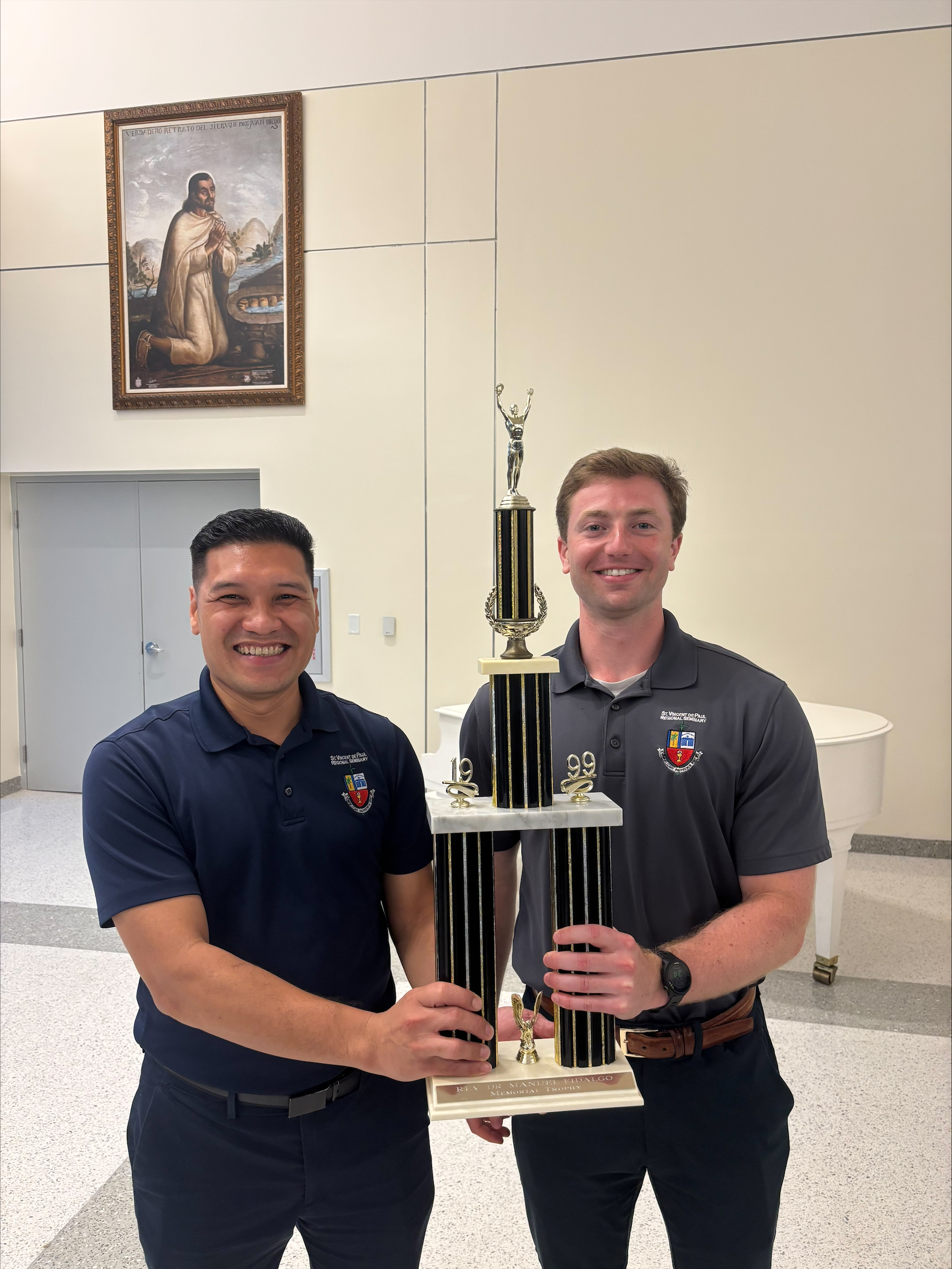
After about 20 years of coaching soccer, I now look forward to getting a team to click as quickly as possible. I am convinced that, beyond skills (there must be a baseline level), team play wins more games. This fall, we had only three weeks before our first match, and we won.

Our university is a bit different from most. Halfway through their studies, seminarians leave for a year to work at a parish, similar to what Northeastern University in Boston does with its Co-ops. This means we lose a group of players each year and have to replace them with incoming players; this is a challenge.

At the start of the season, the first thing we do in practice is make sure everybody knows everybody else’s name until we all get them right! Then we focus on the importance of team play, passing, defending, and attacking as a team.

Another challenge is that we have very limited practice time, and every player wants to scrimmage and have fun. So half of practice is actually playing, which I am not against.

This leaves me very little time to work with the men on strategy, tactics, and skills, team philosophy, community and environment, and, oh, fitness, which I have to leave to the boys. But if you know me, you know I am a sucker for a good dare, so every season we dive right into practice!

Despite some tough losses, we have a winning record under my coaching, so I don’t complain about the challenges; instead, I buckle down and make it work. At the end of the day, soccer is a game that should be fun, and I love it!

With only three weeks of practice, we drove down to Miami and won 0-1; I’ll take it.

What are some of the challenges and rewards you face as a coach? Let me know in the comments.

Emocionario Porteño de Luis Correa-Díaz o cómo gestionar la morriña, la saudade

Para los que vivimos fuera de casa, volver supone más que un viaje físico; al mismo tiempo, es un viaje por la memoria y un viaje de descubrimiento en el que nunca sabes qué ha cambiado desde la última vez que estuviste. Lo que es cotidiano para quienes viven en Valparaíso puede resultar una sorpresa para Correa-Díaz.

Luis Correa-Díaz nos explica ese proceso en su poemario, mejor dicho, en su Emocionario Porteño (Ediciones Altazor 2026).

Correa-Díaz mantiene su uso de emojis, códigos QR y referencias eclécticas: Goethe, Browning, Dostoyevski, Quasimodo, la princesa Leonor, Fray Luis de León, TikTok, YouTube. etc. Pero, por otra parte, pierde el Spanglish; no lo necesita; está en casa.

Aunque cada poema tiene su propio tema —la casa de los cuatro vientos, el mar mapuche, la visita del buque Juan Sebastián Elcano, la plaza Echaurren—, ninguno tiene un punto final (ni la primera letra del siguiente poema está capitalizada), por lo que la lectura se convierte en una caminata continua por Valparaíso, con sus paradas para tomar un café y recordar.

Estos poemas son el ejercicio que hace LCD para gestionar su exilio. Todos tenemos nuestras mañas para desentrañar y exorcizar la añoranza, la morriña, la saudade, que dicen los portugueses, expertos en estas lindes. Yo hago videos de Madrid para turistas (@TonxoTours), lo cual no es tan poético.

Una de las razones por las que me gusta leer a Correa-Díaz (esta es, más o menos, mi séptima reseña de LCD) es el contraste en sus poemas. La yuxtaposición de una escritura aparentemente coloquial, incluso informal, contrasta con una adjetivación estoica, impávida (deadpan, dicen los anglosajones). Esa mezcla entre conversación de amigos y aparente seriedad, incluso misterio, es la que engancha, la que te lleva al siguiente poema y, en mi caso, al siguiente libro. Egoístamente, me gustan estos poemas porque la poesía es universal y lo que siente LCD en Valparaíso es lo que siento yo en Madrid, aunque cambien los nombres de las calles y de los cafés, y, obviamente, Luis lo escribe mejor. Gracias Luis.

What is the best city in the world?

World traveler is not a description I would use for myself; I know a handful of them, and I am definitely not like them. Yes, I have traveled a bit, but, for example, I have never been to Asia or Africa. However, I have spent time in many major cities. This summer, I went to London for the first time in 22 years to visit a dear friend. The visit was short, only three days, but I know London, having lived there for four years during my secondary school, yes, back in the 80s.

Ranking, grading, or listing cities is, of course, highly subjective, but for me, London has to be the best city in the world. Ah, you scream, what about New York? Well, as much as I love New York, it obviously lacks London’s deep history, which dates back to Roman times and gives it a unique character that I find truly inspiring.

The question then becomes: what makes a city great? Sure, does it have great restaurants? But it goes beyond that: accessibility, especially for walking and cycling, beauty, green spaces, culture, education, safety, and the vibrant mix of attractions that make London so captivating for everyone.

While no city is perfect, London not only checks off all these boxes but also has a degree of sophistication enriched by immigration, the previously mentioned history, amazing parks and architecture, improved transportation (since I was last there), cycle paths, and the elusive ‘aura’ that makes it feel alive and special to those who visit.

London is a huge city, so it is impossible to know every little corner. I spent most of my time in Hammersmith, exploring its historic 19th-century bridge and the surrounding neighborhood. I also revisited Shepherd’s Bush and Camden, discovering (for me) St John-at-Hampstead Church, one of the oldest churches in London, with the last big renovation dating to 1740!

I spent most of my time visiting my friend, but I also took long walks, which allowed me to see these elements and led me to my conclusion: London is the best city in the world.

What do you think makes a city great? Is it history, food, or something else? Let me know in the comments. I’d love to hear your thoughts on the best city in the world.

Vas a dirigir, el manual esencial de dirección de ventas

Felipe y yo coincidimos trabajando en la sucursal española de una distribuidora británica de material fotográfico, allá por el Pleistoceno. En teoría, yo era el jefe (aunque no tenía un título específico—lo cual suponía un problema—), pero Felipe me daba sopas con ondas en ventas y eso que éramos muy jóvenes. Aquello marcó el principio de una amistad que ya dura más de treinta años.

Felipe tuvo la astucia de saltar a la telefonía móvil justo cuando nació: “Hola, soy Edu. Feliz Navidad”. Yo dejé el mundo empresarial hace muchos años y me fui a la academia, a la docencia. Pero la amistad sigue ahí.

Hay cientos, si no miles, de libros sobre dirección de ventas: académicos, científicos, motivacionales, etc. El de Felipe es más bien un manual de campo, un checklist, una lista de control, algo que puedes usar como referencia para contrastar con tu evolución como director de ventas. Los capítulos están perfectamente pensados y desarrollados; el texto es ameno, fácil de leer y está lleno de anécdotas personales que aportan textura y realidad a la teoría. Felipe comparte sus años de experiencia para facilitar nuestro trabajo y permitirnos comprobar que nuestra hoja de ruta es correcta y que estamos en el buen camino. El texto está salpimentado de códigos QR que llevan al lector a videos de ventas, presentaciones de formación, etc.

Si yo siguiera en el mundo empresarial y de ventas, este libro viviría en mi escritorio y lo usaría como referencia día a día. Pocos libros pueden ocupar ese espacio, pero Felipe lo ha conseguido con su combinación especial de guía práctica, experiencia y sentido común. ¡Bravo!