Otto is a hilarious and chatty Cuban rugby player who defected to Spain during a tournament tour in the 90’s. He ended up being a barman in the hotel in Mallorca where we go every Summer (see previous posts).
Chapter II
Years ago, wild mint grew in the garden of my mom’s country house. My sister and I put it to good use making Mojitos during the Summer months when we were at the house. One Summer the mint disappeared, maybe due to the desertification of Spain because of climate change. Ever resourceful (and lazy) we switched to easy Gin and Tonics for our nightcaps on the porch, where we chatted and reminisced.
Chapter III
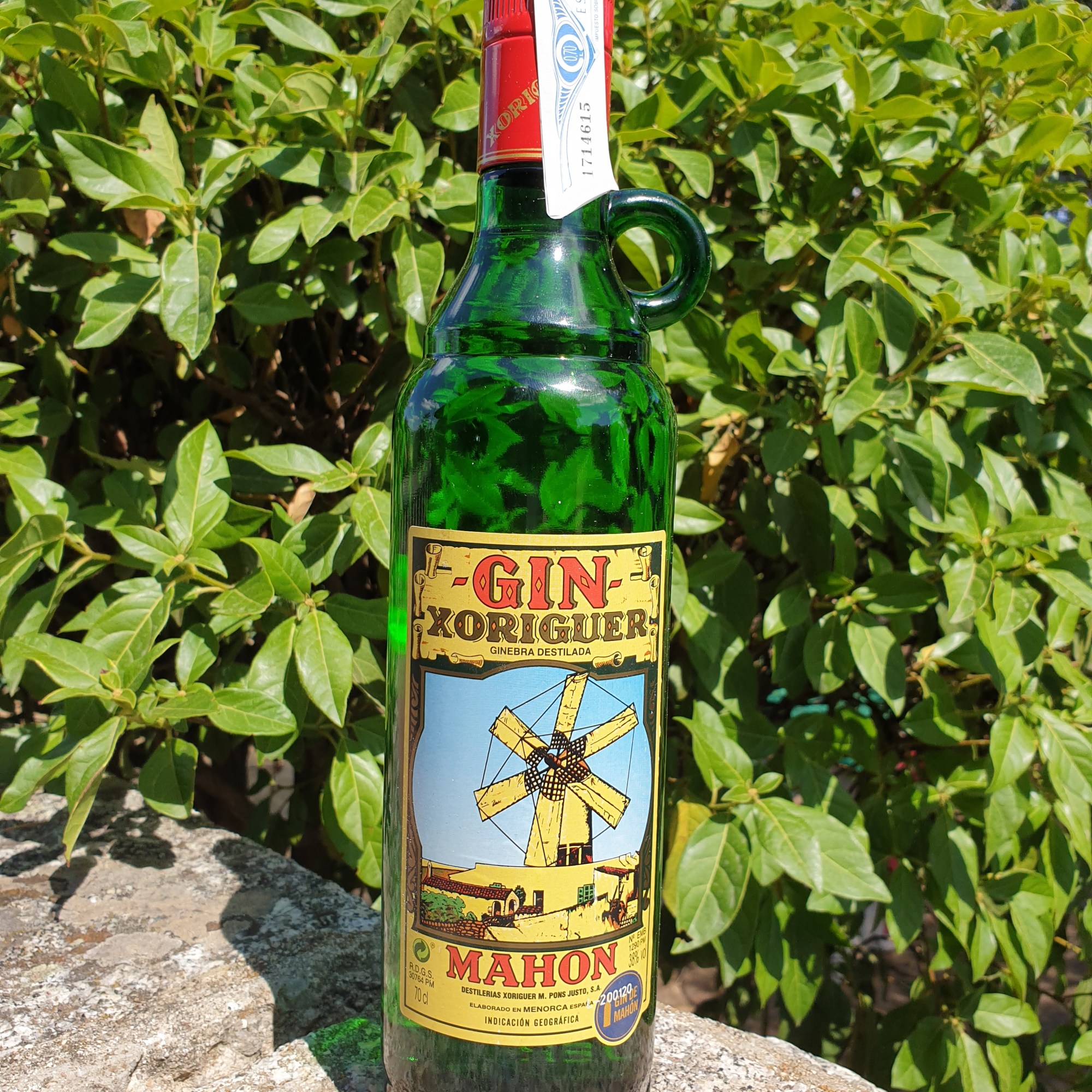
In 1701 the Hapsburg king of Spain, Charles II, had no children. This brought about, a massive war of Succession between the Hapsburg loyalists and those who wanted the French Bourbons to take over the Spanish crown. Just about every country in Europe got involved one way or another. Britain took advantage of the mess to take over Gibraltar (which they still hold) and the Mediterranean Balearic island of Menorca, which they returned to Spain eventually. Before leaving, they stole the recipe for a sauce made by whipping eggs and olive oil (and garlic). The sauce, Mahonesa, is called after the city where it was developed, the capital city of Menorca: Mahón. The linguistically challenged Brits changed Mahonesa to Mayonnaise. To get even, some enterprising locals copied the formula for the spirit the British sailors and their Dutch friends where distilling: Jenever in Dutch, Gin for the Brits. That stolen formula would become Xoriguer Gin, to this day made in Mahón. (There is another version of the story in which the French General Richelieu, copied the recipe when he liberated Menorca from the Brits, but it does not have the same poetic justice for our purpose)
Rich with juniper berry flavor, this is not a subtle gin. These are Mediterranean smells and flavors, not a randomly chosen “floral and botanical bouquet with hints of cucumber” for some 50 Euro bottle of ultra-premium gin. Xoriguer is like taking a walk on a Mediterranean island.
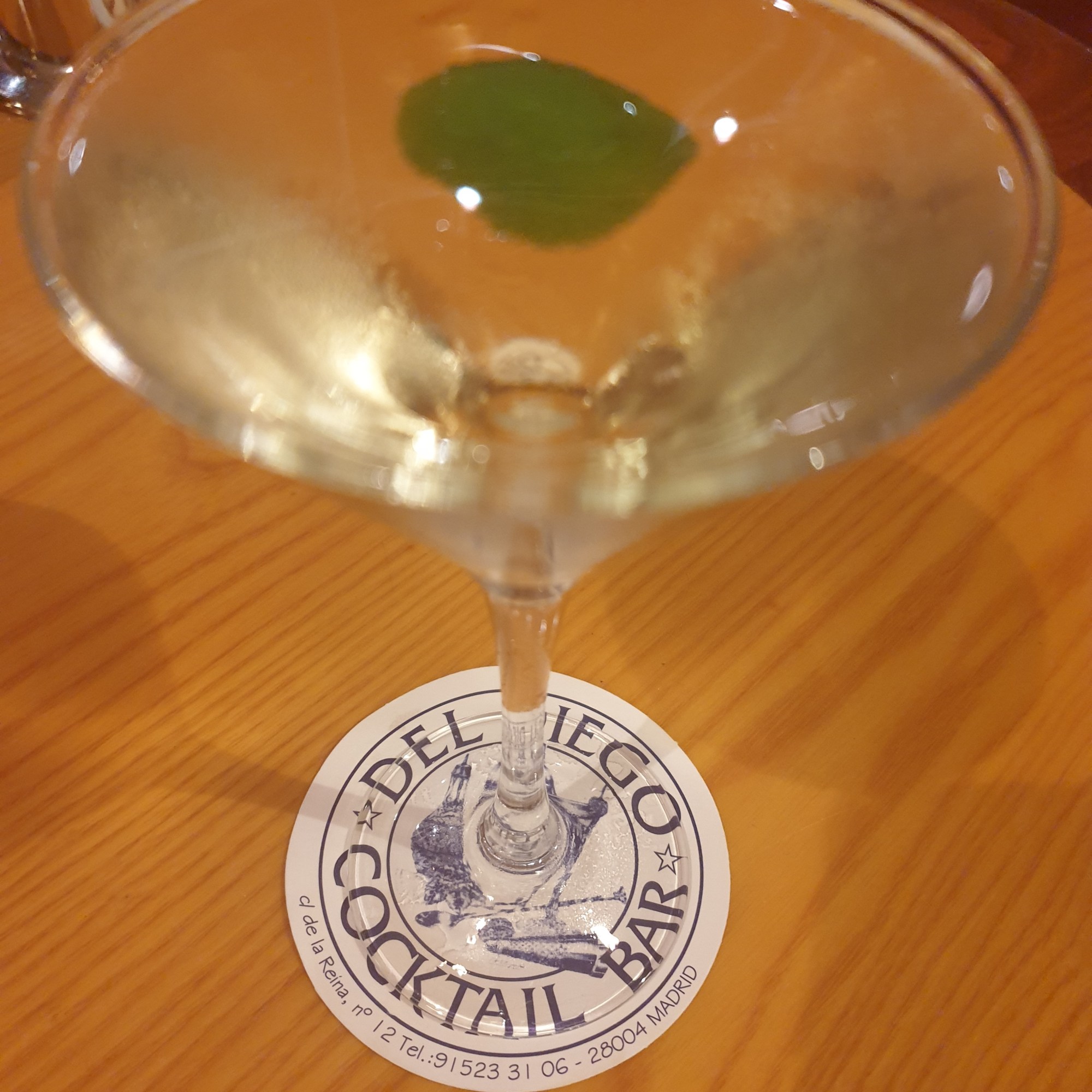
Xoriguer is a small family run distillery, so good luck finding it in most shops. In fact, I only know three bars in Madrid that serve it (and believe me, I know more than three bars in Madrid). One is Bar el 32 in Lavapies, Del Diego, which as I have mentioned before is a temple of spirits. The Del Diego brothers make a light and airy Xoriguer Gin Gimlet which just transports you to Menorca. And miraculously, Marcelino in La Navata (see previous post).
Chapter IV
A few years ago, Otto introduced me to Xoriguer, made just one island over. I fell in love (with the gin, not with Otto, although I do love him, but in a different way).
My mother has a country house in a tiny village near the mountains of Guadarrama, North of Madrid. We have been coming here for weekends and Summer since I was a child. The village has a train station, a small river, a supermarket, a church, a pharmacy, a convenience store, a couple of restaurants, and a hair dresser, but the most important place in the village is the café/bar/restaurant: Marcelino.
Marcelino sits near the Guadarrama river by the road to a bigger village a few miles down. It was built by the grandparents of the current owners stone by stone in the early 20th C. Since then it is the central meeting point of the village. It is the place where I had my first drink in the smoke-filled bar in the early 80s, and the place where I enjoy a coffee every day during Summer. The fourth generation is starting to work there, making coffee, and serving drinks, no privileges.
It is interesting to see the flow of customers. In winter, the local moms meet for coffee after dropping off the kids at school. After lunch, the old men come down for their card game, in the afternoon groups gather for the tertulia (conversation) and coffee. And in summer nights everybody comes for the barbecue!
The coffee is not particularly good. It is old school Spanish coffee, which means it is torrefacto: over-toasted and with added burnt sugars to boost the flavor and aroma (see my previous post on coffee). But that is exactly what you should expect in an old-fashioned café in a Spanish village. My preppy friends from Madrid hate it, but that is missing the point of the tradition. There is a basic lunch menu, which is handy in emergencies and all day bocadillos -simple sandwiches made with Spanish French-style baguette.
But the real food comes at night when they fire up the barbecue! Outdoors, right in front of the diners. While they will oblige and throw a burger on the grill if you ask them to, the specialty here are the local sausages: chorizo and morcilla. Chorizo is the more familiar as it is spicy pork sausage. Morcilla is the lesser known sibling made of ground pork with its blood, with either onion or rice, what the Brits call “Black sausage” but that is where the similarities end. Morcilla has a strong, tangy but sweet taste. And Marcelino grills the best! The barbecue menu also has pinchos morunos (the Spanish evolution of shish kebabs), and steaks, plus salads and other traditional dishes from the kitchen.
After dinner you can stay until after midnight enjoying a drink. In fact, Marcelino is one of only a handful of bars that serves Xoriguer, a gin made in the Balearic island of Menorca, which happens to be my favorite. But that is a subject for a different post.
The other day my dear friend and fine art restorer extraordinaire took me on a whirlwind excursion to see some of his recent work. We took the opportunity to enjoy a nice lunch and ended by visiting our friends at the Paular monastery and to check up on them with the whole pandemic to-do.
Our day started with our traditional morning coffee at our local village café/bar/restaurant/social center: Marcelino. From there we drove over the Guadarrama mountains (yes, the ones where Hemingway’s For Whom the Bell Tolls is based) to the lovely village of Rascafría. We had a leisurely lunch at a cool garden restaurant “La Pradera” (the natural translation “prairie” has taken the American meaning and spirit, being much larger than a Spanish “pradera” which is more of a field, but enough etymologies, and translation theory!)
After lunch we drove to the small village of Canencia. The root Can from the Latin “canis” for dog (oh no, back to etymologies) is because this village is where the kings’ dogs where bred during the Middle Ages. Jaime restored the gorgeous Gothic pulpit at the church last year. A stone’s throw away from the village is a very elegant Medieval stone bridge.
A short drive away is the town of Lozoya. A manorial village as testified by the many coat of arms decorating entrances. The main door of the church is in a beautiful Plateresco style, which is unique to Spain because it keeps the Gothic style but incorporates Renaissance elements. Jaime is scheduled to restore the pulpit there, a delicate Renaissance piece.
A tiny hamlet nearby is Pinilla del Valle, again with a lovely old church and town square. Jaime is working to secure the restoration of the portico of the church, damaged through the centuries.
We ended our excursion visiting our dear friends the monks at the Paular monastery. They are all fine, including the oldest ones. We snuck in for a quick visit. You see, Jaime restored that monastery from scratch years ago, so he knows it well and I have gone on two retreats there -as you might know from previous posts, so I also know it a bit.
After that visit, it was time to head home over the mountains.
Notice the shells of Saint James and the Maltese Cross
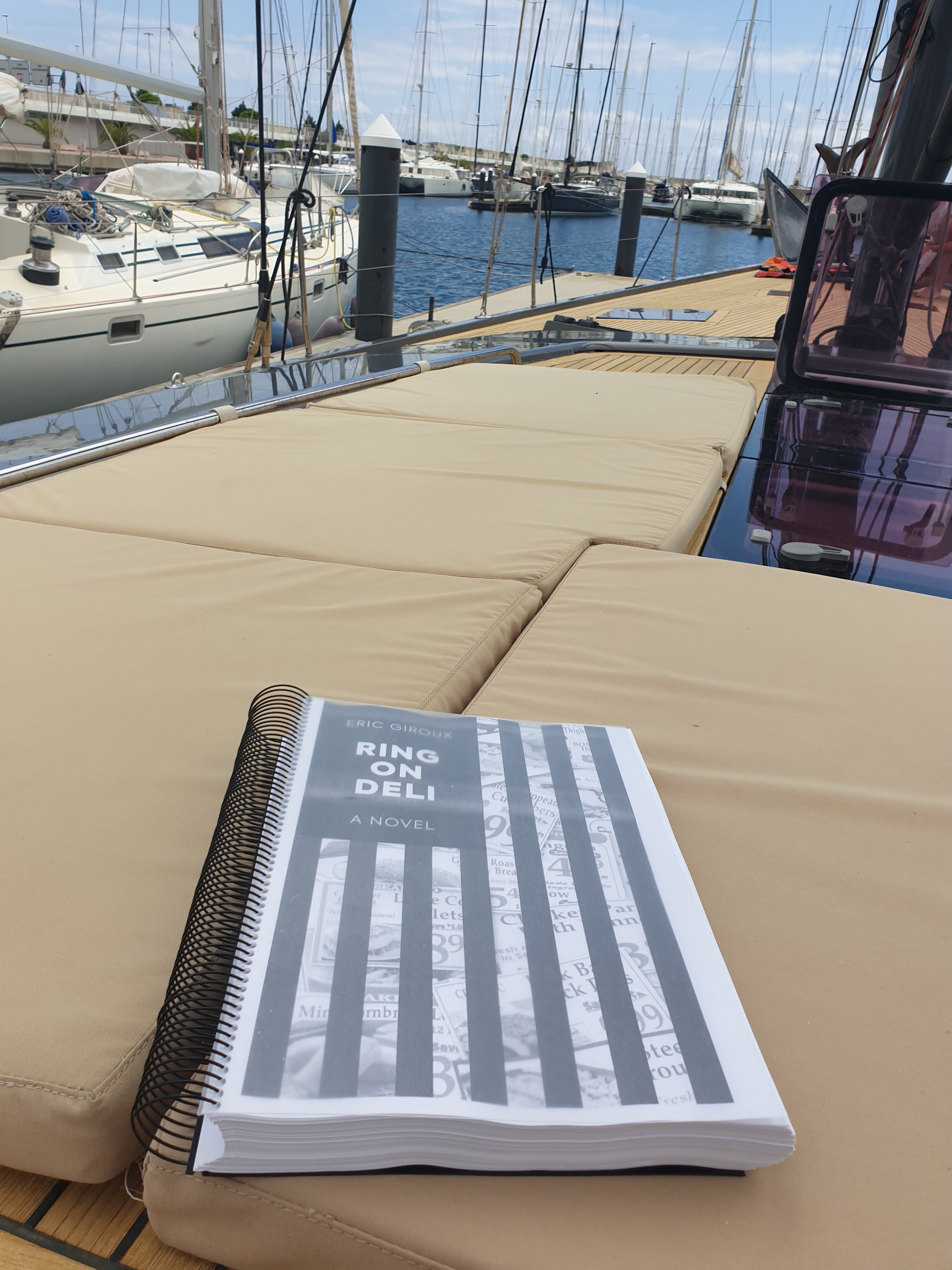
A few months ago I got a request from an old teacher colleague and friend to read his book ahead of the publishing date so I could write a pre-review to get the word out. I got the PDF and had it printed at my friendly neighborhood copy shop – where they accidentally printed it twice and bound it as one, making a hefty tome and an environmental tragedy in one. I did not notice until I started reading it weeks later, by which time it was too late to do anything about it but to work on my biceps.
I posted my review on Goodreads. Amazon, on the other hand, will not let me post it because I have not spent $50 in the last 12 months with them, something I am actually quite proud of. At any rate, here is the review, now go read the book!!
Ring on Deli is a rara avis of the current literary scene. Here is a well-built narrative, with a solid cast of characters that add human depth, texture, and color to a story about complex local -and national- issues such as capitalism, education, local government, even pest control! A story that makes you think, laugh, worry, and cheer. Ring on Deli, although satirical in spirit points to real, current concerns. Eric Giroux has hit the nail on the head with his style: a bit of John Irving to weave the narrative, a bit of Philip Roth for dark humor, and a bit of DBC Pierre for freshness, like cilantro. Using satire to sway opinion is as old as literature itself. From Medieval texts to current opinion journalism, through Voltaire and Swift, all have relied heavily on satire to avoid censorship and inquisition (both real and figurative). Ring on Deli is a brilliant read that I recommend without reservations.
My love for Greece started during my first visit there in 1985. Since then I have returned a few times and enjoyed it every single minute. It is easy for me to remember the last time I went to Greece because it was the Summer right before my father died, 2015. This time was a bit different.
My love for Greece is very much in the Romantic vein, like Lord Byron, Wordsworth, Coleridge, Keats or Shelley. Maybe even in a philosophical vein like Socrates and Plato, like the Stoics. In Greece you are transported to the origins of our Western civilization, our education, our way of thinking, dare I say, we haven’t even improved that much the concept of Democracy… other than the obvious -although we might even be regressing on that front since it looks like the state of Florida will not allow convicted felons to vote, as if they were not citizens.
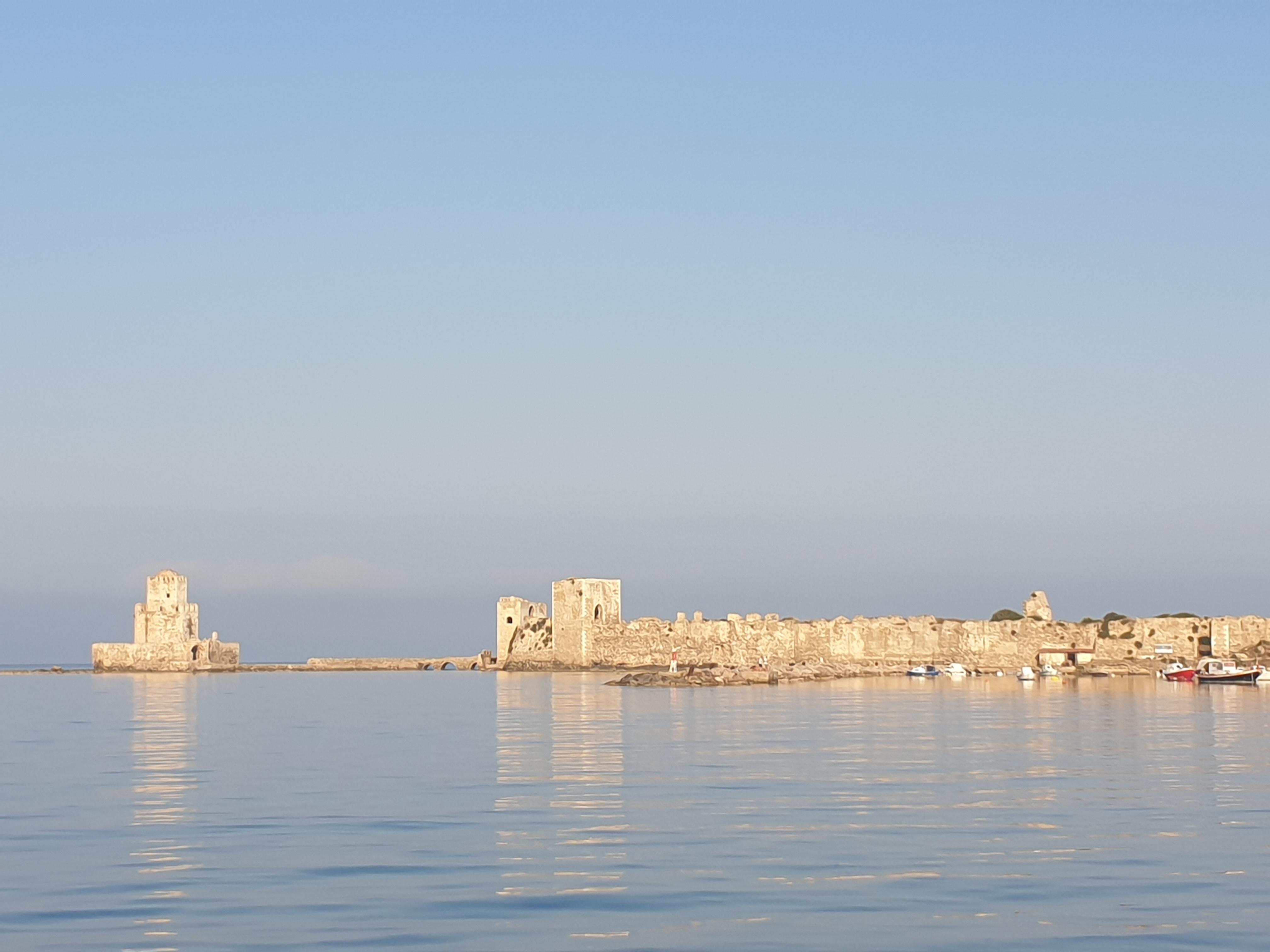
The special aspect to this visit was that I arrived by boat! (see previous post). Our first stop was Methoni. This village sits on the farthest South Western corner of the Peloponnese (the mainland) and is therefore a strategic location for anybody passing by. Because of this strategic location, there has been a castle there since Medieval times. During the Venetian expansion they took over the Ionian sea, up to and including Methoni, building or re-building the tower which manages to be strong yet elegant at the same time. Later, the Ottoman Empire took over, and they added their characteristic Byzantine “touch”. Eventually the town and the castle passed hands a few more times as it saw action during the Turkish invasion and World War II. In this fortress in Ottoman times Cervantes was held captive after his participation in the Battle of Lepanto.
Right between the castle walls with its Venetian coat of arms -The winged lion of St. Mark’s- and the beach is the lovely Methoni Beach Hotel, where Efi served us a couple of delicious Gin and Tonics! Since we had swam ashore, we were lucky to find a generous fisherman that gave us a lift to the boat. Even though he was a Barça fan and that he did not like Real Madrid, I am grateful for the lift.
Our next stop was a couple of “fingers” over, the quiet little island of Elafonisos, with a great wild beach at Simos. Unfortunately, we did not have time to explore the shore.
The next day we sailed by the amazing Monemvasia, a massive island plateau with a fortified village. It is reminiscent of the Israeli Masada fortress! But our destination was the island of Spetses. We arrived at the lovely cove of Zogeria, with its obligatory chapel and beach restaurant (what in Spain is called a chiringuito). A short motorboat jump away is the main town of Dapia with its old and new harbor. The village sits -like most Greek island villages- on the slope of the hill. Fortunately, only residents can have cars on the island, but still everybody moves around on dusty old scooters and quads with the occasional golf cart or electric runabouts.
Due to the relative proximity to Athens (there are a few high-speed passenger ferries from Piraeus), Spetses is one of the popular getaway islands for Athenians to weekend. Think Martha’s Vineyard or Nantucket for Bostonians. This influx of well to do Athenians leads to nice restaurants and shops, with the downside being higher prices and some crowding.
The village is well distributed and has all the requirements of a nice Greek town -and then some:
A fantastic bar with the biggest collection of Scotch I have ever seen, and old Rock and Roll!
It even has a couple of museums, the Spetses museum which chronicles the history of the town and the small but rich Bouboulina museum. This museum in housed in Bouboulina’s grand 19th C house downtown. She was the first woman ever to have been named Admiral for her continued fight for the independence of Greece. If you are in Spetses it is worth the short visit.
On my last day, my dear friend Matthieu came to lunch on his lovely Boston Whaler motorboat and we went to his house on the mainland village of Tolo. The next day, after a nice dinner by the sea, it was time for me to return to Madrid. Just like that, my short visit was over. But I cannot wait to return to my spiritual home.
My stints at sailing have been admittedly few and far between. I loved learning to sail during Summer Camp on Lake Geneva. That feeling of freedom, of you and the wind. After that I remember taking out a Hobbie Cat during my honey-moon, going out on my father in law’s lovely motorboat on Lake Winnipesaukee, and going out on friend’s boats once in a while after that. But when a dear friend invited me to crew his sailing boat from Valencia to a Greek island, I jumped at the opportunity.
The boat
Spain was still easing out of the Coronavirus quarantine restrictions when I took the train to Valencia. The boat was not ready yet, so I spent a week in Valencia, visiting old friends -even an old student, who I was able to see at her Opera recital!, walking about and helping to get the boat ready for sailing. (See previous post)
Skippering
Finally, the boat was ready, Manolo our third man jumped abroad, and we sailed out. The crew was super nice Captain Jose, and Manuel, a good friend of his and a solid sailor, which left me as the lowest on the boat’s hierarchy. But those of you who know me know that I am a sucker for a challenge and always open to learning, specially if it is something as fascinating as sailing.
Full moon during night watch
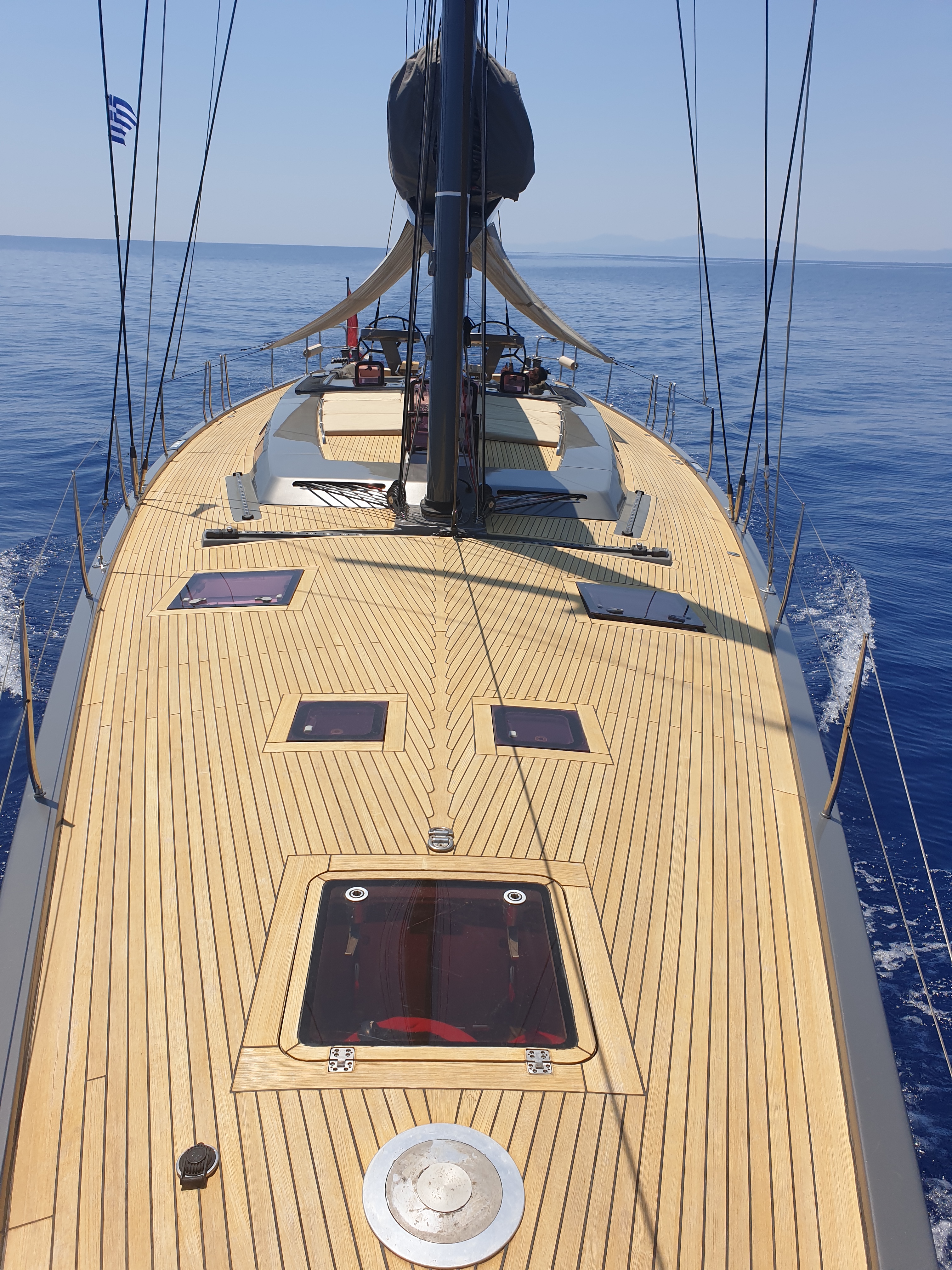
The boat is a 2006 20 mt German built Hanse that the owner has extensively tricked out. It is a beautiful combination of high-tech and old-world. Each of us gets our own en-suite berth. There is an island kitchen, big, flat screen TV, full bar, etc, etc, etc., oh and super-important: a state-of-the-art Nespresso machine!
Taking a break in Mallorca
We sailed out of Valencia on motor power since there was not enough wind to fill the sails. I was surprised to see Ibiza only a few ours out of Valencia. We sailed on, I got the 1:30 to 4:00 am watch, unexpectedly it passed by in a rush as I explored the gorgeous night sky, meditated, and of course did my watch duties: making sure we didn’t crash with anyone, keeping an eye out for icebergs and making use of that Nespresso machine.
Quiet waters
I awoke as we approached my beloved and very familiar Mallorca. My heart filled with memories of my youth and family. (See previous posts about Mallorca). I waved bye-bye to my favorite island only to face a rough head wind on the crossing to Sardinia. We were under full sail, but we were slamming 3 mt waves with no prospect of stopping any time soon, so we did a 180 and headed back to the shelter of Mallorca. Our resourceful Captain wisely picked a cove right on the South-East corner of the island so we would be ready to head to Sardinia as soon as the wind changed direction. A little down-time from the buffeting wind was welcome, as was a first swim and a quiet dinner.
On course for the Messina Straight
The forecast did not change, so we stayed put another day. We hit the beach on an inflatable kayak which would rip a valve as we arrived on the beach. We stayed for a gorgeous local seafood stew lunch “Caldereta” plus a few cocktails to celebrate Manuel’s 50th birthday. The punctured kayak barely got us back to the boat!
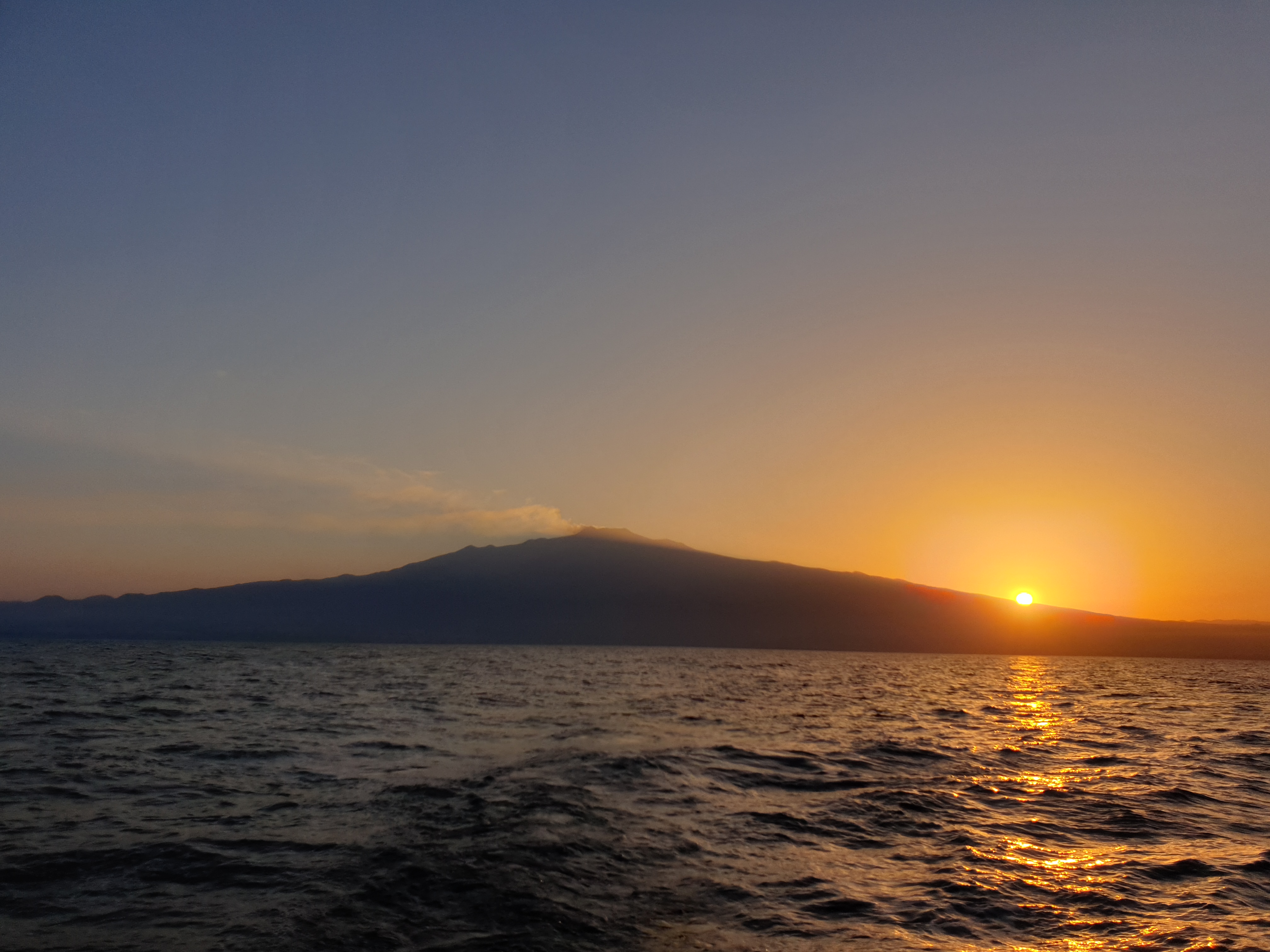
Smoking Mount Etna
As beautiful as that cove was, we had to get moving. Instead of risking the continued headwinds on the crossing to Sardinia, we decided to go around the North of Sardinia where the winds were much friendlier.
We had nasty headwinds all the way to Sardinia so before crossing the treacherous -but beautiful north shore we stopped for the night in another gorgeous cove. We arrived too late for a swim, but we did enjoy a nice plate of spaghetti al pesto.
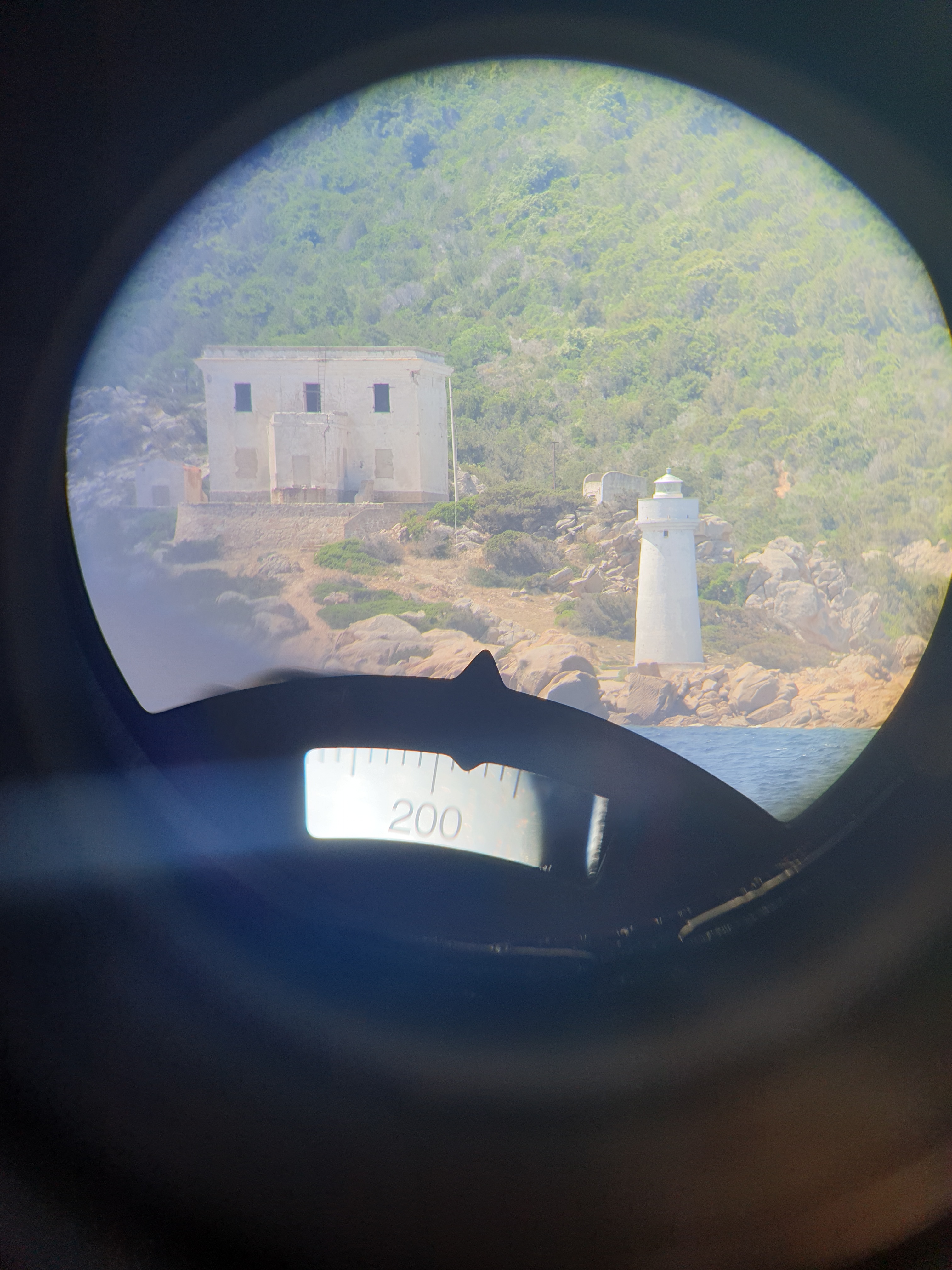
Lighthouse through binoculars
The next day we were running low on fuel, so we stopped to refuel and to rest before the long haul to Sicily. During the way I was allowed to steer for the first time. While re-fueling I managed to run ashore to throw out the trash and to the supermarket where I purchased some overpriced ice, bananas, oranges, and strawberries.
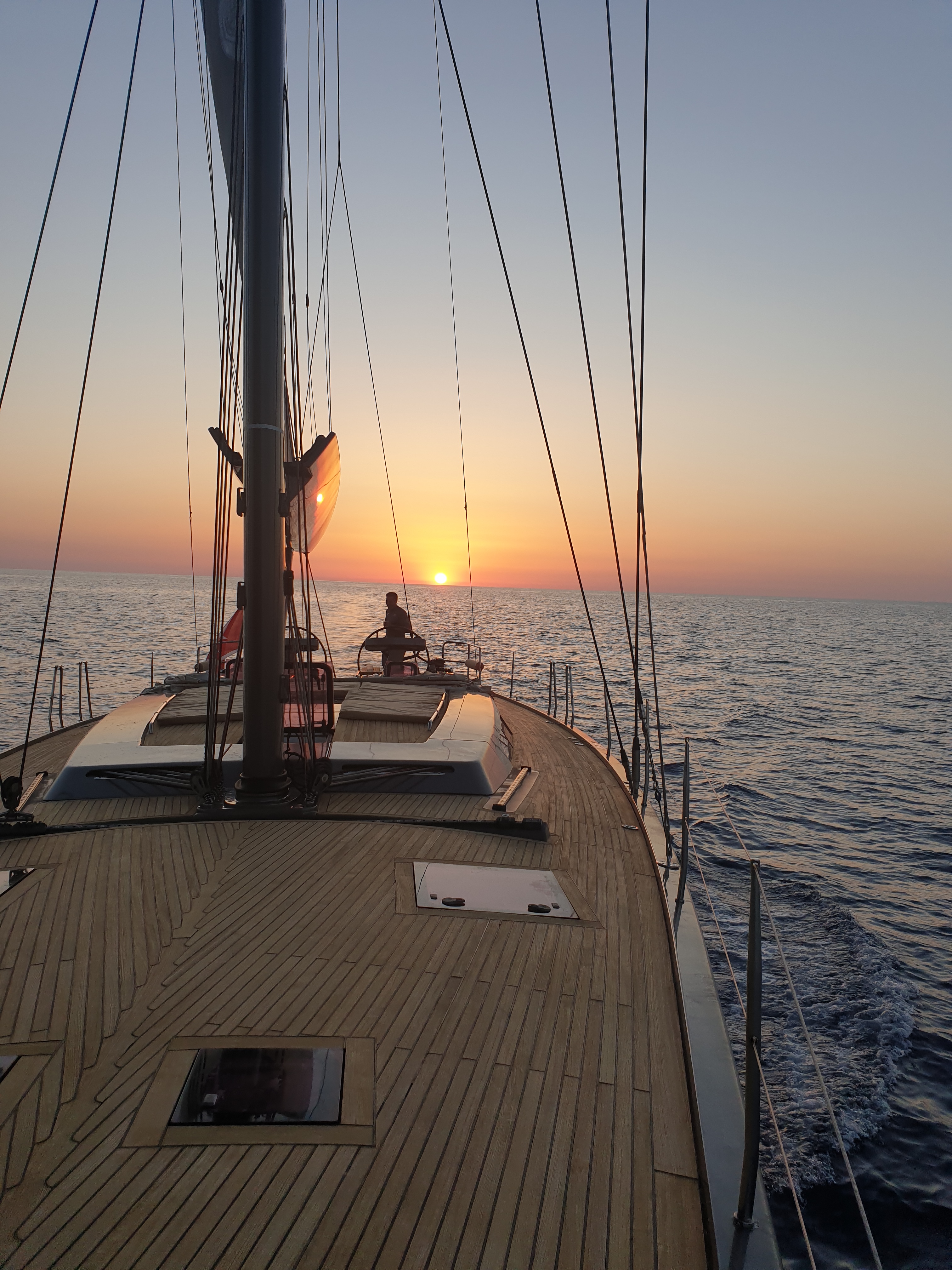
The ice was critical for our sunset chill-out sessions where the crew (not the captain) would enjoy a gin-tonic listening to some nice tunes while enjoying the sunset.
Every sunset is beautiful
From there we continued sailing for a couple of days to the narrow straight of Messina that separates mainland Italy from Sicily. Coming out of that channel we were welcomed by a great aft wind that pushed us nicely to Riposto, right under smoking Etna volcano! The nice marina folks allowed us to park for a couple of hours after refueling so we could do some grocery shopping. We passed by the pretty and well-balanced town square with its church and town hall, we did our grocery shopping and still had time for a quick cup of espresso before boarding. I had not been to Italy since 2004, so that brief stop was wonderful, and the cup of coffee one of the best I can remember (see previous post).
The full coffee experience in Sicily
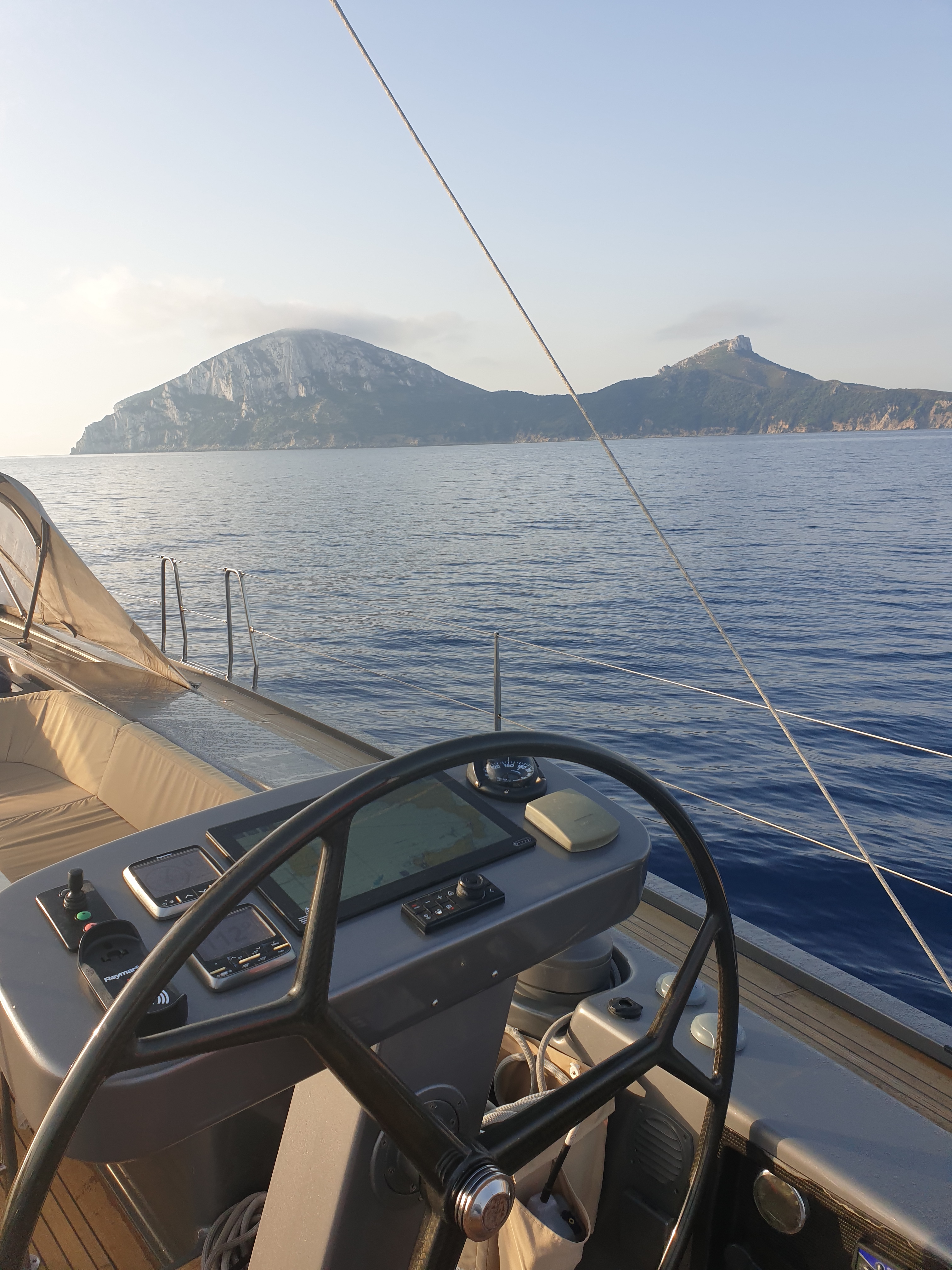
From there it was a straight shot to Greece, where our first stop was Methoni with its Medieval, then Venetian, then Ottoman, then on and on octagonal tower. My dear friend Miguel de Cervantes was held captive there after being captured after the Battle of Lepanto and before being taken to Algiers where he would spend a total of five years.
The Venetian-Ottoman tower in Methoni
From there we sailed around the Peloponnese stopping again at the amazing isthmus at Simos beach on Elafonisos. Our final day was an easy sail to the charming island of Spetses.
Isola Molara off the coast of Cerdegna
Although I started this adventure quite worried about my lack of “real” sailing skills, my colleagues were patient and amazing, teaching me everything they could about this beautiful craft and art that is sailing. So by journey’s end I was participating actively on all maneuvers!
The crew
During my pilgrimages on the Camino de Santiago (see previous posts) I have learnt that spending over ten days outdoors in nature naturally resents your mind and soul. This was no different, if anything it was even better as there are fewer distractions on the ocean: just the sound of the wind, the horizon, the stars at night, even dolphins came to swim with us for a while! It was an experience like no other I have ever had, and I hope to do it again soon. Now that it is over, I miss the camaraderie of the boat, the constant reading of the wind, even the night watches!
PS: If you are a sailing aficionado our trip from Valencia to Spetses was about 1300 Nautical miles, about 1500 land miles and about 2400 km…
The galley
The cabin
My berth
Happy hour
The best coffee I’ve had in a while
Town hall in Riposto
The texture of carbon fiber sails
Isola Molara off the coast of Cerdegna
Full sail
José unfurling the main sail
Arriving to the Balearics
Captain enjoying a read while while a ferry passes by
I discovered Valencia on a business trip in 1992, and I have loved it ever since. Valencia is Spain’s third largest city at over a million inhabitants, it is the largest / busiest port in the Mediterranean and has been for centuries. Unfortunately, or maybe fortunately it remains fairly unknown to most folks on the tourist circuit. Because of this, it maintains a certain undiscovered quality to it, a small town feeling.
Valencia is home to the delicious paella, to the “painter of light”, Joaquín Sorolla, the brilliant architect Calatrava, it was the last home for El Cid (check out the film with Charlton Heston), etc. It is a city rich, very rich in culture, history, literature, architecture, and so forth. I have been lucky to keep great, close friends, including my PhD thesis director!
I hadn’t been to Valencia in a year, when I spent a day walking around and catching up on the Museo de Bellas Artes. This time I have had the luxury of spending a whole week here, so I have squeezed every moment here to see and do all my favorite things, which include:
Walking around
Having breakfast at my favorite coffee shop (ok, I’ll tell you… Café Aquarium)
Eating paella by the beach
Drinking Horchata (made from a tiger nuts)
Eating fartons, a delicious pastry, in my case, stuffed with chocolate.
Hanging out with friends
Running along the old river bed (after a dramatic and deadly overflow, they made a safer channel for the river, sparing the city of further damages.
It has been a very busy but rewarding week and I even got to catch up with one of my old students which is always enriching and fun.
With the AVE high speed train, Valencia is now only a short two hour ride from Madrid – at 189 mph! So there is no reason not to jump on a train and spend a couple of days in this great city.
Of course I have mentioned coffee many times before in this blog, but I have never dedicated a post to it. About bloody time, some of you might say.
As my friend Theo would say I am a bit of a late bloomer, at least on the coffee front, maybe because I did not hit my teenage years in Madrid but in London in the 80’s where a good cup of coffee was as unheard of as a sunny day. Ditto for university in Boston later that same decade. Although I do remember some memorable coffees in the Italian North End where a few cafés knew how to pull a solid espresso!
When I finally got back to Spain in the early 90’s, still young -mind you- then the coffee consumption crept in unannounced. You see, in Spain at mid morning everybody takes a coffee break, who was I not to enjoy a cup? Thus an addiction began.
I do not drink a lot of coffee, preferring to focus on quality over quantity. Normally it is just one a day, mid morning. While travelling, it will be at least a couple, one with breakfast and one mid morning. If I have lunch out, I might have an espresso to finish.
During my PhD, I would meet with my awesome Thesis Advisor a couple of times a week to go over my progress at UNC’s now defunct The Daily Grind, where they knew our orders by heart. Those coffees remain in my memory as some of the most enriching ever.
I have measured out my life with coffee spoons
– T.S. Eliot
Relative to the rest of Europe, Spain does not have the best coffee. You see after our Civil War (1936 to 39) we had a rough famine through the 40’s while the rest of Europe was in WWII. We were lucky to be included in the Marshall Plan that helped us out. We had a scarcity of coffee so it was over roasted to increase flavor. Folks also drank chicory instead of coffee since this grows naturally in Spain and was widely available and much cheaper. Sometimes they mixed coffee and chicory (in proportions depending on what you could afford). A final trick was to add caramel to the coffee, again to push the flavor. All this means is that we got used to bad coffee, torrefacto. Nowadays this is not so much the case except if you go to a remote village where they still like it “old” style.
Another great coffee moment is Sunday after church, where I do not have any time limit on my coffee. In Florida I would go to Bad Ass Coffee next to St. Ann’s, although eventually I moved to The Brick for the more comfy sofas to read on. Here in Madrid I go to the wonderful Pancomido Café where the girls know me enough to prepare my coffee when they see me walking in!
More important than the coffee itself might be the coffee time: a time of reflection, or reading, or of company, and conversation. The ceremony of coffee whether at home, or at a coffee shop is also equally important; taking the time to enjoy a coffee alone or with a friend.
Café bombón with condensed milk
In Madrid we like our coffee with milk in a glass, this is a fancy one!
My first coffee not at home after the Covid pandemic
A Greek frappé
A Summer coffee
Espresso with a twist of lemon
My Sunday morning coffee at the Carolina Inn during my PhD
Home brew
Cigars and coffee are a good pairing
Coffee with students (and books!)
The best company, my niece and nephew!
My everyday cup in Madrid (pain au chocolat optional)
I fell in love with literature at the American School in London with a couple of great teachers: Soledad Sprackling for Spanish Literature and James McGovern for English. But I did not fall in love with books until college.
At Bentley University I discovered the Bowles Reading Room which had beautiful books. It was glassed in from the rest of the library and every day I went there to do my homework but would invariably end up looking at the wonderful books. I loved that room so much that at the end of my studies, I donated a book about Spain to the Collection. (I contacted the librarians who got me this rare photo of the Reading Room for this post, thanks!).
Bowles Reading Room 1992 (After I graduated) (PC: Bentley Archives)
But I would have to wait until after college to have enough disposable income to buy books, which, living in Boston, was very easy. Some days on my lunch break I would sneak to Goodspeed’s to look for treasures. Such is my love for books and literature, that years later, I ended up getting a PhD in Spanish Literature! (see previous posts)
Speaking of UNC, one of the highlights are the libraries. Plural. The old library is the Wilson Library (which is featured prominently in Robin Williams’ great film Patch Adams). I spent hours studying in this library and a couple of times studying very old books in the Rare Book Collection. The big, modern library is the Davis Library with its 7 million books. There, I soon made best friends with the Spanish book librarians Teresa and Becky. I would walk to their office deep in the heart of the library and talk books, (and gossip). This library is as close to the Borges idea of a library as I have ever been: massive and repetitive, but with a soul.
During my studies at UNC, one summer I got a Fellowship to do research at the Biblioteca Nacional in Madrid. What an experience! To get to the rare book collection you have to pass not one, but two security checks, you cannot bring in any pens, books, phones, etc. Books there are treated with the care and reverence one would expect of -in my case- over two hundred year old books. I spent every morning that summer reading most of Francisco de Isla’s first editions, manuscripts, and other pieces attributed to him but not his. That experience is one of the highlights of my academic career. (Their coffee shop in the basement was also excellent – and subsidized! but that is for another post)
Biblioteca Nacional, Madrid
After UNC I moved to Southern Florida, which is a wasteland for books -must be the humidity. But, in 2016 I did read this great article in Vanity Fair, (to which I have subscribed and read every issue from cover to cover since around 2006) about this magical book store in Santorini called Atlantis Books.
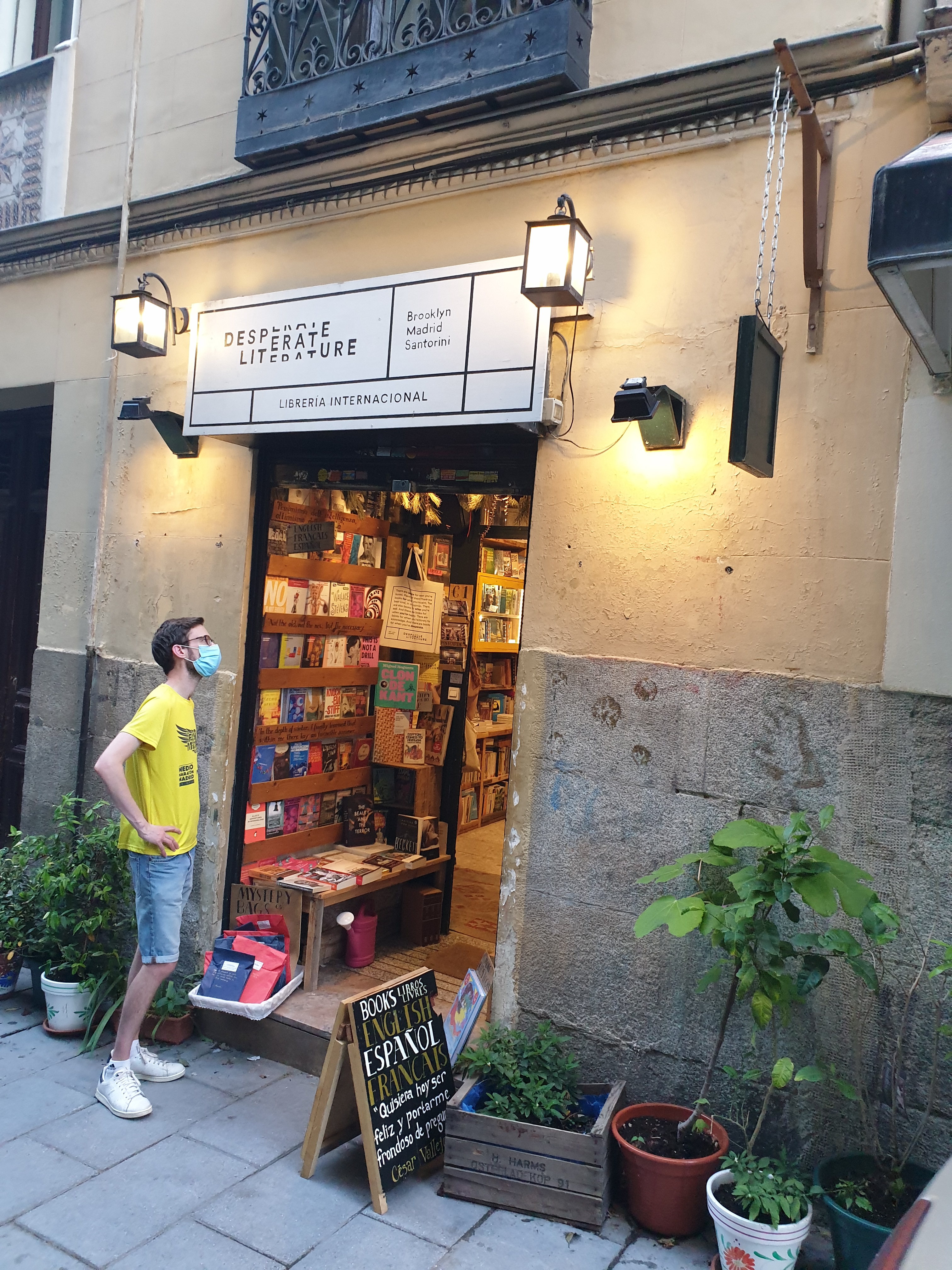
Fast forward to 2018 when my dear friend Matthew came to visit me in Madrid. He stayed at a hotel in the old part of town. One evening after I dropped him off, around the corner from the hotel, on narrow Campomanes street, I bumped into Desperate Literature. I was ecstatic! What a discovery, what a find! A tiny bookstore, but filled with books mostly in English, with a few in Spanish and French for good measure. It was a tiny paradise, an oasis of… books!
Books in time of Covid
I soon found out that this bookshop is part of Atlantis Books which I had read about in that Vanity Fair article. It all fit in, a collection of magical bookstores.
During this Covid-19 pandemic I found out they were sending books to folks. I ordered one and I was able to make use of my workout time to ride my bicycle to pick it up.
In conclusion: support your local -hopefully quirky- bookstores, and read.
I discovered this bookstore in Asheville NC.
Check out this quirky bookstore in Asheville North Carolina
Goodspeed’s in Boston
Bentley University library
The tiny entrance to the tiny Desperate Literature
My only music post on this blog was published in 2014 about Van Morrison. Well, it is time to add to that. Basically the only thing I listen to nowadays is Bach, as in Johann Sebastian Bach.
Of course we are all familiar more or less with his oeuvre, but I must confess that my first conscious contact with Bach was quite late. After college I got a job in Boston’s Financial District. I moved into an tiny attic apartment on Commonwealth Ave. in the Back Bay. Walking around I found out that Emmanuel Church on Newbury st. performed the Bach Cantatas on Sundays’ mass, so I started going religiously (sorry, bad pun). I missed the Catholic ritual, but the music more than made up for it!
Fast forward to 2013 in North Carolina when I sawAndrás Schiff perform the Goldberg Variations and it all came flooding back, and I was hooked. As soon as I could I went to the used record store and got Glenn Gould’s original 1955 recording -yes, the one where you can hear Gould humming the tune in the background! I stuck it in my car’s CD player and it stayed there until the car was sold in 2018. That’s five years of listening to the record over and over. Call me obsessive if you want.
The next step for me was the Cello suites. The progression was simple, although it involved a step back. A step back because I had been surrounded by these pieces when I worked at the Walnut Hill School for the Arts, eventually observing and participating in Über-conductor Benjamin Zander’s Master Classes at the school. Now I have Yo-Yo Ma’s 2015 Royal Albert Hall performance of the complete Cello Suites on a loop (see video below).
Occasionally, if I want to mix it up a bit I might listen to some of his organ music or, the Passions, or some of his other orchestral and chamber pieces (sonatas and partitas). There are many of these because back in the day (1685 – 1750) the only serious musicians worked for the king or the church. Bach falls in the latter, so he had to produce music basically for every Sunday! In case you had not noticed, I am not a musician -much to my regret- but this music has everything I need musically and spiritually speaking.













 Antonioyrocinante's Blog