






Anton Raphael Mengs at the Prado Museum (hurry, until March 1, 2026)

Yes, I might have a mildly obsessive personality. One such obsession is the 18th Century, I rather flourish with everything to do Enlightenment, Neoclassical, late Baroque, early Romantic, you get my drift.

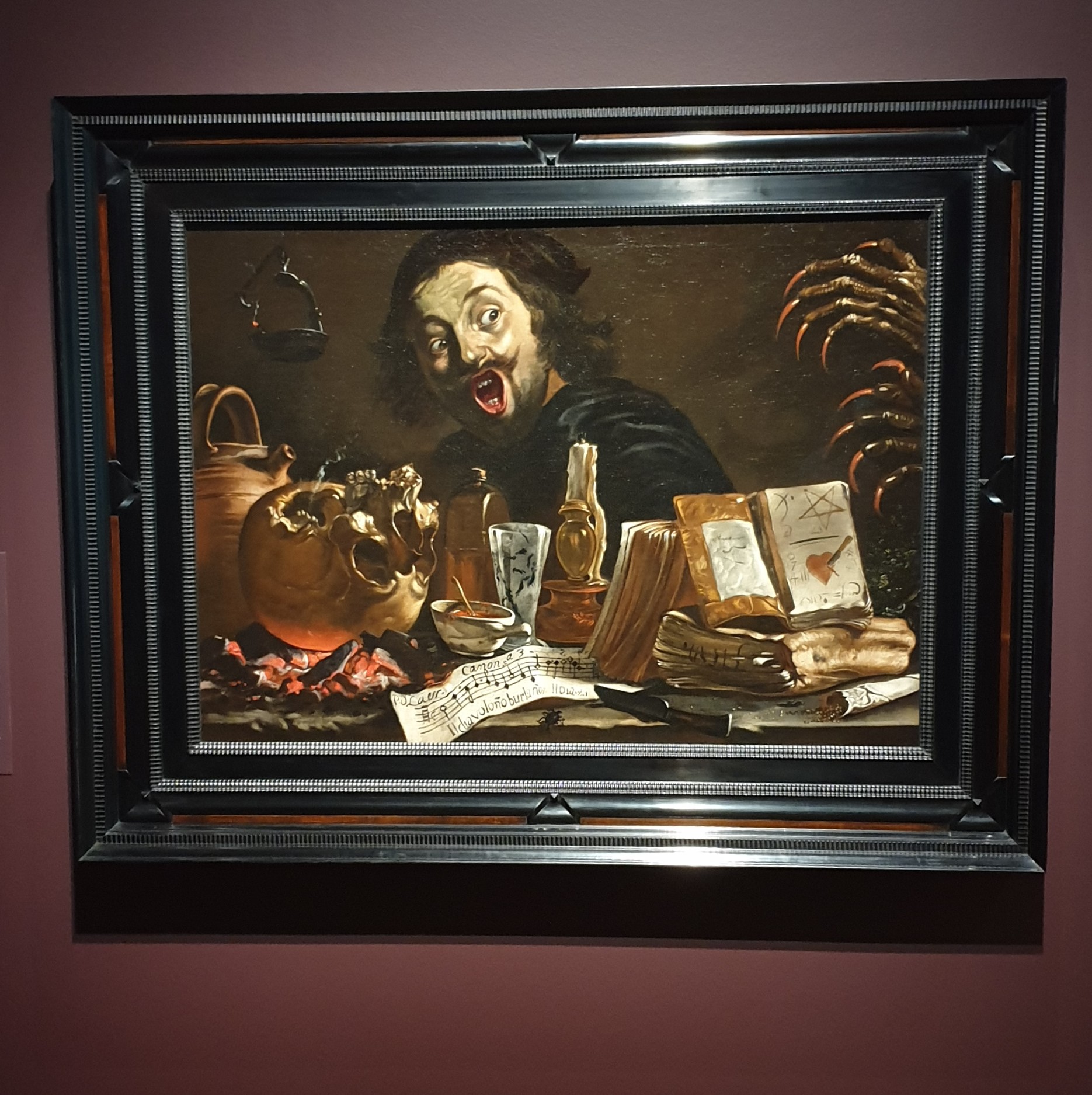
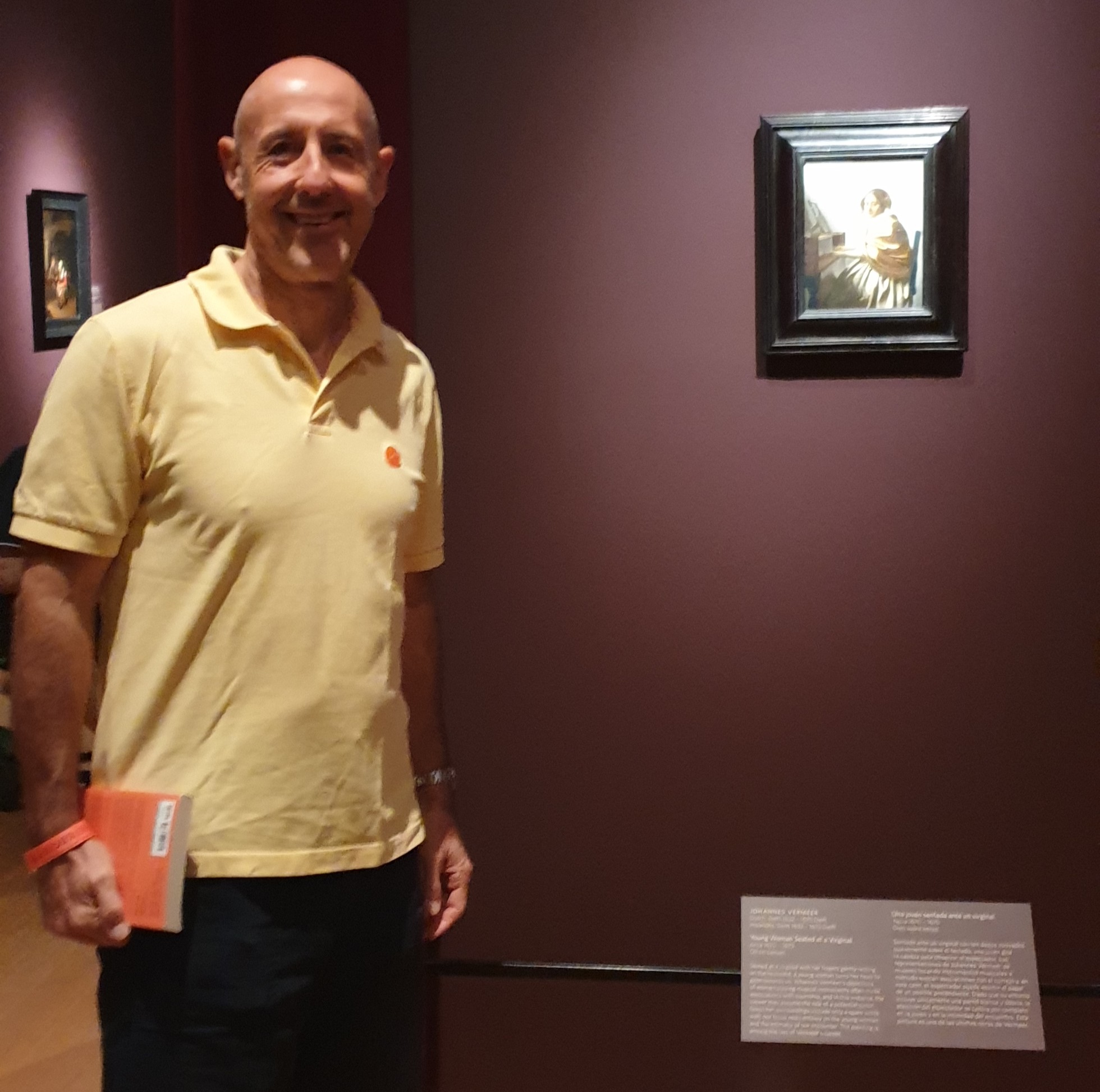
When I found out there was a Mengs exhibit at the Prado, I did not go once; I went twice (and I might go again) —Advantage of being an “Amigo del Prado,” I get in for free 😊

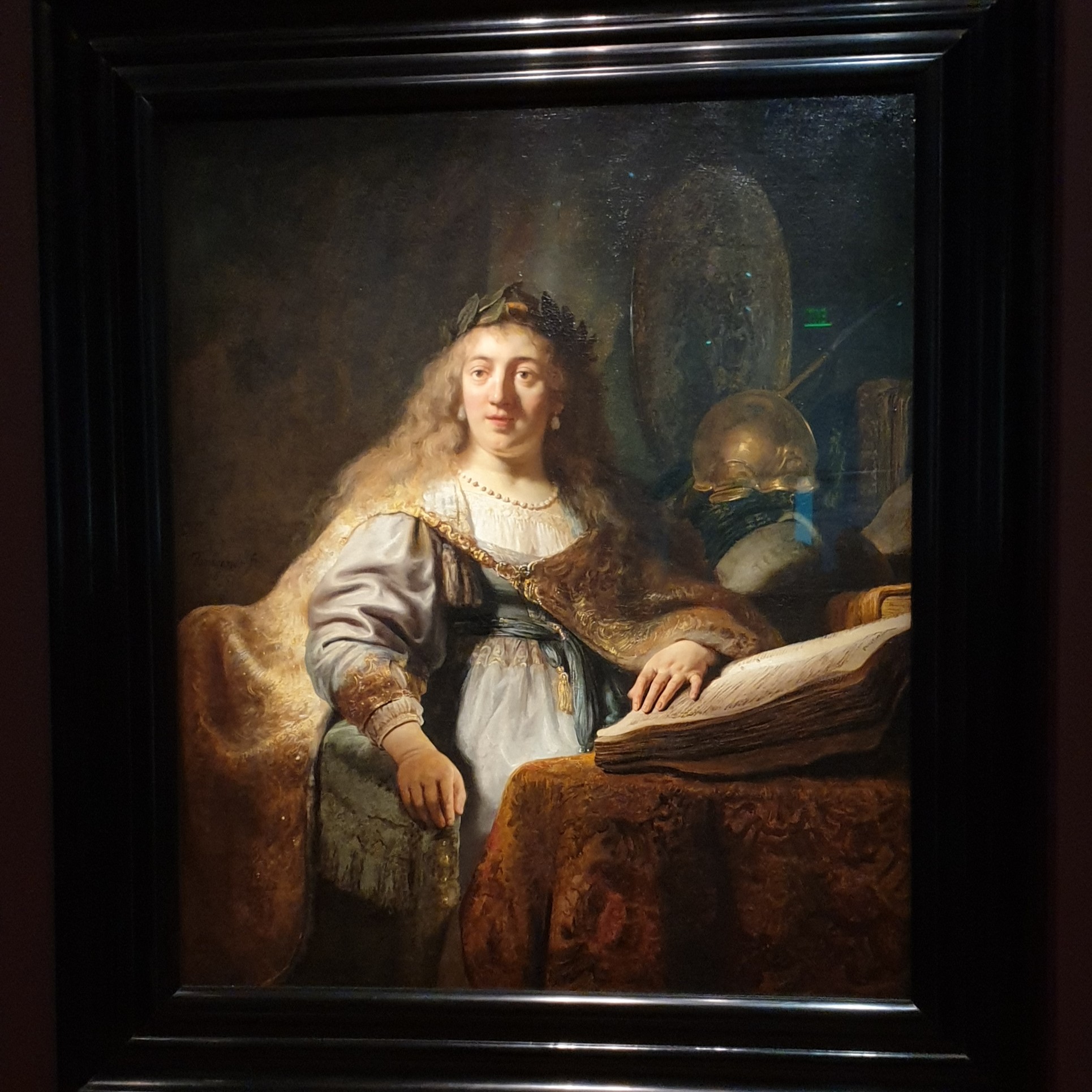
Mengs is the consummate 18th-century, Enlightenment painter. Although he worked for a lot of European nobility, most of his work was for King Carlos III in Madrid; in fact, most of Mengs’ work I have seen was at the Palacio Real in Madrid.

My main scholarly project at the moment (sorry, I cannot disclose too many details) involves a Francisco de Isla book that was in the library of the Spanish-Italian Cardinal Zelada. What was my surprise when reading the description of a portrait at the exhibit, that it was Cardenal Zelada, which normally lives at the Art Institute of Chicago, what a coincidence! (Check it out here).

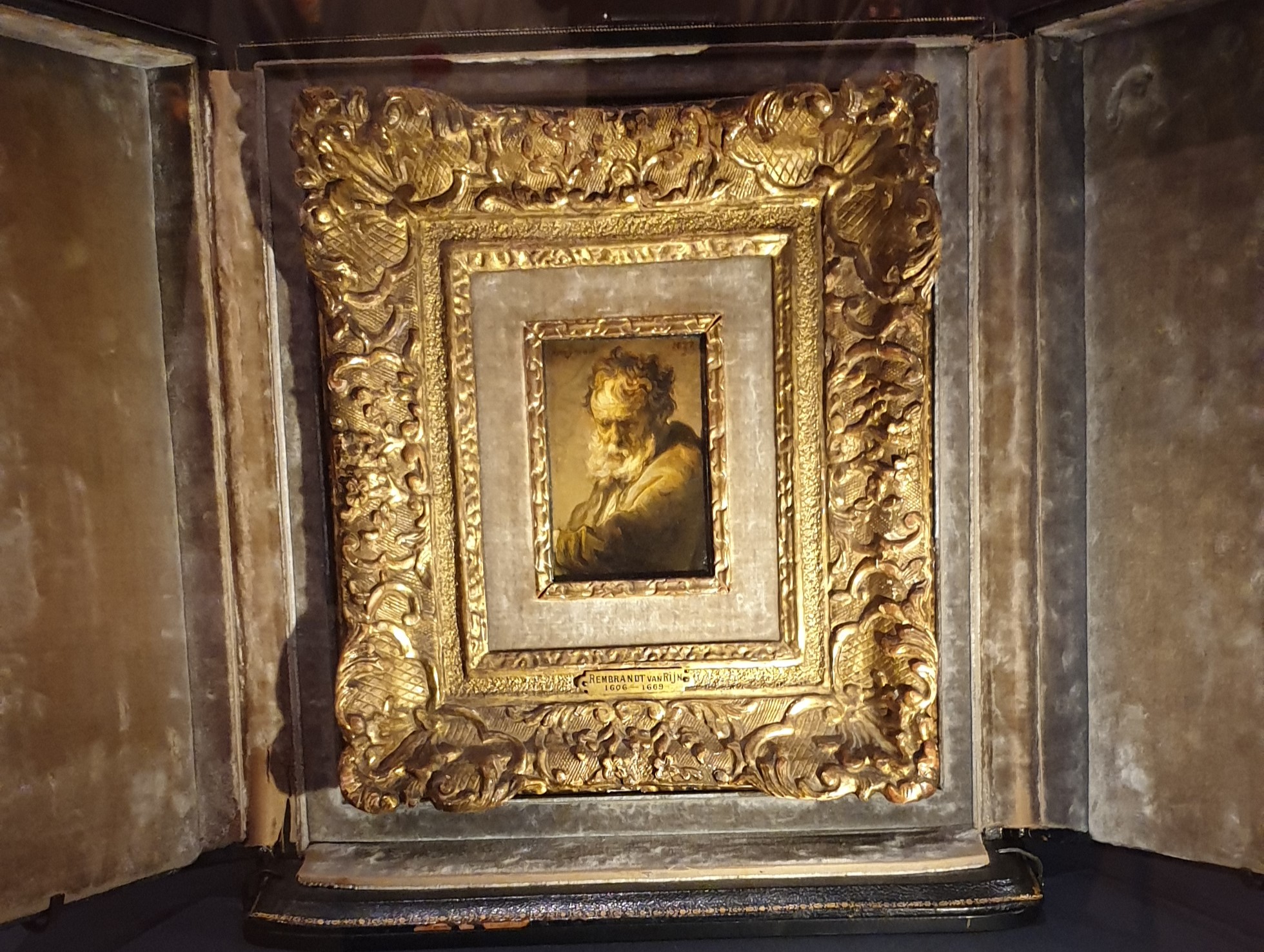
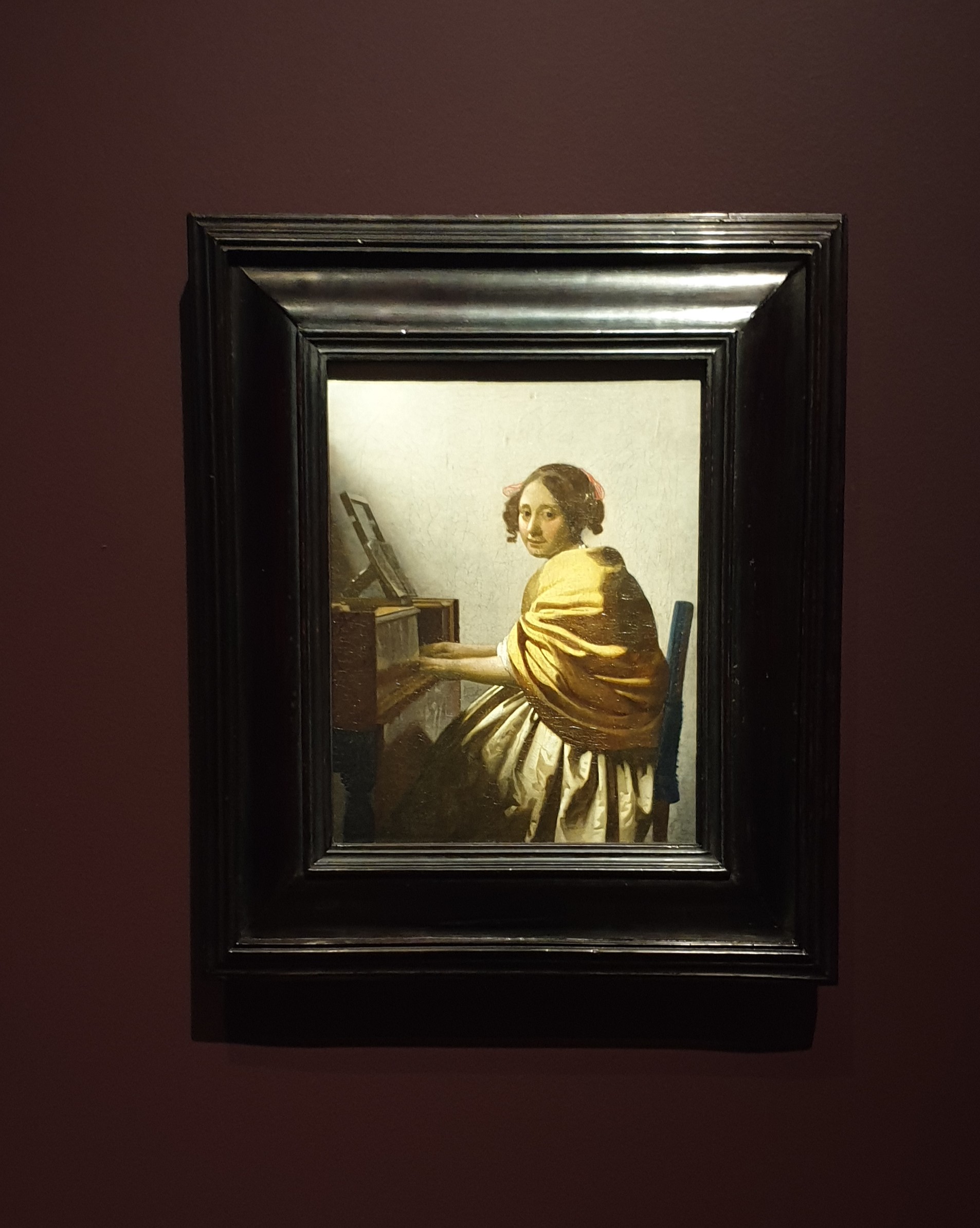
The exhibit is phenomenally curated; it has hundreds of paintings gathered from around the world, divided into 10 huge areas grouping different stages and themes. It is worth the visit.

So if you are in Madrid before March 1st, 2026, go to the Prado and check out the Mengs exhibition. You are welcome.

María Callas, and why I dislike Netflix movies.

I might be slightly obsessed with Callas…

While I do not consider myself an opera connoisseur, I do love opera.

My love of opera started in high school when I listened to Kiri Te Kanawa sing the famous Madame Butterfly aria Un bel di vedremo, on one of my father’s cassette tapes!

Since then, I have listened to a lot of operas on records and on the stage.

Maria Callas stands out as THE diva, the voice. Yes, other voices are gorgeous, but the Callas is recognizable a mile away, and yes, you could probably hear it a mile away.

I recently saw Netflix’s biopic with Angelina Jolie about Callas’ final days, which prompted me to write this blog post.

The Netflix formula is, in my opinion, boring. Notice how they use all the resources. With all the money they have, they perfectly curate every film, produce the perfect color saturation, or switch to Black and White for certain scenes, all of which makes for boring films. So no, I am not a fan of Netflix films, and while Angelina Jolie and the rest of the cast do an outstanding job, everything else about the film is predictable, thus boring.

But go out and enjoy The Callas’ amazing voice and music. You are welcome.

Find your blessings and then leverage them!

Yes, I live in a sort of self-imposed exile. No, I do not live in political exile like some of my friends. I do not live in economic or some other sort of exile; mine is occupational. I cannot do the work I do here at home. On top of that, it is no secret that for me, South Florida has very few redeeming qualities. So I could live a bitter and resentful life. However, I try to find the positive and leverage it.

One of the many blessings I enjoy every day is walking from my office, across campus to the refectory, where I make myself a coffee with steamed milk in a professional espresso machine (and grab a cookie to dunk). We have a 73-acre campus which used to be an emergency landing strip for WWII pilots learning to fly out of what is now Florida Atlantic University in Boca Raton.

About in the middle of our campus is a lake with a fountain, plenty of fish, and a wonderful path around it! So every morning I walk along the lake, and it is beautiful! Every day is different, cloudy, bright, rainy (this is Florida after all). There are all sorts of wildlife: birds, squirrels, and, if you are lucky, turtles!!

That walk is my first meditation of the day; it is a walk of thanksgiving, of gratitude, of joy, it is splendid!

So, while I could be doing that walk moaning and complaining that I am not home, I choose to enjoy that walk and thank God. I invite you to find your blessings and leverage them. You are welcome.

Lake collage

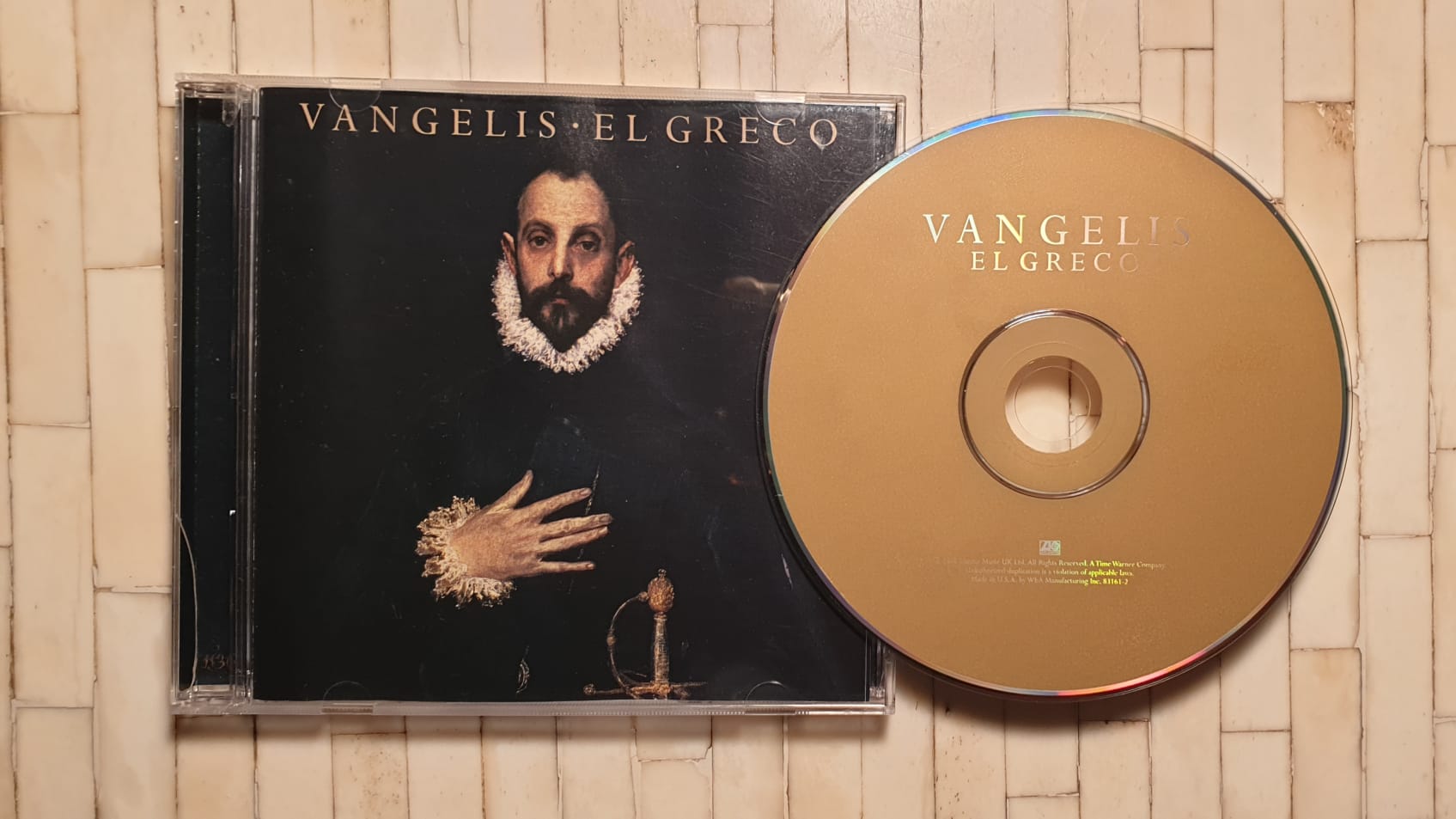
Vangelis – El Greco, and get ready to travel in time and space!

Yes, I enjoy listening to music beyond classical. I have written here about Gospel music and jazz, even pop. Every summer, I create a playlist of pop hits for my nephew and nieces, and I used to record a Jazz playlist for my dad every Christmas.

Occasionally, rarely, I will also listen to contemporary composers like Arvo Pärt. Thrifting the other day —one of my hobbies in this desolate suburbia— I found this CD by Vangelis. I had to give it a listen. While there are many electronic music composers, a few of them had their heyday in the 80s, like Jean Michelle Jarre, Kitaro, or Jean Luc Ponty, Vangelis is probably considered the most serious, possibly because he wrote the music for great films like Blade Runner, and of course, his most famous piece, the theme for Chariots of Fire.

In this record, Vangelis explores his fellow countryman, Domenikos Theotokopoulos, El Greco. Vangelis takes you back to Toledo during the transition from the Renaissance to the Baroque. With heavy, byzantine sounds, bells, and apparently simple layering, Vangelis manages to transport the listener to another city and another era, amazing!

The beauty of this album lies precisely in the journey, the long notes, the reminiscence of old instruments and melodies. When paired with the paintings of El Greco or the ancient narrow streets of Toledo, you become transfixed. You might be in bleak South Florida, but your soul and your senses are in 16th-century Toledo.

Stuff I struggle with: Posthumanism (and Transhumanism)

We recently explored AI for our Film Club theme, watching Fritz Lang’s seminal Metropolis (1927), Ridley Scott’s already classic Blade Runner, the more modern Her (2013) with the great Joaquin Phoenix, Scarlett Johansson’s voice, and finally Ex Machina (2014).

The main discussion, besides the fact that the common thread was that everybody wants to have sex with the robot, was the whole Posthumanism debate. This is something I have been pondering for a few years, specifically since I met Professor Francesca Ferrando, a leading voice in the field of Posthumanism, at a conference in 2024.

My main concern is the paradox, or rather, the oxymoron, of Humanism in a Posthuman world. I discussed this in relation to AI and Caravaggio here. This brings me full circle back to our original observation in Film Club that all our films boil down to Humanism.

I am obviously oversimplifying here, but the basic premise of Posthumanism is that humans coexist with non-humans to the point where humans are no longer the driving force on the planet, as it is overtaken by technology and ecology. The tricky bit is how do you define co-exist, and how to define non-human. Maybe, as a Humanist, I struggle with the labeling. Posthumanism just seems too apocalyptic, too alarmist. I know I should worry, but this made me think about the concept of Humanism, which was only made up, as a label, in the 19th century. Greek writers and philosophers did not realize they were humanists; they were just doing their thing. Even Renaissance humanists like Erasmus, Luis Vives, or Dante did not consider themselves humanists. Of course, the word Humanitas and the study of it existed, but the folks who studied it did not call themselves Humanists.

In conclusion, and I realize I am only —at best— scratching the surface of this argument, there is only Humanism, everything else is academic labels (which I wish I had invented: Posthuman, or Transhuman, and then written a book about).

On sauna and sauna etiquette

I discovered the sauna in college in the early 80s. My dear friend Theo and I would go to the gym a few times a week, enjoy a sauna and the steam room, where we would chit chat with professors, hoping (in vain) to improve our grades, then we would go to the pool for a little swim.

A library book on proper sauna protocols and etiquette soon had me really enjoying my sauna time. Since then, I have been a fan and enjoyed them wherever I find one.

One of the few benefits of the building where I live in Florida is… the sauna and the steam room. I no longer have the time to go a few times a week like I did in university, but I try to go at least once a week.

The sauna is a relaxing time of silence, almost a meditation. Unfortunately, in the United States, there is little sauna culture, so I occasionally have to deal with folks who have no idea what they are doing. Here are a few pointers, which are mostly based on respect:

Dry sauna, as the name implies, is dry. Do not waltz in soaking from the swimming pool; your sauna will be counterproductive. The same applies to those who continue to pour water onto the hot stones. The water is to be used at the end of your sauna for a humidity shock called löyly (a Finnish word since that is where sauna originates).

Sauna in Europe is generally naked. In the US, we must adjust to the Puritan DNA and wear a towel or a bathing suit, but not your gym clothes, and certainly not your sneakers. Also, the sauna is a place to sit and sweat, not to do your post-workout stretching!

Keep the door closed, please. No need to heat the locker room!

As I mentioned before, the sauna is somewhat of a sacred space for relaxation. Keep conversations quiet, and please, no phones or tablets, we have enough of them already —I have seen this and find it most disrespectful.

In conclusion, a sauna is a wonderful experience: rejuvenating and relaxing. Keeping other users in mind will improve everybody’s time there. You are welcome.

The greatest tiny gym in the world.

If you are a reader of this blog, you know that I like to think that I am a connoisseur of gyms, as you could read here and here. You also know that I strive to stay fit, mentally, spiritually, and physically. This means that if I am going to have an extended stay somewhere where I am going to have some routine, I need a gym.

This is what happens when I visit my family in Madrid. For the last few years, when I come, I get myself a monthly membership at Synergym.

This is a great gym; it has a great vibe, a great staff, chill but helpful when needed, the definition of professional, led by their great manager, Paula. It has all the equipment and classes you need, all the requirements of a modern-day gym. Everything is managed by the Synergym App, including entry to the gym. It also helps that it is very reasonably priced.

There is one main issue with this gym: it is tiny. Yes, it has all the equipment: 5 treadmills, 1 staircase, a bicycle, and a handful of ellipticals for cardio, all the main weight machines, a squat rack, a cable machine, and of course, dumbbells, oh, and all the plates you could ever dream of —there are plates everywhere! The problem is that they are all in a tiny room. There is another room for fitness classes, changing rooms, showers, etc.

The trick is that if you go when there are many people, you do not have the luxury of waltzing from one station or machine to the other —unless you are very patient— so you must know your exercises well so you can get a good workout at any given station.

So if you are looking for a chill, neighborhood gym in Chamberí, you have a solid understanding of your workouts, and you are not too fussy, Synergym is for you! You are welcome.

The Sleeper. El Caravaggio Perdido

Although I have a lot of blog posts on film, I have remarkably few on documentaries (other than on Minimalism, and on the Camino).

Ok, this is the story: My friend Jaime’s daughter is good friends with a family that for years had Caravaggio hanging in their dining room, which they thought was a bad imitation of a Murillo, and would have been happy to get 1,500 euros at auction.

This is a documentary on the story of that painting, it is very well done. I recently saw it on the plane ride back to the US and I really enjoyed it!

While narrating the story of this painting, the documentary delves into the world of art dealers, art historians, auction houses, and art restorers. It offers a fascinating glimpse into this normally secretive world. And it all revolves around Caravaggio, who is not only an amazing painter, but who had a fascinating life; there are not that many world-class painters who killed someone!

Apparently, it is available on Prime Video, so if you have the possibility of seeing it, and you like art, definitely see it. You are welcome.

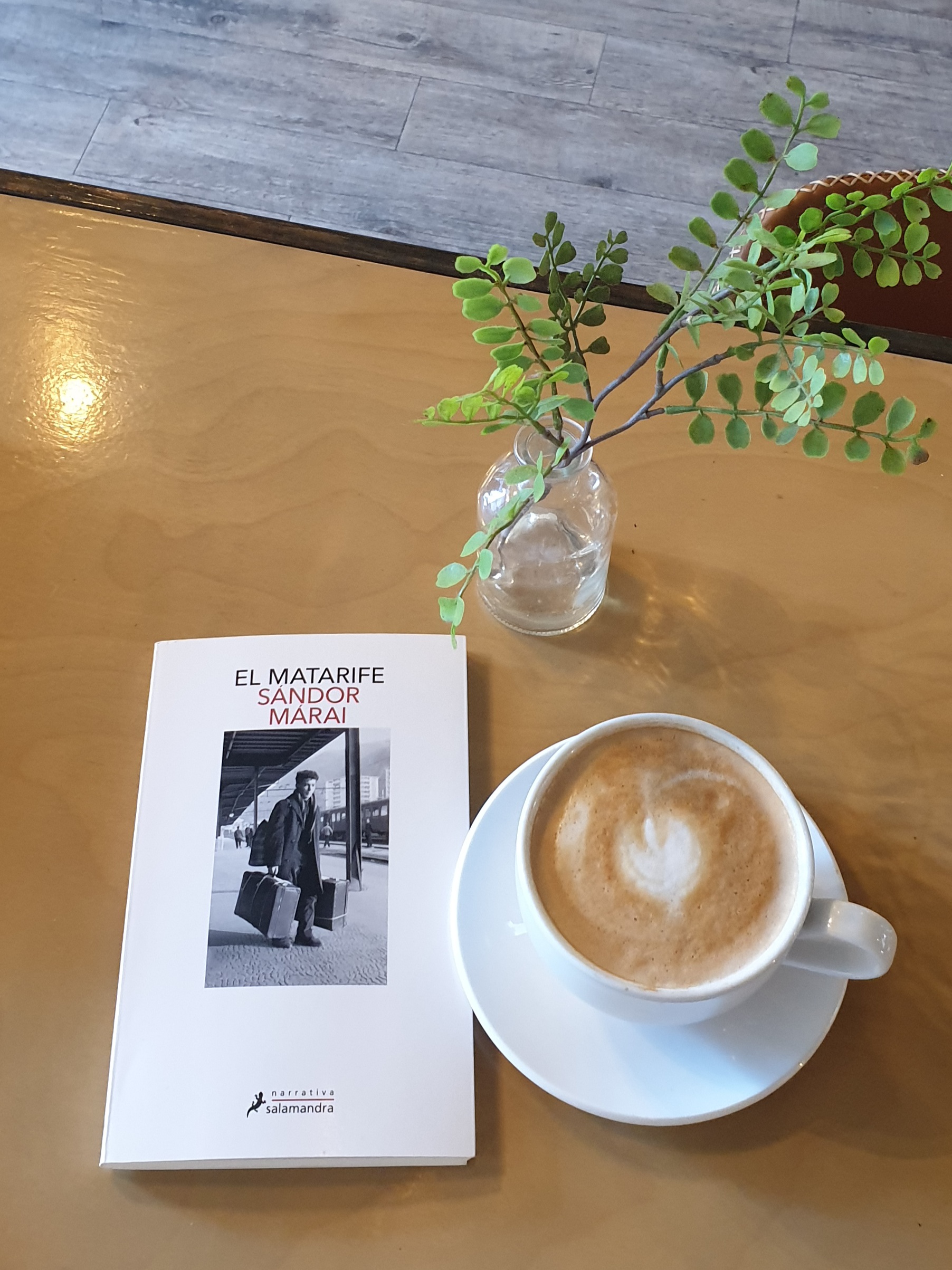
My favorite authors series, Part II: Gabriel García Márquez

Ooops. I just realized that in 14 years of writing this blog, I have never dedicated a post to Gabriel García Márquez, shame on me.

You see, García Márquez is one of the reasons I love literature, one of the reasons I made books my livelihood. My dear college friend Silvia recommended One Hundred Years of Solitude, and when I read it, my mind was blown to smithereens! I was hooked and proceeded to read most of Marquez’s novels.

La hojarasca (1955)

El coronel no tiene quien le escriba (1961)

Cien años de soledad (1967)

El otoño del patriarca (1975)

Crónica de una muerte anunciada (1981)

El amor en los tiempos del cólera (1985)

El general en su laberinto (1989)

Del amor y otros demonios (1994)

Memoria de mis putas tristes (2004)

I also read many of his short stories and one of his books of short stories:

Doce cuentos peregrinos (1992)

To top it all off, I even read one of his more famous interviews.

El olor de la guayaba (1982), con Plinio Apuleyo Mendoza.

When you speak of García Márquez, everybody mentions Magical Realism. Which he did not invent (it started in Germany). Oh, just so we are clear on what Magical Realism is, it is when extraordinary, often fantastical things occur, and the people who witness or live the event don’t even bat an eyelash; it is a common, everyday thing for them. One Hundred Years of Solitude has a lot of Magical Realism; it is the flagship for Magical Realism, but much of his other work has much less, or even no Magical Realism. By the way, many other authors incorporate this genre, including Isabel Allende in Casa de los Espíritus.

“Yo conservaba un recuerdo muy confuso

de la fiesta antes de que hubiera decidido

rescatarla a pedazos de la memoria ajena”

Gabriel García Márquez, Crónica de una muerte anunciada

But that is not the reason I love GM —although I do enjoy those moments! I love how extraordinarily well he writes, but at the same time, how normal it appears; there is no showing off, no showboating, no “look at that sentence” that many authors with far less talent leverage.

I also love how García Márquez brings you into the setting and the story, how easy it feels to be an observer of his world. Granted, all his work comes from true stories, which makes it even more fascinating to feel a part of them.

“Era una síntesis de los últimos acontecimientos nacionales

impresa en mimeógrafo para la circulación clandestina.”

Gabriel García Márquez, El Coronel no tiene quien le escriba

A favorite? I don´t really have a favorite. Amor en los tiempos del cólera is my favorite love story and one of my favorite books. Crónica de una Muerte anunciada is the book I have read the most, since I teach it and will often read it before the course starts and again with the students, which is what has prompted this blog post 😊

So if you have not yet read any of Gabriel García Marquez’s work, and you feel ambitious, go for One Hundred Years of Solitude. If you prefer to dip your toes in the water and just get a feel, read a short story, or better yet, one of the shorter books like Crónica de una muerte anunciada or Memoria de mis putas tristes.
“Las vidas no se acaban sólo con la muerte”, dijo el general.

“Hay otros modos, inclusive algunos más dignos.”

Gabriel García Márquez, El general en su laberinto

García Márquez died in 2015. I will always remember it because it was the weekend I had to write my doctoral exams. And although I was writing about 18th C Spanish Satire, Colonial Satire, and Medieval Satire, I still put a García Márquez epigram to each of my essays in honor. Here they are (of course, without the whole essay, these epigrams lose their context…)

So, if you have not yet read any Gabo, you have my full recommendation. You are welcome.

A morning in Toledo.

Since we had gone to the Puy de Fou night show the evening before, and the theme park does not open until noon, Celia and I recently found ourselves with time to kill in Toledo on a Saturday morning.

Our first stop was the Santa Fe Roberto Polo collection, which hosts the Centro de Arte Moderno y Contemporáneo de Castilla-La Mancha. This is a huge ancient church complex featuring Roman ruins, gorgeous, intricate ceiling paneling, and a beautifully delicate chapel, which is mixed with ridiculous modern art pieces that only add to the beauty of the old pieces and underscore the stupidity of the modern ones.

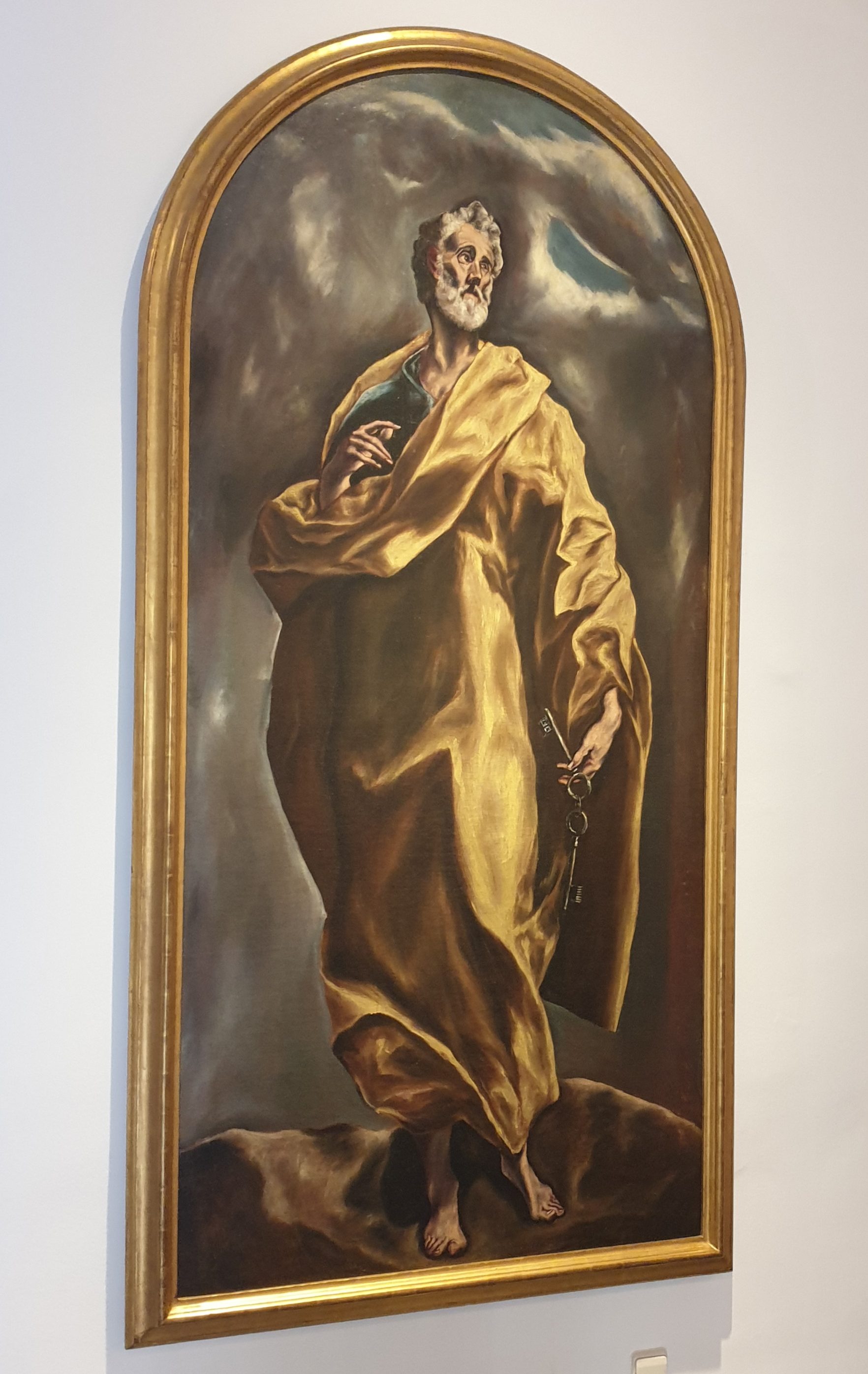
From there, we turned the corner to the Santa Cruz Museum, an astonishing Renaissance structure that once housed the late medieval Children’s Hospital. To our surprise, there was a phenomenal exhibit of fairly random pieces, including a feared pre-Roman falcata sword. But the real star of that exhibit was an El Greco painting of St. Peter, where I had a bit of a Stendhal moment —amazing!

From there, we had time to walk across Zocodover Square, almost down to the Cathedral, before turning up on Trinidad Street to the Capilla de la Inmaculada Concepción for a moment of quiet contemplation and meditation (did you know that you should be meditating?). This chapel has perpetual adoration, which means that it is open 24/7 for people to pray. It is a quiet oasis in the tourist frenzy that is Toledo.

After that, we had to get back to the car to head out to Puy de Fou for a hot, blistering day of fun. You can read about that here.

The amount of mind-blowing, beautiful, culturally enriching things you can do in Toledo is almost limitless. That Saturday, that is what we came up with.