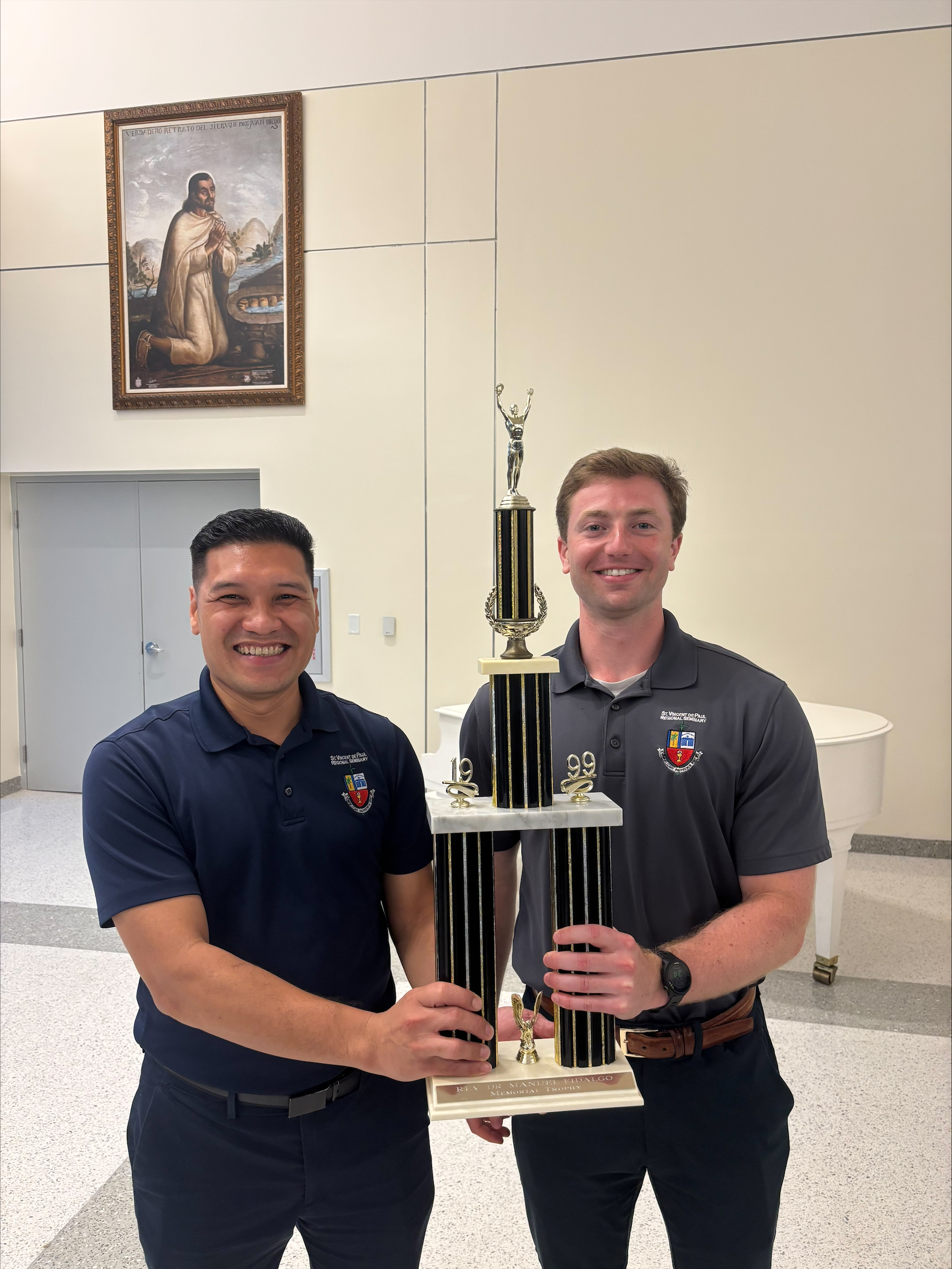
The beauty and challenges of coaching at a small school

After about 20 years of coaching soccer, I now look forward to getting a team to click as quickly as possible. I am convinced that, beyond skills (there must be a baseline level), team play wins more games. This fall, we had only three weeks before our first match, and we won.

Our university is a bit different from most. Halfway through their studies, seminarians leave for a year to work at a parish, similar to what Northeastern University in Boston does with its Co-ops. This means we lose a group of players each year and have to replace them with incoming players; this is a challenge.

At the start of the season, the first thing we do in practice is make sure everybody knows everybody else’s name until we all get them right! Then we focus on the importance of team play, passing, defending, and attacking as a team.

Another challenge is that we have very limited practice time, and every player wants to scrimmage and have fun. So half of practice is actually playing, which I am not against.

This leaves me very little time to work with the men on strategy, tactics, and skills, team philosophy, community and environment, and, oh, fitness, which I have to leave to the boys. But if you know me, you know I am a sucker for a good dare, so every season we dive right into practice!

Despite some tough losses, we have a winning record under my coaching, so I don’t complain about the challenges; instead, I buckle down and make it work. At the end of the day, soccer is a game that should be fun, and I love it!

With only three weeks of practice, we drove down to Miami and won 0-1; I’ll take it.

What are some of the challenges and rewards you face as a coach? Let me know in the comments.

The human aspect of coaching

Coaching soccer is one of my favorite things to do after school. You go out and work with the students outside the classroom. I love it so much, I have been coaching for about 20 years on and off. Although I have also coached tennis and even a season of fencing! Soccer, with its team dynamics, is the most difficult but also the most rewarding to coach.

The technical aspects are fairly easy; players have a “natural position” that they subconsciously tend to. Seeing players find this position is very fulfilling. Game plans and strategies are all easy enough. As usual, the human aspect is the most difficult, dealing with upset players who are not on the starting lineup, players who you pull off the field in a substitution, etc.

On game day, the players wear their jerseys to build up their confidence and feel proud of being on the team. Then we have lunch together to talk soccer, joke, and enjoy a meal together. I also make sure they are on the field to warm up at least 45 minutes before the game, so we are not rushing through the pre-game rituals, warm-ups, photos, chats, etc.

At the beginning of the season, we spend a lot of time building the team, making sure everybody knows everybody, making sure they are bonding through games, scrimmaging, and activities. I am convinced that the time spent doing these bonding activities pays off handsomely later in the season.

The most challenging bit is motivating a team after a loss. I find that talking individually to each of the players, encouraging them, supporting them, and talking through the game is an effective way of being there for them, of letting them vent and process the loss. Yes, it is time-consuming, but the players really appreciate your involvement and commitment. Remember, it is up to us to model behavior, to be fair and honest, to be frank, to explain things honestly but diplomatically. This was the case recently when we lost 0-1 to our archrival in Miami.