Reading Unamuno’s San Manuel Bueno, mártir in a seminary (no spoilers)

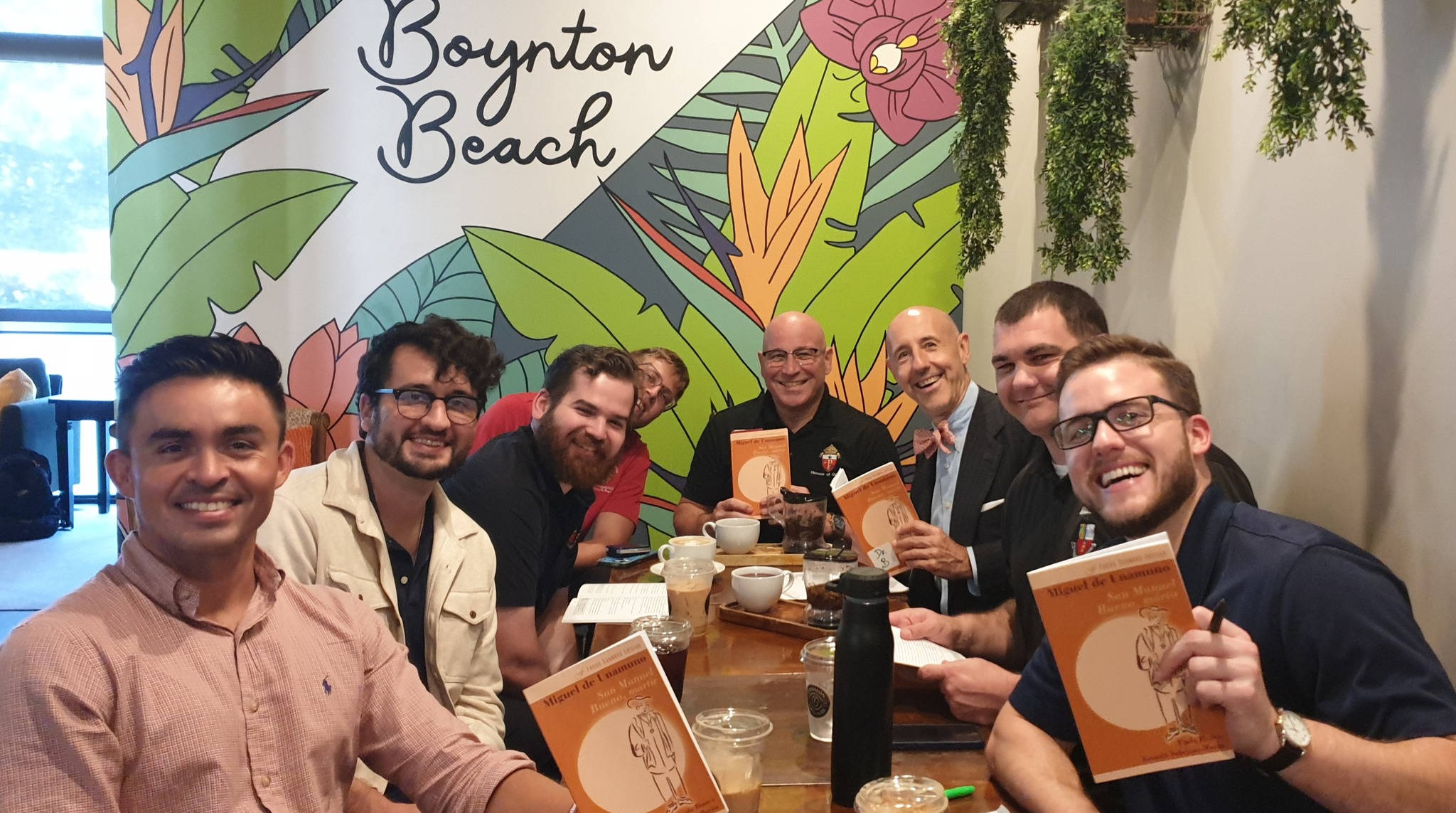
Discussing San Manuel in our favorite coffee shop

Miguel de Unamuno was a professor of Greek and Latin in Salamanca and eventually became the rector. More importantly, he was a leading existentialist philosopher, though he did not achieve the prominence of other early 20th-century philosophers, especially the German philosophers.

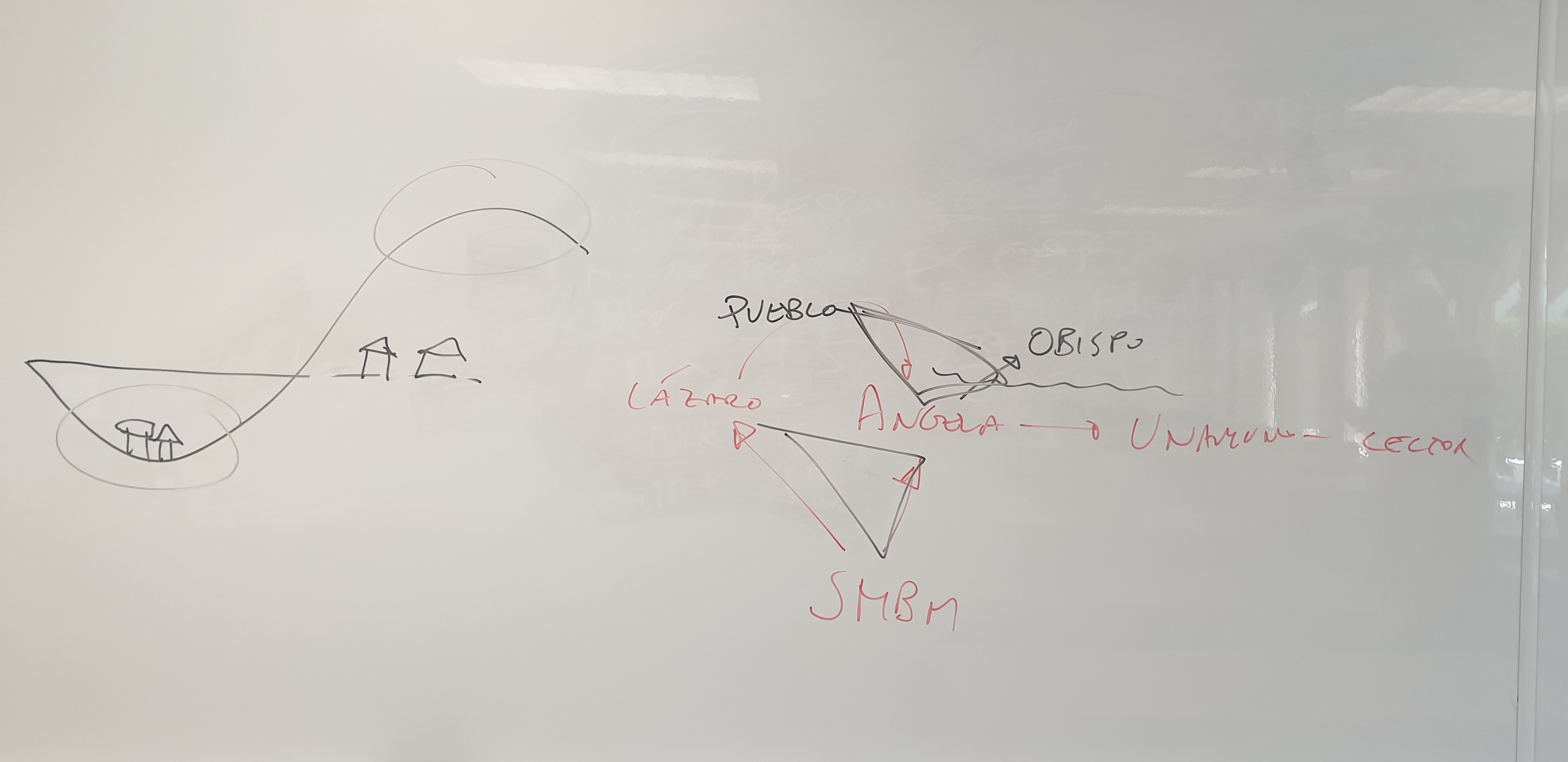
Unamuno’s San Manuel Bueno, Mártir is a book I have taught many times. It is the story of a priest in a fictional village in northwestern Spain. As you can imagine by now, the story raises deep existential and theological questions, which my students have engaged with in ways I did not expect. Without giving away any spoilers (I hope), the leitmotif of the novel is “Hay que vivir,” which translates as “one must live,” or more bluntly, “get on with it” or “carry on.”

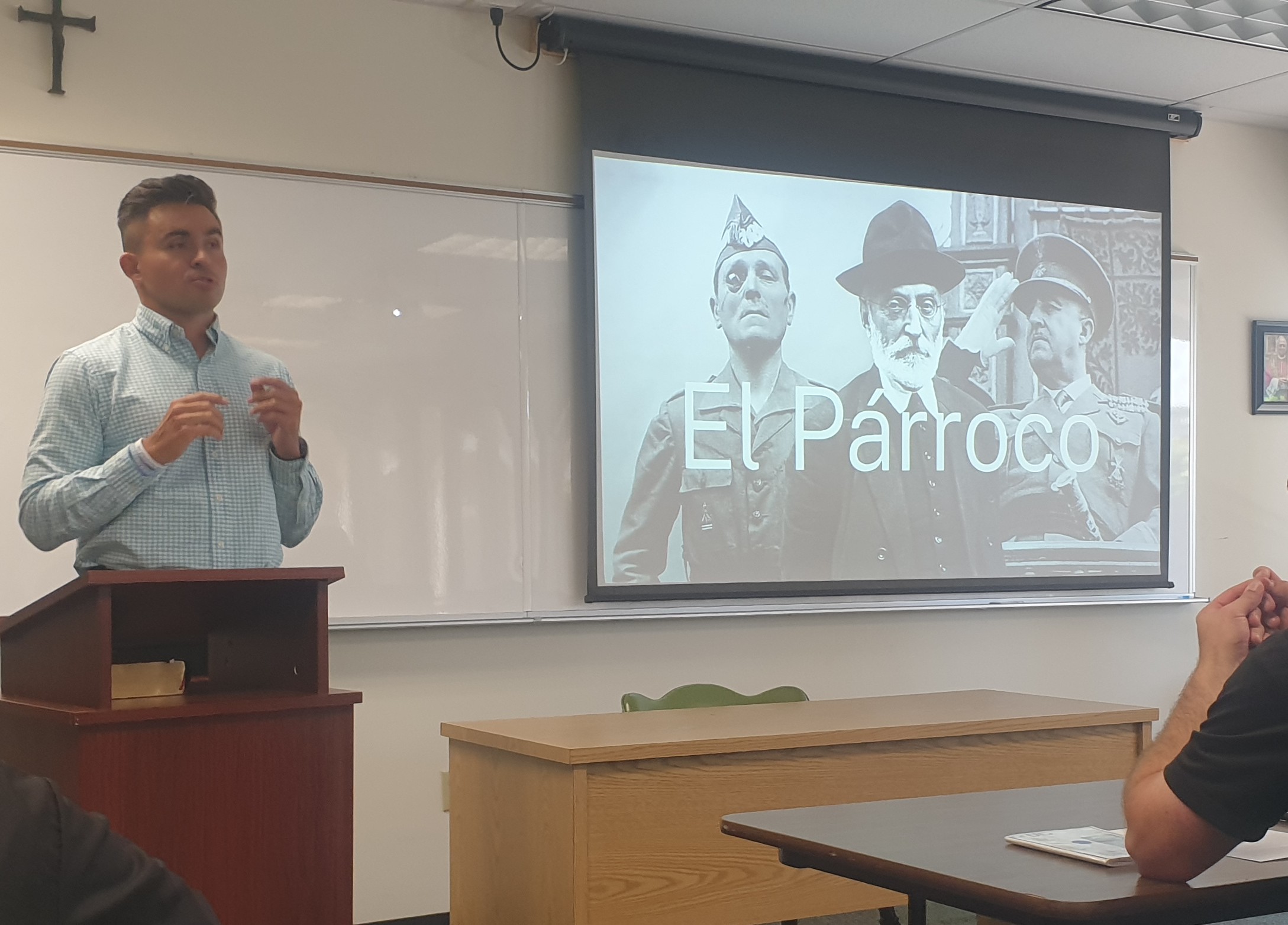
At St. Vincent’s, this has been my first time teaching it, and it has been the most rewarding work I have done in my six years here. You see, I teach the future Catholic priests of the US, and at this level, they all have a bachelor’s or master’s in philosophy, so these discussions were lively, and the students wrestled with the text in ways that—obviously—high school students could not. To say that these men are passionate about their future jobs is an understatement. We got so into the reading that we went to discuss the book at our favorite coffee shop, Common Grounds!

I could go on and on, but I am afraid of spoilers…

There you have it. If you are teaching upper-level or Spanish literature at a Catholic seminary, go ahead and teach San Manuel Bueno, mártir. You are welcome.
Don Quixote, Monsignor Quixote, Graham Greene, and madness vs. Existentialism

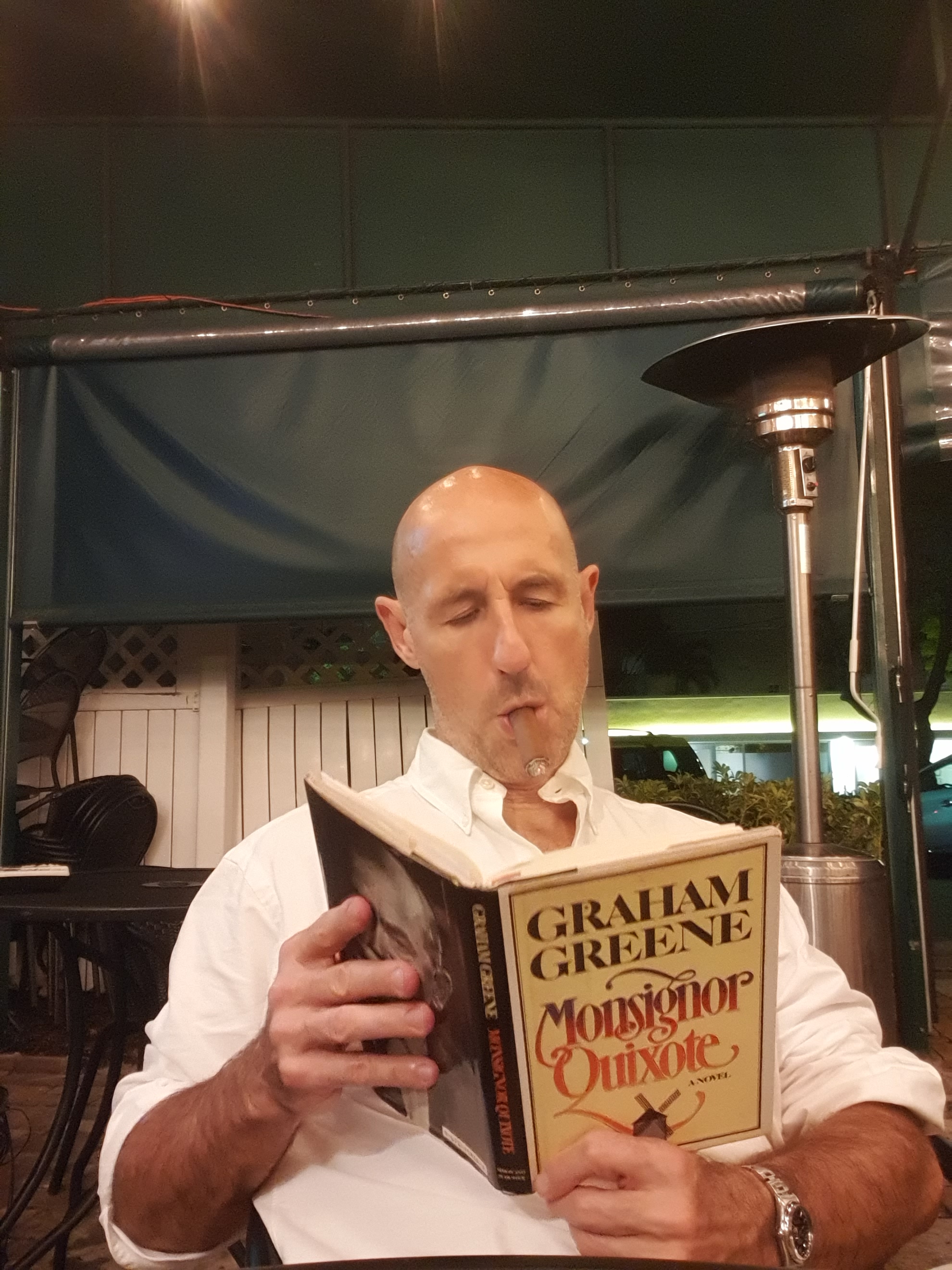
A good book and a good cigar

There are books that I re-read with certain regularity: The Old Man and the Sea, Voltaire’s Candide, the Rubaiyat of Omar Khayyam (you can read about that one here), Don Quixote only three times.

But I recently came across a book I had read as a teenager in the 80s and decided to revisit: Graham Greene’s Monsignor Quixote.

As you can see from the title -I will try not to spoil anything- in a fictional meta-reality, Monsignor Quixote deals with the adventures of a descendant of Don Quixote. There is a Rocinante and a Sancho. Greene converted to Catholicism at 22 in 1926 (you can read his bio here) and this novel deals precisely with -no spoilers- with religion, theology, and the Church in early ‘80s, post Franco Spanish society (It was published in 1982). The book is an easy, quick read, and, since I am always on the lookout for the far reaching effects of Don Quixote, I re-borrowed Monsignor Quixote (thanks Sue) and thoroughly enjoyed it.

My more faithful readers know that one of my research interests is the influence of Don Quixote on Existentialist philosophy. So my antennae are always poised to pick up on this theme. Monsignor Quixote does not disappoint! The references to the links between Don Quixote and Existentialism might have been written unknowingly by Greene, which I doubt, but they are there either way:

There is a heartfelt reference to Miguel de Unamuno who was a big fan of Don Quixote and a proto-Existentialist (read San Manuel Bueno, Mártir). This is an indication that Greene understands Cervantes.

There are explicit mentions of Monsignor Quixote acknowledging his existence, which is a big step in understanding who one is.

The novel deals with our doubts and beliefs, the Existential anguish that drove Kierkegaard (but not in those words), the father of Existentialism -which would make Cervantes the great-grandfather of Existentialism (read about that here).

Finally, as any alert reader would expect of a novel with the name Quixote in it, it talks of madness. Of course, folks -specially those who have not read the novel- often confuse Don Quixote’s drive and purpose with madness (which drives me mad). I will not elaborate but Don Quixote knows who he is, it is just that nobody understands what he is doing, so they call him mad. This leads me to my first and hopefully last political statement ever on this blog: Former President Trump was often called Quixotic, for whatever reason, and the people who labeled Trump like that have obviously never read, and/or never understood Cervantes’ novel!! A similar point is seen in the film Easy Rider when Jack Nicholson as George Hanson says:

Oh, yeah, they’re gonna talk to you, and talk to you, and talk to you about individual freedom. But they see a free individual, it’s gonna scare ’em.

I guess I could have written a more academic article about this book, and maybe I will, but for the time being, enjoy.

A good book and a good coffee