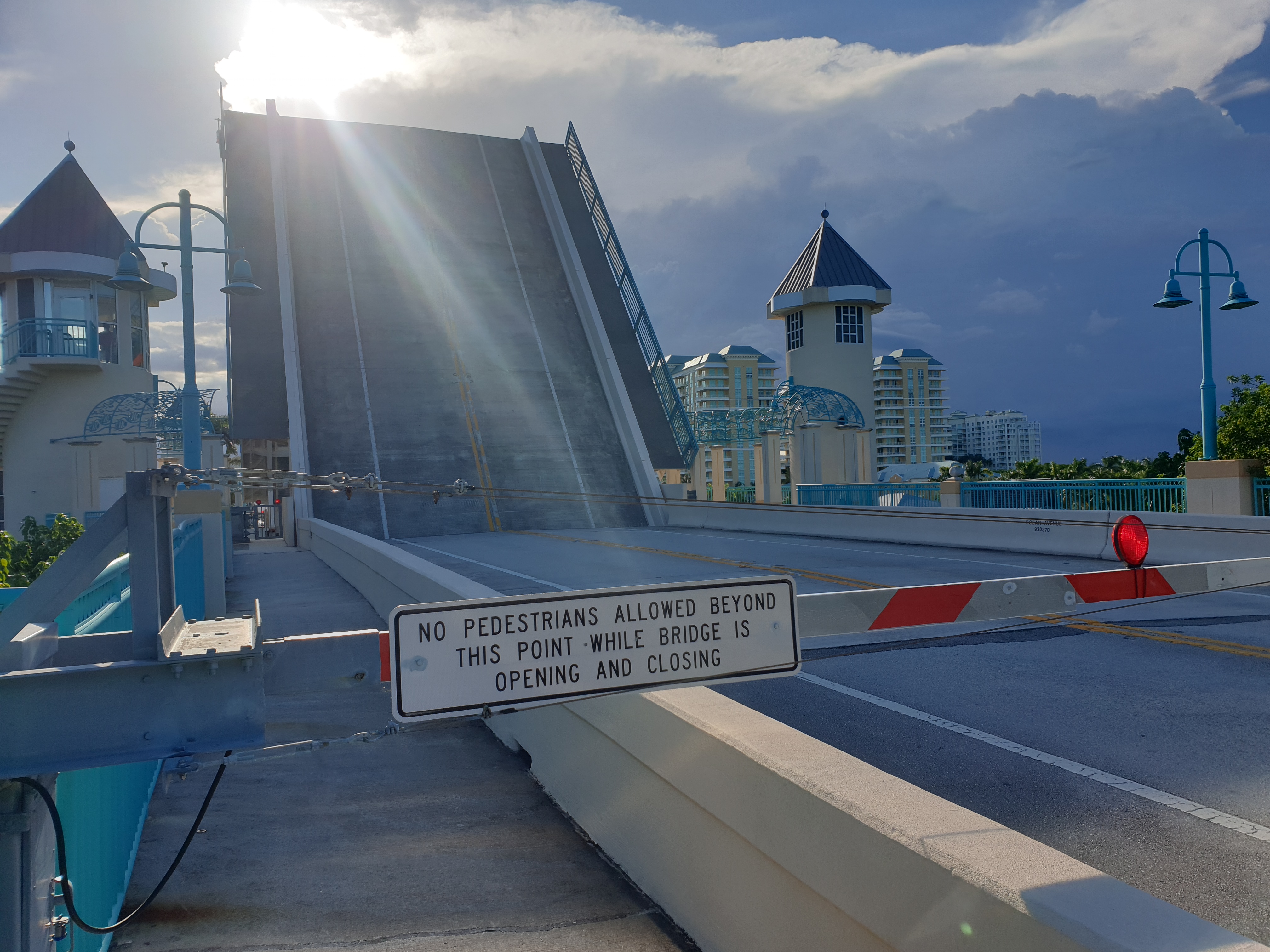
10 years (almost), 200 posts, 100 likes

This was the start of a beautiful friendship (with Rocinante, not with the salesguy)

Time flies when you are having fun, as the saying goes. This blog, that started as a travel log for my motorcycle trip visiting grad schools for my PhD is hitting some important milestones:

First, we have posted over 200 posts, so that is something. That coincides with our upcoming 10th anniversary (it will be on July 31, but still, I am ahead of my time on everything except the rent), which translates to 20 posts a year, so about one every couple of weeks on average. Sorry I am a bit of a nerd.

100 likes means that every other one of my posts gets a like. Hey, I will take it!

My tops posts are the one on Don Quixote and his influence on Existentialist philosophy, and my dad’s eulogy.

Thank you to my readers for making this possible.

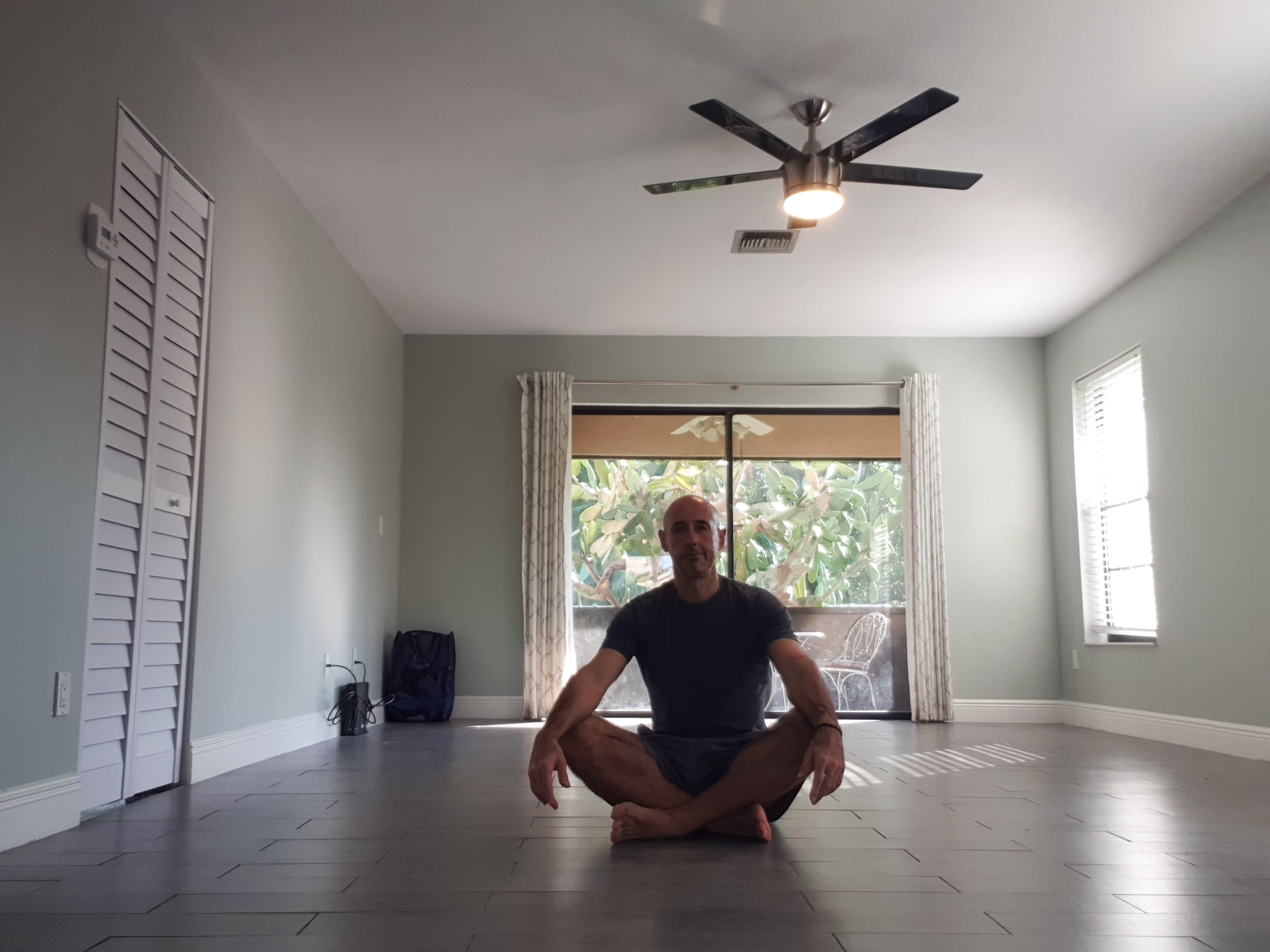
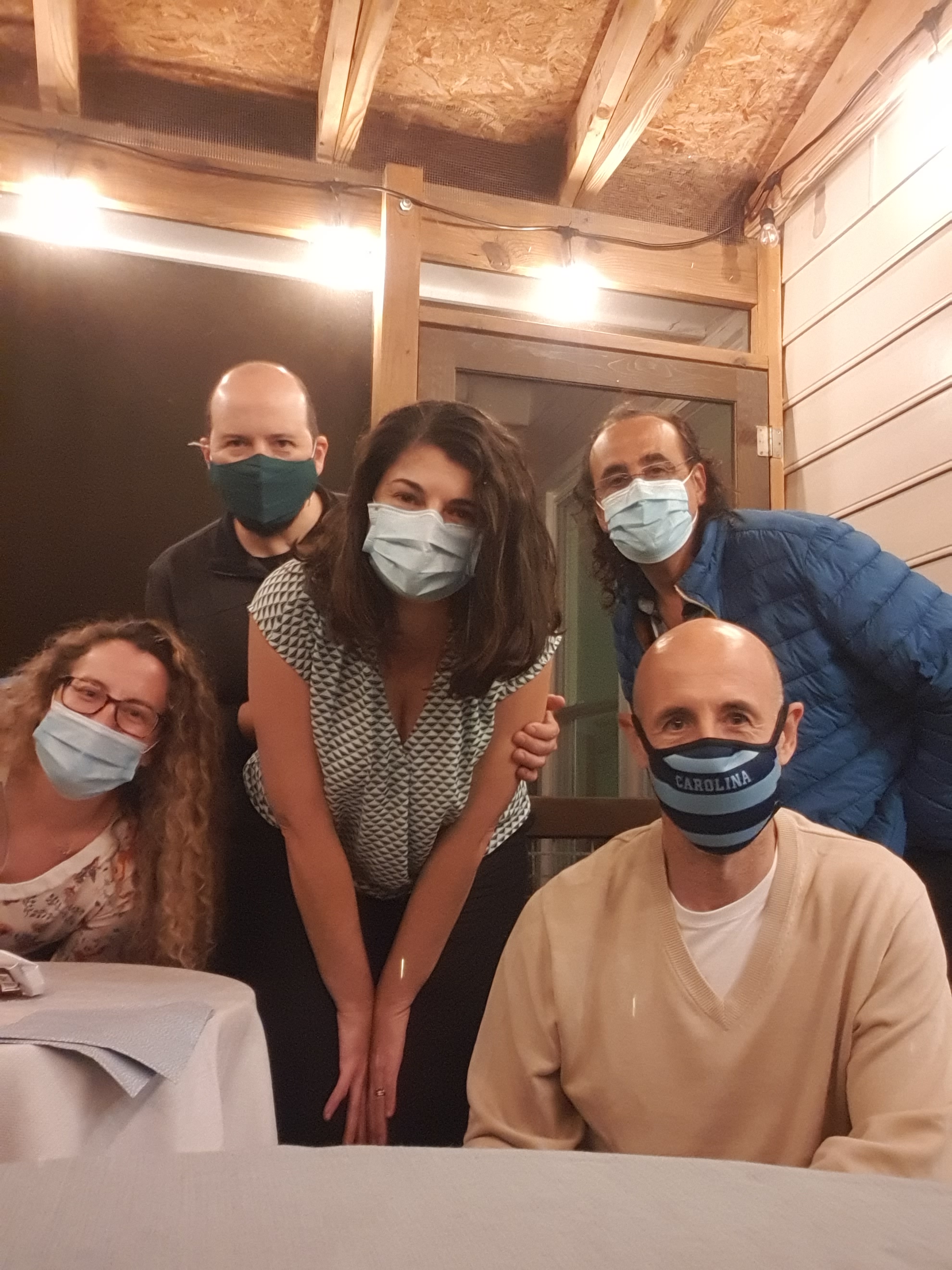
Enjoy my first and most recent photos posted on AntonioyRocinante

On minimalism

For the last few years, I have been trying to consciously deepen my spirituality. I have focused on my body – mind – soul connection, if you follow this blog (thank you), you will have already read about my retreats and my constant search for deeper meaning in life.

Well, one of the aspects of this process has to do with stuff, yes stuff – we have too much. For years, I have thought about my stuff, my belongings, clothes, furniture, accessories, gadgets, etc., and my attachment to them. In 2018 I got rid of many things when I moved back to Spain from the US, bringing with me only two suitcases and having only a couple of boxes –and two bicycles. This was not as traumatic as I thought it would be, and quite frankly I do not remember most of what I left behind. Now back in the US I am very conscious of how to go about starting, basically from scratch, since this time I only brought with me the two suitcases, no boxes, not even the bicycles!

Minder is meer. Mies van der Rohe

After four months I still do not have a sofa. Yes, I did buy a bed at Ikea, I am not sleeping on the floor just yet…. One of the many criteria about investing in new things is: Is it sustainable? My dining room table is from the Habitat for Humanity Store which means it is recycled and I helped others in my purchase.

Free of stuff I find it easier to focus, I am reading much more, I have not needed to hire a cleaning lady, I just sweep the floors once a week. Life is much, much easier! If you do some quick research you will find that the happiest people on the planet happen to be the Buddhist monks, further investigation will reveal that they only personally own about 8 things (something like 2 robes, 2 towels, a shaving blade, a bowl, a belt, and needle and thread). Obviously, I own many more things than a Buddhist monk, but a, there is a goal, and b, the important bit is being very conscious about your possessions.

Since in the US it is basically impossible to live without a car (except if you live in one of the few real downtowns) I bought a 2017 VW Golf. Possibly the best value for money in automobiles. As I stubbornly hold on to my vanity and ego, I did make sure it is a manual gearbox, because as everybody knows, if you drive stick you are a better person (or at least a cooler one).

The other day I saw a documentary about minimalism, based on a recent popular book, it reinforced everything I have been considering for the last few years. When I followed up on the documentary, I realized there is a whole movement dedicated to de-cluttering one’s life, simplifying, minimizing, tiny homes, etc. etc. I guess I am not as cutting edge as I thought I was, but at least it is good to know.

I used to have an empty cardboard wine bottle box and I would fill it with stuff that I no longer needed, clothes I no longer wore, books I had read and so on, and when it was full I would take it to the thrift shop and grab another empty box to start all over again!

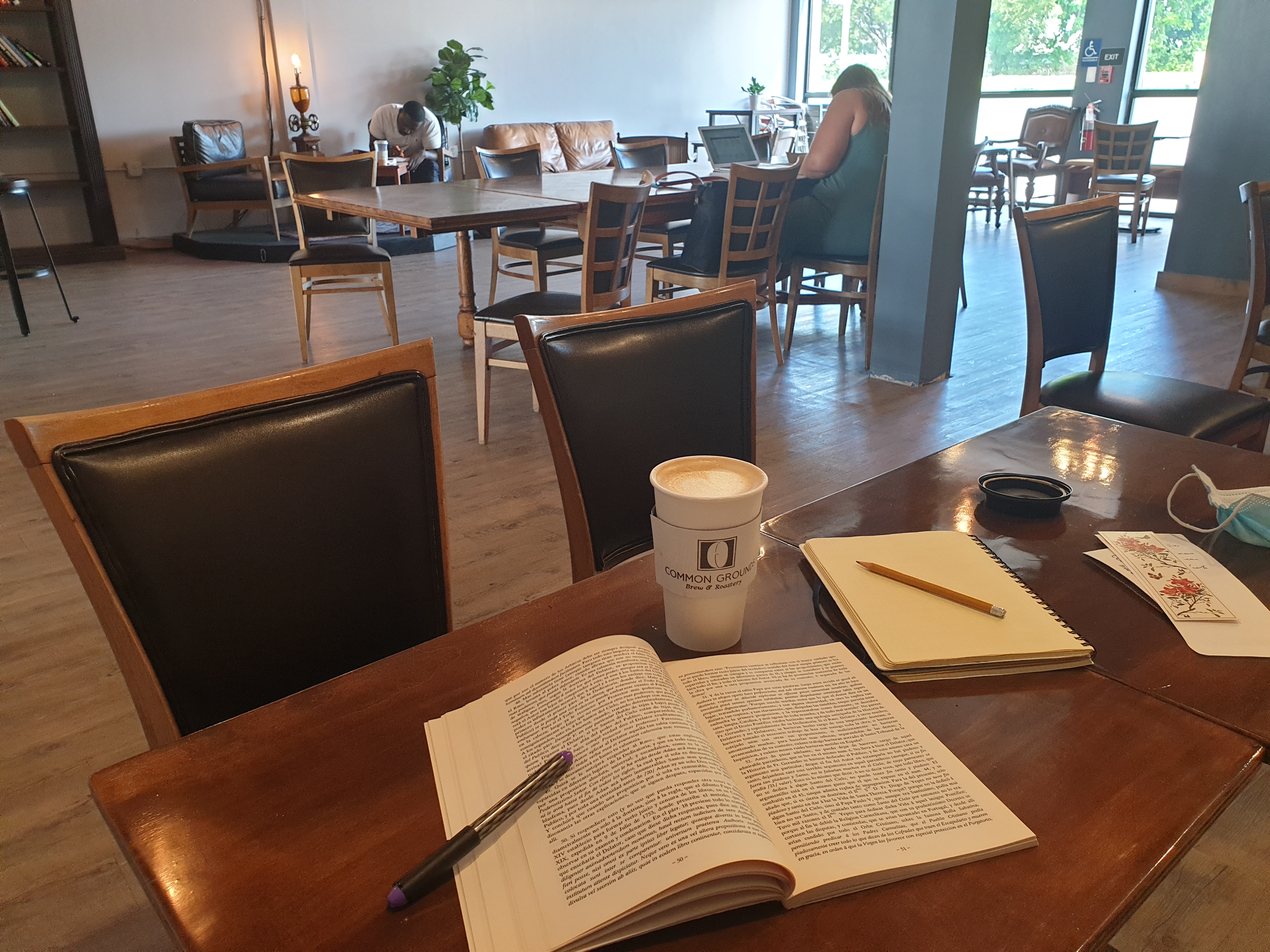
There are many advantages to living with less stuff: you have more time to do things you would not do if you had a lot of things. For me, it is reading, I am reading a lot these days. Living with less means you save a lot of money that would otherwise be spent on buying things, duh. You also have more clarity, literally and figuratively.

In conclusion, I recommend you think about your things, what do you really need? and start a cleansing process, or call it a curating process and you might feel better about it. I think you will appreciate it. Have any thoughts or ideas? Let me know in the comments, thanks!

Lightning visit to Chapel Hill

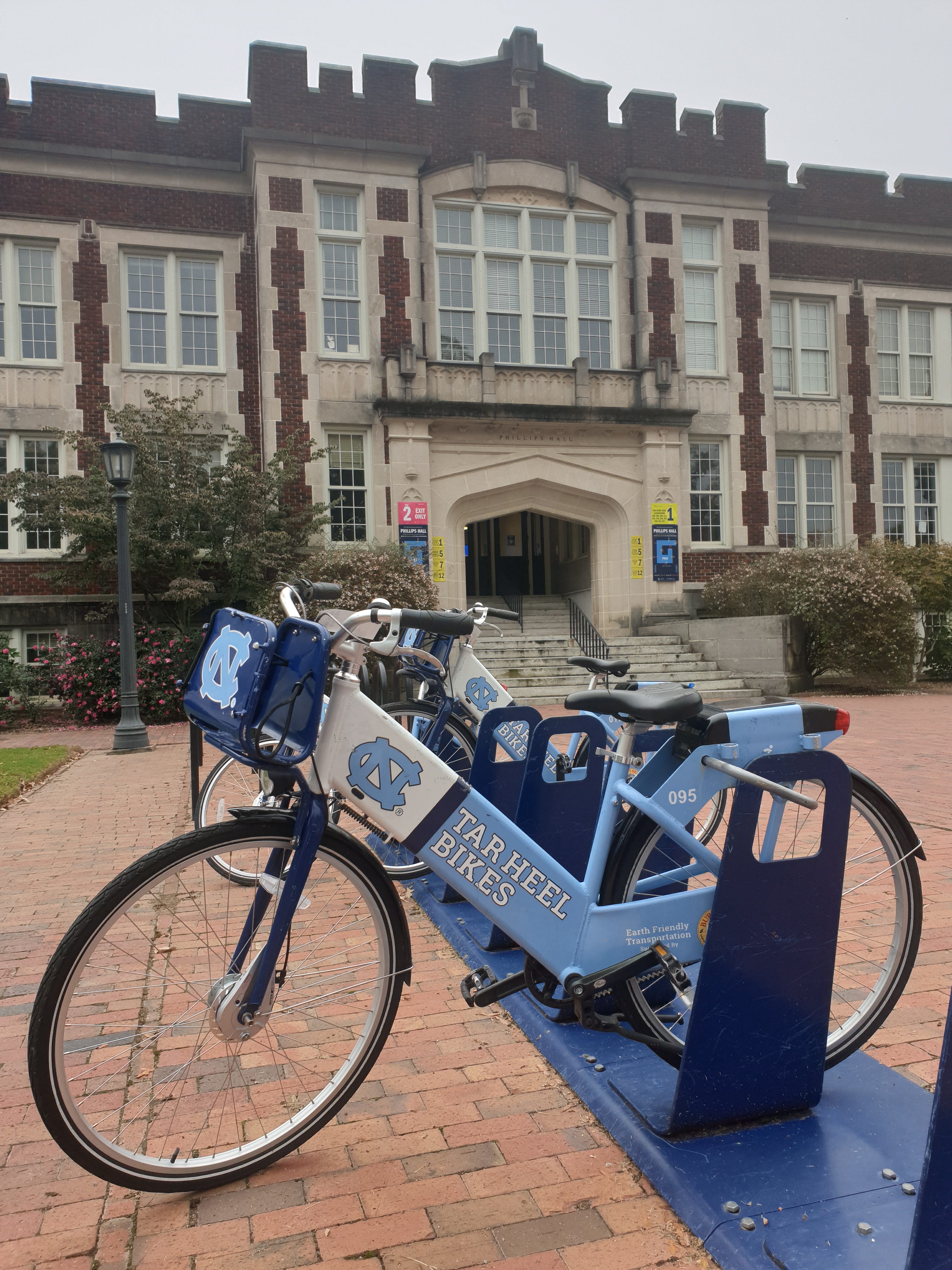
Since graduating in 2016 I had not been to Chapel Hill, and I was dying to go soak it up. So a few weekends ago I jumped in my car and drove off to my beloved Alma mater in North Carolina.

After stopping for the night at a roadside motel in Florence S. Carolina, I arrived in Chapel Hill in time for lunch. I walked across the ghostly campus to see my dear friend Mandey at her restaurant, Imbibe. She did not know I was coming and was very surprised to see me! She fed me a gorgeous pork belly sandwich!! I was happy to see they had successfully transitioned to a delivery and pick up restaurant! Unfortunately, the upstairs bar, Zogs, my second home in Chapel Hill was closed due to Covid. From there I walked down Franklin Street, across town, enjoying the energy and the community, something that I dearly miss in nameless, faceless Florida. I am glad to report that The Yogurt Pump is still serving (from a window) the best frozen yogurt in the world. My old friend Jedd has opened a cigar shop (World Headquarters Cigars) and I enjoyed catching up with him for a while. My next stop was the Student Store!! Where I overspent on UNC gear, although truth be said, it was mostly presents for family. I took the long way back, stopping to meditate at the Arboretum.

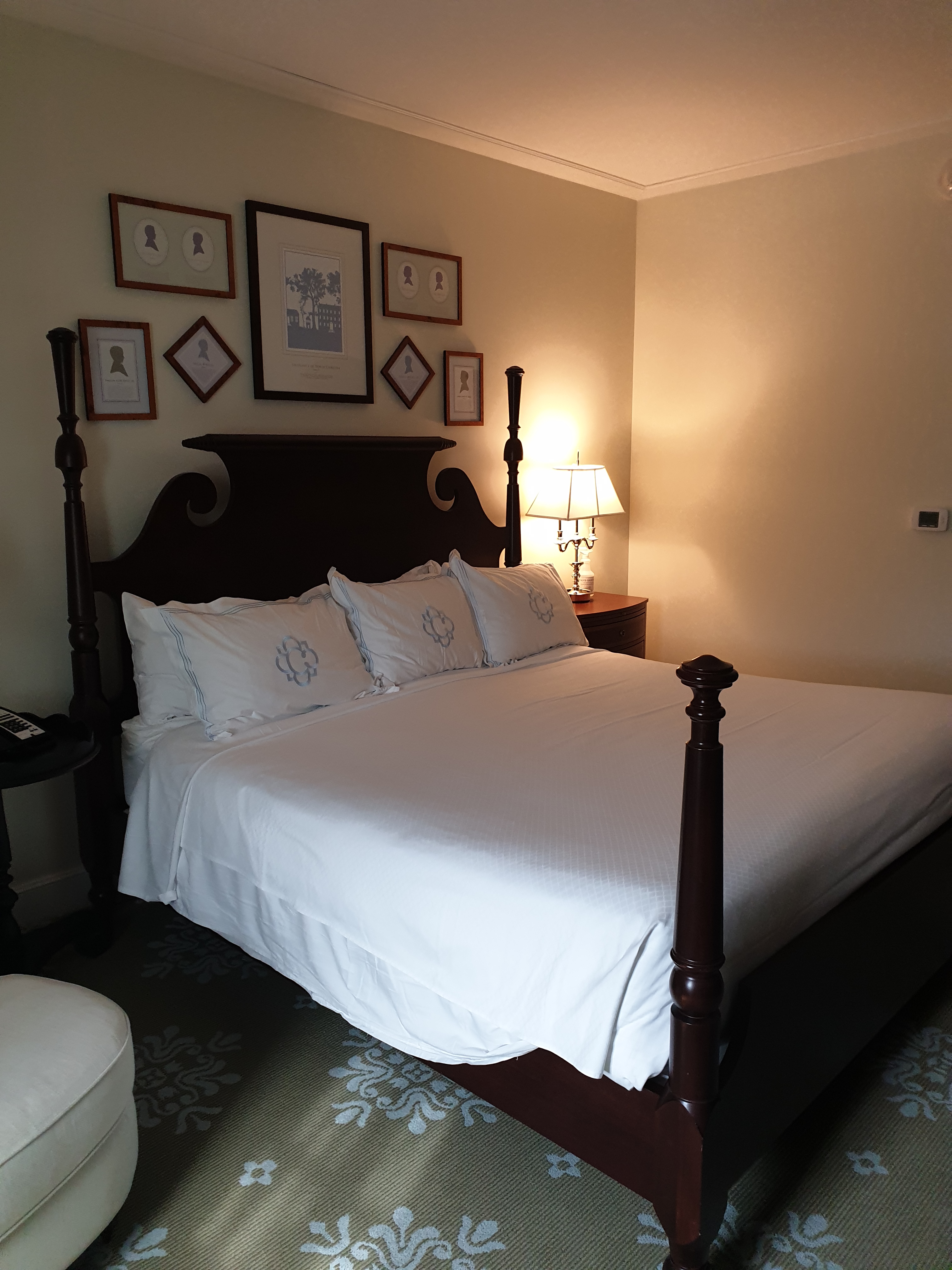
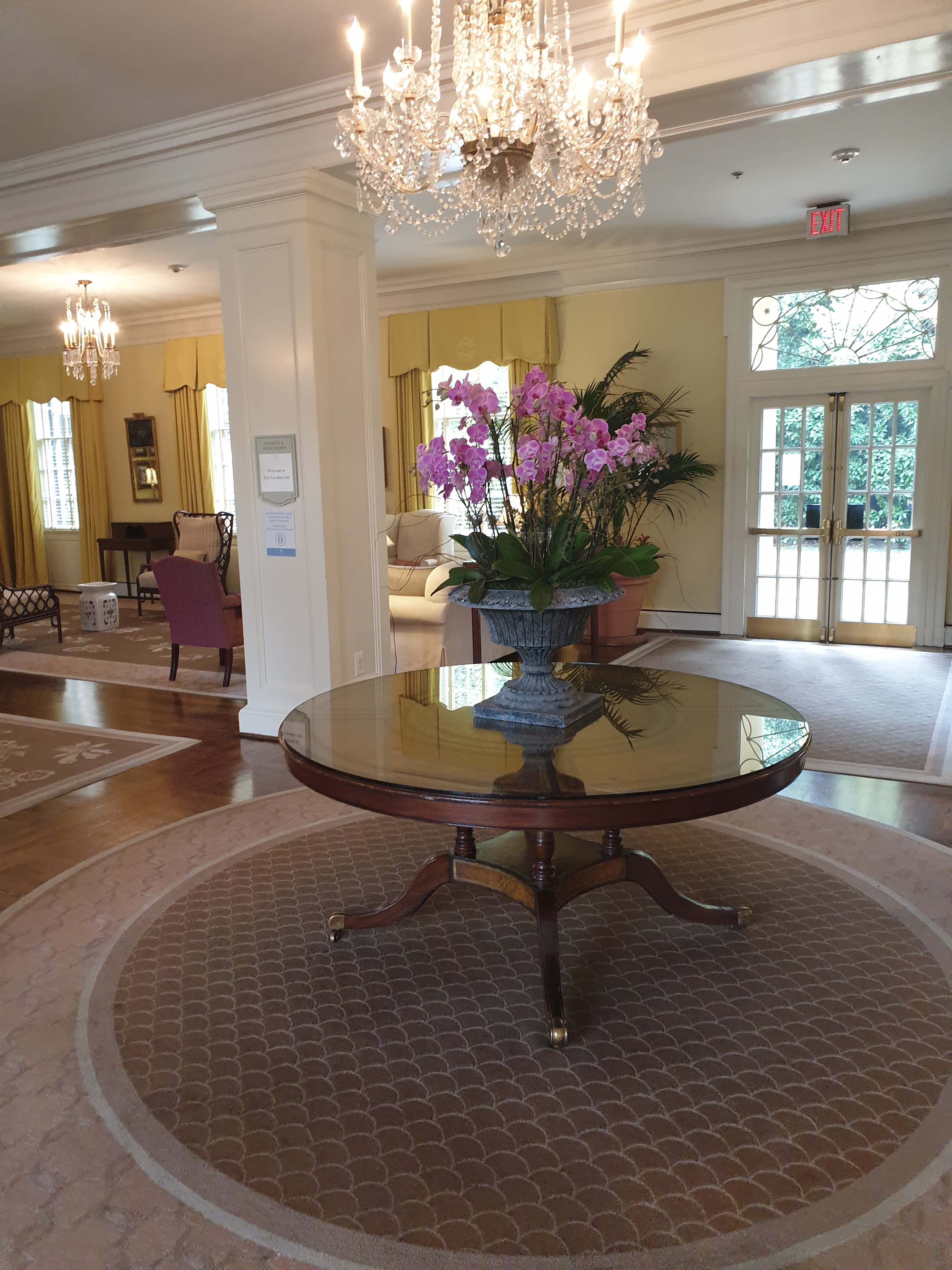
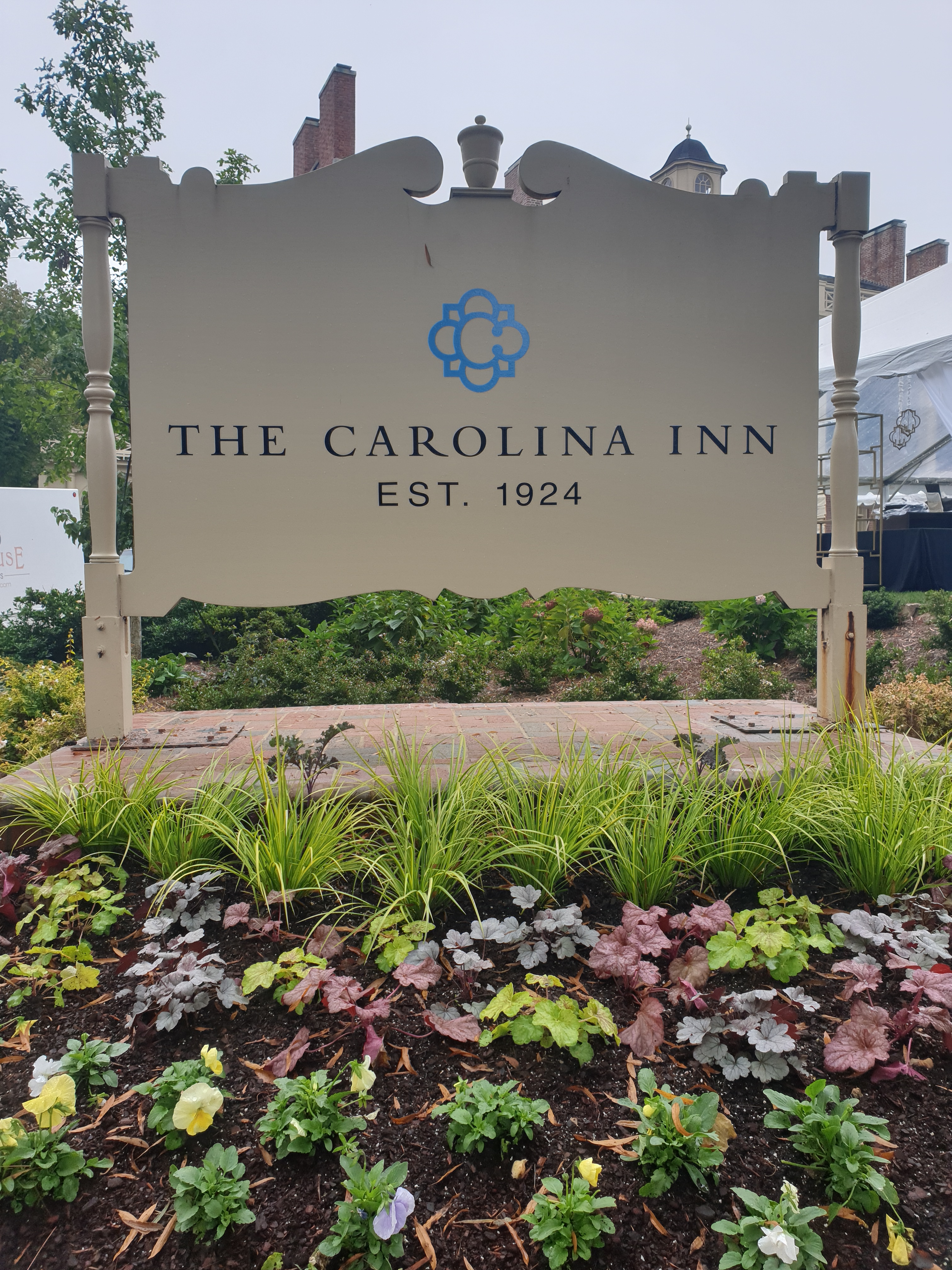
Confession time: The Catholic church at UNC, The Newman Center, is across the street from the Carolina Inn, the quintessential Southern hotel. From my first days in North Carolina, after church on Sundays I would go across the street to the Carolina Inn, get a coffee and sit in the lobby to read. Once, when my sister came to visit, she stayed at the Inn and had an amazing experience! So, at last I bit the bullet and stayed at the Inn, I was dying to, and it did not disappoint!

I had socially distanced dinner with a handful of dear old professors: Cristina, Oswaldo, and Irene. My heart was overjoyed with happiness to spend time with them.

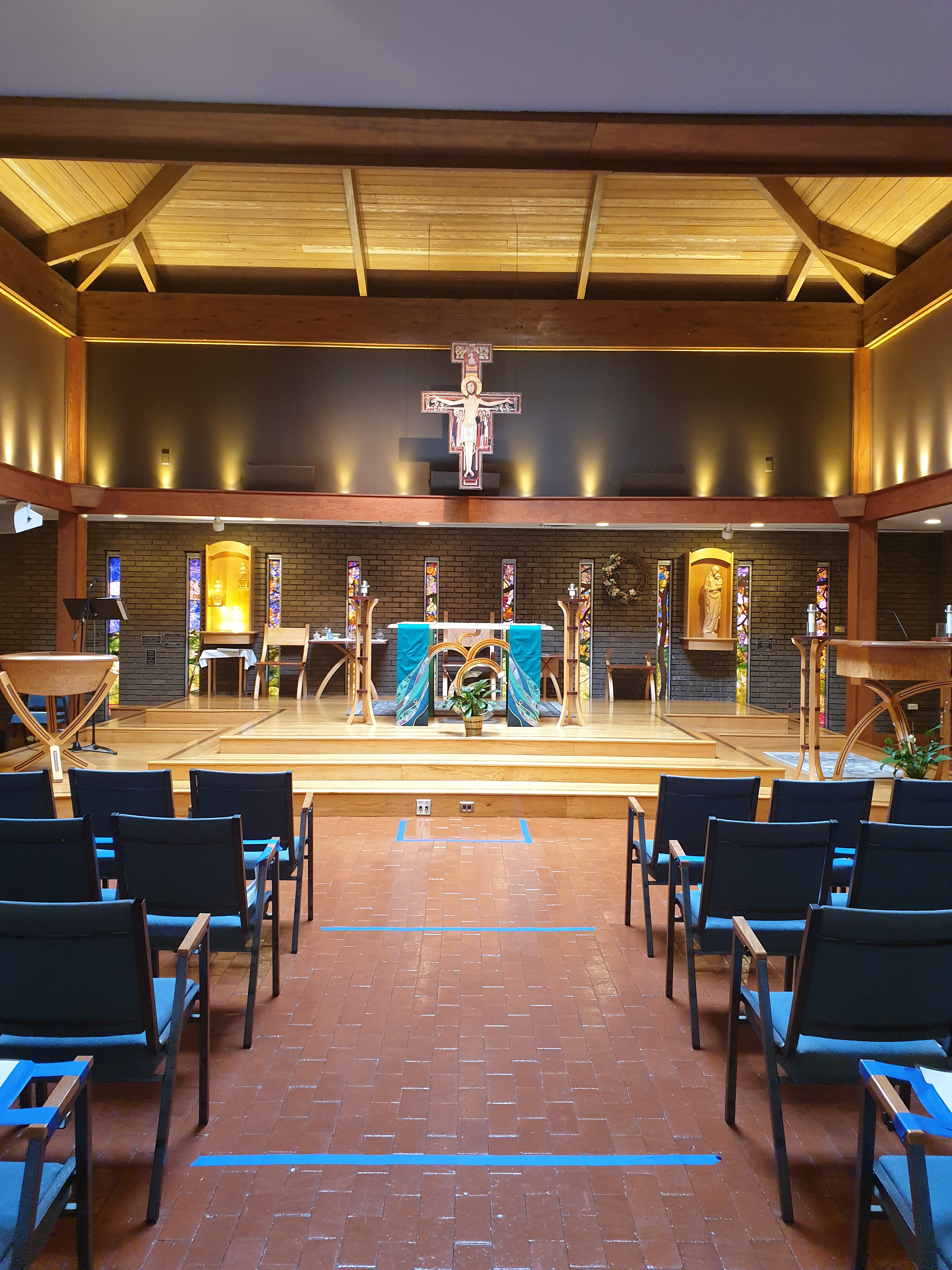
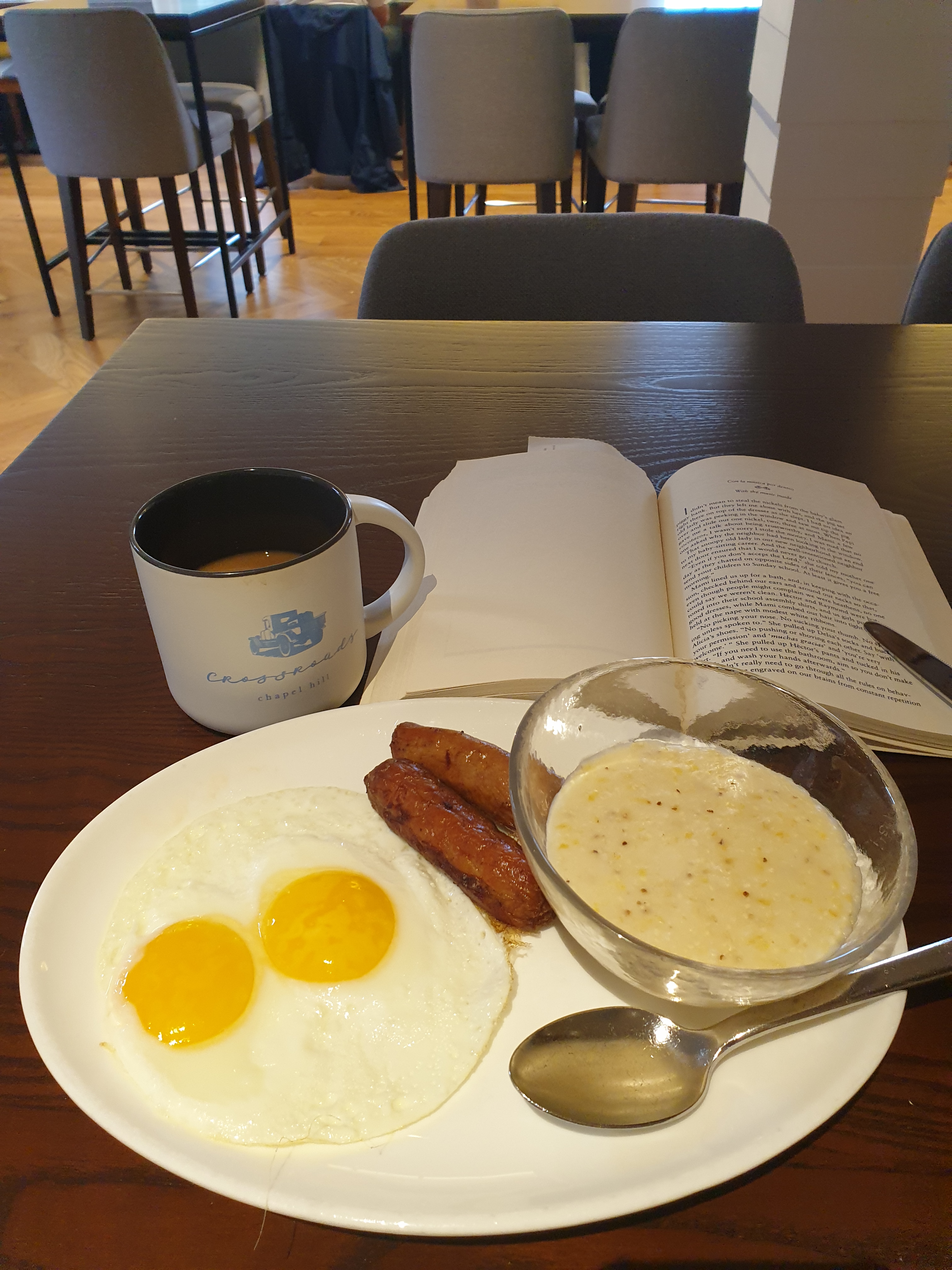
Sunday morning, after a perfectly Southern breakfast –including grits! I crossed the street to church. Mass is normally being held outdoors on the parking lot during Covid, but due to the rain, mass was cancelled and the ceremony was going to be livestreamed from inside. At the beginning they did not want to let me into the building, but when I identified Father Bill, they did. Seeing Father Bill was a more moving experience than I expected. Mass, with only a handful of parishioners, mostly undergrads, was simple and beautiful. After mass we could not abide by the rules anymore and Father Bill and I fell into a heartfelt, teary (for me) hug.

After sadly checking out of the Carolina Inn, I drove to Irene’s house for lunch. And what a lunch it was, full of good food, laughter, memories, conversation, and needless to say: gossip! After that, it was a sad, lonely, and rainy drive back to Florida, stopping to sleep in Savannah Georgia.

Now I can’t wait to go back and see all the folks I missed in this lightning visit (you know who you are), and to go to mi favorite places that were closed for safety’s sake. As Terminator would say: “I’ll be back”.

The pros and cons of multiculturalism

Moving from NYC to Boston 1988

We first moved to New York In 1977, I was 12. From there we moved to London in 1979, from there to college in Boston in 1983, and so on for back and forth between the US and Europe. As I recently wrote in my “Diversity Statement” for a job application:

I have had the privilege of growing up in multicultural and multiracial environments, cities, and schools: New York City, London, Paris, Madrid, Boston, etc., so since childhood I have been bathed in diversity: cultural, racial, religious, sexual, socioeconomic, etc. On top of that I have had the privilege of traveling widely.

So, while being multicultural is definitely an enriching experience, it does have its drawbacks: The first one is that you no longer “fit” into any particular “set” culture, you become a bit of an outsider whenever you are in an environment of population that is “born and bred” in a place.  The second and more insidious aspect is that you might no longer meet certain legal or bureaucratic requirements to say, work in a place.

This is what happened to me when I returned to Spain in 2018. My US degrees (Including a PhD) are not recognized in Spain to work as a teacher. Furthermore, to get all my paperwork approved and transferred and certified and triple stamped would have taken years. Besides the paperwork, there is a mentality issue. Teachers in Spain are generally not a respected, appreciated, and certainly not well remunerated part of the population. There are historical and social reasons for that, but I will leave them for another post.

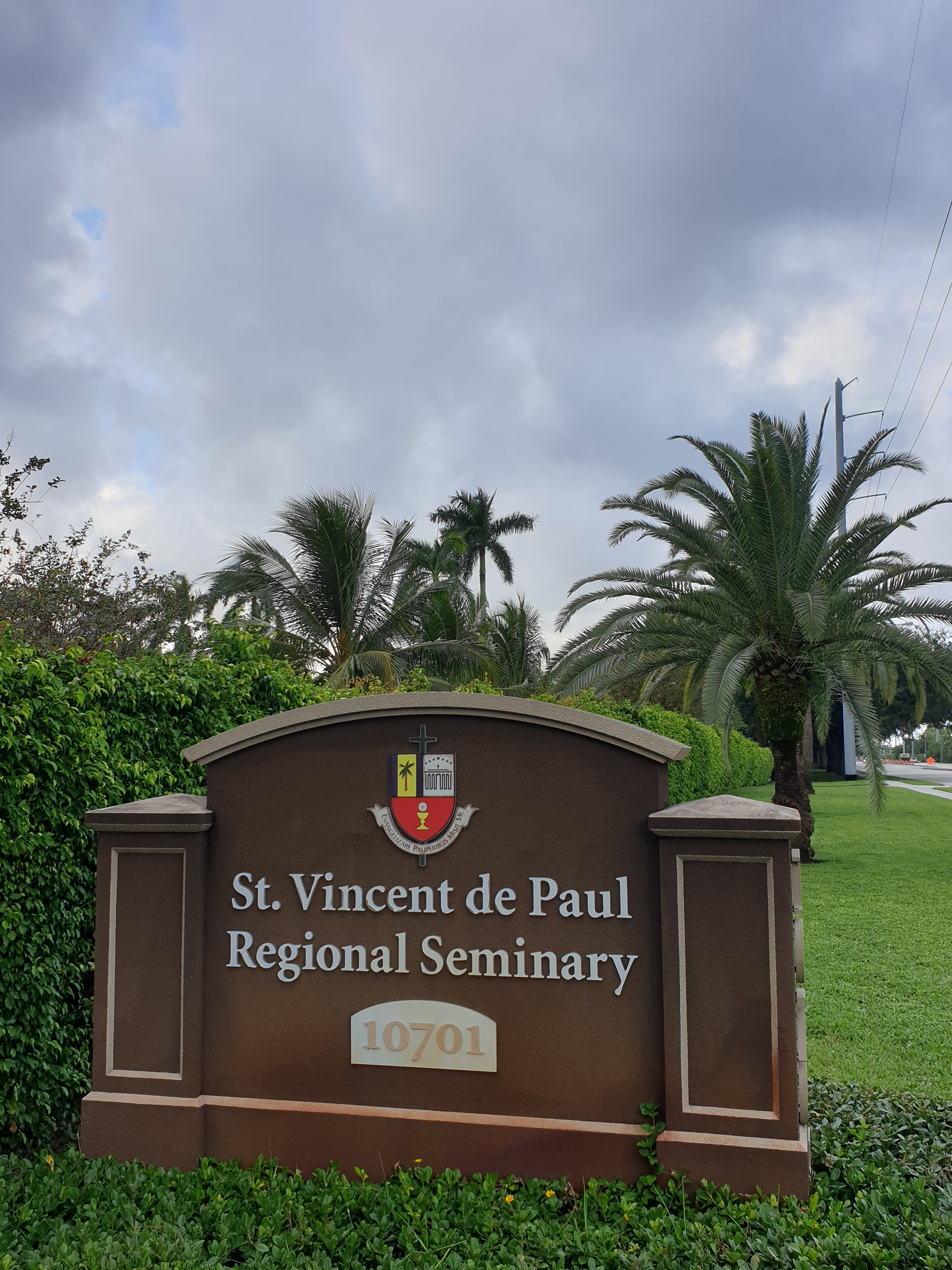
Long story short: I have returned to work in the US as Assistant Professor of Spanish and Assistant Director of the Language Department at Saint Vincent de Paul, a major seminary in Boynton Beach Florida! This was not an easy decision, leaving everything behind for a job, but I could no longer live in a country that refused to acknowledge me professionally.

The Rubaiyat of Omar Khayyam

The Rubaiyat of Omar Khayyam

Although I have a few editions, the other day I picked up a nice, used copy of The Rubaiyat of Omar Khayyam. It is one of my favorite books/poems of all time. I think it all started in the early 80s when we were living in London. My mom hired an Iranian English teacher to teach her English. I rarely saw her. I would come home from school and she would be in class with my mom. But one holiday she came to visit us in my parents’ country house outside Madrid. As a gift she brought a kilo of pistachios -which to this day I love, and a beautiful edition of the Rubaiyat.

I immediately fell in love with that book, it had an illustrated cardboard cover and beautiful illustrations. Every page had the verses in the original (more on that later) Persian or Farsi, English, and French. Right after college I purchased my first copy, and I would read it occasionally. For the last few years, I read it almost every Summer! This is not so strange, as there are several books I read and have read multiple times: Voltaire’s Candide and Hemingway’s The Old Man and the Sea are examples.

At any rate, the book is not without controversy: About the original text, about authorship, about religious interpretations, and about the translations. I have no academic interest in the text, I just enjoy the poetry. I love the flow of the verses, the circularity of the themes, the imagery. It is ancient Persian but feels totally modern. It is an appeal to stop and smell the roses, something that we so often forget to do. Take for example:

I sent my Soul through the Invisible

Some letter of that After-life to spell:

And by and by my Soul return’d to me,

And asnwer’d “I Myself am Heav’n and Hell”

While I do not consider myself an Epicurean or a Hedonist in the modern interpretation of the words, I do enjoy small pleasures in life – which is much closer to the original thought of Epicurean philosophy, to enjoy modest pleasures from tranquility. Thus, I love a good cup of coffee or glass of wine, a well-prepared meal, a well rolled cigar, a piece of music or any art. That, I believe is the message of the Rubaiyat: to enjoy the moment that is life.

Let me know what you think of the Rubaiyat in the comments section.

The Fox and the Stork

A few months ago, at the beginning of the Covid-19 lockdown, a dear friend and old colleague from Seacrest Country Day School started reading to her Lower School students via the interweb. She called her daily reading “Trespassers Will” , and she soon reached out for more readers to help her with her daily story, including me!

Of course, I volunteered. Our only issue was reading a story in Spanish and then adding English subtitles. Although I have uploaded a few videos to YouTube, I had never done the subtitle bit. The trick lies in synchronizing the voice to the subtitle. It took a few tries, including the one where I deleted everything as I was almost finished, grrr.

The Fox and the Stork is an ancient Aesop fable. La Fontaine refreshed it in the 18th C as a perfect vehicle to teach and enjoy, the Dulce et utile theme of the time. It really took hold of the popular imagination, and was popular in the 19th and 20th C. I even have a tie with the fable’s motif! (you can see it on the video)

At any rate, I read the story, recorded it, added the subtitles, and now it has a whopping 48 views, I am sure it must be a record of some kind.

So, for your viewing pleasure, here is the story of The Fox and the Stork, and a clip from the real pro, the aforementioned Angela doing her thing. Spoiler: she is phenomenal and light years ahead of my hack job. Enjoy:

Marcelino

My mother has a country house in a tiny village near the mountains of Guadarrama, North of Madrid. We have been coming here for weekends and Summer since I was a child. The village has a train station, a small river, a supermarket, a church, a pharmacy, a convenience store, a couple of restaurants, and a hair dresser, but the most important place in the village is the café/bar/restaurant: Marcelino.

Marcelino sits near the Guadarrama river by the road to a bigger village a few miles down. It was built by the grandparents of the current owners stone by stone in the early 20th C. Since then it is the central meeting point of the village. It is the place where I had my first drink in the smoke-filled bar in the early 80s, and the place where I enjoy a coffee every day during Summer. The fourth generation is starting to work there, making coffee, and serving drinks, no privileges.

It is interesting to see the flow of customers. In winter, the local moms meet for coffee after dropping off the kids at school. After lunch, the old men come down for their card game, in the afternoon groups gather for the tertulia (conversation) and coffee. And in summer nights everybody comes for the barbecue!

The coffee is not particularly good. It is old school Spanish coffee, which means it is torrefacto: over-toasted and with added burnt sugars to boost the flavor and aroma (see my previous post on coffee). But that is exactly what you should expect in an old-fashioned café in a Spanish village. My preppy friends from Madrid hate it, but that is missing the point of the tradition. There is a basic lunch menu, which is handy in emergencies and all day bocadillos -simple sandwiches made with Spanish French-style baguette.

But the real food comes at night when they fire up the barbecue! Outdoors, right in front of the diners. While they will oblige and throw a burger on the grill if you ask them to, the specialty here are the local sausages: chorizo and morcilla. Chorizo is the more familiar as it is spicy pork sausage. Morcilla is the lesser known sibling made of ground pork with its blood, with either onion or rice, what the Brits call “Black sausage” but that is where the similarities end. Morcilla has a strong, tangy but sweet taste. And Marcelino grills the best! The barbecue menu also has pinchos morunos (the Spanish evolution of shish kebabs), and steaks, plus salads and other traditional dishes from the kitchen.

After dinner you can stay until after midnight enjoying a drink. In fact, Marcelino is one of only a handful of bars that serves Xoriguer, a gin made in the Balearic island of Menorca, which happens to be my favorite. But that is a subject for a different post.

Desperate Literature (or interesting bookstores and libraries)

I fell in love with literature at the American School in London with a couple of great teachers: Soledad Sprackling for Spanish Literature and James McGovern for English. But I did not fall in love with books until college.

At Bentley University I discovered the Bowles Reading Room which had beautiful books. It was glassed in from the rest of the library and every day I went there to do my homework but would invariably end up looking at the wonderful books. I loved that room so much that at the end of my studies, I donated a book about Spain to the Collection. (I contacted the librarians who got me this rare photo of the Reading Room for this post, thanks!).

Bowles Reading Room 1992 (After I graduated) (PC: Bentley Archives)

Bowles Reading Room 1992 (After I graduated) (PC: Bentley Archives)

But I would have to wait until after college to have enough disposable income to buy books, which, living in Boston, was very easy. Some days on my lunch break I would sneak to Goodspeed’s to look for treasures. Such is my love for books and literature, that years later, I ended up getting a PhD in Spanish Literature! (see previous posts)

Speaking of UNC, one of the highlights are the libraries. Plural. The old library is the Wilson Library (which is featured prominently in Robin Williams’ great film Patch Adams). I spent hours studying in this library and a couple of times studying very old books in the Rare Book Collection. The big, modern library is the Davis Library with its 7 million books. There, I soon made best friends with the Spanish book librarians Teresa and Becky. I would walk to their office deep in the heart of the library and talk books, (and gossip). This library is as close to the Borges idea of a library as I have ever been: massive and repetitive, but with a soul.

During my studies at UNC, one summer I got a Fellowship to do research at the Biblioteca Nacional in Madrid. What an experience! To get to the rare book collection you have to pass not one, but two security checks, you cannot bring in any pens, books, phones, etc. Books there are treated with the care and reverence one would expect of -in my case- over two hundred year old books. I spent every morning that summer reading most of Francisco de Isla’s first editions, manuscripts, and other pieces attributed to him but not his. That experience is one of the highlights of my academic career. (Their coffee shop in the basement was also excellent – and subsidized! but that is for another post)

Biblioteca Nacional, Madrid

Biblioteca Nacional, Madrid

After UNC I moved to Southern Florida, which is a wasteland for books -must be the humidity. But, in 2016 I did read this great article in Vanity Fair, (to which I have subscribed and read every issue from cover to cover since around 2006) about this magical book store in Santorini called Atlantis Books.

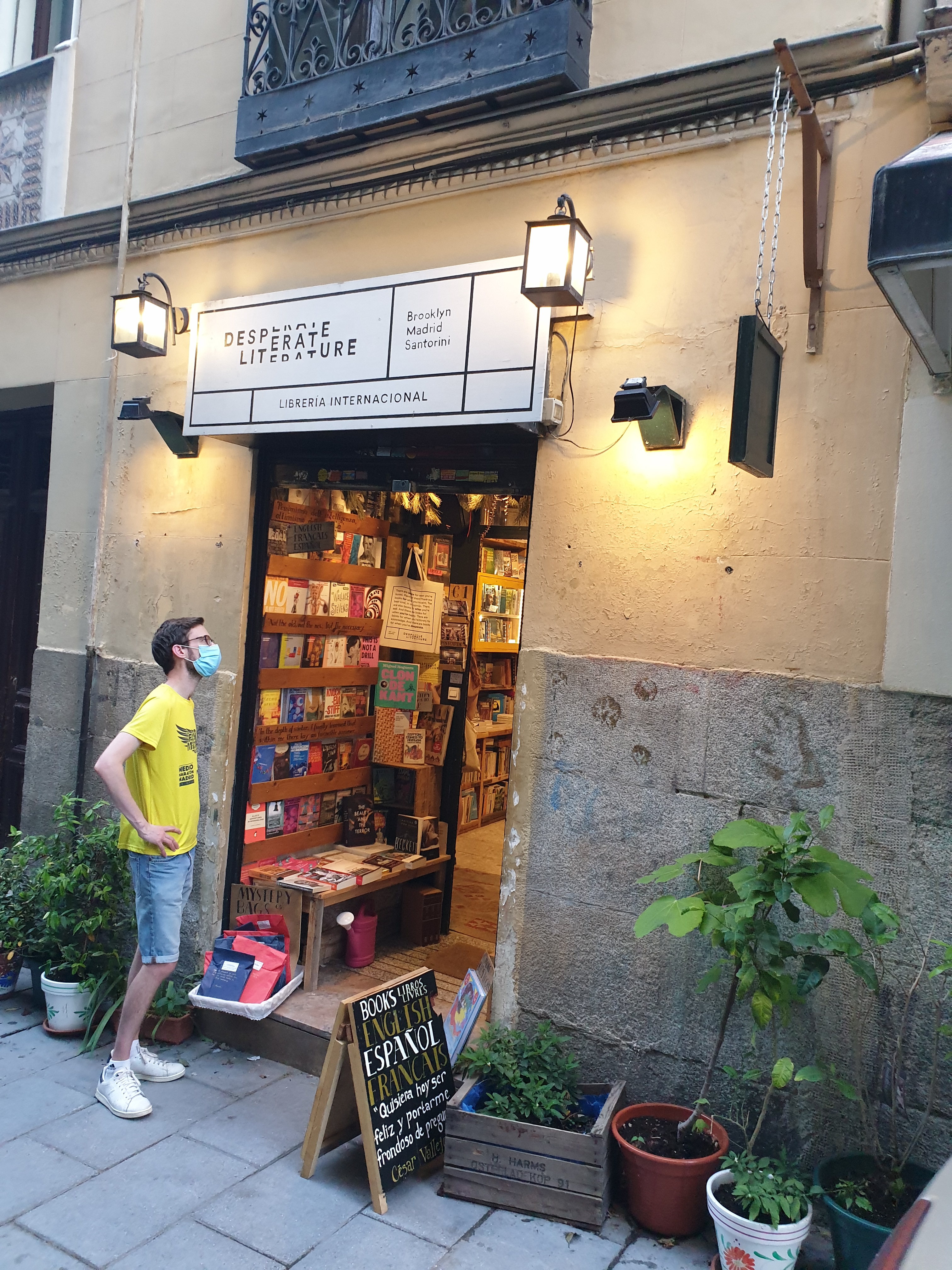
Fast forward to 2018 when my dear friend Matthew came to visit me in Madrid. He stayed at a hotel in the old part of town. One evening after I dropped him off, around the corner from the hotel, on narrow Campomanes street, I bumped into Desperate Literature. I was ecstatic! What a discovery, what a find! A tiny bookstore, but filled with books mostly in English, with a few in Spanish and French for good measure. It was a tiny paradise, an oasis of… books!

Books in time of Covid

Books in time of Covid

I soon found out that this bookshop is part of Atlantis Books which I had read about in that Vanity Fair article. It all fit in, a collection of magical bookstores.

During this Covid-19 pandemic I found out they were sending books to folks. I ordered one and I was able to make use of my workout time to ride my bicycle to pick it up.

In conclusion: support your local -hopefully quirky- bookstores, and read.


My happy place, El Escorial


Although I have talked about it in various posts, I have never dedicated a  post to my favorite building, my happy place, and arguably the most important building in Spain, El Escorial.

I am blessed in that my parents bought a house not far from this place when I was a boy. My restless dad would often take me here for quick excursions, to walk around the palace, the village or the surrounding countryside. As soon as I could drive (17 with my British license) I started going there on my own: to walk around, to read, to write.

Possibly the main reason El Escorial is so special is that it is a monastery that is a royal palace and a royal palace that is a monastery. So it is huge by monastery standards but it is austere and spartan by palace standards. But it is more than a palace and a monastery: it has one of the finest libraries in the world, a magnificent basilica, a pantheon with (most) Spanish kings (and reigning queens), a school, an art museum, etc.

It was built by my favorite Spanish king Philip II. He had such drive and desire to build it that he spent a fortune to have it built as fast as possible. It was built in 21 years from 1563 to 1584. The result is arguably the finest representation of Renaissance architecture in Spain (his dad Carlos V, built another great Renaissance palace in Granada, but that’s a different story). What happens with most huge old buildings is that they took so long to build that they were started in a certain style and finished in another style altogether -and oftentimes, other styles in between. This is most visible in cathedrals. Oh yes, Philip II is the one who sent out the Invincible Armada, in fact, you can see the desk where he worked -and where he received the news of his defeat.

The palace is built entirely of local granite, has 14 courtyards, and thousands of windows, doors, blah, blah, blah. As you can see from the photos, it is amazing, grandiose but sober. There are plenty of books and web sources about it, so I do not need to add to the mountains of information. There is also the village where the palace is. It is a beautiful little village with great food, little bookshops, and cafés. The combination of countryside, palace, and village is really magical. When a group of the king’s scouting committee where checking out where to build the palace they were caught in a fierce storm that they interpreted as a signal. So they figured that is where they should build. There was a semi-abandoned mine there (Escoria means slag, mining residue, thus Escorial). Plus there is evidence of pre-roman, Celtic settlements in the area, adding to the mysticism and aura of the place. I could go on for hours and hours, but a. I will spare you and b. you can hire me to give you a tour!

Many years ago, chatting with a work colleague and friend we discovered that we were both fans of El Escorial, so we soon founded the Asociación A. de Amantes de El Escorial. (The A. stands for apocryphal, but don’t tell anyone), it is a bit of a joke, but we now go at least twice a year for Asociación “meetings” that involve dinner and a walkabout!

Why is this my happy place? Maybe its the radiation from all the granite, maybe the fond memories of walking around, maybe the relaxing qualities of the beautiful renaissance lines, I really couldn’t tell you.


Tonxo Tours


Well, I guess the first thing I must do is apologize to my followers for a very long silence. Soon you will know the reason. As you might know, about a year a ago I returned home to Spain after many – thirteen to be precise – years in the US. With a clean slate, I decided to start a business that had been on the back burner for years: I have become a personal tour guide, creating bespoke tours of Spain under the name Tonxo Tours.

Showing people Spain is my life calling. I am passionate about sharing my culture, history, language. After showing Spain to all sorts of folks for years, I have decided to start Tonxo Tours and make my joie de vivre available to all! I have been toying with this idea since the late 90s, so it is about time to get going, don’t you think?

Most tour companies boast about their team of specialists, well, I am that specialist. I have been giving tours of Madrid and of Spain since my twenties. I have worked with British rock bands, schools and universities, foundations, executives from all over the world, even the Monaco Olympic Sailing Team, I would love to show you around!

After twenty odd years in the business world and thirteen teaching in high schools and universities in the US, it is time for me to do what I do best, which is to share my passion for Spain.

Why has it taken so long you might ask? My life has been marked by a peripatetic lifestyle, moving to New York when I was ten and then to London, Boston, Paris, Bordeaux, Geneva, Lausanne, Chapel Hill, Naples Fl., and so forth to over eleven cities. Cities became my friends. I loved discovering what made each one unique ̶-how they got their personality. I spent my time in museums, cafés, theaters, concerts, operas, ballets, all of which unavoidably infused me with a love for the arts. Sharing my love and knowledge of cities and their cultures soon became a venue to express myself. As a teenager I gave tours of Madrid and London to friends and family, something I continue to do and enjoy, which has led me to create Tonxo Tours. My experience and passion radiate on the street: Explaining Spanish history, architecture, food, music, sometimes all of them at the same time!!

When I started thinking about setting up a tour company I was aware of the tremendous competition in the market. Just in Madrid you can jump on a sightseeing bus and casually check out the city while chomping on some churros, you can take a Segway tour, there are a bunch of tapas tours, there are free tours, you can get a tour on a tuk tuk, a golf cart, an antique car, even in a pink Rolls Royce! In contrast to that, my philosophy is simple: a no gimmick, quality driven, discreet – yet fun – bespoke tour that will cater to what you want to experience, see, taste and hear, not the other way around.

I can arrange exquisite lodgings, extraordinary experiences, delicious food and drink,

with only one purpose: creating unforgettable memories.

But why would anyone choose Tonxo Tours? you might ask. Here’s a few more reasons:

  1. I am a native, a local, born and bred here, but with the advantage that I have lived abroad many years. I have dual citizenship USA / Spain, offering me a perspective unattainable to most.
  2. Passion: I love sharing my culture, my history, my food, my architecture, art, music, dance, etc. This drives me.
  3. Experience: I have been doing this for years with friends, colleagues, schools, universities, foundations, etc. From 1994 to 2004 I had my own company (but that is a different story) which took me to every city and town in Spain at least a couple of times a year, more for the big cities. So I really know Spain like the back of my hand.
  4. DNA: My grandad worked for the British and American embassies, often times driving dignitaries around – he even got a medal from from Queen Elisabeth (but that’s a different story). My dad was restless. We would go on excursions every time he got bored – which was often – He was also a Spanish history buff which rubbed off on me, so I have been reading Spanish history and literature since I was a youth, which eventually led me to get a PhD in Spanish literature at the University of North Carolina at Chapel Hill (again, different story).

I received my undergraduate degree in business. I specialized in management, the human part; what motivates people? What makes them tick? I used these skills in my first jobs in finance, photography and management before using them to run my own business for ten years, importing and selling industrial machinery in Spain and consulting for European companies wanting to expand into Latin America. I moved back to the US, where I started teaching in 2005, and although I was making a fraction of the money I used to make, I felt much happier and more fulfilled. In the meantime I got a Master’s and then a PhD in Spanish Literature from UNC. Returning home to Spain allows me to indulge in my true vocation. I am able to apply my many skills developed and honed over the years. So don’t over think it, contact me and I’ll be happy to show you around!

Let me know when you are going to be in Spain and what you want to do and see. I will personally take care of you, if you just want to spend a few hours walking around old Madrid or if you want to spend two weeks exploring Spain, I will be happy to set it all up.

If you want to know more about me, you can read check out this blog about my random thoughts, travels, and whathaveyous.  You can check out my website tonxotours.com and/or my Instagram: tonxotours