
My favorite shop

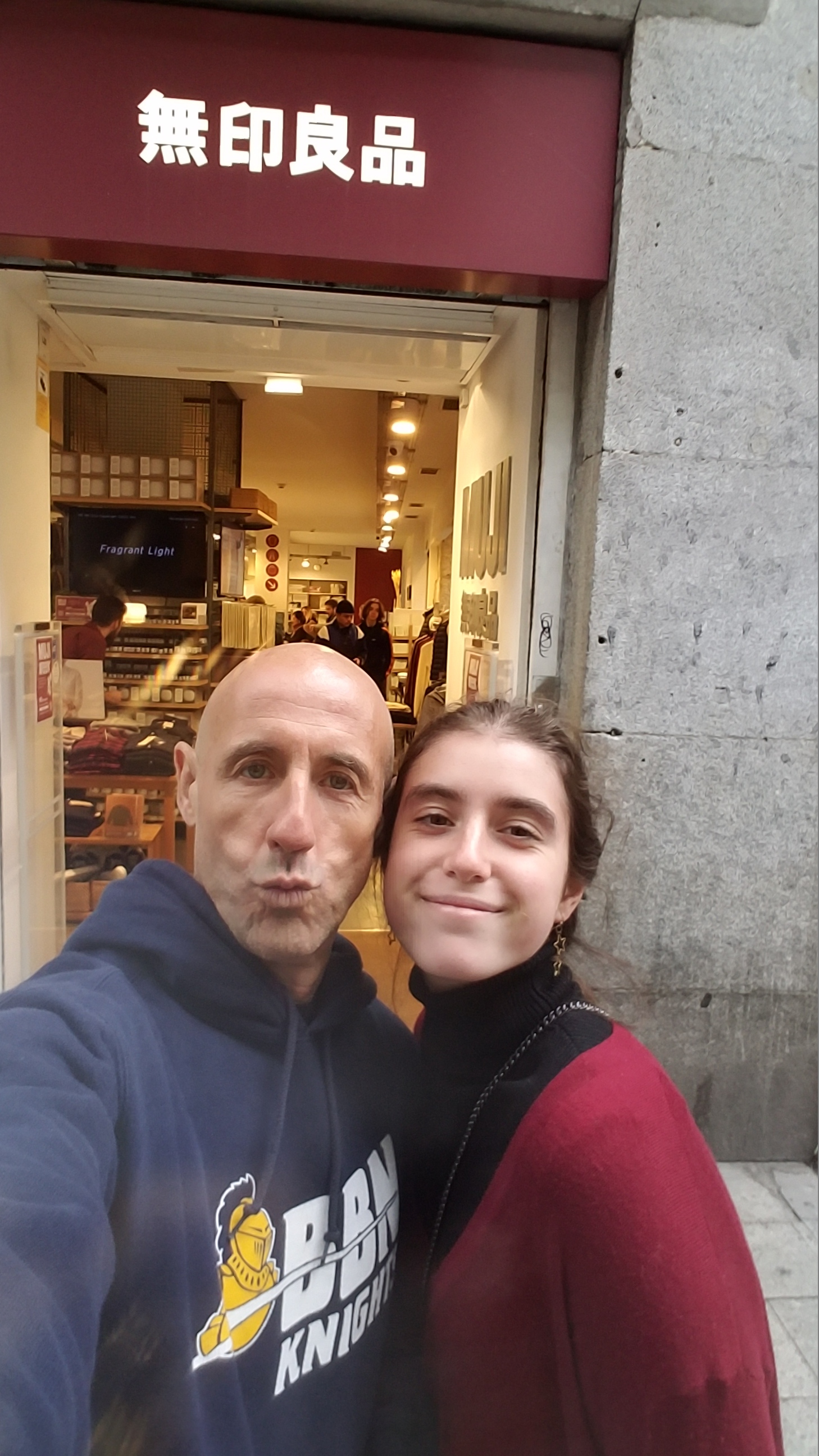
One of my favorite bands in the ’80s was The Style Council. One of their exquisite albums was Our Favourite Shop. What is your favorite shop? Mine is a Japanese no-brand shop called Muji. (How is that for a roundabout intro?)

My university friend Theo introduced me to the Style Council in the 80s and to Muji during a visit to London in the 90s. Theo, ever on the avant-garde, piqued my interest in their products, which I now enjoy.

A couple of decades later, Muji finally opened a couple of shops in Madrid!

The usual gateway product for Muji is its stationery: pens, notebooks, markers, etc. But I soon embraced most of their product line: clothing, home and kitchen products, snacks, and even furniture!

Their clothes follow the traditional Japanese template: perfect cut, rich proportions—no slim cuts here—quality materials: cotton, linen, wool, and no logos!!

But wait, aren’t you a minimalist? Asks the keen readers of this blog. You know that I try to be a minimalist, so I avoid buying clothes (or anything else) on a whim and buy only when needed, but I am not a radical minimalist, more of a practical one. So yes, I try to be very mindful of my purchases. I hope my mindful shopping habits resonate with you and inspire your own minimalist journey.

Anyway, there you have it. If you have not shopped at Muji before, I recommend starting with their stationery. You are welcome.

What’s in a name?

“What’s in a name? That which we call a rose
By any other name would smell as sweet.”

William Shakespeare, Romeo and Juliet (Act II, Scene ii)

Years ago my brother Theo in London sent me some links to a famous butcher in Dorset called Balson, which happens to be the oldest business in England. No, I do not have any relation to the Balson family of Dorset. There is also an American author called Balson, and a few other Balsons around. Nope, no relation.

One of the hobbies my father picked up when he retired was genealogy. He set out to investigate his family’s origins, and he took it quite seriously. He took a course at the prestigious Consejo Superior de Investigaciones Cientificas (CSIC) and he proudly displayed his diploma and class picture on his home office wall.

He traveled around Spain visiting churches to gather data from birth, death and wedding certificates. He even went to Salt Lake City in Utah to research the Mormon genealogy vault / database where billions of family histories are stored – they denied him access. He still managed to research his family into the mid 18th Century before losing track. Not bad. His main findings were that the family originated in rural Lerida,

the area between Barcelona and Zaragoza. The original first name was Anton, which through the generations became Antonio – my grandad’s and uncle’s name. The family moved to Zaragoza by the 1800s and to Madrid by the early 20th Century, where my grandad settled and created a family.

So long story short: No butchers, no authors, but still an awesome family heritage.

Revisiting Cavafy

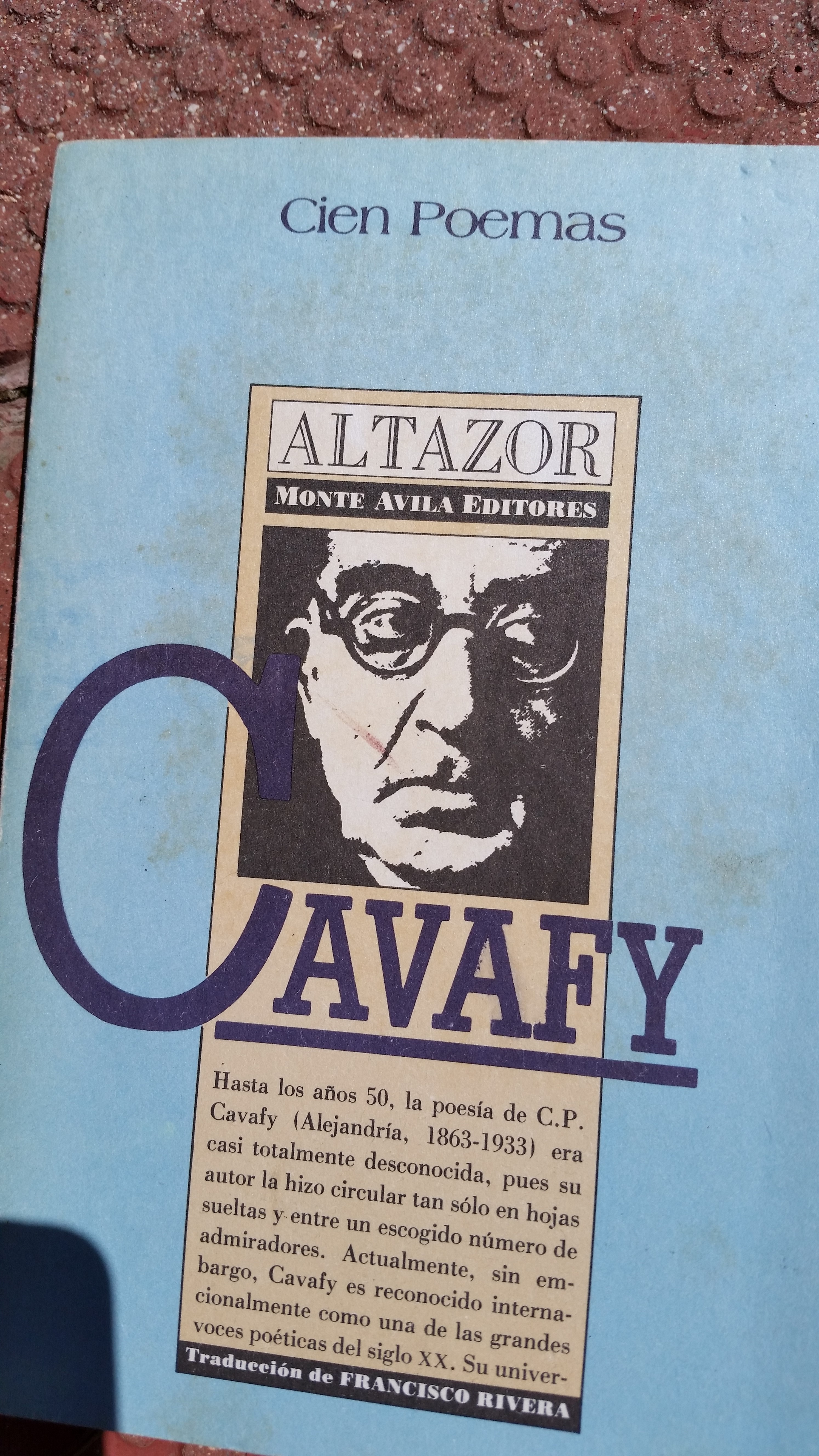
my old Cavafy

my old Cavafy

Sad and melancholic after returning from Greece, I found my old Cavafy book and I am re-visiting it!

My brother Theo introduced me to Constantine Cavafy years ago – through his poem Ithaka (which I posted on this blog on August 19, 2011). Now as I reread poems I discover new beauty in his words. The poem which has struck me the most during this re-reading has been God Abandons Antony or God Forsakes Antony, published in 1911. The story is of a defeated Marc Anthony in Alexandria (which centuries later would be home to Cavafy). After being moved by its elegance I remarked on the importance of the story of Marc Anthony and Cleopatra. Of our fascination with that love story, with ancient Egypt, with the Roman Empire, and so on, so I started thinking of my favorite connections to this story…

The first one that came to mind where the lyrics from one of my favorite Rolling Stones songs: Blinded by Love, when Mick Jagger sings:

The queen of the Nile

She laid on her throne

And she was drifting downstream

On a barge that was burnished with gold

Royal purple the sails

So sweetly perfumed

And poor Mark Antony’s

Senses were drowned

And his future was doomed

He was blinded by love

Of course Cavafy’s poem is born from Plutarch’s telling of the story. Canadian singer-songwriter Leonard Cohen used the poem for one of his songs, but changed Alexandria, the city, to Alexandra, a woman. Of course there is Shakespeare’s play Antony and Cleopatra born from a translation of Plutarch, there is Elizabeth Taylor and Richard Burton, and so on and so forth, but for now I leave you with Cavafy in his own translation:

If unexpectedly, in middle night,

an unseen company be heard to pass,

with music and with voices exquisite, —

turn not away and uselessly lament

your fortune that is giving in, your work

that came to nothing, the projects of your life

that proved illusory from first to last.

As one prepared long since, as fits the brave,

bid now farewell to the departing city,

farewell to the Alexandria you love.

And above all, do not deceive yourself:

say not that your impression was a dream,

that, it may be, your hearing played you false:

to futile hopes like these never descend.

As one prepared long since, as fits the brave,

as most fits you who gained so great a city,

approach the open window steadily,

and with emotion, but without the plaints

and supplications of the timorous,

listen — knowing it to be your last delight —

listen to the elysian sounds, the exquisite

instruments of the mystic company;

and bid farewell to the city you are losing,

farewell to the Alexandria you love.