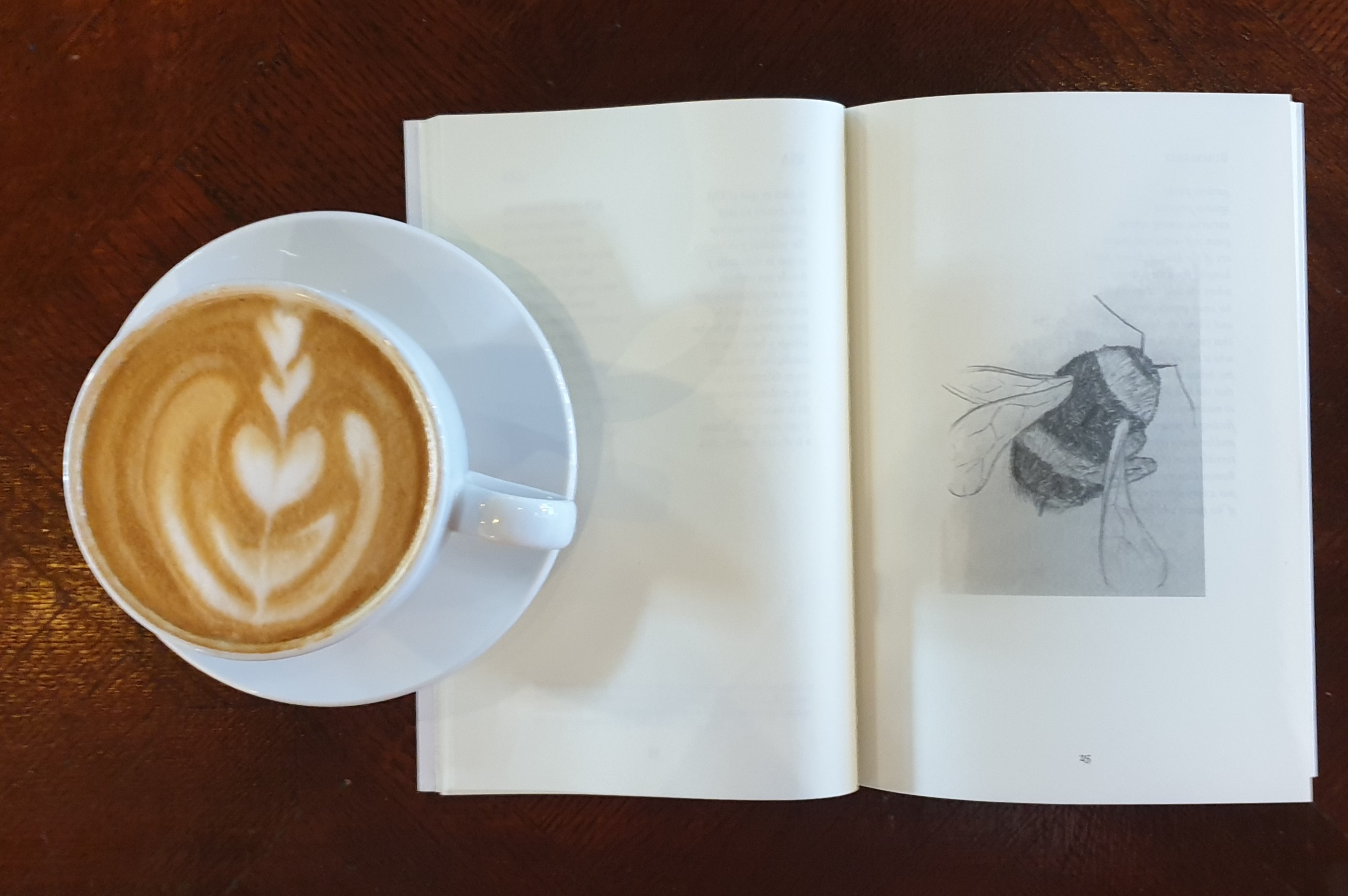
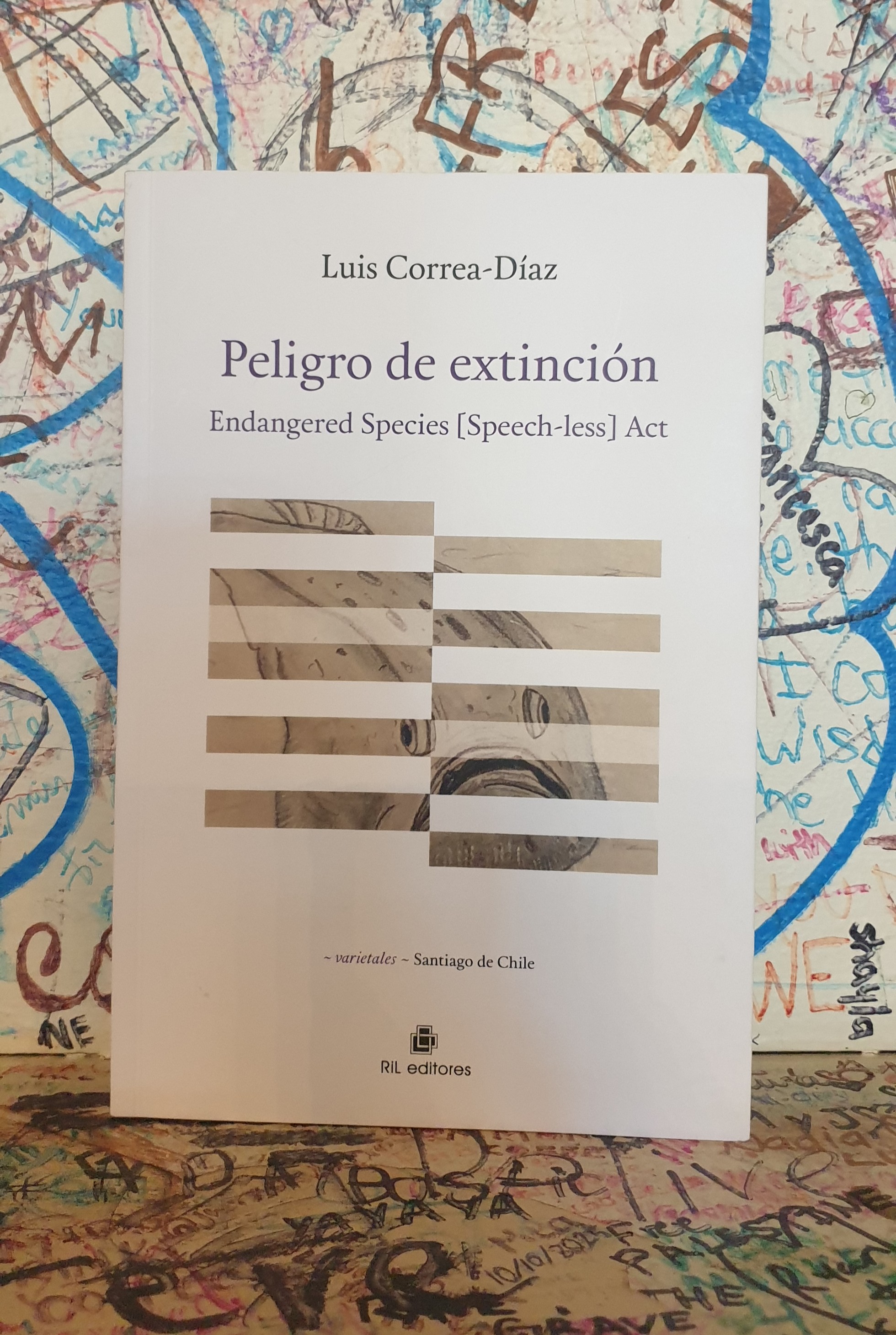
Hace años que soy fan de la obra de Luis Correa-Díaz; he tenido el placer y el privilegio de leerle. Este último poemario, Peligro de extinción; Endangered Species (Speech-less) Act, puede ser su más íntimo y tierno.
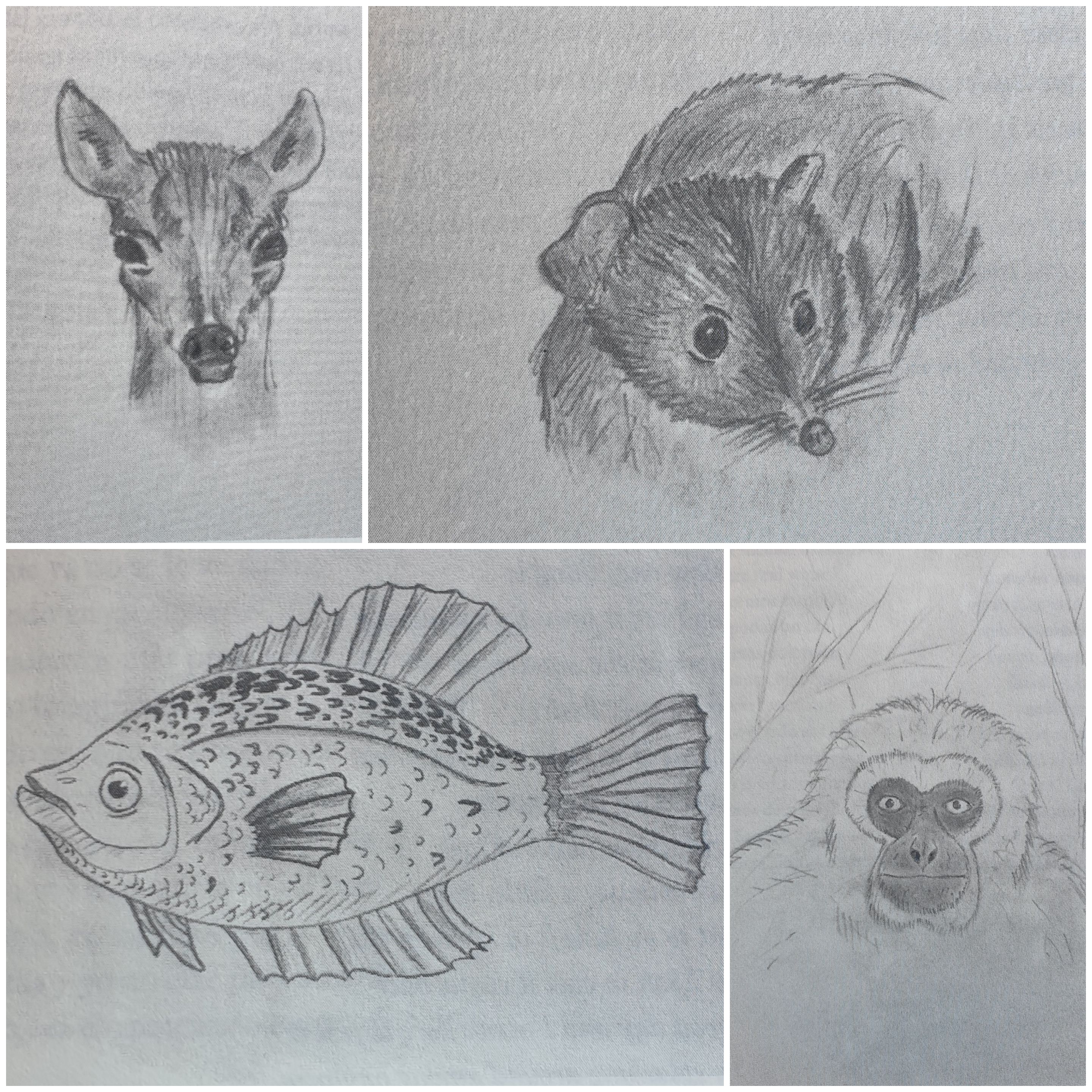
Parte de esto se debe a la colaboración de un ilustrador de lujo. Gus Denault es un joven artista que nos regala ilustraciones primorosas a lápiz/carboncillo para cada poema.
El abanico de veintinueve animales en peligro de extinción que repasan el poeta y el artista va desde lo obvio, como el panda rojo o el delfín rosado, hasta otros como la sirena o el propio Homo, que quizás no figuren en listas oficiales, pero que obligan al lector a pausar y reflexionar, Otros animales, como el mamut, el pterodáctilo o el tamagotchi, dan licencia para volar a la imaginación del lector. Como dice Menchu Gutiérrez del ilustrador de su poemario Huésped del otro, Pedro Pertejo: “Los poemas no existirían sin los dibujos.”*
Como es habitual, LCD nos regala referencias a Ulises o a Rimbaud; otras hay que pillarlas al vuelo, como la del Quijote o la de su alumno, Almodóvar, todas salpimentadas con emojis, con detalles cotidianos de Athens (el de Georgia y REM, no el original, aunque Aristóteles lo quisiera) y a la patria querida de Luis y de Gabriela Mistral.
Luis Correa-Díaz aborda el delicado tema de la situación crítica del planeta con exquisito cariño, pero también con guiños irónicos y críticos al ecoturismo y a las entidades responsables de cuidarlo. Es decir, con realismo; las ilustraciones de Gus le dan fondo, textura y color (aunque sean a blanco y negro) al texto.
- Entrevista Menchu Gutiérrez. Esto es lo último, El Cultural. 26 diciembre 2025.


 Antonioyrocinante's Blog