María Callas, and why I dislike Netflix movies.

I might be slightly obsessed with Callas…

While I do not consider myself an opera connoisseur, I do love opera.

My love of opera started in high school when I listened to Kiri Te Kanawa sing the famous Madame Butterfly aria Un bel di vedremo, on one of my father’s cassette tapes!

Since then, I have listened to a lot of operas on records and on the stage.

Maria Callas stands out as THE diva, the voice. Yes, other voices are gorgeous, but the Callas is recognizable a mile away, and yes, you could probably hear it a mile away.

I recently saw Netflix’s biopic with Angelina Jolie about Callas’ final days, which prompted me to write this blog post.

The Netflix formula is, in my opinion, boring. Notice how they use all the resources. With all the money they have, they perfectly curate every film, produce the perfect color saturation, or switch to Black and White for certain scenes, all of which makes for boring films. So no, I am not a fan of Netflix films, and while Angelina Jolie and the rest of the cast do an outstanding job, everything else about the film is predictable, thus boring.

But go out and enjoy The Callas’ amazing voice and music. You are welcome.

Audrey’s Children, go see it now!

The films I normally write about are transcendental, artsy, and artistically important films. Audrey’s Children is none of the above, but it is still a meaningful, honest film. It tells the story of Dr. Audrey Evans’ arrival at Children’s Hospital in Philadelphia, her pediatric oncology achievements, and her creation of the Ronald McDonald House Charities. There are no special effects, no flashbacks, no plot twists, just a real story told with little fuss. This does not make the film any less interesting; on the contrary, it allows the viewer to focus on the story, which is a good one.

The reason this film hits close to home is twofold: I used to volunteer at the Ronald McDonald House in Chapel Hill for the four years of my PhD, and I also volunteered at the Family Room in Madrid. Also, my sister works for the RMHC in Spain!

This is a solid film: great cast, beautifully written, great photography, and plot, but because this is not a big budget film, it will not last long in theatres, so make sure you see it ASAP, you are welcome.

Philadelphia. 1969. British physician, Dr. Audrey Evans, is newly recruited to a world-renowned children’s hospital and battles sexism, medical conventions, and the subterfuge of her peers to develop revolutionary treatments, purchase the first Ronald McDonald House for families of patients and, ultimately, impact the lives of millions of children around the world. Based on a true story.

Andrei Tarkovsky’s The Mirror

You have been a member of Film Club for 4 years now, you have seen many movies throughout your life, and you have even taken a couple of film classes -in graduate school! So you consider yourself a bit of a film connoisseur, a snob. You have seen the mesmerizing photography of The Proposition, the achingly beautiful La Grande Belleza, The Godfather trilogy, Oscar winners, you name it. Then you watch Andrei Tarkovsky’s The Mirror, and you realize that you have never seen a film like that, that you had no clue of what can be done with film, of how a story can be told through film. You feel like a beginner, an amateur. And it’s a 1975 film!

Imagine sitting on a long road trip and your travel partner reciting childhood stories, dreams, memories, and the like, nonstop, with no transitions, oh, and with beautiful music playing like Bach’s St. Matthew’s Passion. And that partner is Russian, so they have a very acute sense of the absurdity of life, and of history; of the Spanish Civil War, of WWII, that film is The Mirror.

If you read the reviews, they all mention stream-of-consciousness as the driving technique in this film, but this being a film, not printed page, it does not fully convey the power of the images, the ambiguity, the anxiety, and most importantly the beauty of the film.

Although the film is not about Magical Realism, it feels that way, like you are reading a Gabriel García Márquez novel (I have yet to see a good representation of Magical Realism on film, if you have a recommendation, drop in the comments, thanks). Yes, the camera work, the tracking angles, the lighting, it is all there, and you can talk about the technical bits, but at the end of the day, it is a beautiful film, one that blows your mind and changes the way you experience film forever.

I cannot wait to see more Tarkovsky films.

The best opera? The most famous opera? La Traviata at Palm Beach Opera

There are some tunes that you would recognize instantly, even if you have never been to the opera. One of them is the party song at the beginning of La Traviata; it is the subject of viral popup chorales, flash mobs, and opera recitals everywhere.

As children, we did not listen to La Traviata at home. My dad preferred the “epic” operas: Wagner, Aida, Nabucco… He had the vinyl box sets by the big conductors of the time, Karajan, Abbado, and the like.

I had the classical music radio show at the university radio station and would, once in a while, play opera songs. But I became enamored with La Traviata through an 80s film: The Music Teacher, which led me down a wonderful rabbit hole to discover Maria Callas, Renée Fleming, and possibly my favorite Violetta: Kiri Te Kanawa.

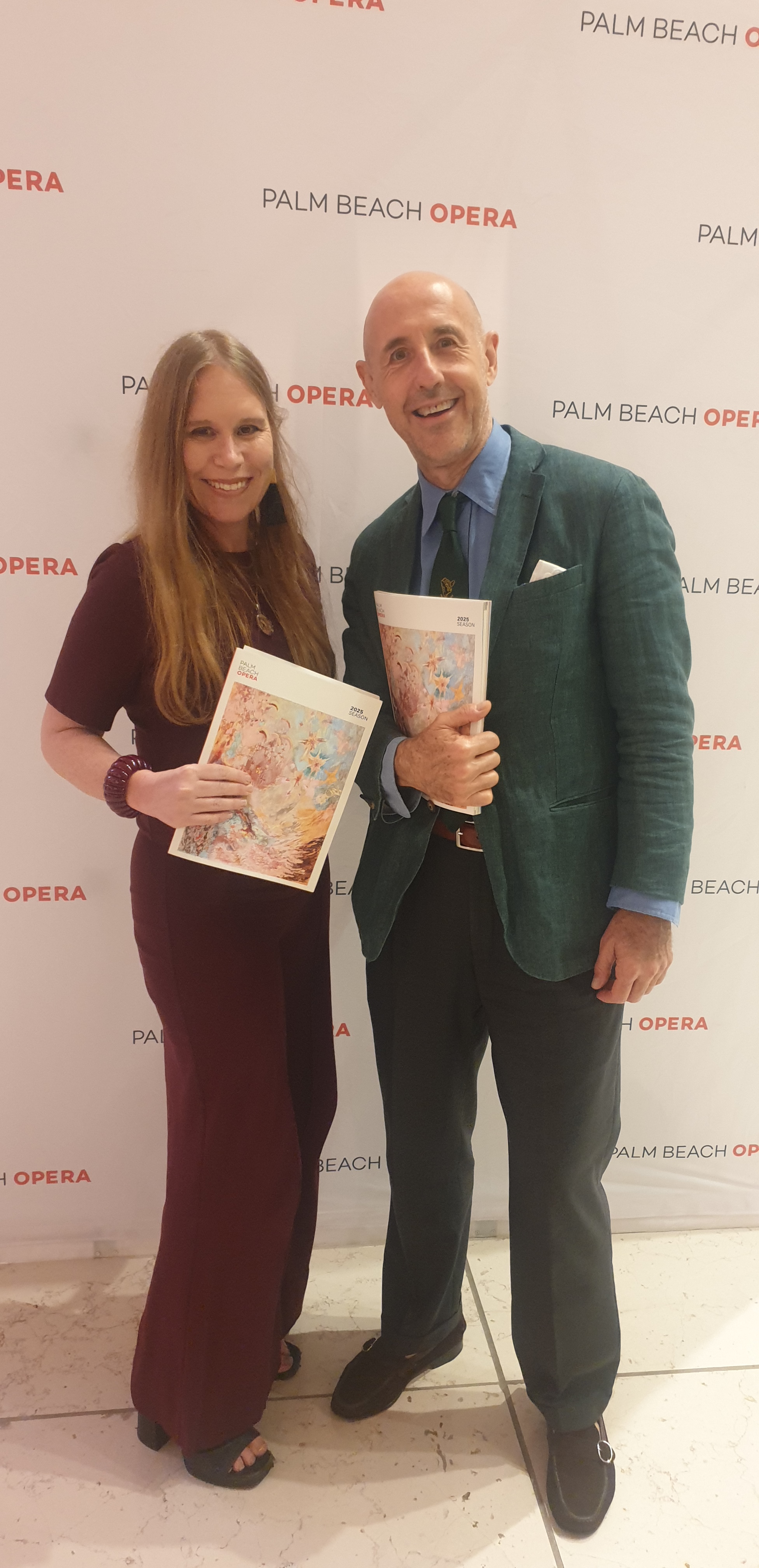
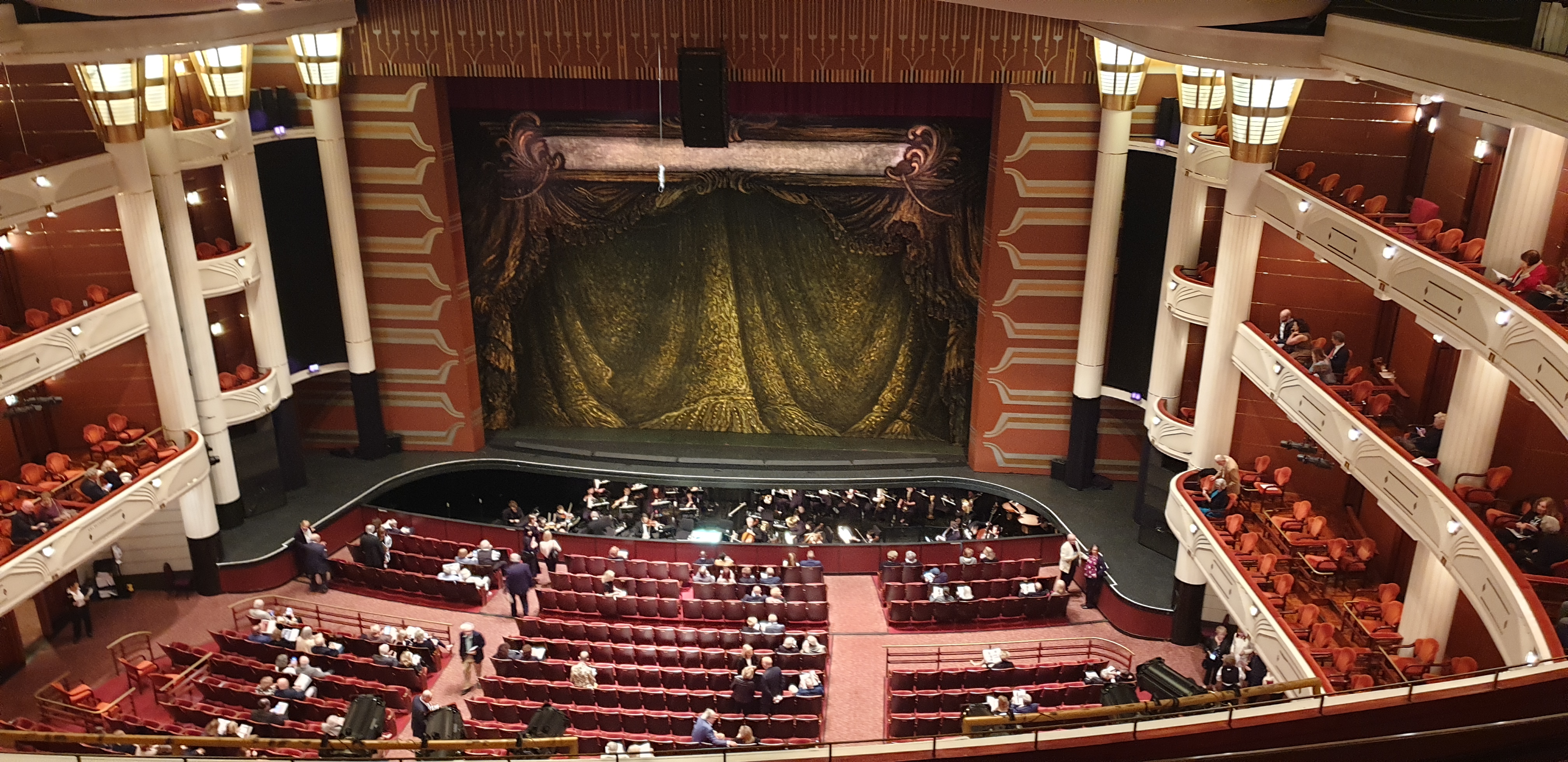
At any rate, I again had the chance to see La Traviata at the Palm Beach Opera last week in the Kravis Center with Caitlin, a work colleague and fellow opera fan.

The production was amazing! Gabriella Reyes, in her pro debut, hit it out of the ballpark, despite taking the current liberty of pushing the Sempre libera finale to E flat above high C notwithstanding that Verdi wrote it in high C, she is forgiven for following the trend. Mario Chang from Guatemala did a perfect job as Alfredo, and unexpectedly Michael Chioldi surprised as Alfredo’s dad, Giorgio Germont, totally channeling his best Gattopardo.

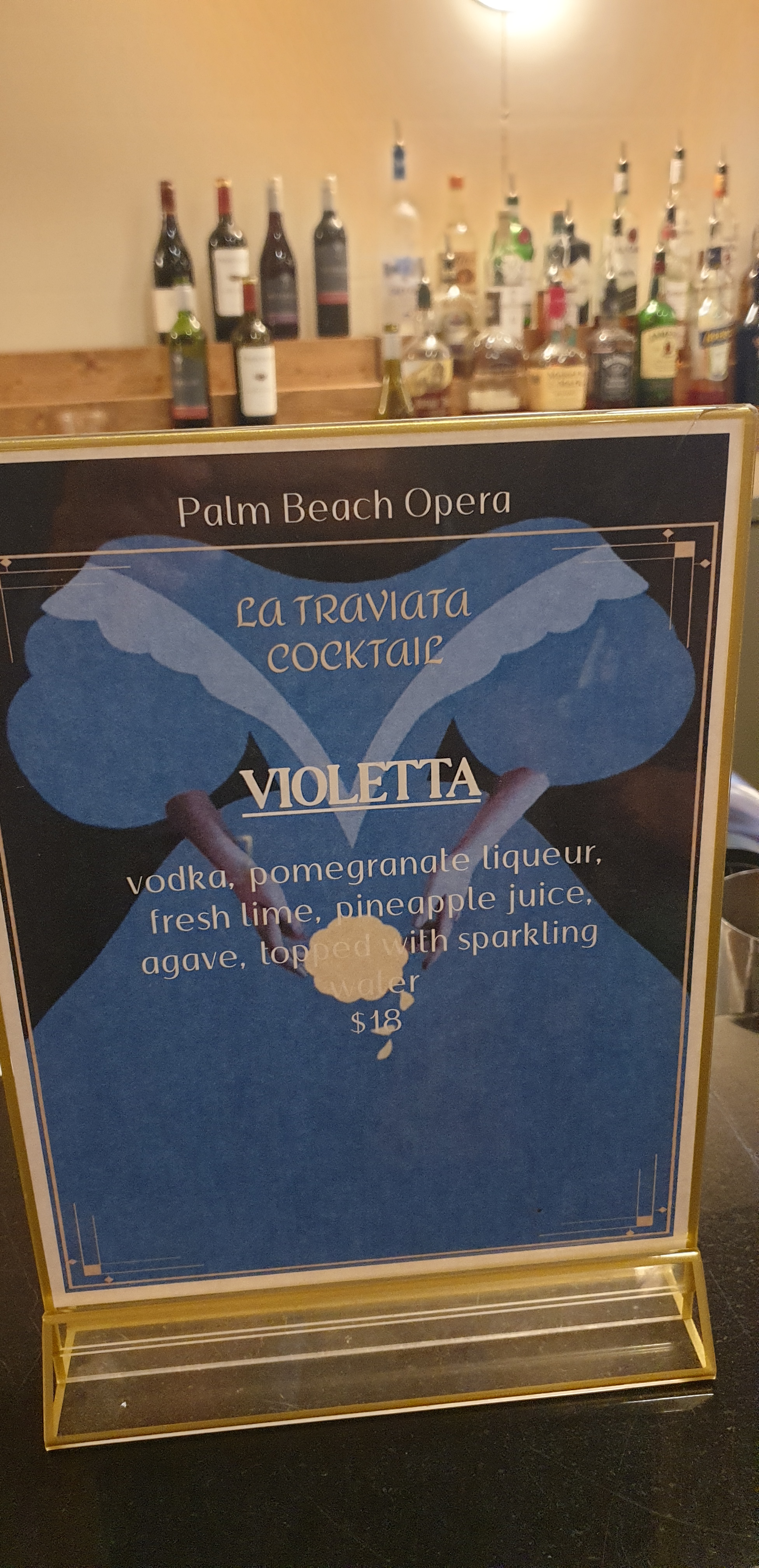
Palm Beach Opera was impressive in their attention to detail: the décor, the photocall, even crafting an apropos cocktail, the Violetta, which I must say, was delicious.

So if you get a chance to see La Traviata, do not hesitate to go. You are welcome.

Who was the first American (US) saint?

Don’t worry, I had no clue either. It was Mother Cabrini, who was Italian, but aren’t most Americans immigrants? (When was the last time you saw a native North American?)

At any rate, they made a movie about her -about time, for she was an amazing woman! The main problem with “Catholic” films is that they tend to be chronically underfunded, and it shows. Unless you are Mel Gibson and have access to Hollywood money, your production is going to be underfunded. See for example last year’s Santiago: the Journey within.

We can serve our weakness or we can serve out purpose, not both.

Cabrini

But Cabrini is not about production budgets, it is about the message of this tenacious, gritty, woman, who worked and worked and worked to help (initially) poor Italian immigrant orphans, but built a massive worldwide organization of schools, hospitals, and all sorts of charity work.

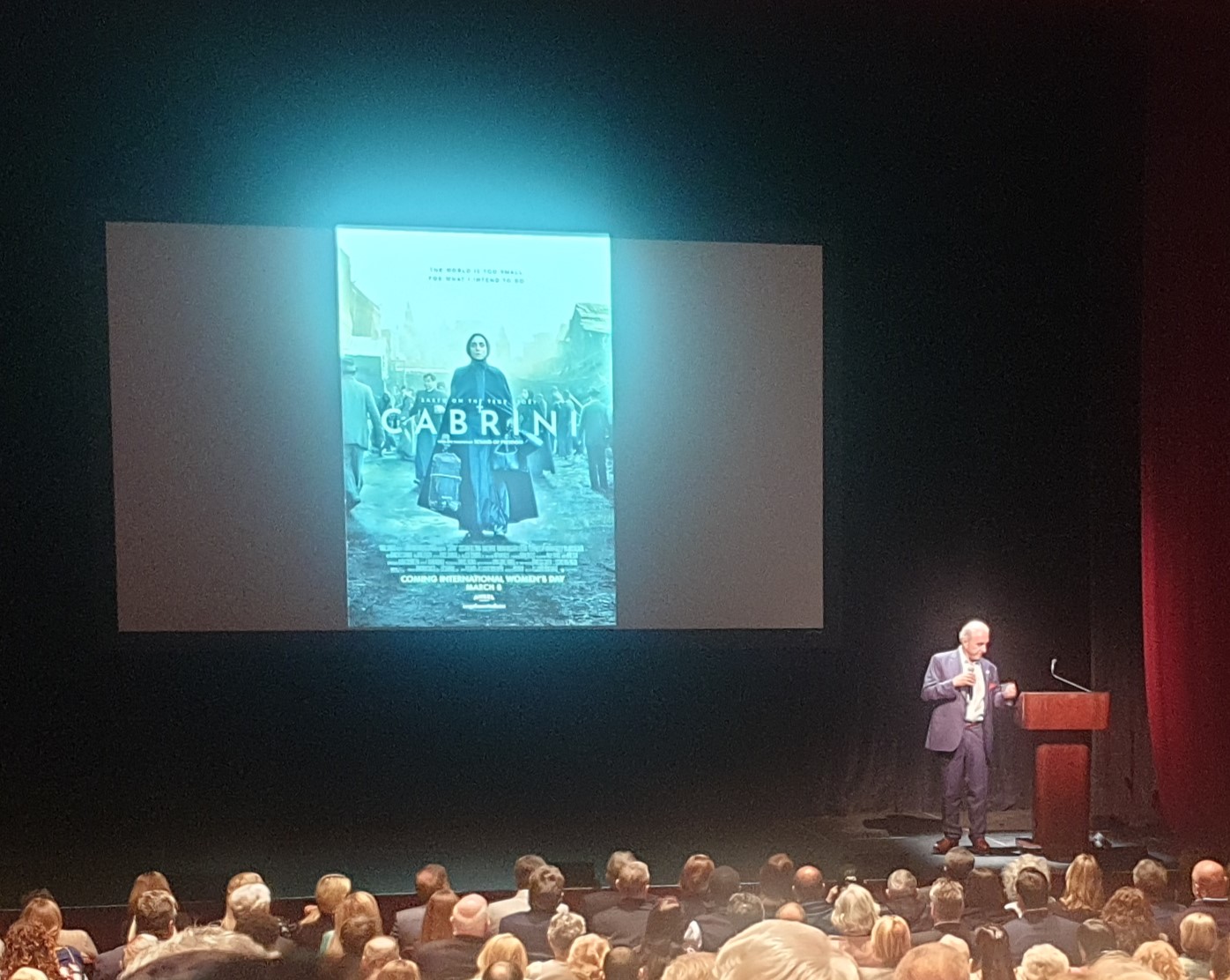
Apparently, one of the financiers of the film, Eustace Wolfington, is a Palm Beach resident, so they invited me to a prescreening at the beautiful Kravis Center, followed by a Q&A by the director Alejandro Monteverde, cinematographer Gorka Gómez Andreu and the phenomenal actor that plays Cabrini, Cristiana Dell’Anna.

The world is too small for what I am going to do

Cabrini

The next day, as I was making my daily coffee at the espresso machine, I was telling one of my students who happens to be of Italian heritage from New York, about the film. He knew about the patron saint of immigrants and told me that he would, in the future, love to have a relic of Cabrini… Later in the day, I was telling a colleague about the film. She opened her desk drawer and there, surrounded by paper clips, toothpaste, and assorted office material was, voilà … a relic of Saint Cabrini. I hear she has since given it to the student.

At any rate, the film is coming out March 8th, so book it to a theatre near you. Do not be a stickler for the production and just focus on the message. You are welcome.

We are bold, or we die.

Cabrini

The Holdovers, an ode to Stoicism.

One of the many blessings of Film Club, beyond the fellowship and deep discussions, is that every few months you watch a jewel of a film. This month’s theme was Boarding Schools, and the repertoire was: Louis Malle’s Au Revoir les Enfants (1987), Netflix’s version of Matilda (2022)(ok, not a boarding school, but it might as well be), Robin Williams’ classic Dead Poets Society (1989) and a film I had never heard of: The Holdovers (2023).

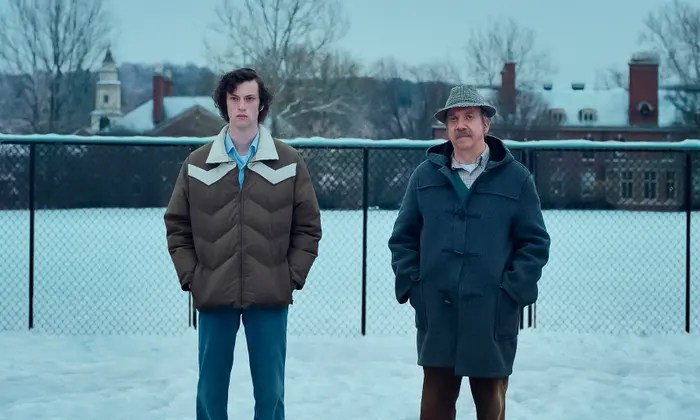
There are many factors that make The Holdovers a fantastic film -at least for me: it is filmed in two main locations I know and love well, New England boarding schools, and Boston, my beloved old Bostonia, Paul Giamatti, wonderful photography, and an insightful narrative.

As I mentioned the film starts in a New England boarding school (it was filmed in half a dozen of them, including a scene in Waltham, home of my alma mater Bentley College), so we have the whole school as the cast. Christmas break arrives and the cast is narrowed to five students who are stuck in school over break with a teacher (Giamatti) and the cook. The dad of one of these holdovers, the CEO of a helicopter manufacturer will eventually pick up his son and the rest of the boys -except one, Angus Tully (Dominic Sessa) to take them skiing. The brunt of the story is then the three holdovers: the student, history teacher Mr. Hunham, and the cook, Mary Lamb (Da’Vine Joy Randolph).

Yes, the film touches on the inequalities of the “legacy students” -children of wealthy alumni, family dynamics, class inequalities, etc. But those are accessory to the plot.

What could these three different people have in common? You might ask. Well, what we all have in common: our brokenness. And this is where the film shines. The big clue comes when Hunham, gives his two Christmas companions copies of Marcus Aurelius’ Meditations “For my money, it’s like the Bible, the Koran, and the Bhagavad Gita all rolled up into one.” At the end of the film, we will see a box full of the books, Hunham’s go to present, apparently.

Stoicism is less a philosophy and more of a way of life: understanding what is under our control, and if it is beyond our control, there is not much we can do about it but accept it. (I recently wrote about this here). Of course, it is difficult for us to become full, real stoics, it is a lifetime process. Our three protagonists -eventually only the two men in their “field trip” to Boston, struggle with their issues. Despite the obvious age difference, we see these two men are basically the same, a mirror image in their brokenness.

As any good film does, The Holdovers makes the viewer consider their lives and how to deal with their issues, and at the same time enjoy a wonderful cast, beautiful photography, great early seventies music and Paul Giamatti.

Enjoy the 70s style trailer:

70s style trailer is classic!

Seven Samurai vs The Magnificent Seven a cultural perspective

Unless you want to see hundreds of articles comparing these two films, do not type this into your interweb search engine. As usual, I want to give it a bit of a twist and look at the cultural angles of these two films beyond the obvious.

Or maybe not so obvious; yes, here is a Japanese and the Western remake that ensued, but what I found interesting was the approach from each filmmaker’s culture.

Kurosawa is meticulous in his approach to his film, showcasing Japanese traditional arts and crafts, even down to calligraphy, flag making, or traditional rice planting! The film underlines Japanese social strata particularly the difference between the farmers and the Samurai class. Coincidentally, we recently saw Jiro Dreams of Sushi in Film Club, and despite the many differences: 2011 documentary vs 1954 fiction, Seven Samurai reflects Japanese artistry and attention to detail, much like sushi making is.

The Magnificent Seven does not have the cultural weight to pull, so it focusses more on the ethical issues of good and bad and on character development, it is Hollywood after all. But the filmmaking compared to Kurosawa is sloppy, even careless. The film is basically pulled off by Yul Brynner, Steve McQueen and Charles Bronson’s magnetic charisma added to James Coburn to round off a magnificent cast.

Of course, the first big difference is that Samurai is almost three and a half hours long compared to the more normal two hours of The Magnificent Seven, so the cutting corners is evidently evident.

Another main difference is that the weapons used in Samurai are swords and spears with only a minor use of a couple of muskets whereas Magnificent revolves around revolvers and rifles, which changes the dynamic of the conflict and the engagement.

Overall, Seven Samurai is a work of art, a masterpiece of cinema, whereas Magnificent Seven is just another Western.

Happy second birthday Film Club!!

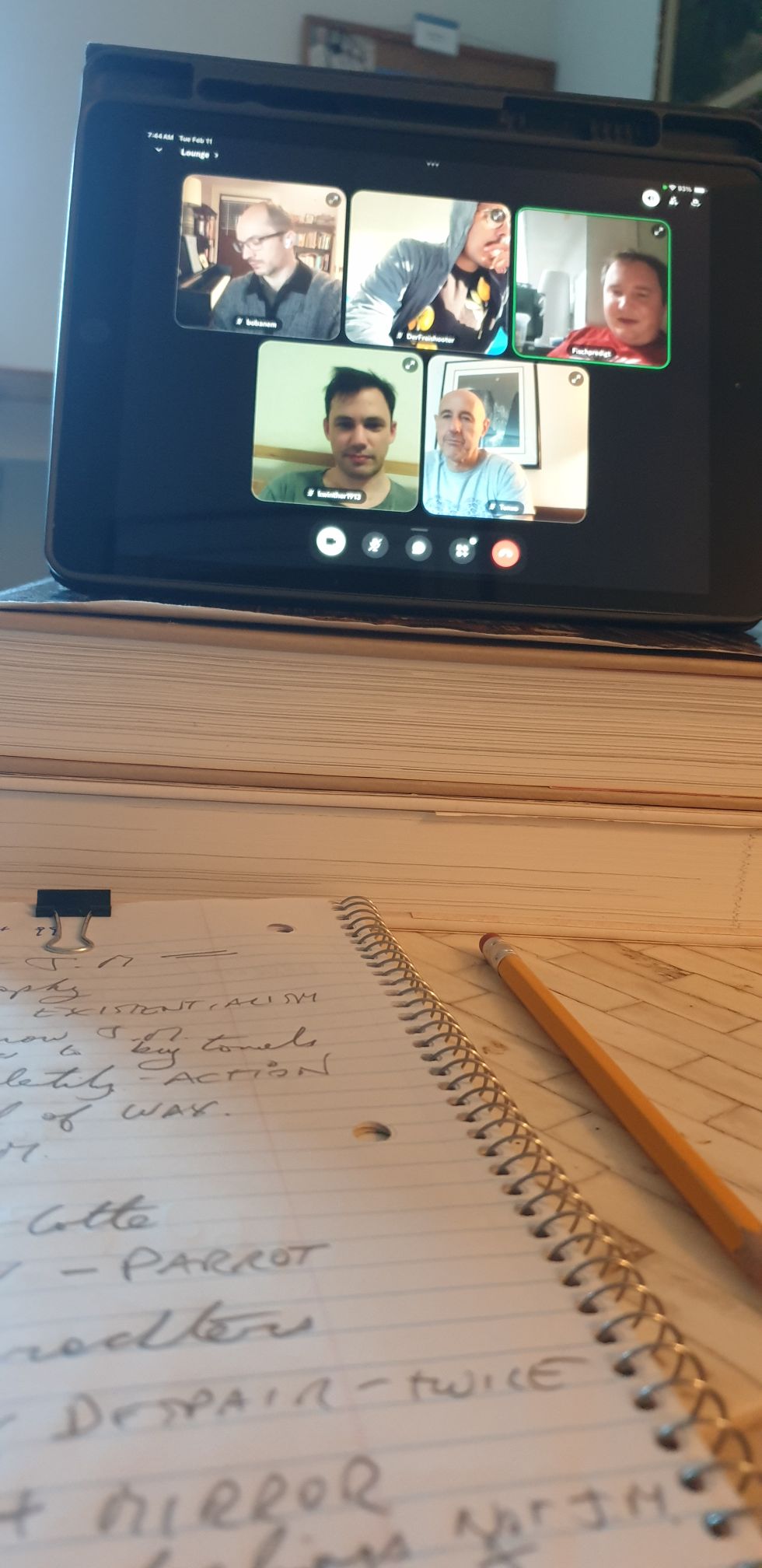
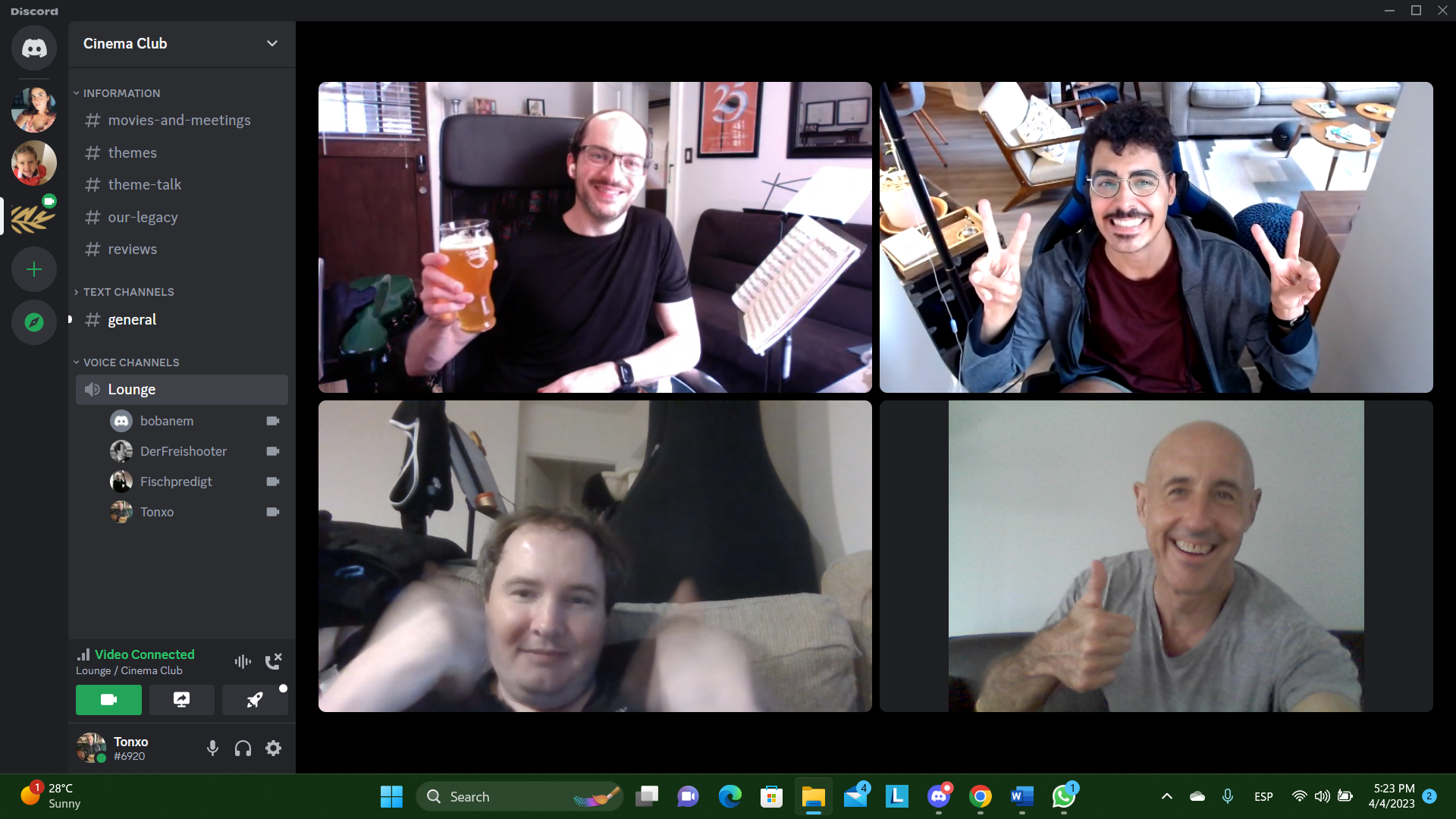
Well, what an honor it is to celebrate the second anniversary of Film Club! It is such a pleasure to sit (in the interweb) with three brilliant film lovers and just talk about the 7th art. It is one of the highlights of the month for me. If the weather cooperates, I will set up on my back porch, prepare some cheese, crackers, a little vino, a square of chocolate and a cigar. Then sit back and enjoy the meeting. We take turns talking about each movie. Of course, the best bits are when we disagree. By now we have a good sense of who is going to like which films, so we have an excellent rapport.

This month we are slowing down a bit to only two films: Kurosawa’s Seven Samurai and the American Western it inspired: The Magnificent Seven.

And the movies! Every month exploring four films in whatever genre we choose for our turn. I ventured off from a genre in July, to explore Meryl Streep’s acting. It was sad we could only watch four of her films, August Osage County was so good I wrote about it here. Another innovation this year was inviting a guest curator, Russian Literature, Film, and Culture professor Anthony Anemone (yes, he is the dad of one of our members) who recommended four brilliant films and had a great presentation for each.

I would write more about the films we watch every month, but I do not want this blog to be a film review blog, there are plenty of those and only one with my silly stories, so there.

Here is what we have watched this year. (For last year’s list, click here)

War (March)

Bridge over the River Kwai (1957)

The Deer Hunter (1978)

Come and See (1985)

Tropic Thunder (2008)

Crime and Punishment (April)

The Killing (1956)

Dirty Harry (1971)

Before the Devil Knows You’re Dead (2006)

Un Prophete (2009)

Art (May)

Tambien la Lluvia (2010)

Inside Llewyn Davis (2013)

Mr. Turner (2014)

Portrait of a Lady on Fire (2019)

Meryl Streep (July)

Kramer vs Kramer (1979)

Sophie’s Choice (1982)

Julie & Julia (2009)

August: Osage County (2013)

Fantasy (August)

Princess Mononoke (1995)

Tale of Tales (2015)

A Monster Calls (2016)

The Green Knight (2021)

The System is Broken (September)

Brazil (1985)

I, Daniel Blake (2016)

Judas and the Black Messiah (2021)

The White Tiger (2021)

Spy (October)

Dr. No (1962)

The Lives of Others (2006)

Tinker Tailor Soldier Spy (2011)

An Officer and a Spy (2019)

RomCom (November)

Roman Holiday (1953)

Hannah and Her Sisters (1986)

The Birdcage (1996)

Punch Drunk Love (2002)

Childhood (December)

Paper Moon (1973)

Stand by Me (1986)

Moonrise Kingdom (2012)

Moonlight (2016)

Russian/Polish as Curated by Tony Anemone (January)

Taxi Blues (1990)

Hipsters (2008)

Ida (2013)

Leviathan (2014)

Documentaries (February)

Jiro Dreams of Sushi (2011)

Icarus (2017)

Gunda (2020)

Fireball: Visitors from Darker Worlds (2020)

Women (March Women’s month)

Todo Sobre mi Madre (1999)

Lady Bird (2017)

Revenge (2017)

TAR (2022)

August: Osage County, a 21st C. Bernarda Alba

August: Osage County British poster

I recently wrote about Federico García Lorca’s La casa de Bernarda Alba (you can read about it here). But since I had not written about film, or Film Club since March, here is an update.

This month for Film Club, we chose to do a deep dive on Meryl Streep. This is the first time we try this format as we normally pick a theme or genre, but it worked out well, I think. We saw (in chronological order) Kramer vs. Kramer, Sophie’s Choice, Julie and Julia, and August: Osage County.

Warning, only minor spoilers. In August, Streep plays Violet, a recently widowed, pill popping matriarch and mother of three women (played by Julia Roberts, Julianne Nicholson, and Juliette Lewis who all do phenomenal jobs!). When the family arrive for the father’s funeral the drama unfolds, just like it does in Bernarda Alba… the hidden truths come out, old stories float up to the surface, rivalries are woken, and so on.

Just like with Bernarda, the action takes place mostly in the house, and in Summer. Both these factors add to the tension in both works. August deals with a larger cast which does an amazing job, but the brunt of the work falls on Streep and Roberts; to see both these heavyweights in the same frame is powerful and dramatic.

Of course one has to keep in mind that these works are almost a century apart, but the human drama, emotions, and feelings are the same.

The film is Tracy Lett’s adaptation of her own play and is intense, well crafted, and poetic.

If you want to see outstanding performances, specially from Streep and Roberts, this film is highly, highly recommended.

With my niece pre-show

Happy birthday Film Club!

The (mostly) honorable members of Film Club

Time flies when you are having fun! Our first year of Film Club has indeed flown by.

I have mentioned Film Club before (here), and it obviously merits a birthday post.

The club was started by one of my old students who then recruited three other guys: a genius film savant in Australia, another old student and exquisitely insightful film critic, and myself. The main component I bring to the table is my old age, which brings a lot of these films to life for these guys. Keep in mind that this is a totally amateur club, so while the guys are brilliant, none of us has formal training other than maybe a college course in film. So our approach is fairly naïf, even when we might do some homework researching the films we have seen.

The mechanics of the Club are fairly straightforward: we decide on a theme or genre for the month, the films are uploaded to our Discord platform and then we have an Internet meeting and talk about the films.

We have watched a total of forty-eight films, some have blown my mind like The Proposition and La Grande Bellezza which both merited their own blog posts. Many I have already seen, but I do not mind re-visiting. Some have been hilarious like The Castle, and some I frankly did not care for like Mr. Nobody, or Upstream Color, and that is ok, there is something wrong if you like every film you watch.

Here is the list. What do you think of these films? What themes of genres do you recommend we watch? Let me know your thoughts below!

Non-Linear Narratives

  1. Citizen Kane (1941)
  2. Annie Hall (1977)
  3. Mr. Nobody (2009)
  4. Biutiful (2010)
  5. Enemy (2013)

Light & Color

  • The Life Aquatic with Steve Zissou (2004)
  • Pan’s Labyrinth (2006)
  • Volver (2006)
  • Midsommar (2019)

Film Noir

  1. The Maltese Falcon (1941)
  2. Chinatown (1974)
  3. LA Confidential (1997)
  4. Nightcrawler (2014)

Western

  1. Fort Apache (1948)
  2. The Wild Bunch (1969)
  3. The Proposition (2005)
  4. 3:10 to Yuma (2007)

The city as protagonist

  1. Wings of Desire (1987)
  2. Do the Right Thing (1989)
  3. City of God (2002)
  4. La Grande Bellezza (2013)

Scandinavian +

  • Tangerines (2013)
  • The Square (2017)
  • Another Round (2020)

Family

  • Tokyo Story (1953)
  • Belle Époque (1992)
  • The Squid and the Whale (2005)
  • Farewell Amor (2020)

Horror

  • The Birds (1963)
  • The Witch (2015)
  • Under the Shadow (2016)
  • Get Out (2017)

Light-Hearted

  • Women on the Verge of a Nervous Breakdown (1988)
  • Cinema Paradiso (1988)
  • The Castle (1997)
  • The Dinner Game (1998)

Christmas Time

  • Day of the Beast (1995)
  • Tokyo Godfathers (2003)
  • In Bruges (2008)
  • Carol (2015)

Sound Design

  • Eraserhead (1977)
  • No Country for Old Men (2007)
  • Upstream Color (2013)
  • Sound of Metal (2021)

Is there a film canon?

  • Duck Soup (1933)
  • Casablanca (1942)
  • 8 1/2 (1963)
  • Taxi Driver (1976)

À propos, next month we are going to explore war in film…