In vino veritas, a good glass (or bottle) of wine


Not to be too much of a hedonist here, but in the world we live in, sometimes it is better to enjoy a nice wine than to try to change people who do not want to change. So let us talk about wine.

My dad enjoyed a good glass of wine. He knew many growers and vintners, so growing up I was spoiled by trying wonderful wines. Having said that, they were mostly solid, serious, dry, old school Riojas and the occasional Ribera del Duero, ok and a glass of bone dry sherry before lunch, oh, and nice Champagne at celebrations!

So I come by my hobby honestly. I started enjoying a glass, ok, or a bottle, seriously in college. I learnt a lot from my french classmates and other budding enthusiasts, but, like most, could not enjoy a solid bottle for pecuniary reasons. That is until I got my first job after university and then things got serious. My palate was used to those heavy, dry Riojas, so when one of my summers in university I went on an internship to Bordeaux I was baffled by the awesome flavor of those much lighter wines – that is why Bordeaux used to be called Claret (for clear). Through time I slowly discovered more and more wine regions and could, never mind identify, but more importantly, enjoy different wines.

As I got older I fell in love with different regions, producers, even specific bottles. Here are some of my faves:

Any “old school” Rioja Reserva or Gran Reserva: Marques de Caceres, Ygay, Muga, CUNE, Marques de Riscal… It is a long list, but if I had to pick a couple, they might be Remirez de Ganuza and LAN.

With the Ribera del Duero I am a bit more picky. Real Riberas have very high tannins and only the older, aged, wines have “tamed” those tannins. So my favorites there are Alejandro Fernandez’s Pesquera Reserva – this was a long love of mine. (It’s little brother Condado de Haza is pretty good as well).

I have been lucky to meet and visit a few growers myself, and that makes all the difference, as you get a much better understanding of the wine making process, the land – terroir, the whole shebang!

One such visit was to the Marques de Griñon in Toledo. He is a lovely fellow and clearly loves each and every single grape he grows! While there I tasted his Syrah (Shiraz, you say potato…) and it was love, sorry, taste at first sight! While I have enjoyed many great Syrahs over the years, that one was a spectacular moment.

Another love story might be with Pinot Noir, but not just any Pinot. You see I was never really impressed with this grape, until one good day not too long ago I had a California Russian River Valley Pinot Noir, and it changed my life: light, but packing a whole lot of deliciousness. These are normally tricky (and expensive) to find, as the region is quite small, so good luck!

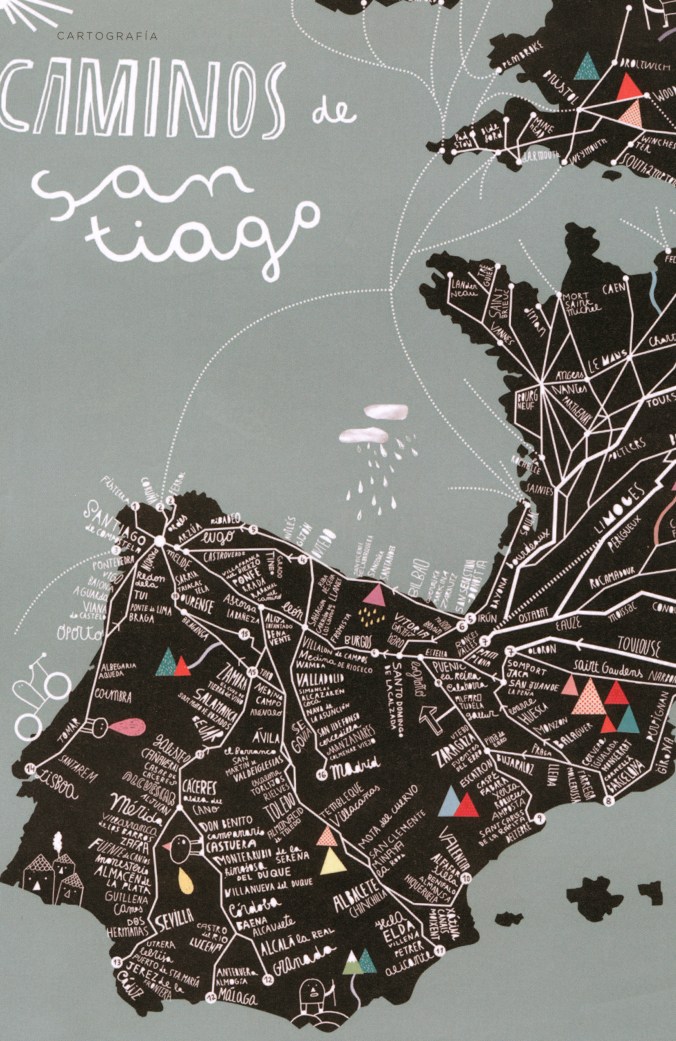
This summer while doing the Camino de Santiago I crossed the Bierzo region, which until recently was only known in Spain. Well, some of those wines really blew my mind!!

But my fave non-Spanish wine region is Châteauneuf-du-Pape, yes I know I am not very original, but I love the full bodied goodness of these guys!!

Given a choice I drink red, but if I have to pick a white, it usually is an Albariño, followed by a Verdejo, after that I’m not all that interested.

There you have it, a short but sweet list of my favorite wines, without getting all pedantic with technical bits, but still making myself a wine snob/nerd.

Torrente, el brazo tonto de la ley

Years ago, while getting my PhD, I promised I would upload my writings for my courses. Well, I did not fully keep my promise… But I am going to fix it, little by little.

You see, I recently came across an unpublished article I wrote about one of my favorite films: Torrente, el brazo tonto de la ley. It is a disgusting film and I love it.

Torrente poster

As my habitual readers will know, my writings were not peer-reviewed, so they are fairly raw and rough. But do let me know your thoughts and opinions in the comments section.

So there you have it, I hope you enjoy the article!

Click here: Torrente a XX Century Quixote

Oh, and here is the trailer (for the full 5 film package – although the article is only about the first film)


Brené Brown on vulnerability

First off I must apologize for my long silence. Life has been a bit crazy lately and I promise to explain soon. In the meantime I really want to bring this video to light.

While the pendulum of history continues its inexorable swings, it never moves back to the same place. I say this because I am confident, hopeful that the world is slowly becoming a better place. If you are quiet for a moment and tune out the nonsense and the screaming, there are plenty of signs we might be on the mend. But I am not here today to list everything I find encouraging on our planet, just to highlight this wonderful video.

You see, I was chatting with the bright and talented teaching fellow Andrea at work the other day about being open to love and to life and she mentioned this Ted Talk.

Of course, one of my spiritual guides Richard Rohr (see previous post about his teachings) also talks about vulnerability. Here he mentions it in the face of trauma:

It was in this process that I came upon what I call the axial moment in which our most intimate experience of who we are turns, as on a hidden axis of love, down through the pain into a qualitatively richer, more vulnerable place. It is in the midst of this turning that we discover the qualitatively richer, more vulnerable place is actually the abyss-like, loving presence of God, welling up and giving itself in and as the intimate interiority of our healing journey.”

I am not going to ramble on and on about it, I am just going to leave it here and you can watch it. Let me know your thoughts on the comments area. Enjoy!!

More lessons from The Camino

Last year I wrote some notes and advice for pilgrims. Here are some more picked up from round II:

Take care of your whole body, not just your feet. Last year I was hyper focused on my feet, to the point where I disregarded the rest of my body. This year I paid much more attention:

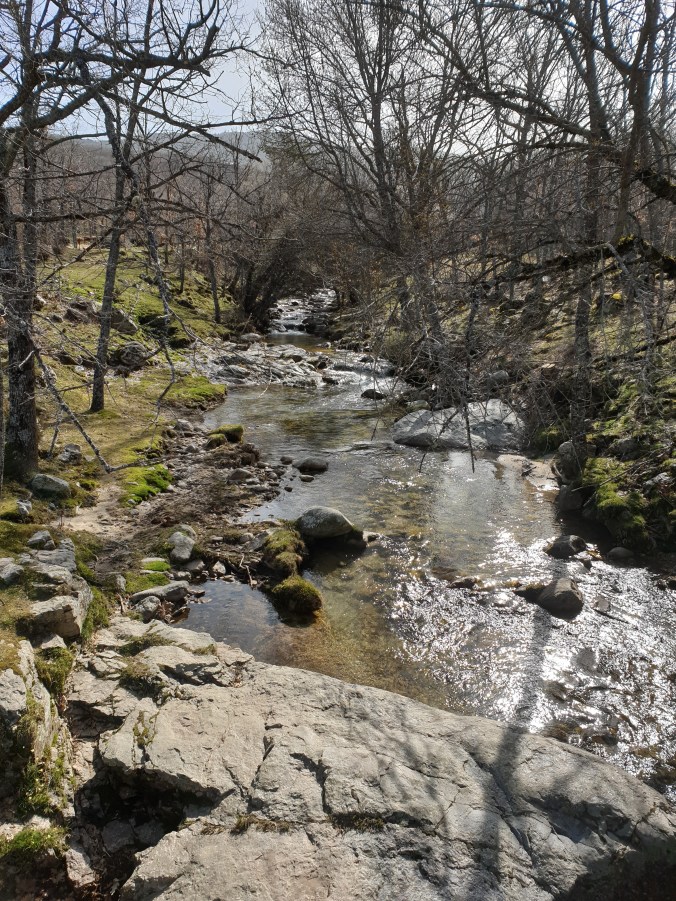
  1. Yoga: I tried to do yoga most evenings. I looked for a patch of grass and then free styled or used the Down Dog app on my phone. In Herrerias I even found a yoga class taught by Esther, a wonderful Dutch girl. It was in a clearing in some trees with a stream running by. It was by far the best yoga lesson I have ever had!! The stretching is wonderful and resets the body.
  2. Ice baths or equivalent: I was lucky to find ice-cold rivers and streams to dip in after my walks. This is critical to bring down whole body inflammation after all day hiking. I found this deeply restorative as well as refreshing. In worse case, a cold shower will also help bring down any possible inflammation.
  3. Liquids, liquids, liquids (preferably not alcoholic). I did not do a bad job on this last year, but this year I made sure to crank it up! Make sure that you keep a solid supply of water, especially if doing the Camino in the summer. I had a stretch one afternoon where I could not find an albergue, it was very hot and I was tempted to not fill my bottle. I’m glad I did, as it took a while to get to the next water source.

Besides your body, listen to your soul. The early morning hours are usually quiet and mostly without people. This is a perfect time to meditate. I use an old rosary to help me match my breath with my pace and a mantra. One morning I managed a solid 45 minutes, a record of conscious meditation for me. It was one of the most cleansing and spiritual experiences I have ever had.

But the best lesson to share is to start walking.

The Camino Part II

Since I ended my Camino last year I was itching to get back to my pilgrimage. It did not disappoint. Exactly a year to the day, I boarded a bus to Astorga, the city where I finished last year. Four hours later, I arrived. I did not want to spend the night in a place that only had sad memories and heartbreak for me. So I walked to Murias, the first village out. It was a gorgeous evening walk on one of the longest days of the year. I passed by the obligatory tiny chapel and yellow arrows. The small Albergue was a repurposed, old, one classroom schoolhouse. Just about everyone inside was already dozing. But I walked to the local restaurant for a quiet dinner with a glass of wine. Then crawled into bed after a quick shower.

My Camino proper started, like last year, on my Dad’s birthday. It is a tiny, silly way for me to honor him and to celebrate with him, walking with his old walking stick. Right out of Murias there is a small detour to one of the prettiest villages in Spain: Castrillo de los Polvazares. An ancient, untouched stone village. Stone homes, stone streets, stone church, stone everything. I made the detour because I remember driving there with my father in his massive Mercedes and being so awestruck by the beauty of the village. My morning walk is always my favorite. The dew on my legs, the silence, loneliness, the cool.

The path was a slow but steady climb to the second highest peak of the route, past Rabanal del Camino, where I stopped to chat with a Benedictine Monk in his monastery, and Foncebadon, to Cruz de Fierro, the site of an ancient Roman temple. It is a tiny iron cross on a massive wooden post. Pilgrims are supposed to drop off a stone picked up at the base, but with the accumulation of stones, they are now suggesting leaving flowers. I had a pebble I had been carrying since Navarra.

After cresting for five odd km. the descent is very technical, putting a lot of pressure on feet, shins, and knees. I was out of the Maragateria area and into El Bierzo, a previously forgotten region of Spain that is now on the map since their wines became noticed some years ago. I eventually stopped at Acebo a lovely village of stone homes with slate roofs.

There are three basic types of albergues a pilgrim can stay in. The municipal or public ones, the parochial or church affiliated ones and private ones. I normally chose my albergues in this order. In Acebo the options were parochial or private, I stayed at the parochial, run by a wonderful American couple that had left the US because of President Trump (they can hardly be blamed).

My walk the next morning led me by a wonderful 18th C. altar in one of the tiny chapels along the way. I always stop and chat with the attendant, while I get my official stamp to prove my visit, which I will need in Santiago. Breakfast was at the gorgeous village of Molinaseca. And the walk continues past fields and vineyards to Cacabelos. The Albergue at Cacabelos is paradise for me. It is set up along the inside wall of an 18th C. neoclassical church, right up my alley! The next day I end up at Herrerias, the base of the third highest climb of the route. There is only a couple of private albergues and the one I choose is super cute. The bedroom only has 8 beds so it is very quiet. There is a neo-Hippy project next door called Project Brigid where they do music workshops, and they lend you their kitchen. I signed up for their yoga class in a small clearing, surrounded by high trees, next to a lovely stream. It was by far the best yoga session of my life.

The climb to Cebreiro is the third highest in the Camino, but in the early morning, it is a breeze. A stop at the great bar El Arbol in La Faba provides great fuel to keep climbing. The view of the hills of Galicia from the top is awesome and the town of Cebreiro is really cute, with a fantastic, intimate church where I spend some time. I keep walking downhill to Triacastelas. The albergue is in rooms of four. I room with a Mexican girl, a South African fellow and Go from Japan, who will become my new friend.

I walk to the Benedictine Monastery at Samos in one gorgeous chestnut tree forest crisscrossing  gurgling streams. At Sarria I enjoy a wonderful empanada, the local pie, stuffed with tuna. The Camino now is a bit more crowded with busses full of “pilgrims” who only walk the last 100 km. in order to earn the coveted Compostela, the traditional forgiveness of sins for doing the Camino. These mostly Spanish folks can afford to do the walk with only a day pack – or just some water – as their bus will carry their kit from village to village. I must confess it does distract from the purity of the Camino, but they must be equally accepted as they are also pilgrims, even if all they are wearing is a bikini and a water bottle, as I saw one girl doing.

Galicia is a magical region of Spain, it’s ancient hills covered with chestnut and eucalyptus forests, streams and tiny agricultural plots. The food is delicious and the people are wonderful. My last two days’ walk is in the company of awesome Aussie Bec and our Japanese friend Go. After a good night’s sleep at a gorgeous little hotel, the walk into Santiago is an easy 9 km, just in time for the Pilgrim’s mass with the fabled Botafumeiro incense burner that somehow uncorks all my emotions as it swings across the naves of the cathedral. I only have time to get my Compostela before jumping on a train home, I’ve got a busy summer ahead!

Dalí and the Dalí Museum


The biggest collectors of Dalí where Reynolds and Eleanor Morse, who founded the Dalí Museum in St. Petersburg – the one in Florida, not the original one. My Spanish V class went on a field trip to visit it.

This year in  Spanish V we studied early 20th Century Peninsular literature and culture. It was an exciting course: we started with late 19th C. Naturalism, reading Emila Pardo Bazán’s short stories, and moved on to Miguel de Unamuno’s San Manuel Bueno, mártir, a proto existentialist text. (To read more about Unamuno and Existentialism see my previous post about Existentialism and the Quijote), we saw Buñuel’s Un Chien Andalou, while studying and reading about Surrealism. We read Federico Garcia Lorca’s poetry  and talked about the Second Spanish Republic and how that led to the Spanish Civil War.

Our visit to St. Petersburg was fun. We took a van for the two hour drive North (with the obligatory stop at Starbucks to start the road trip). Once there, the Museum had our visit very well prepared. We explored the galleries and the students each presented on a work they had studied and talked a bit about Dalí. Outside the museum we walked around the gardens and labyrinth. From there we went a couple of blocks to hip, thriving, Central Ave in Downtown St. Pete, where the students  ordered their lunch – in Spanish – at Red Mesa Mercado, a street side taquería. While the students enjoyed some free time to explore the area, I enjoyed a nice coffee, then we drove back to Seacrest.

The trip was a cultural and pedagogical success, we all learned about Dalí and discovered a little bit of wonderful St. Petersburg – the one in Florida, not the original one.

Shark tagging


Every year, the Science Department at Seacrest organizes a collaboration with the University of Miami  Shark Research team to go on a shark tagging sortie. This year I joined them!

The day starts at 6:00 am driving a van full of students to Key Biscayne. If I had to define Miami with just one word it would be: Traffic. But we made it with time to stop at Starbucks for some breakfast.

The research vessel is a scuba boat (Diver’s Paradise of Key Biscayne) run by the great French/Cuban Captain Eric who moonlights as an Organizational Behavior Professor at FIU. The nuts and bolts of the tagging are simple. Ten “drum lines” are dropped with big chunks of tuna on the hooks, then you go back to check if the sharks have bitten. Sharks need to swim to breathe, so the hooks have an ingenious system to allow them to swim in circles before being tagged. The hook also has a timer so the scientists can know how long it’s been on the hook. Once on board the students have to take various measurements, check the nictitating membrane for stress and reflexes, clip a tiny skin sample from the fin to check the shark’s health and tag it! The grad students also take a blood sample. It is all very professional and humane, I was impressed. Students also study water samples for quality.

Our first specimen was a small blacknose shark, caught near Stiltsville – a series of houses on the water built during prohibition – you guessed it – on stilts, where folks would drink and party. You have to love American hypocrisy! Some are still strong enough to host raves.

The day goes on checking lines, dropping lines, hanging out on the boat, chatting with the U Miami grad students, Eric the Captain, students, and other teachers. It is fantastic to spend a school day where the classroom is the boat!

Then we caught a nurse shark. These are fascinating! Out of the water they breathe on the water they have in their system making a “suckling” noise that gives them their name, their skin feels like sandpaper, and their color is also unique.

After a long day on the boat we hit Miami traffic again to cross Alligator Alley back to Naples. Yuck.

As an educator, this is the kind of experience we always want for our students, where they are participating, helping graduate students work on their research. This is not a sterile classroom experiment, this is field research to study shark stress levels, ecosystem impact, shark immunology, etc. this is real life!

Notes and fun facts: The majority of sharks are under 5 feet long,  you can purchase shark research swag here: https://sharkresearch.rsmas.miami.edu/shop


“Here’s looking at you, kid” Celebrating the 75th anniversary of Casablanca


My first film review was in high school in London in the early 80s for Casablanca. It is my favorite movie because it has all the ingredients I love in the perfect quantities: simple but effective plot, suspense, love, even humor, great cast – Ingrid Bergman, Humphrey Bogart, Peter Lorre… great music, great script, it is full of memorable quotes and one liners. It is all around awesome.

As some of you know I do not own a TV, but I do like my movies, so I have a big screen and projector set up with surround sound. You see, I am an old fashioned old man and I still watch DVDs.  I love watching movies, although I don’t get to see as many as I would like.

It took me over a year of watching Craig’s List like a hawk until I found a decent digital projector that fit my meager teacher salary. In fact it was my last long excursion on Rocinante before the accident. I rode to Venice (Florida) to pick it up. It so happened that my acquisition of a projector coincided with the 75th anniversary of Casablanca, so I celebrated it by watching it a couple of times!

In case you have not seen it yet, go see it.

“What in heaven’s name brought you to Casablanca?”

“…My health, I came to Casablanca for the waters.”

“The waters? What waters? We’re in the desert.”

“...I was misinformed.”


Richard Rohr

Over the years I have mentioned Richard Rohr in different posts, at different lengths, but I had never dedicated a full post to him and his teachings, vamos!

I was introduced to Richard Rohr’s daily emails in 2012 by my therapist in Chapel Hill. I was immediately hooked on his wisdom and totally identified with his belief that we are all part of the same universe, we are made of the same material as plants and rocks and stardust therefore we are one with the universe. This overarching thought then breaks down into various themes such as the importance of the third element in the Trinity as Dark Matter braiding everything together. Or the importance of less is more, of cleansing, minimalism, or self emptying – Kenosis in ancient Greek.

Rohr’s daily email is a refreshing spiritual cleanse, a daily reboot button, a wake up call, a metaphysical slap on the face, and I love it. While more spiritual than religious, Rohr is solidly based on scripture and specially the mystics like Teresa of Avila or Juan de la Cruz. What he presents is a deep understanding of God and love in it’s simple, purest form, devoid of politics, dogmas, or centuries of misunderstanding.

The goal is simple: eliminate the ego. The path is somewhat harder: it requires self examination, meditation, living in the now, the present, realizing that we do not need stuff, power, etc. I could go on and on about Richard Rohr, the impact he has had on my life, but it might be better if I leave you with a quote. One could almost take any from his texts as they are all filled with awesome wisdom, but for now this:

I am convinced that “the sin of the world” (John 1:29) is ignorant killing, and as we see today, we are destroying the world through our ignorance. We need to recognize our own personal and structural violence. The death instinct always comes from people who are unconscious, unaware, and indeed do not know what they are doing. Now we can hear Jesus on the cross and know why he said, “Forgive them, Father, they don’t know what they’re doing” (Luke 23:34). When we love, we do know what we are doing! Love, if it is actually love, is always a highly conscious act. We do evil when we slip into unconsciousness.

I am writing this only a few days before Christmas, so consider this my message of hope and love to you. For my present you can sign up to for Rohr’s free Daily Meditation. Enjoy.

Richard Rohr

One of Rohr’s many books

RIP Rocinante (2006 – 2017)

I bought Rocinante brand new at Boston Harley Davidson in the spring of 2006. We had moved to the US a year earlier and I had no life, I hated my job teaching at a rough public school, had no friends, was still mourning the loss of my company that I had to close down in Spain, and so on. I have been riding since I was 14, so I figured a motorcycle would be a good hobby and maybe even a way to put some adventure in my life and our marriage. Well, the second part did not work out, but Rocinante saved my life. All of a sudden I had something to look forward to, something to tinker with, and something that offered me a great feeling of freedom and adventure. I rode to school every morning, even when it was only a couple of miles away.

My decision was easy, living in the US I wanted an American bike, that meant a Harley-Davidson. But I still wanted a quick, agile, not expensive bike, not a big, fat, expensive couch. The choice was clear, a Sportster.

Rocinante as a name came easy: I love Don Quixote, and his horse was Rocinante.

In the summer of 2011 I rode from Boston to Austin, Texas and back visiting universities for my PhD. It was that trip that gave birth to this blog, so you just have to scroll back to read all about that amazing, life changing adventure.

Rocinante and I moved to North Carolina in 2012, and we explored that state. We checked out the beautiful Carolina shore, it was Rocinante’s first time on a ferry!! Then we moved to Florida, we only managed one quick excursion to Miami, but we had so many more planned.

On September 25 returning home from school, an 80-year-old lady turned her white Lexus SUV left into my green light without seeing me and I crashed into her. I flew and rolled. Fortunately the accident happened near the EMT station, so they put me in an ambulance and took me to hospital in a jiffy! I suffered a shattered pelvis, with its accompanying trauma, and a broken thumb and annular finger. I spent three days in the hospital. Of course my mom got on the first flight out of Madrid. As I write this I have three pins holding my thumb together, while the pelvis and finger heal on their own. With time, I will recuperate.

Rocinante on the other hand will not. Her front fork was destroyed to the point where repair would be more expensive than the value of the bike.

Those are the facts. The emotions on the other hand cannot be easily put on a blog post. Even if I was just going to make a quick market run for a baguette, the anticipation of riding was exciting. We loved making week-end lunch runs, normally to Five Guys. The longer the ride the more exciting the anticipation. Riding to school every day in Florida was a blessing; a way to really wake up on the way there, and a way to leave it all behind on the way home. Longer excursions left me with a deep sense of relaxation. You see, on a bike you are 100% immersed: you hear, smell, feel, see everything, something that can never happen in the air-conditioned, music filled cocoon of a car. Not only are you immersed but you are 100% engaged with the bike, the road, the surroundings, the traffic. I saw Joyce Wheeler approach the light, it was the fact that she slowed down and stopped before turning left that signaled to me that she had seen me. I fell for the most popular motorcycle accident like a stupid rookie.

I will miss Rocinante, I miss her every day, every day that I have to drive to school, to pick up some ice-cream. I miss the engine rumbling, I miss patting the gas tank like Don Quixote would have done on Rocinante’s side. I hope to get a new Sportster as soon as I can. Although no bike will replace the 11 years of emotions on Rocinante.