
Lightning visit to Chapel Hill

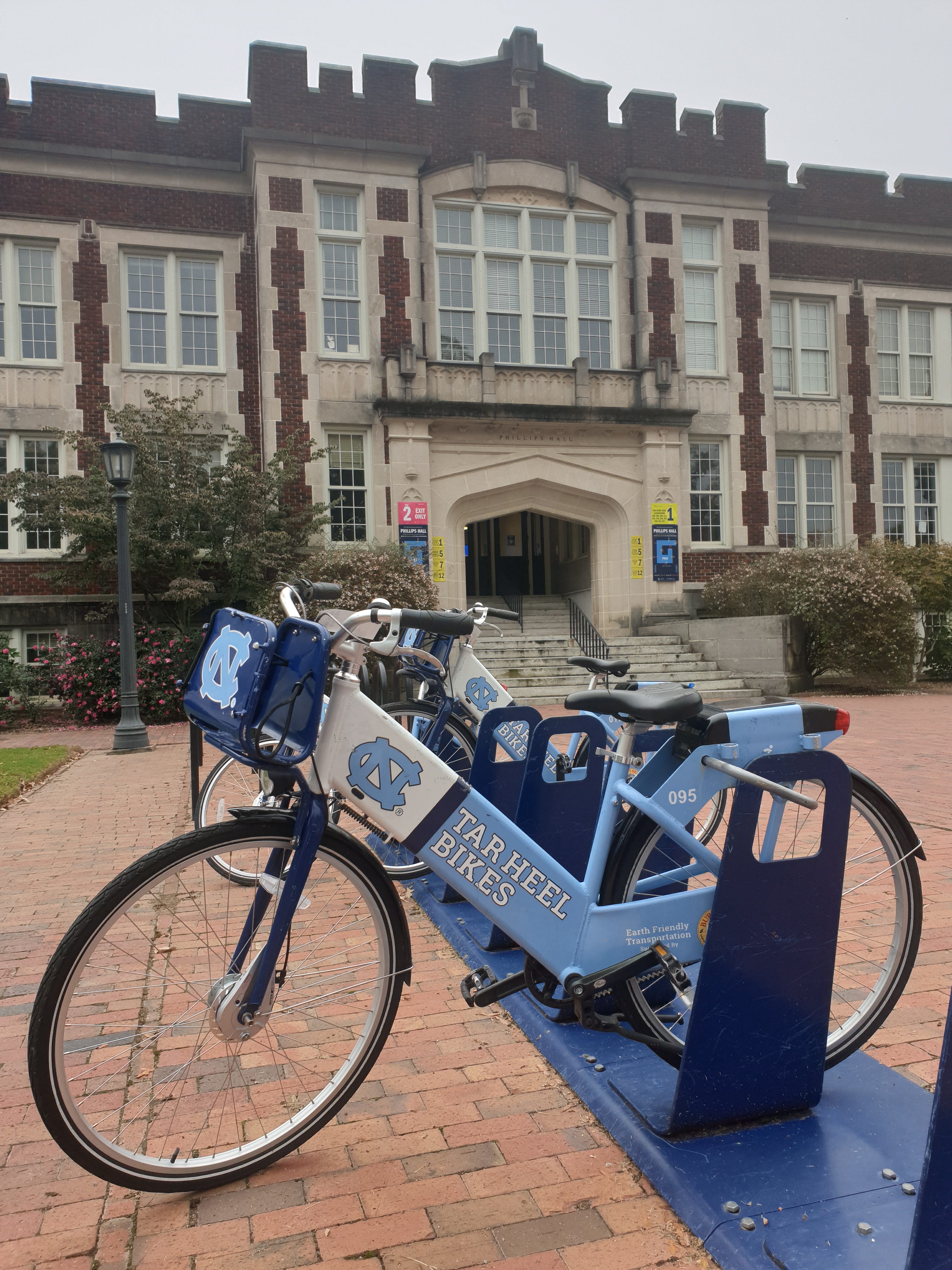
Since graduating in 2016 I had not been to Chapel Hill, and I was dying to go soak it up. So a few weekends ago I jumped in my car and drove off to my beloved Alma mater in North Carolina.

After stopping for the night at a roadside motel in Florence S. Carolina, I arrived in Chapel Hill in time for lunch. I walked across the ghostly campus to see my dear friend Mandey at her restaurant, Imbibe. She did not know I was coming and was very surprised to see me! She fed me a gorgeous pork belly sandwich!! I was happy to see they had successfully transitioned to a delivery and pick up restaurant! Unfortunately, the upstairs bar, Zogs, my second home in Chapel Hill was closed due to Covid. From there I walked down Franklin Street, across town, enjoying the energy and the community, something that I dearly miss in nameless, faceless Florida. I am glad to report that The Yogurt Pump is still serving (from a window) the best frozen yogurt in the world. My old friend Jedd has opened a cigar shop (World Headquarters Cigars) and I enjoyed catching up with him for a while. My next stop was the Student Store!! Where I overspent on UNC gear, although truth be said, it was mostly presents for family. I took the long way back, stopping to meditate at the Arboretum.

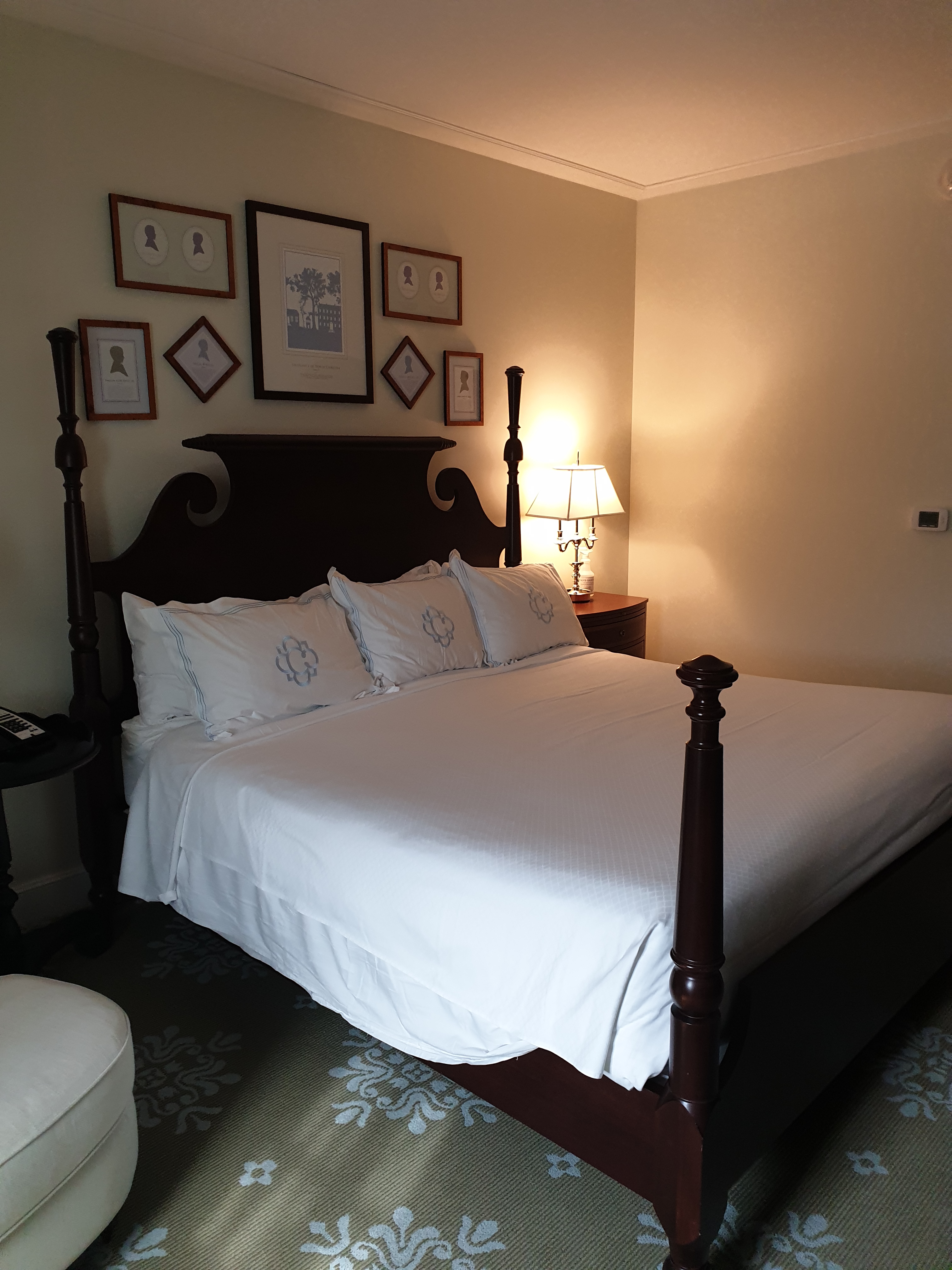
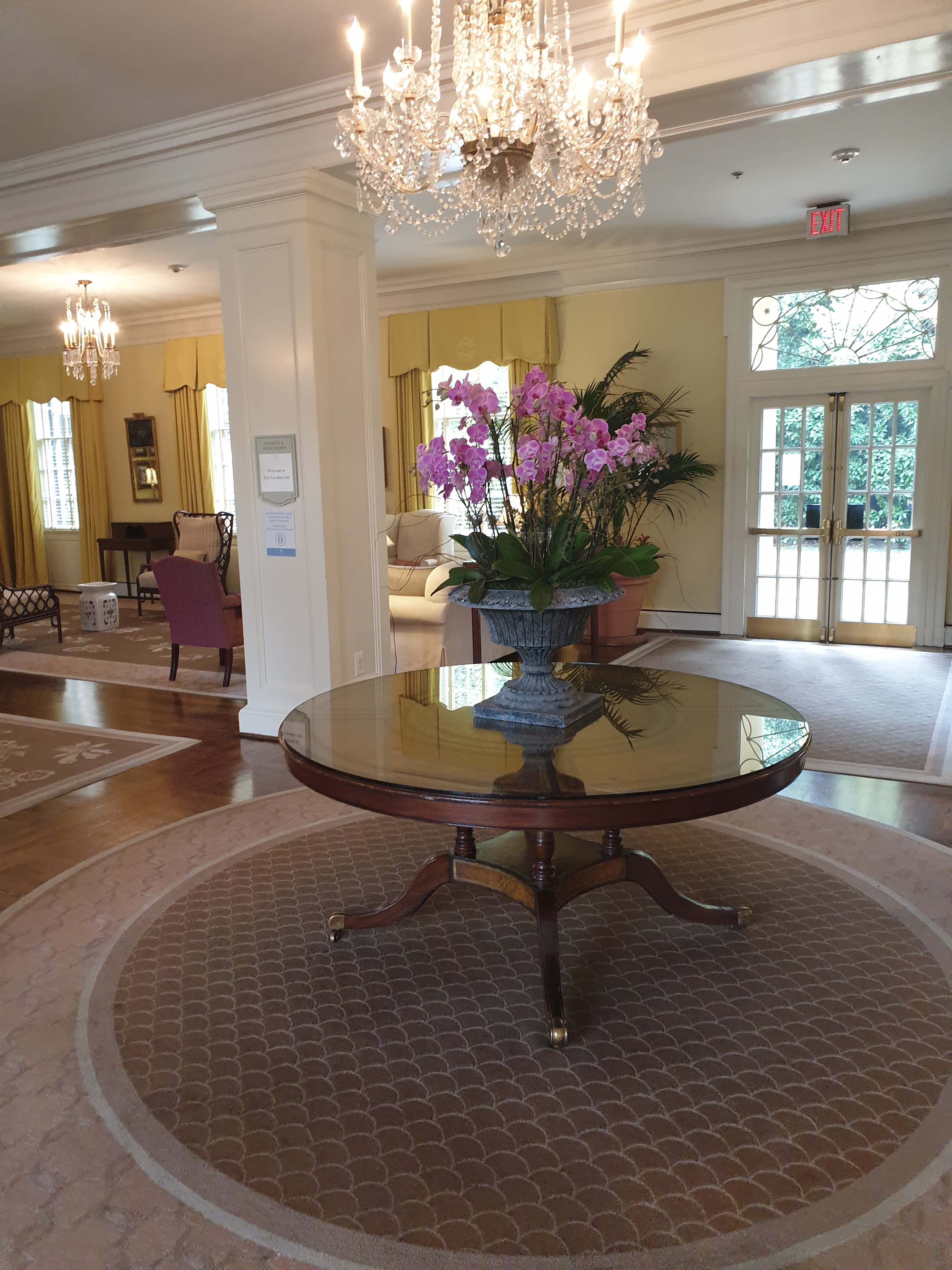
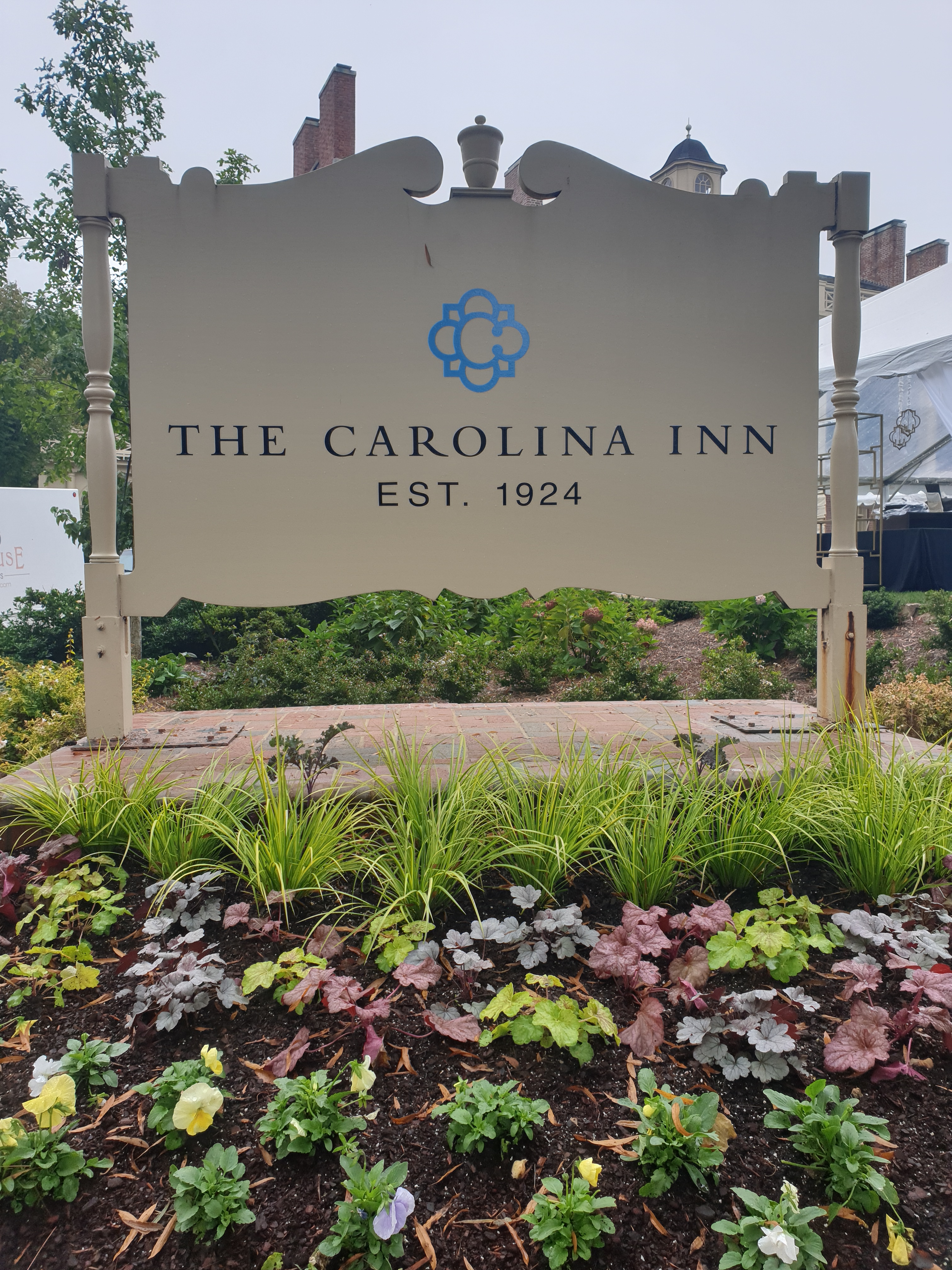
Confession time: The Catholic church at UNC, The Newman Center, is across the street from the Carolina Inn, the quintessential Southern hotel. From my first days in North Carolina, after church on Sundays I would go across the street to the Carolina Inn, get a coffee and sit in the lobby to read. Once, when my sister came to visit, she stayed at the Inn and had an amazing experience! So, at last I bit the bullet and stayed at the Inn, I was dying to, and it did not disappoint!

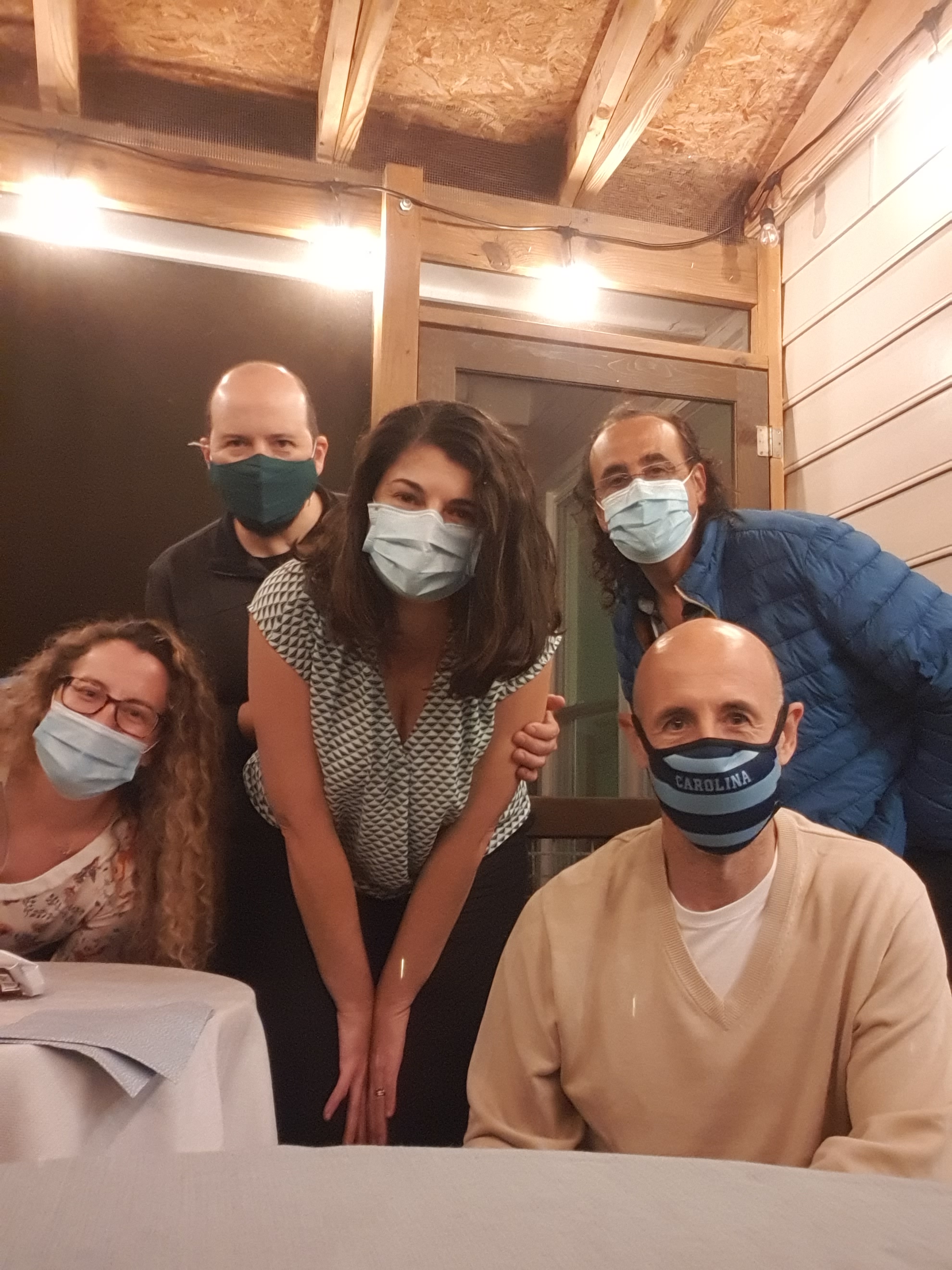
I had socially distanced dinner with a handful of dear old professors: Cristina, Oswaldo, and Irene. My heart was overjoyed with happiness to spend time with them.

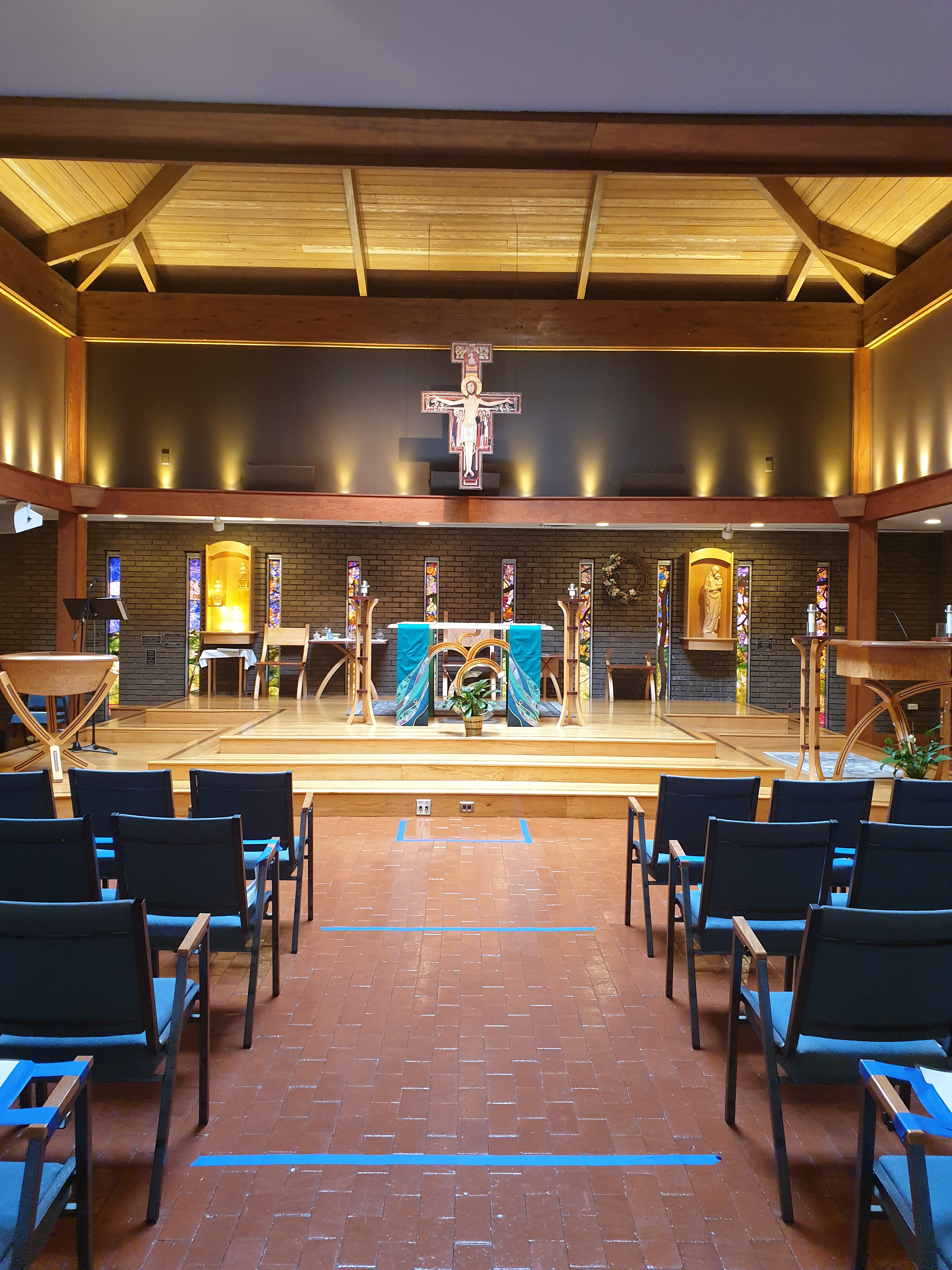
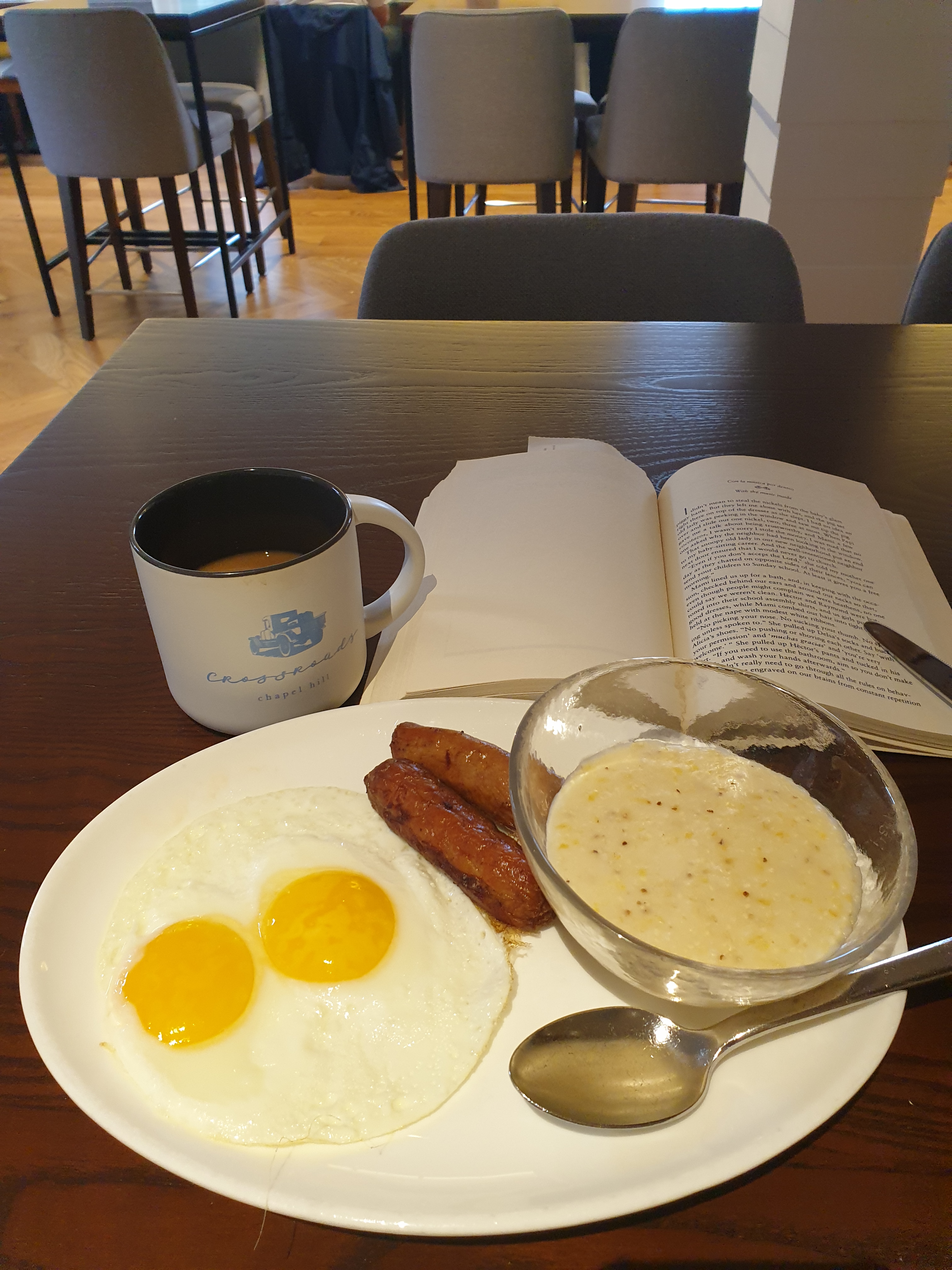
Sunday morning, after a perfectly Southern breakfast –including grits! I crossed the street to church. Mass is normally being held outdoors on the parking lot during Covid, but due to the rain, mass was cancelled and the ceremony was going to be livestreamed from inside. At the beginning they did not want to let me into the building, but when I identified Father Bill, they did. Seeing Father Bill was a more moving experience than I expected. Mass, with only a handful of parishioners, mostly undergrads, was simple and beautiful. After mass we could not abide by the rules anymore and Father Bill and I fell into a heartfelt, teary (for me) hug.

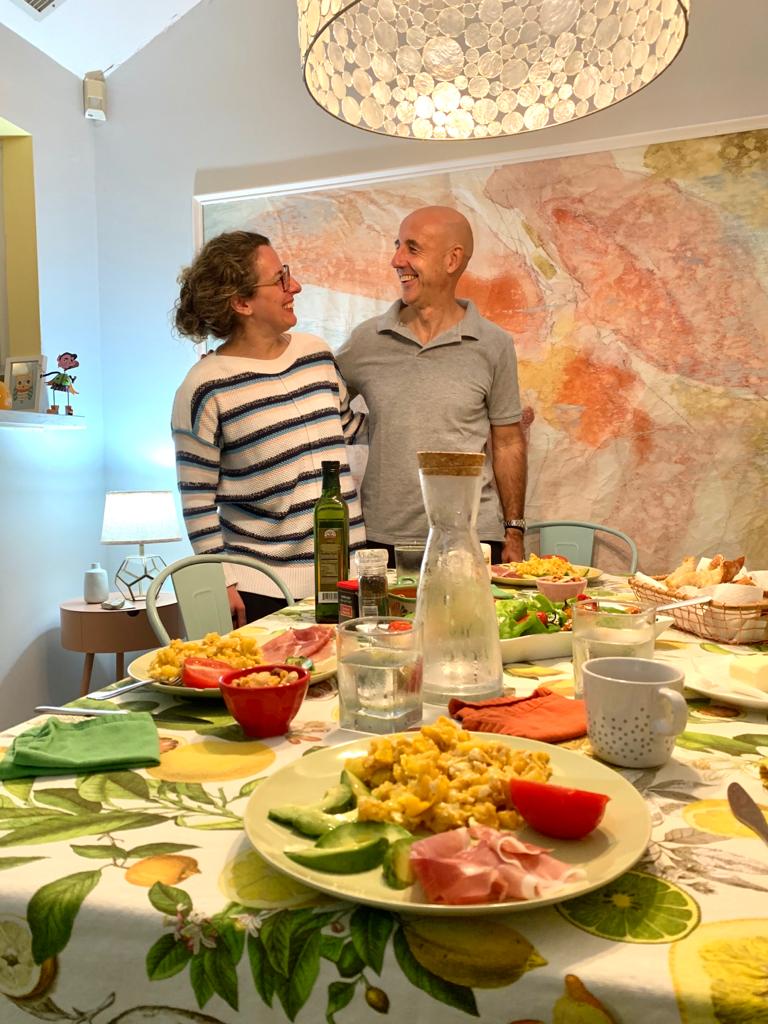
After sadly checking out of the Carolina Inn, I drove to Irene’s house for lunch. And what a lunch it was, full of good food, laughter, memories, conversation, and needless to say: gossip! After that, it was a sad, lonely, and rainy drive back to Florida, stopping to sleep in Savannah Georgia.

Now I can’t wait to go back and see all the folks I missed in this lightning visit (you know who you are), and to go to mi favorite places that were closed for safety’s sake. As Terminator would say: “I’ll be back”.

The “new” volunteering

Volunteering is one of my favorite things to do. I find that helping others, however indirectly it might be, is one of the most rewarding endeavors one can aspire to.

I started volunteering after my breakup in 2010 in Boston. Community Servings cooks and delivers food to homebound families (due to illness) all over the Boston area. Spending my Saturday mornings chopping carrots -or whatever else needed to be done- was the best therapy. And I made great friends in my “squad”.

In Chapel Hill I spent four years volunteering at the Ronald McDonald House. The house hosts families of hospitalized children, free of charge, as long as the child is hospitalized. Monday evenings from 6 to 9 were spent cleaning the kitchen, cleaning, and preparing rooms for families, welcoming families and showing them around, vacuuming, sorting soda can tabs (the aluminum is well payed), whatever needed doing. I cherish the friendships I made in the house during these years.
Two of my favorite guys Ramses and Ronald!

Naples Florida is a bit off the beaten track, so my volunteering took a two-pronged approach: Every Saturday I sorted stuff at the Saint Vincent de Paul Society Thrift Shop and then took it out to the showroom floor. I also helped at Champions for Learning, helping low income students get into college! This was extremely rewarding, as I helped students with their college essays or interview questions. The smiles on their faces when we made a sentence work or when they figured out an interview question were all I needed to fill my heart with joy.

Back in Spain I volunteered at the Ronald McDonald Prenatal Family Room at the La Paz Hospital keeping the room in tip top shape -and baking brownies for the families! I also volunteered at my local Caritas Chapter warehouse, sorting donated books, furniture, and electronics for low income families. I quickly integrated with the team and the hours passed quickly sorting and helping folks out.

Baking brownies for the Ronald McDonald Family Room

Then Covid struck and I moved back to Florida. Although there might be volunteering possibilities out there, I am cautious. At the same time, I miss the camaraderie, the rewarding feeling of helping others.

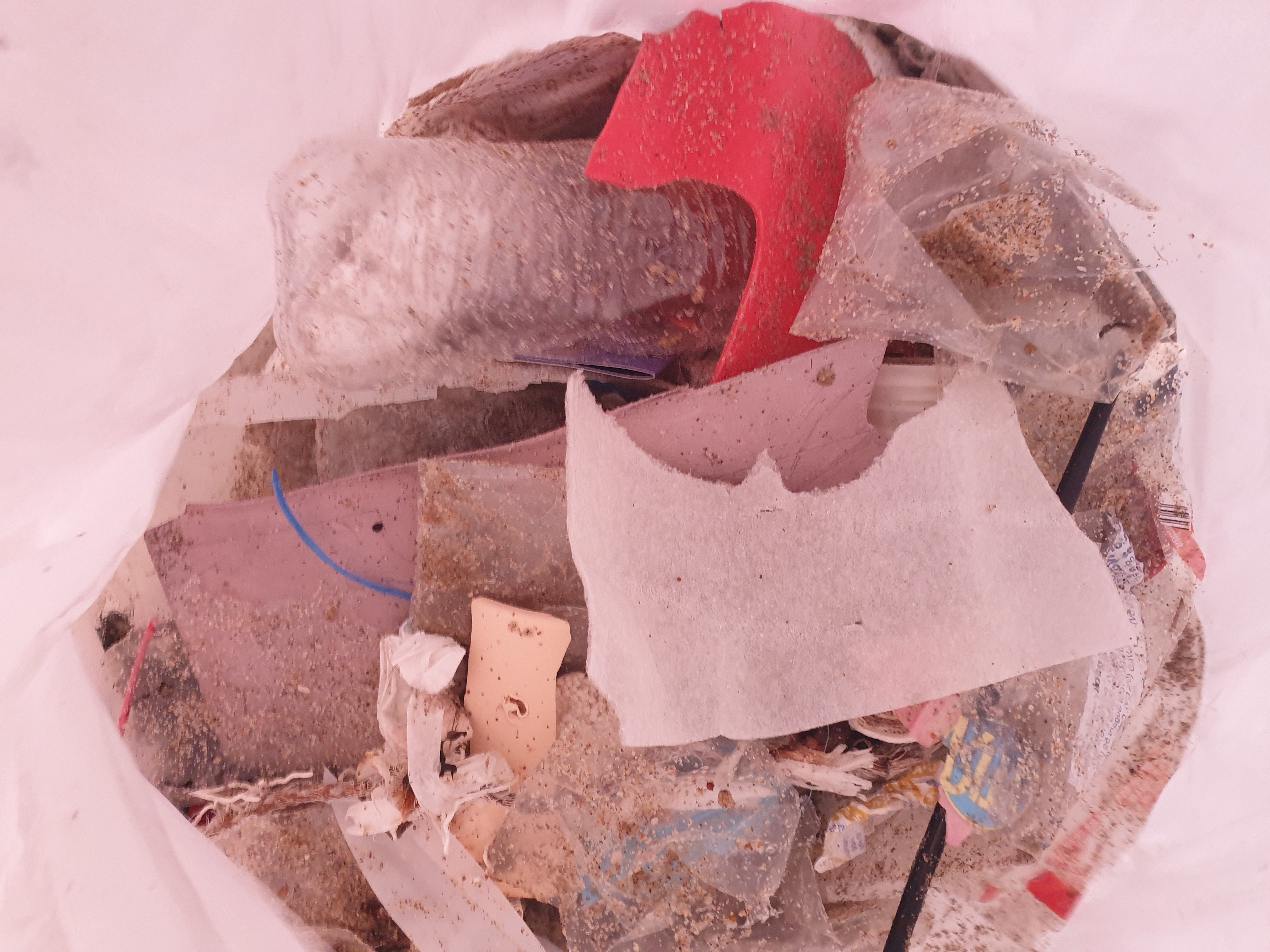
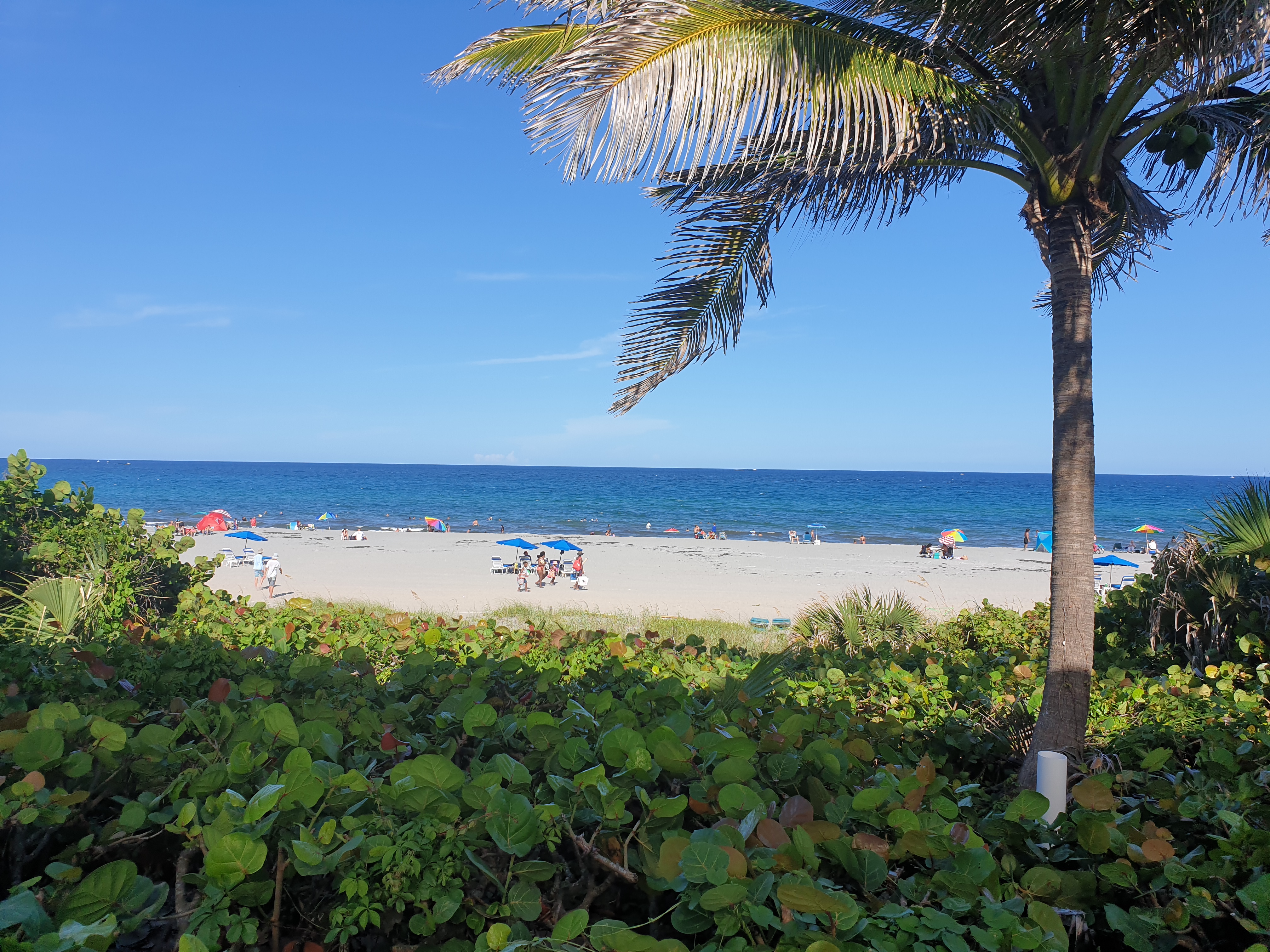
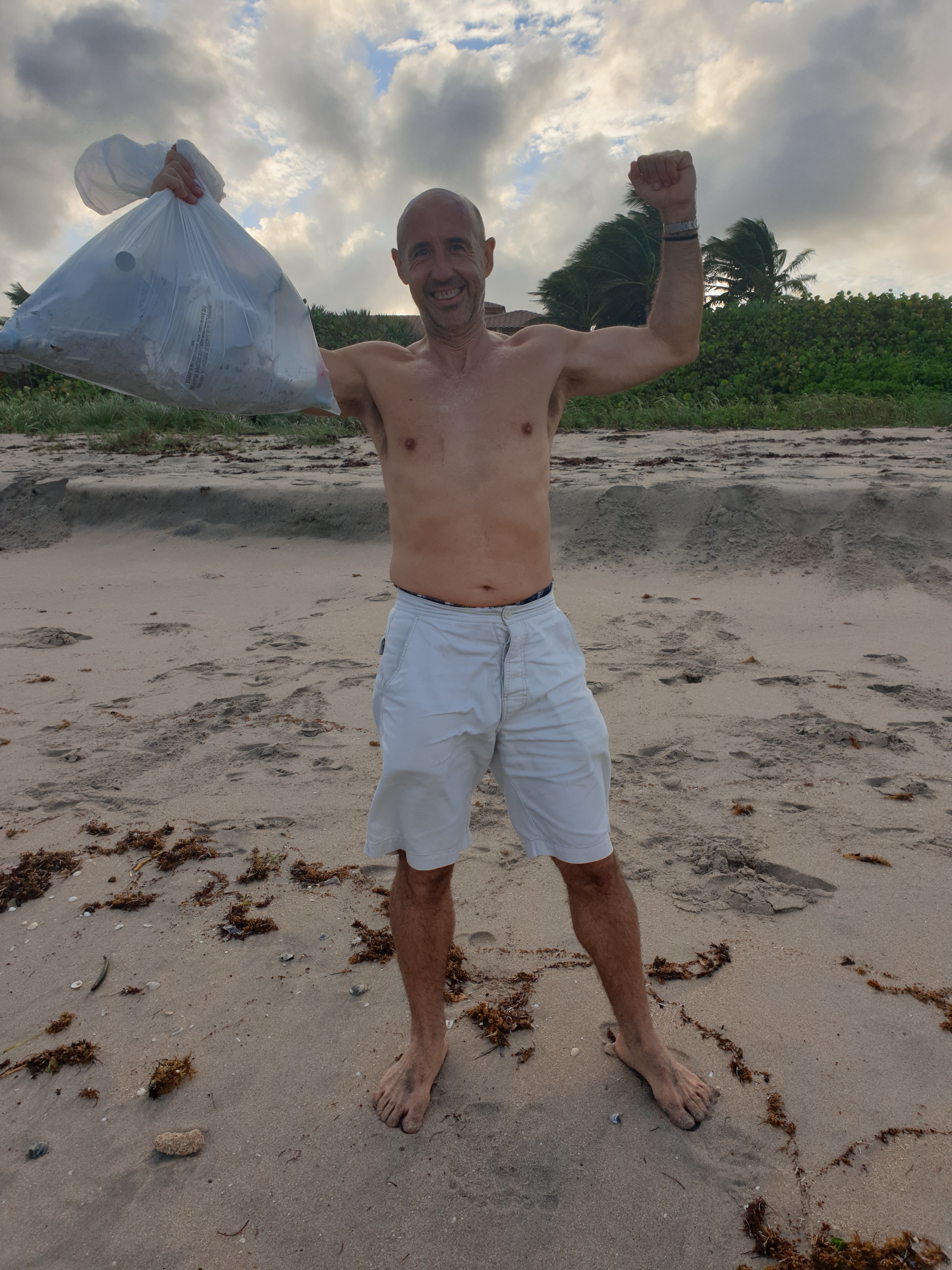
Fortunately, I live near the beach where I go for open water swims every week (weather, rip currents, and surf conditions permitting), so the other day I grabbed a bag and went for a walk picking up trash. I spent an hour and a half walking, meditating, and retrieving plastics (mostly), all sorts of bottles, 2 flip flops (different), bits of rope, bottle tops, and random trash. While it was a lonesome project, I did clean up the beach ever so slightly, and I got some exercise and meditation done, so I will be repeating this socially distanced volunteering again soon!! (next time I will take a bucket since the plastic bag did not like the wind).

The pros and cons of multiculturalism

Moving from NYC to Boston 1988

We first moved to New York In 1977, I was 12. From there we moved to London in 1979, from there to college in Boston in 1983, and so on for back and forth between the US and Europe. As I recently wrote in my “Diversity Statement” for a job application:

I have had the privilege of growing up in multicultural and multiracial environments, cities, and schools: New York City, London, Paris, Madrid, Boston, etc., so since childhood I have been bathed in diversity: cultural, racial, religious, sexual, socioeconomic, etc. On top of that I have had the privilege of traveling widely.

So, while being multicultural is definitely an enriching experience, it does have its drawbacks: The first one is that you no longer “fit” into any particular “set” culture, you become a bit of an outsider whenever you are in an environment of population that is “born and bred” in a place.  The second and more insidious aspect is that you might no longer meet certain legal or bureaucratic requirements to say, work in a place.

This is what happened to me when I returned to Spain in 2018. My US degrees (Including a PhD) are not recognized in Spain to work as a teacher. Furthermore, to get all my paperwork approved and transferred and certified and triple stamped would have taken years. Besides the paperwork, there is a mentality issue. Teachers in Spain are generally not a respected, appreciated, and certainly not well remunerated part of the population. There are historical and social reasons for that, but I will leave them for another post.

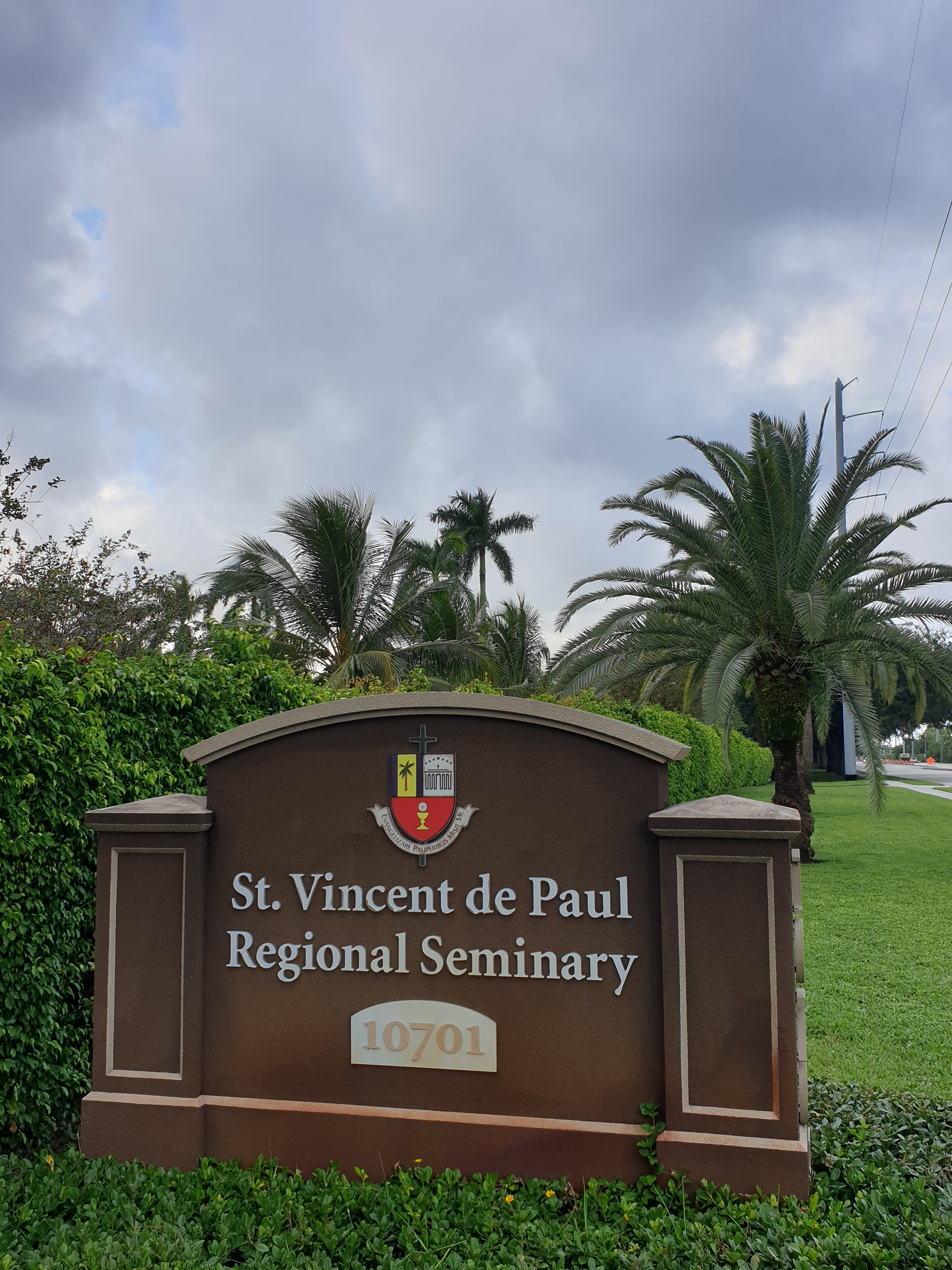
Long story short: I have returned to work in the US as Assistant Professor of Spanish and Assistant Director of the Language Department at Saint Vincent de Paul, a major seminary in Boynton Beach Florida! This was not an easy decision, leaving everything behind for a job, but I could no longer live in a country that refused to acknowledge me professionally.

The Rubaiyat of Omar Khayyam

The Rubaiyat of Omar Khayyam

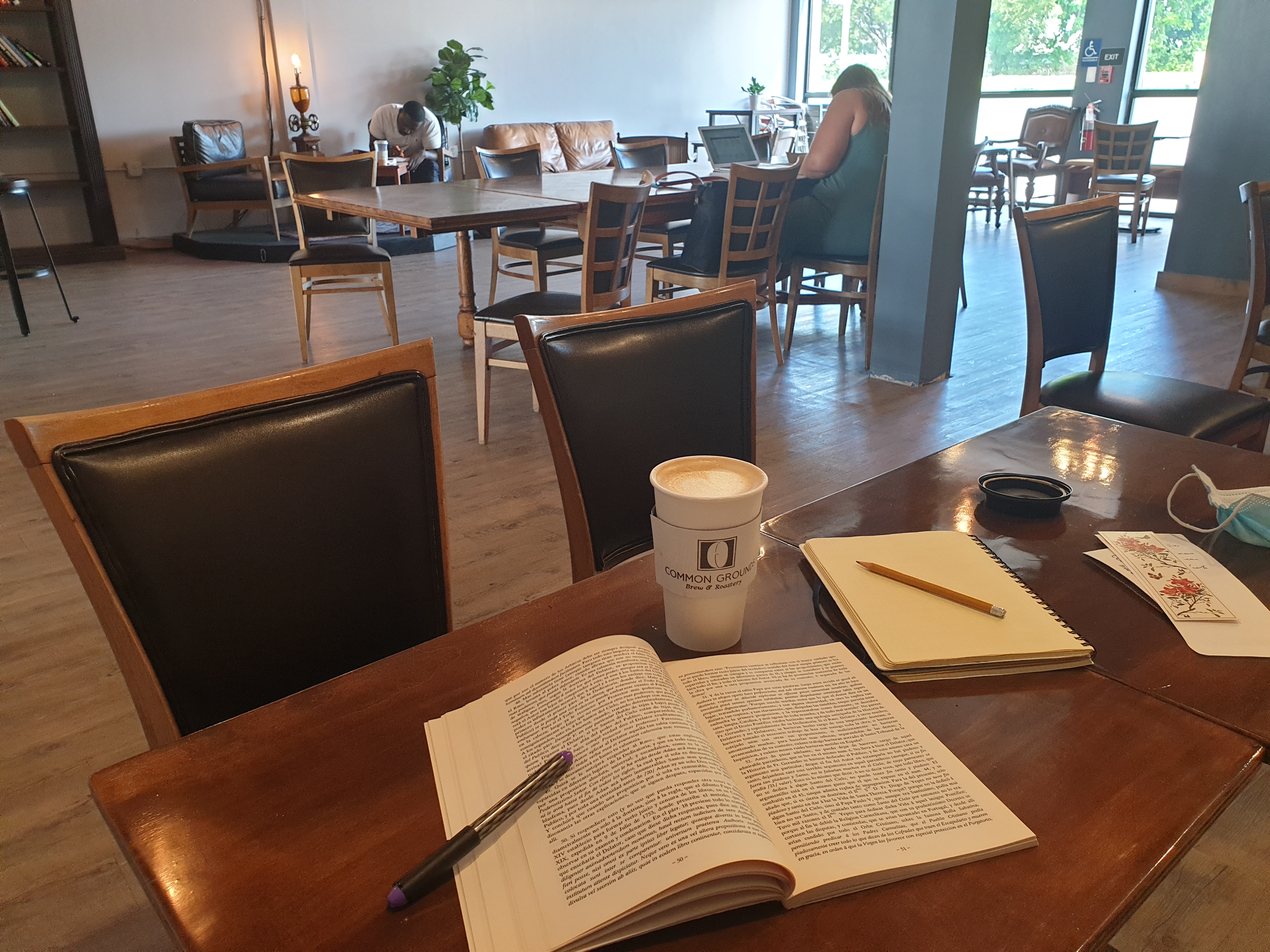
Although I have a few editions, the other day I picked up a nice, used copy of The Rubaiyat of Omar Khayyam. It is one of my favorite books/poems of all time. I think it all started in the early 80s when we were living in London. My mom hired an Iranian English teacher to teach her English. I rarely saw her. I would come home from school and she would be in class with my mom. But one holiday she came to visit us in my parents’ country house outside Madrid. As a gift she brought a kilo of pistachios -which to this day I love, and a beautiful edition of the Rubaiyat.

I immediately fell in love with that book, it had an illustrated cardboard cover and beautiful illustrations. Every page had the verses in the original (more on that later) Persian or Farsi, English, and French. Right after college I purchased my first copy, and I would read it occasionally. For the last few years, I read it almost every Summer! This is not so strange, as there are several books I read and have read multiple times: Voltaire’s Candide and Hemingway’s The Old Man and the Sea are examples.

At any rate, the book is not without controversy: About the original text, about authorship, about religious interpretations, and about the translations. I have no academic interest in the text, I just enjoy the poetry. I love the flow of the verses, the circularity of the themes, the imagery. It is ancient Persian but feels totally modern. It is an appeal to stop and smell the roses, something that we so often forget to do. Take for example:

I sent my Soul through the Invisible

Some letter of that After-life to spell:

And by and by my Soul return’d to me,

And asnwer’d “I Myself am Heav’n and Hell”

While I do not consider myself an Epicurean or a Hedonist in the modern interpretation of the words, I do enjoy small pleasures in life – which is much closer to the original thought of Epicurean philosophy, to enjoy modest pleasures from tranquility. Thus, I love a good cup of coffee or glass of wine, a well-prepared meal, a well rolled cigar, a piece of music or any art. That, I believe is the message of the Rubaiyat: to enjoy the moment that is life.

Let me know what you think of the Rubaiyat in the comments section.

The Fox and the Stork

A few months ago, at the beginning of the Covid-19 lockdown, a dear friend and old colleague from Seacrest Country Day School started reading to her Lower School students via the interweb. She called her daily reading “Trespassers Will” , and she soon reached out for more readers to help her with her daily story, including me!

Of course, I volunteered. Our only issue was reading a story in Spanish and then adding English subtitles. Although I have uploaded a few videos to YouTube, I had never done the subtitle bit. The trick lies in synchronizing the voice to the subtitle. It took a few tries, including the one where I deleted everything as I was almost finished, grrr.

The Fox and the Stork is an ancient Aesop fable. La Fontaine refreshed it in the 18th C as a perfect vehicle to teach and enjoy, the Dulce et utile theme of the time. It really took hold of the popular imagination, and was popular in the 19th and 20th C. I even have a tie with the fable’s motif! (you can see it on the video)

At any rate, I read the story, recorded it, added the subtitles, and now it has a whopping 48 views, I am sure it must be a record of some kind.

So, for your viewing pleasure, here is the story of The Fox and the Stork, and a clip from the real pro, the aforementioned Angela doing her thing. Spoiler: she is phenomenal and light years ahead of my hack job. Enjoy:

The great American restaurant: The diner

Thanks to almost 30 years of the Food Network and food magazines, the US is finally waking up to eating good food. This is not to say there was no interest in food before. Look no further that the Amish communities with their all organic and local only fare -long before that was even a thing. For too long Americans in general only considered food as fuel for the body. Generally, Thanksgiving is the only exception when families cook and sit together to eat. Of course, there have always been restaurants around the country that venerated food. I think of Locke Ober’s in Boston, which my dad loved, and of course many others. Speaking of the Food Network, think of all the restaurants Guy Fieri features in his Diners, Drive-Ins and Dives show, revealing some of the generations old, mom and pop restaurants that are temples of food.

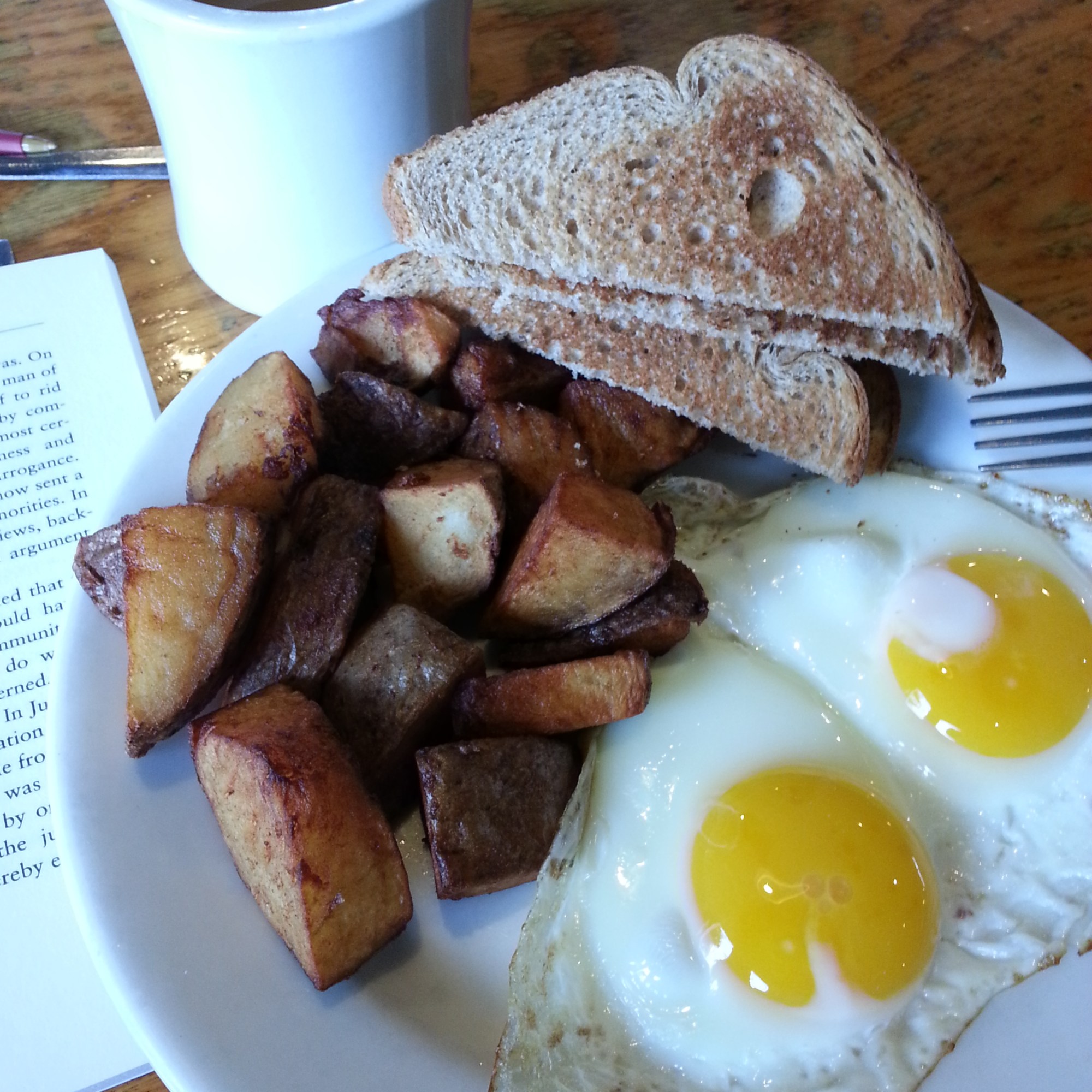
It is my opinion that diners are the finest representation of American food and therefore, culture. It boils down (sorry for the pun) to the Puritan/Protestant DNA, of our work ethic ingrained in our culture; work is the way to earn your salvation. It means one must have a big breakfast to work all day towards one’s goal. Thus the big breakfast at the diner, who has time to make eggs and toast and hash browns, etc, etc, at 5 in the morning? Lunch is a non-event: I have seen people wolfing a slice of pizza while they walk, a sandwich at one’s desk is more than acceptable, it is respected as a sign of your hard work, taking your time for lunch means you are a slacker.

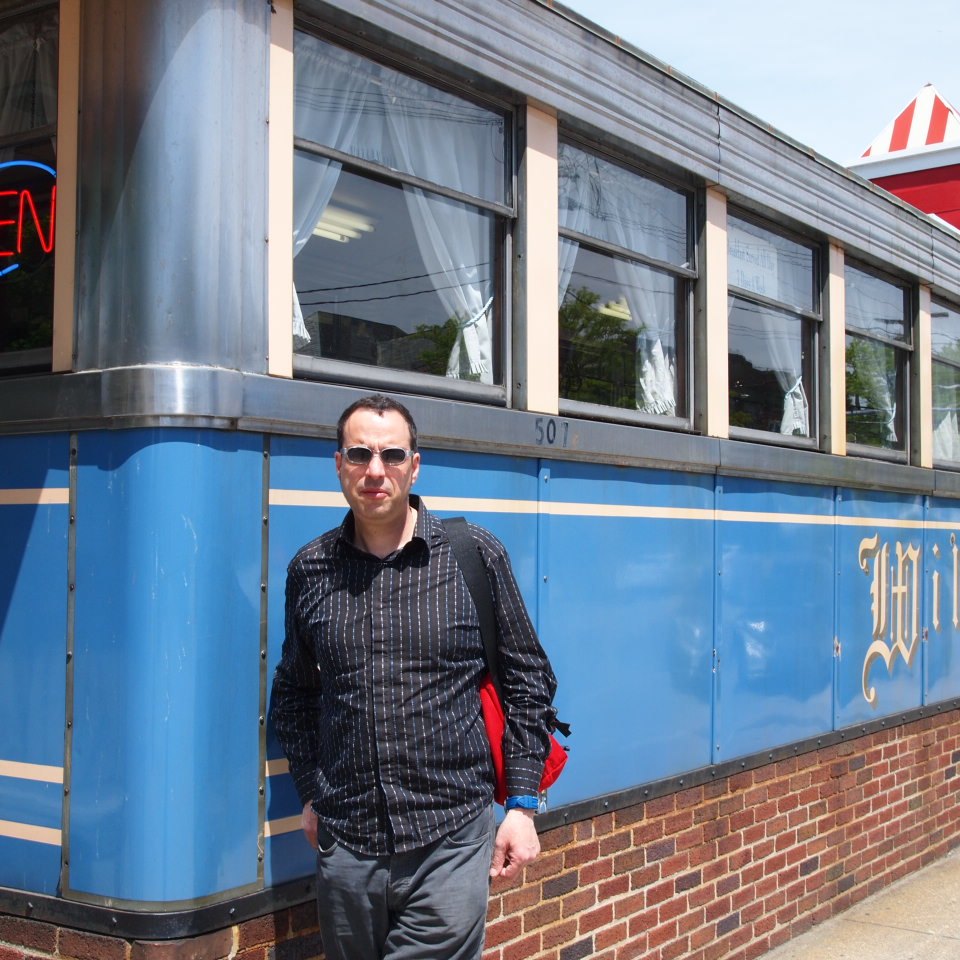
My love for diners started way back in 1983, my freshman year in college in a small town outside of Boston. Exploring the town, I discovered Wilson’s diner. Its shiny blue and chrome was beckoning, inviting. What a discovery! It looked like a railroad car that was permanently placed there. And what a breakfast they had, buttery everything. Big dollops of butter to make the pancakes, the eggs, the omelets, the hash browns, everything! The first times I went with my best friend Theo who quickly got to chatting with the staff in Greek. I was amazed at the coincidence until I learnt that many, if not most of the New England diners are family owned and run by hardworking Greek immigrants. There is obvious irony in the fact that a Greek family was cooking perfectly buttery, greasy American breakfasts. I immediately fell in love with Wilson’s and walked the couple of miles  -sometimes in foot deep snow- into town on Saturdays for my breakfast: eggs, hash browns, bacon, sausage, pancakes, I tried everything and everything was delicious. During those four years of college I explored other diners: The Blue Diner in Boston, and the Deluxe Town Diner in Watertown, quickly cementing my love for diners and what they represent.

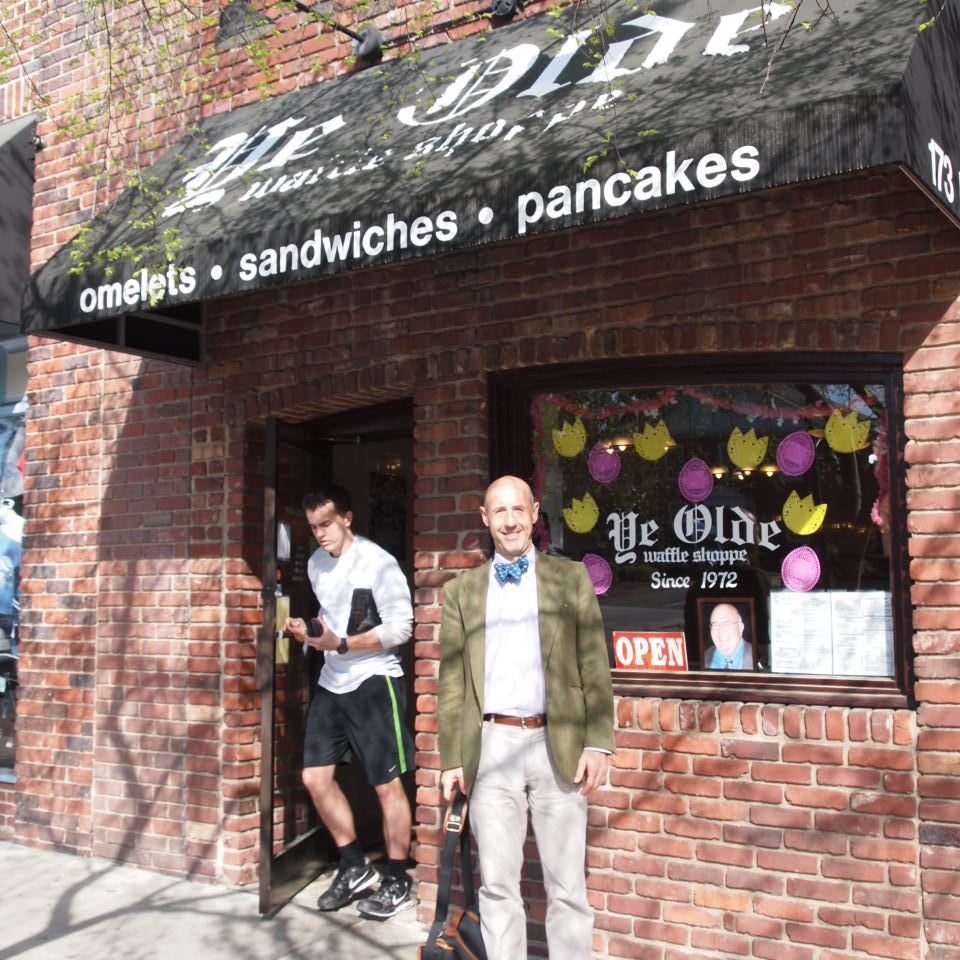
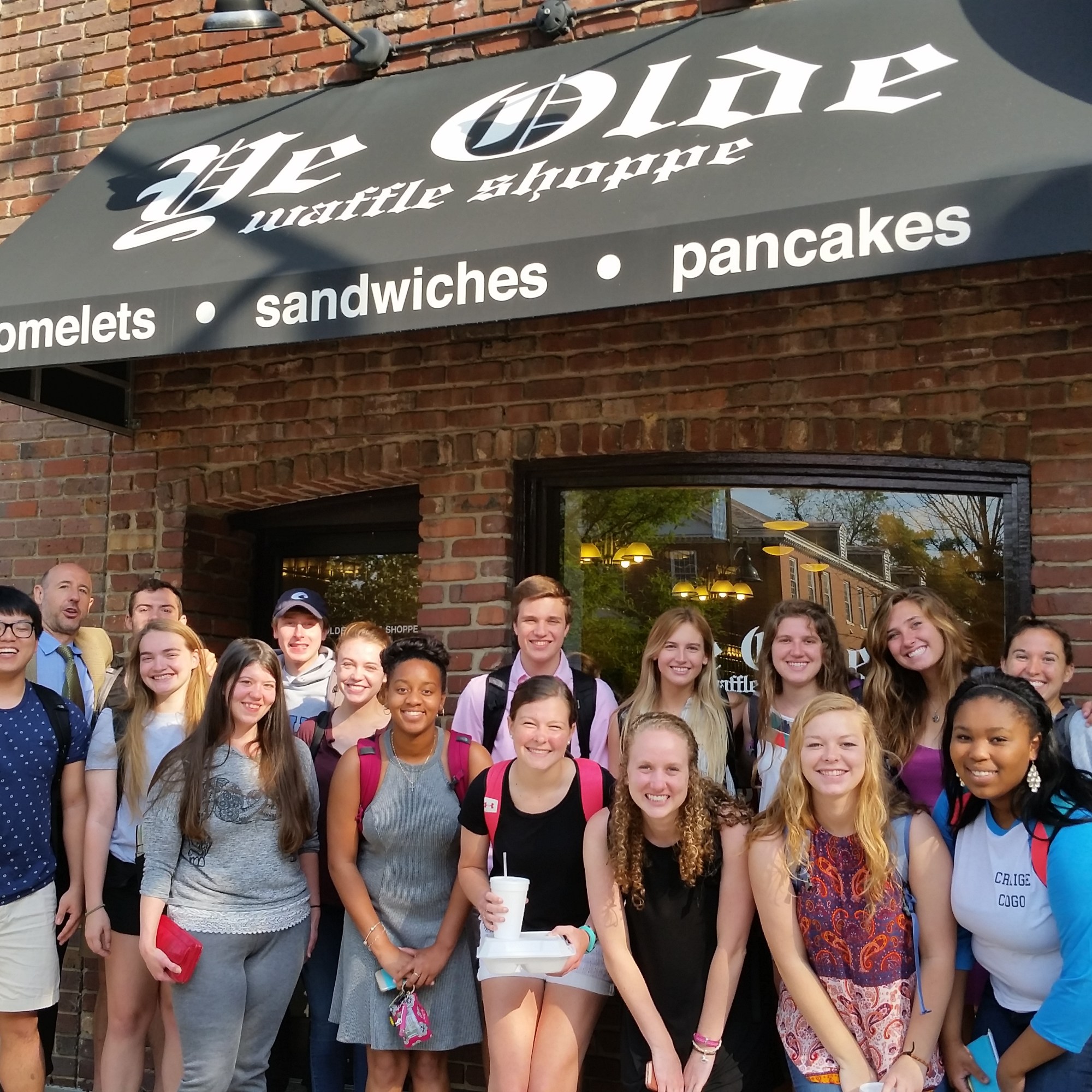
Since then I have had the chance to discover many diners and I always make it a point, whenever and wherever possible to breakfast in a diner: The Empire Diner in Chelsea (The New York one, sorry) around the corner from my apartment after college, The Agawam Diner near Newburyport where I lived for a winter, tiny Casey’s Diner in Natick where I would sometimes take my advisory group, it is so small it does not even have a regular door, but a sliding door which takes up less space, the famous Red Arrow Diner in Manchester New Hampshire where presidential candidates go get their photo taken during the primary election campaign. There are not many diners outside of the Northeast, but that does not mean that there are not great breakfast places that do the job of the diner: Ye Olde Waffle Shoppe in Chapel Hill is one of them. I even held the oral component of my final exams there; the students had to order their breakfast in Spanish from the wonderful Latino staff (although the ownership was Greek!) to pass the class! Visiting the University of Virginia, I discovered the White Spot on which I wrote one of my earliest posts (you are going to have to scroll way down…). The Clover Grill in New Orleans, I even bought their T-shirt: “We love to fry, and it shows”, Plato’s Diner in Maryland, and so on.

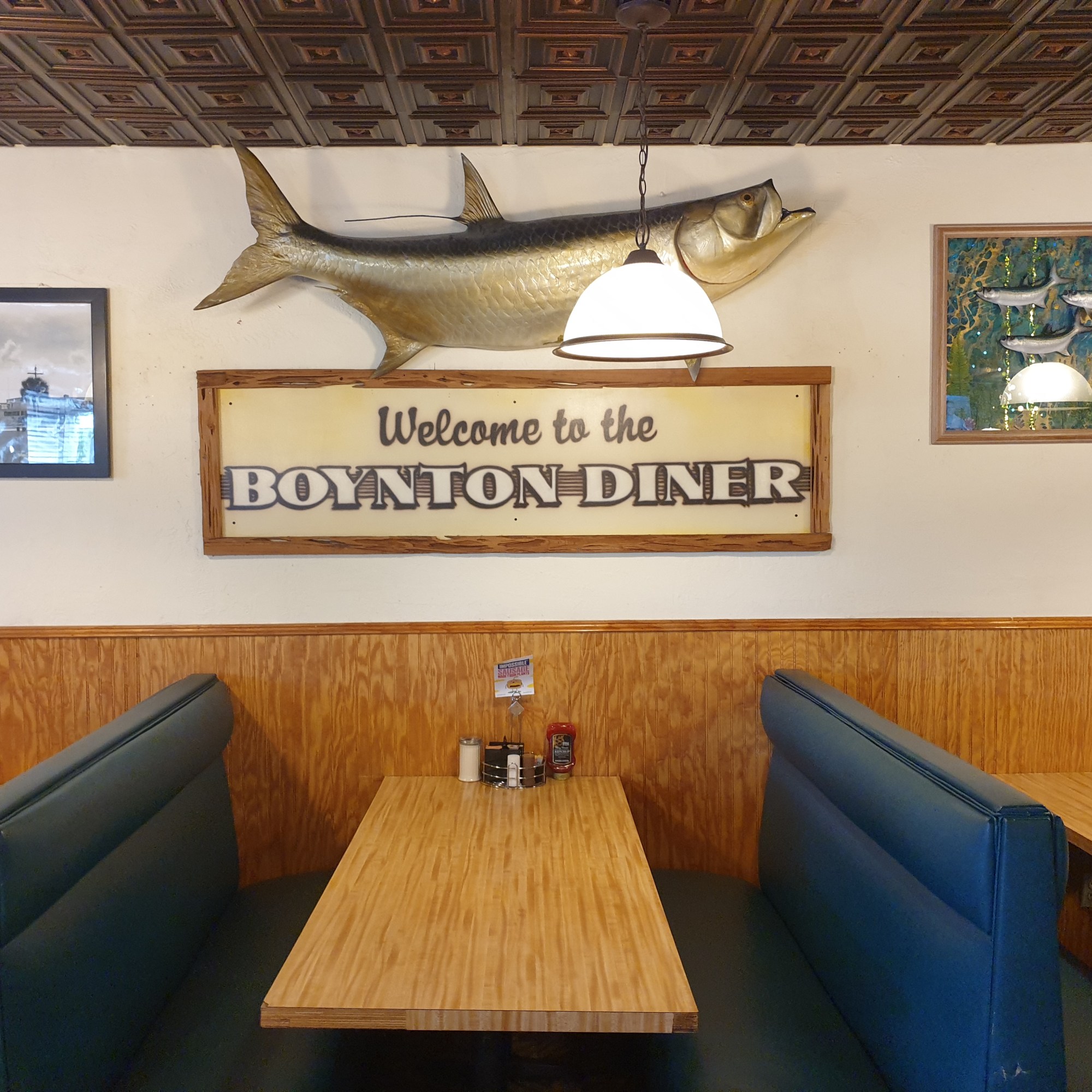
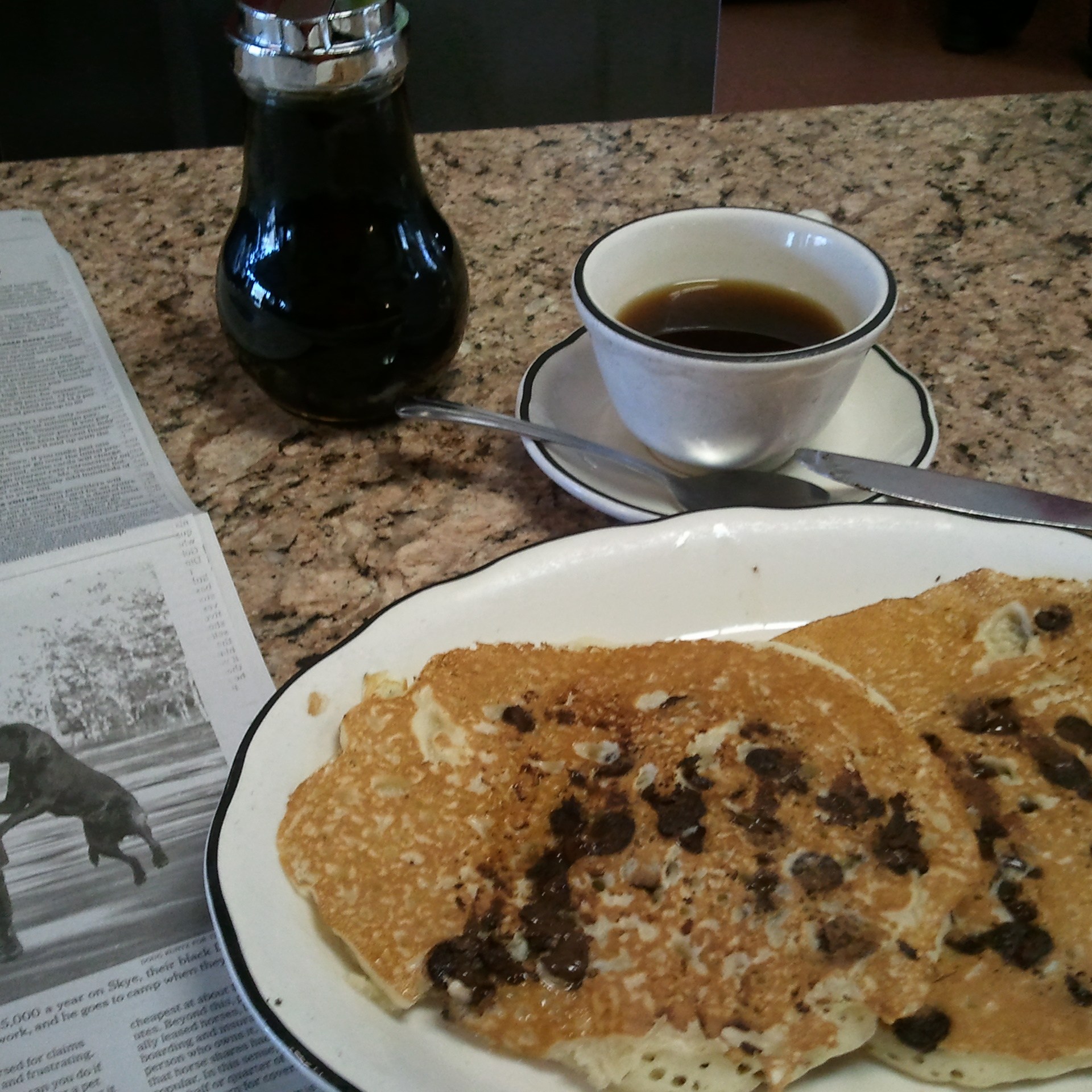
The other day I discovered The Boynton Diner in Boynton Beach in Florida, and I am happy to report it is a perfect specimen of the species: great waitresses, perfect breakfast, and, of course, an endless cup of piping hot coffee.

Xoriguer

Chapter I

Otto is a hilarious and chatty Cuban rugby player who defected to Spain during a tournament tour in the 90’s. He ended up being a barman in the hotel in Mallorca where we go every Summer (see previous posts).

Chapter II

Years ago, wild mint grew in the garden of my mom’s country house. My sister and I put it to good use making Mojitos during the Summer months when we were at the house. One Summer the mint disappeared, maybe due to the desertification of Spain because of climate change. Ever resourceful (and lazy) we switched to easy Gin and Tonics for our nightcaps on the porch, where we chatted and reminisced.

Chapter III

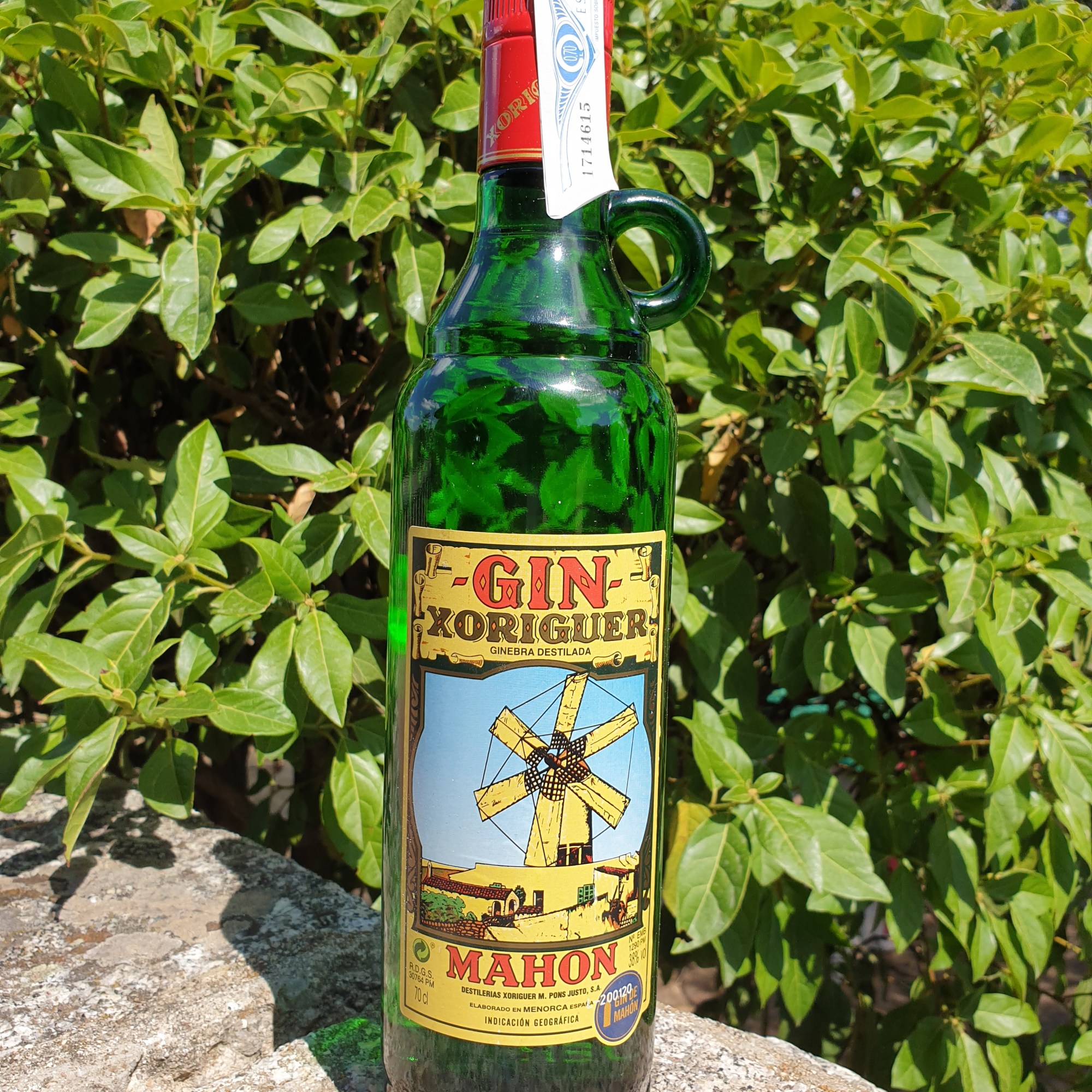
In 1701 the Hapsburg king of Spain, Charles II, had no children. This brought about, a massive war of Succession between the Hapsburg loyalists and those who wanted the French Bourbons to take over the Spanish crown. Just about every country in Europe got involved one way or another. Britain took advantage of the mess to take over Gibraltar (which they still hold) and the Mediterranean Balearic island of Menorca, which they returned to Spain eventually. Before leaving, they stole the recipe for a sauce made by whipping eggs and olive oil (and garlic). The sauce, Mahonesa, is called after the city where it was developed, the capital city of Menorca: Mahón. The linguistically challenged Brits changed Mahonesa to Mayonnaise. To get even, some enterprising locals copied the formula for the spirit the British sailors and their Dutch friends where distilling: Jenever in Dutch, Gin for the Brits. That stolen formula would become Xoriguer Gin, to this day made in Mahón. (There is another version of the story in which the French General Richelieu, copied the recipe when he liberated Menorca from the Brits, but it does not have the same poetic justice for our purpose)

Rich with juniper berry flavor, this is not a subtle gin. These are Mediterranean smells and flavors, not a randomly chosen “floral and botanical bouquet with hints of cucumber” for some 50 Euro bottle of ultra-premium gin. Xoriguer is like taking a walk on a Mediterranean island.

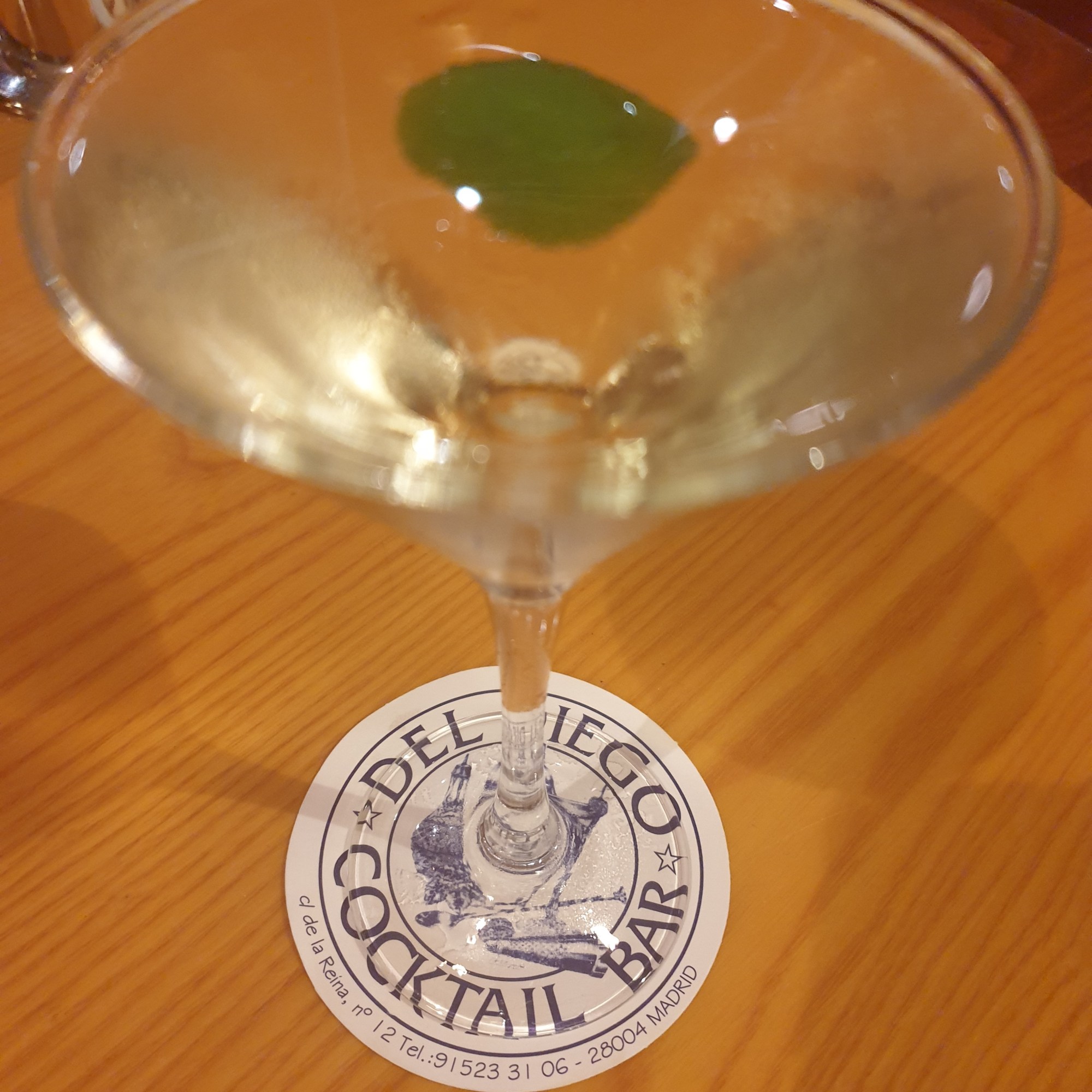
Xoriguer is a small family run distillery, so good luck finding it in most shops. In fact, I only know three bars in Madrid that serve it (and believe me, I know more than three bars in Madrid). One is Bar el 32 in Lavapies, Del Diego, which as I have mentioned before is a temple of spirits. The Del Diego brothers make a light and airy Xoriguer Gin Gimlet which just transports you to Menorca. And miraculously, Marcelino in La Navata (see previous post).

Chapter IV

A few years ago, Otto introduced me to Xoriguer, made just one island over. I fell in love (with the gin, not with Otto, although I do love him, but in a different way).

Note: Always drink moderately and responsibly.

Marcelino

My mother has a country house in a tiny village near the mountains of Guadarrama, North of Madrid. We have been coming here for weekends and Summer since I was a child. The village has a train station, a small river, a supermarket, a church, a pharmacy, a convenience store, a couple of restaurants, and a hair dresser, but the most important place in the village is the café/bar/restaurant: Marcelino.

Marcelino sits near the Guadarrama river by the road to a bigger village a few miles down. It was built by the grandparents of the current owners stone by stone in the early 20th C. Since then it is the central meeting point of the village. It is the place where I had my first drink in the smoke-filled bar in the early 80s, and the place where I enjoy a coffee every day during Summer. The fourth generation is starting to work there, making coffee, and serving drinks, no privileges.

It is interesting to see the flow of customers. In winter, the local moms meet for coffee after dropping off the kids at school. After lunch, the old men come down for their card game, in the afternoon groups gather for the tertulia (conversation) and coffee. And in summer nights everybody comes for the barbecue!

The coffee is not particularly good. It is old school Spanish coffee, which means it is torrefacto: over-toasted and with added burnt sugars to boost the flavor and aroma (see my previous post on coffee). But that is exactly what you should expect in an old-fashioned café in a Spanish village. My preppy friends from Madrid hate it, but that is missing the point of the tradition. There is a basic lunch menu, which is handy in emergencies and all day bocadillos -simple sandwiches made with Spanish French-style baguette.

But the real food comes at night when they fire up the barbecue! Outdoors, right in front of the diners. While they will oblige and throw a burger on the grill if you ask them to, the specialty here are the local sausages: chorizo and morcilla. Chorizo is the more familiar as it is spicy pork sausage. Morcilla is the lesser known sibling made of ground pork with its blood, with either onion or rice, what the Brits call “Black sausage” but that is where the similarities end. Morcilla has a strong, tangy but sweet taste. And Marcelino grills the best! The barbecue menu also has pinchos morunos (the Spanish evolution of shish kebabs), and steaks, plus salads and other traditional dishes from the kitchen.

After dinner you can stay until after midnight enjoying a drink. In fact, Marcelino is one of only a handful of bars that serves Xoriguer, a gin made in the Balearic island of Menorca, which happens to be my favorite. But that is a subject for a different post.

Summer excursion

The other day my dear friend and fine art restorer extraordinaire took me on a whirlwind excursion to see some of his recent work. We took the opportunity to enjoy a nice lunch and ended by visiting our friends at the Paular monastery and to check up on them with the whole pandemic to-do.

Our day started with our traditional morning coffee at our local village café/bar/restaurant/social center: Marcelino. From there we drove over the Guadarrama mountains (yes, the ones where Hemingway’s For Whom the Bell Tolls is based) to the lovely village of Rascafría. We had a leisurely lunch at a cool garden restaurant “La Pradera” (the natural translation “prairie” has taken the American meaning and spirit, being much larger than a Spanish “pradera” which is more of a field, but enough etymologies, and translation theory!)

After lunch we drove to the small village of Canencia. The root Can from the Latin “canis” for dog (oh no, back to etymologies) is because this village is where the kings’ dogs where bred during the Middle Ages. Jaime restored the gorgeous Gothic pulpit at the church last year. A stone’s throw away from the village is a very elegant Medieval stone bridge.

A short drive away is the town of Lozoya. A manorial village as testified by the many coat of arms decorating entrances. The main door of the church is in a beautiful Plateresco style, which is unique to Spain because it keeps the Gothic style but incorporates Renaissance elements. Jaime is scheduled to restore the pulpit there, a delicate Renaissance piece.

A tiny hamlet nearby is Pinilla del Valle, again with a lovely old church and town square. Jaime is working to secure the restoration of the portico of the church, damaged through the centuries.

We ended our excursion visiting our dear friends the monks at the Paular monastery. They are all fine, including the oldest ones. We snuck in for a quick visit. You see, Jaime restored that monastery from scratch years ago, so he knows it well and I have gone on two retreats there -as you might know from previous posts, so I also know it a bit.

After that visit, it was time to head home over the mountains.

Ring on Deli by Eric Giroux

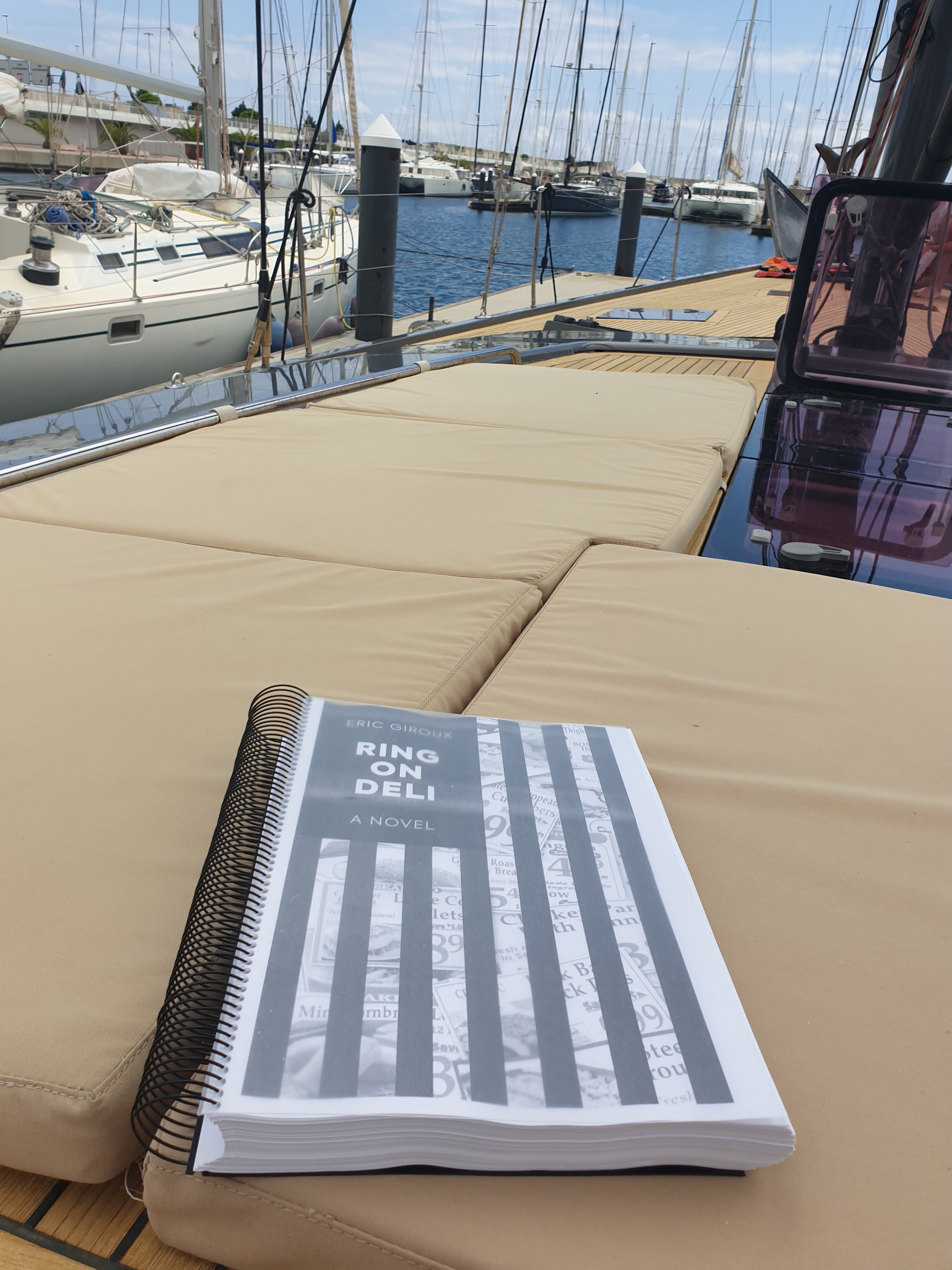
Ring on Deli ready to sail

Ring on Deli ready to sail

A few months ago I got a request from an old teacher colleague and friend to read his book ahead of the publishing date so I could write a pre-review to get the word out. I got the PDF and had it printed at my friendly neighborhood copy shop – where they accidentally printed it twice and bound it as one, making a hefty tome and an environmental tragedy in one. I did not notice until I started reading it weeks later, by which time it was too late to do anything about it but to work on my biceps.

I posted my review on Goodreads. Amazon, on the other hand, will not let me post it because I have not spent $50 in the last 12 months with them, something I am actually quite proud of. At any rate, here is the review, now go read the book!!

Ring on Deli is a rara avis of the current literary scene. Here is a well-built narrative, with a solid cast of characters that add human depth, texture, and color to a story about complex local -and national- issues such as capitalism, education, local government, even pest control! A story that makes you think, laugh, worry, and cheer. Ring on Deli, although satirical in spirit points to real, current concerns. Eric Giroux has hit the nail on the head with his style: a bit of John Irving to weave the narrative, a bit of Philip Roth for dark humor, and a bit of DBC Pierre for freshness, like cilantro. Using satire to sway opinion is as old as literature itself. From Medieval texts to current opinion journalism, through Voltaire and Swift, all have relied heavily on satire to avoid censorship and inquisition (both real and figurative). Ring on Deli is a brilliant read that I recommend without reservations.

Ring on Deli somewhere in the Mediterranean

Ring on Deli somewhere on the Mediterranean