You have heard of the Bermuda Triangle, the National (or Parliamentary) Triangle in Canberra, Australia, Isosceles triangles, and other famous triangles, but today we are going to talk about the Research Triangle.
The Research Triangle is formed by three nearby universities in central North Carolina and the towns where they are: Chapel Hill home of UNC, Durham, home of Duke, and Raleigh home to NC State (in Alphabetical order by city –by university in the title). Many companies, mostly tech and biotech, seeking to take advantage of hiring all these grads have set up shop in the area, thus the name. You can´t blame them.
So that is an economic sort of benefit of the Triangle. But more importantly, and one that does not appear on the news, or in economic reporting, is the great relationship between these three great schools. Sure, we trash talk and compete to the death in sports -UNC vs Duke is the oldest rivalry in college sports, also known as the Tobacco Road, but in academia there is great collaboration and cross pollination. During my days at UNC it was normal to go to Duke or NC State for conferences and chats, I even went to concerts! It is normal for couples to work and study in different universities. I personally know two couples with one person at UNC and one at Duke and one at NC State! And there are many who get their undergrad degrees at one and pursue graduate work in one of the others.
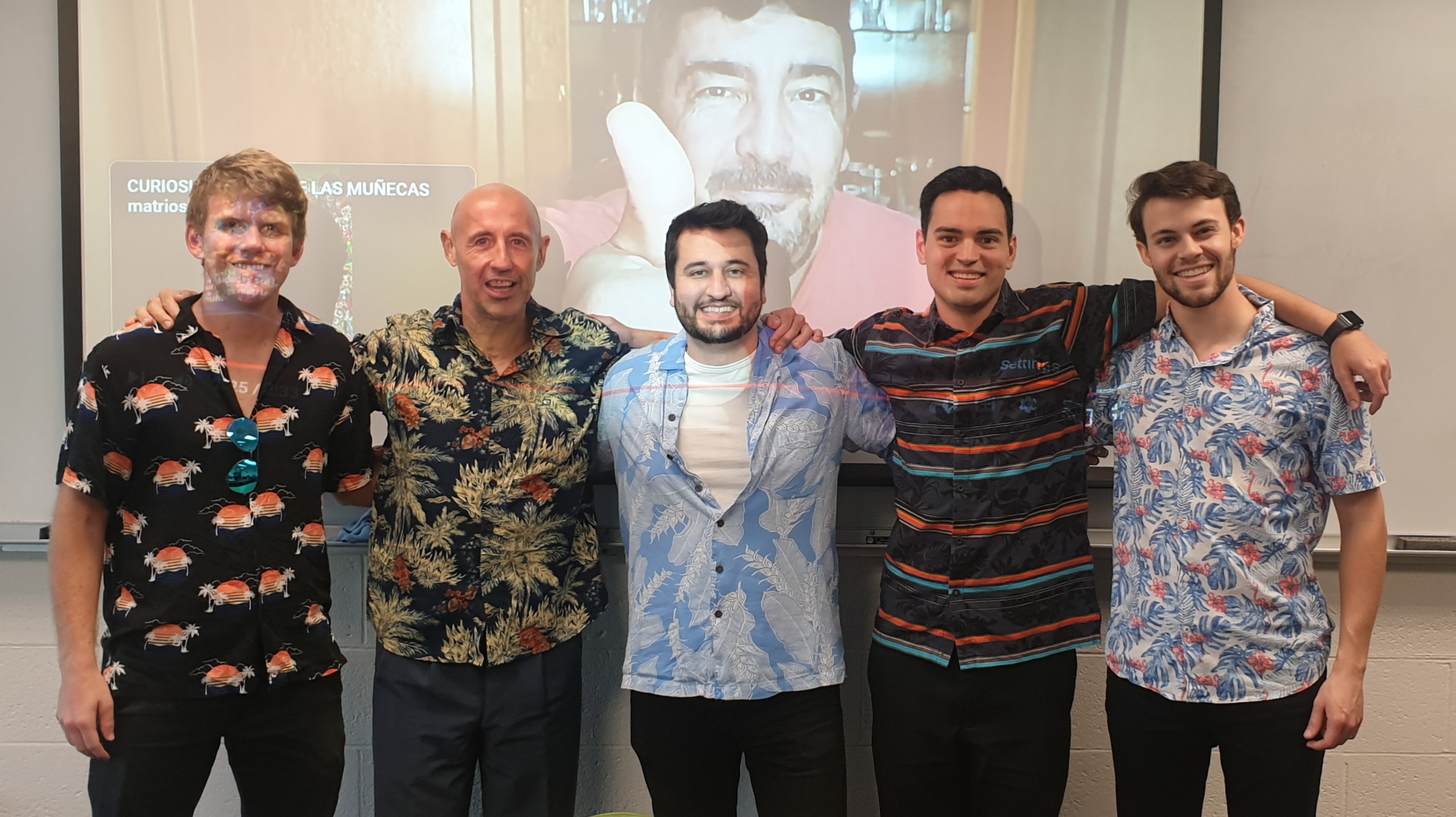
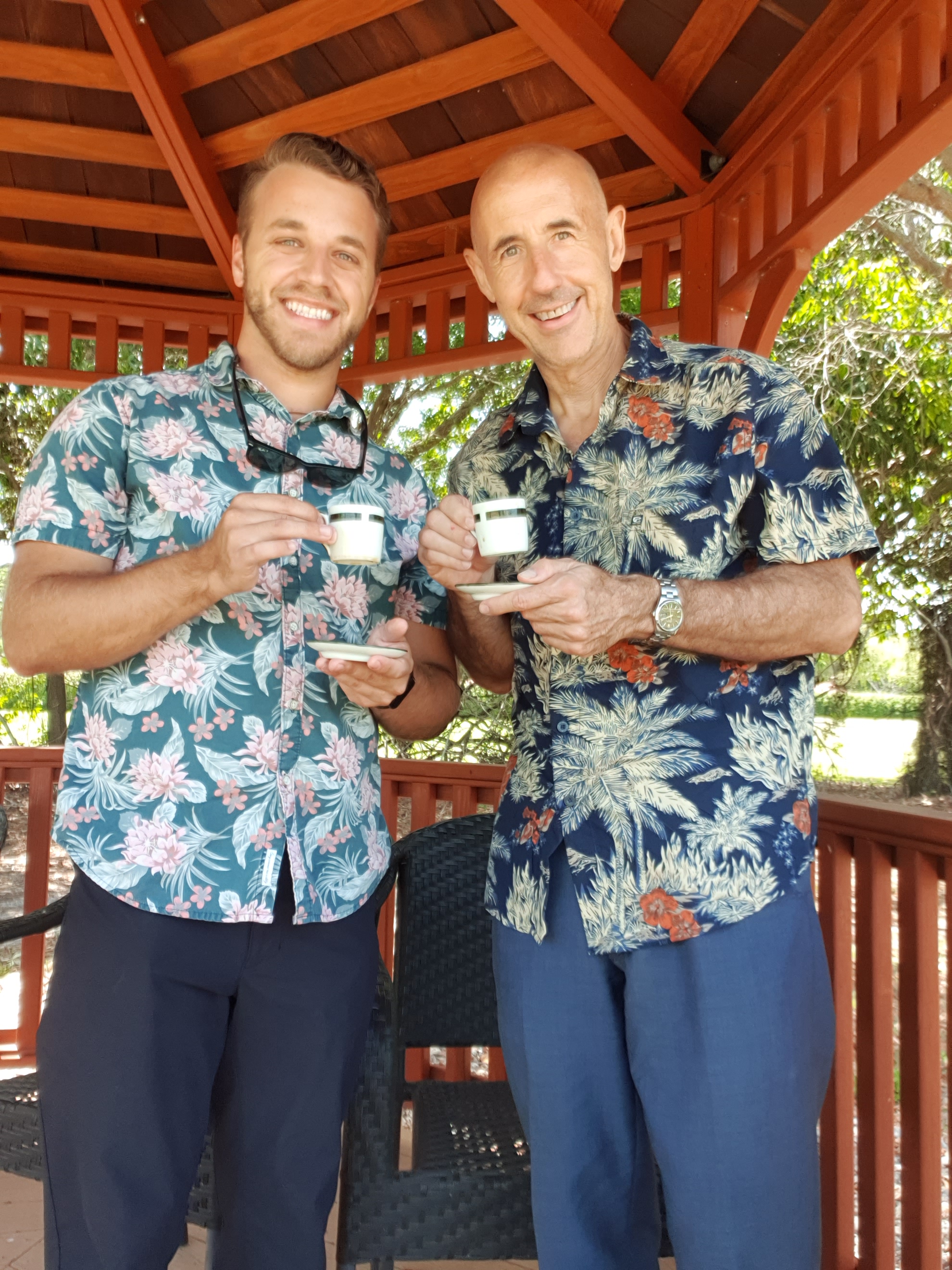
I am blessed to teach -in the same class- a Duke and a NC State graduate, so the other day we agreed to wear our swag shirts and get our favorite photographer Dylan to take some photos of us showing off. Enjoy!
As my dear old friend and brother Theo would say, I am a bit of a late bloomer. I got into teaching later in life, I started my master’s at 42 and my PhD at 47. Once in the doctoral program I realized the importance of publishing academic articles, but I never really committed to it, I was focused on my dissertation which I managed in 4 years from start to finish. So I was never into the article publishing game; I tried a couple of times but halfheartedly…
Then life happened, and I did not worry too much about it, oh and Covid, and so on. Once settled in Florida, alone, in the long winter nights, I actually hammered out an article! When I mentioned it to Irene, my dissertation director, she liked it! and recommended I submit it to Romance Notes academic literary journal…
And they accepted it.
And it was just published!
What is it about?
Remember that Francisco de Isla wrote a scathing satire of 18th Century Spanish preachers: Fray Gerundio de Campazas? The moment it was published it sold out -literally overnight- but as was to be expected, the novel rubbed some people the wrong way and it was denounced to the Inquisition.
The article deals with the letters that Isla wrote in defense of his work. And that is where it gets fun: it is not so much a defense, as an attack on the fellow who filed the complaint of Fray Gerundio to the Inquisition.
You can find the article following this citation, and if you do not have access to academic databases and still want to read it, reach out on the comments and I will get you a copy.
Balsón, Antonio. “La Apología por la historia de Fray Gerundio de Campazas de Francisco de Isla. La anfibología como arma secreta.” Romance Notes 62.3 (2022): 419-429.
Here is the abstract (oh, FYI its in Spanish):
La Apología por la historia de Fray Gerundio es la defensa de Francisco de Isla contra la denuncia presentada por Fray Pablo de la Concepción, superior general de los Carmelitas Descalzos, ante el Tribunal de la Inquisición contra La Historia de Fray Gerundio de Campazas, alias Zotes. Fray Gerundio se publicó en Madrid el 21 de febrero de 1758 y fue un éxito rotundo. La reacción de los predicadores fue instantánea y, no queriendo ser tildados de “Gerundios”, empezaron a predicar sus sermones en un lenguaje más claro y sencillo. Cuatro días después de su publicación, de la Concepción, presentó su denuncia del Gerundio ante el Tribunal de la Inquisición. Isla rebatió la denuncia escribiendo cuatro cartas que se convirtieron en la Apología por la historia de Fray Gerundio. La Apología es una obra típicamente isliana en su retorica combativa. Isla utiliza todos los recursos aprendidos durante su larga carrera literaria, para defender su obra y usa un ataque minucioso para desglosar la totalidad de la denuncia, aunque finalmente fuese en vano, y la novela best seller del siglo dieciocho fuese prohibida. Una de las claves para entender la Apología reside en el uso de la anfibología por parte de Isla. El doble entendre ilumina la Apología como arma ofensiva más que defensiva. Esta obra, como la mayoría de las obras de Isla con la excepción del Gerundio, ha tenido mínima repercusión crítica y académica.
“Goodbyes are only for those who love with their eyes. Because for those who love with heart and soul there is no such thing as separation.”
Rumi
Life is a story, a narrative, with a beginning and an end, and in between (hopefully) many chapters, some longer and some shorter. When a chapter finishes, or is left unfinished, it is emotional. It is emotional because you are back to a blank page, you can start a new chapter -you should start a new chapter.
Saying goodbye is a process shared by all humanity, the emotions that we share when we say farewell. Books, films, plays, operas, ballets, songs, poems (especially poems), you name it, have been devoted to saying goodbye, how we deal with it, how we process, the whole messy procedure. And here is the space for magic to happen in the space left by the person who has left. As you let go of the person leaving, you are on the threshold, you are now open to growth, to seeing what you can take from the friendship, or whatever it was, and make yourself a better person, a more understanding person. Or you can become bitter and insecure.
It is in these transitional moments of our lives that authentic transformation can happen. Otherwise, it is just business as usual and an eternally boring, status quo existence.
Richard Rohr
From family members, to loved ones, friends that sometimes you love as much as family, or even someone you have recently met but with whom you connected with, and everybody in between. Saying goodbye is hard.
The key word there is connection; the moment you share, you laugh, you cry, everything forms a connection with the other person.
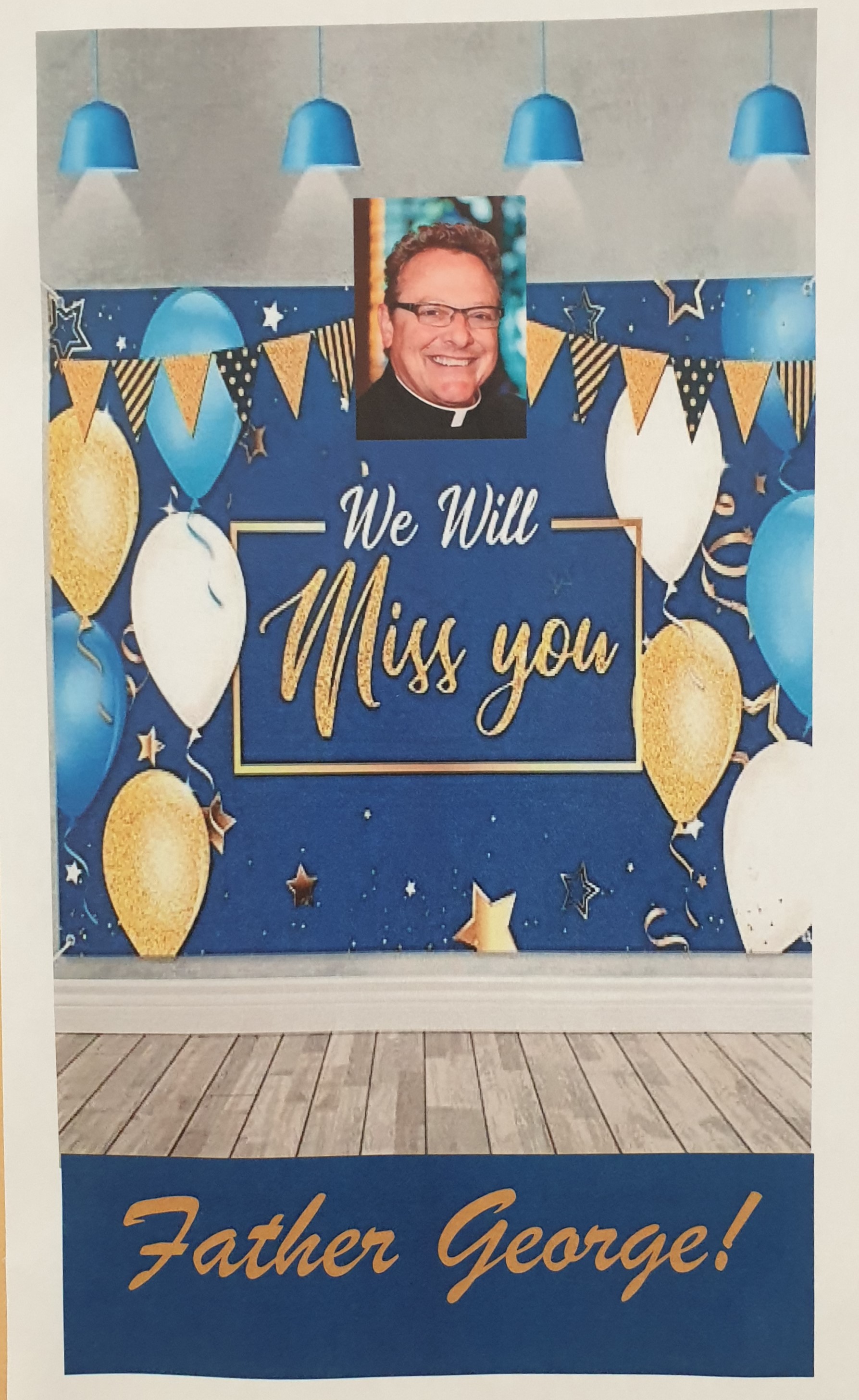
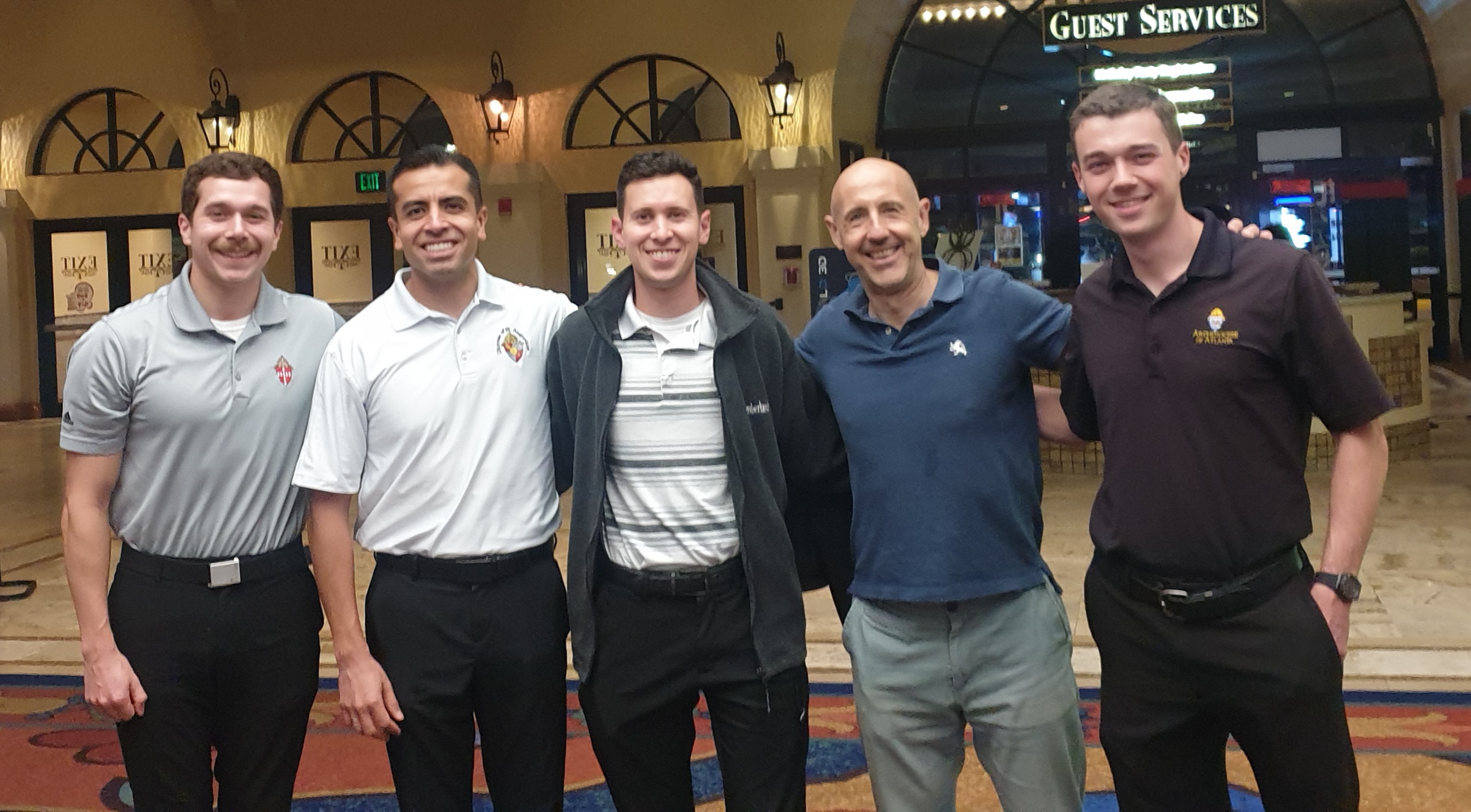
Fr. George generously invited me to go paddle boarding with him last Fall, it became a bit of a tradition, going out early in the morning for an hour or so, and then getting a coffee at Willy Cafe before heading to work. We connected. Now he is leaving our school and going back to Orlando. As a proper surfer, Fr. George is known to wear Hawaiian shirts when not in his clerics; The other day, to celebrate him, we all agreed to wear Hawaiian shirts in his honor, it was fun and moving at the same time!
Words are so clumsy at explaining the feelings, the void left in your heart when someone leaves, dies, ghosts you, whatever.
Of the many, many words to express goodbyes, I like Rumi’s quote at the top and this poem a lot. What are your favorite farewell songs, poems, books? Let me know in the comments.
Luciano Pavarotti, Steve Jobs, Ruth Bader Ginsburg, Aretha Franklin, Patrick Swayze, Joan Crawford, Dizzy Gillespie, Alex Trebek. What do these people have in common with my father?
They all died of pancreatic cancer.
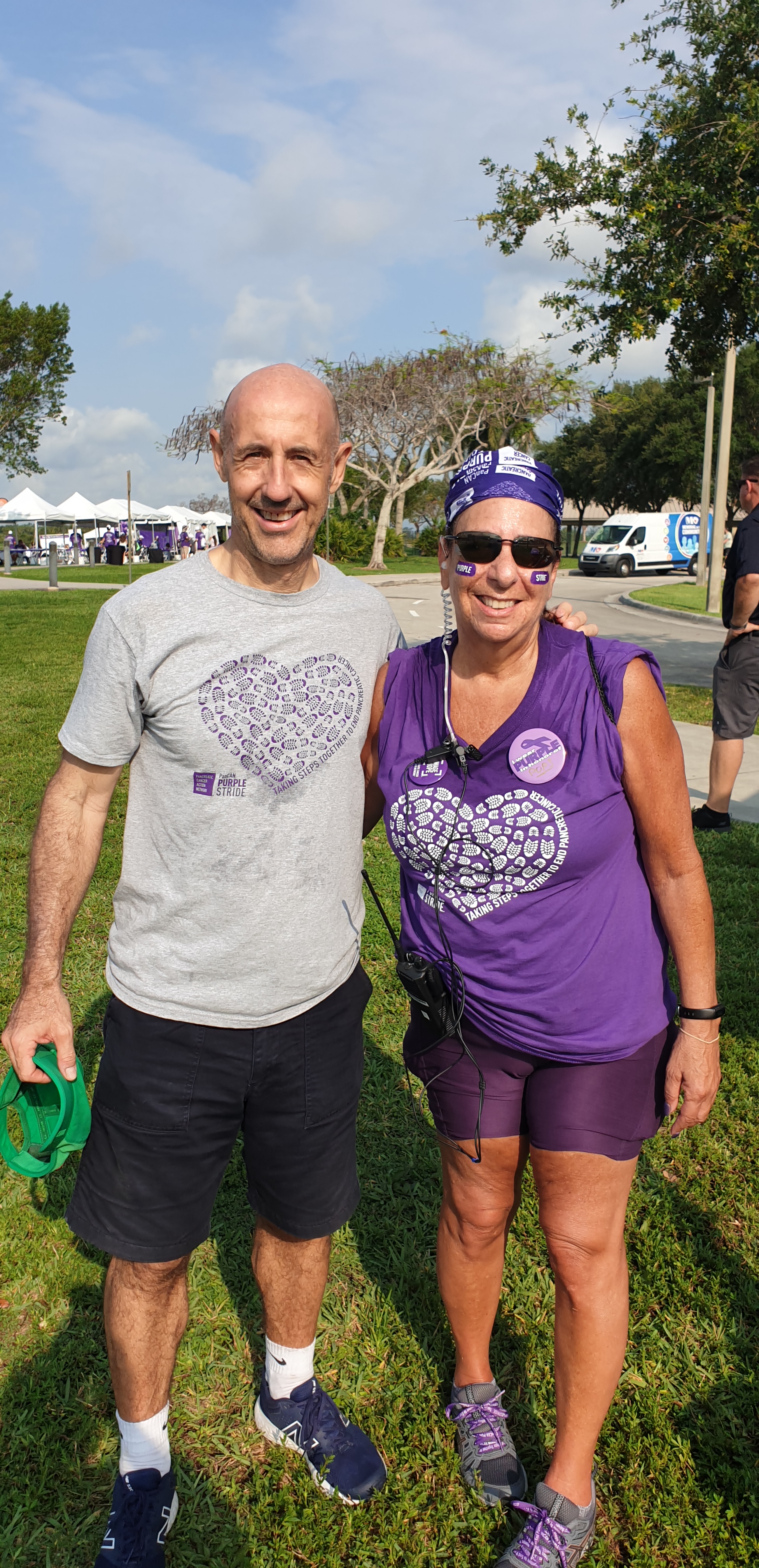
My father died in 2015, so when an opportunity arose a few months ago to volunteer at the Pancreatic Cancer Action Network PanCAN, I signed up.
The purpose of PanCAN is to help folks with pancreatic cancer. We sponsor researchers and doctors, clinical studies, and then we help divulge the findings and help patients:
Our mission is to take bold action to improve the lives of everyone impacted by pancreatic cancer by advancing scientific research, building community, sharing knowledge, and advocating for patients.
PanCan Mission Statement
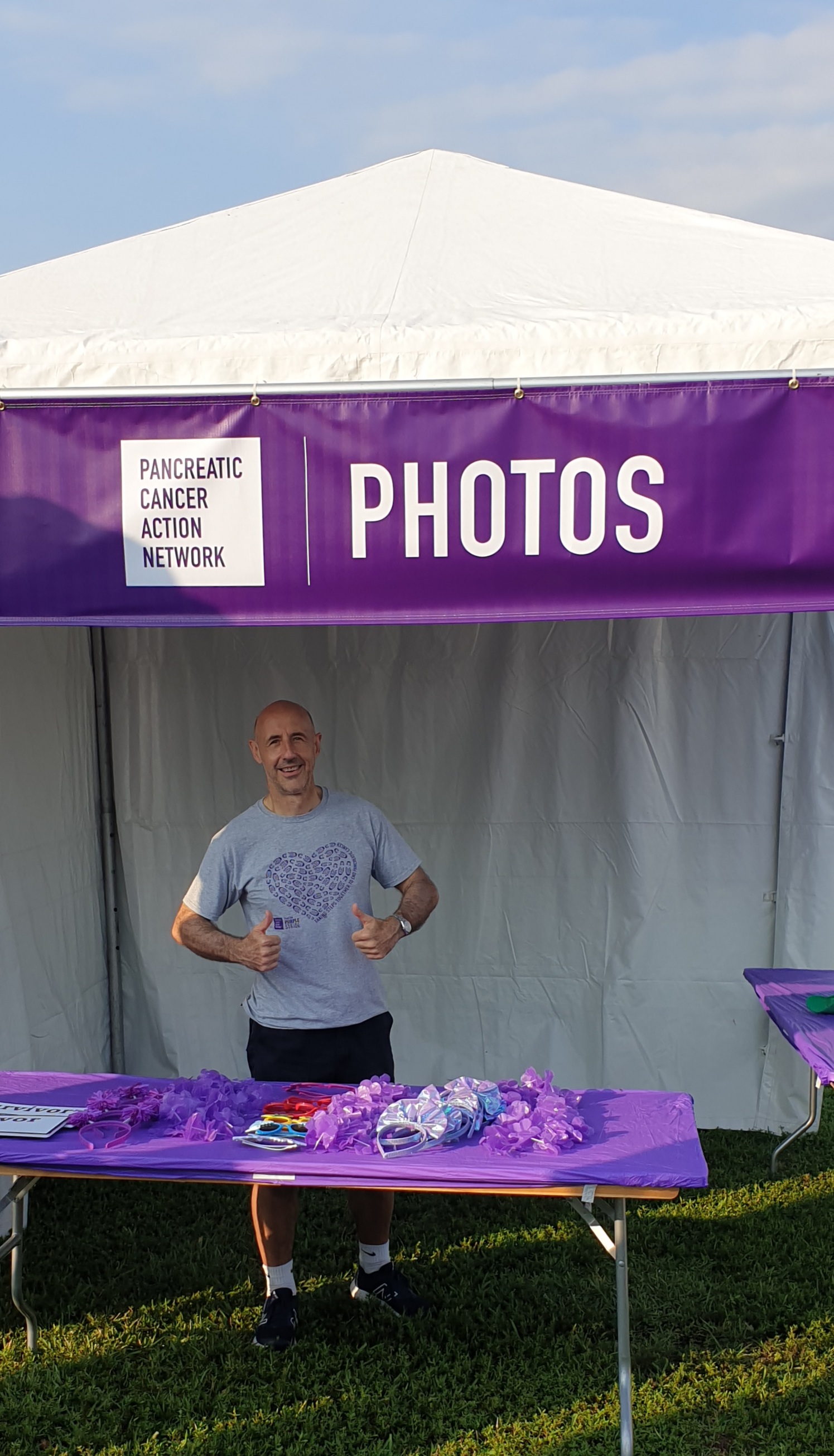
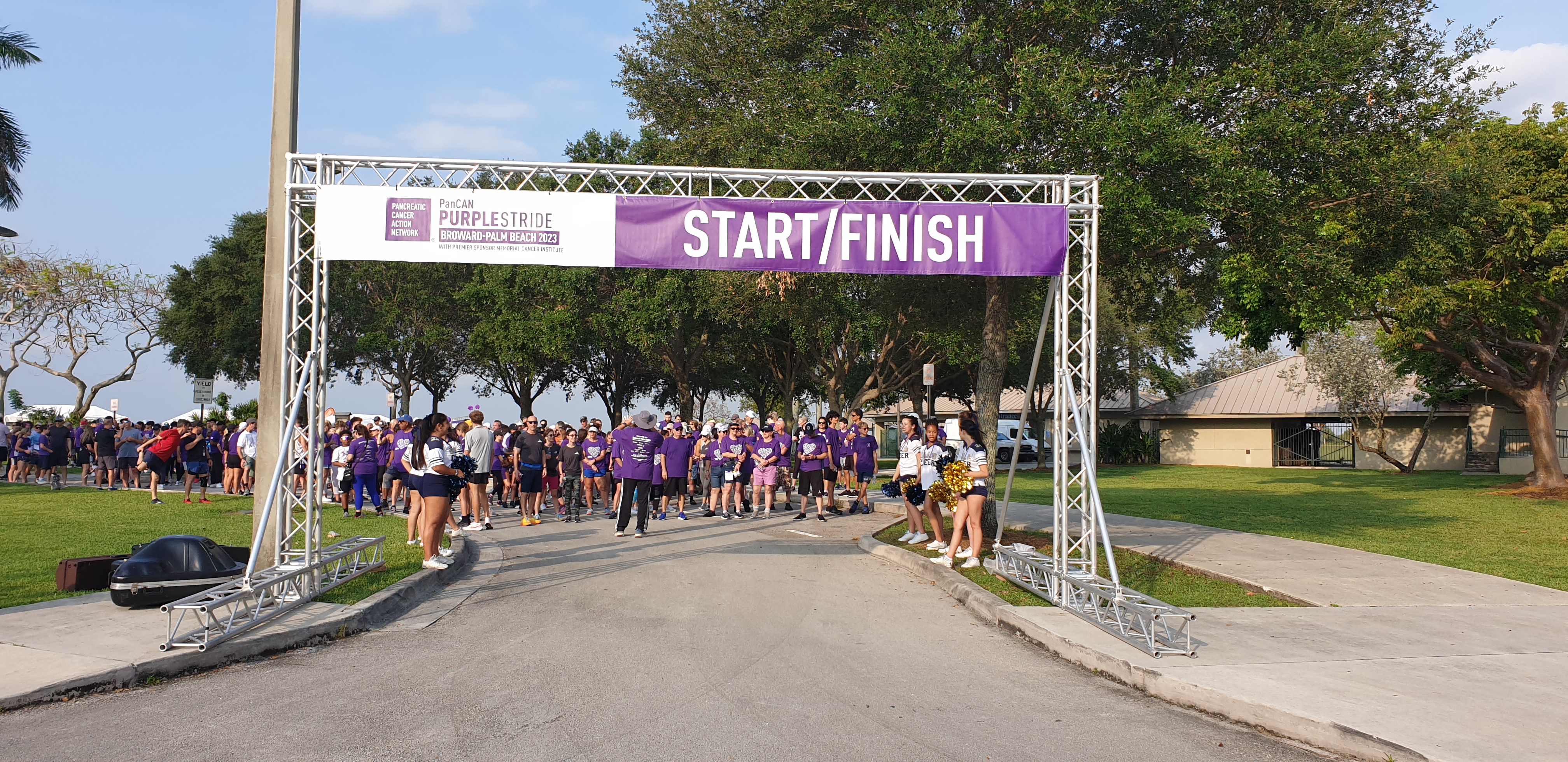
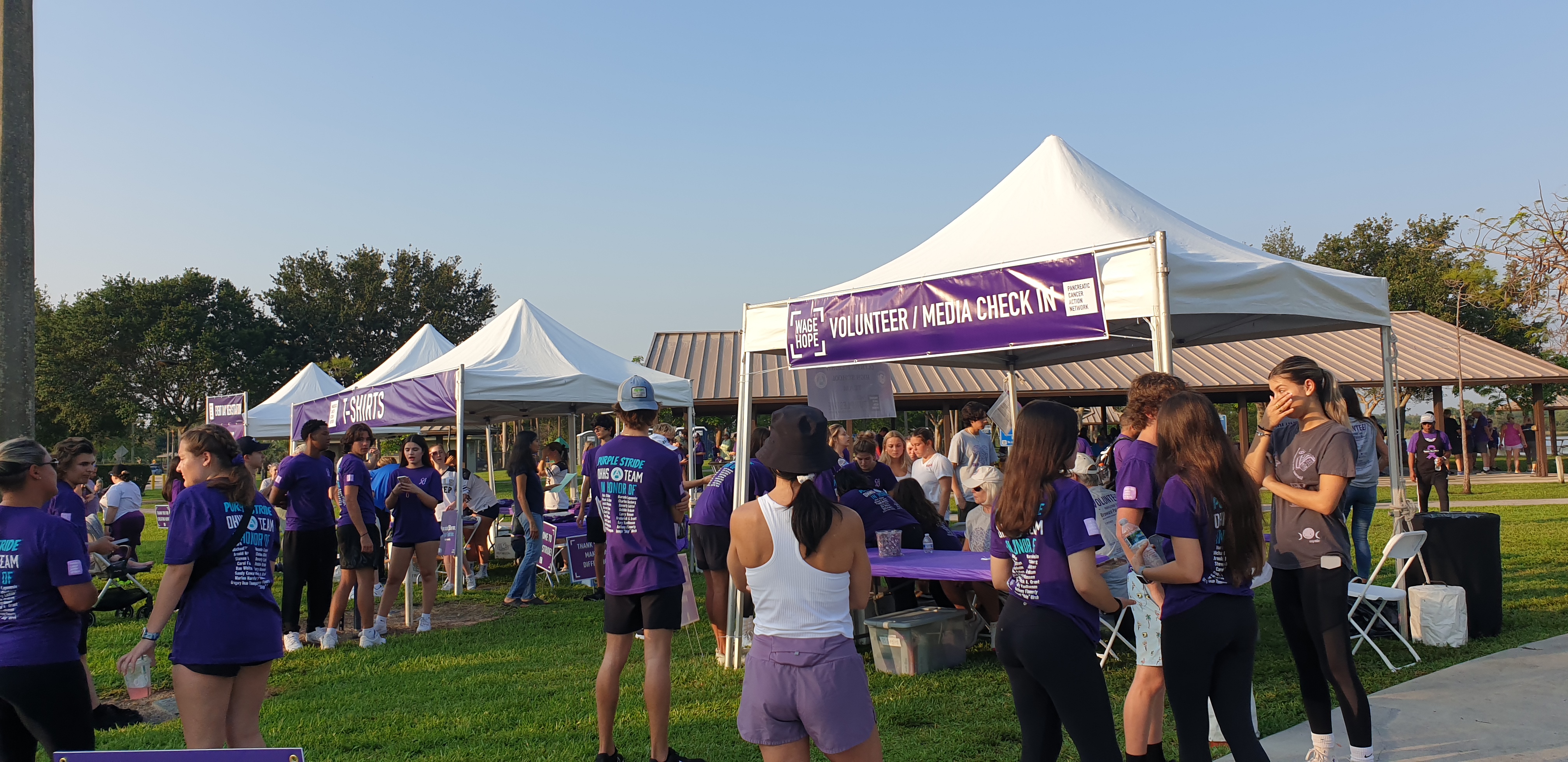
PanCAN’s main event is a 5k fundraising event held across the US on the 29th of April. There was a lot of preparation involved in organizing the event. I drove to the Burt Aaronson Park in Boca Raton on the Friday before the event to help set up.
I returned on Saturday to see thousands of people signed up to do the walk -and more importantly, to fundraise. The event was an enormous success. I spent all morning running around getting this, helping with that, bringing something to someone, setting it up, breaking down, cheering walkers, staffing the Photo Booth, etc. it was exhausting but extremely rewarding!
I cannot wait to start helping with next year’s walk!
Oh, if I have inspired you to donate or to explore this further, click here! Thanks!
For a long time, I just had this title sitting in my drafts box. Today I finally approached it.
Poetry and poems grow with you, some stay longer than others, some come and go, some you even forget, and some stay with you forever.
In my case Neruda and Cavafy are both engraved in my memory since my college days. Also, from my days in university, Tennyson, but he drifted out, like the many poets in the massive Victorian Prose and Poetry book we studied. Some lines stayed with me, like “’Tis better to have loved and lost than never to have loved at all.” from In Memoriam A.H.H.
But a few lines kept re-visiting me, like messages from a distant shore. When I left Spain in 2005, I memorized the whole poem, to recite it to my friends during the farewell dinner (at Alfredo’s, of course).
Then, every Summer, at my mother’s country house I reach for that big old book and search for that poem, and read it, and more often than not, cry.
Yes, the poem is famous, yes, Frasier recited it in his farewell from his TV show, and yes, M recites it in a recent James Bond film, but that does not make it any less good. On the contrary, it is a testament to the quality of the poem.
Here it is, enjoy. (If you are pressed for time, the final 15 lines are the most well known, I have marked the spot with an *.)
And if you would rather listen to the poem click here, it is a 5 minute listen.
Ulysses
It little profits that an idle king,
By this still hearth, among these barren crags,
Match’d with an aged wife, I mete and dole
Unequal laws unto a savage race,
That hoard, and sleep, and feed, and know not me.
I cannot rest from travel: I will drink
Life to the lees: All times I have enjoy’d
Greatly, have suffer’d greatly, both with those
That loved me, and alone, on shore, and when
Thro’ scudding drifts the rainy Hyades
Vext the dim sea: I am become a name;
For always roaming with a hungry heart
Much have I seen and known; cities of men
And manners, climates, councils, governments,
Myself not least, but honour’d of them all;
And drunk delight of battle with my peers,
Far on the ringing plains of windy Troy.
I am a part of all that I have met;
Yet all experience is an arch wherethro’
Gleams that untravell’d world whose margin fades
For ever and forever when I move.
How dull it is to pause, to make an end,
To rust unburnish’d, not to shine in use!
As tho’ to breathe were life! Life piled on life
Were all too little, and of one to me
Little remains: but every hour is saved
From that eternal silence, something more,
A bringer of new things; and vile it were
For some three suns to store and hoard myself,
And this gray spirit yearning in desire
To follow knowledge like a sinking star,
Beyond the utmost bound of human thought.
This is my son, mine own Telemachus,
To whom I leave the sceptre and the isle,—
Well-loved of me, discerning to fulfil
This labour, by slow prudence to make mild
A rugged people, and thro’ soft degrees
Subdue them to the useful and the good.
Most blameless is he, centred in the sphere
Of common duties, decent not to fail
In offices of tenderness, and pay
Meet adoration to my household gods,
When I am gone. He works his work, I mine.
There lies the port; the vessel puffs her sail:
There gloom the dark, broad seas. My mariners,
Souls that have toil’d, and wrought, and thought with me—
That ever with a frolic welcome took
The thunder and the sunshine, and opposed
Free hearts, free foreheads—you and I are old;
Old age hath yet his honour and his toil;
Death closes all: but something ere the end,
Some work of noble note, may yet be done,
Not unbecoming men that strove with Gods.
The lights begin to twinkle from the rocks:
The long day wanes: the slow moon climbs: the deep
Moans round with many voices. * Come, my friends,
‘T is not too late to seek a newer world.
Push off, and sitting well in order smite
The sounding furrows; for my purpose holds
To sail beyond the sunset, and the baths
Of all the western stars, until I die.
It may be that the gulfs will wash us down:
It may be we shall touch the Happy Isles,
And see the great Achilles, whom we knew.
Tho’ much is taken, much abides; and tho’
We are not now that strength which in old days
Moved earth and heaven, that which we are, we are;
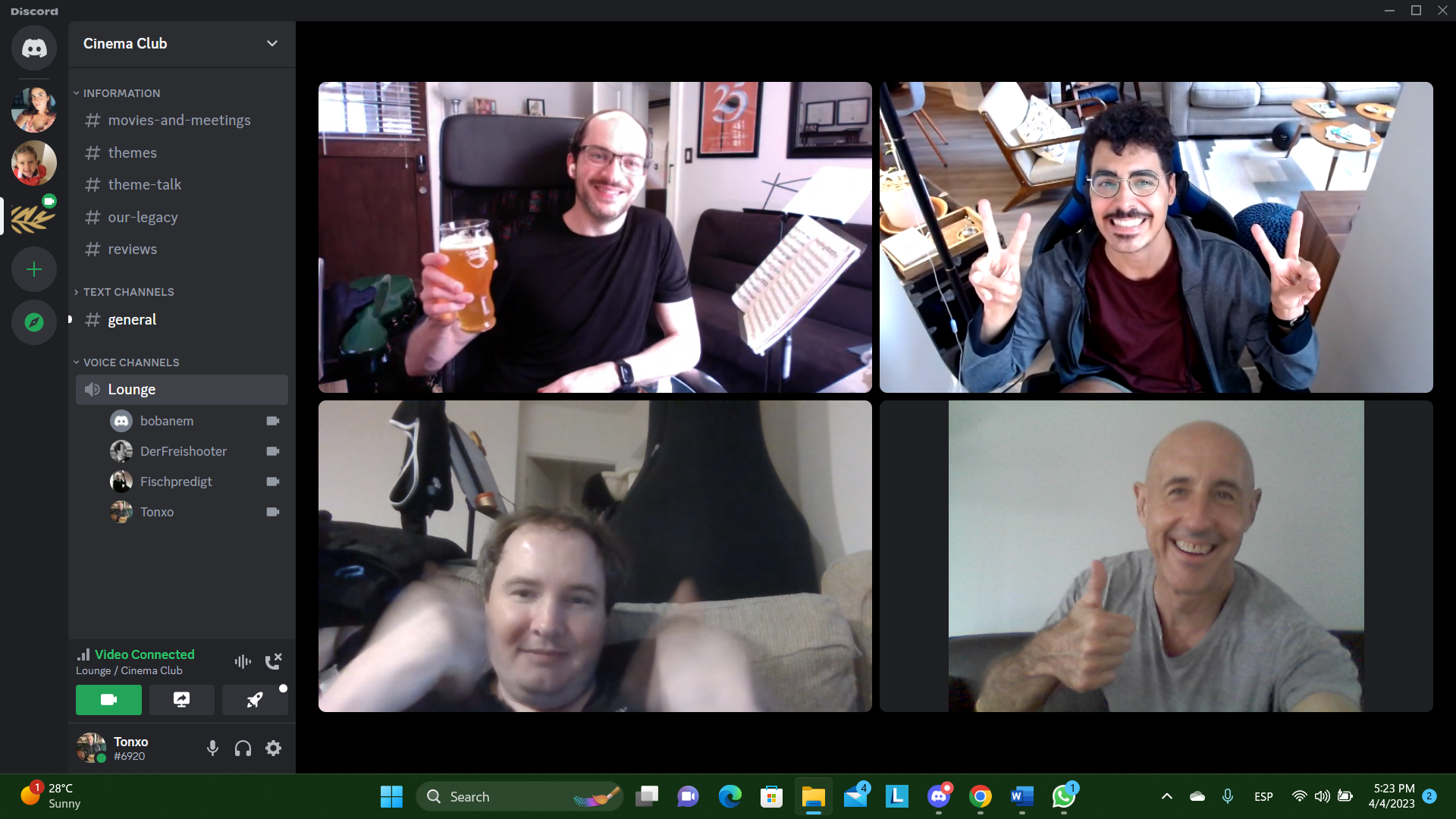
Well, what an honor it is to celebrate the second anniversary of Film Club! It is such a pleasure to sit (in the interweb) with three brilliant film lovers and just talk about the 7th art. It is one of the highlights of the month for me. If the weather cooperates, I will set up on my back porch, prepare some cheese, crackers, a little vino, a square of chocolate and a cigar. Then sit back and enjoy the meeting. We take turns talking about each movie. Of course, the best bits are when we disagree. By now we have a good sense of who is going to like which films, so we have an excellent rapport.
This month we are slowing down a bit to only two films: Kurosawa’s Seven Samurai and the American Western it inspired: The Magnificent Seven.
And the movies! Every month exploring four films in whatever genre we choose for our turn. I ventured off from a genre in July, to explore Meryl Streep’s acting. It was sad we could only watch four of her films, August Osage County was so good I wrote about it here. Another innovation this year was inviting a guest curator, Russian Literature, Film, and Culture professor Anthony Anemone (yes, he is the dad of one of our members) who recommended four brilliant films and had a great presentation for each.
I would write more about the films we watch every month, but I do not want this blog to be a film review blog, there are plenty of those and only one with my silly stories, so there.
Here is what we have watched this year. (For last year’s list, click here)
War (March)
Bridge over the River Kwai (1957)
The Deer Hunter (1978)
Come and See (1985)
Tropic Thunder (2008)
Crime and Punishment (April)
The Killing (1956)
Dirty Harry (1971)
Before the Devil Knows You’re Dead (2006)
Un Prophete (2009)
Art (May)
Tambien la Lluvia (2010)
Inside Llewyn Davis (2013)
Mr. Turner (2014)
Portrait of a Lady on Fire (2019)
Meryl Streep (July)
Kramer vs Kramer (1979)
Sophie’s Choice (1982)
Julie & Julia (2009)
August: Osage County (2013)
Fantasy (August)
Princess Mononoke (1995)
Tale of Tales (2015)
A Monster Calls (2016)
The Green Knight (2021)
The System is Broken (September)
Brazil (1985)
I, Daniel Blake (2016)
Judas and the Black Messiah (2021)
The White Tiger (2021)
Spy (October)
Dr. No (1962)
The Lives of Others (2006)
Tinker Tailor Soldier Spy (2011)
An Officer and a Spy (2019)
RomCom (November)
Roman Holiday (1953)
Hannah and Her Sisters (1986)
The Birdcage (1996)
Punch Drunk Love (2002)
Childhood (December)
Paper Moon (1973)
Stand by Me (1986)
Moonrise Kingdom (2012)
Moonlight (2016)
Russian/Polish as Curated by Tony Anemone (January)
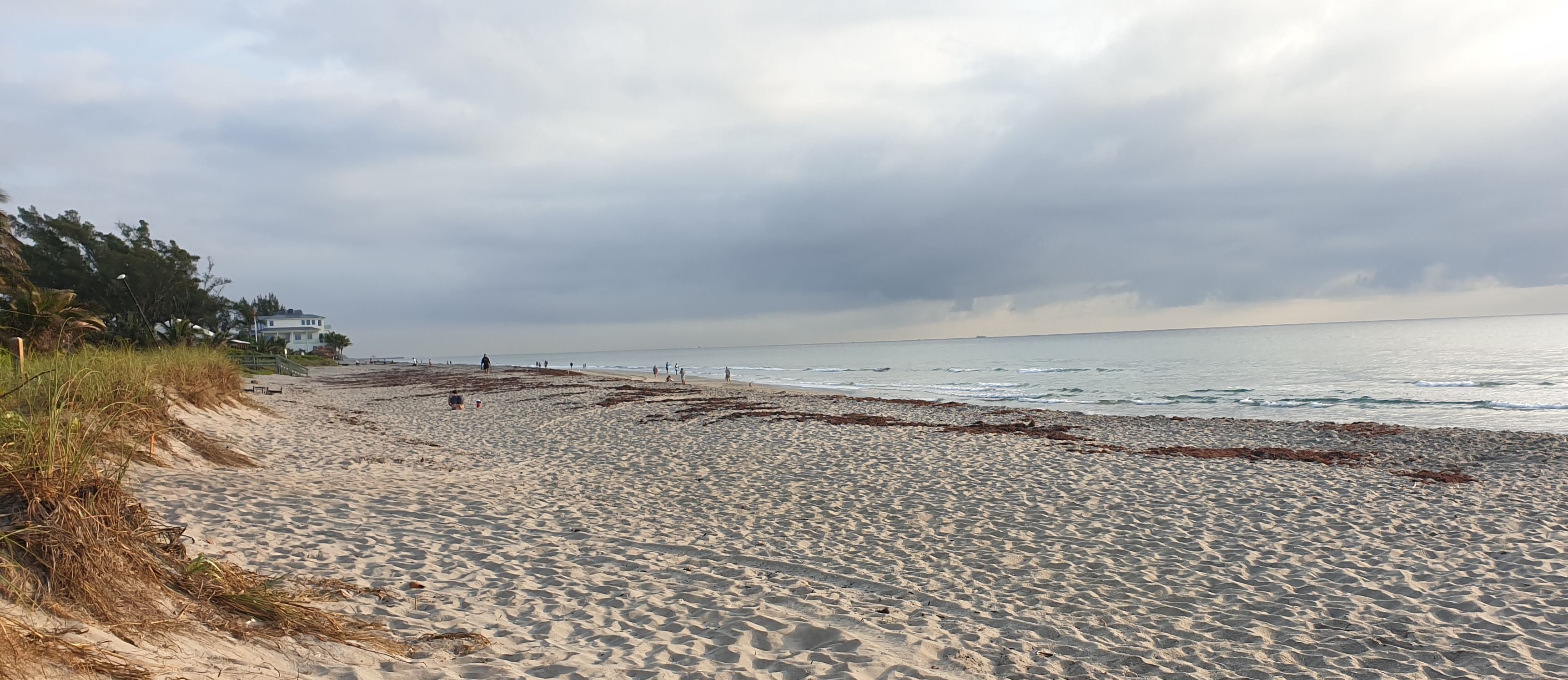
It is a well-known fact that South Florida is a suburban wasteland, with crazy development (Florida does not have income tax, so they compensate it with property tax, thus the constant building…). As you drive through South Florida it is golf course after residential development after shopping strips, again and again, for mile upon mile… However, there is one massive redeeming quality, yes you guessed it: the ocean.
I am privileged to live walking distance from the beach, and I try to go two or three times a week.
If it is my cardio day and the tide is low, I will go for a run on the beach. Alternatively, if it is my cardio day and the water conditions are good -something rare here, since there is usually rip tide warnings, Portuguese Man-O-War, chop, etc. etc.- I will go for an open water swim of about a mile.
On Sunday evenings, before yoga, I will go for a walk/meditation and with a big bucket, clean up the beach. The amount of trash one picks up is crazy, check out my report here.
At the beginning of the year a dear colleague took me Stand Up Paddling in the Intracoastal (read about it here), but recently we have been going out on the beach and actually surfing!! Although I have much to learn and I have only caught baby waves, it is great fun!!
In a very generous act. Fr. George gifted me the board I have been using recently, what an honor!
Finally, occasionally, I will just go for a walk on the beach, no bucket for picking up trash, no running, just a nice walk.
So, as much as I complain about Florida, I do love getting out on the water, or at least running next to it.
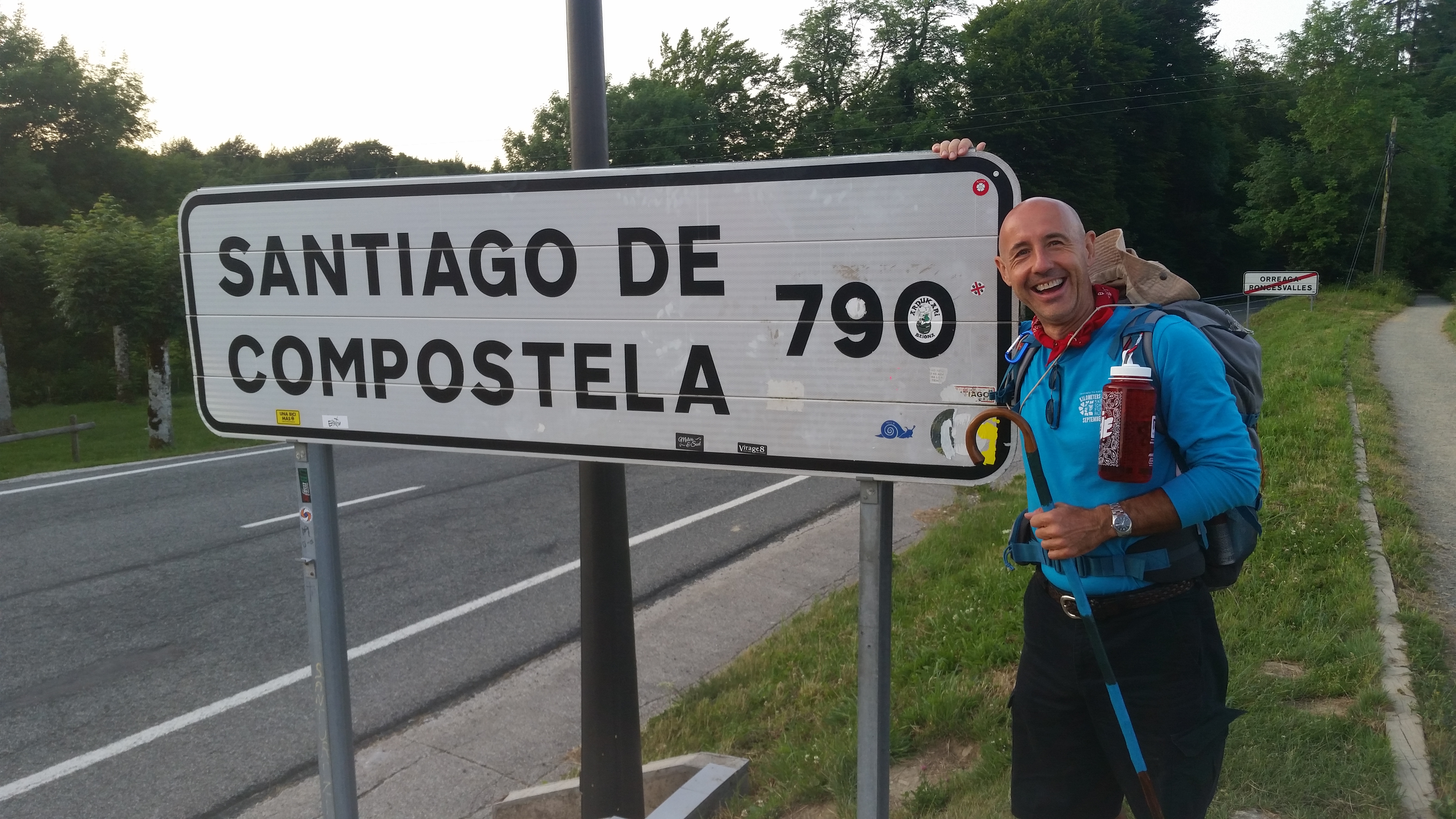
If you type “preparing for the Camino” on the Interweb you are going to get hundreds, maybe thousands of articles and videos on what to pack for the Camino, how to get in shape for the Camino -guilty as charged, even I have written about this. What you are less likely to find is how to really prepare for the Camino, not for the exterior journey, folks in the Middle Ages did it without Gore-Tex, superhightech gear, and without cellphones, but for the interior journey, the one you do not need any gear for.
Yes, there is some overlap: the less you pack, the happier your body will be and not surprisingly, the happier your soul, you, are going to be.
Basically you want to get your mind and your soul (your mind, unfortunately- if you have cleared your head and are living in the present moment, good for you!). So if you have to ask forgiveness, do so before you leave, if you have to settle things, try to do so beforehand. Again, the lighter you travel, the better.
Back in the Middle Ages, there were some guidelines about preparing for the spiritual journey, which have been lost, since the Camino became a bit of a hippie, gofindyourself trek in the early eighties.
My dear Richard Rohr recently wrote about pilgrimage in his daily meditations (if you are not yet receiving them sign up here) and he mentioned the Medieval tradition:
First of all, you had to make amends with everyone you had ever wronged. Also, if you went on pilgrimage holding any kind of unforgiveness, it could not be a good pilgrimage. You couldn’t leave your town until you’d forgiven everyone who’d ever wronged you. Certainly, this is an attitude that we can pray for at the beginning of any pilgrimage: that God would keep our hearts open and loving, because a pilgrimage can’t just be a tourist trip. The meaning of a pilgrimage is an interior journey. Primarily, it’s an interior journey enacted exteriorly.”
Secondly, and a practical, interesting thing, is that if they were going to go on pilgrimage, pilgrims had first to ask permission of their wife, husband, and family. The idea was that they had to leave everything in right relationship at home. If they had any material debts, they also had to pay those before they left. They couldn’t go on pilgrimage until their spiritual and physical debts were paid, and they had permission from all the right people.
Next, they had to go to confession before leaving. Sometime in the course of a pilgrimage, celebrating some kind of reconciliation was deemed very appropriate. Again, there’s that cleansing, that letting go. Perhaps those of us who’ve already been down to the Grotto [1] have seen the basin of water on the far end with the words that Mary spoke to Bernadette. It states, “Go wash your face and cleanse your soul.” What a symbol of reconciliation! It’s a prayer. Above all else, pilgrimage is praying with your body, and it’s praying with your feet. It’s an exterior prayer, and the exterior prayer keeps calling you into the interior prayer.
Rohr writes a week’s worth of content which you can check out here.
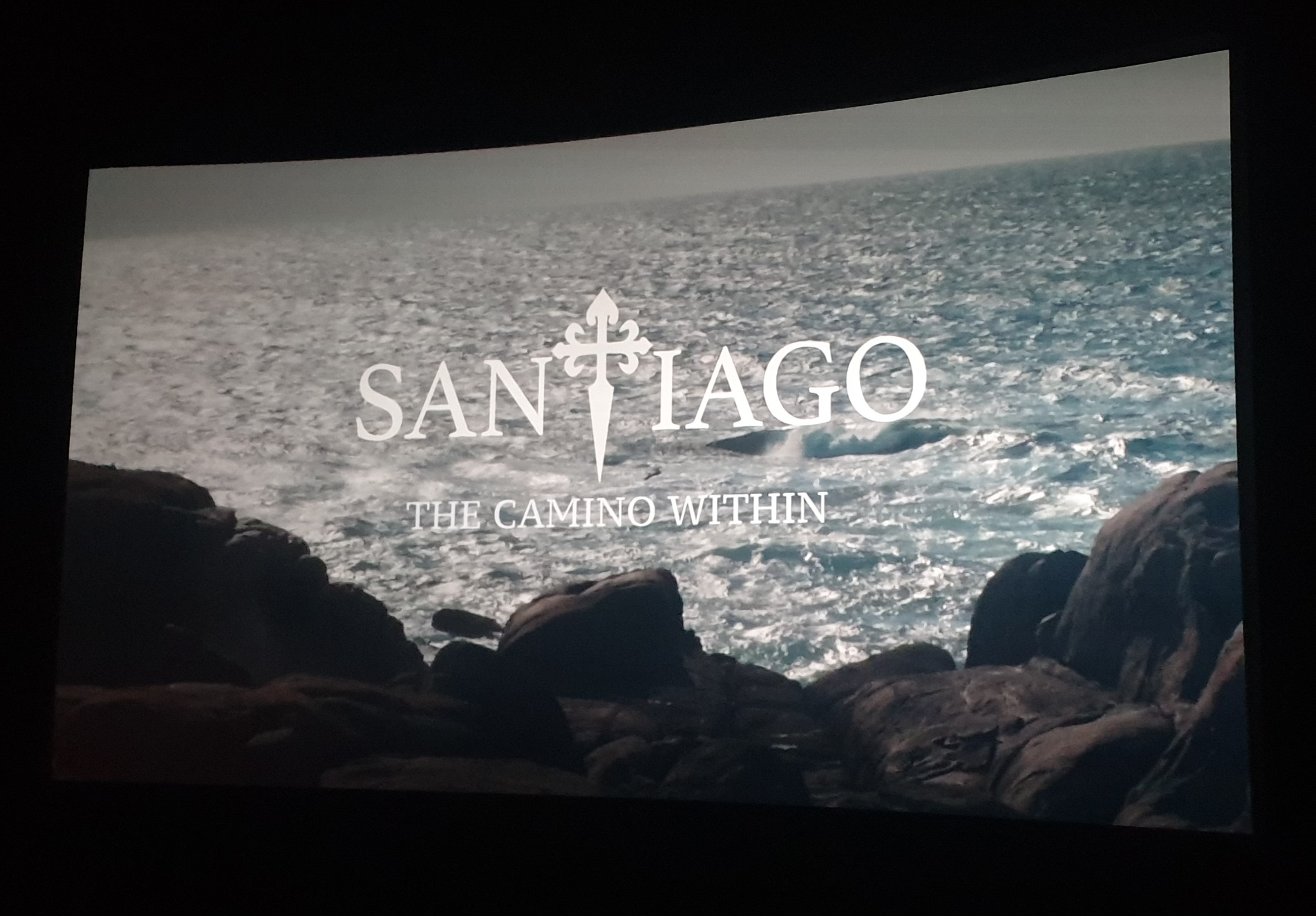
As I was thinking about this blog post, my students invited me to see Santiago The Journey Within, a reflection more than a documentary on the Camino. The film, led by Bishop Donald J. Hying, has beautiful photography and music, but sadly lacks a narrative, a connecting thread, which makes it difficult to immerse oneself in the film. Also the last 45 minutes of the film is just Bishop Hying talking about the Camino at a university conference. Beautiful words, but less than gripping action.
There you have it. Make sure your mind is ready as much -if not more- than your backpack!
¡Buen Camino!
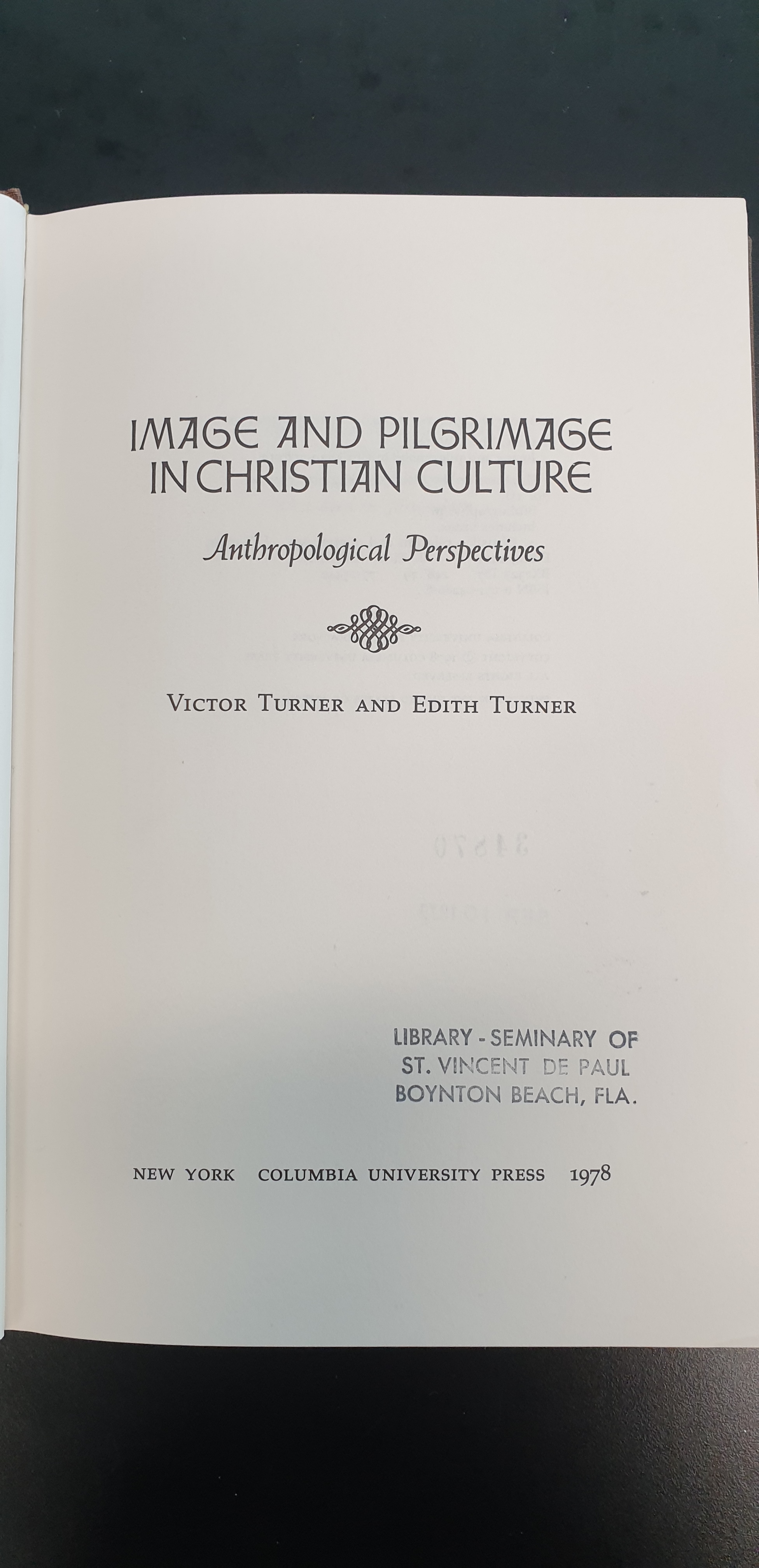
PS: If you are really into this, you can read Image and Pilgrimage in Christian Culture by Victor Turner and Edith Turner.
From the time of the ancient Greeks until the 15th century, the preferred format for literature was poetry; epic poetry, sonnets, pastourelles, so on. By the 15th century theatre took hold as the preeminent platform for writing; the different characters able to portray different points of view, and the fact that you did not need to know how to read to follow along, helped. The dominant format of the Enlightenment was the essay as we scrambled to put “order” into the world. And although my dear Cervantes basically “invented” the novel in 1600 (the word novella comes from the Italian, but these were not long narratives), this format did not fully flourish until the 19th century, and boy did it flourish!
A couple of factors that drove the popularity of the novel was that the printing press and paper making technology was well advanced, as well as the fact that many more people knew how to read.
The result are long, intricate novels with great character descriptions and narrative arches -Dickens, great philosophical dialogues –Dostoevsky, detailed historical dramas -Tolstoy. In fact, most European countries saw a great spike in novels in the 19th Century.
In Spain, Leopoldo Alas “Clarín” and Benito Pérez Galdós stand out. In France, Alexandre Dumas, Flaubert, Verne, and today’s featured author, Hugo among many others marked the 19th C. In Germany, Goethe led the Romantic movement! In Ireland, Joyce, Wilde, and Stoker represent. In Russia Dostoyevsky and Tolstoy are most famous, (click here for Russian lit) but not the only ones (Pushkin and Turnegev are in that list). In England, the list is too long to write down, but let’s just say: Jane Austen, Emily and Charlotte Brontë, Lord Byron, Lewis Carroll, Doyle, and of course, Dickens.
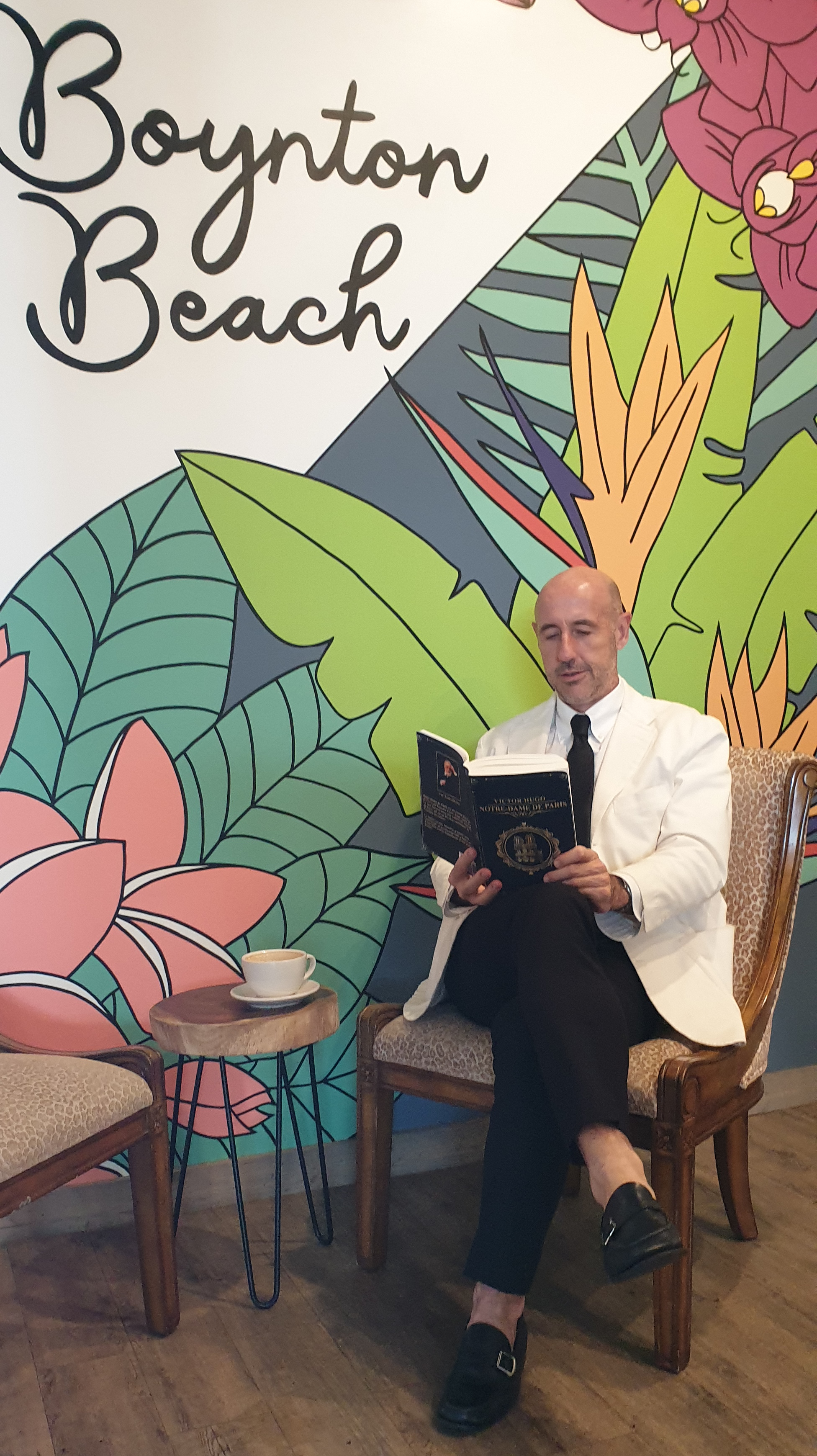
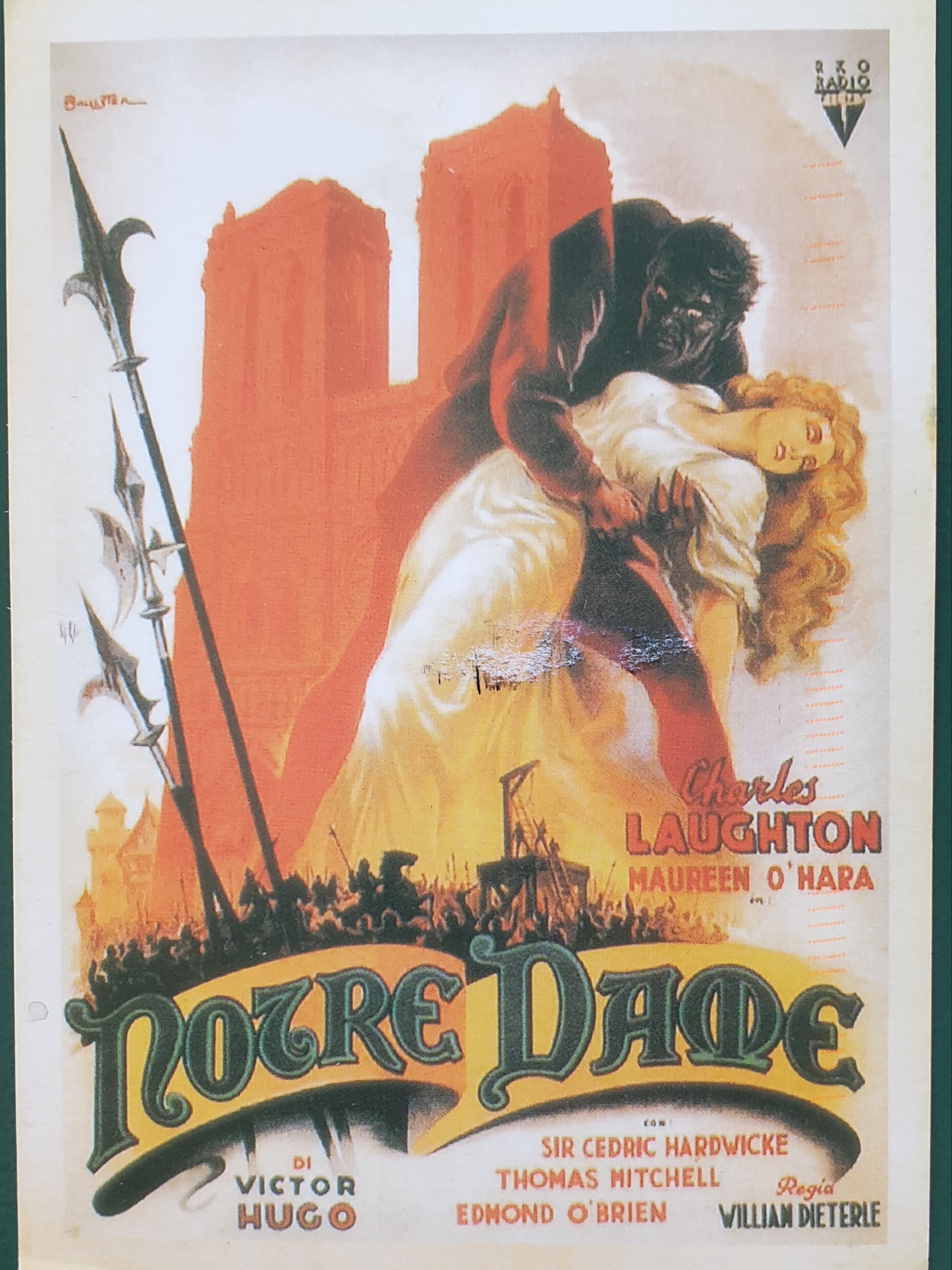
All this to say that I just read Victor Hugo’s Notre Dame de Paris written in 1833, and I have loved it! It is beautifully crafted, amazing, evil, charming, funny, stupid, great characters with, of course, Quasimodo being grotesque but with a beautiful heart. The Cathedral itself is very much a character in the novel, as Hugo was advocating for the preservation of Gothic architecture in a time when old buildings were being torn down to build new ones. The story fits more into the Romantic movement that the later Realist movement, what with all the darkness and gargoyles. I read a French edition that my sister gifted me for Christmas last year, sorry I am running a bit behind on my reading list.
Confession time: I have not seen the Disney version so I cannot judge how faithfully it represents the book, but hey, it is a Disney film. There is also a ballet, a musical, an old film, etc.
Now go read some 19th c. novels!!! You are welcome.
As they say: with great power comes great responsibility, since I have the powerful platform that is my blog, it is my job to tell you to wear a hat and sunscreen when the sun is out – and sometimes also when it is cloudy – oh, and a shirt.
You see, I recently noticed a not very nice looking spot on my schnoz, snout, smeller, horn, sneezer, nose. It grew and grew to the point where I had to do something about it.
I sent a photo to my sister who has a dear friend dermatologist Dra. Isabel Aldanondo, who told me it could be actinic keratosis, which can turn into cancer, and should get it looked at Stateside…
So, I searched for a dermatologist close to home and booked an appointment.
Dr. Nielsen is one of the nicest doctors I can remember dealing with. He listens, he explains things, he manages the small talk, and then he grabbed his ice gun and froze my spot: let it go, let it go, and it went – well, after falling off, getting a crust and have that fall off, and finally healing! I recommend Dr. Nielsen without reservations, he and his staff are professional, attentive, courteous, gentle and just overall nice.
In conclusion: use sunscreen, wear a hat, and when possible a shirt, and check your body for weird looking new spots.





















 Antonioyrocinante's Blog