The Holdovers, an ode to Stoicism.

One of the many blessings of Film Club, beyond the fellowship and deep discussions, is that every few months you watch a jewel of a film. This month’s theme was Boarding Schools, and the repertoire was: Louis Malle’s Au Revoir les Enfants (1987), Netflix’s version of Matilda (2022)(ok, not a boarding school, but it might as well be), Robin Williams’ classic Dead Poets Society (1989) and a film I had never heard of: The Holdovers (2023).

There are many factors that make The Holdovers a fantastic film -at least for me: it is filmed in two main locations I know and love well, New England boarding schools, and Boston, my beloved old Bostonia, Paul Giamatti, wonderful photography, and an insightful narrative.

As I mentioned the film starts in a New England boarding school (it was filmed in half a dozen of them, including a scene in Waltham, home of my alma mater Bentley College), so we have the whole school as the cast. Christmas break arrives and the cast is narrowed to five students who are stuck in school over break with a teacher (Giamatti) and the cook. The dad of one of these holdovers, the CEO of a helicopter manufacturer will eventually pick up his son and the rest of the boys -except one, Angus Tully (Dominic Sessa) to take them skiing. The brunt of the story is then the three holdovers: the student, history teacher Mr. Hunham, and the cook, Mary Lamb (Da’Vine Joy Randolph).

Yes, the film touches on the inequalities of the “legacy students” -children of wealthy alumni, family dynamics, class inequalities, etc. But those are accessory to the plot.

What could these three different people have in common? You might ask. Well, what we all have in common: our brokenness. And this is where the film shines. The big clue comes when Hunham, gives his two Christmas companions copies of Marcus Aurelius’ Meditations “For my money, it’s like the Bible, the Koran, and the Bhagavad Gita all rolled up into one.” At the end of the film, we will see a box full of the books, Hunham’s go to present, apparently.

Stoicism is less a philosophy and more of a way of life: understanding what is under our control, and if it is beyond our control, there is not much we can do about it but accept it. (I recently wrote about this here). Of course, it is difficult for us to become full, real stoics, it is a lifetime process. Our three protagonists -eventually only the two men in their “field trip” to Boston, struggle with their issues. Despite the obvious age difference, we see these two men are basically the same, a mirror image in their brokenness.

As any good film does, The Holdovers makes the viewer consider their lives and how to deal with their issues, and at the same time enjoy a wonderful cast, beautiful photography, great early seventies music and Paul Giamatti.

Enjoy the 70s style trailer:

70s style trailer is classic!

Authors (and characters) as adjectives a quiz, Niccolo Machiavelli a conference, revisiting the Renaissance

Match the author -or character (extra credit)- to the adjective (answers below)

  1. Kafkaesque     A. In which political expediency is placed above morality, and craft and deceit areused to maintain the authority and carry out the policies of a ruler.

2. Nietzschean    B. As a striving toward love of spiritual or ideal beauty.

3. Platonic           C. Emphasizing the will to power as the chief motivating force of both the individual and society.

4. Orwellian        D. Extravagantly chivalrous or romantic; visionary, impractical, or impracticable.

5. Machiavellian E. Describing a fictional world teeming with characters from all walks of life and social strata.

6. Quixotic          F. Sacrificing spiritual values for power, knowledge, or material gain.

7. Faustian          G. Marked by a senseless, disorienting, often menacing complexity.

8. Dickensian      H. The totalitarian future described in his antiutopian novel 1984.

Fairly easy and short right? The reason is that very few authors -and even fewer characters- have reached the level of having their name become adjectives.

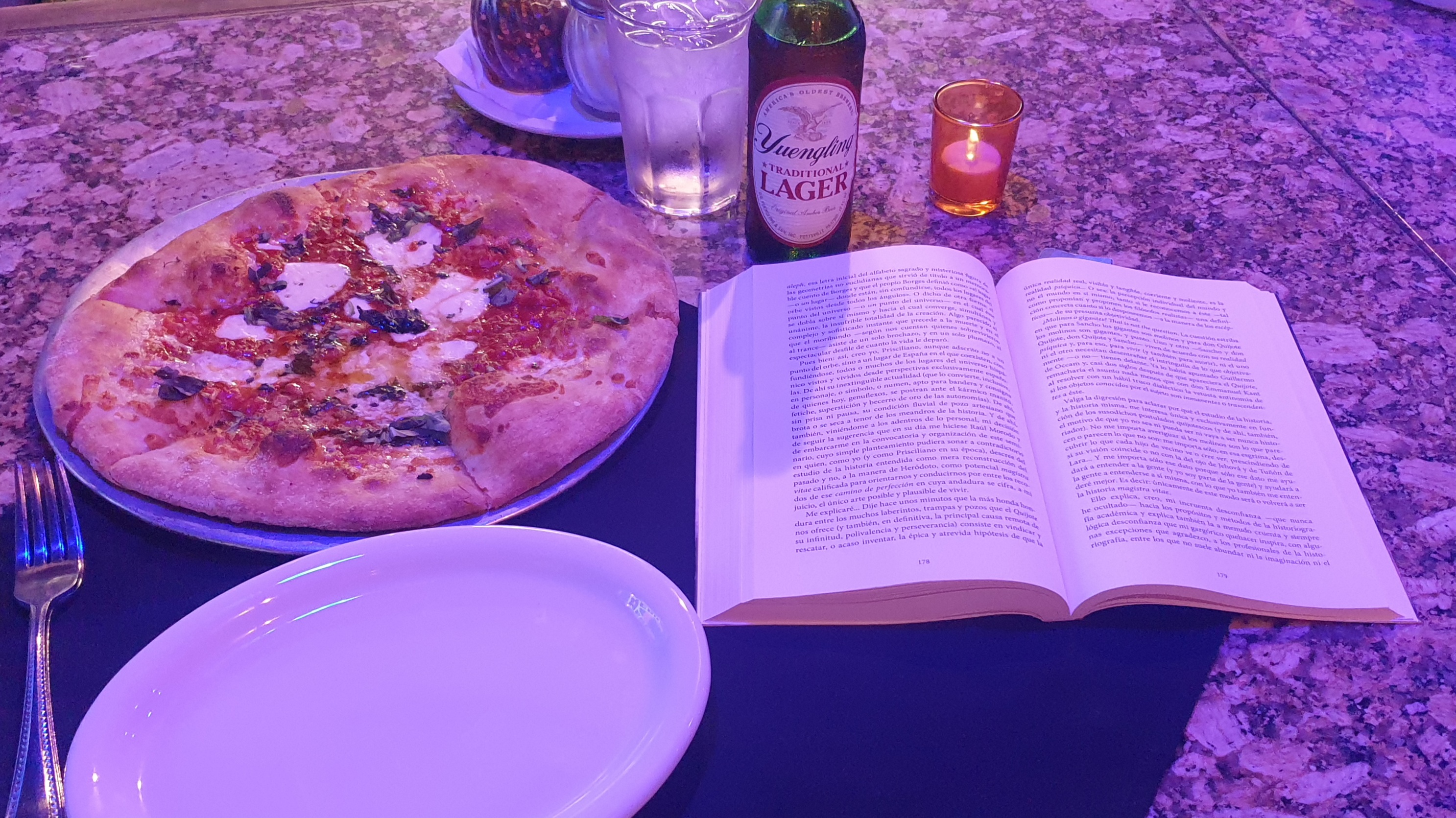
Although I am not a Renaissance specialist, I recently went to a fantastic conference on Machiavelli given by professor of Political Science at the Autonomous University of Madrid Fernando Vallespín at the fantastic Fundación Juan March.

Professor Vallespin was amazing, and his presentation was equally interesting. He obviously referenced the growing wave of Humanism that sparked and propelled the Renaissance, he commented on Giovanni Pico della Mirandola (1463–1494), he recommended Stephen Greenblat’s The Swerve, and he put Machiavelli in the context of his era. I had not read The Prince since high school back in the Pleistocene; so, it was very refreshing to re-visit Machiavelli. I remembered my Medieval Literature professor, the great Frank Dominguez mention that The Prince was written for king Ferdinand of Aragon whom Machiavelli admired. I wanted to ask Prof. Vallespin about that, but he did not stick around for Q and A…

If you are in Madrid, check out the conference cycles at the March, you will not regret it!

Answers:

1.         Kafkaesque     G. Marked by a senseless, disorienting, often menacing complexity.

2.         Nietzschean    C. Emphasizing the will to power as the chief motivating force of both the individual and society.

3.         Platonic           B. As a striving toward love of spiritual or ideal beauty.

4.         Orwellian        H. The totalitarian future described in his antiutopian novel 1984.

5.         Machiavellian A. in which political expediency is placed above morality, and craft and deceit are used to maintain the authority and carry out the policies of a ruler.

6.         Quixotic          D. Extravagantly chivalrous or romantic; visionary, impractical, or impracticable.

7.         Faustian          F. Sacrificing spiritual values for power, knowledge, or material gain.

8.         Dickensian      E. Describing a fictional world teeming with characters from all walks of life and social strata.

*All definitions from Dictionary.com with thanks

Happy New Year! and the resolutions that come with it

It is time to reframe and write down our new year’s resolutions. How is that working out for you?

Our main issue with new year’s resolutions is that we try to change either one thing, quit smoking or everything: quit smoking, lose 10 lbs., go to the gym, save a million dollars, etc. Usually neither one of these approaches works long term. TV, social media, hyper processed foods, etc. they are all engineered for you to lose that battle. The solution? A lifestyle change, Stoicism, a gradual approach. Let me break that down.

A lifestyle change means that you change your outlook on life. Under ideal circumstances that requires more motivation than a change in a number in the calendar, for example a breakup, a heads up from a doctor, something nice and traumatic. Another hack, this time from British Philosopher Alain de Botton, is the importance of repetition. De Botton sets the example of religions, which are particularly good at making us repeat things. So, make yourself repeat things until they become second nature -but beware of staying mindful of your actions, do not let them become rote.

A key component to succeed with your New Years resolutions lies in balance, in equilibrium, the Middle road as the Buddhists say, or moderation, the motto of the Stoics. You can´t kill yourself in the gym only to get drunk every night, or you cannot eat super healthy if you are not exercising. You cannot work all day and not have a moment of recollection; you get the idea. What I propose is to take stock of all the distinct aspects of your life: physical, mental, spiritual and see how and where you can improve.

Last year one of my online tutoring students gave me a wonderful book: Diario para Estóicos*, daily reflections from the Stoics. I loved it and incorporated it to my evening version of “Lectio Divina” when I read and meditate.

The problem with the current Stoicism is that you are reading a quote from Marcus Aurelius on Social Media, you smile to yourself, think that is a good one, maybe even do a screen shot, and then keep scrolling. You are lacking the repetition and the action components necessary to exercise Stoicism. Reading a daily prompt incorporates that repetition that de Botton talks about, and I believe that after a year I have become more Stoic. Of course, for any self-improvement to happen, you must be conscious of who you are, and that, my friends, is the hard bit.

So good luck with your fitness and your diet, your prayers and meditation, your yoga and community service, your sleep and your work, your reading and socialization. But most importantly good luck with your consciousness.

“begin in philosophy is this: a clear perception of one’s own ruling principle.”

Epictetus

As for me, I said goodbye to 2023 running my 6th San Silvestre Vallecana 10K. Where are you on your path to wellness?

* The Daily Stoic Journal: 366 Days of Writing and Reflection on the Art of Living by Ryan Holiday and Stephen Hanselman.

Museo Arqueológico Nacional MAN

When one of your best friends is a noted fine antique art restorer and he invites you to walk around the Museo Arqueológico Nacional, something you had not done since you were a schoolboy, you drop everything and go!

First, what a wonderful job they have done renovating it! The museum shares building with the National Library -One side Library, one side Museum. In it you will find everything from prehistoric bones to early 19th C artifacts. Of course, the main exhibits are from Spain’s first inhabitants, the íberos, with their rich sculptures, like the Dama de Elche -the museum’s undisputed jewel, and their falcata swords feared by the Romans… (Jaime restored a bunch of these curved swords and told me everything about them).

The room of Roman mosaics is mind blowing, the Greek room, the Romanesque room also, and on and on. The whole museum is jaw dropping! And if that was not enough, under the garden, they have recreated the Altamira caves with their prehistoric paintings, it is literally a cave with the painting on the walls and ceilings.

Jaime even introduced me to some of his colleagues and showed me the labs and workshops, even the library where he works when he collaborates with them.

So, if you are in Madrid, do not miss the Museo Arqueológico Nacional, also, it is on Calle Serrano, a main shopping street so you can kill two birds with one stone!!

You are welcome!

The Streets of New Orleans, The New Orleans Gospel Stars, gospel music as a meditation.

It was love at first sight. The streets, the feel, the vibe, I stayed at a dingy little hotel in the French Quarter, the Andrew Jackson, my room stank of weed, every morning I had breakfast at the Clover Grill Diner before heading to work. In the mid-90s I went to New Orleans two years in a row for a conference. I do not remember much about the conferences, but New Orleans stayed in my heart. But I was not new to New Orleans, for years I had listened to its music, its magical, powerful, beautiful music which my dad loved and played constantly. As a result of this, I got hooked on the New Orleans sound, listening to Branford and Wynton Marsalis, Harry Connick Jr., Jon Batiste and so many more.

The other day I saw a poster for a Gospel Choir concert in Madrid, and Celia and I immediately invited my niece and my nephew to the concert.

It was a blast! The brass marched into the hall playing a beautiful version of “Just a Closer Walk with Thee” which I know and love from Van Morrison’s version, then the rest of the band walked in and ignited the crowd with their rhythm and energy. “What a Wonderful World” was nice, but nobody can come close to Louis Armstrong on that one. At the end we got the classic: “Oh Happy Day.” For the grand finale: “When the Saints Come Marching in.” The normally conservative Madrid crowd was all standing and dancing! What a show!

Richard Rohr writes in his daily reflection about this music:

worship in the Black church can create a communal contemplative experience

CAC faculty member Barbara Holmes

My niece and nephew enjoyed it. I loved traveling back to my dear New Orleans, as I had not been there since the start of this blog in 2011 (check it out here) when I applied for my PhD in Tulane.

Here is a clip of the amazing New Orleans Gospel Stars, enjoy:

Culture in cities, Fundación Juan March; Antes de America.

One of the principal reasons I love cities is their fantastic cultural offering -lots of it free. So, when I am in Madrid, I make the most of it and try to go to as many culturally stimulating events as possible.

The other day I went with my nephew to the Antes de America exhibit at the phenomenal Fundación Juan March. What this exhibition sets to show is the influence of pre-colonial art on post-colonial art. It was a massive display showing pre-colonial artifacts next to the artifacts it inspired: from furniture to posters, record covers, pottery, all sorts of stuff.

Although the brochure claims the exhibit highlights art from Tierra de Fuego to Alaska, most of the material was Mesoamerican. Admittedly, that is also the region with the richest concentration of cultures -I am guessing because of the weather, but I am not a paleontologist or any kind of scientist, so what do I know?

One of the more important things I learnt from this exhibition was how prevalent ancient American art is in our modern culture. You might see a cool geometric design on a poster for a concert, for example, but in fact it was done hundreds of years ago by a tribe, people, culture that is no longer with us.

With hundreds, maybe thousands of pieces on show, there are bound to be some misses and I did find a couple of choices somewhat questionable. But again, this is not my field of expertise, I am just an old, white guy.

In conclusion, the exhibit is phenomenal in volume and content, if you are in Madrid before March 10, 2024, I highly recommend a visit. The Fundación has a cute little coffee shop in the basement and a cute little library you can borrow books from! And of course, the obligatory gift shop which sells the massive catalogue from the exhibition (yes, I got one!).

Seven Samurai vs The Magnificent Seven a cultural perspective

Unless you want to see hundreds of articles comparing these two films, do not type this into your interweb search engine. As usual, I want to give it a bit of a twist and look at the cultural angles of these two films beyond the obvious.

Or maybe not so obvious; yes, here is a Japanese and the Western remake that ensued, but what I found interesting was the approach from each filmmaker’s culture.

Kurosawa is meticulous in his approach to his film, showcasing Japanese traditional arts and crafts, even down to calligraphy, flag making, or traditional rice planting! The film underlines Japanese social strata particularly the difference between the farmers and the Samurai class. Coincidentally, we recently saw Jiro Dreams of Sushi in Film Club, and despite the many differences: 2011 documentary vs 1954 fiction, Seven Samurai reflects Japanese artistry and attention to detail, much like sushi making is.

The Magnificent Seven does not have the cultural weight to pull, so it focusses more on the ethical issues of good and bad and on character development, it is Hollywood after all. But the filmmaking compared to Kurosawa is sloppy, even careless. The film is basically pulled off by Yul Brynner, Steve McQueen and Charles Bronson’s magnetic charisma added to James Coburn to round off a magnificent cast.

Of course, the first big difference is that Samurai is almost three and a half hours long compared to the more normal two hours of The Magnificent Seven, so the cutting corners is evidently evident.

Another main difference is that the weapons used in Samurai are swords and spears with only a minor use of a couple of muskets whereas Magnificent revolves around revolvers and rifles, which changes the dynamic of the conflict and the engagement.

Overall, Seven Samurai is a work of art, a masterpiece of cinema, whereas Magnificent Seven is just another Western.

Antonio y Rocinante’s Long haul flight and jet lag hacks

Getting on an airplane

At this point in my life, I cannot tell you how many times I have crossed “the pond”. My first time was in 1976, I remember because the US was celebrating their bicentennial, so I was 11. Since then, we moved to NY for my 6th grade, then I went to college in Boston, and stayed in NY and Boston for a few years after that, then I traveled for work and vacations all over the US, Caribbean and South America, then I moved back to Boston in ’05, and you know the story since then (if you don’t, you can backtrack in this blog). So, for a conservative number let’s say over a hundred times.

Here are some of my travel and jet lag hacks:

Pre-flight:

Your body has three main built in clocks: stomach, sleep, and light. We need to prep those at least the day before the flight:

Start eating easy to digest meals this will “prep” and confuse you stomach, getting it adjusted for your new meal schedule.

Same with sleep: try getting some naps in the days before the flight. Again, you are trying to “trick” your sleep pattern.

Flight day:

Look good. Do you really want to meet someone important in your life, maybe your next boss, your future spouse, a potential client, or a celebrity, wearing oversize sweats and Crocs. Is it really that difficult for you to look good and be comfortable at the same time? Work on it; for me it means a button-down shirt, blazer, chinos, and comfortable loafers – just like George Clooney in Up in the Air (see clip below). Ground staff and cabin crew are going to like you more if you look nice than if you look like you are going to a pajama party.

Hydrate, hydrate, hydrate. Cabin air is super filtered and super dry, so on a long haul you are going to notice. Most of your tiredness after a long flight is more dehydration than tiredness.

Night flights: try to sleep! Take a heavy-duty Melatonin, eye mask, ear plugs, blanket and sleep, sleep, sleep, or at least try to.

No alcohol, coffee, tea, sodas, all those drinks are going to make you pee, or make you thirsty, or dehydrate you or whatever, stick to water. I also put on moisturizer every time I go to the bathroom and wash my hands, it feels nice.

Adjust your watch if you are an old fool like me.

After landing:

Do not have a big meal, stick to easy to digest meals for a day, to continue adjusting.

Try to adapt to the local schedule ASAP, no going to bed in the morning, no big meals at odd times. Be a local.

Try to go outside, if there is sun, take in the sun, remember light is one of your body clocks.

You are welcome.

Any thoughts? Additions? Suggestions? I would love to read them in the comments below.

Why is football (soccer) the leading sport in the world?

Why is football (soccer) the leading sport in the world? Why is the World Cup one of the most watched events in the world? There are a few factors, which might surprise my American readers.

Yes, football is low scoring, but that is part of the beauty of it, each goal is precious and celebrated. American football has a weird scoring system which devalues each score. Basketball averages 70 points per game, so unless you have a final basket deciding the game, the final score is not so dramatic. Also, since the court is indoors and relatively small you cannot have a massive audience. A major tennis final might also be exciting, with each point going back and forth.

The low scoring factor also makes for suspense. A winning goal might come at the last minute -literally! (For example, Andres Iniesta’s World Cup winning goal at the 2010 final)

We also have ties, but that is only on league games, not cup, and not championship games.

All it takes to play soccer is a ball, and some are even made from plastic bags. This means that children even in the poorest neighborhood or village play soccer.

When you become a football fan, you will follow your team in all their competitions: national league and cup, and if your team is any good, in their European or Latin American championship (Champions League or Libertadores). You will also follow your national team in their continental and world tournaments (Euro, Americas or World Cup). This team is made up with your country’s best players regardless of their club affiliation. In football countries you basically inherit your allegiance from your parents. I remember my father taking me to the Bernabeu stadium in cold winter afternoons. However, there are exceptions to this rule with even some Madridista (Real Madrid) and Culé (Barcelona) marriages!!

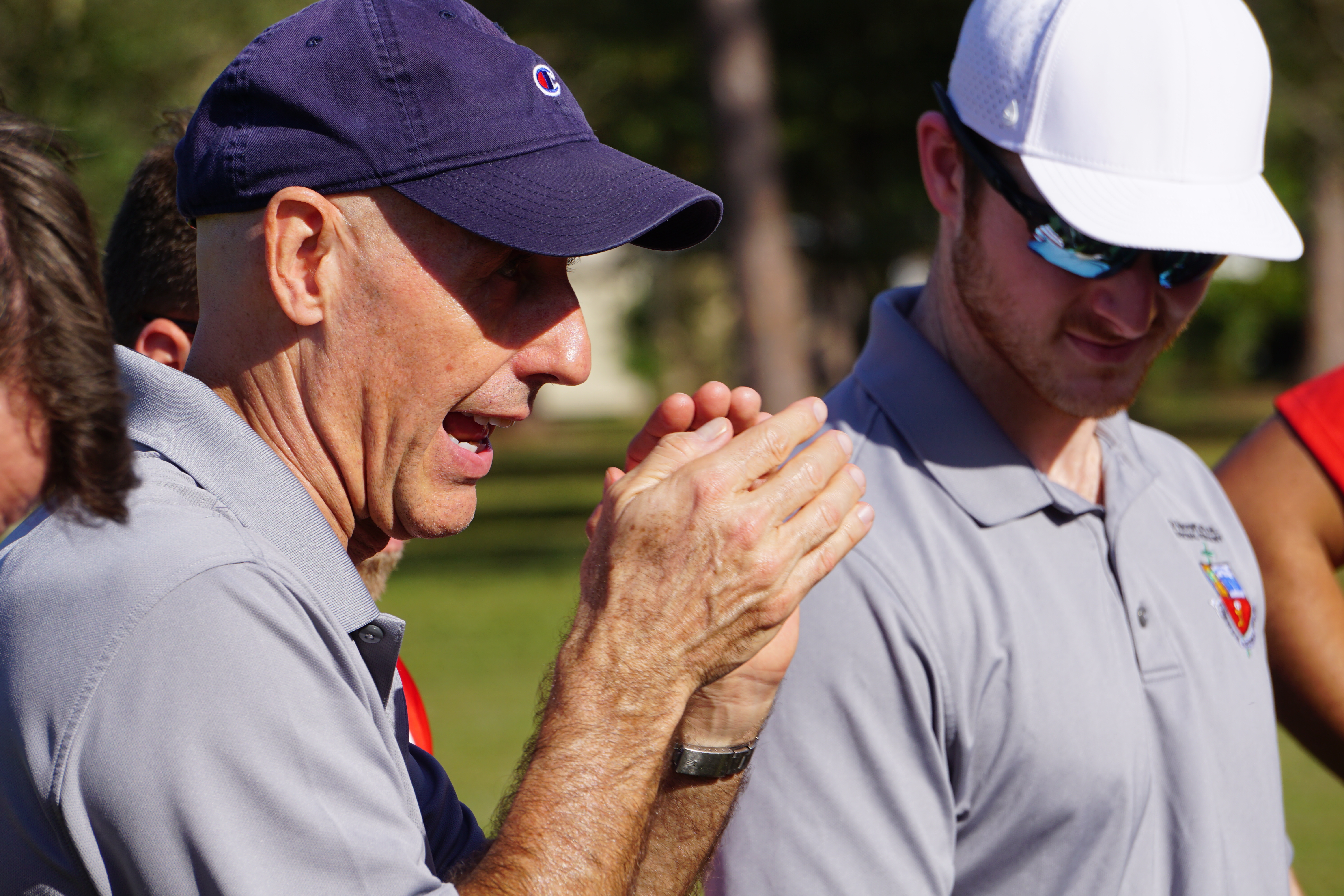
I am passionate about soccer. Although I never played enough to be a good player, I have always loved it. I got the opportunity to coach in 2005 and I have been coaching on and off since.

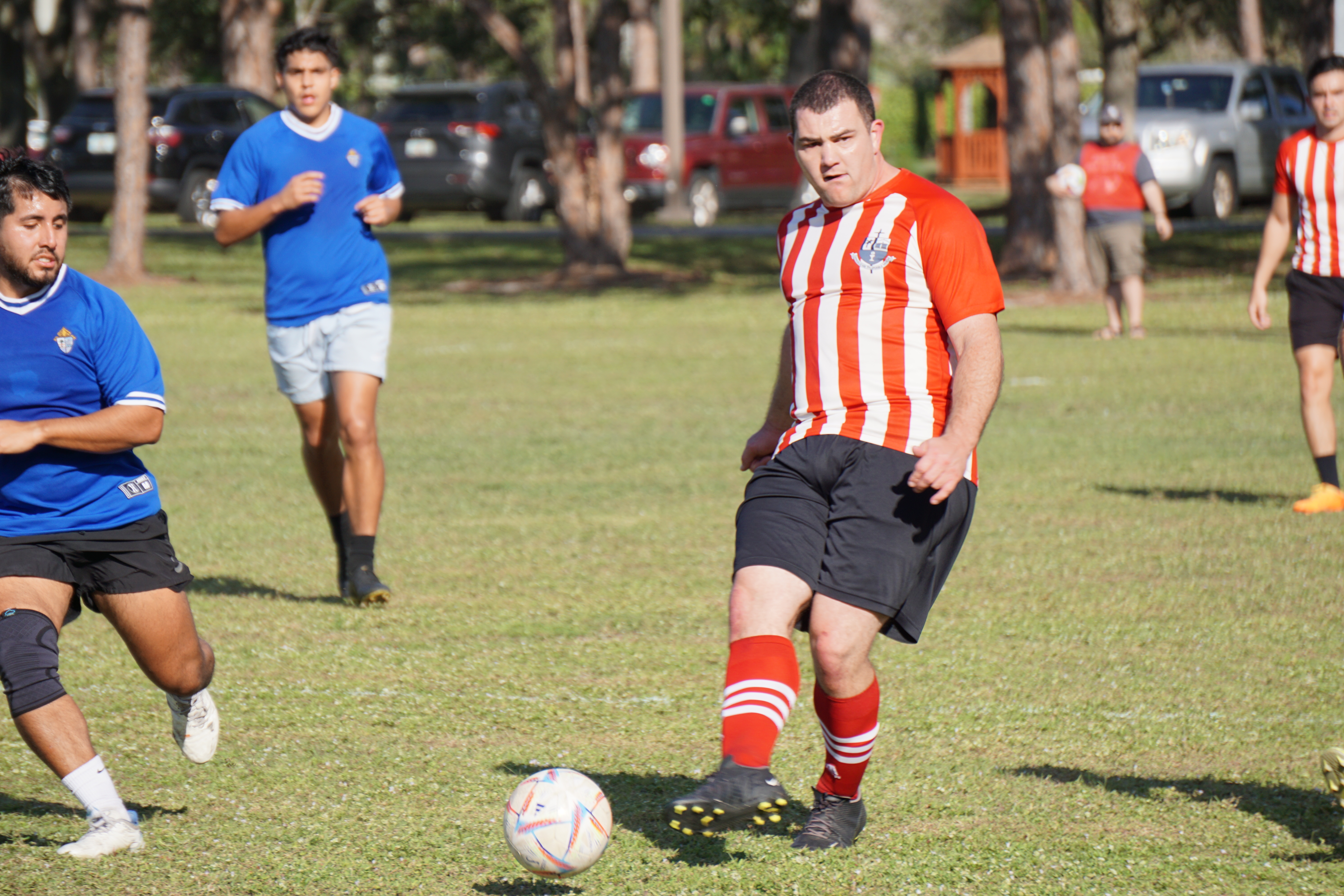
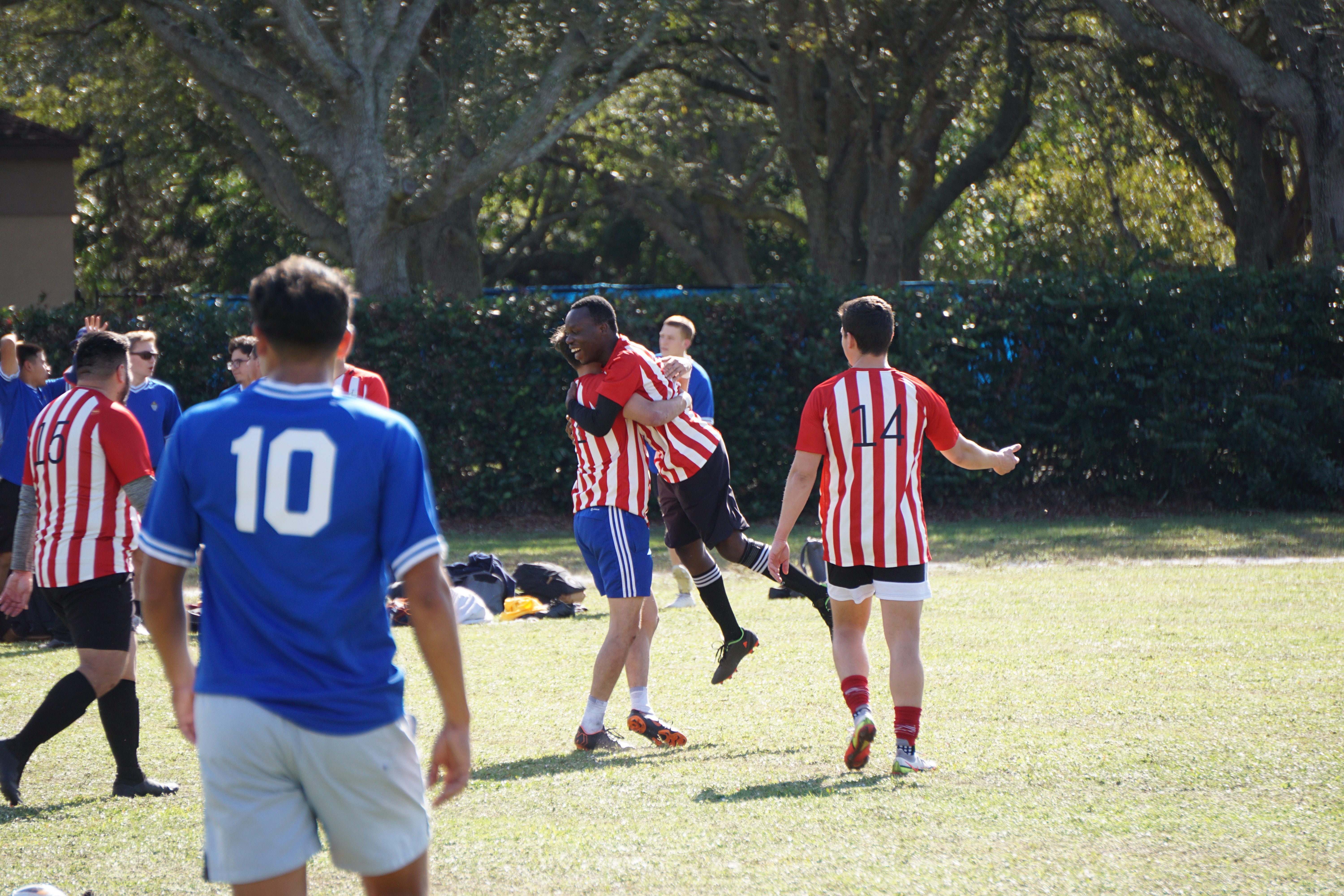
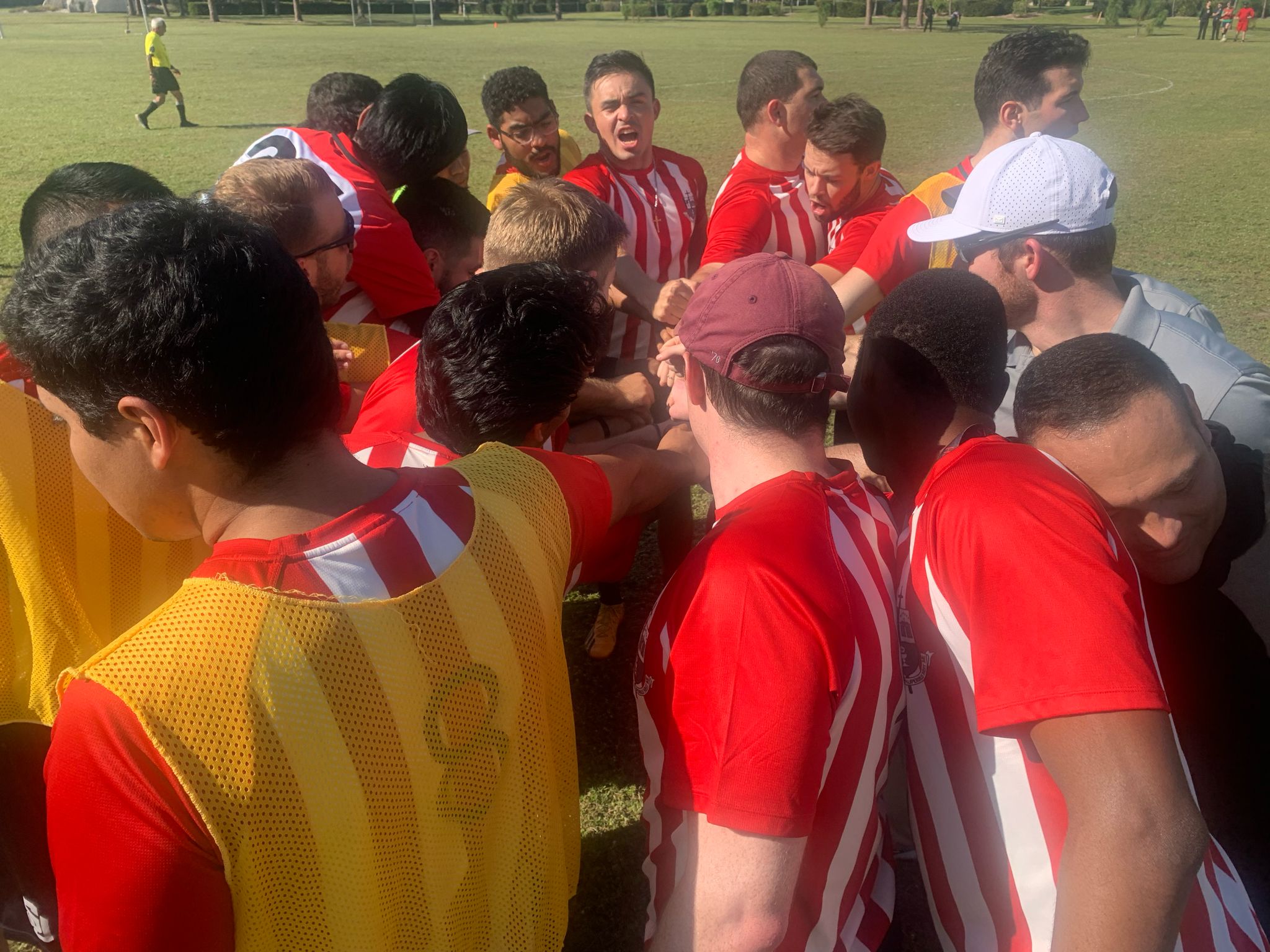
We recently played our Fall game against the Miami seminary in Miami. Since we won both games last year, we were a bit sleepy for the first half, moving the ball around but without decisive finishing. 0-0 at half time. We had to wake up and we did, scoring three goals. By the end of the game, exhausted, we allowed a goal. 1-3 is a good result, and I am super proud of the boys.

The players did not order their shirts on time, so the old players played with our traditional red and white (Atletico de Madrid, Athletic de Bilbao) (not a fan) shirts, while the new players who did not buy their shirts had to play with temporary (red) shirts – fortunately the refs were ok with it if they were not blue. You will notice this in the photos, grrrr. Speaking of photos, cred. Jonathan Arias.

R.I.P. Brother Eulogio.

Nuestras vidas son los ríos

que van a dar en el mar,

que es el morir:

allí van los señoríos

derechos a se acabar

y consumir;

allí, los ríos caudales,

allí, los otros, medianos

y más chicos,

allegados, son iguales,

los que viven por sus manos

y los ricos.

Jorge Manrique wrote these lines in his Coplas por la Muerte de su Padre in 1480, the late Middle Ages, the cusp of the Spanish Renaissance (Spain, like me, is a bit of a late bloomer, and we consider 1492 as our start date for the Renaissance if you want to be technical about it).

But these are the lines that jump in my mind every time I hear of someone passing; the best friend of one of my students three days into his honeymoon, family members of dear friends, Matthew Perry, and last week Benedictine monk Brother Eulogio in El Paular Monastery.

Brother Eulogio was a spiritual force of nature, a spiritual power who would ask you point blank questions or nonchalantly point to the spot he wanted to be buried in the Monastery’s cloister. I have written about him before (click here) and he was one of the many reasons I love to go on retreat to El Paular.

Brother Eulogio pushed me in my quest for peace. Although in his later years he was wheelchair bound and did not recognize me, he kept his aura bright. I remember one of our last conversations was about the gifts each one has and how to find comfort in our gifts. It was in the “little” chapel, a tiny chapel where the 11 monks and whoever is staying with them pray their daily prayers, only using the big chapel for high mass on Sundays and special holidays.

The beauty in Brother Eulogio’s spirituality was the joy, simplicity, and casualness of his asceticism, his humanity and humility. He could answer what you thought was a deep question with a wave of his hand or think about it for a second and go into a deep explanation. I will miss our walks in the orchard, or in the cloister.

I hope to visit your grave in the cloister of the monastery soon.