Michael Jackson and Hegel in Nosferatu (1922) and Nosferatu the Vampyre (1979)

There is a scene in Nosferatu (1922) where Count Dracula is looking across his window at Lucy Harker. When he slowly retreats from the window, his hands are awkwardly positioned in a sort of sideways traffic-stopping gesture. This is the key move in Michael Jackson’s (who was a big fan of Count Dracula) Thriller video dance sequence. There you have it, now let’s talk about Hegel’s influence on Werner Herzog’s Nosferatu the Vampyre (1979).

There is a nerdy viral meme showing side-by-side pictures of philosopher Hegel and film director Herzog —who look remarkably similar— asking when Herzog will play Hegel in his biopic. As with the reality surpassing fiction aphorism, there is more here than meets the eye.

The key scene in Herzog’s film is when Lucy Harker (Isabelle Adjani) has a conversation with Count Dracula (Klaus Kinski). This poetic philosophical dialogue exposes Herzog’s Hegelian philosophy:

Dracula:          You must excuse my rude entrance. I’m Count Dracula.

Lucy:               I know of you from Jonathan’s diary. Since he has been with you, he is ruined.

Dracula:          He will not die.

Lucy:               Yes, he will. Death is overwhelming. Eventually, we are all dead. Stars spin and reel in confusion, time passes in blindness, rivers flow without knowing their course. Only death is cruelly sure.

Dracula:          Dying is cruelty against the unsuspecting, but death is not everything; it is more cruel not to be able to die. I wish I could partake of the love which is between you and Jonathan.

Lucy:               Nothing in this world, not even God, can touch that. And it will not change. Even if Jonathan never recognizes me again.

Dracula:          I could change everything. Will you come to me? And be my ally, there will be salvation for your husband, and for me. The absence of love is the most abject pain.

Lucy:               Salvation comes from ourselves alone, and you might rest assured that even the unthinkable will not deter me. Goodnight.

In his Lectures on the Philosophy of Religion, Hegel takes a novel approach to salvation, taking it beyond the religious to the existential —even when Existentialism as such was being “invented” a bit further north in Denmark by Kierkegaard. The road to salvation in Hegel’s view is tied to one’s spirituality, one’s spiritual journey.

Other than in Transylvania, Bram Stoker’s Dracula takes place mostly in London, but the 1922 film Nosferatu takes place in the fictional German city of Wisburg, which is actually Wismar. In Werner Herzog’s Nosferatu the Vampyre, the Dutch towns of Delft and Schiedam serve as stand-ins for the German city of Wismar circa 1850. Having the story set in mid-1800s Germany allows the characters to more plausibly have read orstudied under Hegel. Ok, that is a bit of a stretch. But you get the idea.

Oh, by the way, I also saw 2024 Nosferatu, and I must be getting old and cynical, because I did not like it at all. All the AI neogothic, steampunk, everything (landscapes, backgrounds, the castle, blah, blah, blah), the exaggeration, the predictability, bilingual count Orlok (Romanian and English), the sexualization, the juvenile script: “Does evil come from within us, or from beyond?” Even that sublime scene between Lucy and Dracula in Herzog’s version becomes a gaudy monstruosity in this film. I found only one redeeming quality to this production: Willem Dafoe. If you want my ranking: 1979, 1922, and if you must, 2024.

Vendemos el Bismarck, el Merche, el coche de mi padre.

Aunque a mi padre le gustaban los ordenadores (Apple), pasear por el Retiro, comer (y beber) bien, lo que más le gustaba eran los coches. Así que, en 1980, en la feria del automóvil de Frankfurt compró un Mercedes 500 SEL —que todavía no había salido al mercado. Unos meses más tarde, en 1981, lo recogió en la fábrica de Sindelfingen.

El Mercedes 500 SEL fue el mejor coche del mundo en su época: suspensión neumática, motor V8 de aleación, el primer coche con ABS, etc., etc. Mi padre nos dejó en 2015.

No puedo decir las veces que ese coche cruzó España y Europa. Viajes a Londres a visitar a mi hermana, viajes a Ginebra a visitar a mi otra hermana, viajes a Andalucía o a Euskadi a visitar amigos. ¡Cualquier excusa era buena para hacer un viaje de cientos o miles de kilómetros!

El Mercedes está en venta. Está dado de baja temporal en Tráfico, y lleva levantado del suelo, parado en el garaje desde 2012. ¡Si te interesa, contacta en comentarios!

The best barbacoa in the Sierra de Guadarrama, Marcelino.

When writing reviews for this blog, I sometimes struggle with sharing too much about a place I love. Not that I am making any place TikTok famous, blogging is not TikTok after all, and my readership, while loyal, is not exactly viral; nevertheless, one still has a bit of pride in thinking that they can influence some readers to follow one’s recommendations.

This is the case with Bar Restaurante Marcelino in the tiny village of La Navata, North of Madrid. Marcelino, which has been around for ages, is the best barbacoa in the Sierra de Guadarrama. You can find fancier places, regional, and international foods, and more famous places, or with better views, but none have the combination that makes Marcelino so special.

Marcelino is housed in the original 1949 granite building, which was the preferred construction method in this area of the Sierra de Guadarrama. It has a huge “terraza,” an outdoor area split into two areas: the regular café, and the Barbacoa for the evenings.

While I am on vacation at my mom’s house during the summer, I walk down the hill every day for my coffee —and if I am lucky, a churro. Some days in the afternoon, I walk down with Celia for an afternoon snack. But the real highlight is the Barbacoa at night.

We are talking old school —with old school service, open air, oak charcoal, with the best available meats on the market (I know because we share the same butcher, but that is for another blog post). Chorizo, morcilla (black or blood sausage), Pinchos morunos (kebabs), lamb chops, etc.…

The vibe is relaxed, although you do need to make reservations. Enjoy a sangría, a Tinto de Verano, or a cold beer, get some appetizers, and enjoy the best barbacoa in the Sierra! You are welcome.

Let’s talk about it.

As the great Frank Sinatra would say, “Regrets, I’ve had a few.” One of them is not talking enough, not conversing enough, not listening enough. Communication, and especially effective communication, is critical for relationships, work, and life in general.

Conversation, from the early stages of a relationship, professional, personal, romantic, you name it, is vital and decisive, and as that relationship progresses through time, you must keep it going, keep it fresh, ask questions, and listen, listen, listen.

It was not until college that my favorite management professor, Aaron Nurick at Bentley College taught me to listen – he has been a mentor ever since! Still, I am far from being a great conversationalist or listener; normally, my ADHD kicks in, and I must focus and listen.

For the last seven years, I have taught at the university level, which means that my conversations with students are adult conversations (conversations with high school students are also rewarding, but the maturity difference makes for somewhat unbalanced discussions).

Your responsibility in keeping up your end of a conversation is not what is commonly called the “gift of gab,” which might be good to “break the ice,” but is rarely useful beyond that, but rather, as Socrates would say: knowing yourself enough to know how to steer a conversation. Know your strengths and weaknesses on your most personal level, which means knowing yourself. Counterintuitively, that will happen from being alone and spending time getting to know yourself.

So practice your conversational skills, your active listening skills, and you will be a richer person for it. You are welcome.

“The most fruitful and natural exercise for our minds is, in my opinion, conversation.”

― Michel de Montaigne, The Essays: A Selection

Paolo Veronese at the Prado Museum

Back in a previous lifetime, I used to collaborate with a polymer extrusion company (sexy, I know) located just outside Florence. For work purposes, of course, I used to visit them every year, spending a week in Florence. Because of this, I am quite familiar with the Florentine Renaissance and less so, I must admit, the Venetian Renaissance.

Fortunately, I recently had the opportunity to (partly) fix this by going with my sister to an amazing Paolo Veronese (1528-1588) exhibit at the Prado.

I was blown away!! There are over a hundred paintings from the Louvre, the Metropolitan Museum, the National Gallery in London, the Galleria degli Uffizi, the Kunsthistorisches Museum of Vienna, and, of course, the Prado.
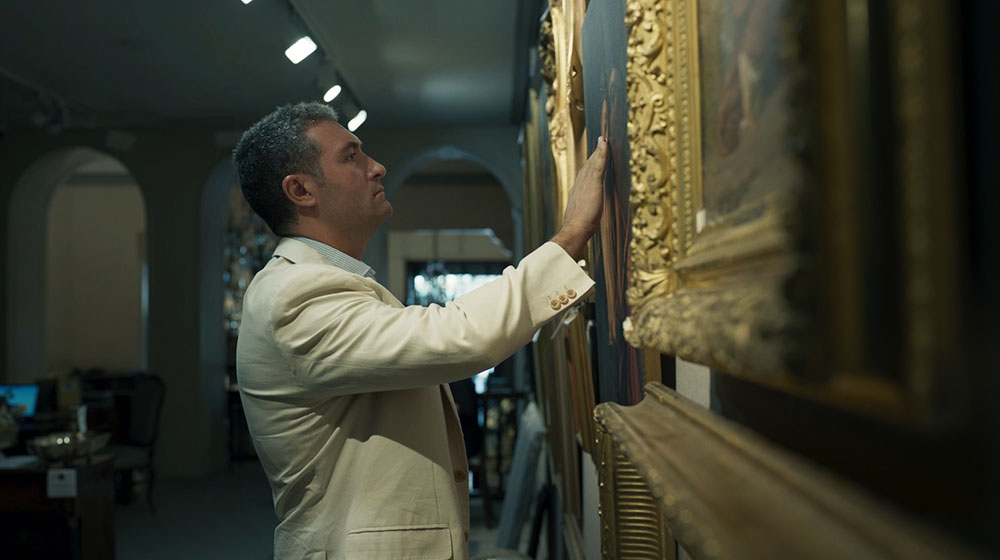
When you mention the Renaissance, the first thing you think of, in painting, is perspective, depth; this is something Veronese has mastered. More importantly, I found the details, and even more importantly, the narrative capacity of the paintings —the ability to tell a story, really special. From a technical or art history perspective, the Renaissance started in Florence, giving them the edge, but Venice soon countered with brighter colors, as a young El Greco would learn. However, all this makes little difference, for a non-specialist like me, I just freaked out at the beauty.

This being the Renaissance, most paintings are of Biblical or Greek mythology stories, making it relatively easy to situate oneself.

So if you are in Madrid until September 29, see the Veronese exhibit at the Prado. You are welcome.

La Valparadisea Luis Correa-Diaz

La Valparadisea LCD

Hay tres tomas de Valparaíso en la película Los diarios de la motocicleta: La primera en la oficina de correos donde Ernesto Guevara, el futuro Ché, recoge una carta de su novia, cortando con él. La segunda es un trayecto en el funicular donde no hay siquiera diálogo entre Guevara y su amigo Granado. Y la tercera es en la playa, donde Guevara acepta que no le queda otra que seguir su aventura. Esto es todo lo que sé, o lo que sabía de Valparaíso hasta que empecé a leer los poemas de Luis Correa-Díaz. En su última entrega, La Valparadisea (Altazor, 2025) Correa-Díaz nos invita a una excursión en dron —droncito— y recoge los corazones rotos como el de Guevara, los trayectos en el funicular, sin diálogo, y las meditaciones en la playa.

Con Correa-Díaz siempre hay más. Sus líneas están llenas de referencias: Jorge Manrique junto a Starbucks, la Nueva Trova Cubana junto a Hieronymus Bosch, al Papa junto a Herzog y todo ello en las calles, plazas, cafés y urbanizaciones de Valparaíso.

Pero lo importante no son las calles ni los edificios, sino la gente que llena los poemas de LCD: Amigos, libreros, familiares, transeúntes, otros poetas, músicos, tenderos, camareros, la gente que hace una ciudad, que le dan el color, la textura, la profundidad y la memoria a los sitios.

La memoria y su hermana la melancolía son el tejido que colorea el tapiz que es La Valparadisea. Los recuerdos de Correa-Díaz, los recuerdos de nuestros hogares que tenemos los que vivimos en el exilio —aunque sea elegido.

This summer’s obsession: Pine nuts.

My mom’s garden has a handful of pine trees, and one of them in particular is a prolific producer of pinecones —with pine nuts, piñón (not all pinecones have pine nuts, depending on stress, gender (only female trees produce pine nuts), etc.) Also, pine trees do not make the same number of pinecones with nuts every year. The average number of pine nuts per cone is anywhere from 10 to over 100, according to the interweb.

This year, this one tree has an unstoppable quantity of pine nuts. So I started collecting them.

Possibly my favorite pasta sauce is a rich, flavorful pesto: the silky olive oil, the rich combination of cheeses, the fresh basil (with some parsley for extra color!), the tangy garlic, and to bring it all together magically… the pine nuts!!!

The goal: to make a kickass pesto.

The process: to crack hundreds (thousands?) of pine nuts.

Chatting with our neighbor, a local guru who knows all there is to know about nature and country life, showed me his machine for cracking pine nuts.

I am not a fan of Amazon, but I’m in the middle of the country, and I need a nut-cracking machine; the old stone or hammer won’t cut it with the number of pine nuts I have to crack. So I ordered a machine. Although it is advertised as cracking pine nuts, these are too small for this machine, probably designed to break almonds, hazelnuts, walnuts, you know, bigger nuts than mine. I returned it to Amazon (sorry, no photo of the first machine).

Second machine: this one does fit and cracks pine nuts, but it pulverizes them. I try to go slow, but there is no way; the flesh of the nuts disintegrates with each swing of the lever.

The third one I ordered is not from Amazon; it is from a hardware store on the other side of Spain. This machine has a much smoother cracking system, so you can apply pressure progressively until the pine nut cracks. One problem: like the first machine, even at its smallest setting, it does not crack pine nuts… The solution? A tiny board “lifts” the pine nut so the cracker part of the mechanism reaches it. Finally, the pine nut problem is solved!!

I’d better get cracking. Pesto anyone?

You should be meditating.

Stop, inhale, focusing on the air entering your nostrils or your lungs. Exhale, focusing on the air leaving your lungs or your nostrils. There, you did it!! For a brief time, you didn’t worry about what’s for dinner, your bills, the weather, what you were going to tell your boss, your customer, or your friend. You didn’t think about politics, and you weren’t scrolling through social media. You had a moment —albeit a very short one—of meditation. The trick is to do that exact exercise with your breathing for 5, 10, 20 minutes, or half an hour. The longer you do it, and the more often you do it, the better you will feel.

My dear friend Paco encouraged me to try meditating while I was in a deep, dark depression over ten years ago. It was not easy for a hyperactive fellow like me to embrace it, but now I cannot live without some quiet time every day. And although I have written about meditation here before, it was usually in passing while talking about health and mental health in general.

This all comes to mind because I recently had the opportunity to see and hear Paco give a presentation on Christian Meditation at the Antonio Azorín bookstore in El Escorial. He filled the room and had a wonderful talk. I originally thought the attendees were curious about meditation, but during the Q&A, I realized some of them were very advanced, although from different “schools” of meditation —see below.

There are many labels for meditation, just like there are many different philosophies and methods: Mindfulness Meditation, Mantra Meditation, Zen Meditation (Zazen), Vipassana Meditation, Transcendental Meditation (TM), or Body Scan Meditation. The ancient Fathers and Mothers of the desert, the early Christians, also developed a method of meditation which nowadays is called Christian meditation, or even centering prayer. Some recent Catholic proponents of meditation might be Thomas Keating, Thomas Merton, or Richard Rohr.

Whichever way you choose to sit down in silence is fine. Of course, nowadays you can use an app on your phone to time your sits, or to guide you. I have been using Insight Timer for years, and I love it!

Every class I teach at school starts with one minute of silence. This time is a buffer between whatever the students were doing before and class, between English and Spanish; it is a moment to regroup, to breathe, and for me, it is a minute of meditation.

Recently, Maria Popova also wrote about the importance of spending time alone and in silence, not exactly meditation, but close to it. Check it out here.

So carve out a few minutes from your day: when you wake up, before you go to sleep, in the middle of the day, or, paradoxically, if you are really busy, more than once a day. Whatever works for you, sit down, and start focusing on your breathing. You are welcome.

Oh, you should definitely check out this video of Villanova’s Fr. Martin Laird on the benefits of meditation. It is a bit long, but worth it!!

Puy du Fou (Warning Spoilers)

Puy du Fou is a theme park on the hills near Toledo. The original is in France, but the Spanish one seems to be the better one. It is a huge place where they perform historical recreations, but accented with dance numbers (fortunately, no singing). A group of friends and I went recently. The high point is the “Sueño de Toledo” night show. They have recreated the city of Toledo with the Tajo river (a copy of it, anyway) serving as a proscenium.

The show begins with an old man walking along the vast, open-air stage with his donkey. He meets a shepherd girl on the other side and starts telling the story of Toledo, only he skips the early history of the Carpetanians, and more importantly, the Romans! So they start the history of Toledo with the Christians and the Goths, that is when you realize that you are seeing a show and not a factually historic recreation. From there, they move to the Moorish invasion, which is when a group of Moorish girls walk into the ankle-deep “river” and perform a suggestive belly dance. I must admit, I was impressed when they walked into the water to do their dance number! And so they move through the history of Toledo. At another time, representing the building of the cathedral, two massive (make-believe) organs rise from the “river,” and then, paradoxically, flames start spewing from the organ pipes! I’m sure Bach would have been jealous. At another time, Christopher Columbus’s Santa María rises from the “river,” which is impressive, I must admit. There were plenty of horses, geese, goats and sheep, even pigs! Anyway, enough spoilers.

The next day, we enjoyed a series of performances. The first one was Cetrería de Reyes, which is an awesome falconry show. Unfortunately, midday in the Toledo sun in July made it, how can I say, blistering hot. But the show was cool, they brought out owls, hawks, falcons, vultures, even a Secretarybird stomping on a (fake) snake! At the end of the show, they released all the birds, and it was a grand finale!

A pluma y espada is a swashbuckling dramatized show of Lope de Vega, our most famous playwright of the Siglo de Oro (1600s Spain). Again they did the water thing where they danced and splashed about, and again they brought in the horses, which, given the indoor space, was surprising.

Allende la mar oceana recreates one of Columbus’s ships. You walk in and it looks and feels like you are in one of the galleons! You come out to a recreation of Hispaniola island!

Then we stopped for lunch, which is the weak spot of the park, but it was to be expected. After all, one is not there for a culinary experience. You can bring in your picnic, but the idea of carrying around lunch all day is not the most appetizing.

We finished the day with El último cantar, a show about El Cid. In this one, you get the horses and the dancing in a huge indoor space where the seats rotate to different parts of the fixed circular stage, impressive indeed.

There are many other shows, and they add about a show a year, but we were knackered, so we called it a day.

My recommendation? If it is not too hot, go enjoy the day. If it is hot, go to the night show. If you have the time, do the night show and then the next day go for the day. You are welcome.

La feria del libro in Madrid

Here is a bit of a paradox: I love literature (so much that I made it my livelihood), I love books, but I really do not like Madrid’s huge annual book fair: La Feria del Libro.

Every year, the first two weeks in June, hundreds of bookstores and publishers set up camp in Madrid’s beautiful Retiro Park. Every day, there are book signings, conferences, debates, colloquia, and, of course, bars, ice cream stands, and all sorts of other associated entertainment.

I try to avoid it, but I still go and walk around together with thousands of other folks who are looking for celebrity author sightings and signings and are willing to stand in line for hours to get a book signed.

This year was a bit different for me. Celia found out that Carmen Lomana, an old employee of my dad’s in London, who is now a bit of a celebrity, was signing her memoirs. We went to her booth, chatted with her for a few minutes about life in London in the early 80s, and bought her book for Mom, which Lomana kindly signed.

We also walked around, bought a couple of books, some overpriced ice cream, and enjoyed the throngs of people.

So if you are in Madrid the first couple of weeks in June and you love books (or don’t), go to the Retiro Park and enjoy the Feria del Libro with hundreds of other book lovers.

PS: Statistics show that for the last few years, while book sales are up, book reading is down. Someone explain that to me -or don’t bother.