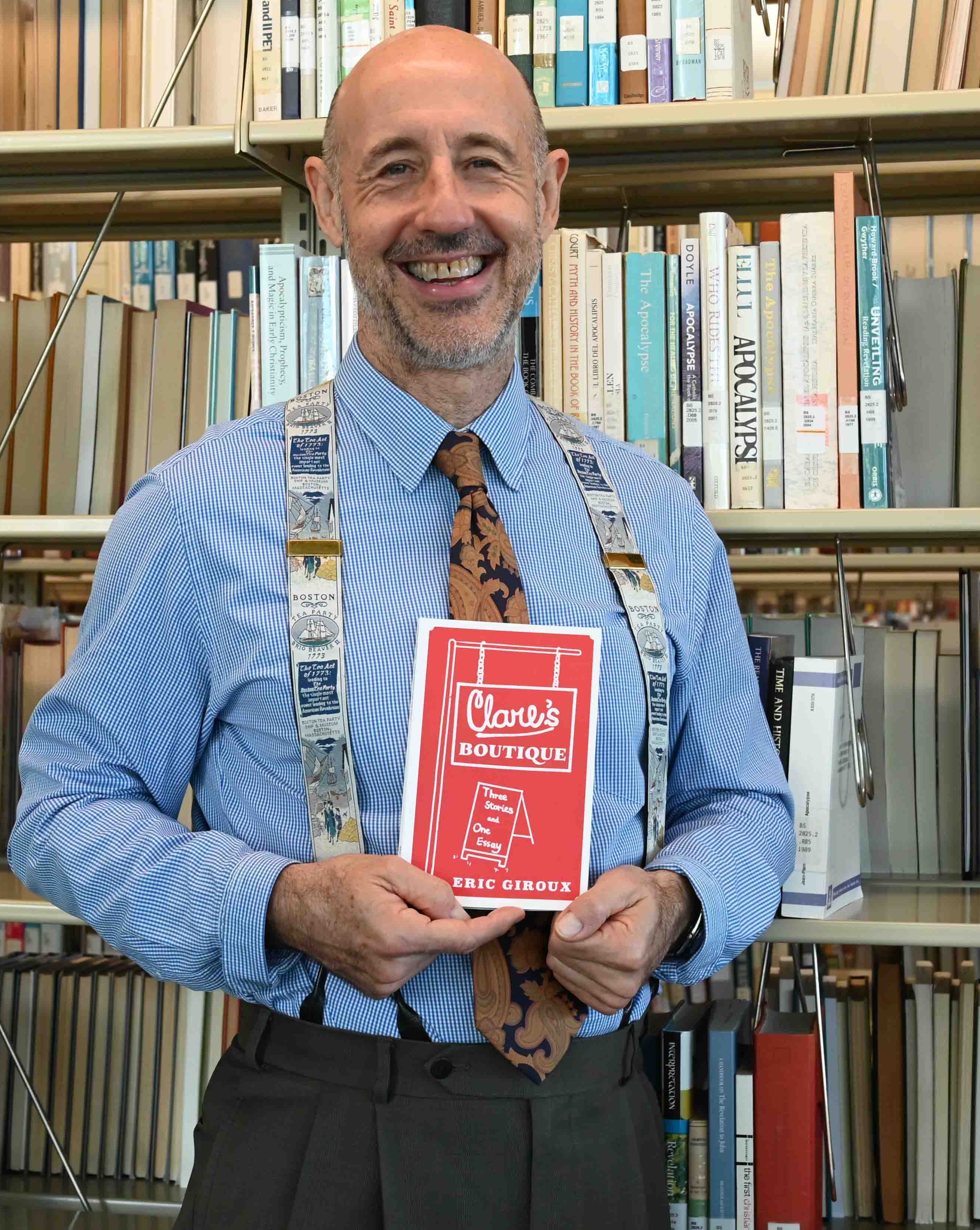
Eric Giroux’s foray into the short story (and the essay), Clare’s Boutique.

Clare’s Boutique by Eric Giroux

This is so commonplace, so threadbare that I am embarrassed, but Eric Giroux’s Clare’s Boutique proves that good things come in small packages. Yes, I’m unoriginal, sorry.

Clare’s Boutique is also Giroux’s third book, so I could also say that good things come in threes, but I won’t. Clare’s Boutique consists of three short stories and an essay, according to him, although it reads more like a brief memoir. The stories, like his previous novels, are set in North Massachusetts, the gritty, post-industrial town of Lowell. Like his previous novels, Giroux continues to explore coming-of-age stories, only this time in a more challenging short-story form.

I have written before about the challenge of the short story (here), the craftsmanship needed to develop characters and narrative in a condensed space. Bravo to Giroux for pulling it off, not an easy task, but he does it with apparent ease and panache!

The addition of an essay gives a “behind the scenes” aspect to the stories, like you have a backstage pass at a concert. The vulnerability and courage to allow us to glimpse “the making of” give the stories further depth and texture.

Full disclosure: Giroux and I taught together many years ago in an artsy, suburban New England prep school. The conversations I remember most with him involved his cinema class and the topics he covered. I remember recommending Un Chien Andalou for his unit on Surrealism!

If you want to read my other reviews of Eric’s work, click here and here.

Photo credit: Sister Mary

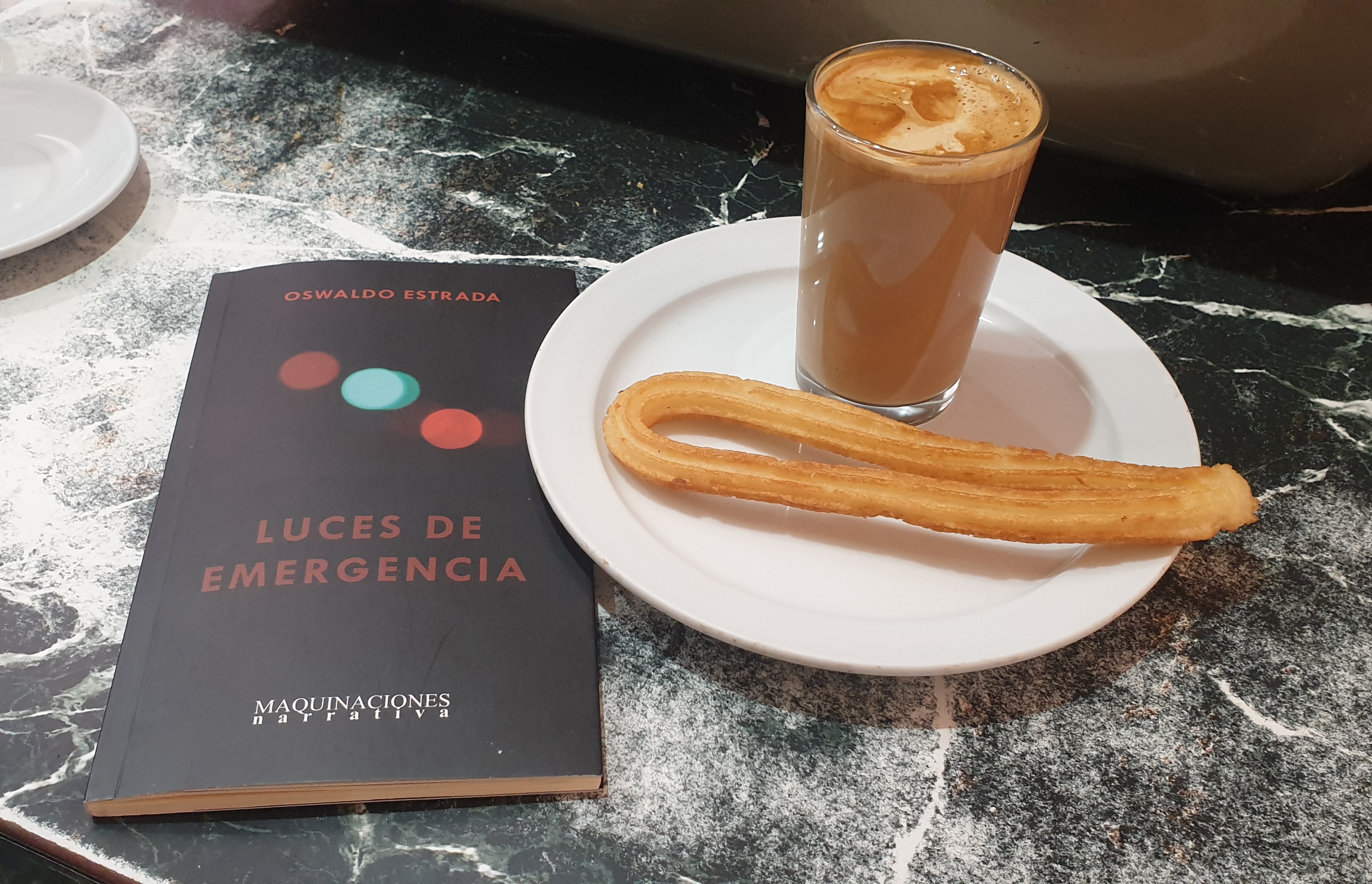
Punch drunk on Oswaldo Estrada’s “Luces de emergencia”

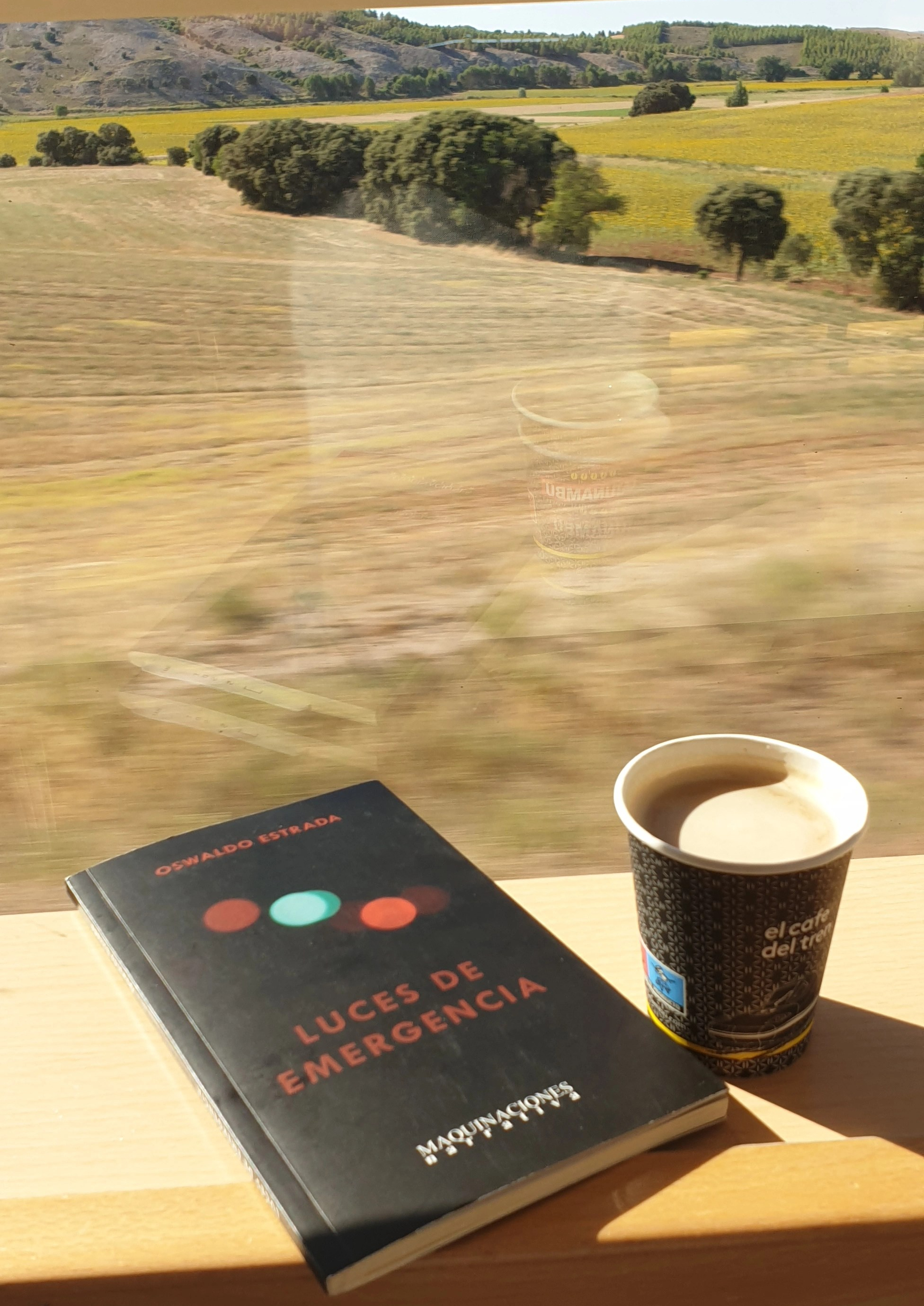
Luces de emergencia with a churro

When you sip a drink, a glass of wine, a scotch, you enjoy the flavors and complexities, the layers and textures, you return to it again and discover new subtleties, you explore the color and smell, every sip brings new nuances.

Reading Oswaldo Estrada’s Luces de emergencia is more like downing a shot: you feel the explosion of flavor in your mouth, the burning of your throat, and then a punch to your stomach. Do this eleven times and you feel like you have been eleven rounds with Joe Frazier.

As you go deeper and deeper into the stories you feel like you are eavesdropping on very private, personal stories, you feel embarrassed because you should not be listening to them. And then you start another one, hooked on the adrenaline of learning secret gossip. It is exhilarating, you want to talk to the characters, grab some by the shoulders and give them a good shake, hug others, sit and listen to others, console others. Get ready for an emotional roller coaster.

Not surprising, Luces won the International Latino Book Awards in 2020.

Luces de emergencia

The triumph of the short story

Good things come in small packages, they say. In Spain we say: “lo bueno, si breve, dos veces bueno” the same thinking can be applied to the short story. If you can develop characters and plot in not too many pages instead of hundreds you might have what it takes.

Your end of apprenticeship project in the Middle Ages required you to do a miniature of whatever your craft was; If you were a carpentry apprentice you had to make a tiny piece of furniture. These pieces where far more difficult to make than a regular sized piece. Again, the same goes for short stories. Boiling down a full story to a few pages requires a craftmanship not all writers have.

Short stories are the reason I fell in love with Literature (yes, with capital L). My high school Spanish lit teacher Soledad Sprackling had me reading Borges, and García Márquez. Later on I devoured Poe, Hemingway, Cortázar, Cervantes’ Novelas Ejemplares, Rosario Castellanos, Fuentes, etc. etc.

I recently read back-to-back books of shorts stories and was surprised to see that I have never written about short stories in this blog.

Las guerras perdidas is by Oswaldo Estrada, a dear friend and professor at UNC. Unfortunately, I never took any of his courses since our research interests did not match. Regardless, we became good friends. Last year on a weekend trip to Chapel Hill he even hosted a tapas dinner for me. His bittersweet short stories about loss and pain are beautifully written, his prose is reminiscent of García Márquez “Y aunque te bañes y perfumes, siempre hueles a tristeza.” Estrada’s insight into the human condition is precise, but sweetly narrated, which makes for a wonderful read. Highly recommended, five stars, two thumbs up!

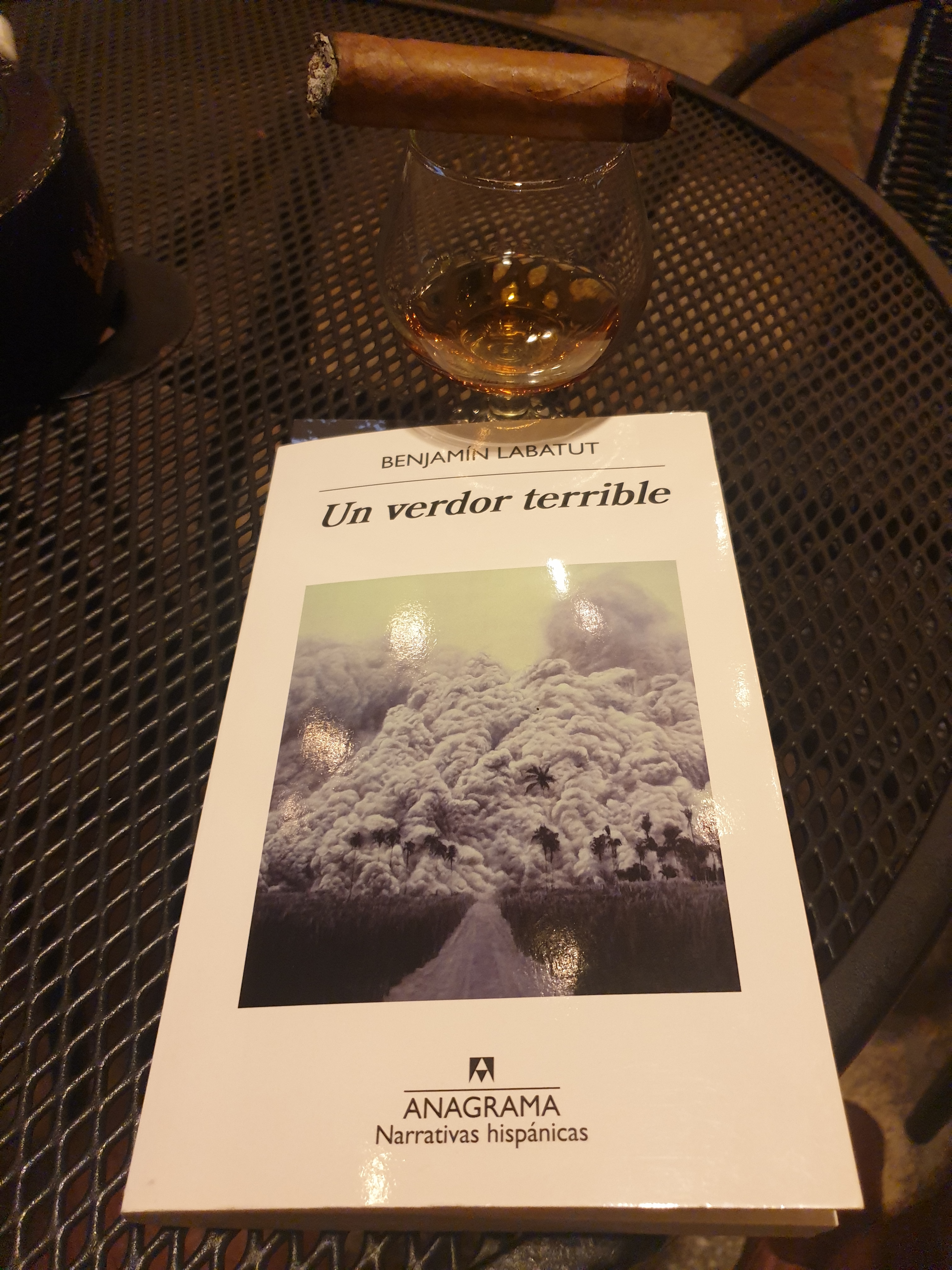
Chilean Benjamín Labatut writes Un verdor terrible (oh yes sorry, both books are in Spanish). Labatut focuses his stories on physicists and chemists, scientists and their discoveries during the first half of the XX C. These are deeply researched stories that mix fiction and history in unknown (to the reader) quantities. It makes for scary but rewarding reading, riveting.

If you like short stories and read Spanish, I recommend both of these books. You are welcome.

Please leave your comments and recommendations below!