Anton Raphael Mengs at the Prado Museum (hurry, until March 1, 2026)

Yes, I might have a mildly obsessive personality. One such obsession is the 18th Century, I rather flourish with everything to do Enlightenment, Neoclassical, late Baroque, early Romantic, you get my drift.

When I found out there was a Mengs exhibit at the Prado, I did not go once; I went twice (and I might go again) —Advantage of being an “Amigo del Prado,” I get in for free 😊

Mengs is the consummate 18th-century, Enlightenment painter. Although he worked for a lot of European nobility, most of his work was for King Carlos III in Madrid; in fact, most of Mengs’ work I have seen was at the Palacio Real in Madrid.

My main scholarly project at the moment (sorry, I cannot disclose too many details) involves a Francisco de Isla book that was in the library of the Spanish-Italian Cardinal Zelada. What was my surprise when reading the description of a portrait at the exhibit, that it was Cardenal Zelada, which normally lives at the Art Institute of Chicago, what a coincidence! (Check it out here).

The exhibit is phenomenally curated; it has hundreds of paintings gathered from around the world, divided into 10 huge areas grouping different stages and themes. It is worth the visit.

So if you are in Madrid before March 1st, 2026, go to the Prado and check out the Mengs exhibition. You are welcome.
Paolo Veronese at the Prado Museum

Back in a previous lifetime, I used to collaborate with a polymer extrusion company (sexy, I know) located just outside Florence. For work purposes, of course, I used to visit them every year, spending a week in Florence. Because of this, I am quite familiar with the Florentine Renaissance and less so, I must admit, the Venetian Renaissance.

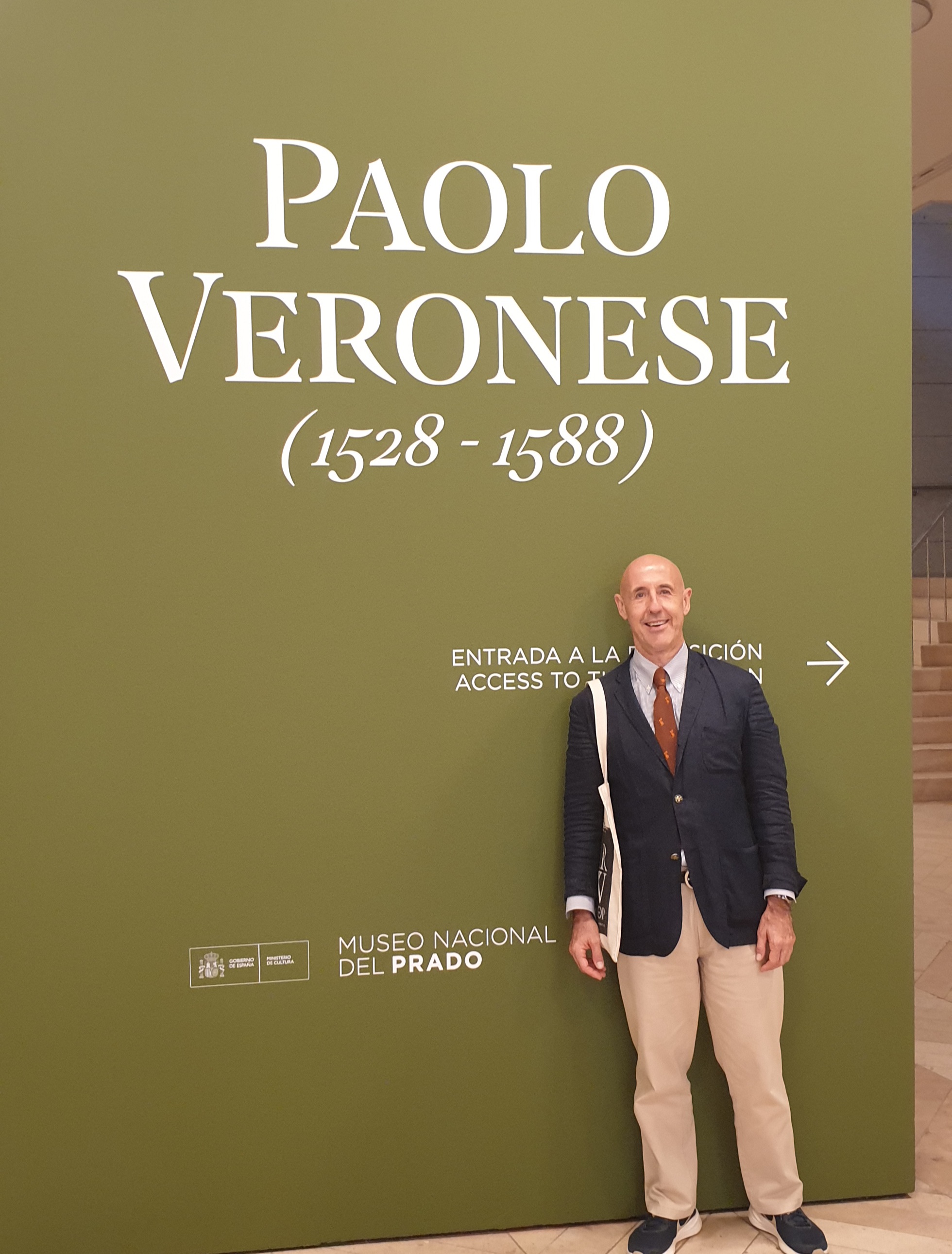
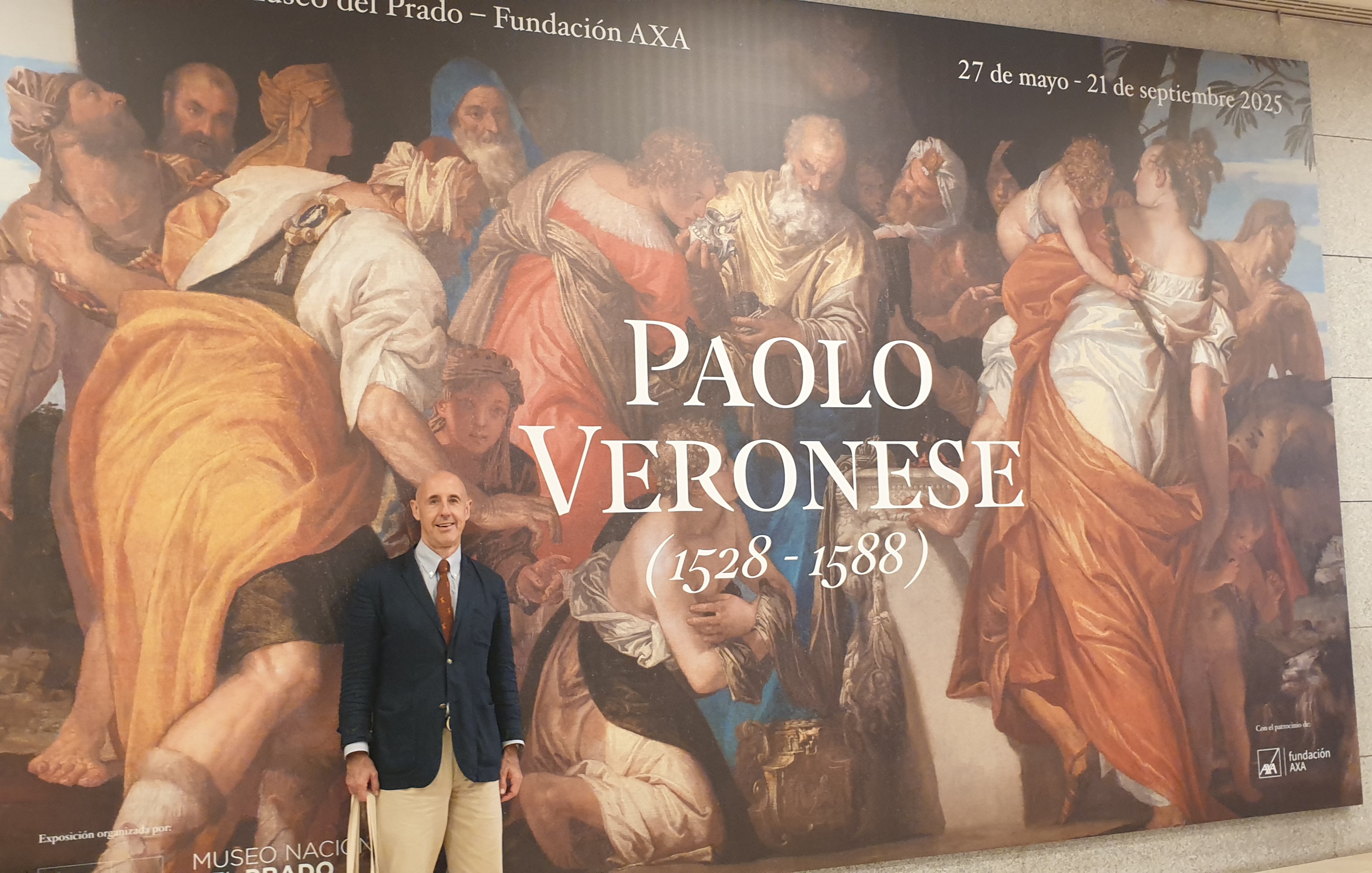
Fortunately, I recently had the opportunity to (partly) fix this by going with my sister to an amazing Paolo Veronese (1528-1588) exhibit at the Prado.

I was blown away!! There are over a hundred paintings from the Louvre, the Metropolitan Museum, the National Gallery in London, the Galleria degli Uffizi, the Kunsthistorisches Museum of Vienna, and, of course, the Prado.

When you mention the Renaissance, the first thing you think of, in painting, is perspective, depth; this is something Veronese has mastered. More importantly, I found the details, and even more importantly, the narrative capacity of the paintings —the ability to tell a story, really special. From a technical or art history perspective, the Renaissance started in Florence, giving them the edge, but Venice soon countered with brighter colors, as a young El Greco would learn. However, all this makes little difference, for a non-specialist like me, I just freaked out at the beauty.

This being the Renaissance, most paintings are of Biblical or Greek mythology stories, making it relatively easy to situate oneself.

So if you are in Madrid until September 29, see the Veronese exhibit at the Prado. You are welcome.

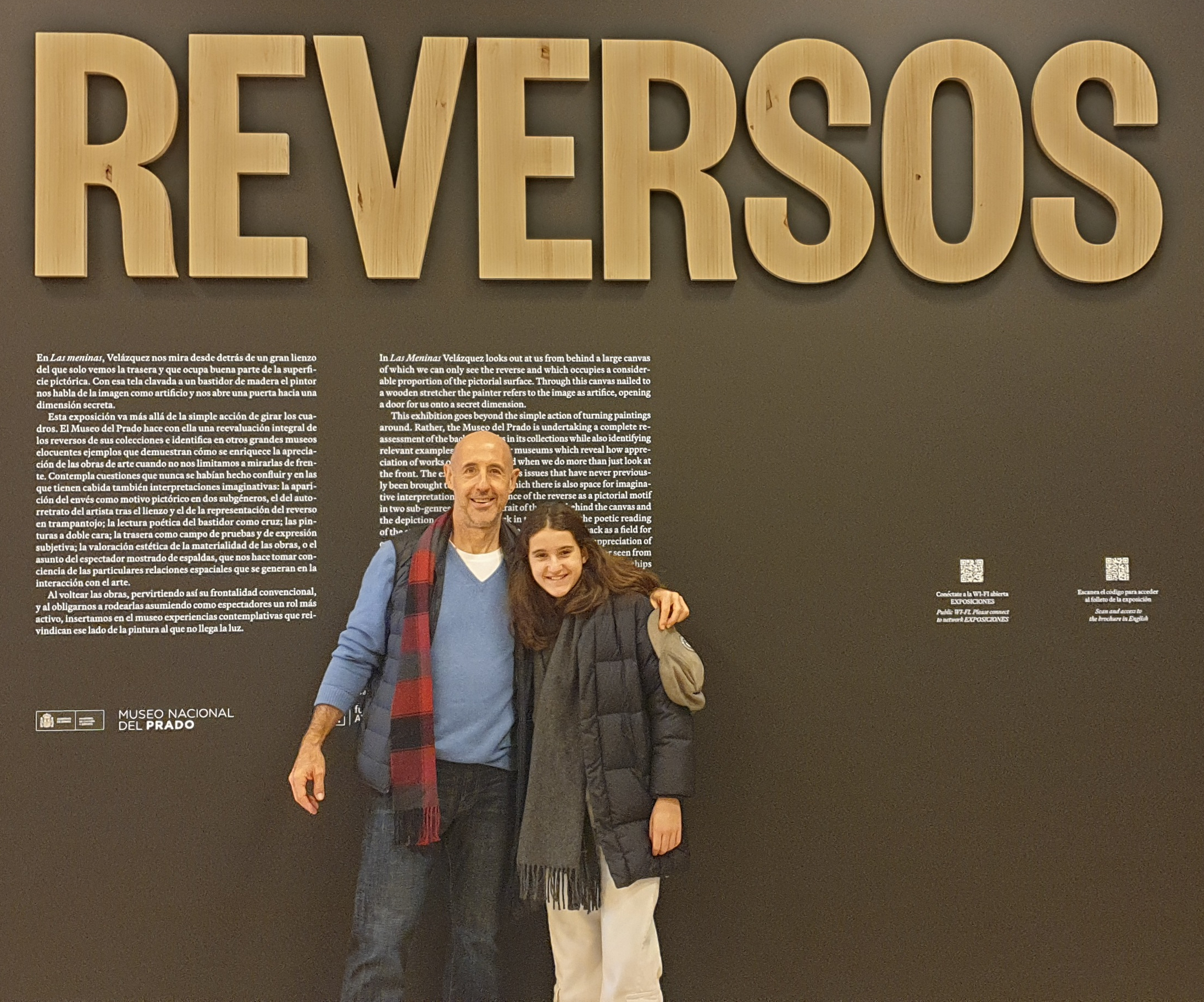
The backside of paintings, “Reversos,” how to bribe your niece to go to a museum with you.

Have you ever thought about what is on the other side of a painting? Well, the Prado museum read your mind and has an exhibition just on that! The back sides of the painting “Reversos.”

So, I grabbed my Amigos del Museo del Prado card and invited my niece to come. How did you get a preteen to go to a museum with you? You might ask. Very easily; first she is a sport, and second, I went ice skating with her the day before!!

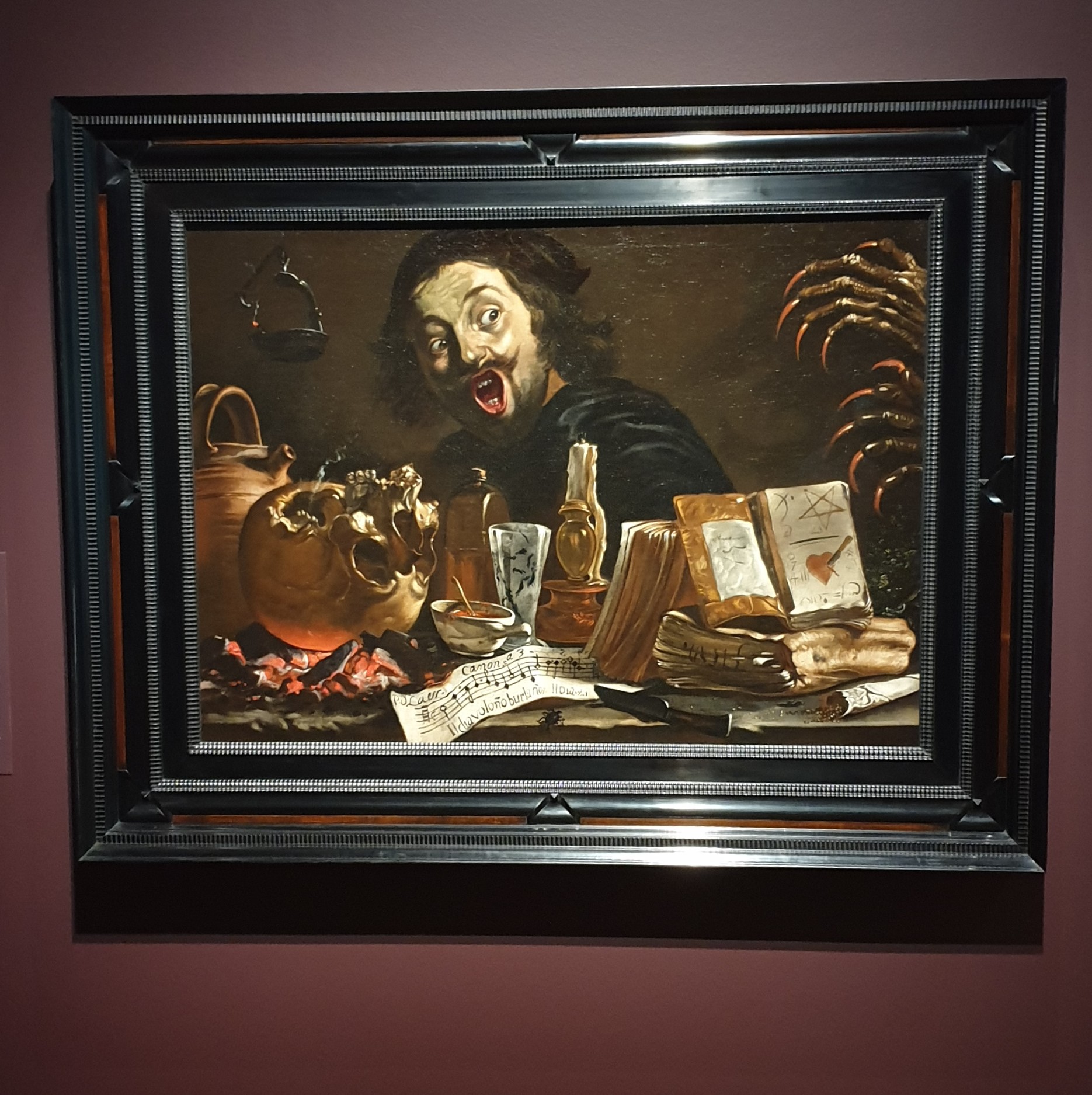
The exhibit is a real revelation. From plain dedications to the subjects and patrons on the back, to sketches and drafts, to “real” backsides of the painting -paintings with two sides! Some insightful and beautiful, some a bit spicy. Walking around this exhibition felt very private, the public was not “supposed” to see what was going on behind the paintings, it was all a bit secret.

If you are in Madrid until March 3rd, make sure you check out this exhibit. You are welcome!

Return to culture (at last)

One of the massive pluses of living in a major world capital is the amazing cultural offering one has access to. I really needed this cultural stimulation. The problem with the word culture is that it has been made to sound elitist, refined, distant from the people, the stuff Frazier and Niles Crane did, but in truth it is just beauty, beauty created by man – and woman of course! The least important bit is if we call it culture, art, or whatever.

I have been lucky to live in major cities where I became a cultural junkie: London (where it all started for me), Paris, Boston, New York, even Chapel Hill – a college town, but obviously with a thriving cultural scene. Unfortunately Naples only had a couple of cultural outlets (which I squeezed every last drop from), and in NJ I didn’t get a chance to explore although of course the heavy stuff was in NYC…

In the less than three months back in Madrid I have been lucky to experience:

  • A brilliant piano recital by local piano star Luis Fernández Pérez playing Händel, Scarlatti, Rameau, and Bach. For free at the Fundación Juan March.
  • A play/recital of Federico García Lorca’s poetry by stage icon Nuria Espert.
  • Jean-Paul Sartre’s eerily prescient play Nekrassov (1955) about the “fake news”.
  • A gorgeous version of The Nutcracker by the prestigious Compañía Nacional de Danza and the Teatro Real house orchestra!
  • Visits to the Sorolla museum, the Museo del Romanticismo, and a score of art exhibits including “Rediscovering the Mediterranean” at the Fundación Mapfre with paintings and sculptures from the XIX and early XX Centuries.
  • After fourteen years I again became a member of the Amigos del Prado, which allows me free entry to the Prado, avoiding the queues. I have, of course, already gone twice!
  • Seeing a couple of concerts in bars around town by chance.
  • Never mind being surrounded by amazing architecture.

Et cetera, et cetera, down to awesome street musicians and performers! And this is with limited time and money. The cultural menu is, in fact, overwhelming, but I am happy to nibble and enjoy!

Culture is the widening of the mind and of the spirit.

Jawaharlal Nehru


Museo del Romanticismo

In past posts I have written about the Museo Sorolla and the Lázaro Galdiano, Two of my favorite museums in Madrid. Today’s turn is for the Museo del Romanticismo, another unknown jewel of the Madrid museum offerings.

Fortunately for us locals,  most tourists are pressed for time and just rush through the Prado and by Picasso’s Guernica at the Reina Sofia. They rarely venture any further to discover other really rewarding pearls of art and history, at most they will check out the Thyssen (major works of minor artists and minor works of major artists), thus completing what is known as the Art Triangle (all three museums are a stone’s throw from each other).

But beyond that trio, there are plenty of other, obviously much smaller, museums.

The Museo del Romanticismo is housed in an old XIX C. palazzo in a quiet neighbourhood, in a small street. No fireworks here. The fireworks are inside as the museum is chock-full of art, furniture and objets, even King Fernando VII’s toilet! (as one would expect, it is a very nice piece in wood and velvet, with the poop going to a key locked drawer – we don’t want anybody stealing royal poop!). But the real treasure is a huge Goya painting in the tiny chapel (oratorio). Other pieces include the gun journalist Larra used to kill himself, and much, much more. To finish the visit is the obligatory cute gift shop and an even cuter café with garden seating in good weather!

This year I had a chance to go with my nephew Jimmy. We had a nice stroll and got to see a temporary exhibition on Rafael Tegeo, possibly Spain’s favorite XIX C portrait painter.

Museo Lázaro Galdiano

A few years ago I wrote about the Museo Sorolla in Madrid, a hidden gem in the big city. A small, personal sized museum, which proves that there is no relationship between size and quality. A few blocks away is another such gem, the Museo Lázaro Galdiano. I re-visited it recently with my sister.

Hidden in plain sight, in the middle of busy Calle Serrano, better known for its shopping than for museums (although the Archeological museum is down the street). The museum in housed, as you might have guessed, in what used to be Lázaro Galdiano’s house. It is a big house, a huge house. In Spanish we call it a palacete, in English, you borrow the Italian word palazzo, at any rate, it is big. And it is full of wonderful art. From ancient Greek and Roman nick knacks to Goya and Velazquez paintings. Each gorgeous room is full of wonderful pieces: medieval art, paintings by Hieronymus Bosch, El Greco, Murillo, jewelry, weapons, ceramics, furniture, sculptures, etc. The house itself is a work of art, beautiful wooden floors, painted ceilings, central staircase, and gardens. It also has the obligatory gift shop, and a research library.

My sister Rocky and I were pleasantly surprised that here and there were pieces of modern, contemporary art. Call us old-fashioned, but in general, in contrast to the art surrounding it, the modern pieces did not measure up.

Finally, the museum publishes Goya, a serious art/academic magazine. Of course, my dear friend and Dissertation Director, Irene Gómez Castellano, has published an article in it.

While the lines at the Prado, the Thyssen, and the Reina Sofia are discouragingly long, you can generally just walk straight into the Lázaro Galdiano, and walk around at your own leasurely pace, and definitely get your money’s worth. When you finish, you are on glamorous Calle Serrano, and you can stroll to get a coffee or a meal!