Is there a right or wrong way to walk the Camino?

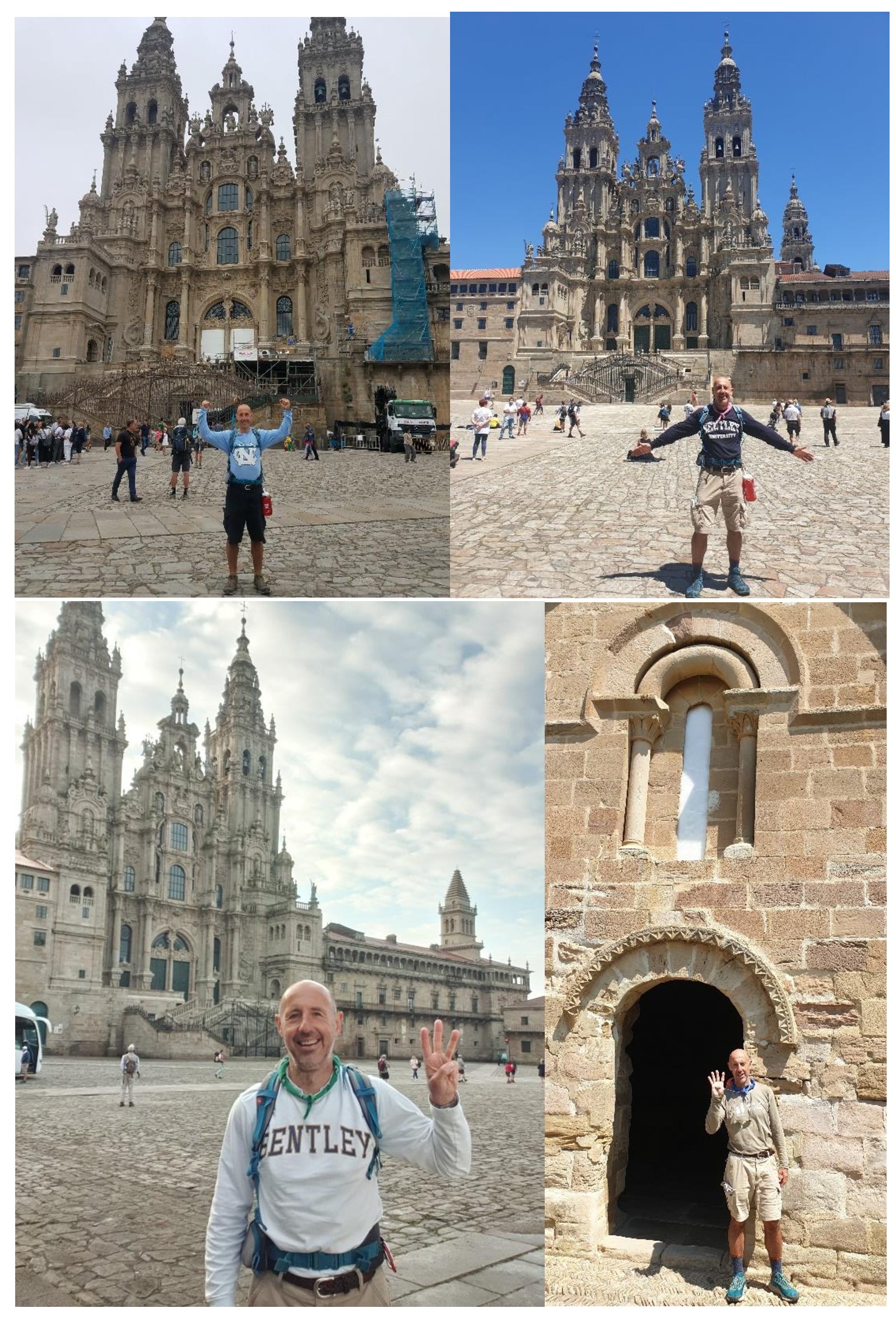
4 Caminos so far…

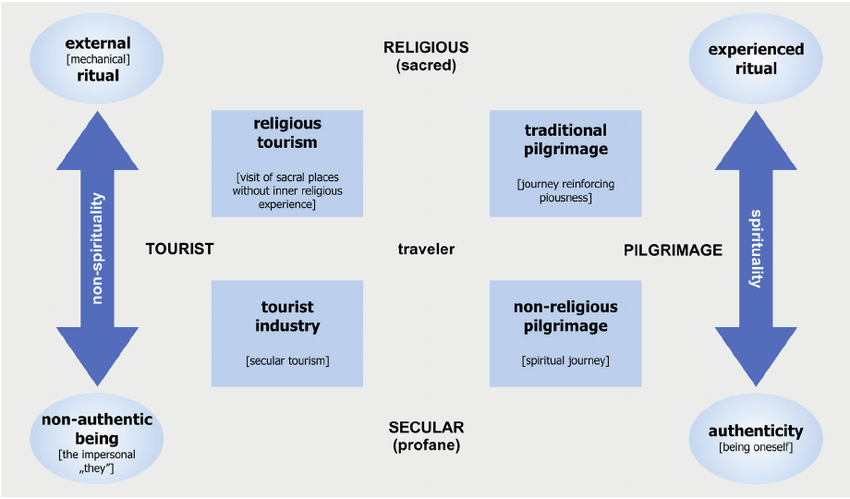
Is there a right or wrong way to do the Camino? Spoiler alert: no, everyone does their thing. There is a lot of talk about this, and social media really likes to push extremes. If you go to the Camino pages on any platform, you will see what I am talking about. Pilgrims who walk from St. Jean or further beyond think they are better than folks who start in Sarria, stay in luxury hotels, eat gourmet meals, and have a luggage delivery service. This is obviously not true, but having said that, there is a difference between a pilgrim and a tourist, and that is ok.

Like everything else in life, you are going to get out of the Camino as much as you put into it.

It boils down to how willing you are to have your life changed; how open you are to being changed, and how much you are willing to do to have that experience. I remember the first time I stepped into an albergue and realized I had to share room -and bathroom- with complete strangers, something I had not done since college, a few decades before. That was a first eye opening and humanizing experience, never mind walking for over thirty days with a pack on my back.

The problem arrives when you are on a pilgrimage trail, but you have chosen not to be a pilgrim, or you are not willing to put in the effort to be a pilgrim, or you do not know the difference (I once saw a young lady walking in her bikini carrying only a water bottle, good for her!). There is no such thing as a perfect pilgrim, maybe if the only thing you are carrying is a chunk of old bread and a Bible, according to The Way of a Pilgrim, a 19th-century Russian mystical text (reference Richard Rohr’s Daily Meditation: The Way of a Pilgrim).

Before you start the Camino, ask yourself what your purpose is in walking to Santiago. Do you just want to check off this item on your bucket list, but have no desire for a spiritual journey? That is fine but be aware that you will walk with people who might have a deep spiritual purpose on the Camino. Likewise, pilgrims need to be aware that not everybody on the Camino is there on an inner journey but might just be there for the fun experience, the food, and the thread count on their bedsheets.

The whole purpose of a pilgrimage is letting go of the ego, a lot of that happens through letting go of other stuff… all your clothes -you only need a few, your privacy, a nice bed. It is easy for your ego to think that you are the best pilgrim, or that the only good pilgrims are the ones who stay in your Albergue. For more on this read about the Cosmic Egg here.

At the end of the day, it is all about tolerance. Yes, there is a difference between a pilgrim and a tourist, it is a mindset and attitude issue, but that is all right, we can all share the path.

Here is an interesting chart I found on Researchgate: Tourism – pilgrimage continuum based on spirituality and authenticity by Ivo Jirásek

Thanks to Ivo Jirásek

Preparing for the Camino, and Santiago The Journey Within

If you type “preparing for the Camino” on the Interweb you are going to get hundreds, maybe thousands of articles and videos on what to pack for the Camino, how to get in shape for the Camino -guilty as charged, even I have written about this. What you are less likely to find is how to really prepare for the Camino, not for the exterior journey, folks in the Middle Ages did it without Gore-Tex, superhightech gear, and without cellphones, but for the interior journey, the one you do not need any gear for.

Yes, there is some overlap: the less you pack, the happier your body will be and not surprisingly, the happier your soul, you, are going to be.

Basically you want to get your mind and your soul (your mind, unfortunately- if you have cleared your head and are living in the present moment, good for you!). So if you have to ask forgiveness, do so before you leave, if you have to settle things, try to do so beforehand. Again, the lighter you travel, the better.

Back in the Middle Ages, there were some guidelines about preparing for the spiritual journey, which have been lost, since the Camino became a bit of a hippie, gofindyourself trek in the early eighties.

My dear Richard Rohr recently wrote about pilgrimage in his daily meditations (if you are not yet receiving them sign up here) and he mentioned the Medieval tradition:

First of all, you had to make amends with everyone you had ever wronged. Also, if you went on pilgrimage holding any kind of unforgiveness, it could not be a good pilgrimage. You couldn’t leave your town until you’d forgiven everyone who’d ever wronged you. Certainly, this is an attitude that we can pray for at the beginning of any pilgrimage: that God would keep our hearts open and loving, because a pilgrimage can’t just be a tourist trip. The meaning of a pilgrimage is an interior journey. Primarily, it’s an interior journey enacted exteriorly.”

Secondly, and a practical, interesting thing, is that if they were going to go on pilgrimage, pilgrims had first to ask permission of their wife, husband, and family. The idea was that they had to leave everything in right relationship at home. If they had any material debts, they also had to pay those before they left. They couldn’t go on pilgrimage until their spiritual and physical debts were paid, and they had permission from all the right people.

Next, they had to go to confession before leaving. Sometime in the course of a pilgrimage, celebrating some kind of reconciliation was deemed very appropriate. Again, there’s that cleansing, that letting go. Perhaps those of us who’ve already been down to the Grotto [1] have seen the basin of water on the far end with the words that Mary spoke to Bernadette. It states, “Go wash your face and cleanse your soul.” What a symbol of reconciliation! It’s a prayer. Above all else, pilgrimage is praying with your body, and it’s praying with your feet. It’s an exterior prayer, and the exterior prayer keeps calling you into the interior prayer.

Rohr writes a week’s worth of content which you can check out here.

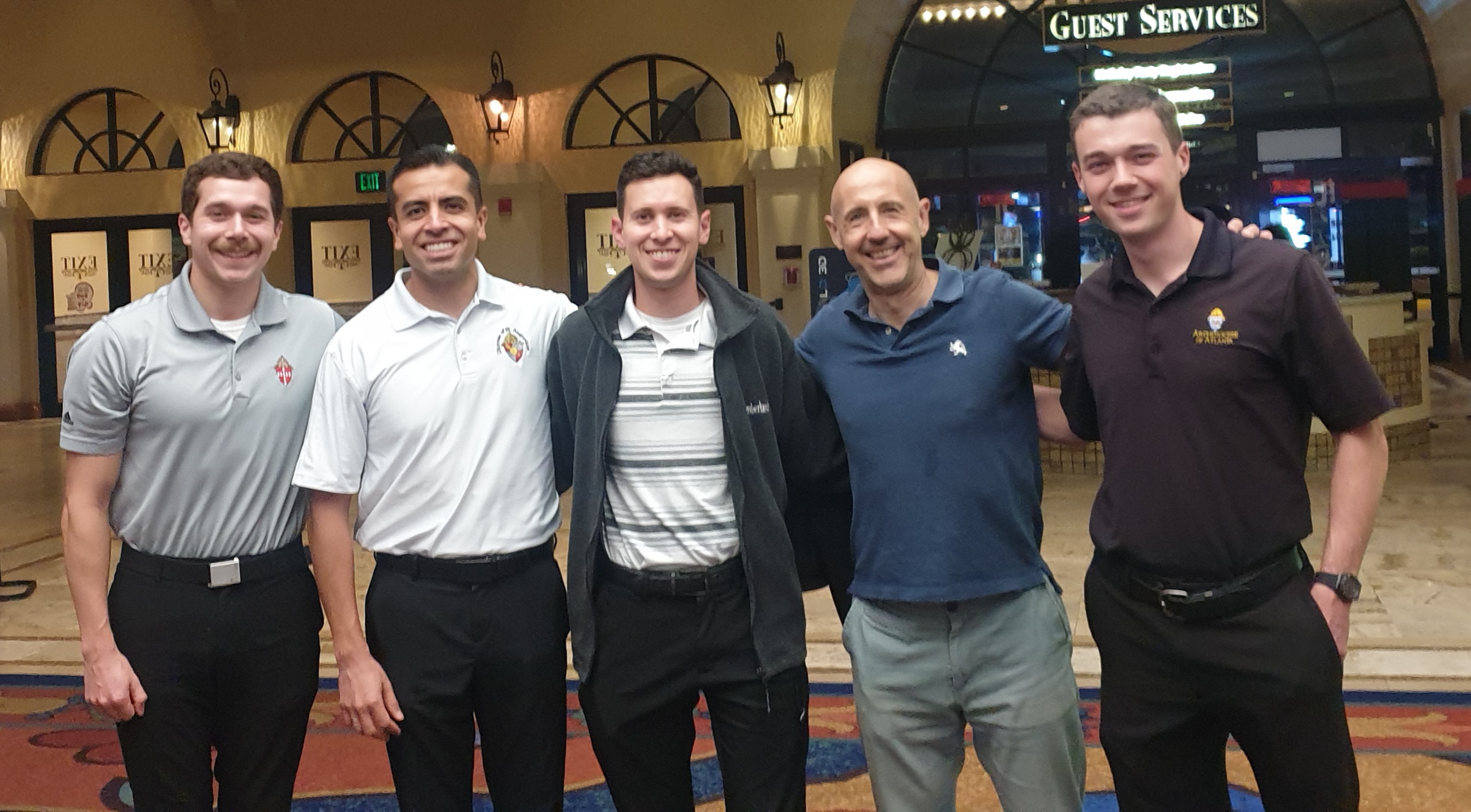
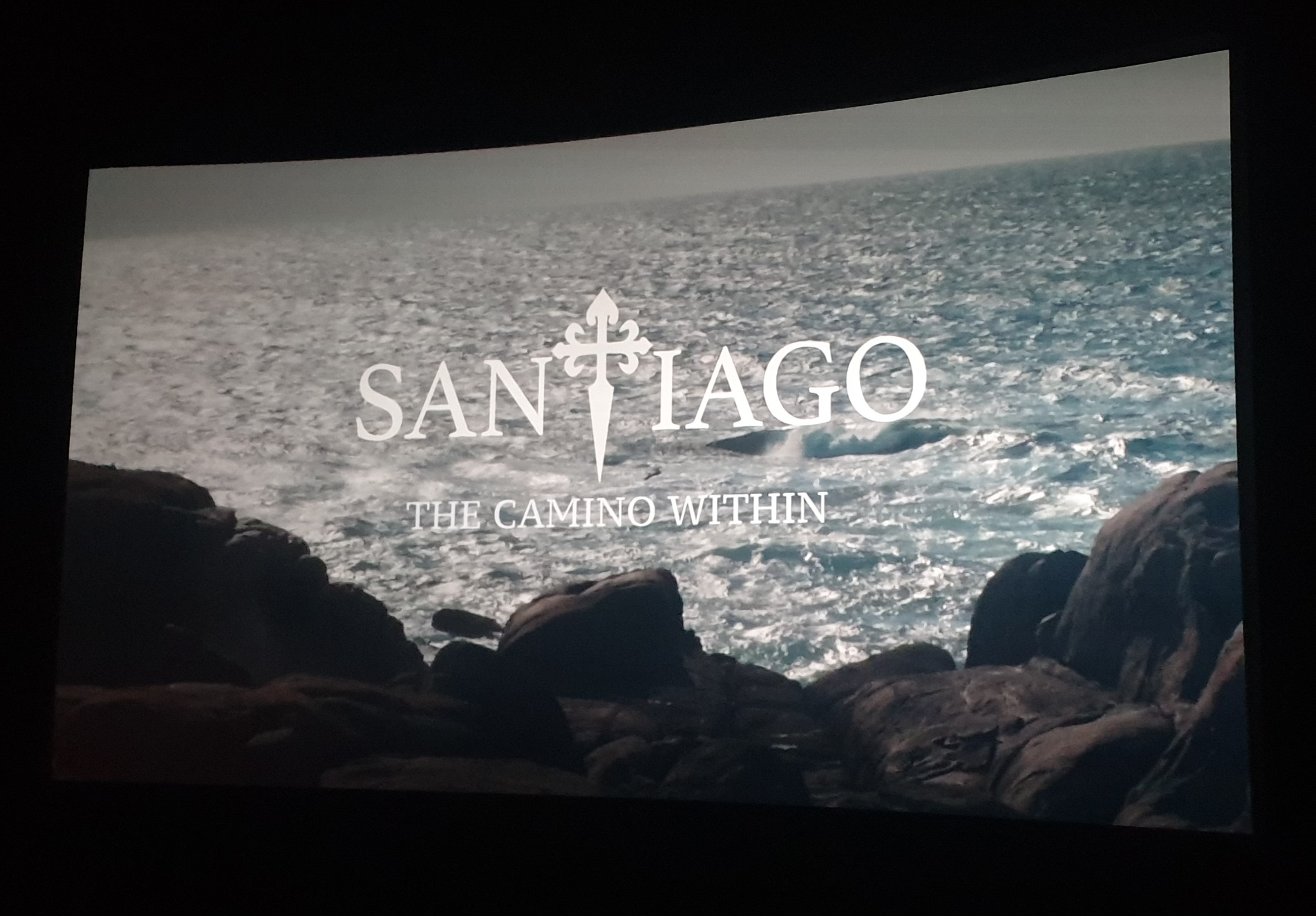
As I was thinking about this blog post, my students invited me to see Santiago The Journey Within, a reflection more than a documentary on the Camino. The film, led by Bishop Donald J. Hying, has beautiful photography and music, but sadly lacks a narrative, a connecting thread, which makes it difficult to immerse oneself in the film. Also the last 45 minutes of the film is just Bishop Hying talking about the Camino at a university conference. Beautiful words, but less than gripping action.

There you have it. Make sure your mind is ready as much -if not more- than your backpack!

¡Buen Camino!

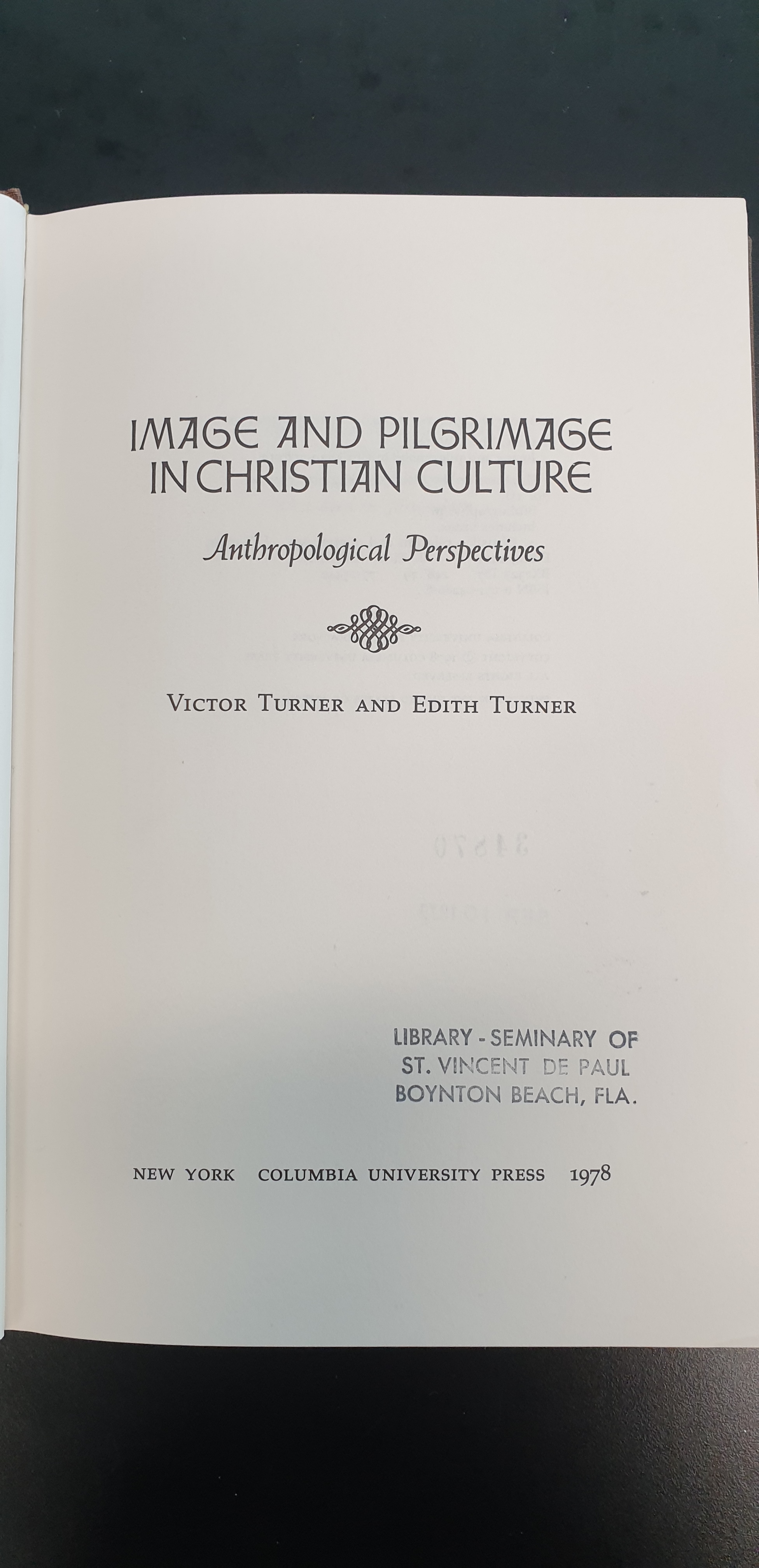
PS: If you are really into this, you can read Image and Pilgrimage in Christian Culture by Victor Turner and Edith Turner.

Should you walk the Camino?

Many of the people I have met since I did my first Camino in 2017 tell me how much they want to do it. Most folks will never get around to walking it. Well, I am here to guide you.

What is your motivation to walk the Camino? In my case, I had dreamt about it for years, but it took my father’s passing for me to finally commit. Maybe you have heard from a few pilgrims that it was a cool experience? Or maybe you have a higher motivation. Although it is bad Camino etiquette to ask pilgrims why they are walking (it is none of your business, you can read more pointers here), most folks do it in between jobs, after college, to “find themselves.”

You 100% should walk the Camino. For clarity, for healing, for your mental, spiritual, and physical health, to get to know the country in a way not even Spaniards know, for culture: history, architecture, art, food, etc., to disconnect from civilization (you are not walking the Appalachian trail), but just walking for hours on end each day means that you are not looking at a screen for those hours, and yes, for fun.

Your first task is committing, maybe therein lies the issue.

Your next step is to figure out how much time you have. For the full enchilada, you are going to need thirty something days. Or you can do a shorter Camino like the Primitivo which will take you around 12 days. Any less and you are really cheating yourself out of the transformative experience that is the Camino. Sure, you only need to walk 100 km (62 miles) -less than a week- to get your Camino certificate, your Compostela, but if you are walking the Camino to hang a certificate on your wall, you might as well just go to Disney World.

Once you know how much time you have, take a look at all the different Caminos, you can start in Paris, Geneva, Madrid, Lisbon, Bordeaux, you name it. The Camino starts at your doorstep.

Money. The Camino in Spain is relatively inexpensive. You can get away at 30 Euros a day. You will need more if you want to stay in hotels instead of Albergues, and much more if you are going to walk in France or anywhere else in Europe. On the other hand you will need much less if you camp and/or if you make all your own meals.

Then you make your travel plans: planes, trains, buses, whatever.

And your equipment, there are a million YouTube videos on this, even I have written about it here.

That’s it, you are on your way, Buen Camino!

Love letter to El Camino (sorry, en Español)

Every day that passes I am closer to getting back on the Camino. This Summer I hope to walk the Primitivo, from Oviedo to Santiago, the same one that king Alfonso II -the first pilgrim- did sometime around 840 to check out St. James’ tomb. It is apparently the most rugged and thus the most beautiful although it is only 14 stages at 314 km (about 195 miles).

The other day I saw this beautiful video/love letter from Condé Nast Traveler, which while not 100% authentic, it does capture the spirit of the Camino, so I am sharing it with you in this tender time that is Christmas.

Enjoy.

Arriving in San Sebastian!

The Camino Part II

Since I ended my Camino last year I was itching to get back to my pilgrimage. It did not disappoint. Exactly a year to the day, I boarded a bus to Astorga, the city where I finished last year. Four hours later, I arrived. I did not want to spend the night in a place that only had sad memories and heartbreak for me. So I walked to Murias, the first village out. It was a gorgeous evening walk on one of the longest days of the year. I passed by the obligatory tiny chapel and yellow arrows. The small Albergue was a repurposed, old, one classroom schoolhouse. Just about everyone inside was already dozing. But I walked to the local restaurant for a quiet dinner with a glass of wine. Then crawled into bed after a quick shower.

My Camino proper started, like last year, on my Dad’s birthday. It is a tiny, silly way for me to honor him and to celebrate with him, walking with his old walking stick. Right out of Murias there is a small detour to one of the prettiest villages in Spain: Castrillo de los Polvazares. An ancient, untouched stone village. Stone homes, stone streets, stone church, stone everything. I made the detour because I remember driving there with my father in his massive Mercedes and being so awestruck by the beauty of the village. My morning walk is always my favorite. The dew on my legs, the silence, loneliness, the cool.

The path was a slow but steady climb to the second highest peak of the route, past Rabanal del Camino, where I stopped to chat with a Benedictine Monk in his monastery, and Foncebadon, to Cruz de Fierro, the site of an ancient Roman temple. It is a tiny iron cross on a massive wooden post. Pilgrims are supposed to drop off a stone picked up at the base, but with the accumulation of stones, they are now suggesting leaving flowers. I had a pebble I had been carrying since Navarra.

After cresting for five odd km. the descent is very technical, putting a lot of pressure on feet, shins, and knees. I was out of the Maragateria area and into El Bierzo, a previously forgotten region of Spain that is now on the map since their wines became noticed some years ago. I eventually stopped at Acebo a lovely village of stone homes with slate roofs.

There are three basic types of albergues a pilgrim can stay in. The municipal or public ones, the parochial or church affiliated ones and private ones. I normally chose my albergues in this order. In Acebo the options were parochial or private, I stayed at the parochial, run by a wonderful American couple that had left the US because of President Trump (they can hardly be blamed).

My walk the next morning led me by a wonderful 18th C. altar in one of the tiny chapels along the way. I always stop and chat with the attendant, while I get my official stamp to prove my visit, which I will need in Santiago. Breakfast was at the gorgeous village of Molinaseca. And the walk continues past fields and vineyards to Cacabelos. The Albergue at Cacabelos is paradise for me. It is set up along the inside wall of an 18th C. neoclassical church, right up my alley! The next day I end up at Herrerias, the base of the third highest climb of the route. There is only a couple of private albergues and the one I choose is super cute. The bedroom only has 8 beds so it is very quiet. There is a neo-Hippy project next door called Project Brigid where they do music workshops, and they lend you their kitchen. I signed up for their yoga class in a small clearing, surrounded by high trees, next to a lovely stream. It was by far the best yoga session of my life.

The climb to Cebreiro is the third highest in the Camino, but in the early morning, it is a breeze. A stop at the great bar El Arbol in La Faba provides great fuel to keep climbing. The view of the hills of Galicia from the top is awesome and the town of Cebreiro is really cute, with a fantastic, intimate church where I spend some time. I keep walking downhill to Triacastelas. The albergue is in rooms of four. I room with a Mexican girl, a South African fellow and Go from Japan, who will become my new friend.

I walk to the Benedictine Monastery at Samos in one gorgeous chestnut tree forest crisscrossing  gurgling streams. At Sarria I enjoy a wonderful empanada, the local pie, stuffed with tuna. The Camino now is a bit more crowded with busses full of “pilgrims” who only walk the last 100 km. in order to earn the coveted Compostela, the traditional forgiveness of sins for doing the Camino. These mostly Spanish folks can afford to do the walk with only a day pack – or just some water – as their bus will carry their kit from village to village. I must confess it does distract from the purity of the Camino, but they must be equally accepted as they are also pilgrims, even if all they are wearing is a bikini and a water bottle, as I saw one girl doing.

Galicia is a magical region of Spain, it’s ancient hills covered with chestnut and eucalyptus forests, streams and tiny agricultural plots. The food is delicious and the people are wonderful. My last two days’ walk is in the company of awesome Aussie Bec and our Japanese friend Go. After a good night’s sleep at a gorgeous little hotel, the walk into Santiago is an easy 9 km, just in time for the Pilgrim’s mass with the fabled Botafumeiro incense burner that somehow uncorks all my emotions as it swings across the naves of the cathedral. I only have time to get my Compostela before jumping on a train home, I’ve got a busy summer ahead!

El Camino de Santiago

This slideshow requires JavaScript.

Everything you have ever heard about the Camino is true: it is a spiritual journey, it is a life changing experience, you make deep bonds with people you meet, the hiking and the views are gorgeous, and so on. Yes, all that is true, but it is so much more, so much more.

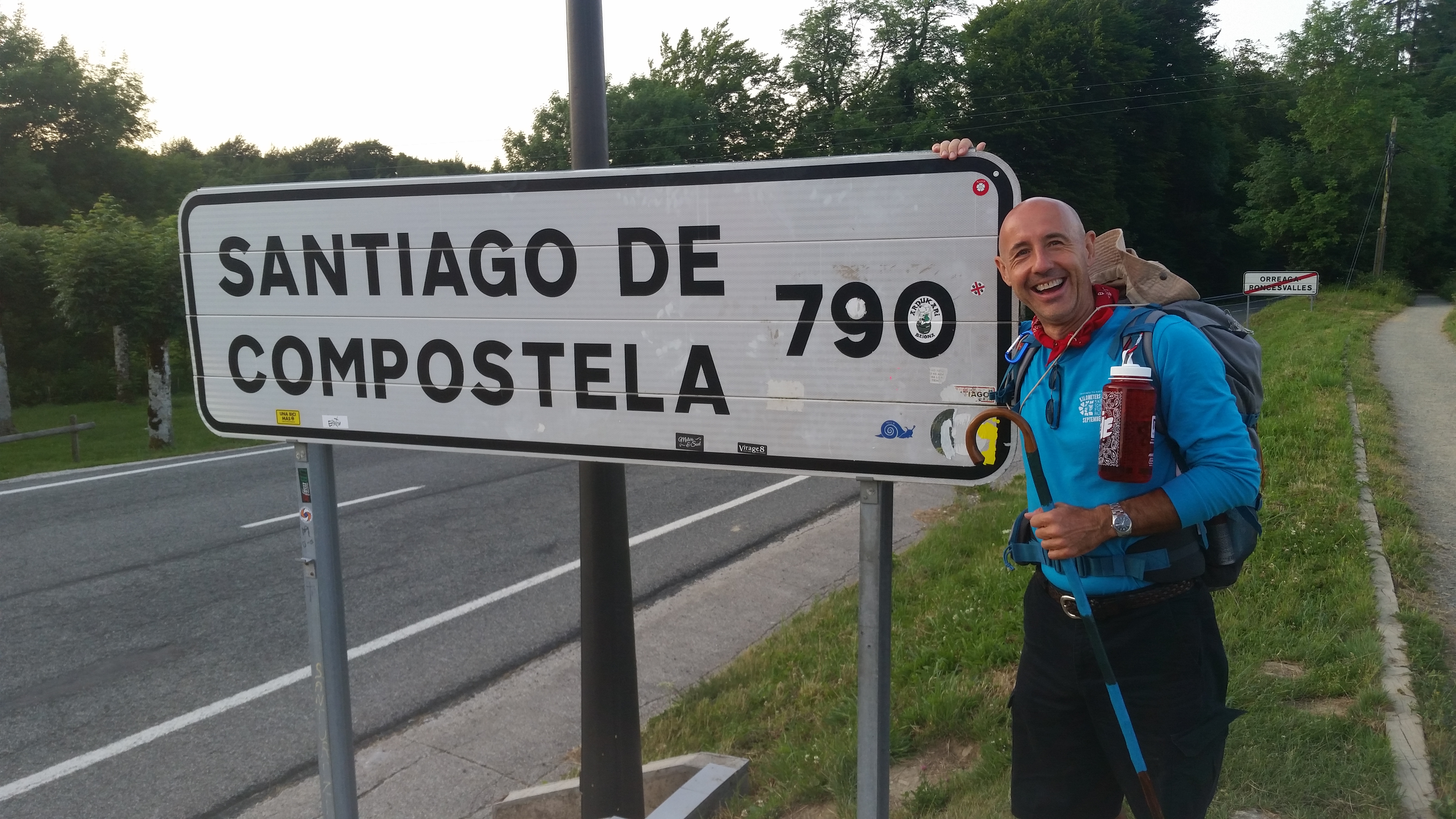
My trip started with a quick bus ride to the Atocha station in Madrid, a train ride to Pamplona where I met up for lunch with an old colleague from UNC, and from there, a breathtaking bus ride up and down the Pyrenees to St. Jean de Pied-de-Port in France. As part of my experience I did not make any sleeping arrangements, so I really did not know what to expect. Getting out of the bus, I walked around exploring the cute little village. I wandered into the Pilgrim’s mass, which ended with a very warm Pilgrim’s blessing, then stumbled into the Pilgrim’s Office where I got my all-important “Credencial”, the passport that you get stamped along the way as proof of your pilgrimage. Then it was time to figure out where I would sleep. I asked at a couple of albergues (hostels), which were full. Third time lucky as Eric at the Chemin Vers L’Etoile generously welcomed me. We had a wonderful group dinner of couscous and sautéed pork at a long table where I met all sorts of pilgrims: a young woman who started walking from her front door in Belgium, Marie Helene who had been walking from Alsace-Lorraine – and who I would bump into for the rest of my Camino -, a young man from Taiwan, etc. The first humanizing experience of the Camino are the sleeping quarters in the albergues: a room full of bunk beds. I had not slept in a room with total strangers in 30 years, (since the summer of ’87 when I had to sleep in a youth hostel in Geneva as my apartment in a university dorm was still occupied). I say humanizing because on the Camino we are all equals, it does not matter how much money you have, what kind of car you drive, how big your house is. You have committed to walk to Santiago and that is really the only thing that matters. I was a bit surprised that everybody headed to bed after dinner. I needed a bit of a walk to settle dinner, so I explored the cute village and by the time I got to bed I was the last one in.

Not wanting to make any noise getting into bed, I did not rummage through my backpack to look for my earplugs, big mistake. In the hot summer night I could hear all the heavy breathing and snoring. Around five I heard rumblings, and when I opened my eyes everybody was getting ready to go! At ten past six, after a quick breakfast of toast and bad coffee I was walking out of the village, in time to see the sunrise over the Pyrenees. The first two hours are brutally steep. Eventually you reach a nice auberge at Orisson, it is a perfect place for a nice rest and charge up. They have fantastic orange juice, tortilla, coffee, and they will make you a sandwich to go. The climb continues at a gentler grade for hours, with brief stops at an image of the virgin (Vierge de Biakorri), a cross (La Croix Thibaut), a trailer selling snacks, and eventually a fountain, the Fountain of Roland, which marks the border of France and Spain. After some time cresting with largest remaining beech forest in Europe on either side, you start the descent into Roncesvalles. There are two options: a dangerously rocky steep path, and a bit longer but easier winding mountain path. Having heard horror stories about the first, I took the second option.

The connection to nature is one of the first things that hit any hiker, on the Camino it is a never-ending wonder. Crossing the Pyrenees you encounter basque ponies and woolly basque sheep, brown vultures, and cows, of which you will see every breed of on the Camino. You will stare in awe at the flight of the falcon and wonder if it knows how cool it is soaring the sky. In the cool mornings you must be careful not to step on the hundreds of snails. In a field in Burgos we were surrounded by butterflies, hundreds, thousands of different butterflies playing with us. I saw two deer jumping through fields of gold (as Sting would say), storks, deafening cicadas, and every type of farm animal, including geese. Special mention to the cat at a crossroads outside of Los Arcos who just sat there waiting for pilgrims to pet it, it was a smart Siamese mix, and it was nice to hang out with it for a moment.

Roncesvalles is not really a village, it is a medieval colegiata, a notch down from a monastery, which hosts the albergue and a posh hotel, a church with a nice cloister, crypt, and a chapter hall where Sancho el Fuerte, an old king of Navarre is buried. There are also a couple of inns.

After the day’s walk, one must shower away the dust incrusted dry sweat, give the old feet a loving massage, and do the day’s laundry, after which there is time off to have a siesta, roam around, eat or explore the village. Roncesvalles had a lush lawn, so I enjoyed a few minutes of yoga with young Englishman James, with whom I would make a brief bond, talking about Hemingway’s time in Pamplona. I bought some cherries from a travelling fruit seller’s van and walked around. Dinner was with James, after which we rushed to the Pilgrim’s mass and blessing. Father Vicentin offered to give us a tour of the church if someone translated, at which point somebody that had heard about my job, literally pushed me forward. So I enjoyed translating to English and French all the explanations of the church, crypt, cloister, chapter hall, and Sancho el Fuerte who was over six feet tall.

This time I took my time with my bedtime preparations, including trying out the wax ears-plugs, they are awesome, I heard nothing!

The morning ritual includes slathering your feet in Vaseline, putting on socks and shoes, and a quick breakfast before hitting the road. The Camino through Navarra is beautiful, with ever-changing views, each one more breathtaking than the previous one. I enjoyed an enlightening conversation with Manolo from Zaragoza, the fellow I had descended the Pyrenees with the day before, after a snack stop I surged forward through forests and fields, up and down hills. From the top of a hill I saw a village below – with a gorgeous and inviting public pool calling out for me. I went straight to the pool for a refreshing swim and lunch. The last couple of hours hiking in the heat to my end of stage were tough, but the swim was worth it.

Larrasoaña, is a small village, it has a nice municipal albergue and a small convenience store run by crazy Angel who plays vinyl records and treats you to a glass of local wine. The next morning after breakfast with Angel’s victuals, I enjoyed the walk into Pamplona. I shared it with a young and restless Italian architect called Diego. Stops were few, but a remarkable one was at the small church of San Esteban where they have an incredible bell that rings beautifully, for over a minute. If you are willing to climb up the bell tower they let you ring it, once. It did have a nice ring. I did not stay in Pamplona, after visiting the Cathedral I continued across town to the first village out, Cizur Menor, where I stayed at an albergue run by the medieval order of the Knights of Malta. In fact, the beautiful fortified Romanesque church still stands on the compound. As I dropped off my backpack by my bed, the woman trying to sleep a siesta on the next bed, said “Hi” to me with the sweetest, warmest, smiling eyes.

One soon develops a rhythm to the Camino, the morning ritual, the stops at villages for constant snacks of pinchos de tortilla, bocadillos, empanada, whatever you can get your hands on. Stops at interesting chapels, churches, and cathedrals or other interesting sites, like the free wine fountain at Bodegas Irache. All along you can get your Credencial stamped, I found it a bit of a game to collect all the stamps wherever I stopped, as much for fun as for a memory aid of every stop. Technically you only need one per day until Sarria, and then 2 per day until Santiago. Still, one hears stories of people hitchhiking to the next town, taking taxis, whatever, it is your Camino.

Although there are recommended daily stages, every village on the Camino has albergues so you can set your own pace. The beauty of this is that sometimes you stop at tiny – one bar – charming villages where you might be the only pilgrim for the evening. I had a couple of such experiences where you can chat with the locals, etc.

The day after Pamplona you are faced with the Monte del Perdón. The climb has a nice manageable rhythm to it, and at the top between the massive electric windmills there is a small prayer pillar, a modern sculpture dedicated to the pilgrims and a Land Rover Defender 110 with a trailer selling all sorts of snacks! The descent is much tougher than the climb, with a few fairly technical bits. Remember to buy shoes a size larger than usual so your toes do not crumple with your shoe on these descents. Of course at the village at the end of the hour-long descent there is a nice place to grab a well-deserved second breakfast.

One of the many magical things about the Camino are the chapels and tiny churches, most of them dating back to medieval times, peppered along the way. In the angle formed by the merger of the Camino Aragonés coming from the Eastern Pyrenees with the Francés (which I was on), is the unique chapel of Santa María de Eunate. The placement of these chapels might appear fairly random, but one cannot help but notice a formidable energy, a presence, an intangible metaphysicallity, a sacredness in these places. Most of these thousand year old churches are in simple, elegant, minimalist Romanesque, and even Pre-Romanesque style. The wonderful hospitalaria (albergue keeper) at Cizur Menor had explained to me that Eunate was built over two underground streams that met right under the church. Never mind how old this church is, never mind the unequal (yes, unequal) eight sided construction, the feeling inside cannot be described in a blog, in words. This experience would be repeated with different intensity at San Miguel before Estella, at Nuestra señora del Monasterio in Rabé, where both Krisztina and I cried unconsolably for minutes, at San Nicolás on the Pisuerga river right before entering into Palencia, and at the chapels I have already mentioned.

Puente la Reina is aptly named for the awesome five arched medieval bridge that crosses the local river. Although that is a recommended daily end of stage, I pressed on with Rolf, the young Swiss carpenter I had met a few days earlier. Mañeru is one of those lovely villages with only one bar. The albergue run by Mayte has massive stone walls that act as natural air conditioning and it was nice and cool inside. Ditto for the patio, where I did my laundry and read and wrote for the evening.

A curious phenom of the Camino is the ebb and flow of pilgrims. People you thought long overtaken appear at villages well ahead of where you left them and vice-versa, you catch up to people who overtook you hours or days earlier. This was the case with the young woman I had met at the albergue outside of Pamplona. I had overtaken her early in the day’s walk and yet she was well ahead of me the next time I saw her the next day. I finished that day at Los Arcos, at an albergue run by Austrian volunteers who happened to be German.

Logroño is the second big city you reach on the Camino. To enter the city proper you have to cross the Ebro river, the biggest river in Spain, that alone is an experience. The albergue is an old palazzo restored to accommodate the dusty and sweaty pilgrims. You are now in the heart of wine country and all you see for days are vineyards.

Another thing I found happened to me on the Camino is that my senses awakened. I thought my sense of touch, smell, sight, taste, and hearing worked fine, until I was a few days into the Camino and realized my senses had automatically fine-tuned. Walking in the Rioja region I could not resist every once in a while just holding bunches of green grapes in my hand, their weight, their sensual skin, was just a very rich, rewarding feeling. Same goes of hearing birds chirping, or total silence, or for the views, or for smelling every sort of plant and tree you walk by – my favorite where the fig trees – although the fruit was still far from ripe, grrr.

It was freezing in Burgos, and they were celebrating their local patron saint festivities, so everybody was out partying. The walk into the city is tedious and boring, bordering industrial estates and the airport before hitting a massive park that takes you into the city. The albergue is a really cool restored palazzo right behind and across the street from the awesome gothic cathedral where they had a pilgrim’s mass in one of the side chapels. That night Manolo was ending his Camino for the year, so he invited a group of us to a nice dinner. Leaving Burgos is much nicer than entering, as you leave by the university campus. It was drizzling that morning, but it soon stopped.

And so the kilometers and the days pass, village after village, occasionally a town, and eventually a city will meet you. The only thing you have to do every day is get up, put on your shoes and walk, and walk, and walk. This is really quite liberating, the only non-walking action that happens is in your mind, so in the pre-dawn walking I could meditate in the cool darkness, later I thought about anything and everything, or not. Sometimes in the total solitude of the Camino I sang at the top of my lungs, certain that there really was nobody for miles around. I sang mostly old Rolling Stones, Frank Sinatra, even The Police.

Between Burgos and Leon lies Palencia (yes, with a P, not Valencia), a flat, arid land where the walking is tedious, but not any less rewarding. The earth is very clayey so it holds on to moisture well which is perfect for the acre upon acre of cereal grown there. At Carrion de los Condes we stayed at an albergue in the Convent of Saint Claire. Evening vespers with the nuns was one of the more moving experiences I have had in memory. The walk from Carrion to the next village is 17km., one of the longest, over three hours, without any stops or fountains.

The lack of technology is one of the most freeing feelings on the Camino. Other than taking photos, you really do not need any technology. In the evening, if the albergue has WiFi you can catch up a bit on the old social networks, email, etc. Personally I did not miss the technology a single bit, although I did post a highly curated daily Instagram pic for my fans. (Follow me at tonxob)

Living out of a backpack means you have two sets of clothes, the one you are wearing and the one you washed the night before – I am a snob, so I had three t-shirts, boxer shorts and socks. This might be boring, but it is also terribly liberating, you do not have to worry about what to wear, how to match. You also do not have to worry about your things, because you have very few things on the Camino: your dopp kit, your clothes, sleeping bag, some reading and writing material, a guide, phone with charger, a pocket knife, and little else.

León follows Burgos on the big city stops, and what a place it is. It has a beautiful pedestrian downtown, an amazing cathedral, and massive free tapas with every drink you order. There is no municipal albergue in León, so we stayed in a university dorm that doubles as an albergue in the summer, when there are no students. It also had double rooms with bathrooms, which was a nice break from the albergue life for a night. In Leon I caught up with Ana, an old colleague from Milton High School in Boston, we had a great evening with her sister and Krisztina.

When was the last time you played with your own shadow? When was the last time you even noticed your own shadow? On the Camino which is a fairly straight East to West walk, you see your own shadow forming every morning when the sun comes up! It is little things like these that make the Camino a journey of self re-discovery, of renewal, it gives you time to forgive, to let go, to forget.

At Astorga, a great little town with an awesome cathedral and the Bishop’s house built by Antoni Gaudí (of Sagrada Familia in Barcelona fame) I had to finish my Camino in order to go get the country house ready for mom, sisters, brothers in law, and nieces and nephew who were on their yearly holiday in Mallorca. It was heartbreaking to say my goodbyes and wait for hours for the long and boring train ride to Madrid.

Needless to say I cannot wait to finish the last third of my Camino next summer. Stay tuned.

Notes: I walked over 520 km (325 miles) in 19 days (with one rest day for a pesky shin tendonitis).


The Camino, at last (Prologue)

Up until I was ten, we used to vacation in Galicia in the North West coast of Spain, the little corner above Portugal. During those holidays we would go on some excursions, and I remember when we went to Santiago de Compostela being really impressed with the Peregrinos, the pilgrims that had walked for miles to get there. It has taken me many years, but at last I am going on the Camino this summer.

Saint James (the Greater, the Great) was charged by Jesus to preach to the end of the earth. That would be the westernmost coast of Europe at that time. There is a Finisterre (Finis Terrae in Latin), where hippies from all over gather to see the sunset (just like there is a Land’s End in Cornwall). At any rate, James did his job and returned to Jerusalem, only to be beheaded by King Herod Agrippa. This is where it gets interesting: within a week James’ body and head appeared on the shore of Galicia (must have had some awesome sailing winds…) where he last preached. So the locals built a shrine and buried him. With time that shrine became too small, so he was moved further inland to current day Santiago de Compostela (was the city known in latin for compost or for stellae (stars) is another debating point – I prefer the “field of stars” campos-stellae option). At any rate the church became this massive cathedral finished in a massive, dizzying baroque explosion, but you can still kiss the remains of St. James. Word got out and people started trekking to see the Saint. Then about 800 years later in 834 (or 844, on this there are different opinions), during the Reconquista, the Christians where kicking the Moors out of Spain, and in the Battle of Clavijo (this battle really occurring, is also a bit dubious) Saint James showed up on his white horse and started slaying Moors left and right, leading the undermanned Christians to victory. After this, Santiago started showing up at battles all over Spain doing his thing and putting the Moors to his sword. So Saint James became the patron saint of Spain and thus even more people went to visit his remains at Santiago. People never stopped going to visit the Saint. Since the Middle-Ages, people from all over Europe walked to Santiago. Making the pilgrimage the third most important in Christianity after Jerusalem and Rome, but with the distinction that one must walk this pilgrimage – at least the last 100km in order to gain pardon for your sins.

With such a rich history, there are many ways to Santiago. Traditionally the pilgrimage started at your doorstep, but with time different main ways appeared: there is the Portuguese way from Lisbon, the Ruta de la Plata from Sevilla, the North Coastal way, and others, but the most famous one has become the French way, el Camino francés, which I should have started by the time you read this. From the little village in the Pyrenees of Saint Jean de Pied-de-Port, and going through towns like Pamplona (fortunately not during the running of the bulls), Burgos (home of El Cid), Leon, and many small villages.

Enough excuses, enough see sawing, one must commit, push oneself. While my family will be in my beloved Mallorca swimming in crystal clear blue waters I will be carrying a backpack through the hot, dusty plains of Castile.

My approach, as it is to most things in life, is a bit of a hybrid: part old school, I have tried not to see too many YouTube clips nor Interweb blogs, part High Tech, I did buy new shoes and a new backpack (mostly because my old one had a decomposed lining). But the intention is to just walk, trying not be dependent on the phone and its connection to the outside world. Medieval pilgrims did not have Gore Tex nor moisture wicking textiles, nor iPhones to make hostal reservations and write blogs…

A train will take me to Pamplona, and a bus will carry me over the Pyrenees to begin my next adventure, I will try to keep you posted…