


(There is a previous post on El Paular. This one is a bit more detailed and touches on different themes, most importantly, spirituality.)
Every trip to El Paular monastery is gift, a spiritual gift.
A few years ago, Jaime, my oldest childhood friend, took me to see what had been his first professional restoration job in the late 80s: the Monasterio de El Paular, nestled in the Guadarrama Mountains. Although many years had passed, he was still friends with the Abbot and with a few of the monks there. The drive was breathtaking; over the Navacerrada pass and down Cotos, not far from where Hemingway had based his novel For Whom the Bell Tolls.
Brother Eulogio is getting old and frail, but his faith, his spirituality is still resolute. After working at the Vespa scooter factory in Madrid, he decided to become a monk at El Paular. He has been there for fifty odd years, since his 20s. We did not know what to expect, he had been in hospital for a stint.
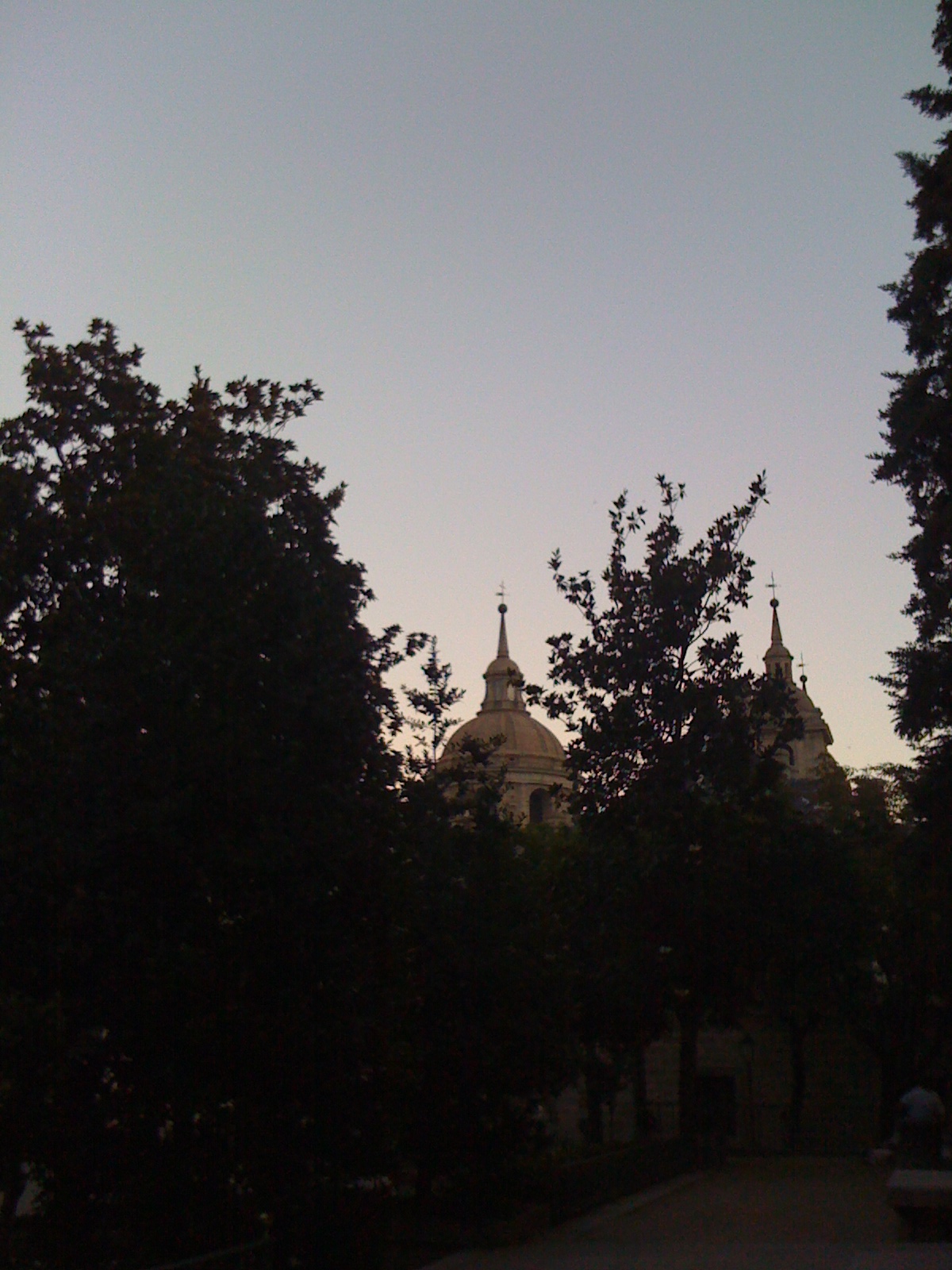
The monastery has a long history dating back to medieval times. Apparently there was a hermit living there before the monastery was built by the Carthusian order in the 1300s. The placement could not be any more beautiful, between a crystalline stream and the mountains, with a huge vegetable garden and orchard. The energy flow, the calm and beauty would not have passed unaccounted for anyone, regardless of the era.
By my calculations, following the geographical clues, the Arcipreste de Hita’s Serranas section of the Libro de Buen Amor should pass by the Monastery, since he mentions Somosierra and Lozoya on his way to Segovia. There could not have been much of a place to pass other than the Monastery.
The first time I went to El Paular, the Abbot treated us to lunch with the brothers in the modern but humble, functional, refectory. The gorgeous original is only used for Christmas dinner, when they have many guests. It was then that I met brother Eulogio for the first time. I remember vividly his first question: “Do you have faith?” To which I mumbled/chuckled something to the effect of “I’m working on it”. Then he went off on a tirade on the state of modern faith, his thin, strong frame acting as an exclamation mark for his statements.
In 1779 Enlightenment writer Gaspar Melchor de Jovellanos stayed at the Monastery for a retreat/convalescence writing what scholars consider the seed of Spanish Romantic poetry, the Epístola del Paular, which you can find at the end of the post…
After lunch Eulogio took Jaime and I for a walk on the huge fruit and vegetable garden. It is so big that they have hired a company to run and sell their produce, but only after the monks take what they need. During the walk, Eulogio referred repeatedly to feelings I had that needed answers to, he hit the spot on the need and importance of a “higher presence” in our lives – subtly connecting this need to the beauty around us. Eulogio looks like a closet Franciscan. From that visit, and that conversation I have always wanted to return to El Paular to continue my conversations with Eulogio. So every time Jaime mentions a visit, I jump at the opportunity.
The Church in Spain had so much power that for centuries it rivaled the government in its sway of the citizens. So in the 1800s Prime Minister Mendizabal took over and sold many, if not most of the Church’s properties, El Paular was abandoned, the massive Vicente Carducho paintings lining the cloister walls were grabbed by museums and collectors looking out for Mendizábal’s garage sales.
For years Eulogio’s job at the Monastery had been to handle the weddings that took place in the church. Only a couple of hours North of Madrid, it is an idyllic setting for a romantic wedding. However, Eulogio does not fit into the “cute” monk idea popularized by Hollywood. He would question the couples on their love, their reasons for marriage, their commitment.
During the Civil War, 1936 to 1939 the abandoned monastery served as a makeshift military barracks for troops. The graffiti left there was not painted over during the restoration process as it gives further historical context to the Monastery.
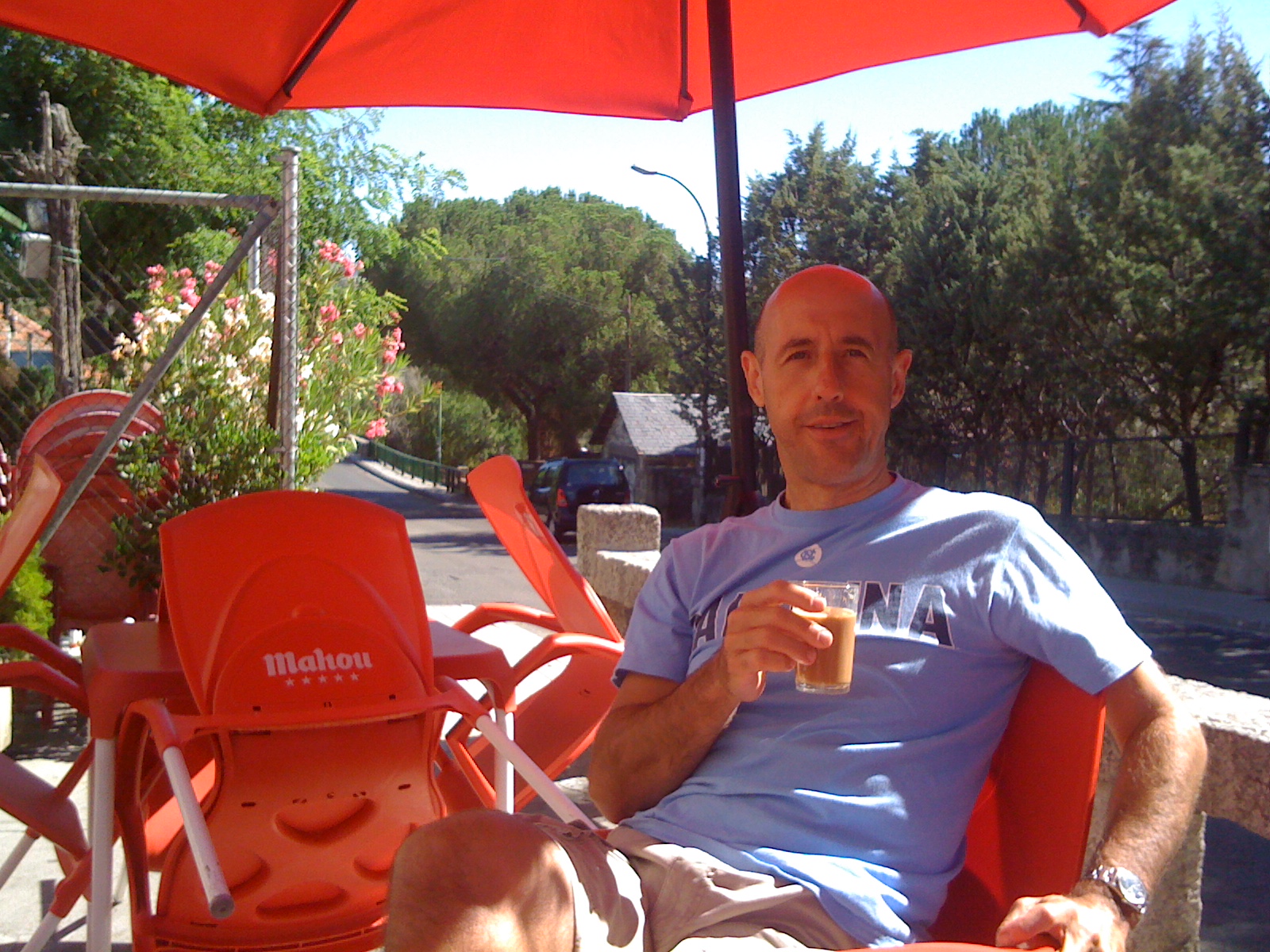
Last year we also made the drive to visit Eulogio, but we did not stay for lunch, as we wanted to ride and hike to explore the mountains surrounding the Monastery.
After the Civil War, General Franco, seeking to restore the Monastery, brought in some Benedictine monks who continue to this day. In the late 70s the government built a luxury hotel next door to the Monastery, profiting from the ideal location, the tourist influx, and the weddings that were held in the beautiful church of the Monastery. After changing hands a number of times between luxury hotel operators, it now rests abandoned.
My thirst for Eulogio’s spiritual wisdom comes from my realization in 2010 of the powerful inter-connectedness of the universe, of which we are as much a part of as a blade of grass, as a distant star. But to get to that point one must let go of the ego, of that which we think we are, and simply be. Easier said than done. Richard Rohr explains it in the context of the ancient Greek word of self-emptying: “kenosis, an emptying out of the contents of awareness so that one becomes oneself an empty vessel, a broken vessel, a void that lies open before God and finds itself filled with God’s own life. This gift of God is revealed to be the ground and root of our very existence. It is our own true self.”
This, of course, is not a new concept, it is embraced by Buddhism and Hinduism, and by early Christianity. 18th Century philosopher Kierkegaard wrote about the Three Stages of Life: the Aesthetic when our lives are dominated by the ego necessary to gain independence from our parents and establish ourselves in the world, everything is superficial. The Ethical where we concern ourselves with what is right and what is wrong, and finally – if we are lucky – and only through a process of “breaking” does one reach the Religious Stage where one realizes that our lives are a part of a much bigger, interconnected picture. Unfortunately for many people, they do not overcome the Aesthetic stage, refusing to release the ego and embrace the universe, the oneness.
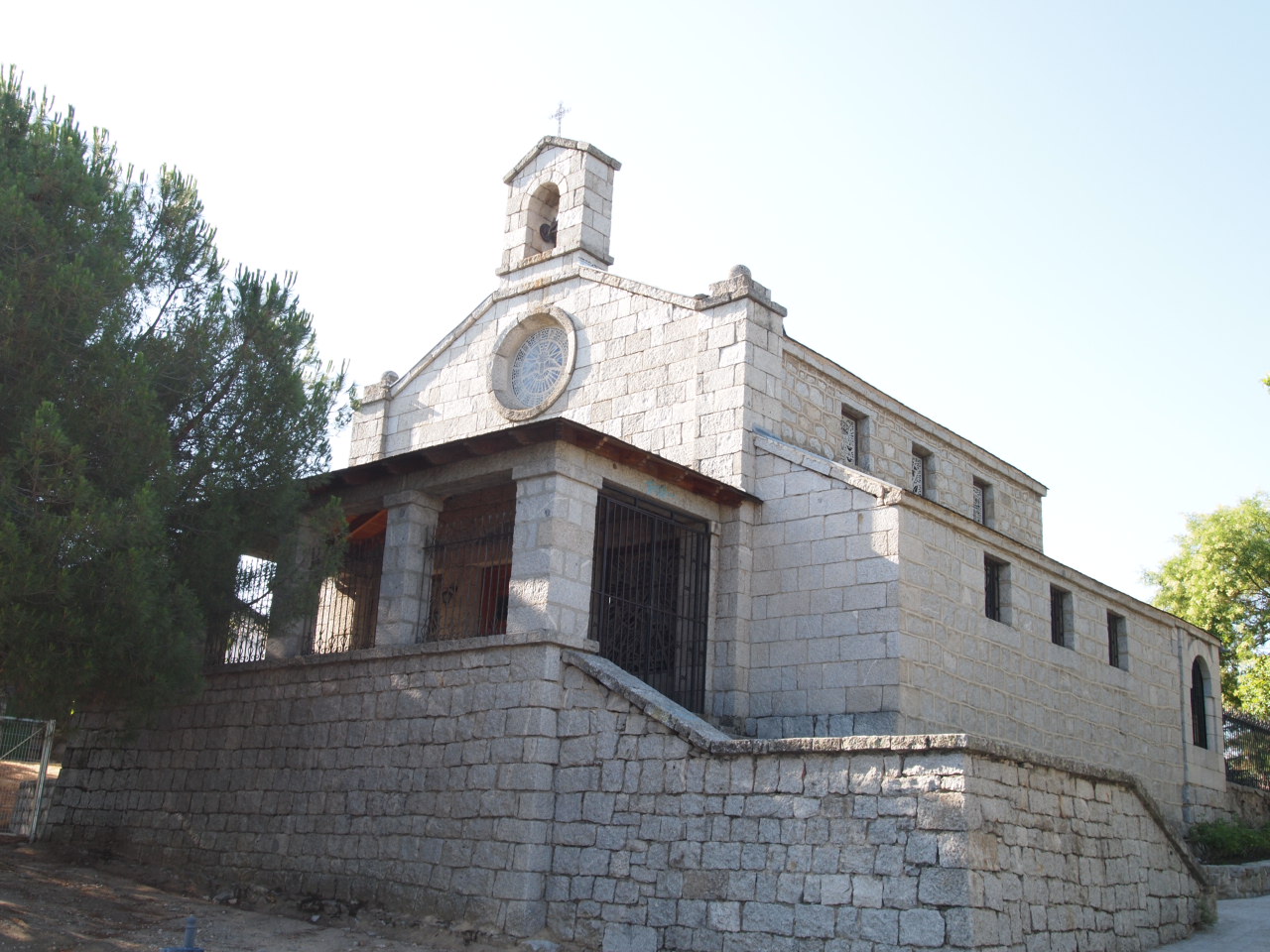
This summer, Jaime and I made our pilgrimage to El Paular only a few days after I had finished my own Pilgrimage of The Camino de Santiago (see earlier posts) so I was primed and ready for conversing with Eulogio. He did not disappoint. As soon as we arrived, the Abbot invited us to stay for lunch in the garden. We had plenty of time to walk around the monastery and the garden and talk. And talk we did, about the importance of prayer, of meditation, of being in the presence of God, of a higher power, an energy.
After mid-day prayers at the chapel we headed for the garden where a wonderful meal awaited. I sat next to Eulogio and enjoyed his wisdom, wisecracks and complaints about the food!
El Paular does host visitors that want to spend time with the monks in retreat, so I am considering spending some time with them next time I am in Spain.
Epístola de Jovino a Anfriso escrita desde El Paular (Epístola desde El Paular)
(Jovellanos)
Desde el oculto y venerable asilo,
do la virtud austera y penitente
vive ignorada, y del liviano mundo
huida, en santa soledad se esconde,
Jovino triste al venturoso Anfriso
salud en versos flébiles envía.
Salud le envía a Anfriso, al que inspirado
de las mantuanas Musas, tal vez suele
al grave son de su celeste canto
precipitar del viejo Manzanares
el curso perezoso, tal süave
suele ablandar con amorosa lira
la altiva condición de sus zagalas.
¡Pluguiera a Dios, oh Anfriso, que el cuitado
a quien no dio la suerte tal ventura
pudiese huir del mundo y sus peligros!
¡Pluguiera a Dios, pues ya con su barquilla
logró arribar a puerto tan seguro,
que esconderla supiera en este abrigo,
a tanta luz y ejemplos enseñado!
Huyera así la furia tempestuosa
de los contrarios vientos, los escollos
y las fieras borrascas, tantas veces
entre sustos y lágrimas corridas.
Así también del mundanal tumulto
lejos, y en estos montes guarecido,
alguna vez gozara del reposo,
que hoy desterrado de su pecho vive.
Mas, ¡ay de aquél que hasta en el santo asilo
de la virtud arrastra la cadena,
la pesada cadena, con que el mundo
oprime a sus esclavos! ¡Ay del triste
en cuyo oído suena con espanto,
por esta oculta soledad rompiendo,
de su señor el imperioso grito!
Busco en estas moradas silenciosas
el reposo y la paz que aquí se esconden,
y sólo encuentro la inquietud funesta
que mis sentidos y razón conturba.
Busco paz y reposo, pero en vano
los busco, oh caro Anfriso, que estos dones,
herencia santa que al partir del mundo
dejó Bruno en sus hijos vinculada,
nunca en profano corazón entraron,
ni a los parciales del placer se dieron.
Conozco bien que fuera de este asilo
sólo me guarda el mundo sinrazones,
vanos deseos, duros desengaños,
susto y dolor; empero todavía
a entrar en él no puedo resolverme.
No puedo resolverme, y despechado,
sigo el impulso del fatal destino,
que a muy más dura esclavitud me guía.
Sigo su fiero impulso, y llevo siempre
por todas partes los pesados grillos,
que de la ansiada libertad me privan.
De afán y angustia el pecho traspasado,
pido a la muda soledad consuelo
y con dolientes quejas la importuno.
Salgo al ameno valle, subo al monte,
sigo del claro río las corrientes,
busco la fresca y deleitosa sombra,
corro por todas partes, y no encuentro
en parte alguna la quietud perdida.
¡Ay, Anfriso, qué escenas a mis ojos,
cansados de llorar, presenta el cielo!
Rodeado de frondosos y altos montes
se extiende un valle, que de mil delicias
con sabia mano ornó Naturaleza.
Pártele en dos mitades, despeñado
de las vecinas rocas, el Lozoya,
por su pesca famoso y dulces aguas.
Del claro río sobre el verde margen
crecen frondosos álamos, que al cielo
ya erguidos , alzan las plateadas copas,
o ya sobre las aguas encorvados,
en mil figuras miran con asombro
su forma en los cristales retratada.
De la siniestra orilla un bosque ombrío
hasta la falda del vecino monte
se extiende, tan ameno y delicioso,
que le hubiera juzgado el gentilismo
morada de algún dios, o a los misterios
de las silvanas dríadas guardado.
Aquí encamino mis inciertos pasos,
y en su recinto ombrío y silencioso,
mansión la más conforme para un triste,
entro a pensar en mi cruel destino.
La grata soledad, la dulce sombra,
el aire blando y el silencio mudo
mi desventura y mi dolor adulan .
No alcanza aquí del padre de las luces
el rayo acechador, ni su reflejo
viene a cubrir de confusión el rostro
de un infeliz en su dolor sumido.
El canto de las aves no interrumpe
aquí tampoco la quietud de un triste,
pues sólo de la viuda tortolilla
se oye tal vez el lastimero arrullo,
tal vez el melancólico trinado
de la angustiada y dulce Filomena.
Con blando impulso el céfiro süave,
las copas de los árboles moviendo,
recrea el alma con el manso ruido;
mientras al dulce soplo desprendidas
las agostadas hojas, revolando,
bajan en lentos círculos al suelo;
cúbrenle en torno, y la frondosa pompa
que al árbol adornara en primavera,
yace marchita, y muestra los rigores
del abrasado estío y seco otoño.
¡Así también de juventud lozana
pasan, oh Anfriso, las livianas dichas!
Un soplo de inconstancia, de fastidio
o de capricho femenil las tala
y lleva por el aire, cual las hojas
de los frondosos árboles caídas.
Ciegos empero y tras su vana sombra
de contino exhalados, en pos de ellas
corremos hasta hallar el precipicio,
do nuestro error y su ilusión nos guían.
Volamos en pos de ellas, como suele
volar a la dulzura del reclamo
incauto el pajarillo. Entre las hojas
el preparado visco le detiene;
lucha cautivo por huir, y en vano,
porque un traidor, que en asechanza atisba,
con mano infiel la libertad le roba
y a muerte le condena, o cárcel dura.
¡Ah, dichoso el mortal de cuyos ojos
un pronto desengaño corrió el velo
de la ciega ilusión! ¡Una y mil veces
dichoso el solitario penitente,
que, triunfando del mundo y de sí mismo,
vive en la soledad libre y contento!
Unido a Dios por medio de la santa
contemplación, le goza ya en la tierra,
y retirado en su tranquilo albergue,
observa reflexivo los milagros
de la naturaleza, sin que nunca
turben el susto ni el dolor su pecho.
Regálanle las aves con su canto
mientras la aurora sale refulgente
a cubrir de alegría y luz el mundo.
Nácele siempre el sol claro y brillante,
y nunca a él levanta conturbados
sus ojos, ora en el oriente raye,
ora del cielo a la mitad subiendo
en pompa guíe el reluciente carro,
ora con tibia luz, más perezoso,
su faz esconda en los vecinos montes.
Cuando en las claras noches cuidadoso
vuelve desde los santos ejercicios,
la plateada luna en lo más alto
del cielo mueve la luciente rueda
con augusto silencio; y recreando
con blando resplandor su humilde vista,
eleva su razón, y la dispone
a contemplar la alteza y la inefable
gloria del Padre y Criador del mundo.
Libre de los cuidados enojosos,
que en los palacios y dorados techos
nos turban de contino, y entregado
a la inefable y justa Providencia,
si al breve sueño alguna pausa pide
de sus santas tareas, obediente
viene a cerrar sus párpados el sueño
con mano amiga, y de su lado ahuyenta
el susto y las fantasmas de la noche.
¡Oh suerte venturosa, a los amigos
de la virtud guardada! ¡Oh dicha, nunca
de los tristes mundanos conocida!
¡O monte impenetrable! ¡Oh bosque ombrío!
¡Oh valle deleitoso! ¡Oh solitaria
taciturna mansión! ¡Oh quién, del alto
y proceloso mar del mundo huyendo
a vuestra eterna calma, aquí seguro
vivir pudiera siempre, y escondido!
Tales cosas revuelvo en mi memoria,
en esta triste soledad sumido.
Llega en tanto la noche y con su manto
cobija el ancho mundo. Vuelvo entonces
a los medrosos claustros. De una escasa
luz el distante y pálido reflejo
guía por ellos mis inciertos pasos;
y en medio del horror y del silencio,
¡oh fuerza del ejemplo portentosa!,
mi corazón palpita, en mi cabeza
se erizan los cabellos, se estremecen
mis carnes y discurre por mis nervios
un súbito rigor que los embarga.
Parece que oigo que del centro oscuro
sale una voz tremenda, que rompiendo
el eterno silencio, así me dice:
“Huye de aquí, profano, tú que llevas
de ideas mundanales lleno el pecho,
huye de esta morada, do se albergan
con la virtud humilde y silenciosa
sus escogidos; huye y no profanes
con tu planta sacrílega este asilo.”
De aviso tal al golpe confundido,
con paso vacilante voy cruzando
los pavorosos tránsitos, y llego
por fin a mi morada, donde ni hallo
el ansiado reposo, ni recobran
la suspirada calma mis sentidos.
Lleno de congojosos pensamientos
paso la triste y perezosa noche
en molesta vigilia , sin que llegue
a mis ojos el sueño, ni interrumpan
sus regalados bálsamos mi pena.
Vuelve por fin con la risueña aurora
la luz aborrecida, y en pos de ella
el claro día a publicar mi llanto
y dar nueva materia al dolor mío.





 Antonioyrocinante's Blog