The Sleeper. El Caravaggio Perdido

Although I have a lot of blog posts on film, I have remarkably few on documentaries (other than on Minimalism, and on the Camino).

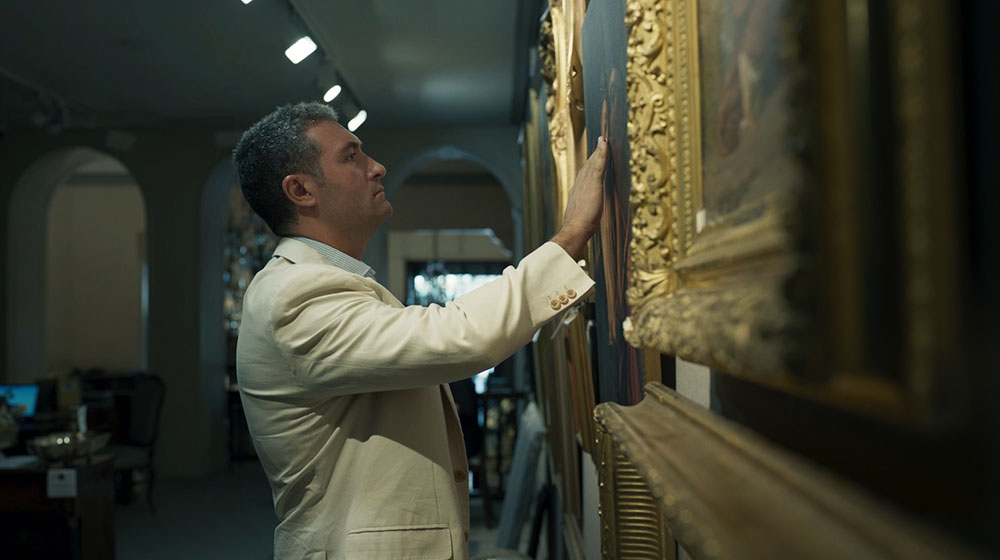
Ok, this is the story: My friend Jaime’s daughter is good friends with a family that for years had Caravaggio hanging in their dining room, which they thought was a bad imitation of a Murillo, and would have been happy to get 1,500 euros at auction.

This is a documentary on the story of that painting, it is very well done. I recently saw it on the plane ride back to the US and I really enjoyed it!

While narrating the story of this painting, the documentary delves into the world of art dealers, art historians, auction houses, and art restorers. It offers a fascinating glimpse into this normally secretive world. And it all revolves around Caravaggio, who is not only an amazing painter, but who had a fascinating life; there are not that many world-class painters who killed someone!

Apparently, it is available on Prime Video, so if you have the possibility of seeing it, and you like art, definitely see it. You are welcome.

My favorite authors series, Part II: Gabriel García Márquez

Ooops. I just realized that in 14 years of writing this blog, I have never dedicated a post to Gabriel García Márquez, shame on me.

You see, García Márquez is one of the reasons I love literature, one of the reasons I made books my livelihood. My dear college friend Silvia recommended One Hundred Years of Solitude, and when I read it, my mind was blown to smithereens! I was hooked and proceeded to read most of Marquez’s novels.

La hojarasca (1955)

El coronel no tiene quien le escriba (1961)

Cien años de soledad (1967)

El otoño del patriarca (1975)

Crónica de una muerte anunciada (1981)

El amor en los tiempos del cólera (1985)

El general en su laberinto (1989)

Del amor y otros demonios (1994)

Memoria de mis putas tristes (2004)

I also read many of his short stories and one of his books of short stories:

Doce cuentos peregrinos (1992)

To top it all off, I even read one of his more famous interviews.

El olor de la guayaba (1982), con Plinio Apuleyo Mendoza.

When you speak of García Márquez, everybody mentions Magical Realism. Which he did not invent (it started in Germany). Oh, just so we are clear on what Magical Realism is, it is when extraordinary, often fantastical things occur, and the people who witness or live the event don’t even bat an eyelash; it is a common, everyday thing for them. One Hundred Years of Solitude has a lot of Magical Realism; it is the flagship for Magical Realism, but much of his other work has much less, or even no Magical Realism. By the way, many other authors incorporate this genre, including Isabel Allende in Casa de los Espíritus.

“Yo conservaba un recuerdo muy confuso

de la fiesta antes de que hubiera decidido

rescatarla a pedazos de la memoria ajena”

Gabriel García Márquez, Crónica de una muerte anunciada

But that is not the reason I love GM —although I do enjoy those moments! I love how extraordinarily well he writes, but at the same time, how normal it appears; there is no showing off, no showboating, no “look at that sentence” that many authors with far less talent leverage.

I also love how García Márquez brings you into the setting and the story, how easy it feels to be an observer of his world. Granted, all his work comes from true stories, which makes it even more fascinating to feel a part of them.

“Era una síntesis de los últimos acontecimientos nacionales

impresa en mimeógrafo para la circulación clandestina.”

Gabriel García Márquez, El Coronel no tiene quien le escriba

A favorite? I don´t really have a favorite. Amor en los tiempos del cólera is my favorite love story and one of my favorite books. Crónica de una Muerte anunciada is the book I have read the most, since I teach it and will often read it before the course starts and again with the students, which is what has prompted this blog post 😊

So if you have not yet read any of Gabriel García Marquez’s work, and you feel ambitious, go for One Hundred Years of Solitude. If you prefer to dip your toes in the water and just get a feel, read a short story, or better yet, one of the shorter books like Crónica de una muerte anunciada or Memoria de mis putas tristes.

“Las vidas no se acaban sólo con la muerte”, dijo el general.

“Hay otros modos, inclusive algunos más dignos.”

Gabriel García Márquez, El general en su laberinto

García Márquez died in 2015. I will always remember it because it was the weekend I had to write my doctoral exams. And although I was writing about 18th C Spanish Satire, Colonial Satire, and Medieval Satire, I still put a García Márquez epigram to each of my essays in honor. Here they are (of course, without the whole essay, these epigrams lose their context…)

So, if you have not yet read any Gabo, you have my full recommendation. You are welcome.

A morning in Toledo.

Since we had gone to the Puy de Fou night show the evening before, and the theme park does not open until noon, Celia and I recently found ourselves with time to kill in Toledo on a Saturday morning.

Our first stop was the Santa Fe Roberto Polo collection, which hosts the Centro de Arte Moderno y Contemporáneo de Castilla-La Mancha. This is a huge ancient church complex featuring Roman ruins, gorgeous, intricate ceiling paneling, and a beautifully delicate chapel, which is mixed with ridiculous modern art pieces that only add to the beauty of the old pieces and underscore the stupidity of the modern ones.

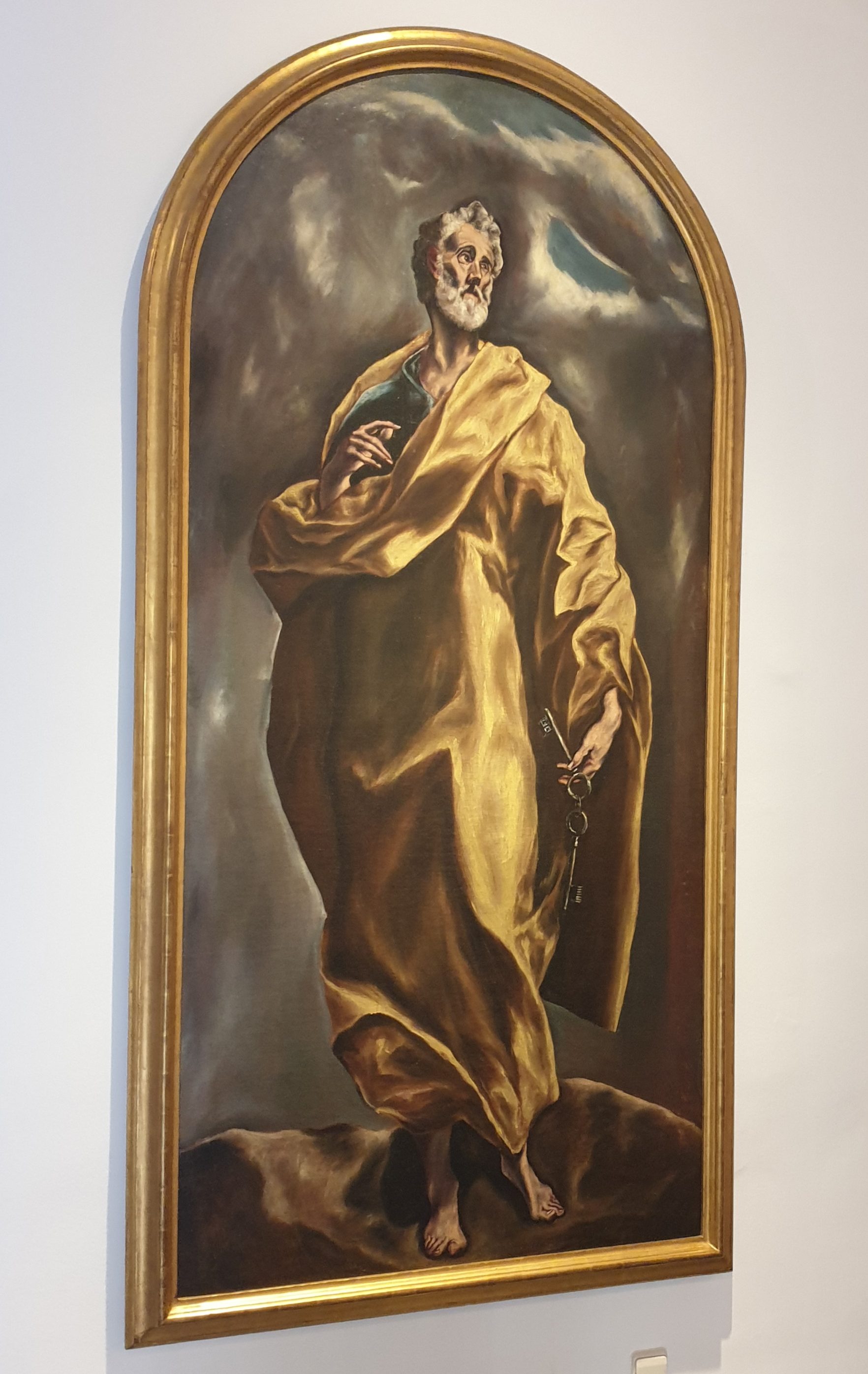
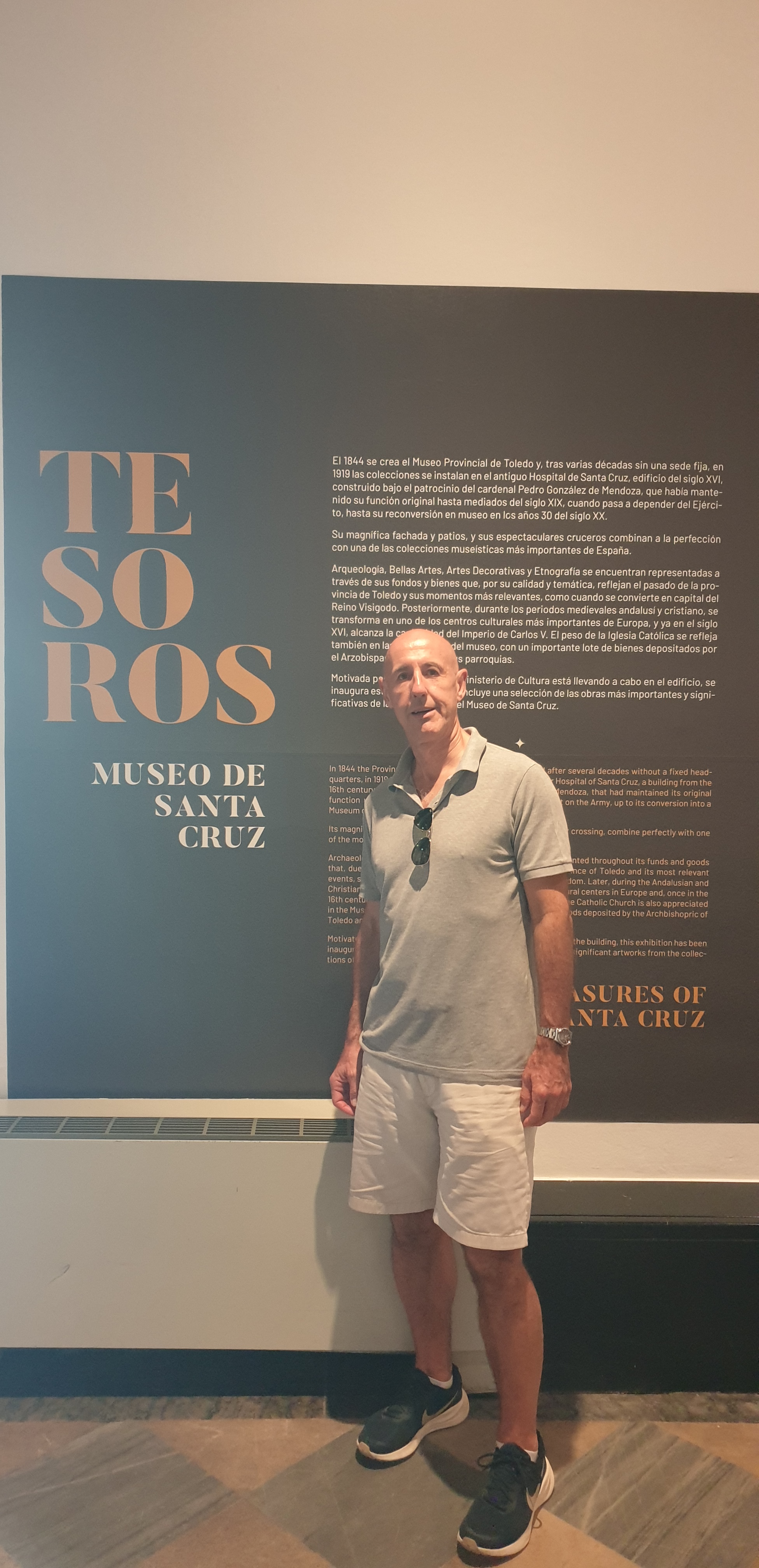
From there, we turned the corner to the Santa Cruz Museum, an astonishing Renaissance structure that once housed the late medieval Children’s Hospital. To our surprise, there was a phenomenal exhibit of fairly random pieces, including a feared pre-Roman falcata sword. But the real star of that exhibit was an El Greco painting of St. Peter, where I had a bit of a Stendhal moment —amazing!

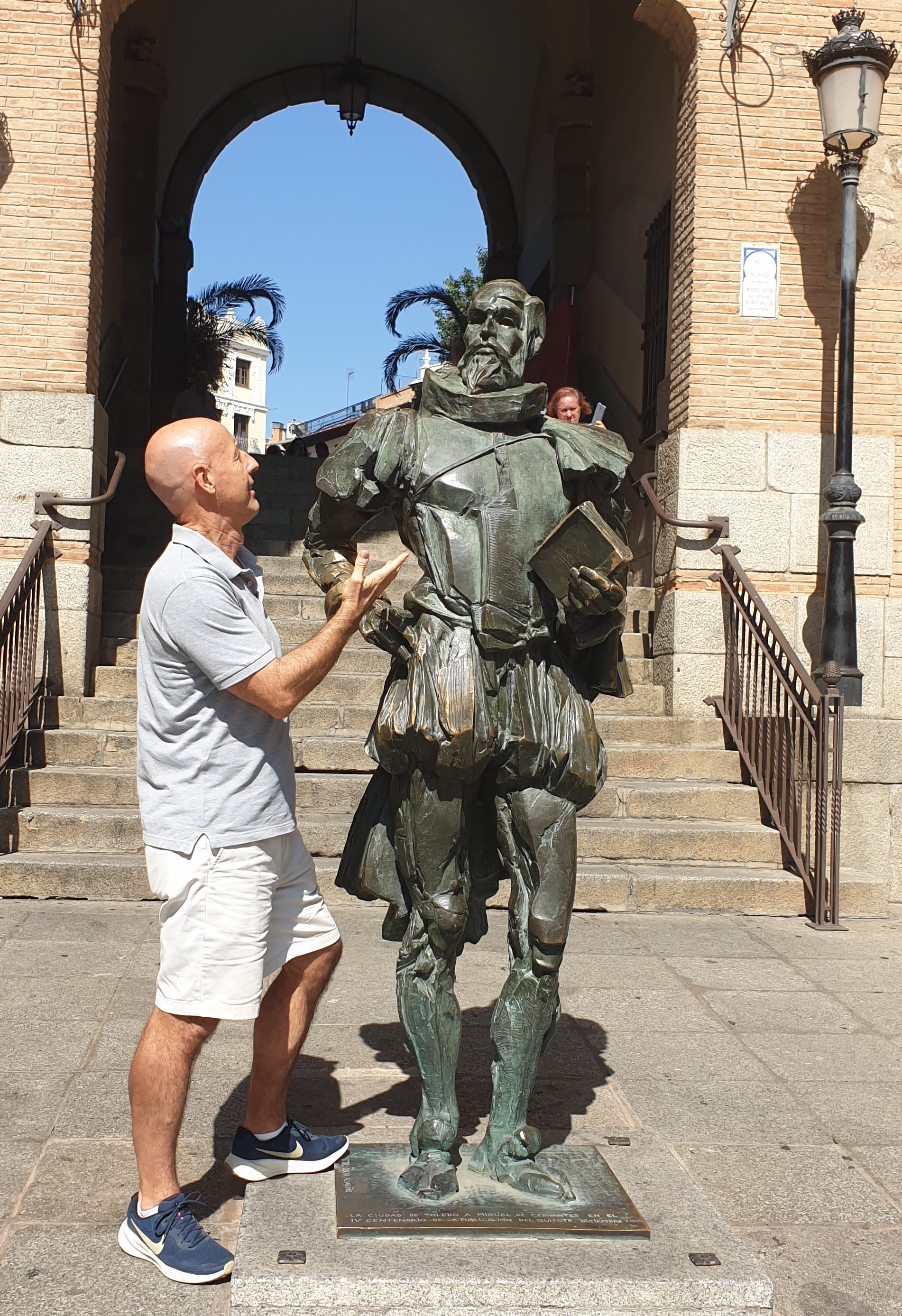
From there, we had time to walk across Zocodover Square, almost down to the Cathedral, before turning up on Trinidad Street to the Capilla de la Inmaculada Concepción for a moment of quiet contemplation and meditation (did you know that you should be meditating?). This chapel has perpetual adoration, which means that it is open 24/7 for people to pray. It is a quiet oasis in the tourist frenzy that is Toledo.

After that, we had to get back to the car to head out to Puy de Fou for a hot, blistering day of fun. You can read about that here.

The amount of mind-blowing, beautiful, culturally enriching things you can do in Toledo is almost limitless. That Saturday, that is what we came up with.

Michael Jackson and Hegel in Nosferatu (1922) and Nosferatu the Vampyre (1979)

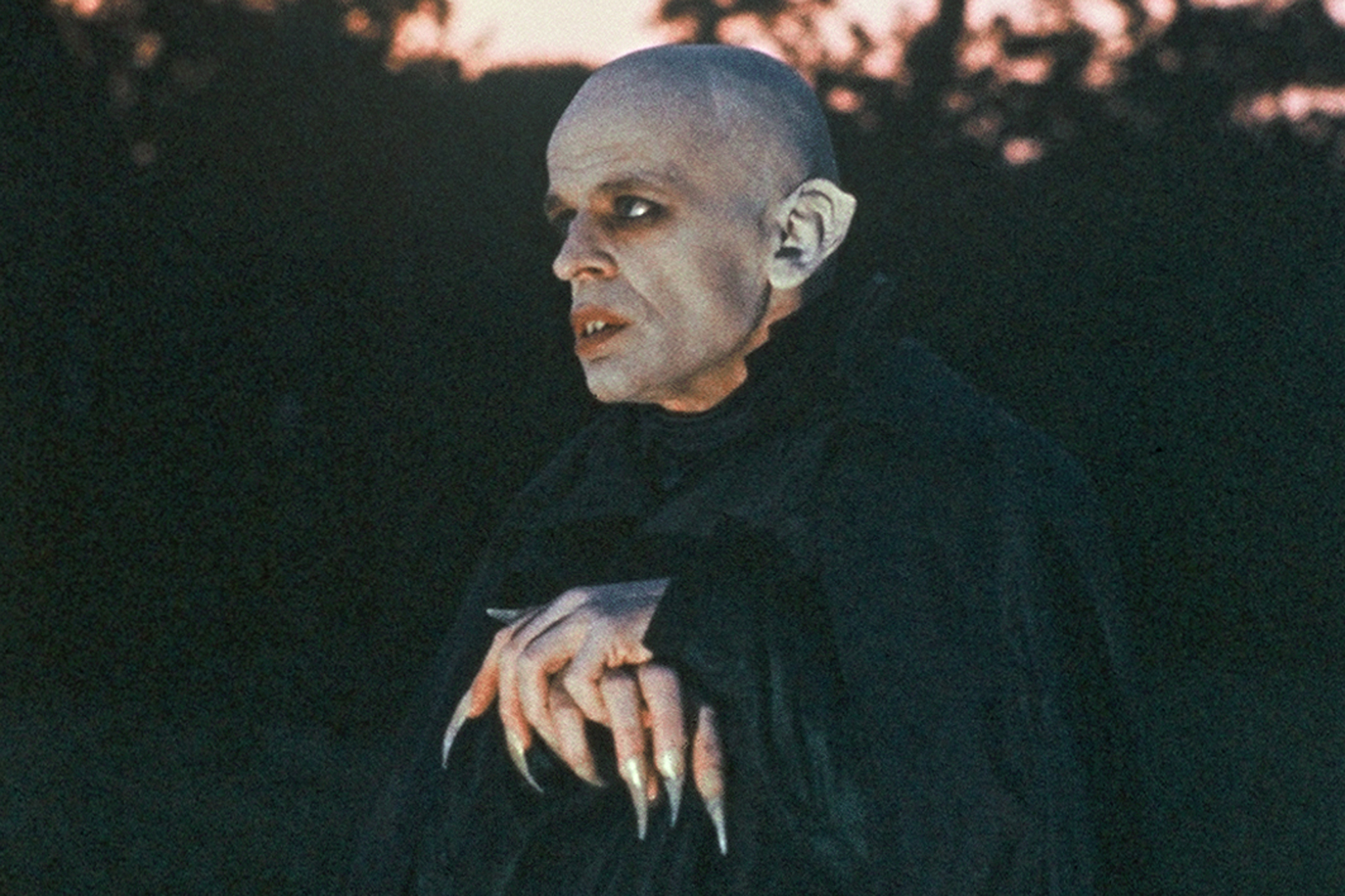
There is a scene in Nosferatu (1922) where Count Dracula is looking across his window at Lucy Harker. When he slowly retreats from the window, his hands are awkwardly positioned in a sort of sideways traffic-stopping gesture. This is the key move in Michael Jackson’s (who was a big fan of Count Dracula) Thriller video dance sequence. There you have it, now let’s talk about Hegel’s influence on Werner Herzog’s Nosferatu the Vampyre (1979).

There is a nerdy viral meme showing side-by-side pictures of philosopher Hegel and film director Herzog —who look remarkably similar— asking when Herzog will play Hegel in his biopic. As with the reality surpassing fiction aphorism, there is more here than meets the eye.

The key scene in Herzog’s film is when Lucy Harker (Isabelle Adjani) has a conversation with Count Dracula (Klaus Kinski). This poetic philosophical dialogue exposes Herzog’s Hegelian philosophy:

Dracula:          You must excuse my rude entrance. I’m Count Dracula.

Lucy:               I know of you from Jonathan’s diary. Since he has been with you, he is ruined.

Dracula:          He will not die.

Lucy:               Yes, he will. Death is overwhelming. Eventually, we are all dead. Stars spin and reel in confusion, time passes in blindness, rivers flow without knowing their course. Only death is cruelly sure.

Dracula:          Dying is cruelty against the unsuspecting, but death is not everything; it is more cruel not to be able to die. I wish I could partake of the love which is between you and Jonathan.

Lucy:               Nothing in this world, not even God, can touch that. And it will not change. Even if Jonathan never recognizes me again.

Dracula:          I could change everything. Will you come to me? And be my ally, there will be salvation for your husband, and for me. The absence of love is the most abject pain.

Lucy:               Salvation comes from ourselves alone, and you might rest assured that even the unthinkable will not deter me. Goodnight.

In his Lectures on the Philosophy of Religion, Hegel takes a novel approach to salvation, taking it beyond the religious to the existential —even when Existentialism as such was being “invented” a bit further north in Denmark by Kierkegaard. The road to salvation in Hegel’s view is tied to one’s spirituality, one’s spiritual journey.

Other than in Transylvania, Bram Stoker’s Dracula takes place mostly in London, but the 1922 film Nosferatu takes place in the fictional German city of Wisburg, which is actually Wismar. In Werner Herzog’s Nosferatu the Vampyre, the Dutch towns of Delft and Schiedam serve as stand-ins for the German city of Wismar circa 1850. Having the story set in mid-1800s Germany allows the characters to more plausibly have read orstudied under Hegel. Ok, that is a bit of a stretch. But you get the idea.

Oh, by the way, I also saw 2024 Nosferatu, and I must be getting old and cynical, because I did not like it at all. All the AI neogothic, steampunk, everything (landscapes, backgrounds, the castle, blah, blah, blah), the exaggeration, the predictability, bilingual count Orlok (Romanian and English), the sexualization, the juvenile script: “Does evil come from within us, or from beyond?” Even that sublime scene between Lucy and Dracula in Herzog’s version becomes a gaudy monstruosity in this film. I found only one redeeming quality to this production: Willem Dafoe. If you want my ranking: 1979, 1922, and if you must, 2024.