Andrei Tarkovsky’s The Mirror

You have been a member of Film Club for 4 years now, you have seen many movies throughout your life, and you have even taken a couple of film classes -in graduate school! So you consider yourself a bit of a film connoisseur, a snob. You have seen the mesmerizing photography of The Proposition, the achingly beautiful La Grande Belleza, The Godfather trilogy, Oscar winners, you name it. Then you watch Andrei Tarkovsky’s The Mirror, and you realize that you have never seen a film like that, that you had no clue of what can be done with film, of how a story can be told through film. You feel like a beginner, an amateur. And it’s a 1975 film!

Imagine sitting on a long road trip and your travel partner reciting childhood stories, dreams, memories, and the like, nonstop, with no transitions, oh, and with beautiful music playing like Bach’s St. Matthew’s Passion. And that partner is Russian, so they have a very acute sense of the absurdity of life, and of history; of the Spanish Civil War, of WWII, that film is The Mirror.

If you read the reviews, they all mention stream-of-consciousness as the driving technique in this film, but this being a film, not printed page, it does not fully convey the power of the images, the ambiguity, the anxiety, and most importantly the beauty of the film.

Although the film is not about Magical Realism, it feels that way, like you are reading a Gabriel García Márquez novel (I have yet to see a good representation of Magical Realism on film, if you have a recommendation, drop in the comments, thanks). Yes, the camera work, the tracking angles, the lighting, it is all there, and you can talk about the technical bits, but at the end of the day, it is a beautiful film, one that blows your mind and changes the way you experience film forever.

I cannot wait to see more Tarkovsky films.

British geopolitics in Spain during WWII; Walter Starkie and “El British”

My dad could not stop talking about Walter Starkie. I never gave the fellow much consideration, that was my dad’s thing. My dad even found and bought some of his (many) books. But a few days ago, my aunt passed along a brief bio of Starkie –particularly in his time as Director of the British Institute in Madrid (attached). And I loved it! This fellow did more for Britain than you would think.

Mise en scene: Spain during WWII is a neutral country, at least on paper. After all, Franco won the (in)Civil War in 1939 with help from Hitler and Mussolini. Having said that, when Hitler asked Franco to let him transport his troops and tanks by train to Algeciras (next to British Gibraltar -but that is another story) to get to North Africa, Franco -to his credit- said no. But back to our story.

So, in a neutral but Axis friendly country, in 1940, during WWII, what could Britain do to exert some sort of “soft” power in Spain? The answer: send a phenom of nature, a genius, a virtuoso (literally), a wonder, and let him do his thing. Make sure he looks unassuming, a roly-poly, jolly, violin-playing academic fellow. Give him a fairly vague title like British cultural representative. Finally, give him carte blanche to do as he sees fit, oh and a generous budget, I am sure.

Ironically, Starkie was Irish, from a family of scholars and artists, he graduated from Trinity College in Dublin, with honors in Classics, History and Political Science, oh, and first prize in violin from the Royal Academy of Music in Dublin! After graduating he stayed at Trinity teaching Italian and Spanish. Samuel Beckett was one of his students! During WWI in Italy, he played violin for the British troops and met his wife. Back in England Y.B. Yeats made him director of the Abbey Theatre. From there he was sent to Madrid in 1940.

Starkie soon founded the British Institute – El Instituto Británico, “El British,” where my father, my uncle, and my aforementioned aunt went to school as children of a British Embassy employee (read more about my grandad here). Eventually my sister and I would also go to “El British.” Starkie made the school a center for conferences, concerts, presentations, so forth, which is precisely what Britain wanted in Spain: a cultural beachhead in Nazi friendly Madrid. Not only that, but as a Catholic (remember, Starkie was Irish), Starkie soon made friends with influential Jesuits Heras and Otaño, and eventually with government ministers. In fact, one of Starkie’s biggest victories was to have English as a language option (together with German) in Spanish secondary schools.

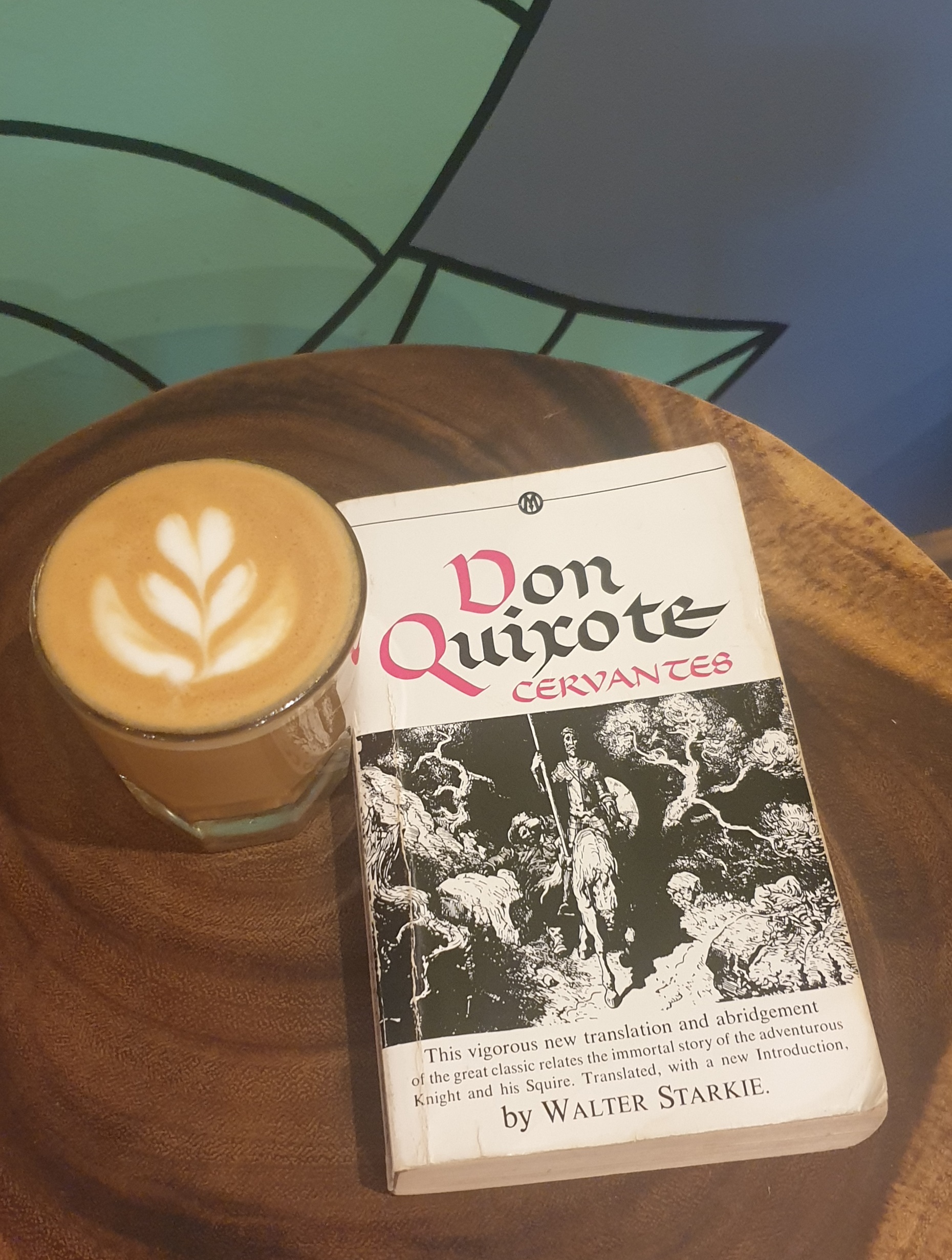
On any given day, Starkie could meet with a Spanish government official, play the violin with gypsies, whom he loved and wrote his most famous books about (Raggle-Taggle: Adventures with a Fiddle in Hungary and Romania (1933), Spanish Raggle-Taggle: Adventures with a Fiddle in Northern Spain (1934), and Don Gypsy: Adventures with a Fiddle in Barbary, Andalusia and La Mancha (1936)), host a conference, write or translate a book -like Don Quijote, and then go home, which served as a safe house for Jewish, Gypsy, and other prosecuted refugees on their way to America.

I asked my uncle what he remembered about Starkie. He told me how the Embassy’s country house was used as a safe house for downed plane crews rescued by the French resistance who were on their way back to the UK to fly again. But to get to this country house one had to drive by a gypsy settlement. Because of the friendship between Starkie and the gypsies, nobody ever dared go near that house to investigate what was going on, why there were cars and vans coming in and out at all times of the day and night, another point for Starkie!

So, besides the eventual victories on the battlefield, Britain scored a major victory in WWII by sending Walter Starkie to Spain.
Summer reading recap

Confession time: I have a problem that started around high school, I cannot stop reading. I read anywhere, anytime. I have books and magazines strategically placed around the house: the dining room table, the bathroom, bedside table, etc.

My summer reading was -as usual- an eclectic mix of books, here are some reviews:

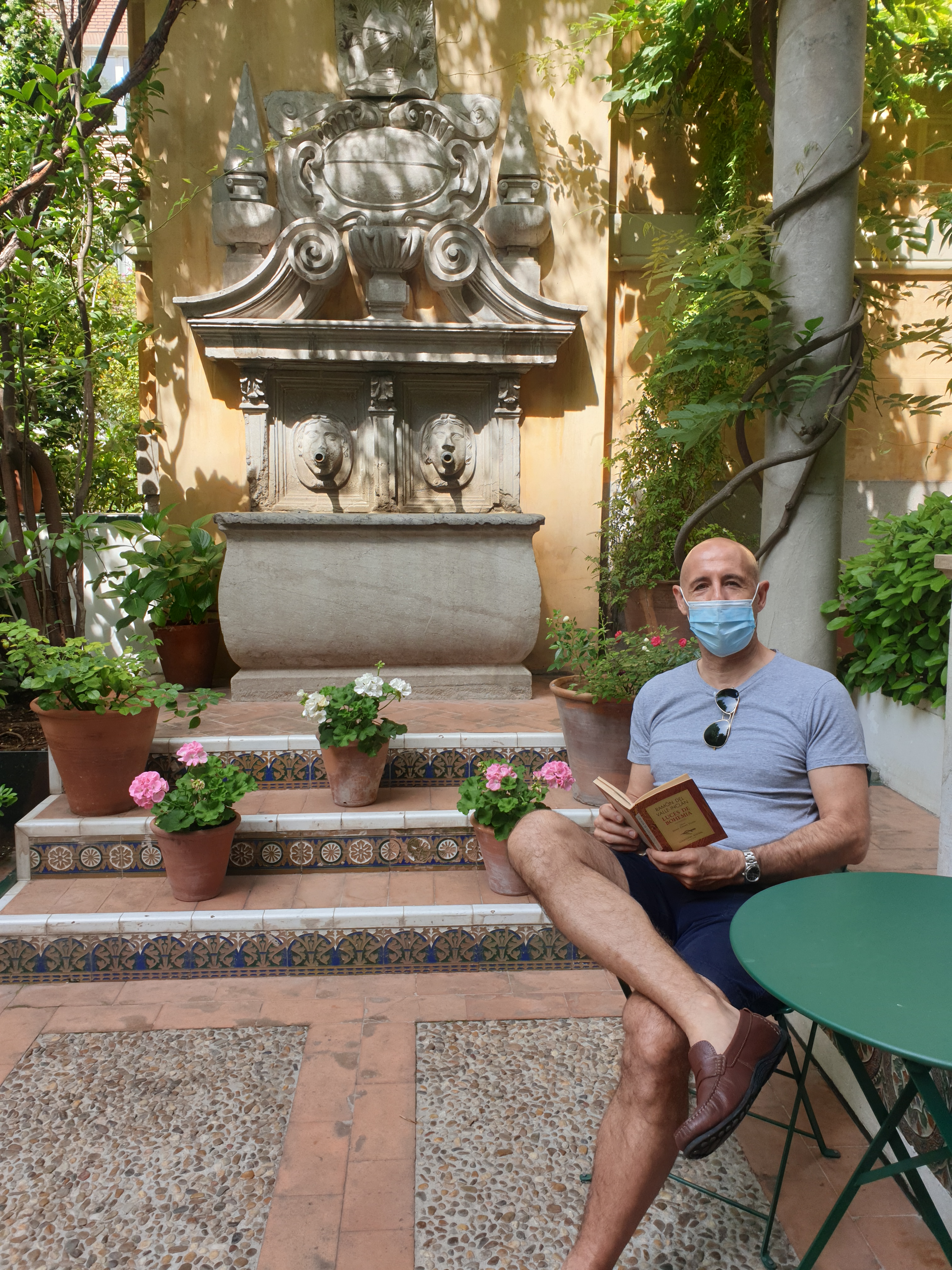
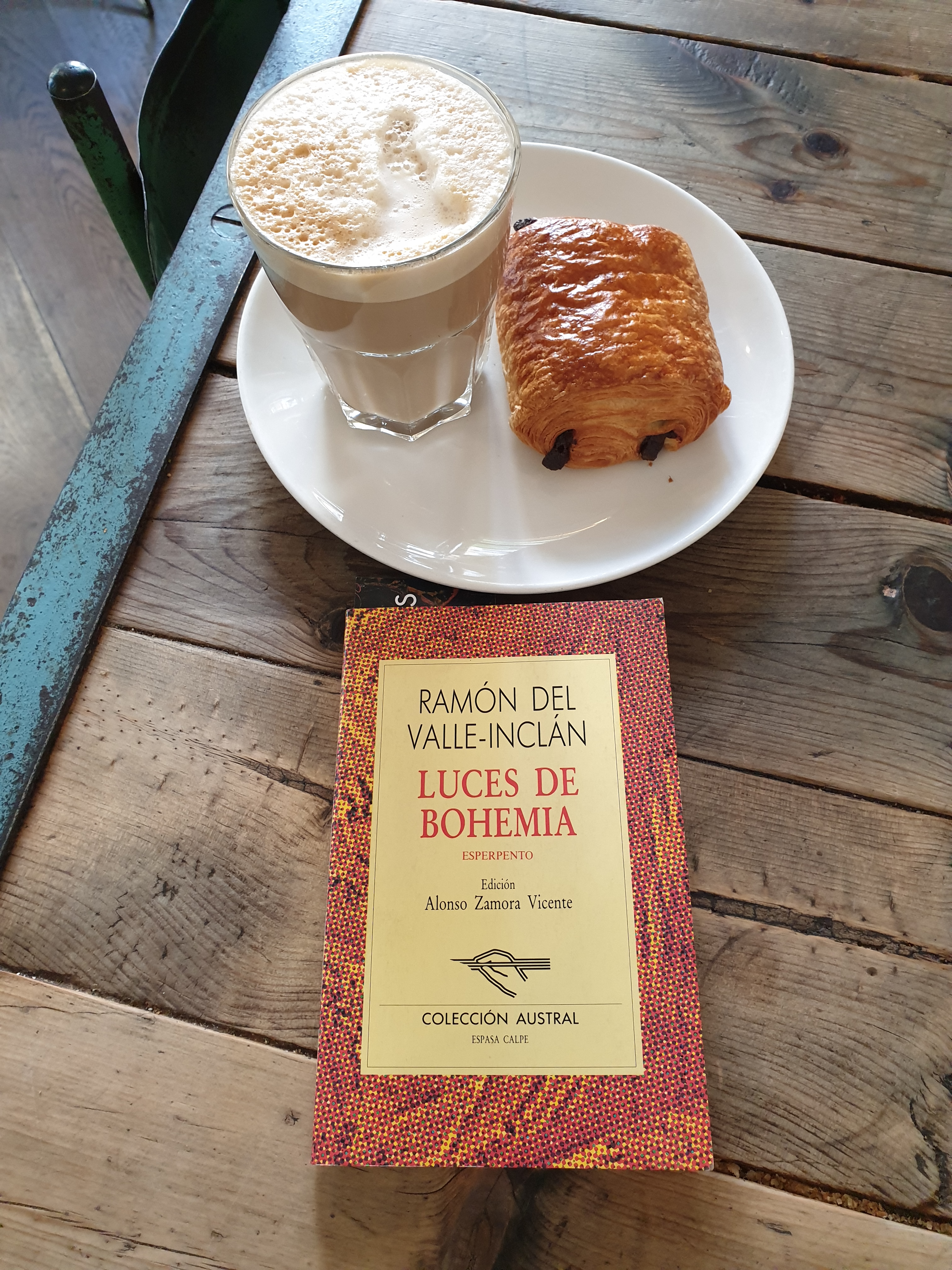
Ramón del Valle Inclán Luces de Bohemia. I am a bit ashamed to disclose that I have a PhD in Spanish Literature and I had never read this (to my defense, my specialty was 18th C. literature, and my sub-specialties were Colonial Satire and Medieval Spanish Satire). I was surprised how fresh this book felt. Although it was written in the 1920s it might just as well have been written today. It is a satirical but profound glimpse of Spain at that time. It also introduces the concept of “esperpento” which offers a distorted and grotesque view of the world which paradoxically acts as a corrective lens to better appreciate the situation.

A critical factor of the Camino de Santiago is weight. The library of the albergue in Roncesvalles (the first stop of the Camino Francés) is full of Bibles that pilgrims with the intention of reading have “donated” because of its excessive weight and bulk. This year I carried Junichiro Tanizaki’s In Praise of Shadows which is a beautiful study of Japanese aesthetics and culture, a gorgeous essay on the philosophy of traditional Japanese interior design.

Back in Madrid I read Henri Brunel’s The Most Beautiful Zen Stories – The original is in French, and I do not think there is an English translation. The book, as the title explains has short and sweet stories, but always with a bit of a sting – a question, maybe, unanswerable, at the end.

My beach reading was a gift from my dear friend Paco Navarro: Walter Kempowski’s All for Nothing (Alles umsonst in the original German). A story about a family during the last days of WWII in Germany. A great read about family dynamics, history, the human condition, and war.

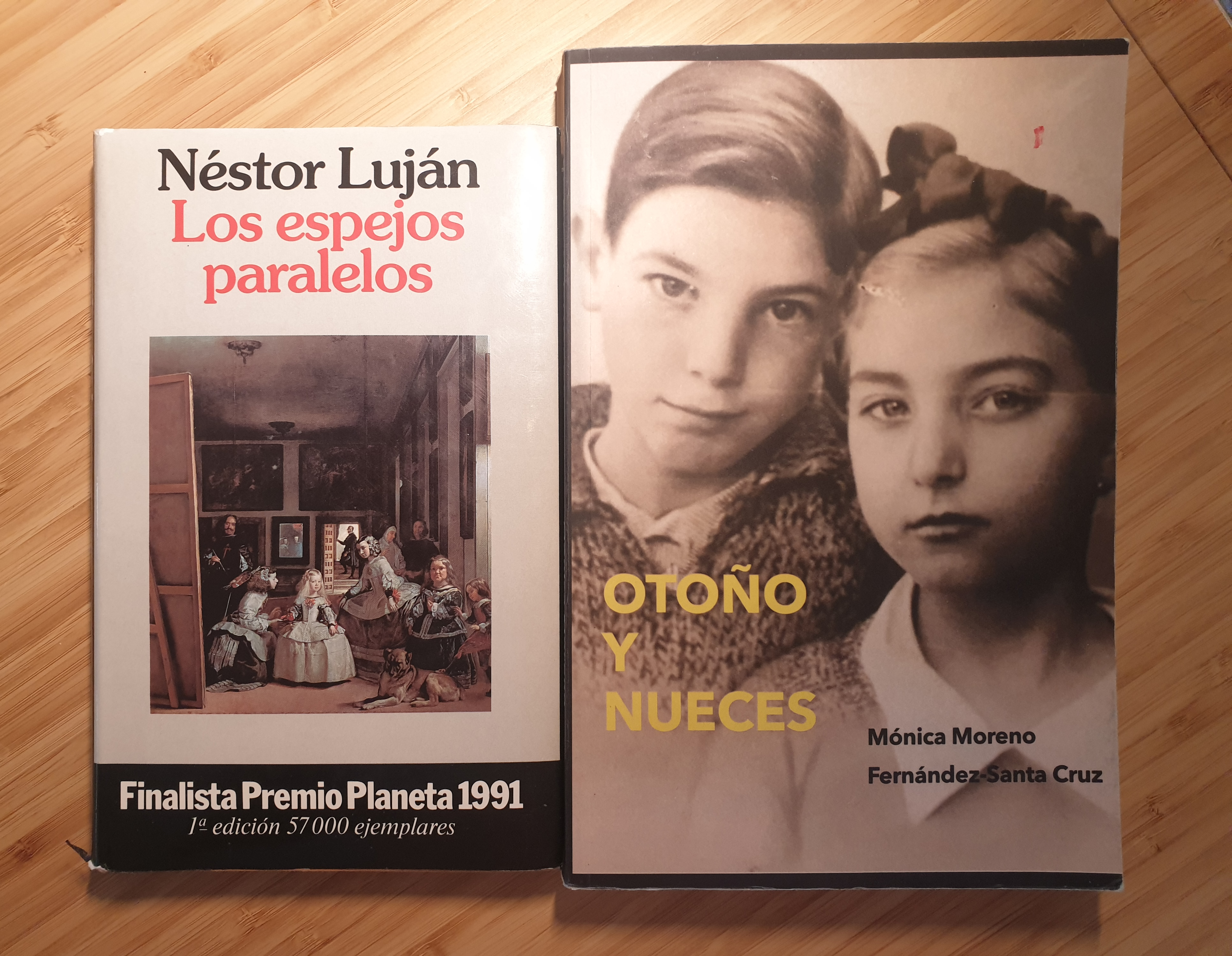
Back in my mom’s country house I dug into another war, this time the Spanish Civil War, from the hand of dear friend Monica Moreno, who writes about love and family during that fratricidal war in Otoño y nueces. Her first adult novel after a handful of YA books, is well documented and intimate. Get it on Amazon here!

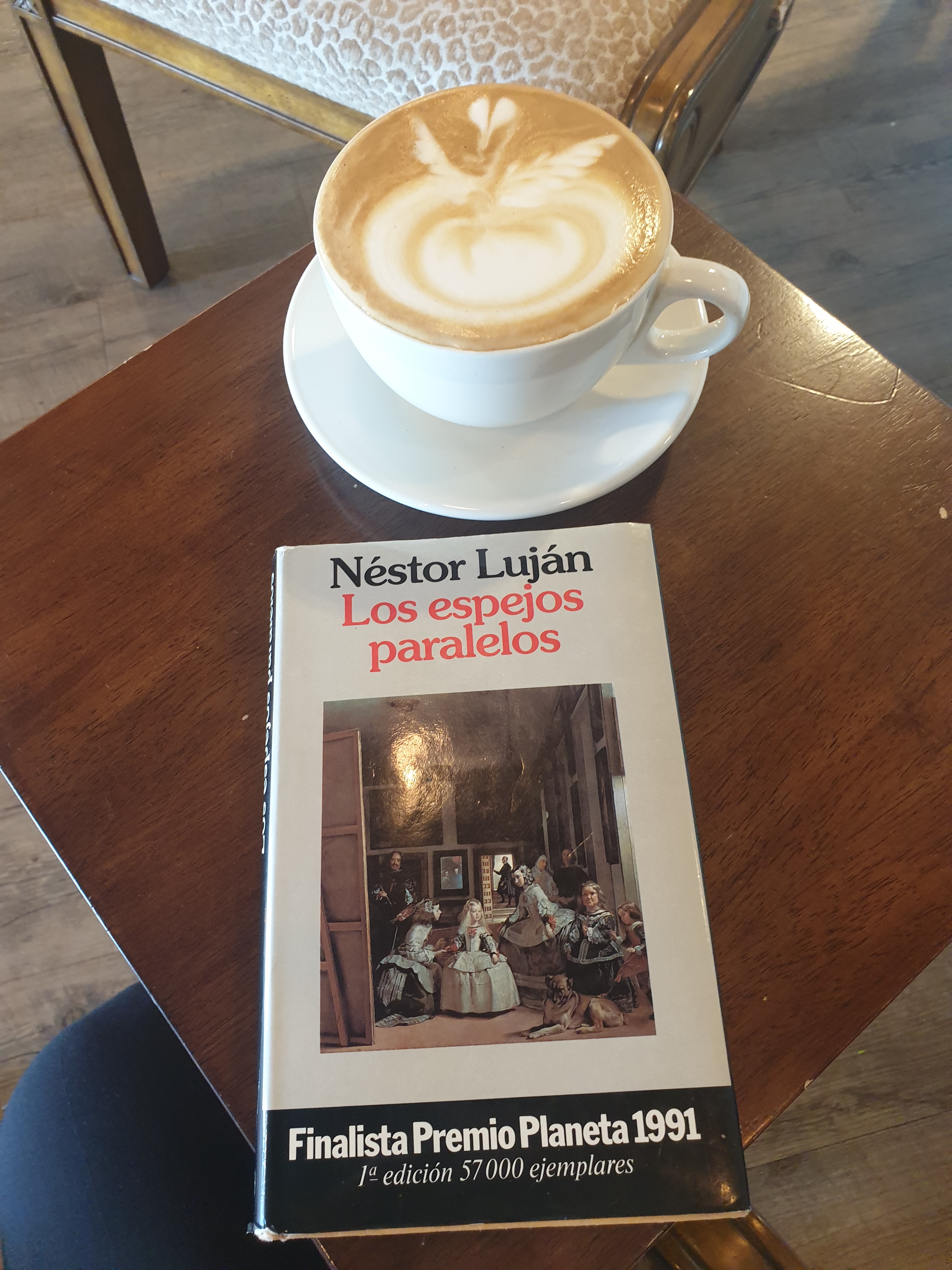
Back in Florida I explored Velazquez’s masterpiece painting Las Meninas through Néstor Luján’s Los espejos paralelos, which brings the painting to life through each of the characters, including the dog! Luján takes us to the dark hallways of Madrid’s old Alcazar palace, life in the court of Philip IV, and Madrid. A delightful read –specially if you are a fan of Velazquez and Las Meninas!

My last book before Fall was Richard Rohr’s The Divine dance which reflects on the deep spirituality of the Trinity and how love flows through the universe and us!

So there are a few reading recommendations in case you needed any, you are welcome.

“Here’s looking at you, kid” Celebrating the 75th anniversary of Casablanca


My first film review was in high school in London in the early 80s for Casablanca. It is my favorite movie because it has all the ingredients I love in the perfect quantities: simple but effective plot, suspense, love, even humor, great cast – Ingrid Bergman, Humphrey Bogart, Peter Lorre… great music, great script, it is full of memorable quotes and one liners. It is all around awesome.

As some of you know I do not own a TV, but I do like my movies, so I have a big screen and projector set up with surround sound. You see, I am an old fashioned old man and I still watch DVDs.  I love watching movies, although I don’t get to see as many as I would like.

It took me over a year of watching Craig’s List like a hawk until I found a decent digital projector that fit my meager teacher salary. In fact it was my last long excursion on Rocinante before the accident. I rode to Venice (Florida) to pick it up. It so happened that my acquisition of a projector coincided with the 75th anniversary of Casablanca, so I celebrated it by watching it a couple of times!

In case you have not seen it yet, go see it.

“What in heaven’s name brought you to Casablanca?”

“…My health, I came to Casablanca for the waters.”

“The waters? What waters? We’re in the desert.”

“...I was misinformed.”