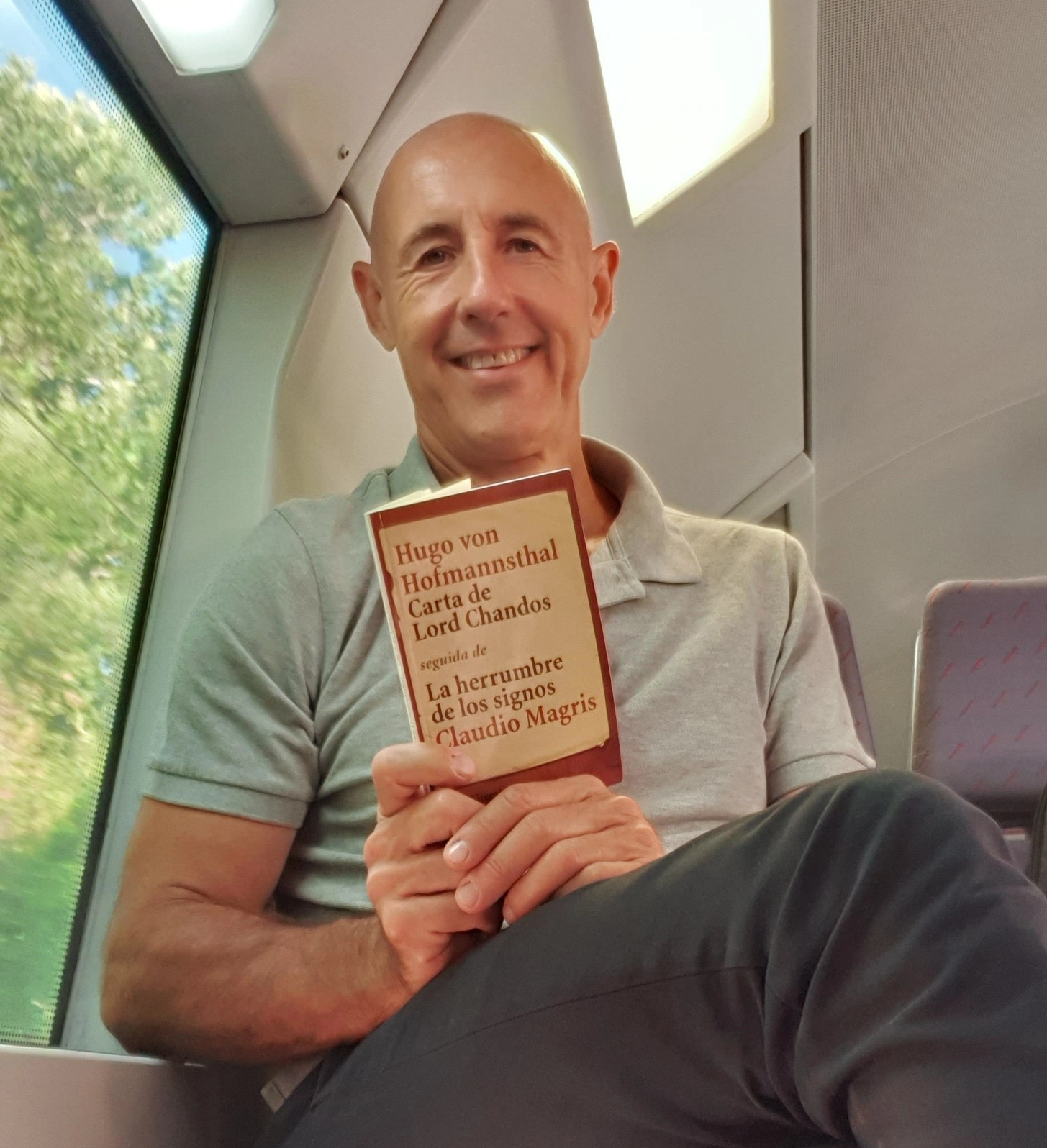
Mahler, Roth, von Hofmannsthal, and Magris, fin de siècle Vienna and the fall of the Austro-Hungarian empire.

Lord Chandos on a train

A couple of years ago I wrote about Mahler and Joseph Roth and the coincidence that they both lived in the turn of the Century Vienna. It was very much a gut feeling post (you can read it here) since I am not a history scholar, even less an Austro-Hungarian history scholar specializing in the fall of the empire.

What you read on the Camino is very important. I usually choose spiritually enlightening books. (The Book of Job, Gemma Simmonds The Way of Ignatius A Prayer Journey through Lent (she was my sister’s teacher!), Willigis Jager The Wave is the Sea, even a collection of Zen stories!) They also have to be physically light and small due to backpacking requirements. This year under my friend Paco’s recommendation I took an intellectually challenging book: Hugo von Hofmannsthal Ein Brief (Brief des Lord Chandos) – Letter to Lord Chandos followed by Claudio Magris’ analysis of the Letter in La Lettera Di Lord Chandos.

Hofmannsthal’s (fictional) letter from Lord Chandos to Francis Bacon is a short (22 pages) but fascinating essay on language. Magris’ analysis of the letter is a mind-blowing tour de force of fin de siècle Vienna and the fall of the Austro-Hungarian empire and what was to follow in Europe. After a master’s and a PhD in literature, I was surprised to find that this is by far the densest reading I have ever encountered. It is rich, thick -but readable- and chock full of references: Kafka, Wittgenstein, Heidegger, Freud, and Nietzsche (obviously), Borges, Saussure, Kubrick, Eco, Pasolini, Plato, Seneca, and Cicero, Roth, Kierkegaard, Klee, Van Gogh… and a whole bunch of other names I confess I have no clue who they are. But the point is that Magris explains in philosophical and existential detail the fall of the Austro-Hungarian Empire, turn of the Century Vienna and what would follow in postmodern Europe. It was also very rewarding to read a real essay on what I wrote as a hack blog post…

In conclusion, this is a short, small book, perfect for travelling but dense and rich and glorious academic reading! Enjoy, you are welcome!

PS: If you want to read more about Chandos check out this article:

Greaney, Patrick. “On the Chaos in Chandos: Hofmannsthal on Modernity’s Threshold.” MLN 129.3 (2014): 563-573.

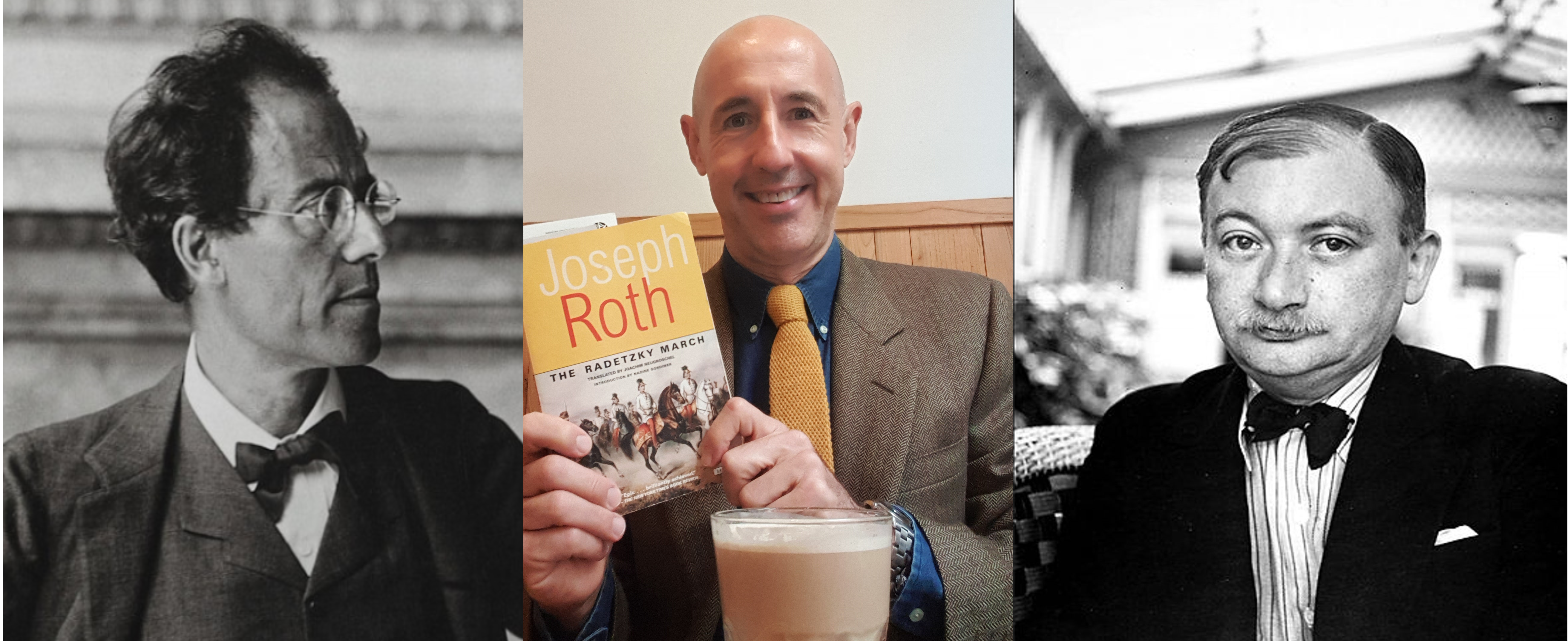
Joseph Roth and Gustav Mahler, brothers separated at birth??

My car is an old VW Golf, it still has a CD player! Not a fancy multi-disk unit, just a single CD at-a-time thing. So I put in a CD and it stays there for months, it is all I listen to. This has been going on for years: Bach’s Goldberg Variations (of course the original Gould recording), Van Morrison’s Born to Sing, no Plan B, the Tous le Matins du Monde soundtrack (which I found in a literal mountain of CDs being sold by some very trashy looking folks in Vermont, which leads me to believe that a, it was stolen or found, or b, I am a bad person who stereotypes people by their looks), Mozart’s Requiem… you get the idea. Well for months I have only listened to Mahler’s symphony No. 5.

Joseph Roth was a turn of the 20th Century German writer. I have read Job, The Story of a Simple Man twice, in 2003 and 2018, The Collected Stories in 2006, and I just finished The Radetzky March.

As I read the book and listened to Mahler, I realized how extraordinarily similar they are in their art. Both artists manage to convey the full spectrum of feelings in a single work, in my example: The Radetzky March and the Symphony No. 5 which is not even considered Mahler’s best work. Of course, his best symphony is a highly debated topic (I would go with No. 2).

This capacity to transmit feelings got me thinking about their similarities, there are a few:

Both lived around the same time Roth 1894 – 1939 and Mahler 1860 – 1911.

Both were Jewish (although Mahler became a Catholic so he could continue working…)

Both lived in Vienna at the turn of the century –although not at the same time- and attended the same university, although neither was originally even Austrian (Mahler was Bohemian, modern day Czech Republic and Roth from Galicia, modern day Poland and Ukraine) but both were in the Austro-Hungarian Empire. This is critical since both artists reflect the fall of the empire in their work.

Of course, at the end of the day each artist’s capacity to make the receptor of the art feel something is based on his or her craft and abilities. But let’s just say that reading and listening (not at the same time) I was transported from happiness to sadness, from victory to defeat, from walking in a field in Spring to avoiding enemy fire. Thank you Mahler and Roth.

Here is the Third movement from Mahler 5. It is directed by my dear friend and old colleague Benjamin Zander, a Mahler scholar!!