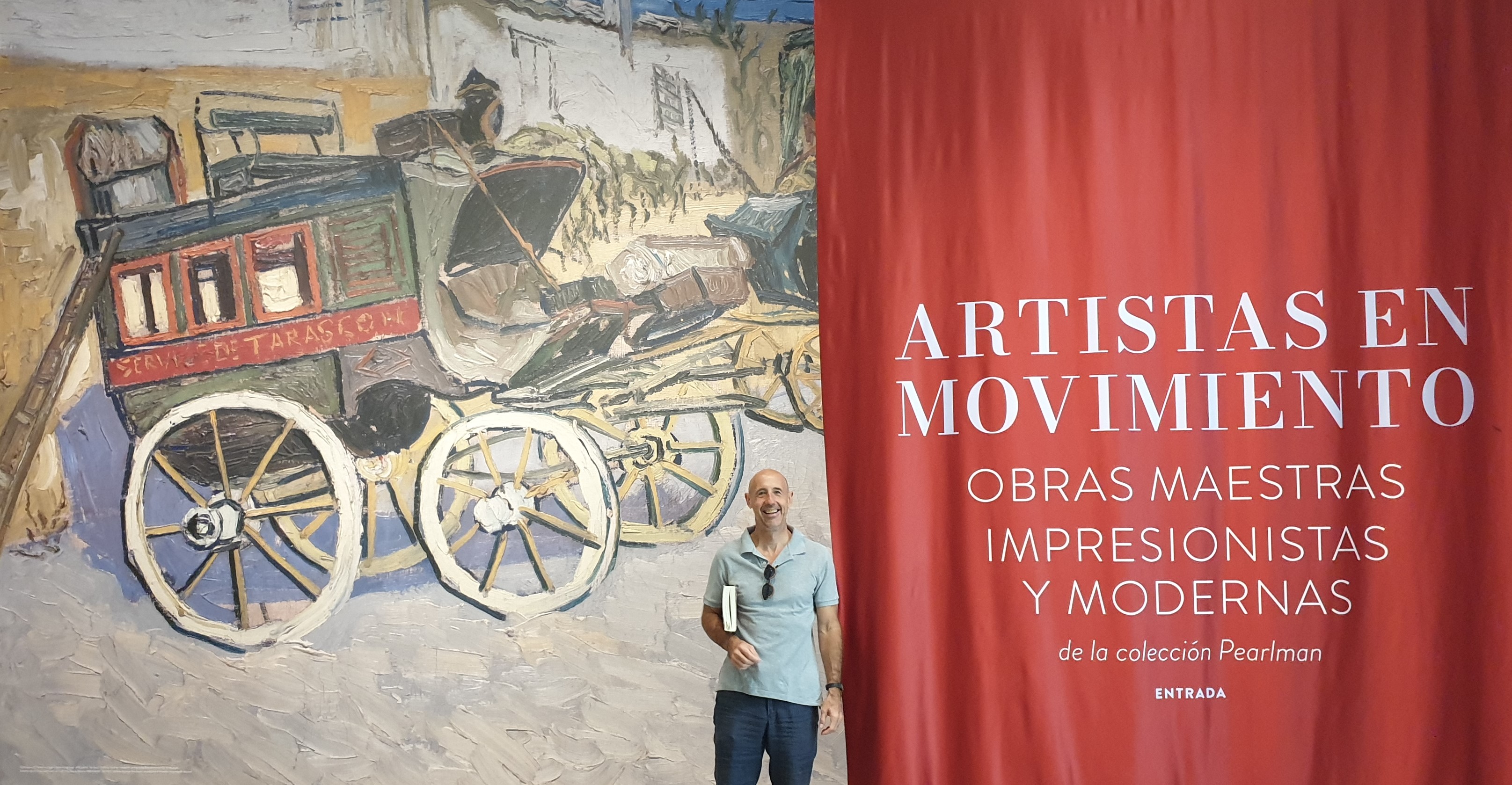
El Greco, a proto-Impressionist and the new exhibit at the Norton Museum of Art.

Confession time: I like the Impressionists, but as a collective, it is not my favorite artistic movement. I like and appreciate the Impressionists individually, but I am not crazy about them as a whole. I can explain.

I am privileged in that I am a supporter of the Prado Museum through their Amigos del Museo del Prado program which is (mostly) fantastic. The main advantage of this “membership” is free access to the museum, which I do take advantage of frequently, plus I love showing the museum to friends and in Tonxo Tours.

So, I often get to see El Greco’s work. Domenico Theotocopulos (1541–1614) was born in Crete, moved to Venice, Rome, Madrid and eventually Toledo, where he would flourish. One of the many interesting things about El Greco was how much nineteenth-century collectors and artists loved his work. Why? Because he was an Impressionist avant la lettre!

Picasso and Renoir were blown away by El Greco, here was someone painting how he wanted to paint more than what he “saw”, a very unreal, conceptual art, and around three hundred years before them!

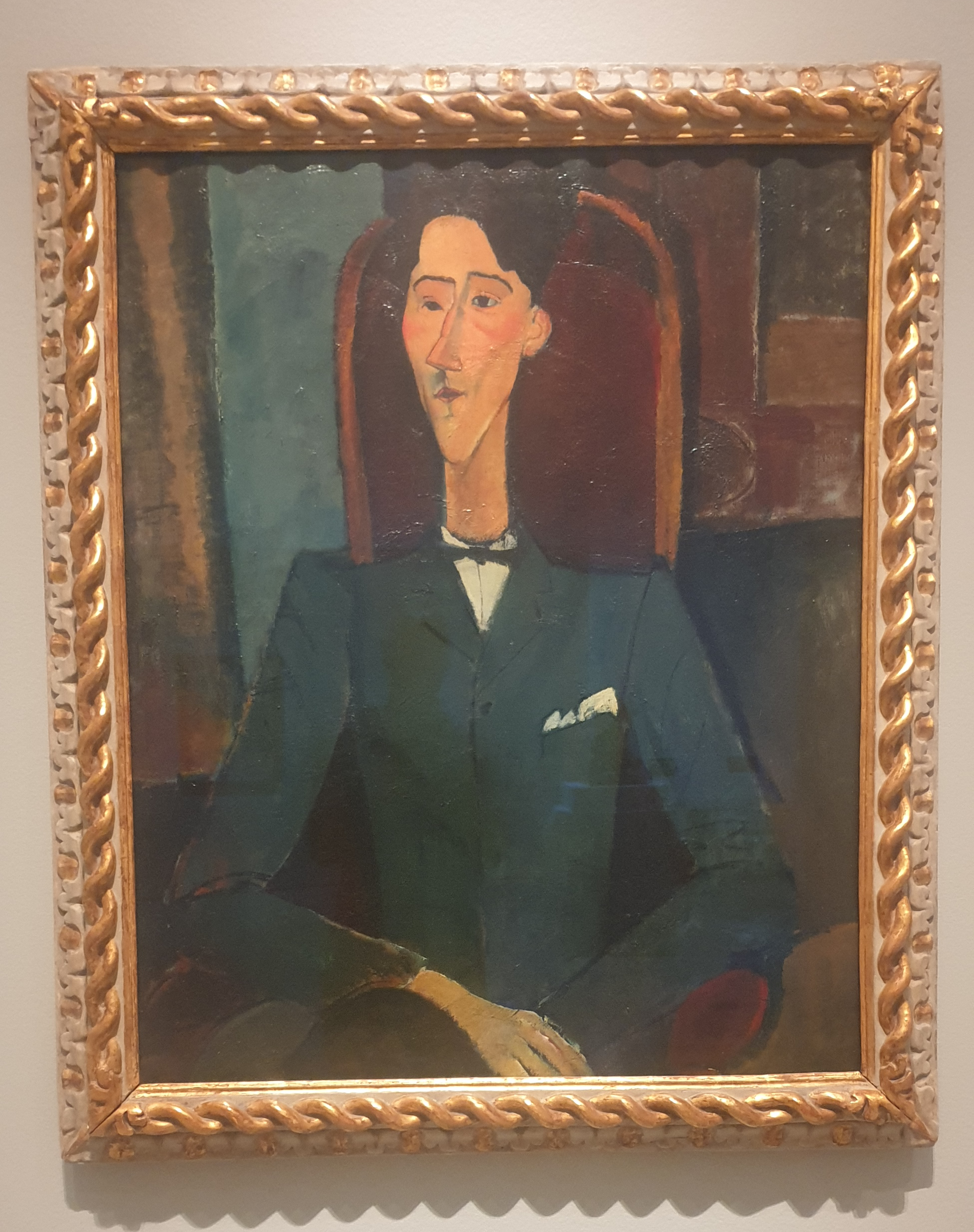
Why am I pontificating thus? you ask. Well, I recently had the opportunity to visit one of my favorite places in South Florida, the Norton Museum of Art in West Palm Beach. They have just opened a new exhibition titled Artists in Motion: Impressionist and Modern Masterpieces from the Pearlman Collection. It is a smaller exhibit with some niece pieces: a Gaugin wood carving, a van Gogh, some Cezanne, a couple of Modigliani, etc. My favorite was a Modigliani portrait of Jean Cocteau -yes, you could say it is very Grecoish.

When I am at the Norton, I always enjoy walking around and checking out the permanent collection, the gift shop, the sculpture garden, it is all a very rewarding and enriching, my blood pressure goes down. As I have said before many times, an oasis of culture and beauty in South Florida.

Mahler, Roth, von Hofmannsthal, and Magris, fin de siècle Vienna and the fall of the Austro-Hungarian empire.

Lord Chandos on a train

A couple of years ago I wrote about Mahler and Joseph Roth and the coincidence that they both lived in the turn of the Century Vienna. It was very much a gut feeling post (you can read it here) since I am not a history scholar, even less an Austro-Hungarian history scholar specializing in the fall of the empire.

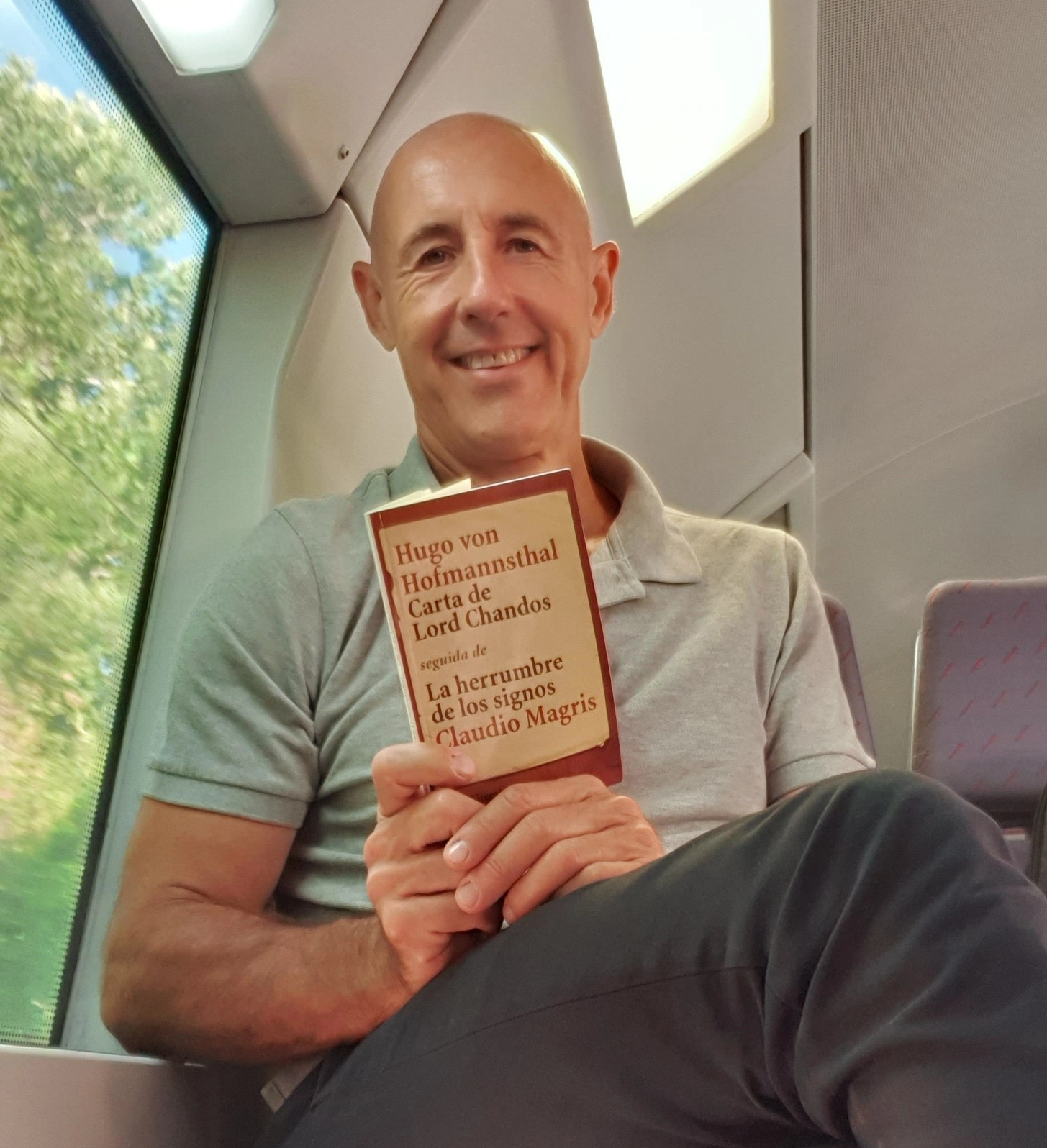
What you read on the Camino is very important. I usually choose spiritually enlightening books. (The Book of Job, Gemma Simmonds The Way of Ignatius A Prayer Journey through Lent (she was my sister’s teacher!), Willigis Jager The Wave is the Sea, even a collection of Zen stories!) They also have to be physically light and small due to backpacking requirements. This year under my friend Paco’s recommendation I took an intellectually challenging book: Hugo von Hofmannsthal Ein Brief (Brief des Lord Chandos) – Letter to Lord Chandos followed by Claudio Magris’ analysis of the Letter in La Lettera Di Lord Chandos.

Hofmannsthal’s (fictional) letter from Lord Chandos to Francis Bacon is a short (22 pages) but fascinating essay on language. Magris’ analysis of the letter is a mind-blowing tour de force of fin de siècle Vienna and the fall of the Austro-Hungarian empire and what was to follow in Europe. After a master’s and a PhD in literature, I was surprised to find that this is by far the densest reading I have ever encountered. It is rich, thick -but readable- and chock full of references: Kafka, Wittgenstein, Heidegger, Freud, and Nietzsche (obviously), Borges, Saussure, Kubrick, Eco, Pasolini, Plato, Seneca, and Cicero, Roth, Kierkegaard, Klee, Van Gogh… and a whole bunch of other names I confess I have no clue who they are. But the point is that Magris explains in philosophical and existential detail the fall of the Austro-Hungarian Empire, turn of the Century Vienna and what would follow in postmodern Europe. It was also very rewarding to read a real essay on what I wrote as a hack blog post…

In conclusion, this is a short, small book, perfect for travelling but dense and rich and glorious academic reading! Enjoy, you are welcome!

PS: If you want to read more about Chandos check out this article:

Greaney, Patrick. “On the Chaos in Chandos: Hofmannsthal on Modernity’s Threshold.” MLN 129.3 (2014): 563-573.