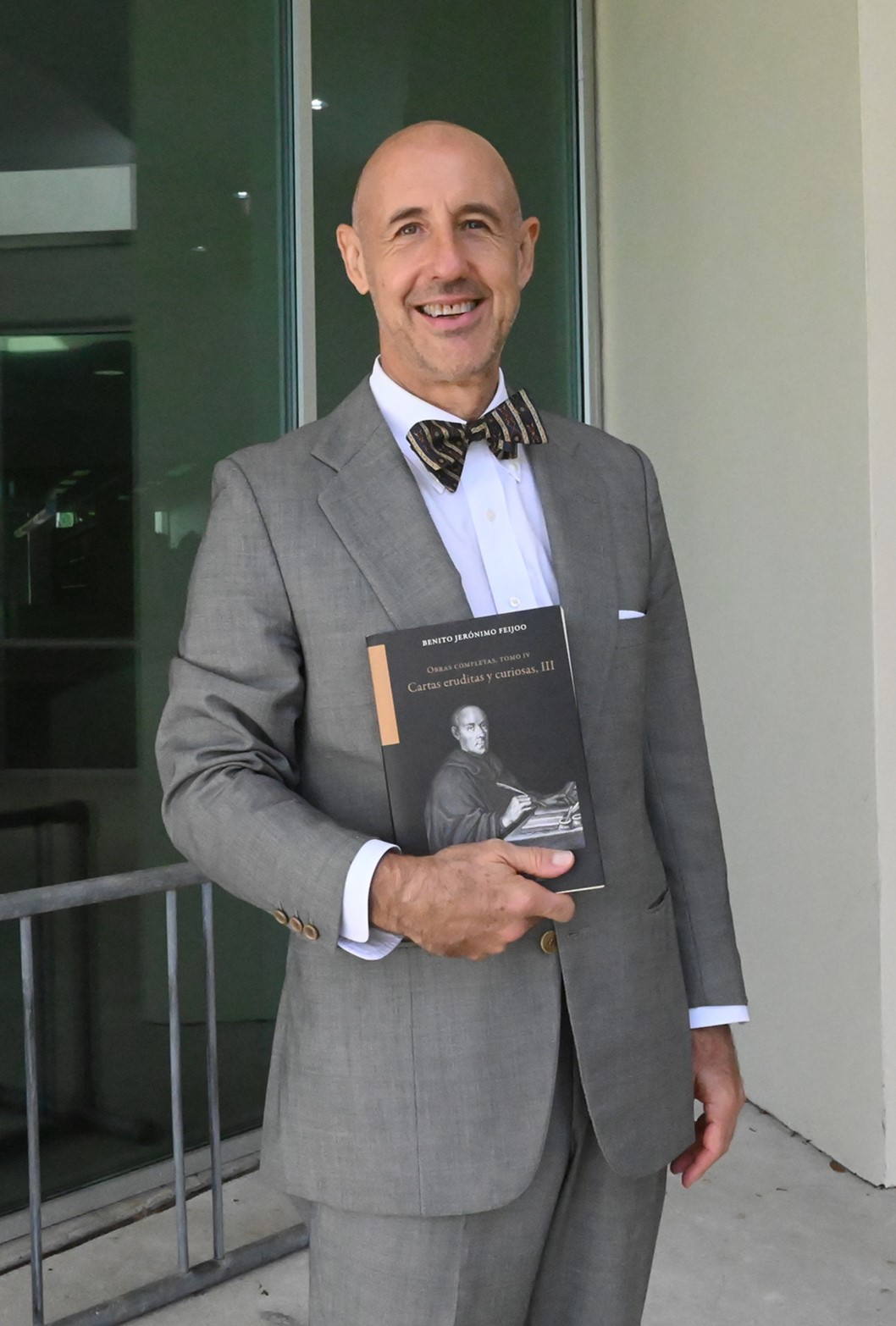


David Gies is an authority in 18th C Spanish Literature, an eminence, arguably the doyen of the field. He was professor at UVA for decades, he founded Dieciocho, the leading academic journal of 18th C Spanish Literature, he was my Dissertation Director’s Dissertation Director, and he is a great, funny, brilliant fellow!
When David Gies asks you to do a book review for Dieciocho, you drop whatever academic project you were working on and you read-and then write-that book review (even if the book has 700 pages).
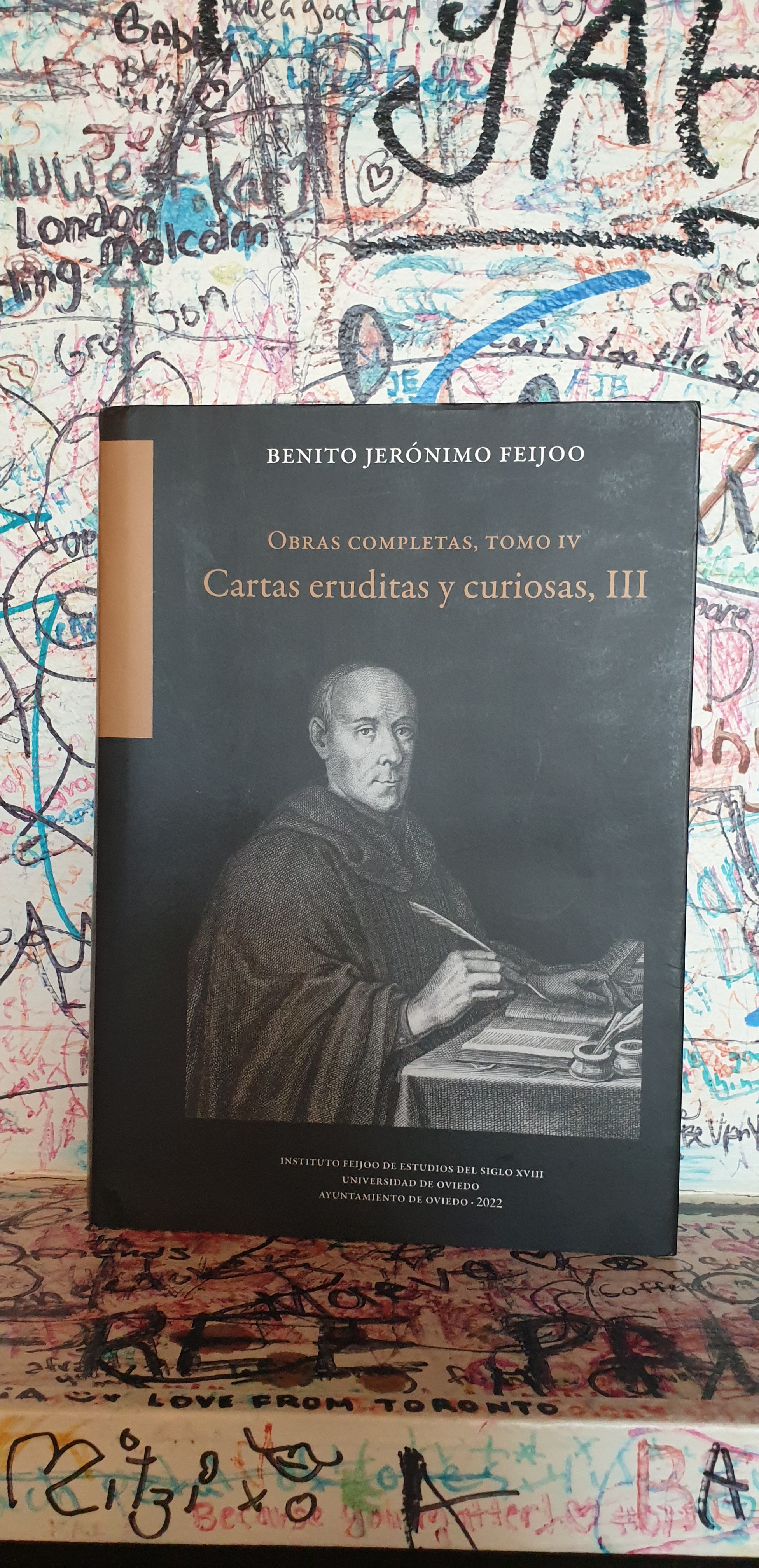
Benito Jerónimo Feijoo is probably the most important Spanish writer of whom you have never heard of. Starting in the early 18th Century and for the rest of it, Feijoo was the first to break down many of Spain’s dark superstitions, he was the first to write about science and medicine, about all sorts of topics. These essays were published in a collection called the Teatro Crítico Universal and later the Cartas eruditas y curiosas. Feijoo is considered the Spanish Montaigne.
Of course I had read Feijoo for my doctorate, and I enjoyed it, but it was great to revisit his work. Feijoo writes clearly, to the point, and occasionally with humor. More importantly, it is fascinating to understand how revolutionary and groundbreaking Feijoo’s writing was in traditional, conservative 18th C. Spain. In fact, the Inquisition had its eye set of this Benedictine monk, so much so that King Fernando VI had to issue a letter protecting him.
Feijoo has some similarity to my main research interest Francisco de Isla, in that they were both pre ilustrados, advancing and preparing for the Enlightenment to arrive in Spain later in the century.
While I have written many book reviews for this blog, it is not the same as having them published in a leading academic journal…
This was a great project to work on and you can read it here. Hope you like it, let me know in the comments!











 Antonioyrocinante's Blog