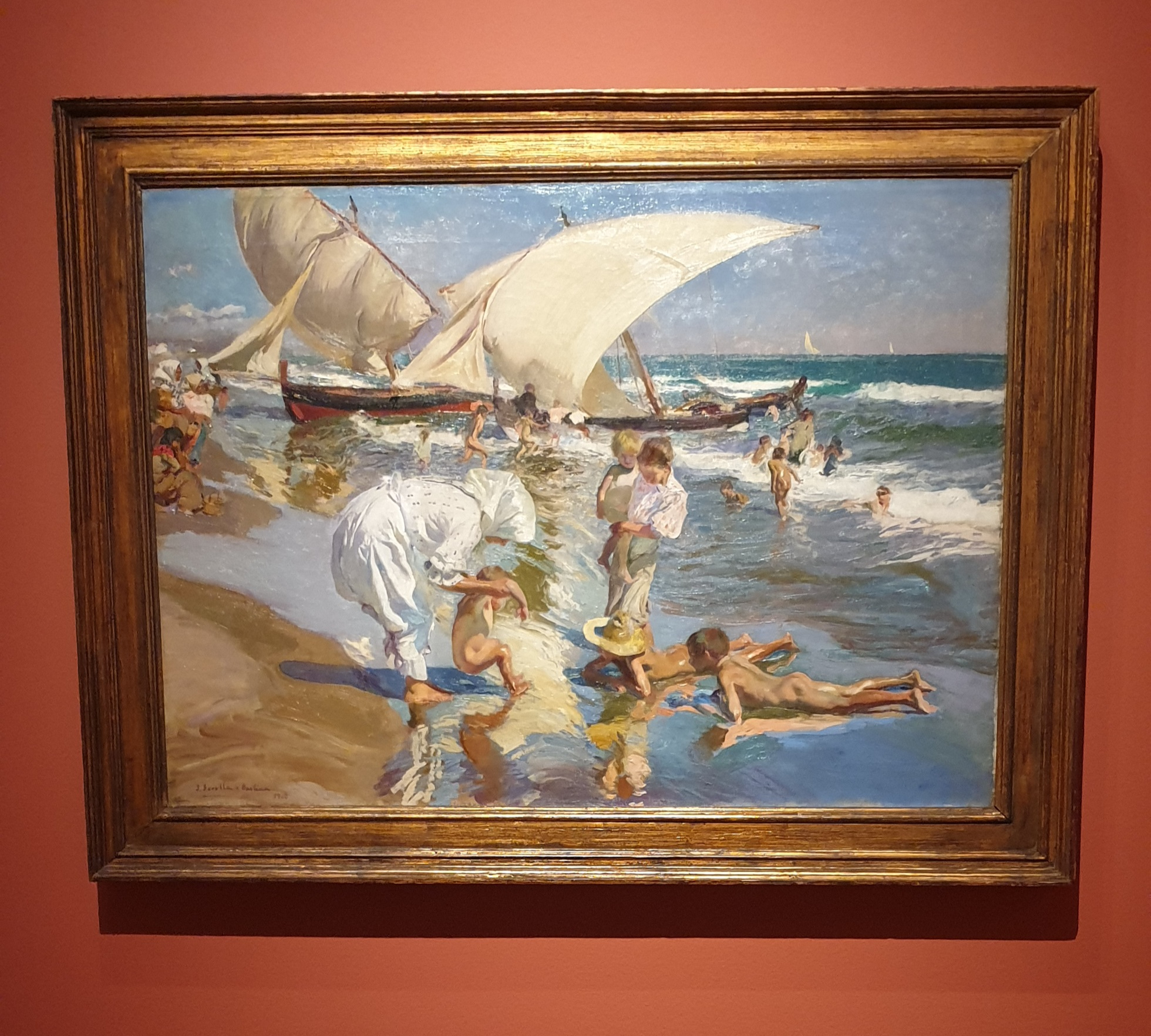
Sorolla and the Sea at the Norton in West Palm Beach

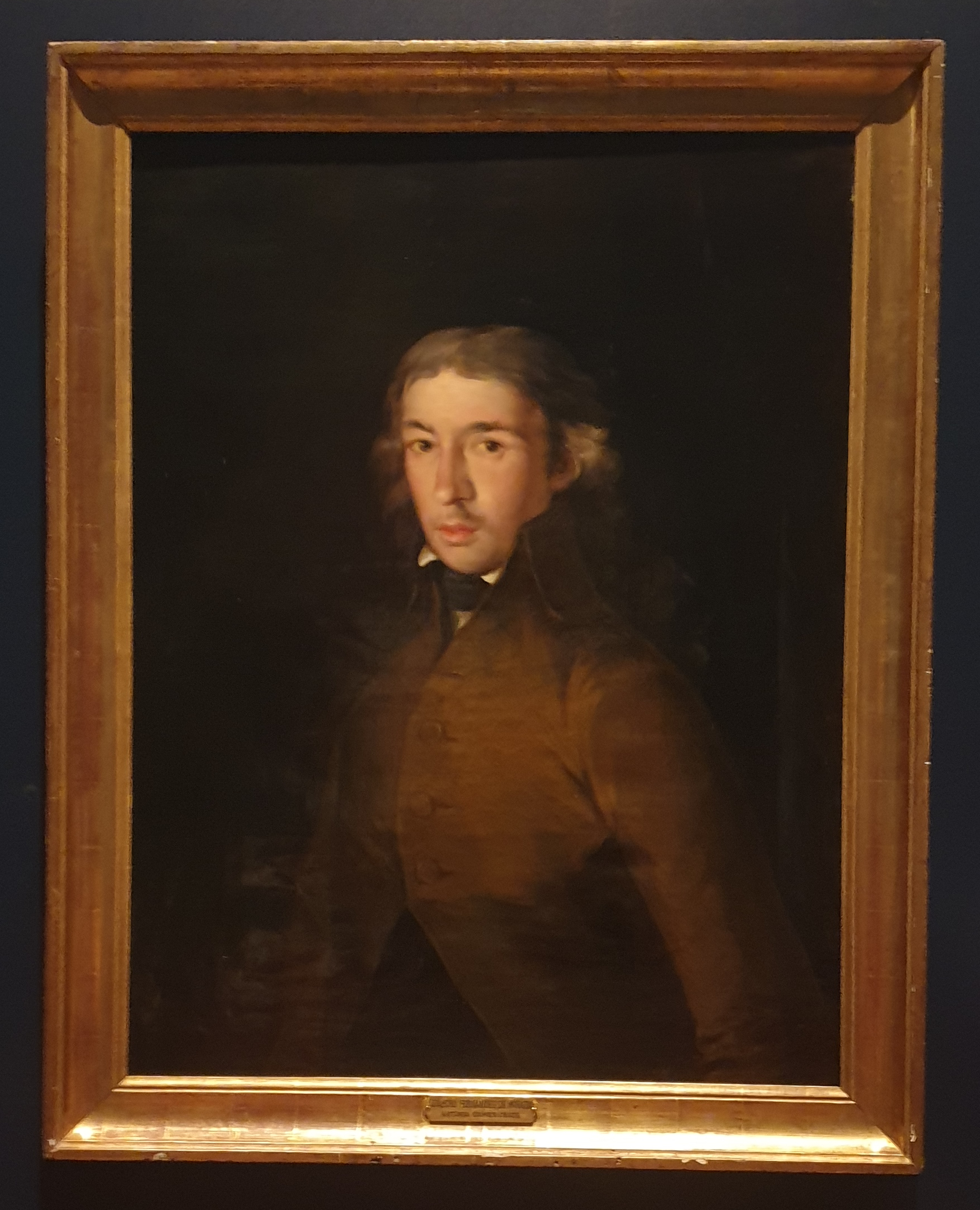
Maybe because the Joaquín Sorolla house and museum is around the corner from my family home in Madrid, Sorolla was the first painter I connected to. Maybe it was his Mediterranean scenes that took me to my own Summers in the Med. Whatever it might have been, Sorolla has a special place in my heart.

When I am in Madrid, I often sneak into the garden of the Sorolla house museum to read, and occasionally I will go inside to visit the paintings like old friends (you can read about that here).

So when I learned the Norton Museum was hosting an exhibition to complement their existing (huge) Sorolla painting, I had to see it.

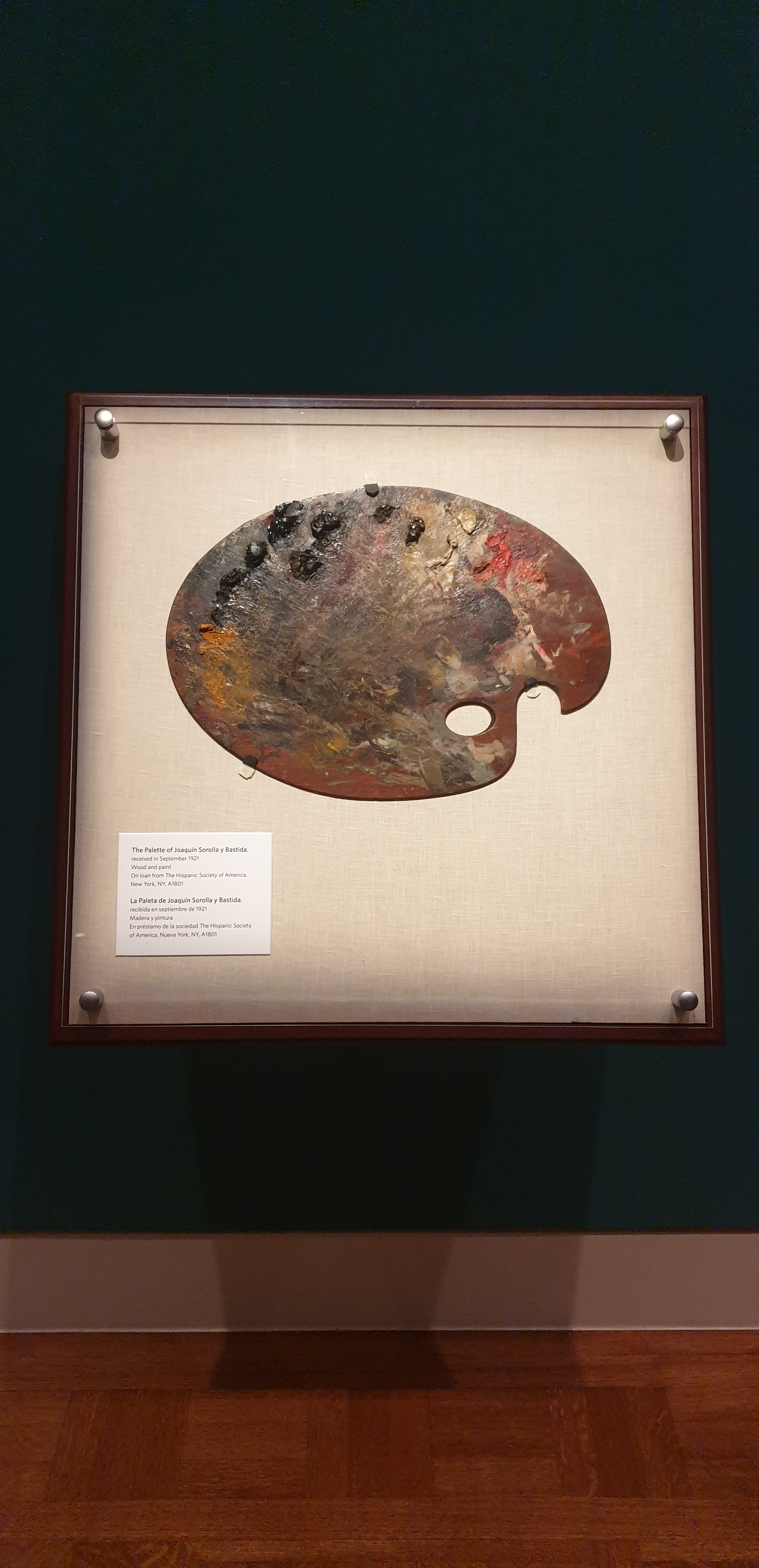
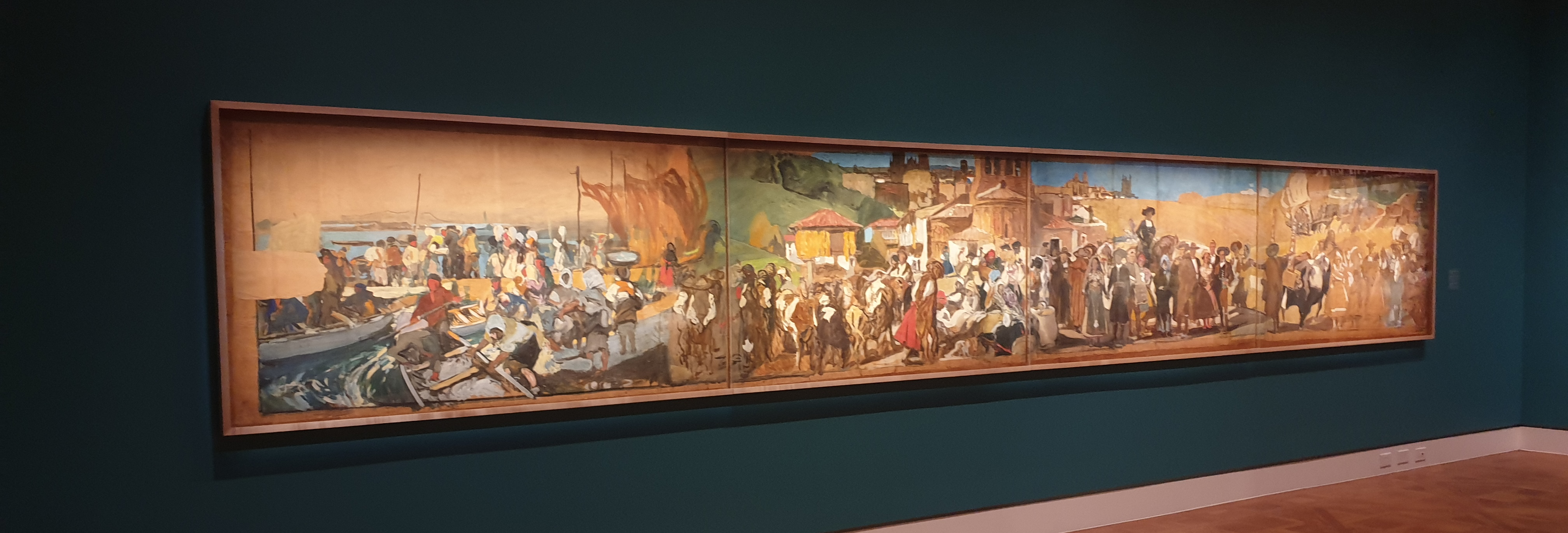
It did not disappoint. Most of the paintings are on loan from the Hispanic Society in New York City which commissioned many paintings from Sorolla. The exhibit includes some drafts of paintings, a bronze sculpture from his dear friend and paisano Benlliure -the marble one is in the garden in Sorolla’s house, even one of Sorolla’s palettes!

Sorolla is known as the painter of light, leaving behind the Impressionists, and creating a space of his own, beyond labels.

If you are in the Palm Beach area you should see it, you are welcome.

The adventures of travel; an example.

The previous post was a generic “get out and travel” post, a motivational (hopefully) message, a reminder of the beauty of travel, of meeting new people, of seeing new things. What I did not talk about was the adventure of travel and the stress and adrenaline involved.

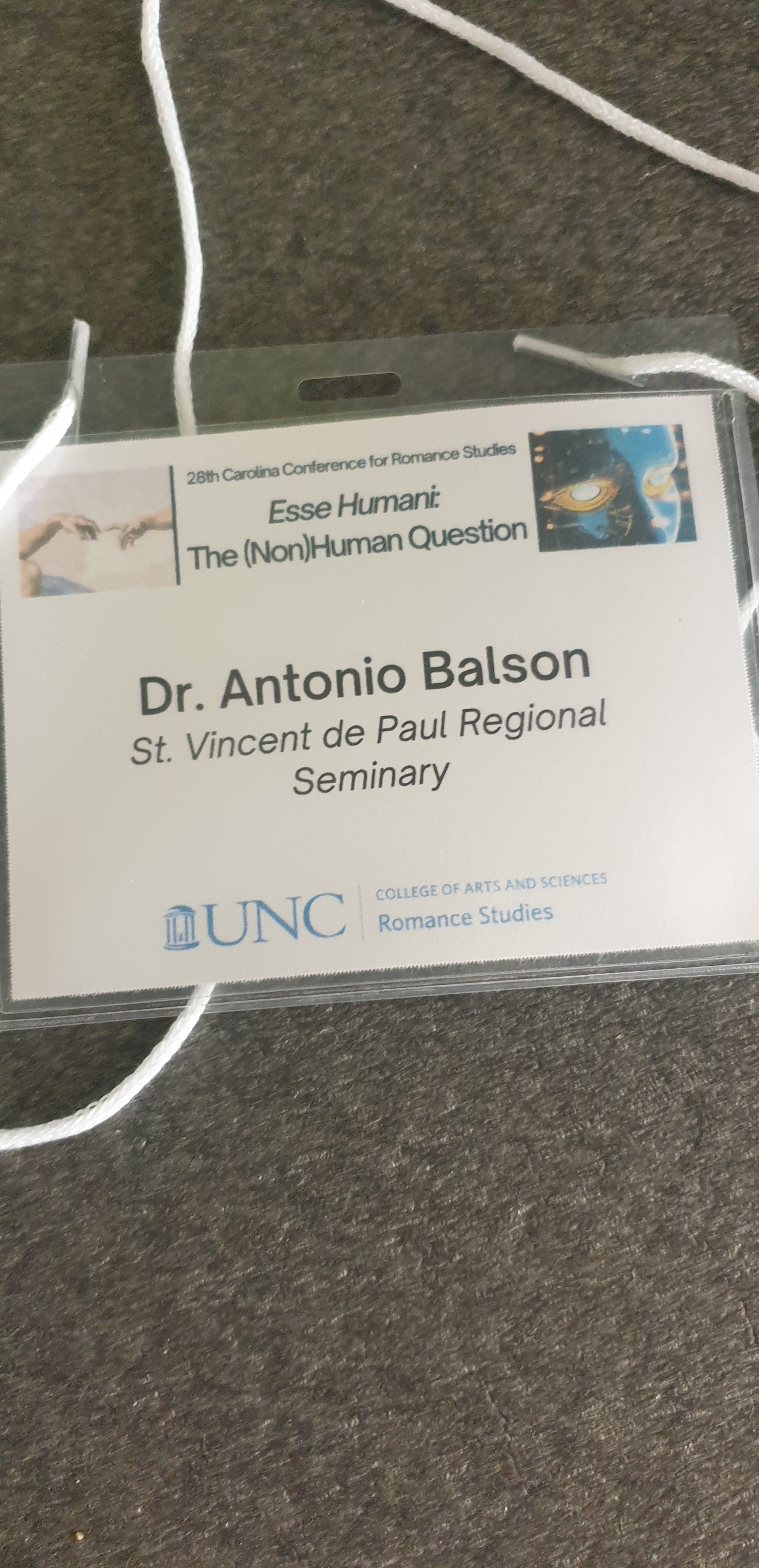
As has been previously reported, I recently presented at a conference in Chapel Hill, North Carolina. To get there, I had to fight with the metaphorical Cyclops, lotus-eaters, and Sea Nymphs…

On paper the trip was easy: West Palm Beach, which has a cute little airport to Charlotte North Carolina – a behemoth airport, the 10th in the nation with 23.1 million passengers per year. From there to Raleigh Durham, another cute provincial airport, from there a taxi/uber to Chapel Hill.

Unfortunately, the equipment (the airplane for you Philistines) in Palm Beach was broken and we spent more than two hours on the ground getting it fixed. People left the plane to make other plans, but I had no options. There were no more flights to Charlotte and no other flights to Raleigh, I had to take my chances… We arrived at midnight at Charlotte, and I sprinted to the car rental area to try to get a car. Some booths were closing, others had long lines, most had no cars available. In all of Charlotte airport there was one, one car available, it was with Avis, it was electric, and it would cost me $270. But there was nothing else I could do. If I stayed in Charlotte to wait for the next day’s flight, I would miss the conference and an appointment at 9:00 the next morning. I had to take the car. I took the car.

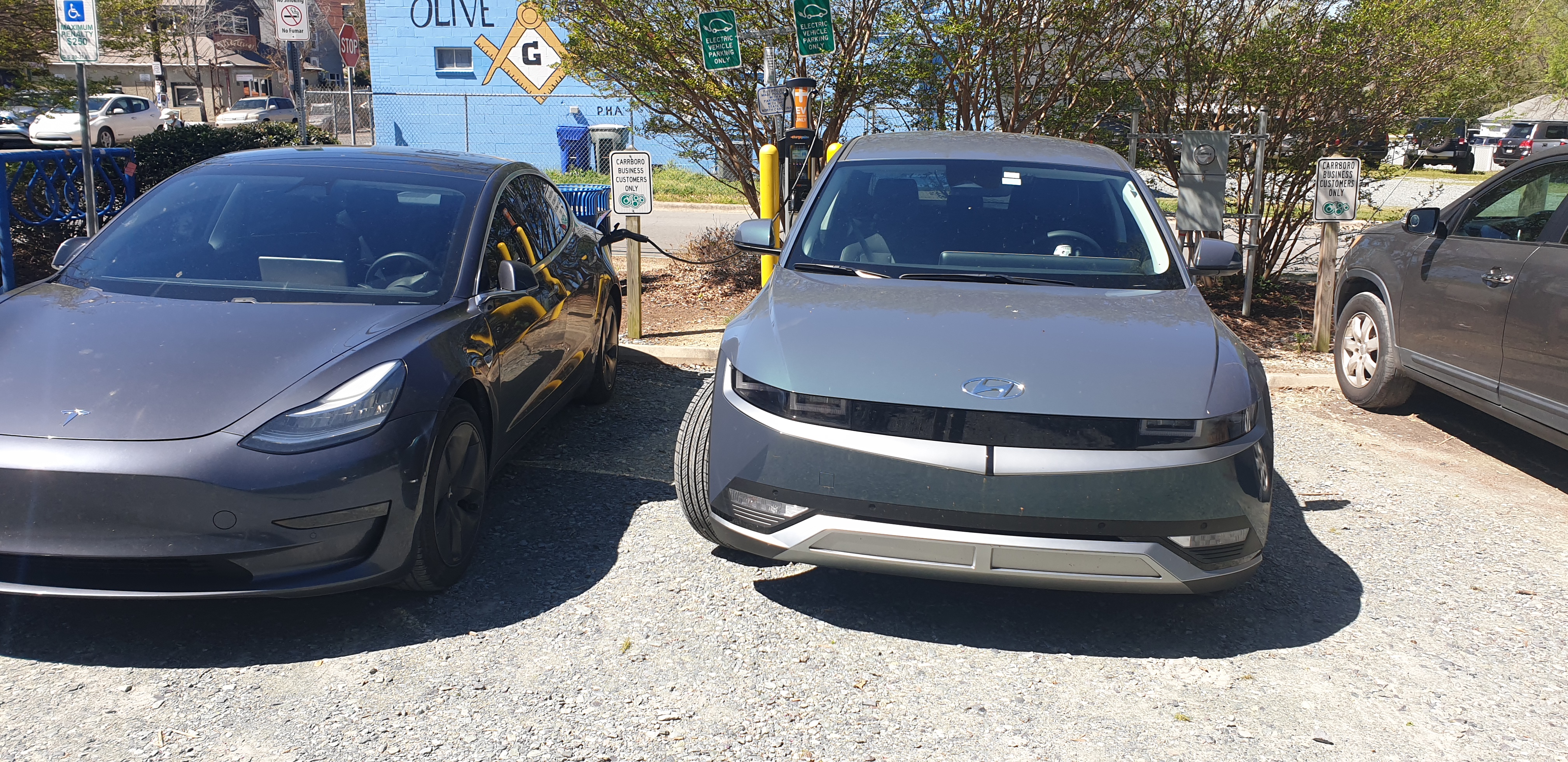
I have never really driven an electric car (yes, ok little electric rentals in Madrid, but that does not really count). I buckled into the Hyundai IONIQ 5 SEL, a $50K rig. In theory it had over 200 miles autonomy for a 144-mile drive, plenty. The theory bit is that the autonomy calculation is at the speed limit, hahaha. Ooops. Not that I drove autobahn style, but it was late, I wanted to get some sleep, and I am a Mediterranean driver anyways, so I might have driven a midge over the limit. Watching the battery level and the mileage left was a hairy experience. The battery clicked to red, 9% as I pulled into the hotel parking lot -I was not going to hunt for free street parking at 2:30 in the morning.

Epilogue:

The next morning (after my breakfast meeting with the great Professor (retired) Frank Dominguez) I found a free charging spot at the chamber of commerce. Fortunately, a Tesla owner arrived at the charging post next to mine and explained that I should leave the car there and go live my life while it charged -Hmm, not your usual gas station experience. So I left the car there and headed to the conference. By late morning, the battery was up to 30%, enough to drive to the airport, return the damn car, and take an uber back to the conference…

Safe travels folks!

The Grand Tour, or get out and travel

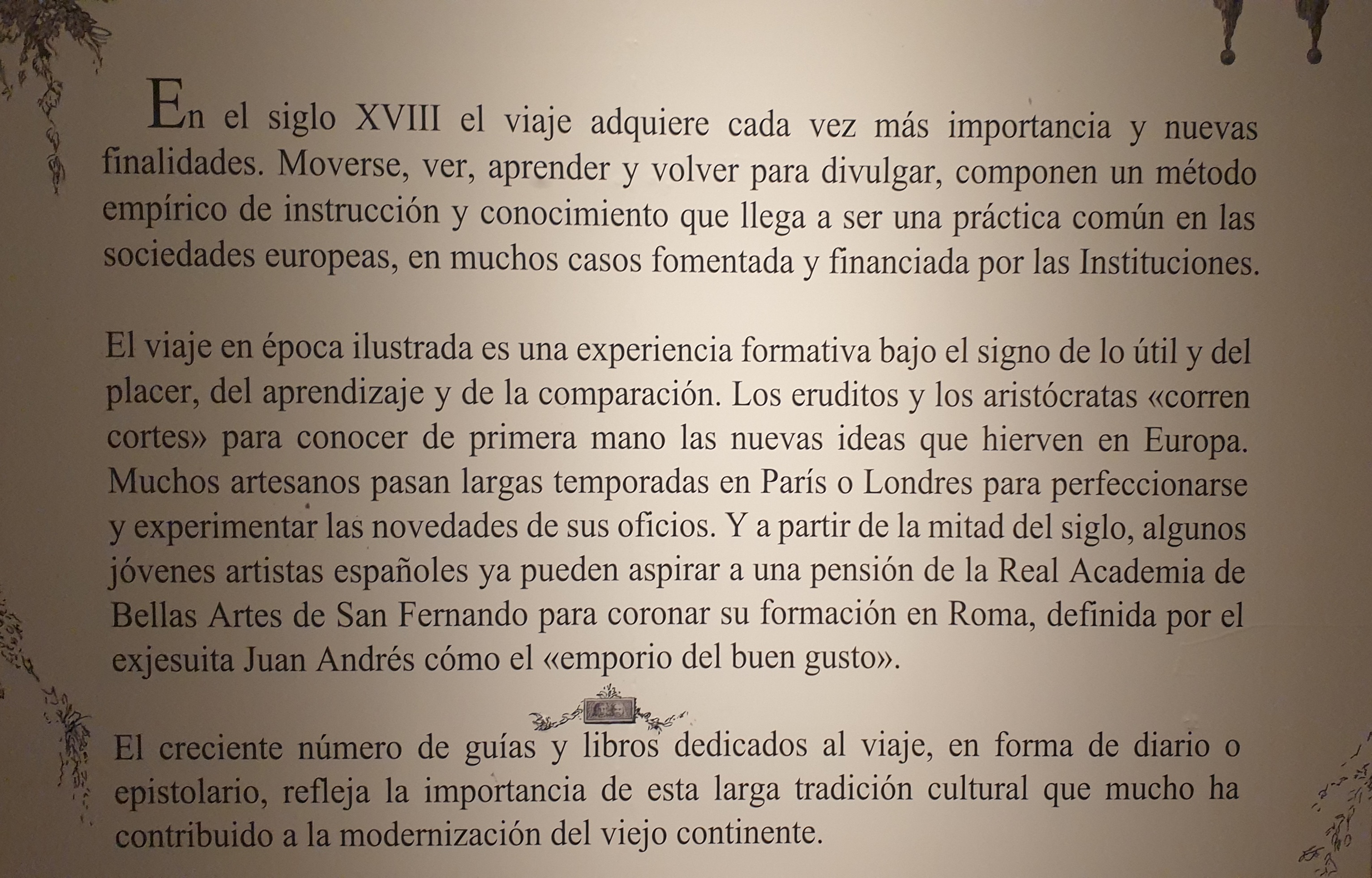
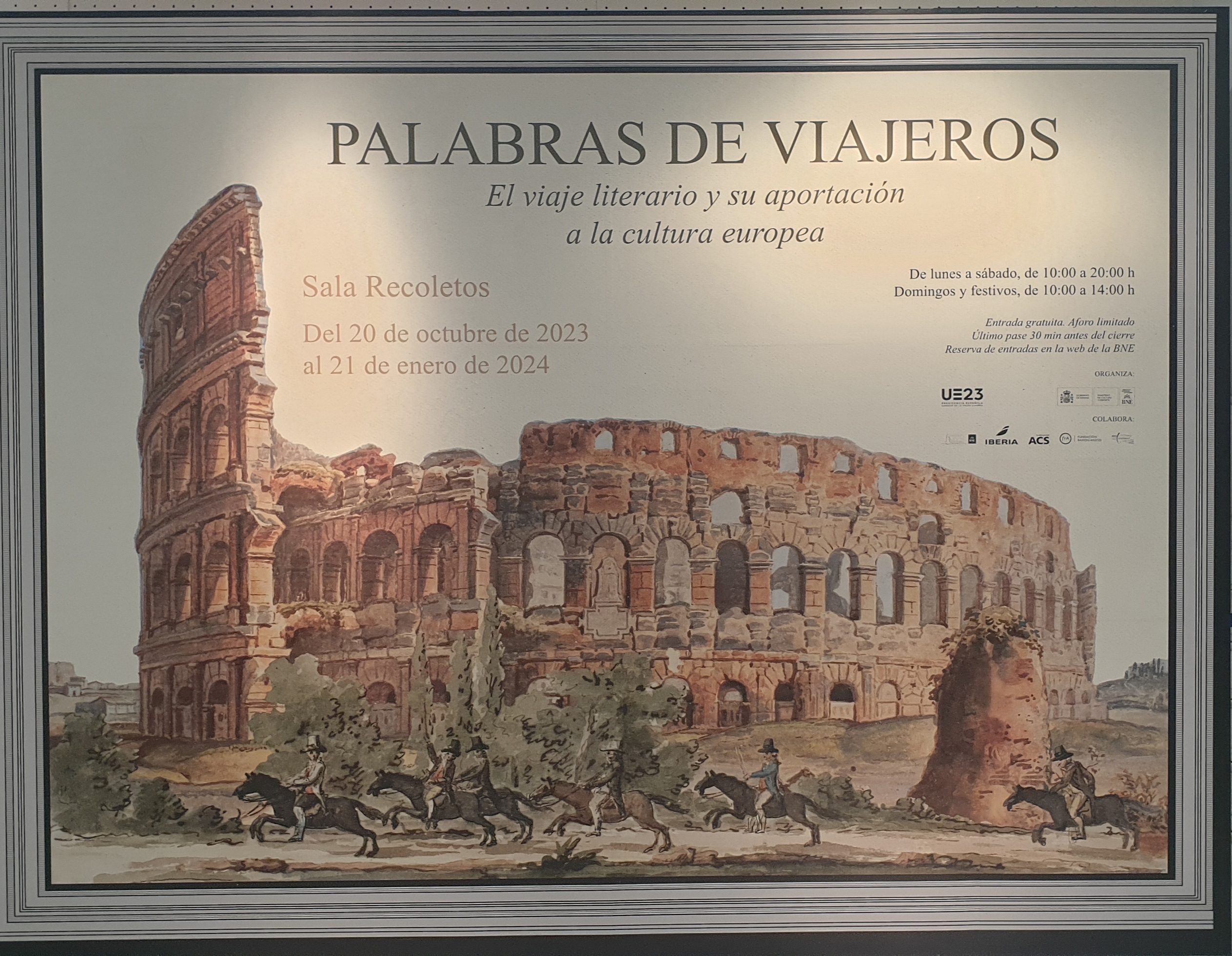
The Grand Tour is associated with wealthy brits traveling around Italy back in the 19th C., think of Lord Byron, or E. M. Forster’s Room with a View. But long before them, noble Spaniards were doing the Grand Tour, as I recently discovered at a brilliant exhibition at the Biblioteca Nacional in Madrid, titled Palabras de Viajeros.

The Grand Tour eventually morphed into “Euro railing” which was a Summer jaunt through Europe taking advantage of cheap rail tickets. My niece did this last year and there seemed to be more flights than trains and more discos than museums…

Nowadays I do not travel as much as I used to. Mainly because I am now tied to the academic calendar, and when I am not teaching, I enjoy spending time with my family, with Celia, with friends. But I still manage little escapades to Chapel Hill, to Rome, to the Camino. And I am excited to visit St. Augustine soon, look out for that post.

The issue here is not so much an issue of quantity as much as quality. Discovering new foods, talking to locals, walking, walking, walking. And processing, maybe through writing, keeping a diary -for me it is this blog- I do not know if Instagram allows you enough depth to really appreciate your travels, although we always enjoy nice photos.

At any rate, the conclusion is simple: if you can, when you can, go travel.

 Travel is fatal to prejudice, bigotry, and narrow mindedness.

Mark Twain  

The evolution of my Camino packing

Pilgrims have been walking to Santiago from all over Europe since about the year 800, before Hoka running shoes, before high tech fibers, before ergonomic backpacks, before electronic watches that measure your heart rate, every step you take and your lymphocytes, before, before, before. So chill.

On top of that, most people walk really short Caminos, so your choices are not that critical; you are going to walk for 5 days, eating much better food at half the price of whatever you are eating at home, sleeping on decent beds, showering with decent water pressure, with a fully stocked pharmacy in almost every village you walk through should you need any medicine, and enjoying free, high speed Wi-Fi internet connections so you can post on Instagram. You will not be roughing it (unless you choose to).

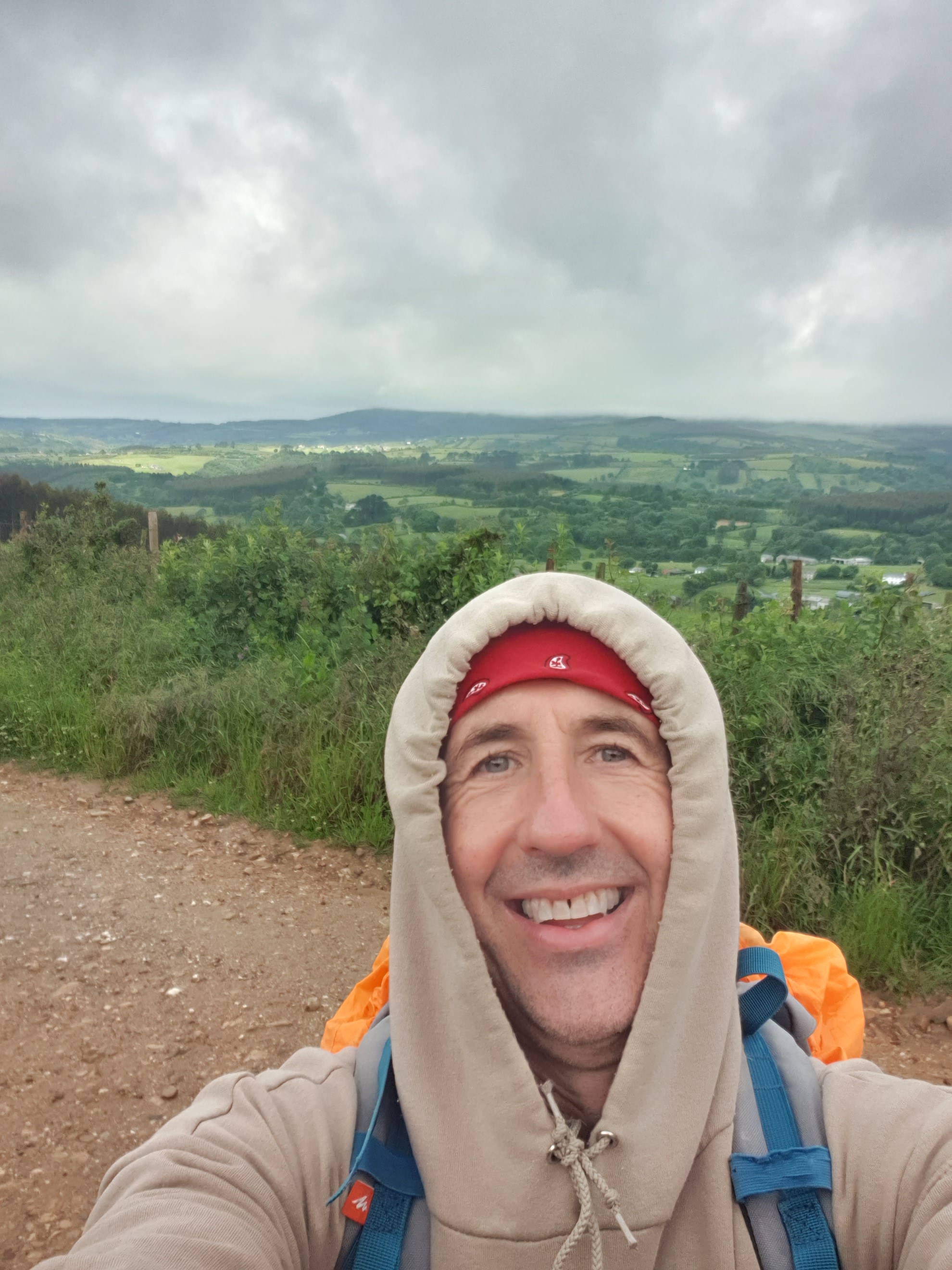
As I prepare for my fifth Camino, here are some thoughts on my packing and the evolution of my packing philosophy.

One of your realizations on the Camino might be how happy you are with so little, only with what you are carrying on your back. So packing is or should be an exercise in minimalism. Here are some thoughts:

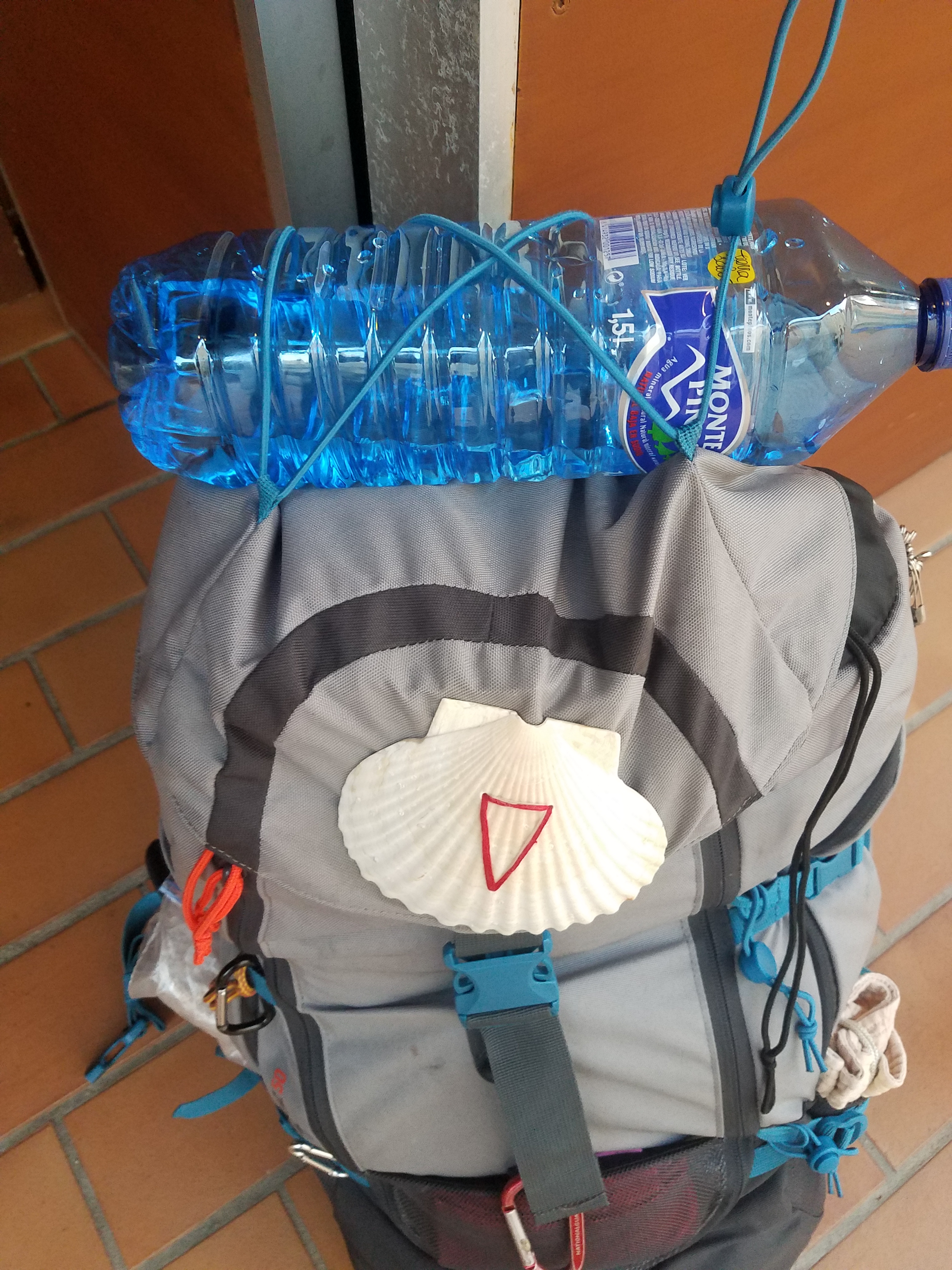
There are laundry facilities in all albergues, some might be modern washer driers, some might only have manual washing options. If you are not willing to hand wash your own socks, underwear, and t-shirt –ask yourself if you want to be on the Camino. So you do not need to pack a lot of clothes. I pack 3 pairs of wool, no stitching socks, 3 underwear, 3 (long sleeve) cotton T shirs -yes, I am a snob and hate the feel of modern fibers. 2 pairs of cargo shorts (the side pocket is perfect for guidebook, maps, etc.) and a sweatshirt. My first Camino, optimist that I am, I did not pack a sweatshirt, and it was freezing in June in Burgos, so I had to buy one!

Did I tell you I am a snob? My sleeping bag is my favorite bedsheet folded in half and sewn together like a sleeping bag. It is much heavier than a modern sleeping bag, but it is far comfier, with matching pillowcase, of course.

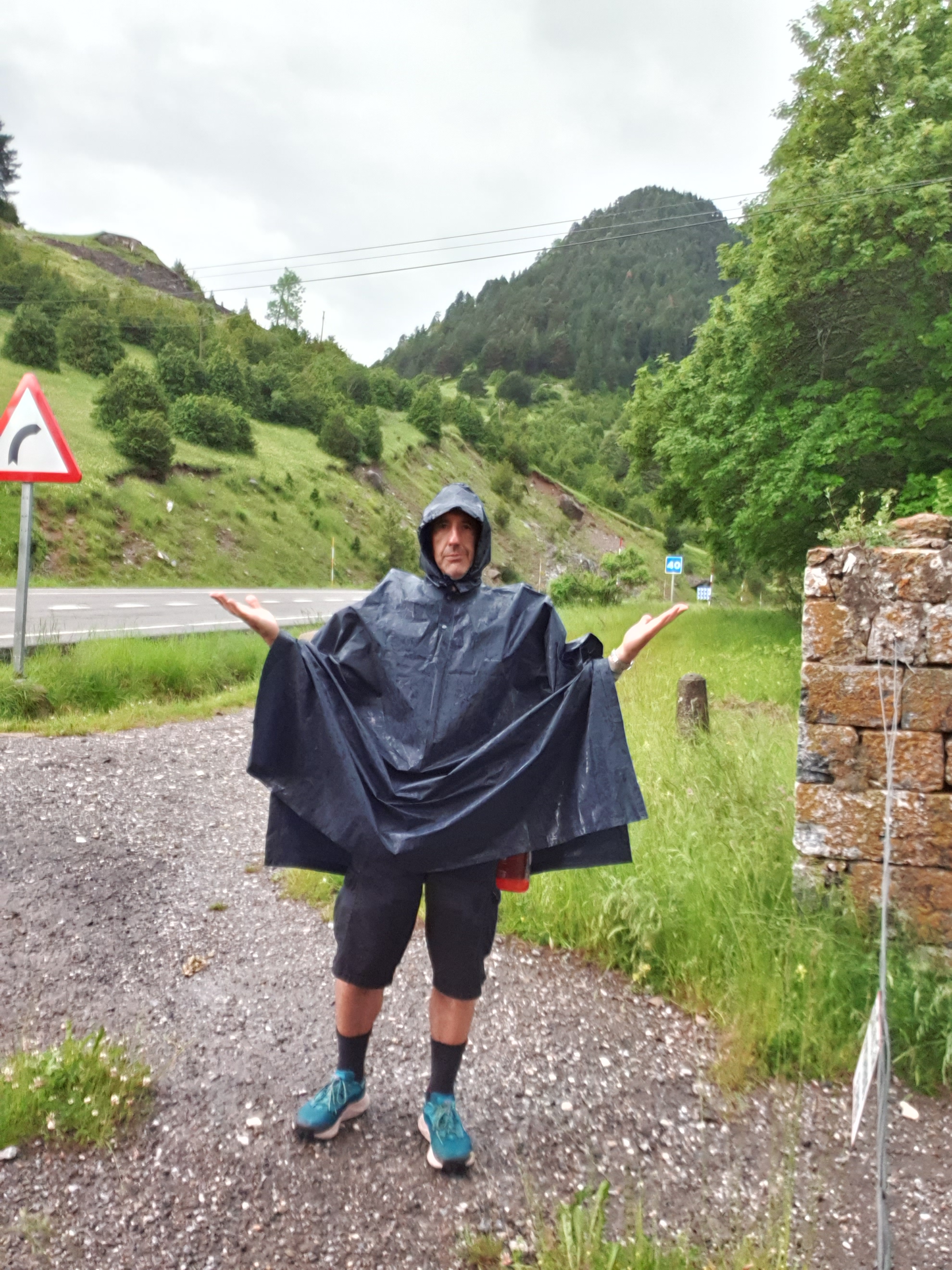
If it rains you are going to get wet. Yes, you can buy a $200 jacket that will keep you dry, good for you. For a few bucks you can have a poncho that will also cover your pack. (although you should also have a rain cover for your pack). Be ready to activate your rain protocol quickly as summer showers might pop up unannounced. (You do not want your poncho at the bottom of your pack.

Bag of mixed nuts (trail mix) in a side pocket for a snack if the walk between villages is too far.

Bandanas (x 3) great for picking up sweat, as an impromptu hat, etc.

Sun hat, people have died on the Camino from sun strokes. On the climb up from Castrojeriz you read the sad story of a fellow who basically got skin cancer -on that climb.

Swiss Army Knife, you are only going to use it to maybe slice some bread to make a bocadillo (Spanish sandwich) or to open a bottle of wine, but it gives you great peace of mind knowing that you have it.

Bathing suit! If you find a spot for an after-hike dip, or a municipal pool, you will need it.

Lightweight towel.

Flip flops. My first Camino I carried sandals for the après-Camino, but then I realized that most of the population of Southeast Asia only wear flip flops. So I ditched the sandals, I now wear my cheap flip flops all the time.

Silk long johns. Some evenings it does get chilly, long johns to the rescue. They weigh nothing and take up zero space.

A few feet of thin rope. No rope space for your laundry? Bring your own line…

Water bottle. A lot of people use bladders, on a sweltering day you will quickly run out of water and those are difficult to fill in a village fountain… you have been warned.

Savon de Marseille: use it for your body, shampoo…or clothes, 3 in 1. If you get it in Spain, it is called jabón Lagarto, every supermarket has it.

Small first aid kit, you might need a few things to take care of blisters, etc. More for peace of mind on the trail.

Small book and writing/drawing notebook.

Sunglasses.

Rule of thumb is your pack should never exceed 10% of your body weight and should never exceed 10 kg (22lbs). My pack is a 50 liter, but I have plenty of space. Also remember to pack the heavy stuff in the bottom of your pack so it will sit in your lumbar area.

Now, having said all this, forget it! Each person is different with unique needs and expectations, experience, etc. So, make your own Camino, and your own pack. Buen Camino!!

Antonio y Rocinante’s Long haul flight and jet lag hacks

Getting on an airplane

At this point in my life, I cannot tell you how many times I have crossed “the pond”. My first time was in 1976, I remember because the US was celebrating their bicentennial, so I was 11. Since then, we moved to NY for my 6th grade, then I went to college in Boston, and stayed in NY and Boston for a few years after that, then I traveled for work and vacations all over the US, Caribbean and South America, then I moved back to Boston in ’05, and you know the story since then (if you don’t, you can backtrack in this blog). So, for a conservative number let’s say over a hundred times.

Here are some of my travel and jet lag hacks:

Pre-flight:

Your body has three main built in clocks: stomach, sleep, and light. We need to prep those at least the day before the flight:

Start eating easy to digest meals this will “prep” and confuse you stomach, getting it adjusted for your new meal schedule.

Same with sleep: try getting some naps in the days before the flight. Again, you are trying to “trick” your sleep pattern.

Flight day:

Look good. Do you really want to meet someone important in your life, maybe your next boss, your future spouse, a potential client, or a celebrity, wearing oversize sweats and Crocs. Is it really that difficult for you to look good and be comfortable at the same time? Work on it; for me it means a button-down shirt, blazer, chinos, and comfortable loafers – just like George Clooney in Up in the Air (see clip below). Ground staff and cabin crew are going to like you more if you look nice than if you look like you are going to a pajama party.

Hydrate, hydrate, hydrate. Cabin air is super filtered and super dry, so on a long haul you are going to notice. Most of your tiredness after a long flight is more dehydration than tiredness.

Night flights: try to sleep! Take a heavy-duty Melatonin, eye mask, ear plugs, blanket and sleep, sleep, sleep, or at least try to.

No alcohol, coffee, tea, sodas, all those drinks are going to make you pee, or make you thirsty, or dehydrate you or whatever, stick to water. I also put on moisturizer every time I go to the bathroom and wash my hands, it feels nice.

Adjust your watch if you are an old fool like me.

After landing:

Do not have a big meal, stick to easy to digest meals for a day, to continue adjusting.

Try to adapt to the local schedule ASAP, no going to bed in the morning, no big meals at odd times. Be a local.

Try to go outside, if there is sun, take in the sun, remember light is one of your body clocks.

You are welcome.

Any thoughts? Additions? Suggestions? I would love to read them in the comments below.