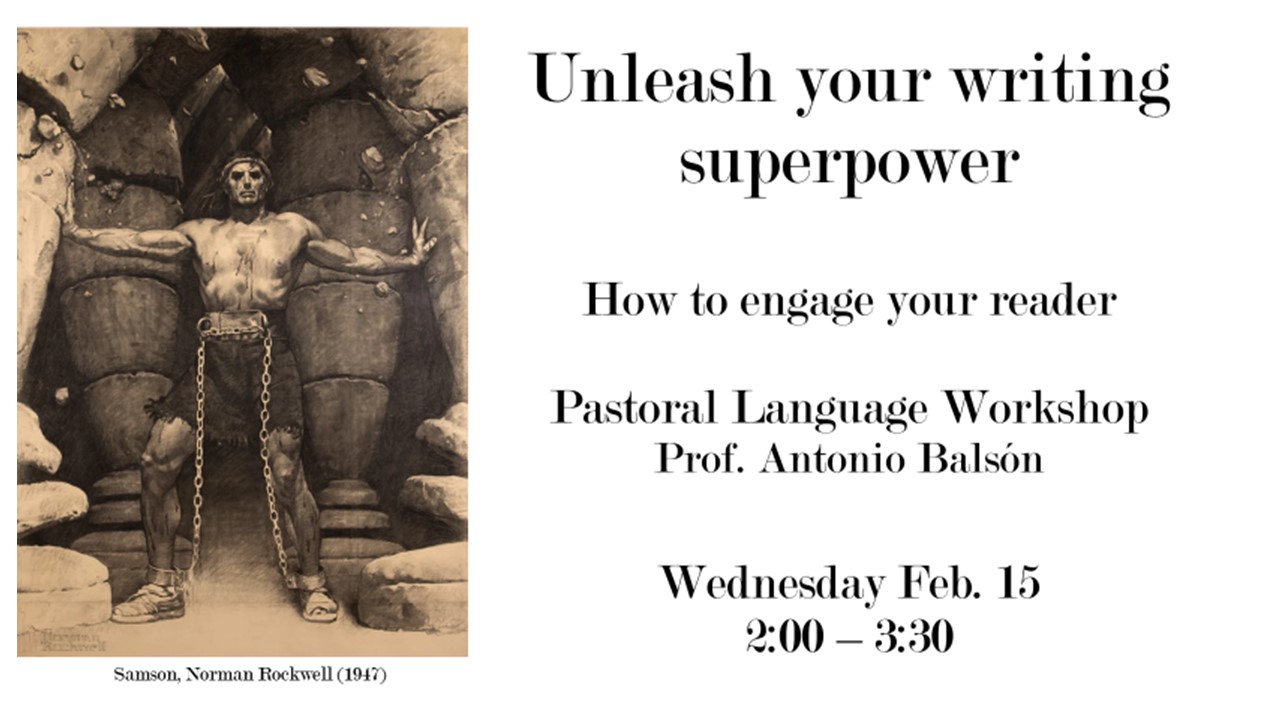
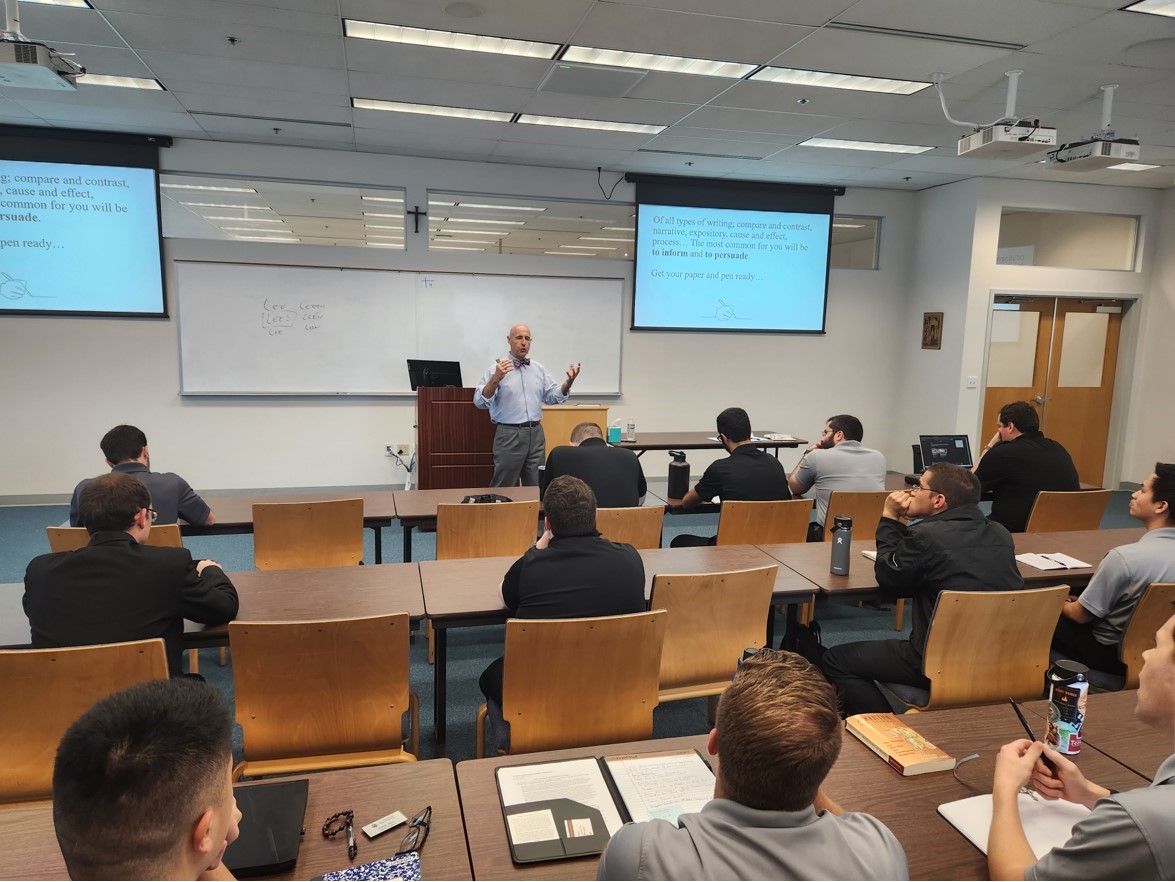
You might not know this, but first lines are really important, first lines in writing specially. I recently had an opportunity to expound on this at a Language Dept. workshop at school.
We started by talking about how skillful writing hacks your brain so that you might not know your brain has been hacked. We showed a few examples of great first sentences -of course, there are many, many more. (Try to figure out the author and book, answers below – don’t cheat!). (We played a similar game on this blog on my post about Russian Literature, check it out here.)
“Here is a small fact: You are going to die.”
“En un lugar de la Mancha, de cuyo nombre no quiero acordarme, no ha mucho tiempo que vivía un hidalgo de los de lanza en astillero, adarga antigua, rocín flaco y galgo corredor.”
“Happy families are all alike; unhappy families are all unhappy in their own way.”
“Muchos años después, frente al pelotón de fusilamiento, el coronel Aureliano Buendía había de recordar aquella tarde remota en que su padre lo llevó a conocer el hielo.”
“He was an old man who fished alone in a skiff in the Gulf Stream and he had gone eighty-four days now without taking a fish.”
“Lees ese anuncio: una oferta de esa naturaleza no se hace todos los días.”
“Call me Ishmael.”
We had a good time going over those sentences and what made them good first sentences. Then we looked at how to write good sentences in general and especially for academic writing. The hands-on part of the workshop involved the students writing a sentence each until we had a first paragraph!
We had a good time and I hope the students left understanding the importance of first sentences!
Match the titles of the books with their corresponding first line.
Happy families are all alike; every unhappy family is unhappy in its own way.
Well, Prince, so Genoa and Lucca are now just family estates of the Buonapartes.
On an exceptionally hot evening early in July a young man came out of the garret in which he lodged in S. Place and walked slowly, as though in hesitation, towards K. bridge.
Towards the end of November, during a thaw, at nine o’clock one morning, a train on the Warsaw and Petersburg railway was approaching the latter city at full speed.
Please allow me to introduce myself, I’m a man of wealth and taste, I’ve been around for a long, long year, stole many a man’s soul and faith.
In the big building of the Law Courts, during a break in hearing the case of the Molinsky’s, the members and the prosecutor met in Ivan Yegorovich Shehek’s office, and the conversation turned on the celebrated Krasovski case.
It was a wonderful night, such a night as is only possible when we are young, dear reader.
Fyodor Dostoevsky, White Nights
Leo Tolstoy, Anna Karenina
Mikhail Bulgakov, Master and Margarita (trick question, this is the opening of the Rolling Stones’ Sympathy for the Devil, which is based on this book)
Fyodor Dostoevsky, The Idiot
Leo Tolstoy, War and Peace
Fyodor Dostoevsky, Crime and Punishment
Leo Tolstoy, The Death of Ivan Ylich
Answers: 1-B, 2-E, 3-F, 4-D, 5-C, 6-G, 7-A
How did you do? As you can see this is a thorough test of your knowledge of Russian literature. In reality, it is a test of my knowledge (or lack thereof) of Russian literature, since these are the only books by Russian authors that I have read.
“The strongest of all warriors are these two — Time and Patience.”
Having said this and confessed my weak literacy in this deep ocean of work, I love what little I have read of Russian literature. In fact, at one point, I naively fancied doing my PhD in Comparative Lit. studying Spanish and Russian. Granted, this thought only lasted until I realized there was no way I was going to learn Russian in any level required to pursue a PhD, so… about 15 seconds (yes, I am a bit slow).
“Taking a new step, uttering a new word, is what people fear most.”
One of the many reasons I love Russian Literature are the many links to my beloved Don Quixote. While this is not unusual, think of Moby Dick, Madame Bovary, and authors like Unamuno, Graham Greene, Foucault, and now even Salman Rushdie! Dostoevsky is clearly and heavily influenced by The Knight of Sad Countenance. Oh by the way, if you this will not be a profound, critical literary analysis, just my chaotic ramblings, sorry.
“No one’s fate is of any interest to you except your own.”
My first dip into Russian literature was, predictably, War and Peace which blew my mind. The intricacy of the descriptions, the narrative arc, the character development, the whole package! Tolstoy puts you in 19th C. Russia, down to the smells, the samovar ritual, the clothes, the temperatures, etc.
“If you look for perfection, you’ll never be content.”
Then came The Death of Ivan Ylich and my mind was blown even further. Here was all the richness of War and Peace, but in a short story. Crime and Punishment came in 2007, and at this point there was little of my mind that had not been blown to smithereens! In my opinion this is a psychological thriller at its best! If Tolstoy puts you in Russia, Dostoevsky puts you inside Raskolnikov’s mind!
A couple of years later my dear friend Irina recommended Bulgakov’s Master and Margarita, and I was just flabbergasted, bowled over, dumfounded. This is deep, funny, magical, wonderful reading.
Anna Karenina, I found more personal than War and Peace, it struck a chord in my heart, not only in my mind. Basically, a similar narrative arc, character development, etc. of War and Peace, but from a much more intimate, psychological perspective.
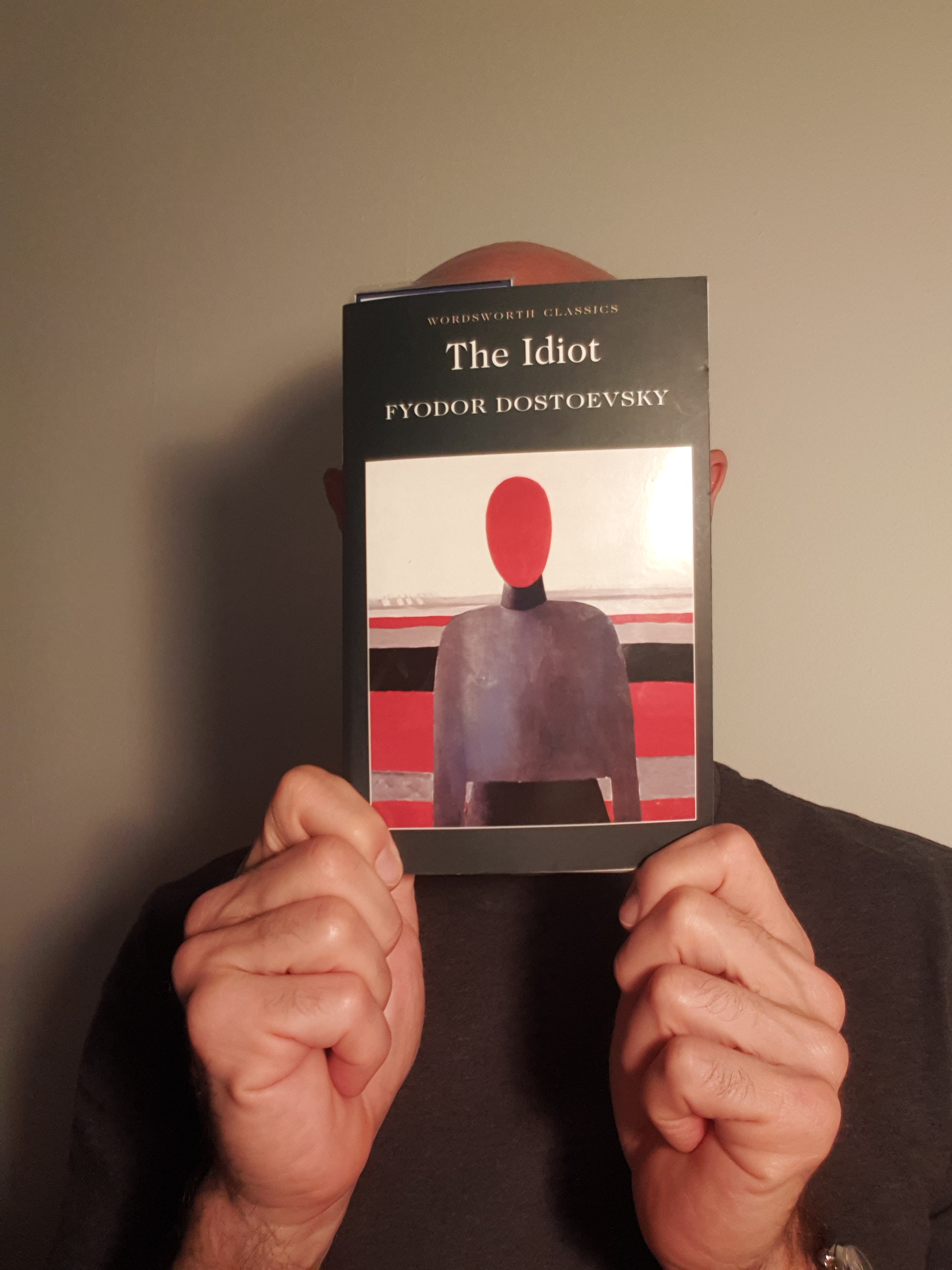
And now, I just started Dostoevsky’s The idiot. The start is promising, to begin with, there is a narrator interrupting the narrative. I love it and will keep you posted (if I have any brain left to write).
PS: I did not forget Chekhov. But as we say in Spain, that is flour from another sack…
Please leave any comments and recommendations below!!
Locked up at home during the Coronavirus quarantine, I get to read a lot, which got me thinking of books This blog exists because of books. You see, I started this blog to report my Harley-Davidson trip visiting universities across the South for my PhD in Spanish Literature, that is: books. Yes, I am addicted to books. Having said that, I am a slow reader. So, while I enjoy books, I do not devour books like some folks do. Anyway let’s start at the beginning:
My first blurry memories of reading are of Enid Blyton, I guess like millions of children. Fortunately in high school, I had the privilege of being taught by Mrs. Soledad Sprackling. And my mind exploded with what she had me read: Borges, Neruda, Lorca, et al. That was it, I was hooked. In college my super cultured friend Silvia Velez introduced me to Gabriel García Márquez and my mind exploded again! It has been a series of explosions since.
Luckily I can read in Spanish, English and French and find it very frustrating when I cannot read every book in the original language it was written in. In fact, when I was twirling about with the idea of getting my PhD, I wanted to study comparative lit Spanish / Russian, but there was no way I was going to learn that level of Russian in a hurry, so that was the end of that thought. Miguel de Unamuno, one of my literary heroes actually learnt Danish so he could read Kierkegaard, bastard.
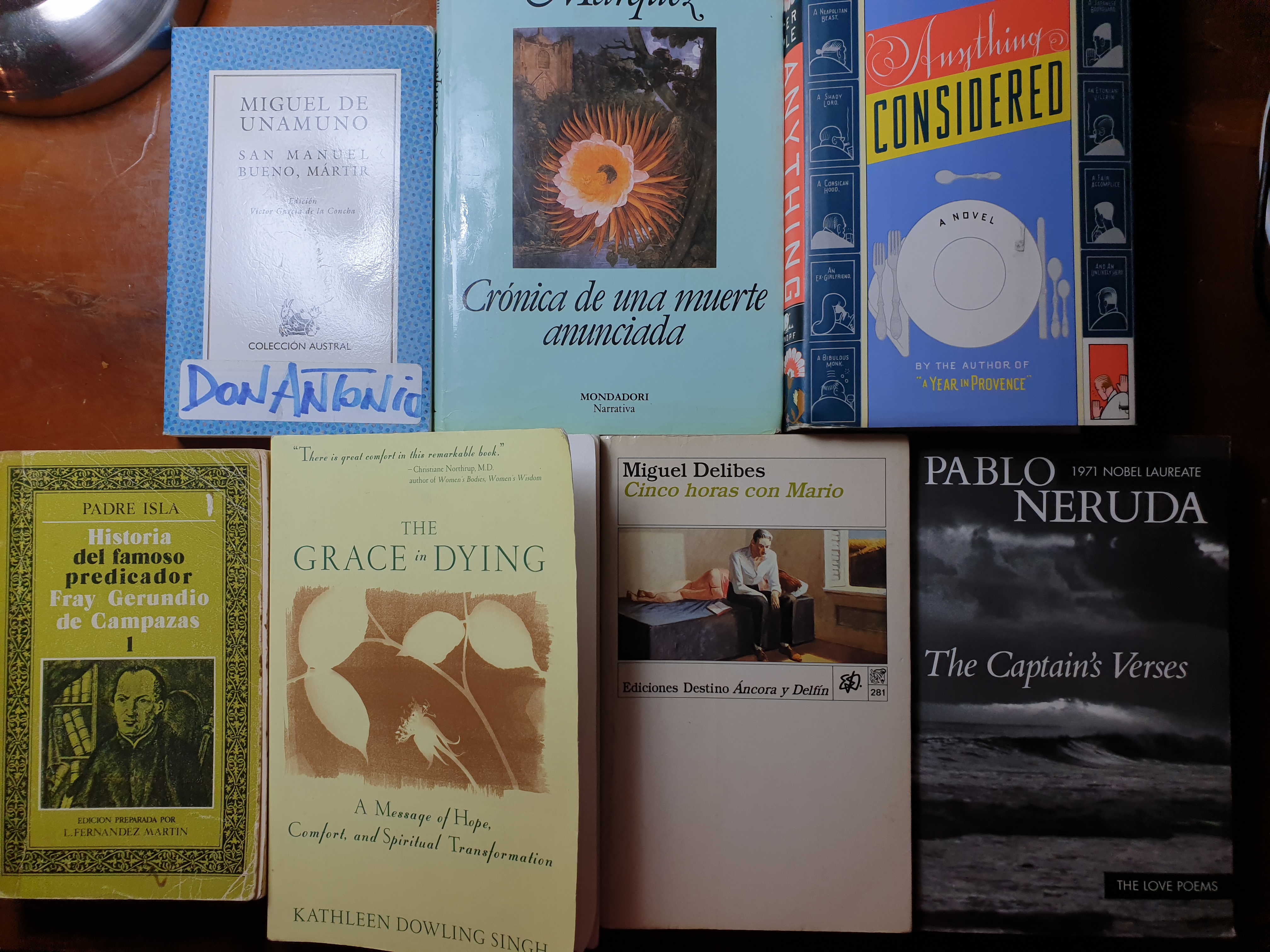
Here is a list of some of my favorite books with only number 1 in a clear position – all the rest vary according to the day you ask me:
Miguel de Cervantes – Don Quixote. I have only read it three times, once with the amazing Prof. Louise Cohen. She shared with me her passion for this book, which I have written about in previous posts.
Alexandre Dumas –The Count of Montecristo. Love, adventure, revenge, massive wealth, what’s not to like?
Leo Tolstoy – Anna Karenina / War and Peace / Death of Ivan Ilyich. Tough call on this one…
Ernest Hemingway – For Whom the Bell Tolls or The Old Man and the Sea. It takes a foreigner to describe Spain with such precision. High School is also where I got hooked on Hemingway.
Gabriel García Marquez – Cien Años de Soledad (But really any by him). Of course, nowadays, I keep thinking of Love in the Times of Cholera
Voltaire – Candide. Possibly the best satire ever written?
Miguel de Unamuno – San Manuel Bueno, mártir. Proto-existentialism at its best!
Mikhail Bulgakov – Master and Margarita. Or as the Rollings Stones interpreted it: Sympathy for the Devil…
Francisco de Isla – His early works. After all, I am the leading authority on the subject…
Of course, there are many, many more, but I don’t want to bore you, dear reader, any more.
Interestingly, my last read was. The Grace in Dying by Kathleen Dowling Singh which was recommended to me (like so many more) by my dear friend Patxi. It is about the spiritual journey of death, and how the best approach to death is meditation. I started reading it before the massive Covid outbreak and it has helped me digest the numbers in the news. I loved it. My next read, to celebrate the centenary of Benito Perez Galdos’ death will be Trafalgar, about the battle of the same name, not the square in London.
There you have it, some thoughts on reading and my some of my favorite books. Which are yours? What do you recommend? Tell me in the comments!!
That is not one of the editions of Quijote that I have read
Baking brownies for the Ronald McDonald Family Room
Accept yourself
Giving your time is awesome therapy
The French way has a strong spiritual charge
Conversing with brother Eulogio, a Benedictine monk
A quiet garden to meditate in near my house
Richard Rohr’s wonderful lessons
Practicing Yoga on the Camino, wonderful session!
For a few years, since 2010 to be precise, I have been actively seeking inner peace, not just talking about it with a drink in one hand and a cigar in the other staring at a sunset. It is only with breakage that one slowly lets go of the ego and matures through Kierkegaard’s three stages that we have seen before (the aesthetic, the ethic and the spiritual). With my divorce and the life changes brought about by that trauma, I started seeking solace and understanding. My first, basically subconscious moves were to exercise, to work with a therapist (the amazing Dr. Nemser), I went to church on Sunday – and have not missed a Sunday since (maybe a couple but only for reasons of force majeure), and volunteering. I started reading Scripture every night, then I got hooked on Richard Rohr’s Daily Meditations, I tried to find inspiring readings, revisiting Tolstoy’s The death of Ivan Illich, Milton, Jalics, etc. With time I started meditating, then I started yoga, then came walking the pilgrimage to Santiago…
Little by little I started realizing in my body, mind and spirit that all these things were connected, that working with one affected the other two. Yoga, even weightlifting quieted my mind, meditating relaxed my body and spirit. Breathing helped me stretch during yoga. I realized that while we are made up of many different things, we are in fact one totality of being with a single energy.
I started yoga lessons in North Carolina about six years ago. It was the perfect thing for saturdays after friday night soccer games. And just like that I was hooked. I normally find a gym or a studio that has lessons, but in a pinch I use an app called Down Dog which is very scalable!
For meditation, I usually wait until the end of the day so I have nothing left to do that day. Or I parcel out a time to mediate. I sit and breathe, focussing on my breathing for twenty minutes. I use a great app called Insight timer where I can time myself, take courses, dial into guided meditations – and it keeps track of your progress!
Then I started using these techniques with my athletes when I coached, most recently and successfully the tennis players at the Hun School. Yoga on days in between games, a bit of meditation before games, it all translated to happier, less injured, more understanding players.
Volunteering has been a key factor in my recent growth and maturity. First at Community Servings in Boston cooking for sick, homebound families. In Chapel Hill I volunteered every monday night for four years at the Ronald McDonald House. In Naples I helped out the St. Vincent de Paul charities. Now in Madrid I’m helping at the Ronald McDonald Family Room at the La Paz Hospital in Madrid, for families with premature babies.
My second pilgrimage to Santiago I really focused on walking, meditating, stopping at churches for contemplation, doing yoga after the day’s walk. It really was magical, and I noticed a holistic improvement!
Healing is a long process that there is no way to rush. Acceptance, gratitude, patience, forgiveness, compassion, perspective, humility, understanding, generosity, none of these knock on your door overnight. One must consciously work at healing, it is slowly working for me, give it a try!




 Antonioyrocinante's Blog