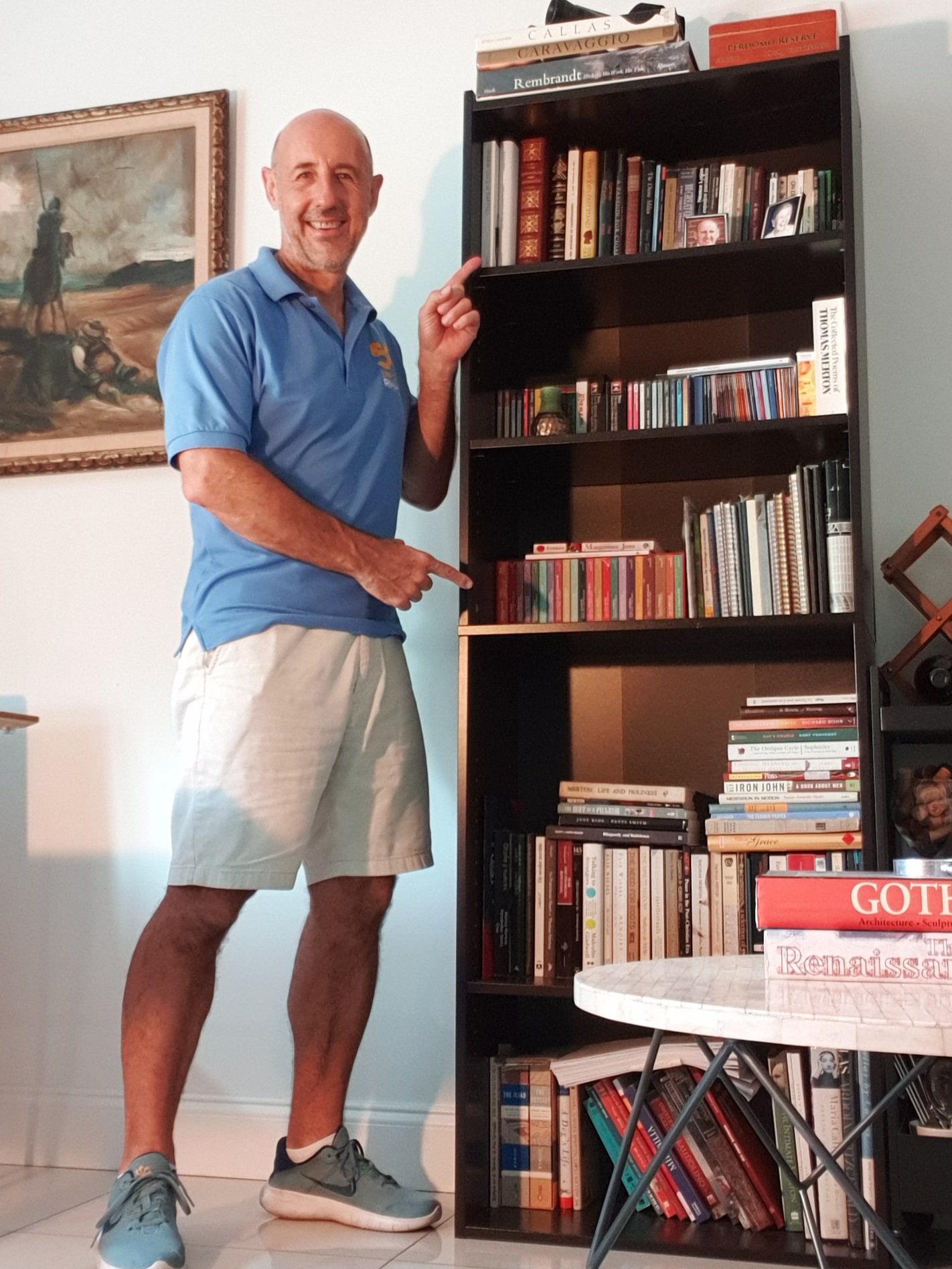
In my first full-time job at a fund manager in Boston, brilliant people surrounded me. One of those individuals was a portfolio manager named Forrest Berkley, who was brilliant and, fortunately for me, very patient. One of his adages, which he personally did not keep, was that of paper neutrality. The idea is that for every paper that came into his office, another one had to leave. This was easier said than done; his office was full of stacks of research reports from stock markets around the world! But I liked the idea, and I would occasionally mention it as a joke when I threw away some paper.
Now that I am older, I have realized that I need less and less to be happy. I have become a bit of a minimalist. While having lots and lots of books might make you look smart, you really do not need them. Once you read a book, you are rarely going to return to it for reference or to re-read it. Let’s face it, how many books have you re-read? In my case, in over 40 years of reading, I have only re-read a handful of books.* So once you read a book, give it away, donate it, sell it, you do not need it.
In that spirit, I have evoked Forrest Berkley’s old adage, and I now have a self-imposed 100-book neutrality program at home. This means that I can only have 100 books at home at any given time. This requires a lot of reading and a lot of donating and giving away books. Does it work? Yes, more, or less, sometimes I might be a bit lenient, but then I remember, and I carefully go over my shelf. Picking out books that I know I shall never get around to reading, cleaning out doubles (I just gave away a Thomas Merton repeat to my yoga teacher, Paritosh), and getting rid of books I have read.
So, unless you like collecting stuff as a hobby, implement a neutrality program. For each blank that comes into your home/office/whatever, another item has to go. You are welcome…
- Voltaire, Candide
- Hemingway, The Old Man and the Sea.
- Gabriel Gárcia Márquez, Crónica de una muerte anunciada
- Omar Khayam, Rubaiat
- Unamumo, San Manuel Bueno, mártir
- Federico Gárcia Lorca, La casa de Bernarda Alba
- Cervantes, Don Quijote











 Antonioyrocinante's Blog