Dunning–Kruger Effect, a lecture on Art History

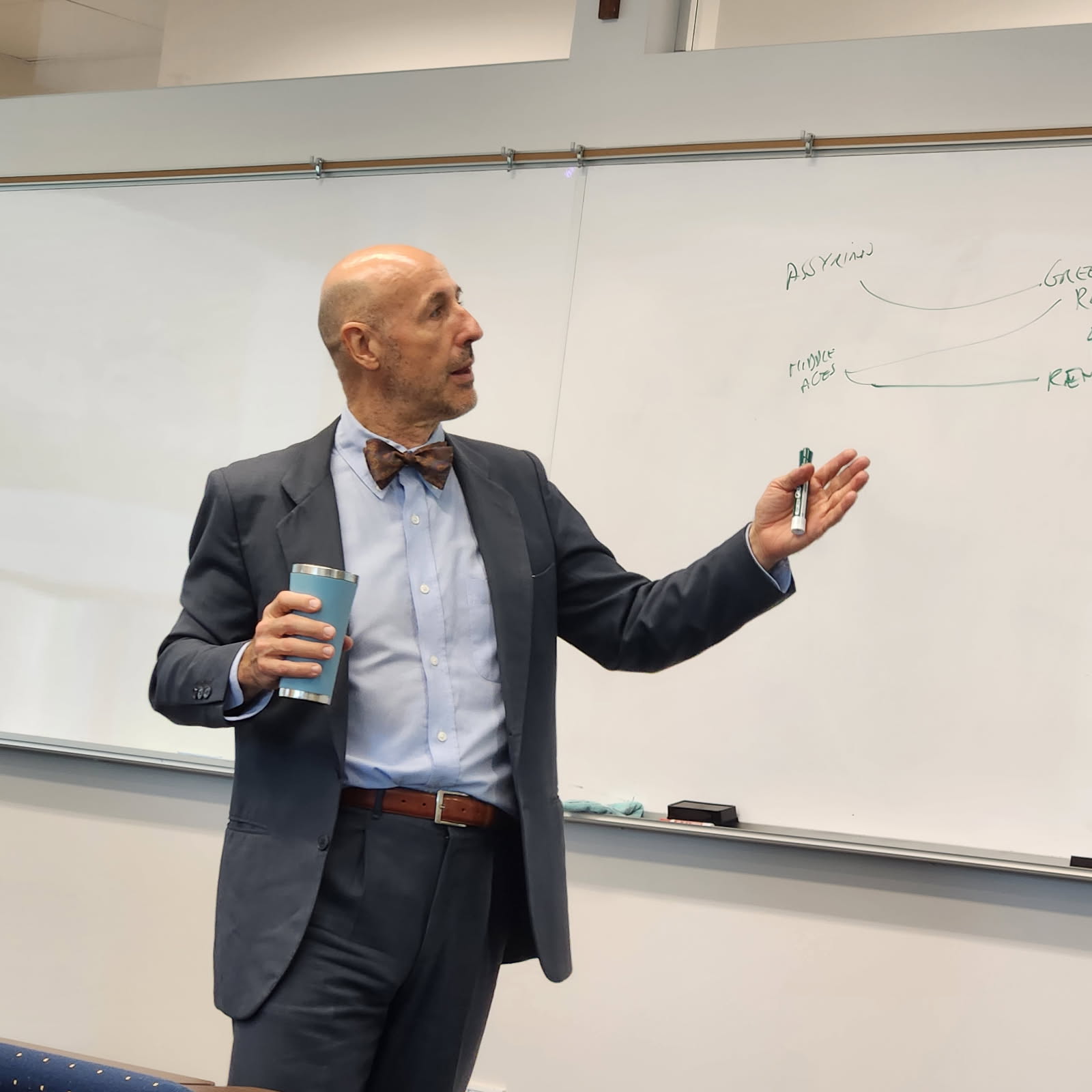
It is a Thursday morning in Florida, while a whopper snowstorm is expected to wallop the rest of the US. Flights are already getting cancelled in anticipation of the storm. Your school is hosting a nationwide conference on Monday morning. As you casually chat with the event coordinator, she is stressed out because she had to reschedule the keynote speaker’s flight to Monday afternoon. She asks you to fill in on Monday morning to give a two-hour lecture on Art History. Of course, you say yes.

Yes, I have been giving tours of Madrid since I was in university; tours of Boston and Miami came later. Yes, I have been going to the Prado museum since I was a child and have spent many hours in other museums since then, especially the Boston Museum of Fine Arts, the Ackland Museum in Chapel Hill, the Baker in Naples, and nowadays the Norton. Yes, I have read and continue to read about art, art history, and history, and have attended many lectures, etc. Yes, we talk a lot about art history in my literature classes, but no, I am not an art historian, just an amateur, a lover of art and art history.

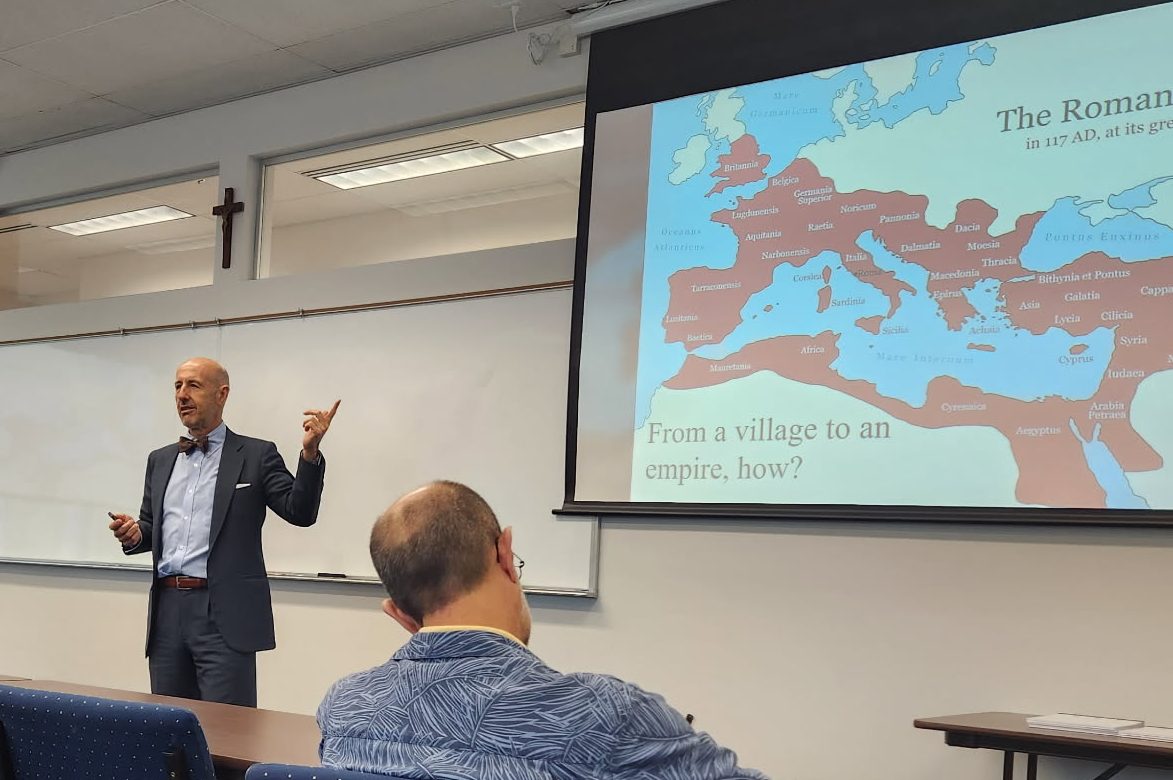
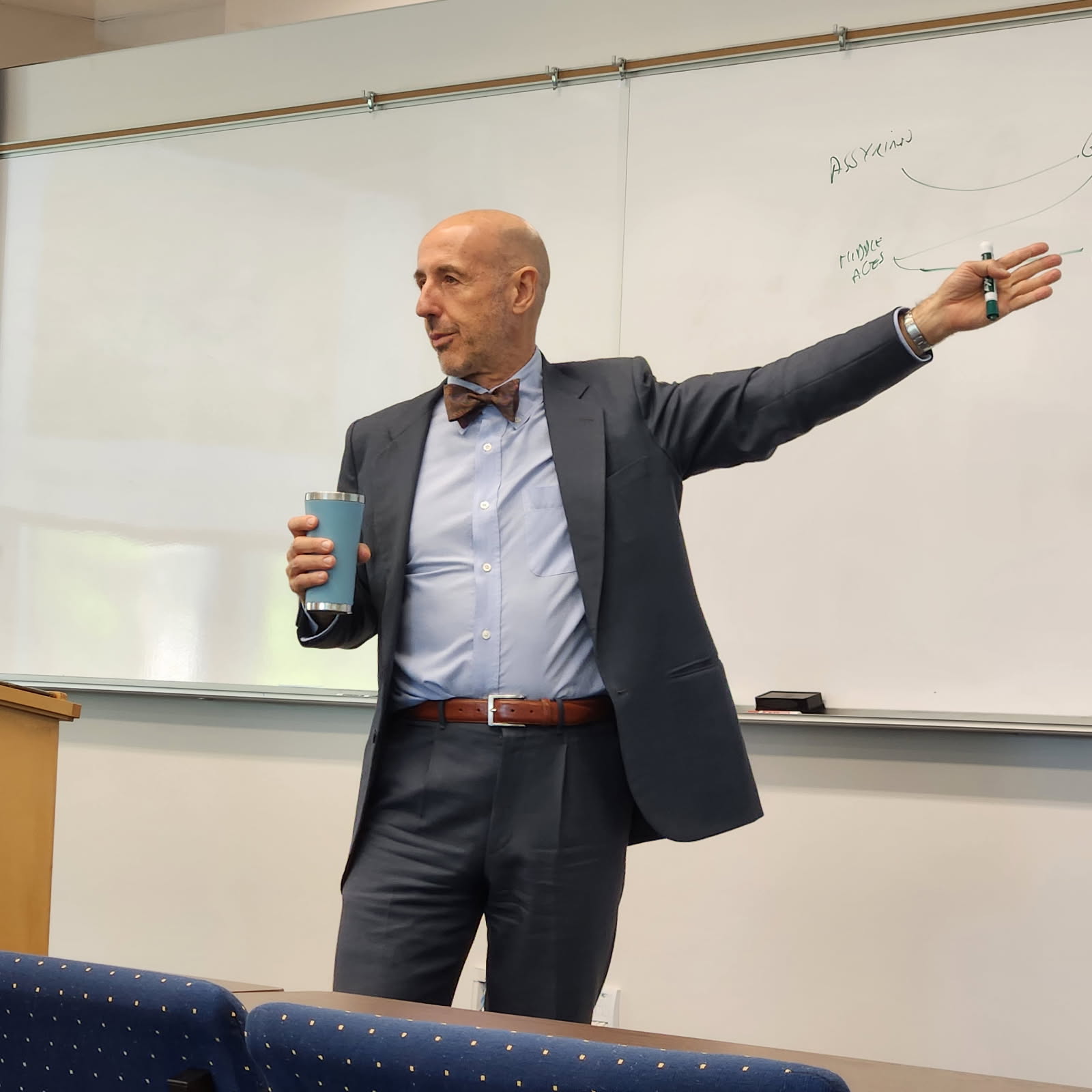
I spent the weekend preparing a two-hour lecture. Starting in Mesopotamia with the Assyrians, Ancient Greece and Rome (same sentence, very different material), the Middle Ages (Pre-Romanesque, Romanesque, and Gothic), the Renaissance, Baroque, Rococo, Neoclassic, Romantic, Realism, Impressionism, Post-Impressionism, and Surrealism, then we ran out of time.

This was exhausting, the preparation and the delivery. After the conference, I was wasted. Good thing I had a quiz scheduled for my class; I would not have done a good job teaching!

The audience, a group of Catholic priests from across the country, was very generous and inquisitive; they asked insightful questions and seemed interested.

This is a full–on Dunning–Kruger Effect case. I know enough to know that I know nothing. I have a very superficial knowledge of Art History, but enough to look like I know what I am talking about, I don’t.

Rene Magritte at the Baker Museum in Naples

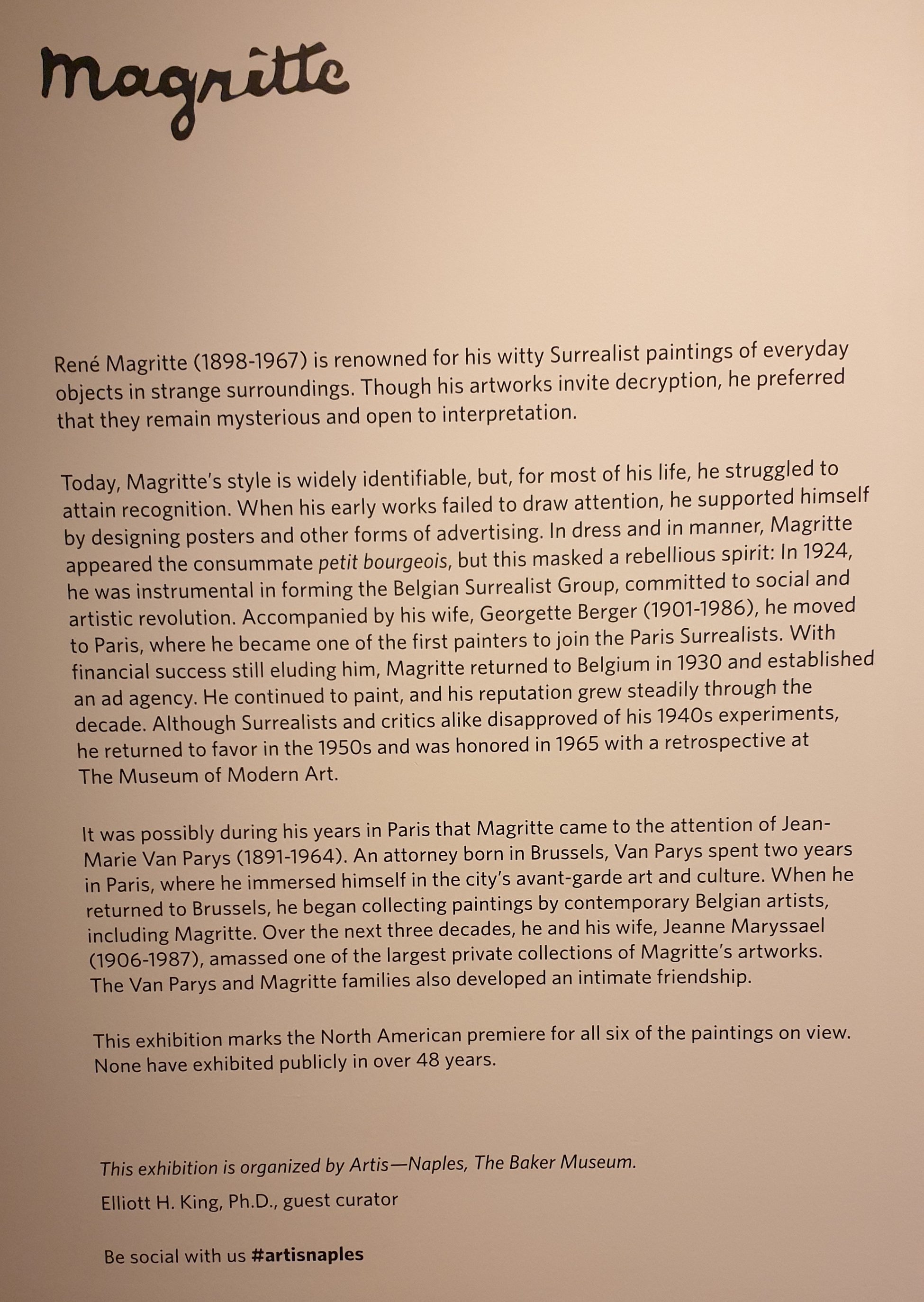
René Magritte might not be a household name, even though you might have his iconic Ceci n’est pas une pipe print hanging in your room or have seen his images many times.

Magritte (1898-1967) was a Belgian surrealist painter known for his amusing but ingenious surrealism, the body of a man in a suit with an apple for a head, the pipe painting, and so on.

On a recent trip to Naples (the Florida one), I had a bit of time in between meeting friends, so I snuck into the Baker Museum (which I write about here).

The Magritte exhibition was admittedly small, with just half a dozen paintings sandwiched inside a much bigger exhibition about the Everglades and its environment. But it was still worthwhile and beautiful to sit down for a while and contemplate these paintings that make you think about the metaphysical.

Magritte: Reflections of Another World comprises six paintings — five oils and one gouache — by Belgian artist René Magritte (1898-1967). Renowned for his witty Surrealist paintings of everyday objects in strange surroundings, Magritte preferred that his artworks remain mysterious and open to interpretation. These works are from the collection of Jean Van Parys, a collector of avant-garde art and a close friend of Magritte, and they are on a five-year loan to Artis—Naples, The Baker Museum from Van Parys’ daughter. The paintings have never previously been shown in North America, and none have exhibited publicly in over 48 years. Baker Museum

Dalí and the Dalí Museum


The biggest collectors of Dalí where Reynolds and Eleanor Morse, who founded the Dalí Museum in St. Petersburg – the one in Florida, not the original one. My Spanish V class went on a field trip to visit it.

This year in  Spanish V we studied early 20th Century Peninsular literature and culture. It was an exciting course: we started with late 19th C. Naturalism, reading Emila Pardo Bazán’s short stories, and moved on to Miguel de Unamuno’s San Manuel Bueno, mártir, a proto existentialist text. (To read more about Unamuno and Existentialism see my previous post about Existentialism and the Quijote), we saw Buñuel’s Un Chien Andalou, while studying and reading about Surrealism. We read Federico Garcia Lorca’s poetry  and talked about the Second Spanish Republic and how that led to the Spanish Civil War.

Our visit to St. Petersburg was fun. We took a van for the two hour drive North (with the obligatory stop at Starbucks to start the road trip). Once there, the Museum had our visit very well prepared. We explored the galleries and the students each presented on a work they had studied and talked a bit about Dalí. Outside the museum we walked around the gardens and labyrinth. From there we went a couple of blocks to hip, thriving, Central Ave in Downtown St. Pete, where the students  ordered their lunch – in Spanish – at Red Mesa Mercado, a street side taquería. While the students enjoyed some free time to explore the area, I enjoyed a nice coffee, then we drove back to Seacrest.

The trip was a cultural and pedagogical success, we all learned about Dalí and discovered a little bit of wonderful St. Petersburg – the one in Florida, not the original one.