Whenever possible, if you find the right person at the right time, get a guest speaker.
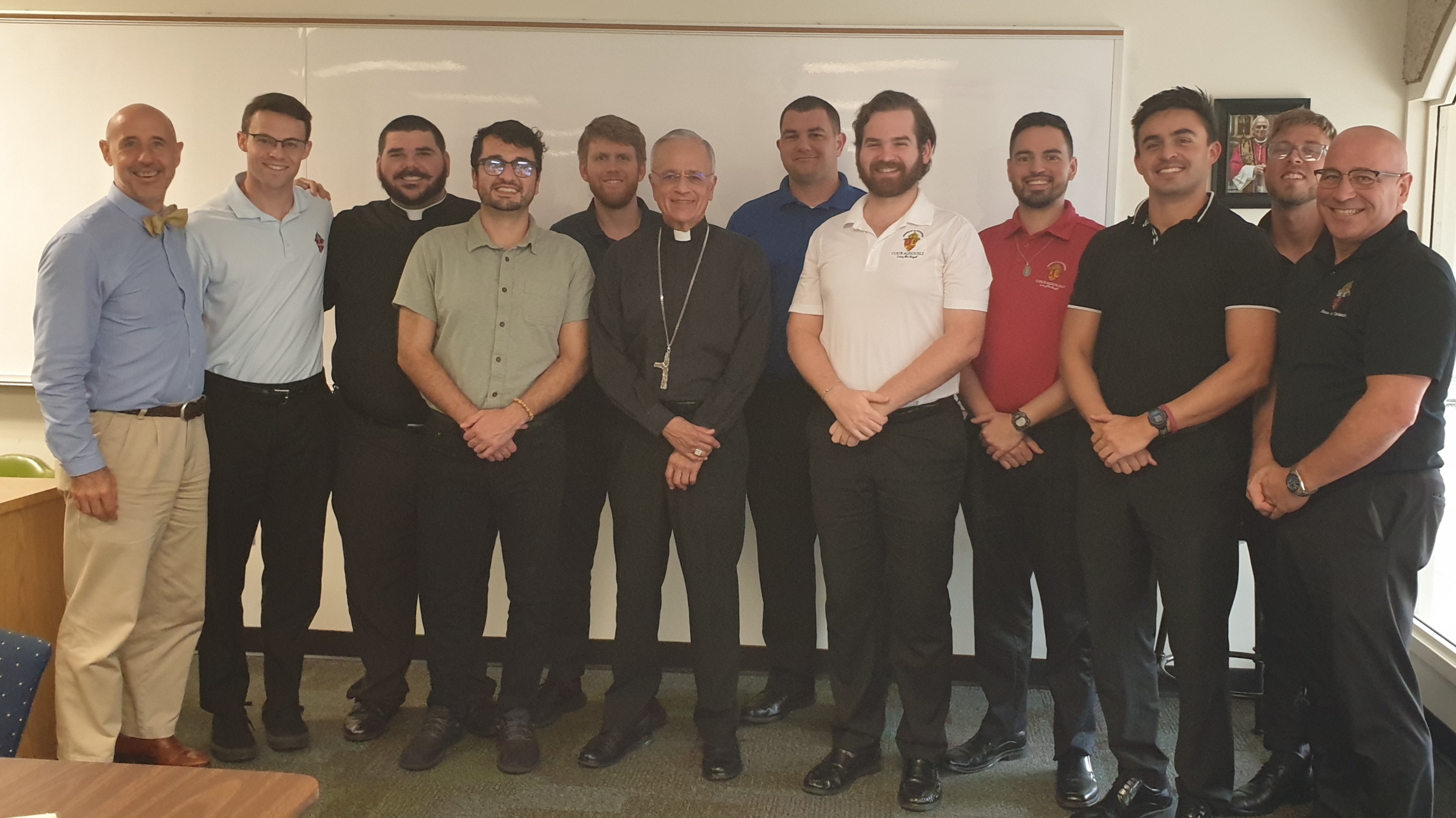
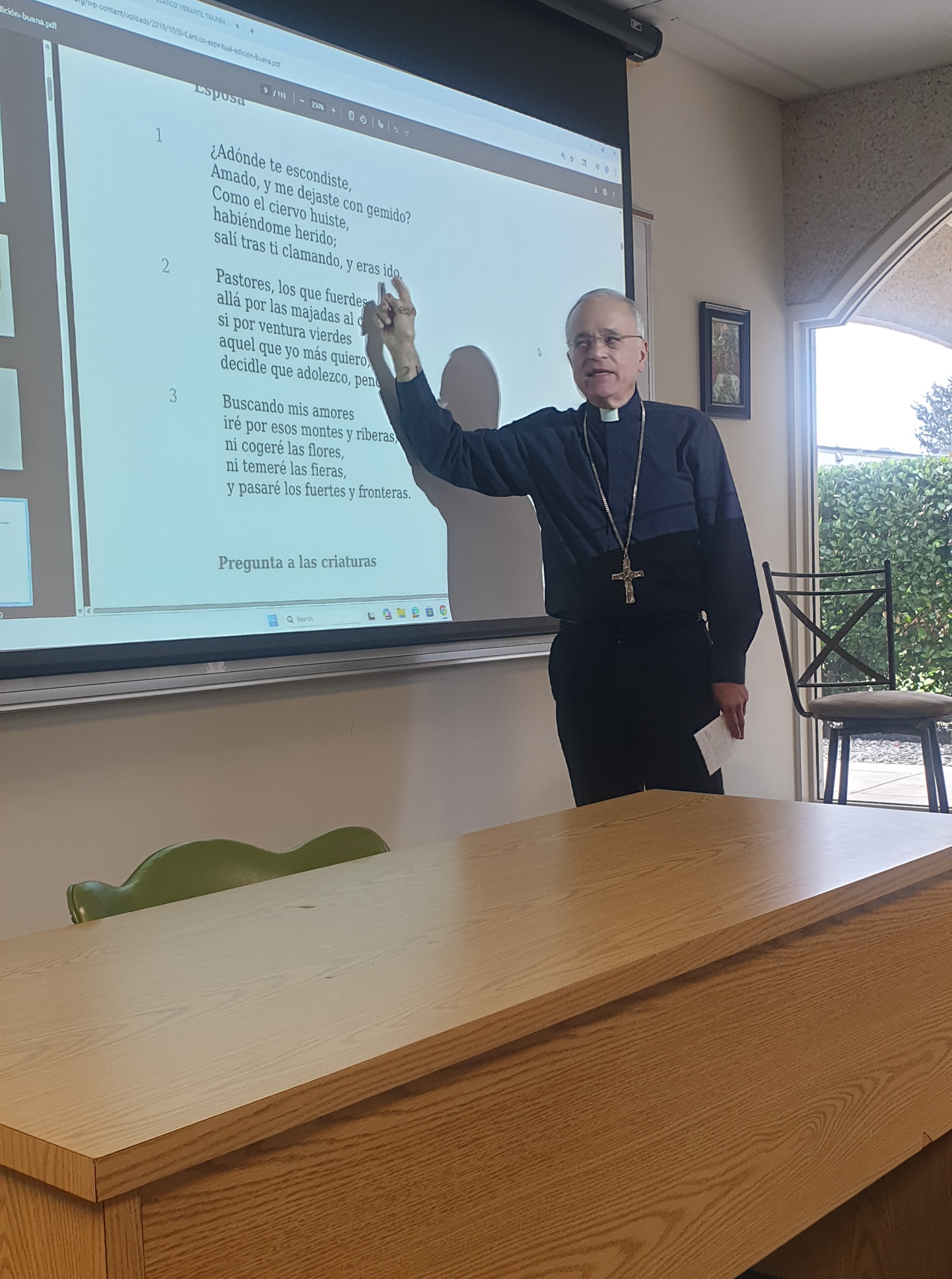
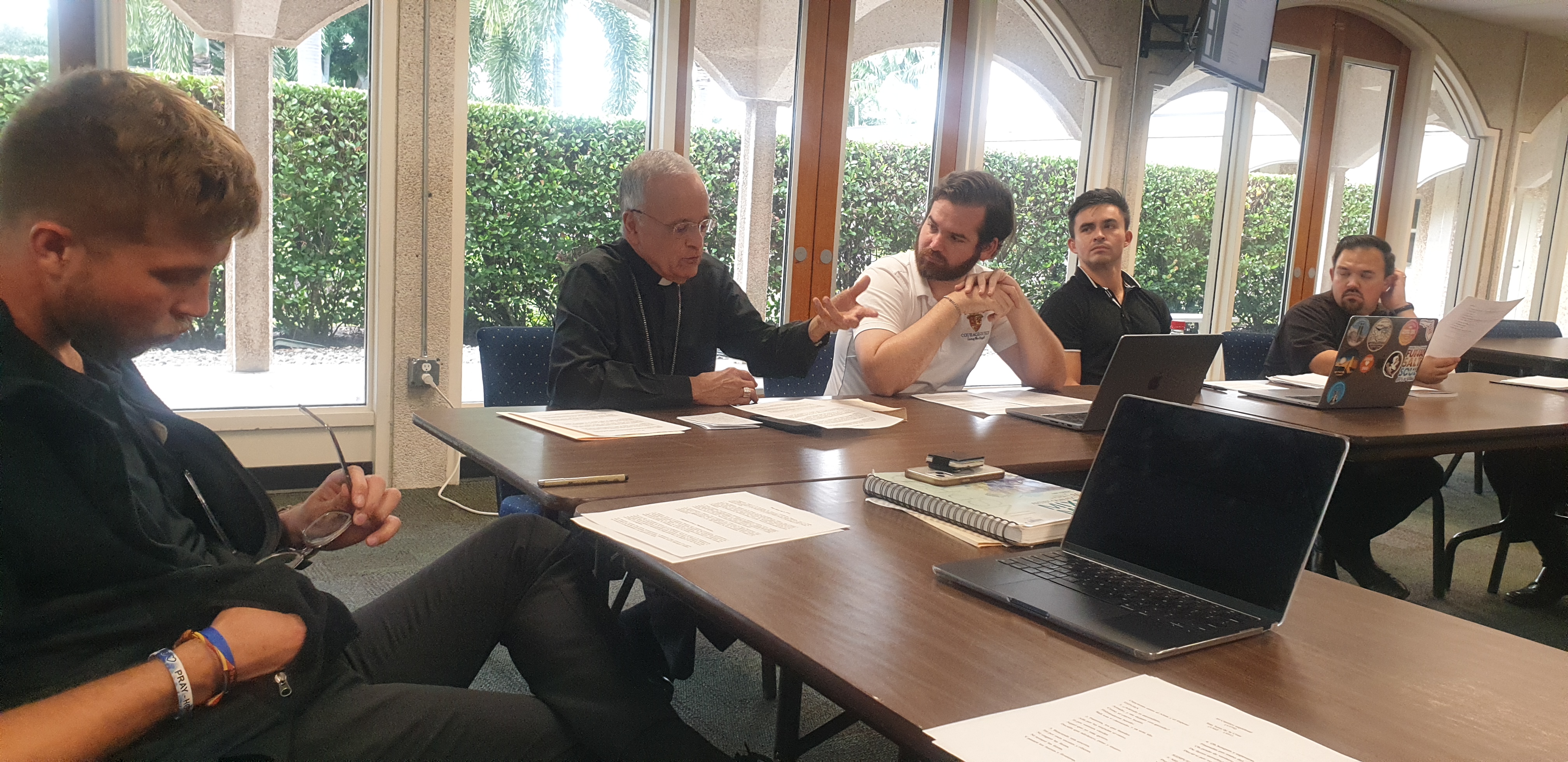
Bishop Silvio Báez @silviojosebaez of Managua is a Carmelite who just happens to work at my school. After much discussion and persuasion, I finally convinced him to attend my Spanish Art and Literature class to talk about St. John of the Cross. We arranged, organized, and scheduled, and he exceeded expectations. Bishop Báez brought his old St. John book, tattered and torn, from when he was a seminarian!
We only had time to explore the first 5 stanzas of the Spiritual Canticle, and he showed us how the writing leads directly to spirituality. Of course, St. John is the master of lyric poetry, and Bishop Baez knew exactly how to tease out St. John’s technique, method, and tricks to transport the reader to a deep spiritual realm. Bravo!
Of course, for the students, it is a new, different voice —an authority on the subject— presenting new material.
Over the years, I have managed to get the Spanish Consul in Boston and his Education Attaché to come chat. Poet Daniel Bosch explained how the very structure of Pablo Neruda’s Veinte Poemas de Amor is in itself a poem. At UNC, I met the owner of a local restaurant who spoke excellent Spanish, so I invited her to my Spanish for Business class.
On the other hand, if you can talk about a subject with some authority, then it is only fair for you to give back by being a guest speaker. I have been a guest speaker a couple of times: once on bullfighting, a couple of times on entrepreneurship, and a couple of times on public speaking.
So if the stars align and you can pull it off, get a guest speaker; your students will appreciate it.
As any normal person who has gone to the gym with certain regularity knows, it is mind-numbingly boring. I had heard all the wonderful benefits of Yoga, so about ten years ago, when somebody offered me a Yoga class at the gym in Chapel Hill, I signed up.
I liked it, I liked it enough to return and make it part of my routine, which also meant not doing the same boring workouts. I moved to Florida and continued going to Yoga at my local gym, and so on. Back in Spain, I dropped it; there seemed to be a disconnect between the mentality of Yoga and Spain’s well-established Scholastic tradition. I tried a few venues, but was not convinced
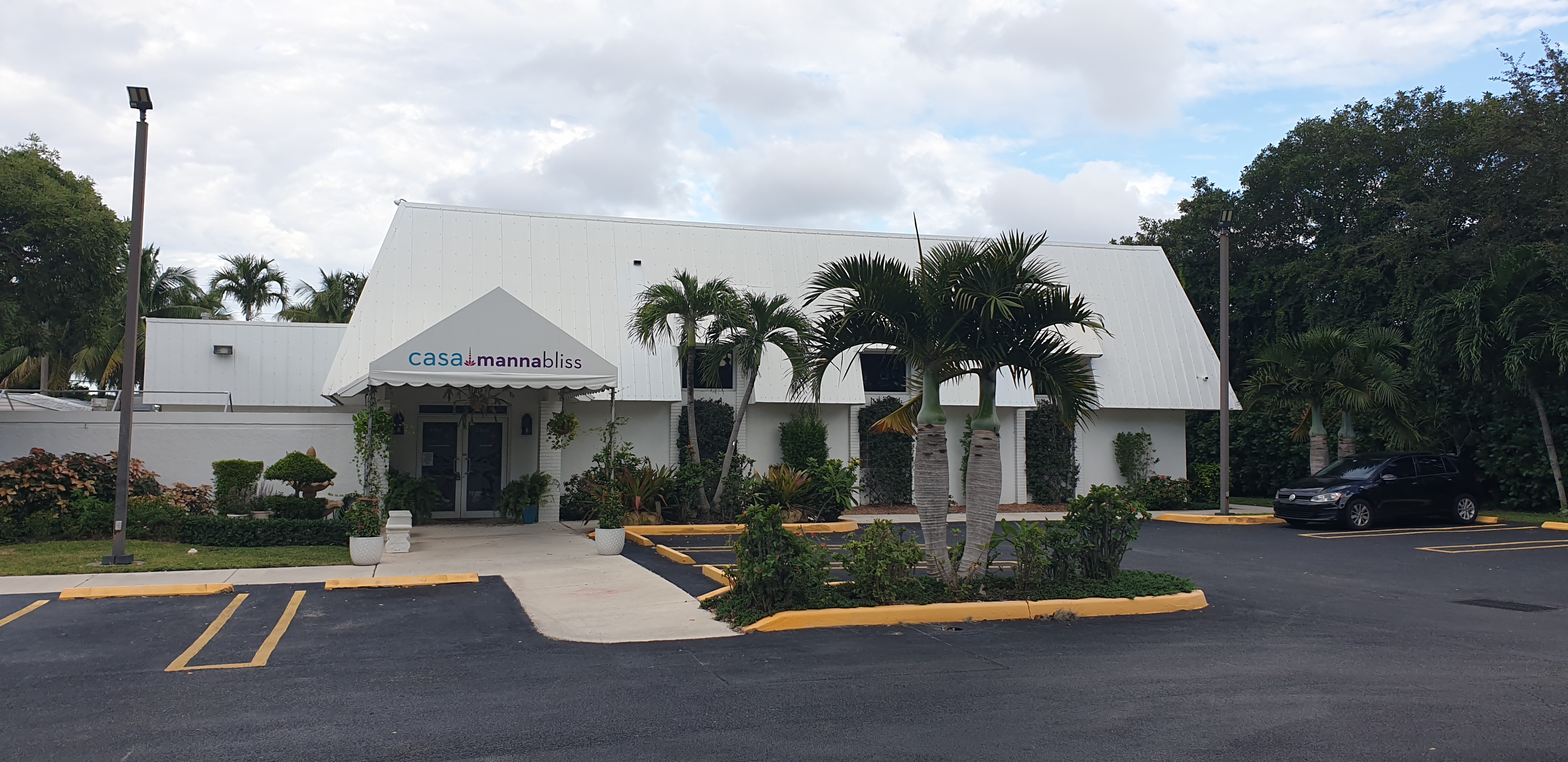
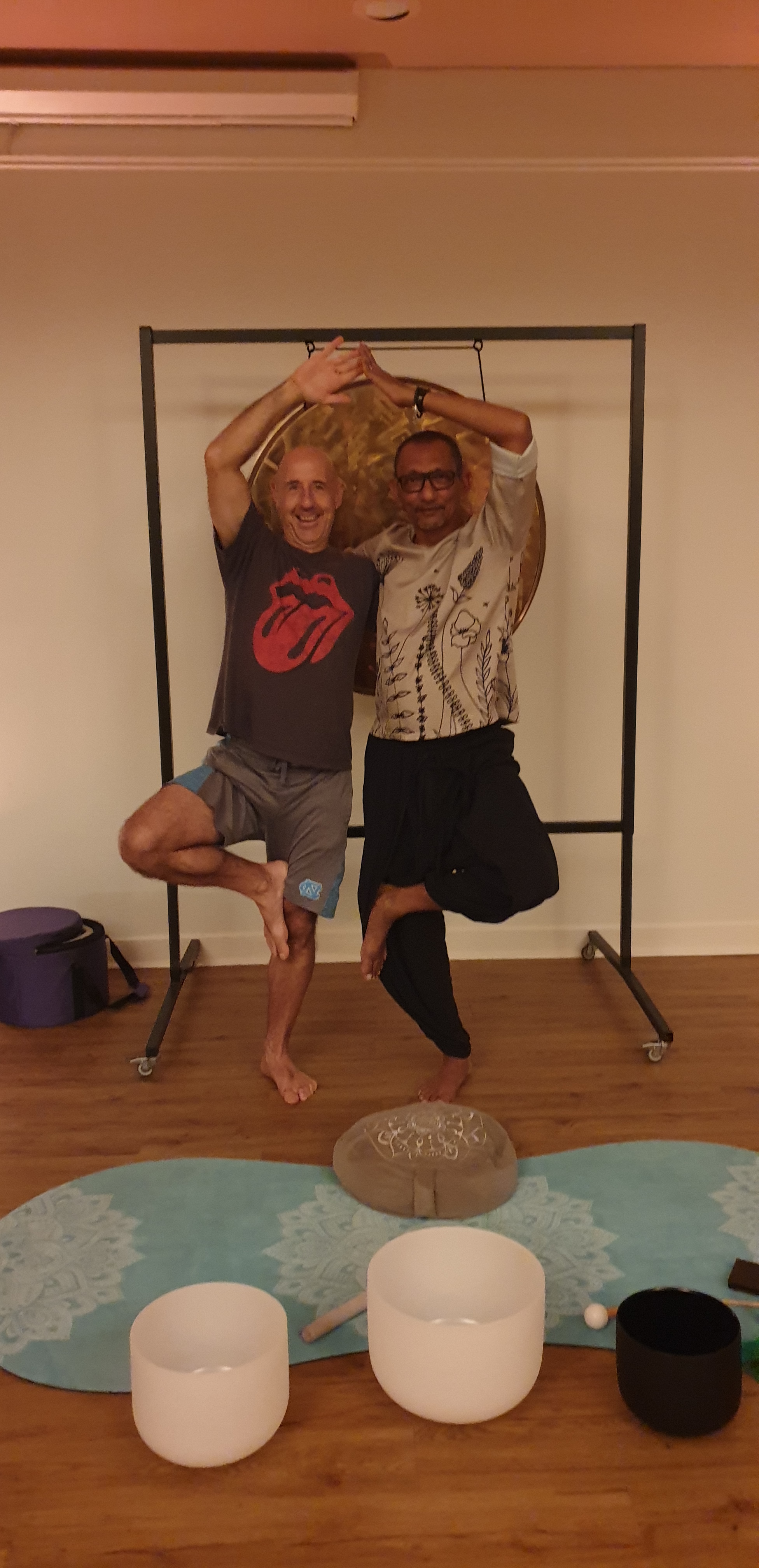
When I returned Stateside, after a bad experience at a local studio, I eventually found Paritosh at Casa Manabilss. What I realized was akin to thinking that for years I had been going to Taco Bell, thinking I was eating Mexican food, and then trying Mexican food in Mexico! My life was changed; I had now entered into real Yoga. Paritosh patiently explains not only the asanas, but they why, the philosophy, the history, the spirituality, the whole package!
On top of that, Paritosh is hilarious! Yes, I know all the jokes and when they are going to drop, but that is part of what makes the class fun.
Originally, the class was labeled Yin Yoga, a type of Yoga that works the fascia of the muscles by holding the asanas longer. Now it is Raja (Royal) Yoga, which gives Paritosh more room to do more encompassing exercises: meditations, breathing exercises, Yoga Nidra, etc. It is a very enriching class, as you never know exactly what the components are going to be, but they are always amazing.
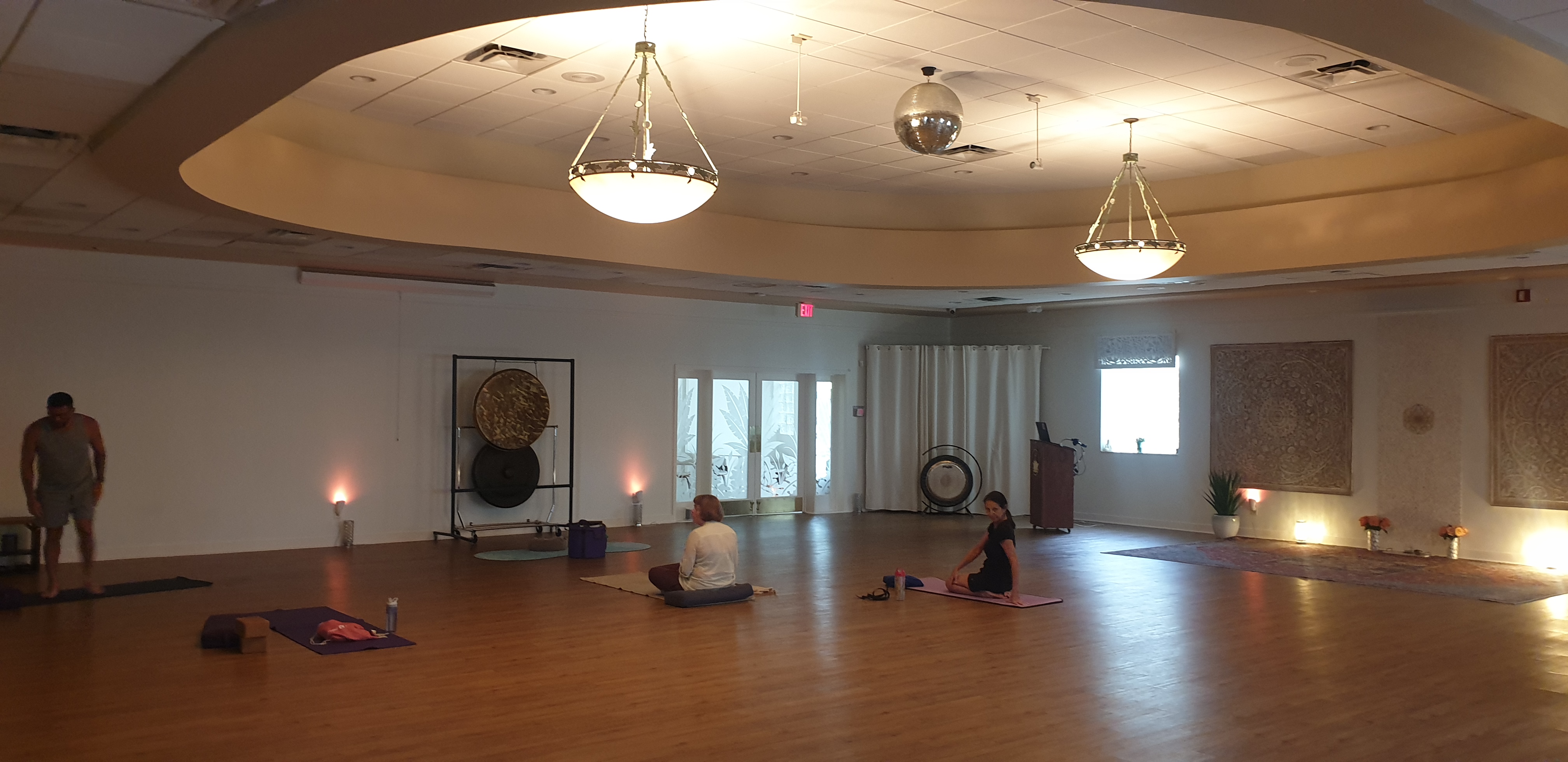
Also, Casa Manabliss has a new home in what used to be the function room of a restaurant! They have done a great job preparing it and keeping the disco ball! It is a great new venue!
One of the best things about having your own blog is that you can write whatever you want. Even if it is pseudo academic, or as one of my students says: Dr. B’s conspiracy theories. No double-blind peer reviews, no scientific method, no academic prestige to worry about, just my unadulterated thoughts, a hunch. So enjoy:
Why am I fascinated by the turn of the (20th) Century Central and Eastern Europe? I have written about it a couple of times (here and here).
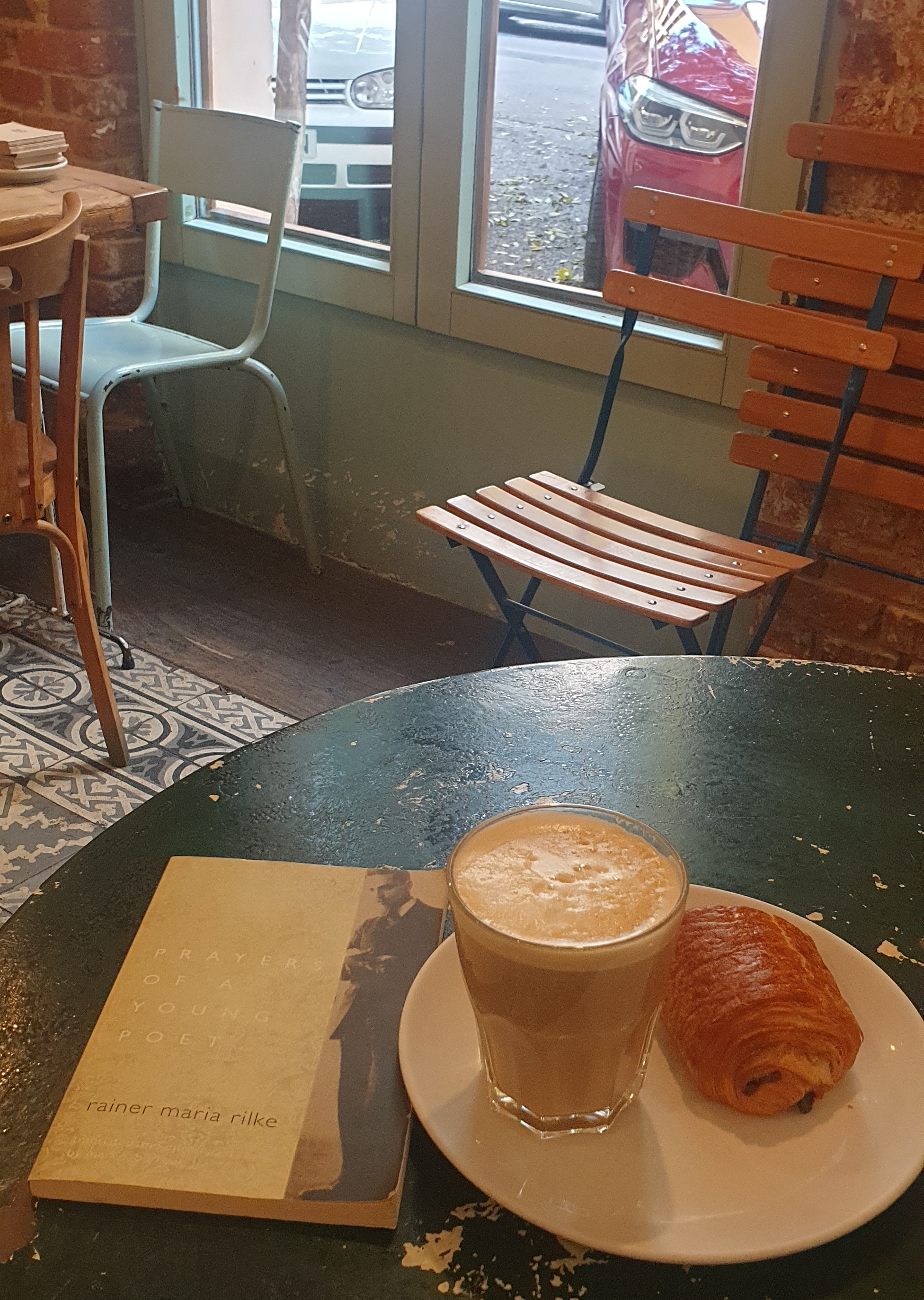
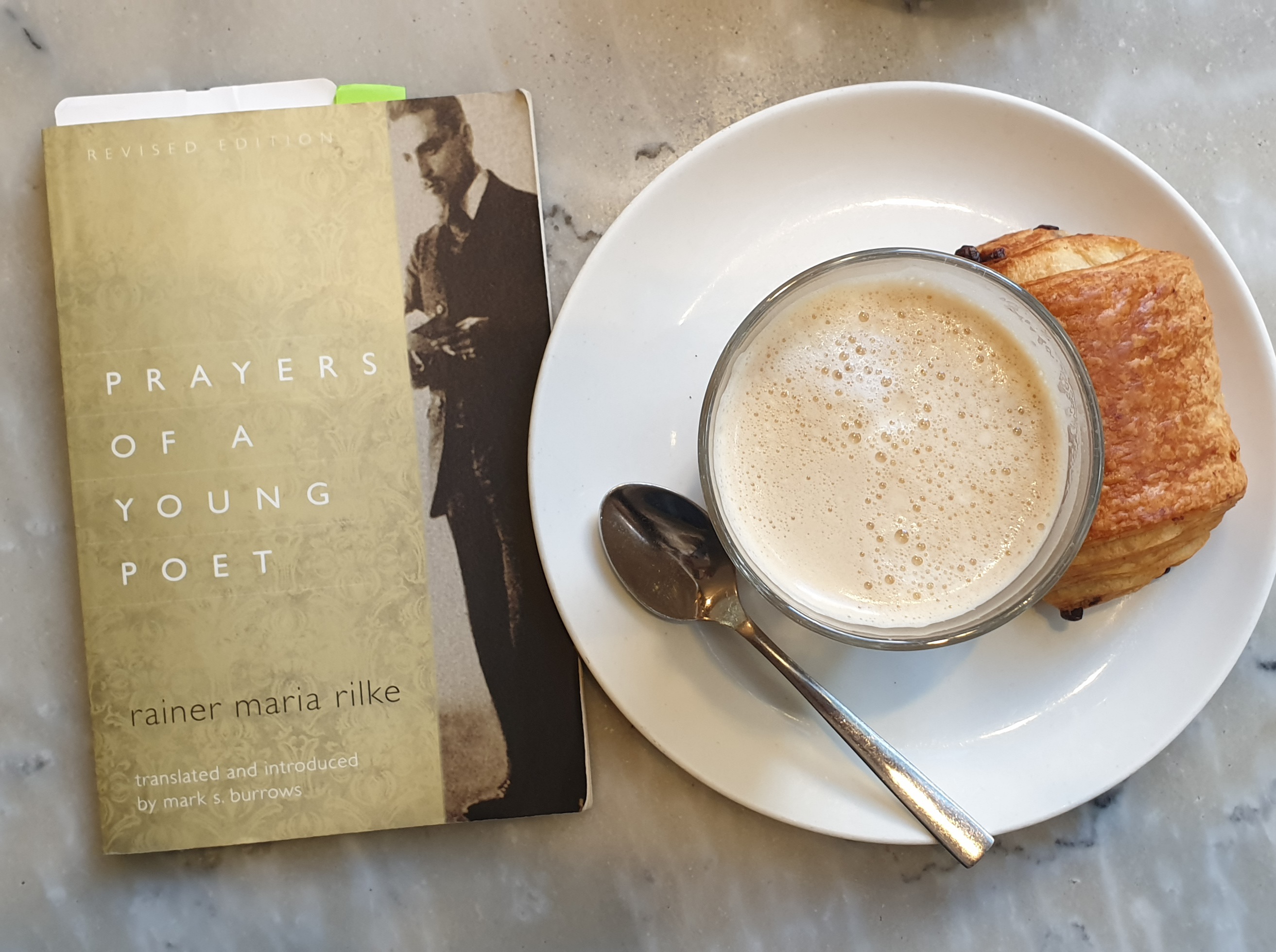
I just finished Rainer Maria Rilke’s Prayers of a Young Poet, and it blew me away!
Rilke authors this 68-poem collection in the voice of a nameless Russian Orthodox monk. The spirituality is palpable. Each poem has a brief footnote denoting where and/or when it was written: “2nd of October, beneath soft evening clouds”, “On the 5th of October, written down in the exhaustion of evening, having returned home after having been out among the people.”
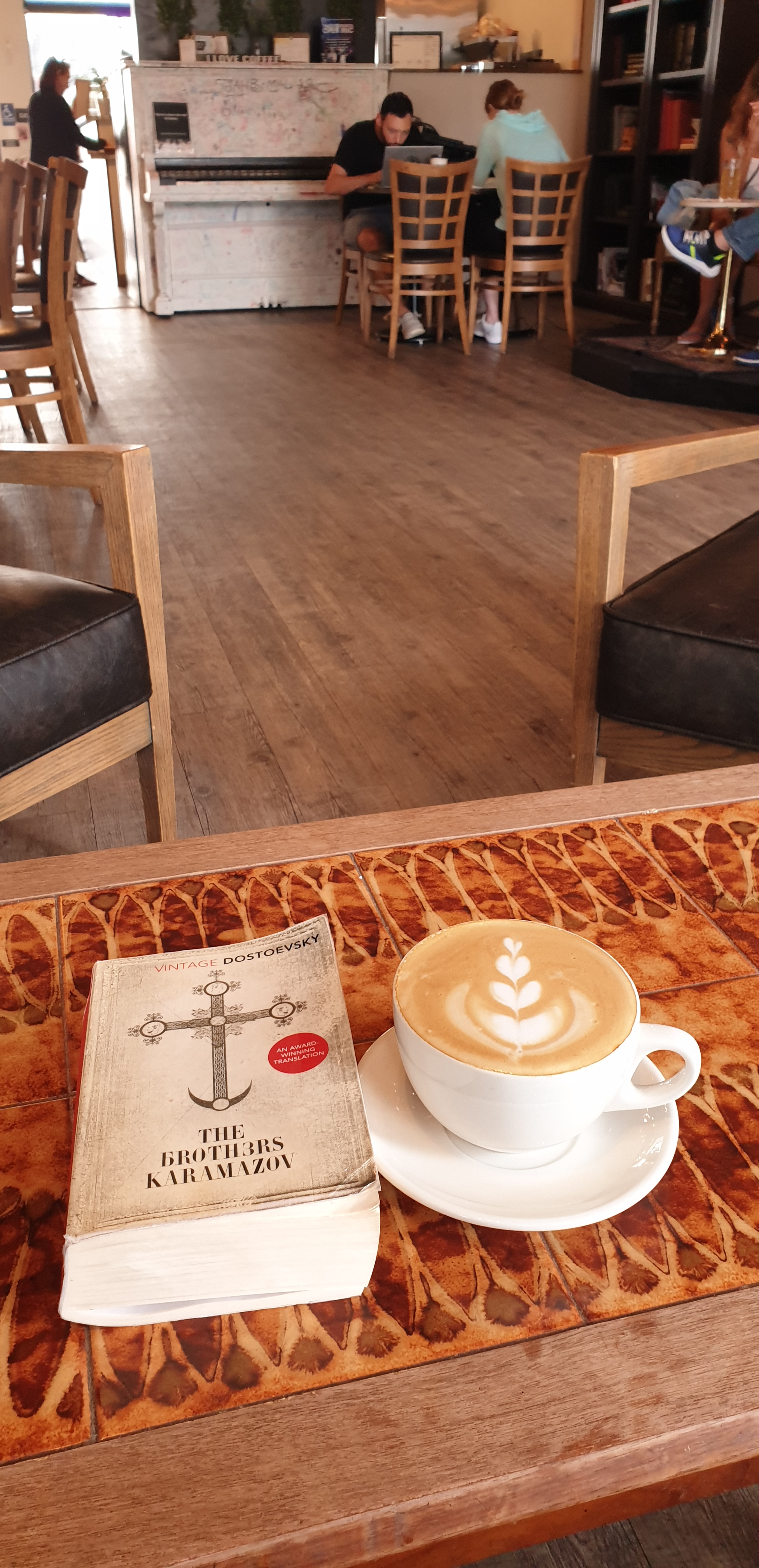
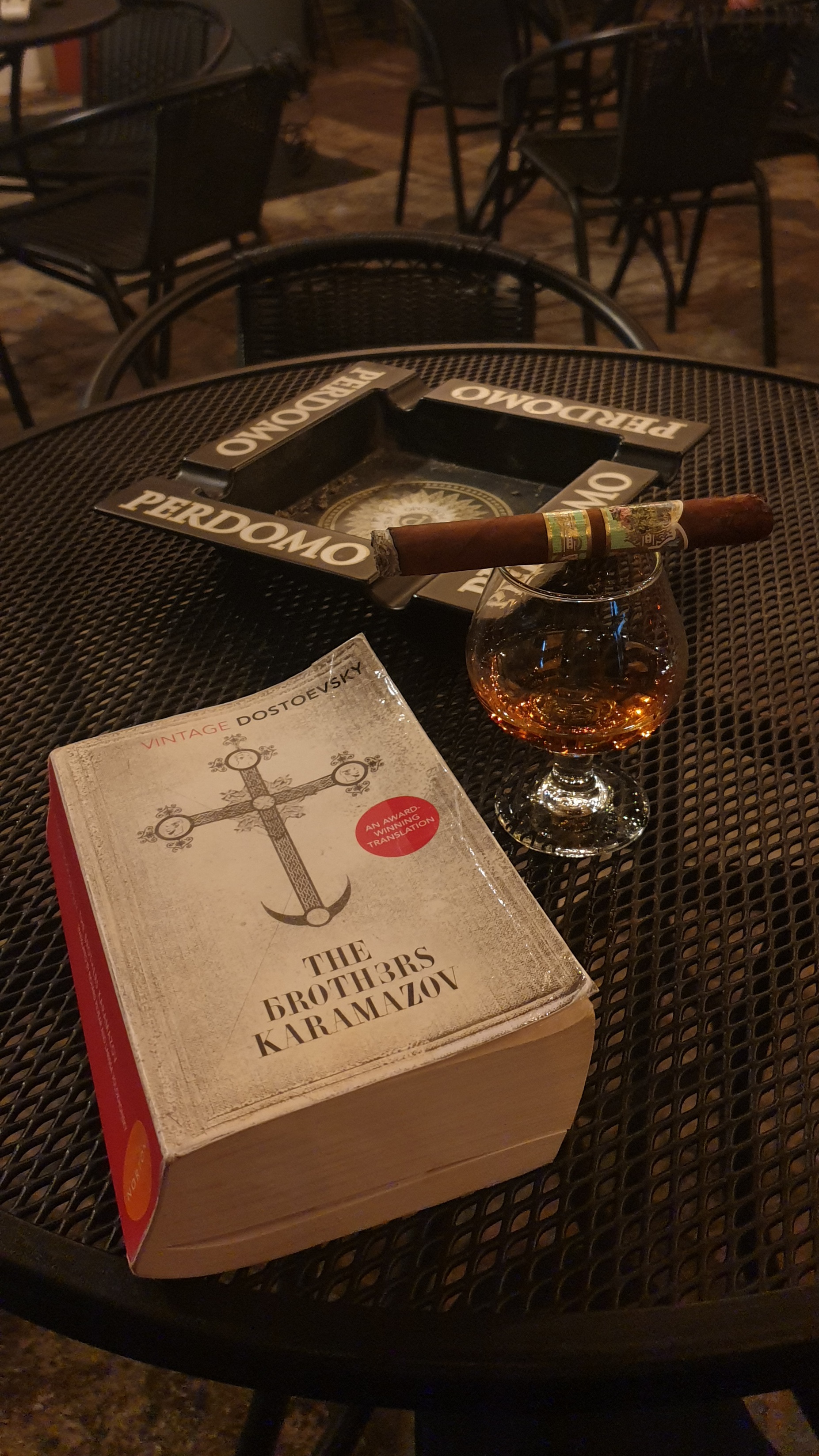
Perhaps due to my ignorance and lack of reading, I kept thinking of Alyosha Karamazov from Dostoyevsky’s novel.
What connects these poems and Alyosha Karamazov is a simple innocence, a pure love of life and humanity in lines like:
“I want to love things in ways no one has yet done.”
or
“The hour bows down and stirs me
with a clear and ringing stroke;
my senses tremble. I feel that I can–
and seize the forming day.”
So, that is my hunch, my thesis. That there is an existential connection between the monk, the narrative author of Prayers of a Young Poet and Alyosha Karamazov, as if he had drafted those poems. But, you say, there are hundreds if not thousands of Russian Orthodox monks and many of them are in literature. My answer to your comment is the first line of this blog post. Also, I am a romantic, can’t you see? And this connection is just beautiful, and delicate, and awesome!
Rilke travelled to Russia and was entranced by their culture, art, and most importantly their rich religious tradition. He also could have read Dostoyevsky’s masterpiece published in 1880, 19 years before the original publication of Prayers in 1899.
Yes, I could go on and on and get all academic, but this is a general interest blog, so there you have it. If you do want me to elaborate on my thoughts, let me know in the comments!!
Richard Rohr recently explained in his daily email about the transformative power of art (see below). Although this is something we have known for a long time, I was just thinking the same thing recently.
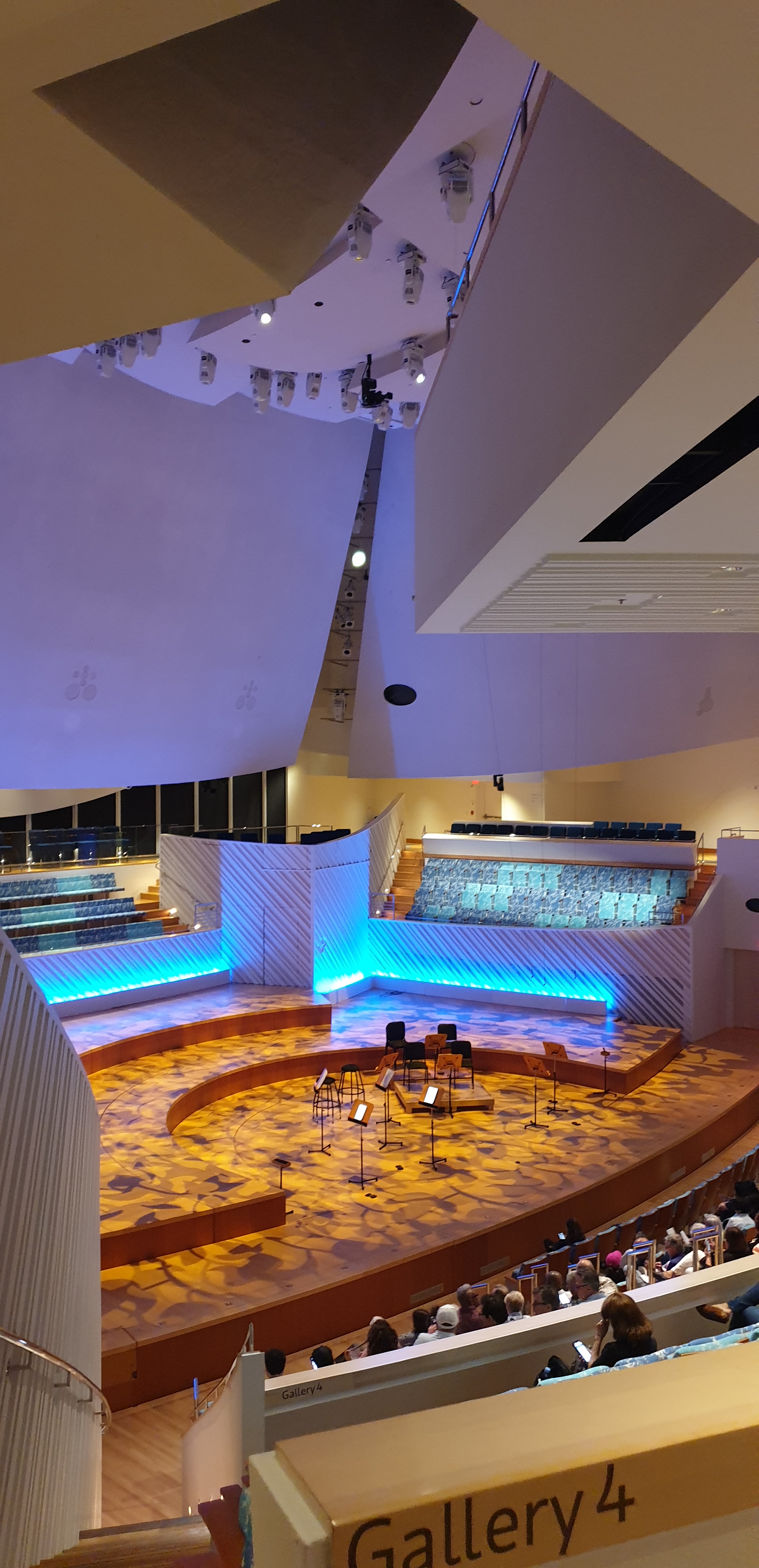
My dear friend, old student, Film Club founder, and overall formidable fellow, Guillermo recently invited me to see him perform with his orchestra, Sphinx Virtuosi, at the New World Center in Miami.
When the art hits, when it envelops you, your attention is focused on the art. You are not thinking about bills, work, what’s for dinner, etc. At that moment, at that point, you are as close to the divine as you are possibly going to be. The beauty of this moment is that it happens without conscious preparation, you just hit the moment, and it is beautiful.
The Sphinx concert featured their amazing musicians, all of which are at the top of their game, with musicians, fellows, from the New World Orchestra in a fluid collaboration. William is not my only old student playing in the Sphinx Virtuosi, Tommy Mesa whom I have mentioned before (here) and Celia Hatton who, like Guillermo, plays the viola, were also my students. Having a drink after the show I met Canadian-Caribbean violinist Maithena Girault.
So go immerse yourself in art, the more you appreciate art, the more chances you are going to have of being transformed by it. It could be a concert, in a museum, any form of art has the power and potential to elevate you. Be open to it.
Few things are as rewarding as finding an unexpected jewel. It might be a film, some material thing -including a jewel- but in my case it was a book.
Anthony de Mello’s The Prayer of the Frog has been on my to read list for years, but it is a long list so I don’t really worry too much about it. A few months ago, I found another book by Anthony de Mello on the Free Bookshelf at my school: Awareness.
Well, I finally picked it up and it gave me a big slap on the face! What an awakening!
The book (published posthumously; de Mello died in ’87 the book was published in ‘90) is basically a transcript of one of his conferences. He shakes you to wake up, to start really seeing, to really listen and observe, to be aware of what we do, including charity work, to not label things, including God. The book is really priceless, with quotes such as:
We see people and things not as they are, but as we are.
Anthony de Mello
De Mello urges the reader to simplify, to understand the difference between desires and preferences. He points to our understanding of the world through our conditioning. The whole book is full of wisdom and urgency. I read the almost 200 pages in a few sittings.
One never quarrels about reality; we only quarrel about opinions, about concepts, about judgements.
If you read my Thanksgiving post, you might have gotten the idea that I am a Grinch. Well, I am.
Before we go any further, I hate the lights, the mass euphoria, the presents, and most importantly the assumption and expectation of happiness. “It’s Christmas, you will get presents, everything looks pretty and everything is lit up; therefore you must be happy”. This is stressful, at least for me.
On the other hand, I love the spirituality of the celebration of the birth of Jesus, of the Winter solstice, and most of all, I love Advent.
Madrid, like most cities during Christmastime is chaos. Everybody is out; apparently enjoying the pretty lights, and walking around, and stopping for a coffee, and buying presents, and getting drunk, and singing and getting drunk and singing. Jesus, your emotional wellbeing, your financial wellbeing, silence, reflection, and meditation are nowhere to be seen.
This year I found a great little book: Preparing for Christmas, Daily meditations for Advent, by my guru, Richard Rohr. In it he reflects on the daily reading, and then à propos of the reading writes a meditation for the reader. Some of them are:
What expectations and demand of life can you let go of so that you can be more prepared for the coming of Jesus.
or
What attachments in your life can you let go of to make more room for God?
Or, last one:
What perceptions of Jesus and Christ do you have that need to be changed?
This is excellent food for thought and meditation and this is part of the journey of Advent. You see, the presents and the lights no not make you a better person, you are lucky if you feel grateful for getting another sweater, another tie. What is enriching is the journey to Christmas, the spiritual preparation, the reflection, and the meditation.
So, it is not that I hate Christmas, I just hate the commercial, superficial Christmas.
As soon as people find out I have done the full Camino Francés AND the Camino del Norte they always ask the obvious question: which is better? Well, here are my thoughts.
Like everything else in life, it is all about your personal tastes, the purpose of your Camino, etc.
The French way has more varied terrain, switching every few days. You get the Pyrenees on day one, then the rolling hills of Navarra, blending into the vineyards of La Rioja, eventually you get to the agricultural hills of Burgos, before hitting the plains of the plateau of Palencia and Leon before arriving at the hills of El Bierzo and the ancient Celtic hills of Galicia. The North or Coastal route on the other hand is amazing beach after amazing beach, and amazing forest after amazing forest, oh, and the only flat bits are the beaches, the rest of the time you are going up or down, which makes this route much tougher physically, but extremely rewarding as you are never more than a day or two away from the sea.
Also since this was the predominant trail in the late Middle Ages, the French way has a lot of history and a powerful spiritual charge, every chapel, every church, and cathedral just has this literally awesome, moving presence. By contrast, the Northern trail was abandoned in favor of the Francés as the Moors were driven out of the peninsula so, in fact, you are walking a much newer trail without so much of the spiritual aspect.
Food is probably better on the North route, as you partake from the bounty of the lush, green countryside and the ocean. This does not mean that the French way is bad, it just does not pass-through San Sebastian, arguably the best food per square foot in the world!!
North Coast of Spain is very green. Why? Because it rains a lot! So, if you commit to the North way, make sure you are prepared mentally and physically to deal with rain, sometimes for days… The French way on the other hand tends to be much drier.
Finally, depending on when you are doing it, the French way can become a bit crowded, while the North route has consistently less traffic.
If you are more into exploring cities and towns, both ways offer great stops, San Sebastian, Bilbao and Santander on the North, Pamplona, Logroño, Burgos or León on the French way.
So, in the end it boils down to what you want from your Camino. If you are looking for tradition and spirituality, go with the French way, if you prefer breathtaking views and more of a physical challenge, go North.
Have you done both Caminos? Leave your thoughts in the comments!!
Confession time: I have a problem that started around high school, I cannot stop reading. I read anywhere, anytime. I have books and magazines strategically placed around the house: the dining room table, the bathroom, bedside table, etc.
My summer reading was -as usual- an eclectic mix of books, here are some reviews:
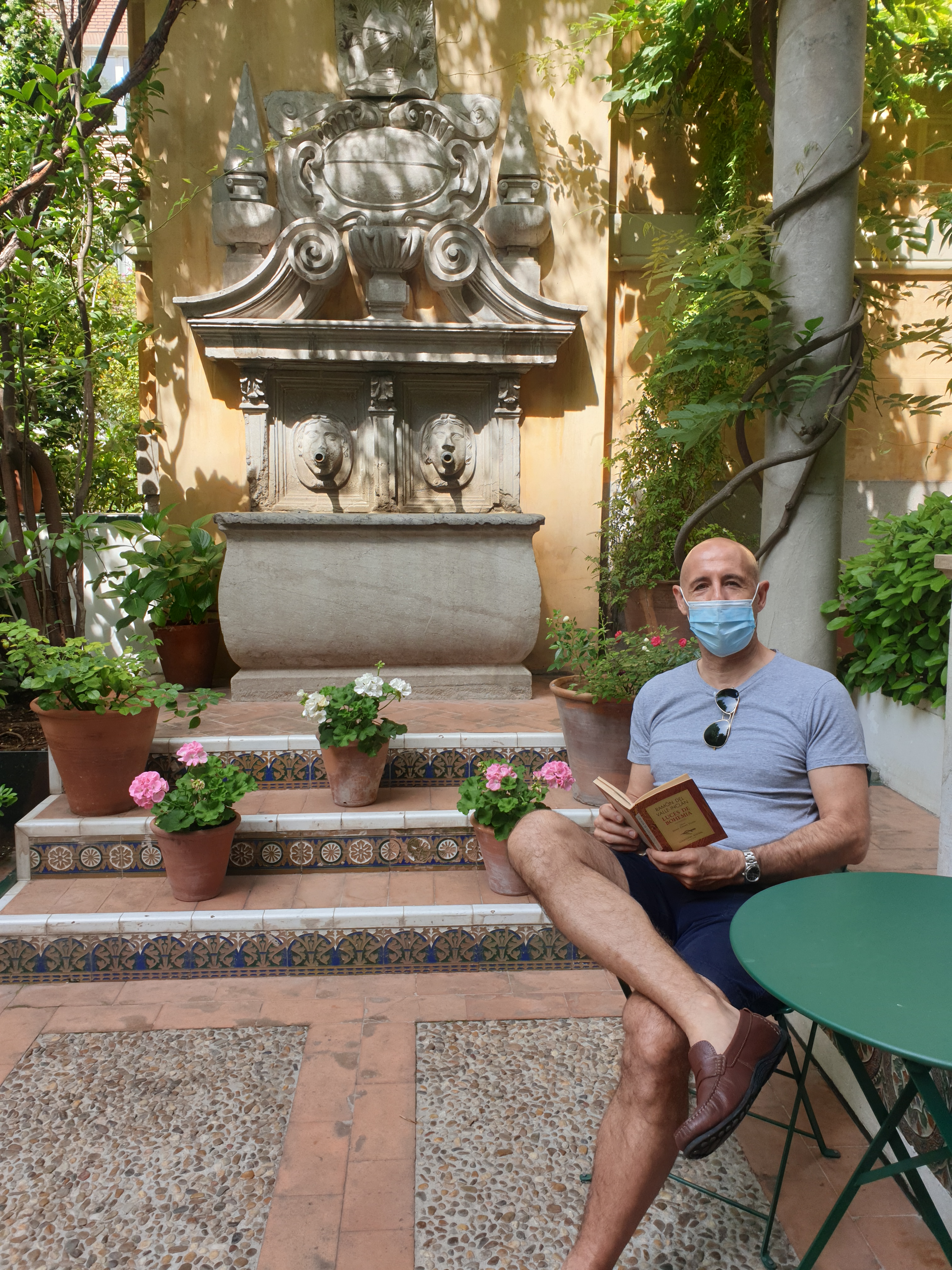
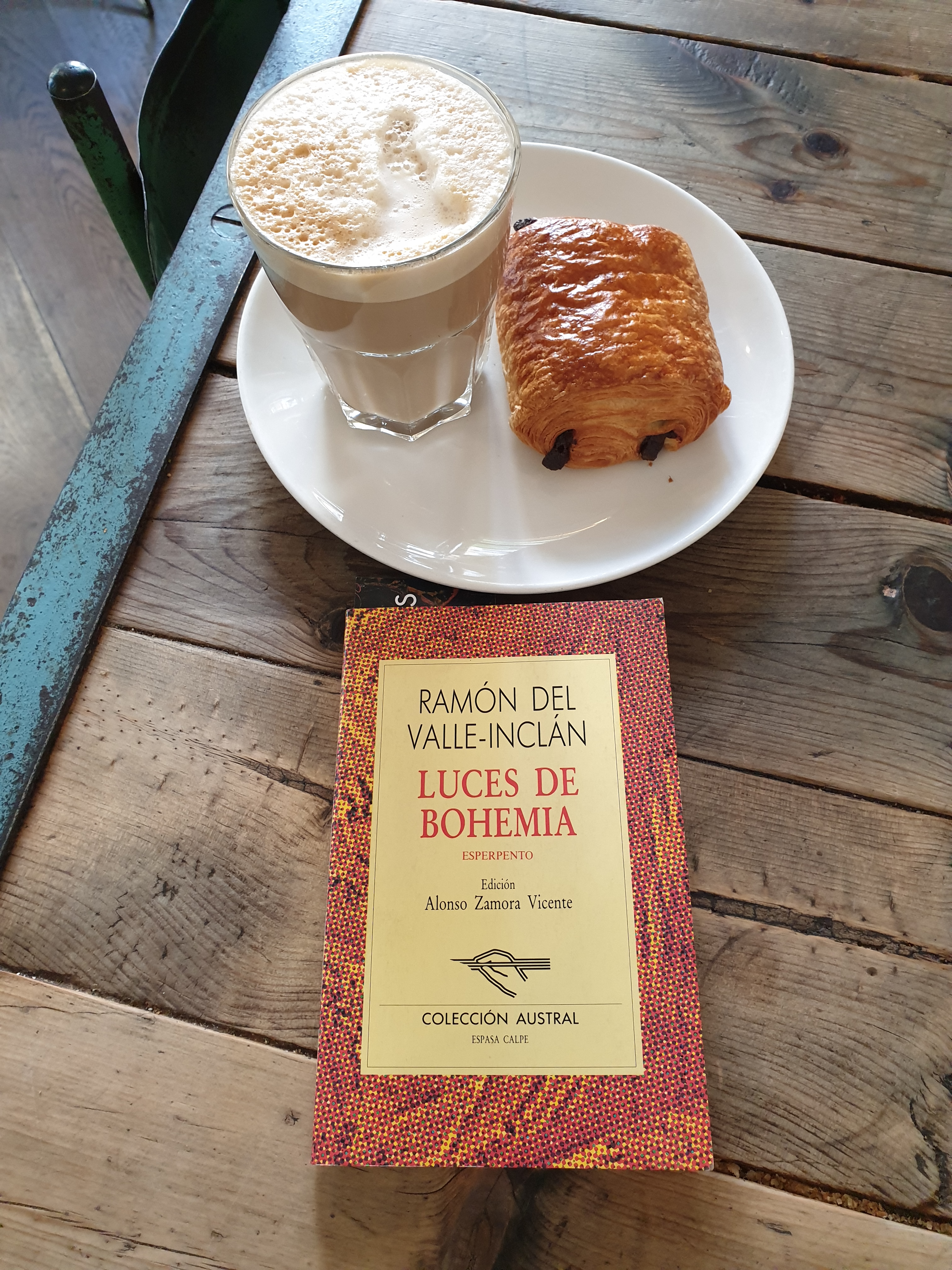
Ramón del Valle Inclán Luces de Bohemia. I am a bit ashamed to disclose that I have a PhD in Spanish Literature and I had never read this (to my defense, my specialty was 18th C. literature, and my sub-specialties were Colonial Satire and Medieval Spanish Satire). I was surprised how fresh this book felt. Although it was written in the 1920s it might just as well have been written today. It is a satirical but profound glimpse of Spain at that time. It also introduces the concept of “esperpento” which offers a distorted and grotesque view of the world which paradoxically acts as a corrective lens to better appreciate the situation.
A critical factor of the Camino de Santiago is weight. The library of the albergue in Roncesvalles (the first stop of the Camino Francés) is full of Bibles that pilgrims with the intention of reading have “donated” because of its excessive weight and bulk. This year I carried Junichiro Tanizaki’s In Praise of Shadows which is a beautiful study of Japanese aesthetics and culture, a gorgeous essay on the philosophy of traditional Japanese interior design.
Back in Madrid I read Henri Brunel’s The Most Beautiful Zen Stories – The original is in French, and I do not think there is an English translation. The book, as the title explains has short and sweet stories, but always with a bit of a sting – a question, maybe, unanswerable, at the end.
My beach reading was a gift from my dear friend Paco Navarro: Walter Kempowski’s All for Nothing (Alles umsonst in the original German). A story about a family during the last days of WWII in Germany. A great read about family dynamics, history, the human condition, and war.
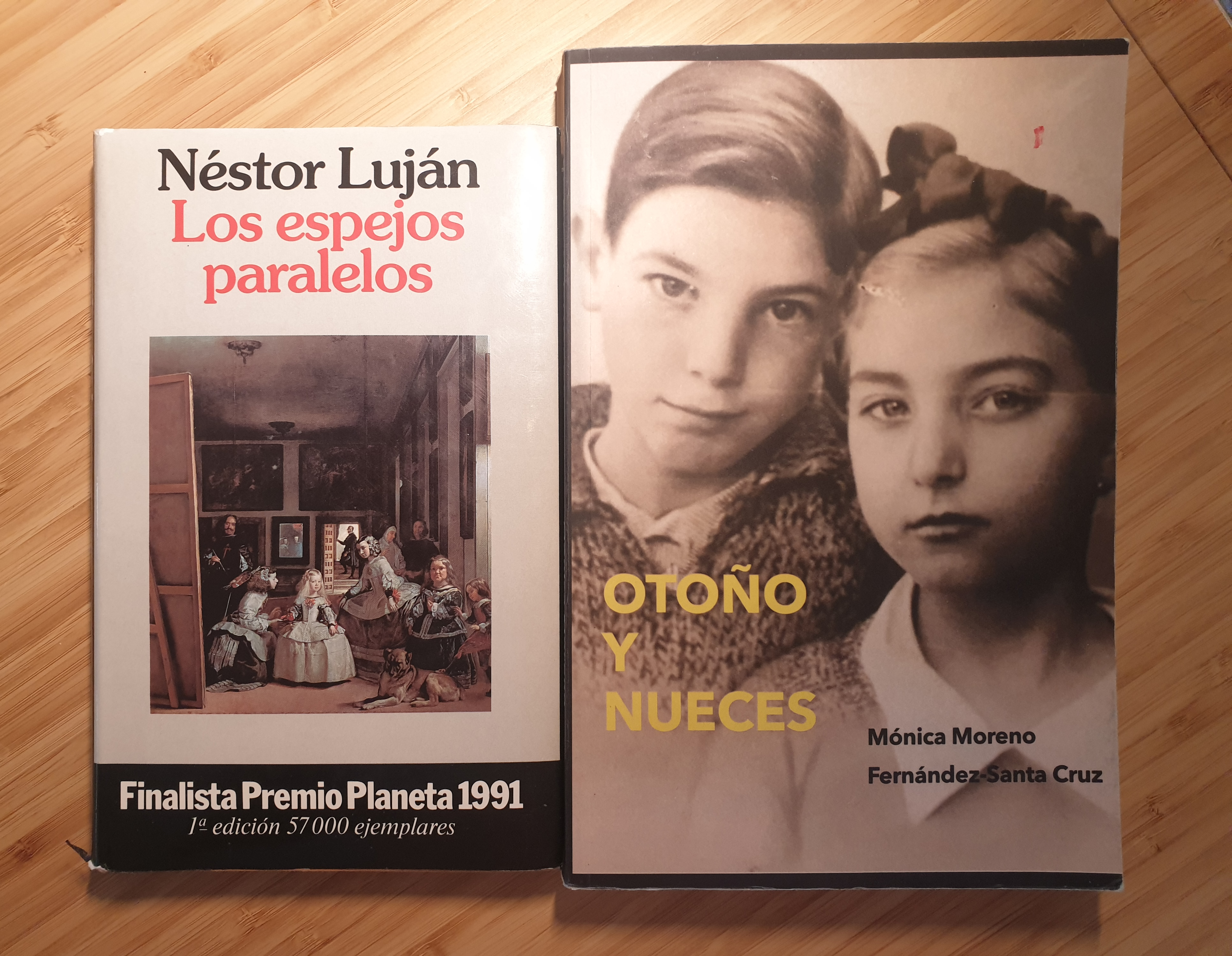
Back in my mom’s country house I dug into another war, this time the Spanish Civil War, from the hand of dear friend Monica Moreno, who writes about love and family during that fratricidal war in Otoño y nueces. Her first adult novel after a handful of YA books, is well documented and intimate. Get it on Amazon here!
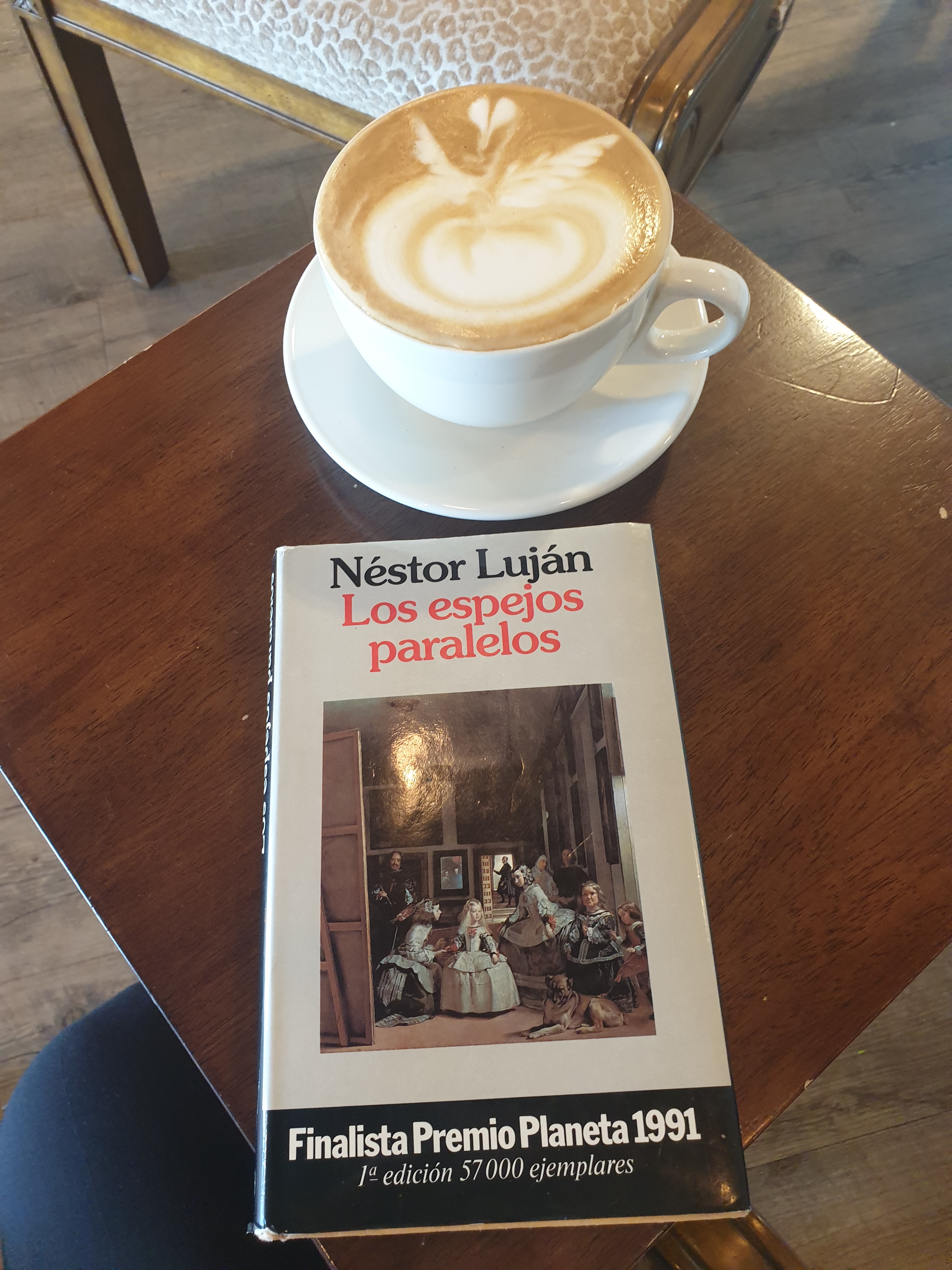
Back in Florida I explored Velazquez’s masterpiece painting Las Meninas through Néstor Luján’s Los espejos paralelos, which brings the painting to life through each of the characters, including the dog! Luján takes us to the dark hallways of Madrid’s old Alcazar palace, life in the court of Philip IV, and Madrid. A delightful read –specially if you are a fan of Velazquez and Las Meninas!
My last book before Fall was Richard Rohr’s The Divine dance which reflects on the deep spirituality of the Trinity and how love flows through the universe and us!
So there are a few reading recommendations in case you needed any, you are welcome.
Thanks to Film Club, I am seeing many more films now than I have in years . Having said that, I really do not want to make antonioyrocinante into a film blog, there are enough of those already.
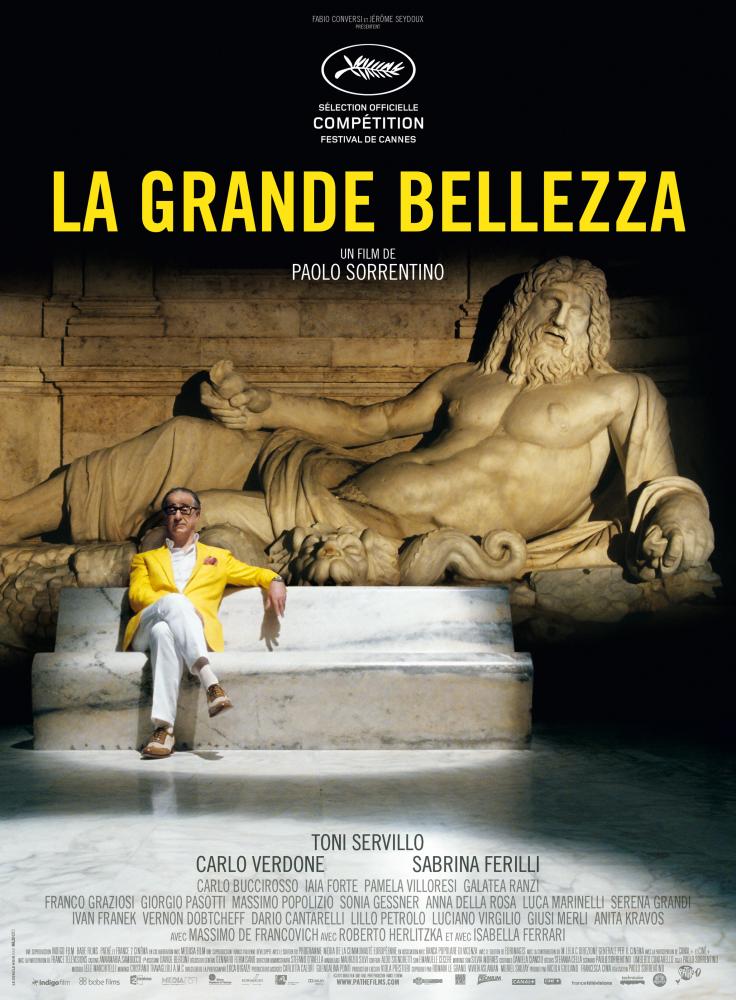
But I just saw La Grande Bellezza, (yes it is a 2013 film, I am a bit slow) and I have to tell you about it – beware, there might be spoilers.
This is an exquisite film, as beautiful as Rome, the city where it is filmed: exuberant, colorful, rich, fun… but there is a gaping void in it, a melancholy, sad void represented by protagonist Toni Servillo as Jep Gambardella.
You see, all the beauty in the world is sterile, meaningless without love, without a deep spiritual connection. Director Sorrentino is not subtle about this: The film opens with a quote from Céline’s Journey to the End of the Night
Traveling is very useful: it makes your imagination work. Everything else is just disappointment and trouble. Our journey is entirely imaginary, which is its strength.
To drive home that point, the opening scene combines ethereal views of Rome combined with David Lang’s otherworldly song I lie. The fact that the song is in Yiddish should lead you to the great spiritual journeys of Israel, of Job. Life is nothing if not a spiritual journey to yourself, to the divine in you, to your Grande Belleza, Namaste.
Let’s stop there. Let me know your thoughts in the comments, or go see the film and then let me know.
For the last few years, I have been trying to consciously deepen my spirituality. I have focused on my body – mind – soul connection, if you follow this blog (thank you), you will have already read about my retreats and my constant search for deeper meaning in life.
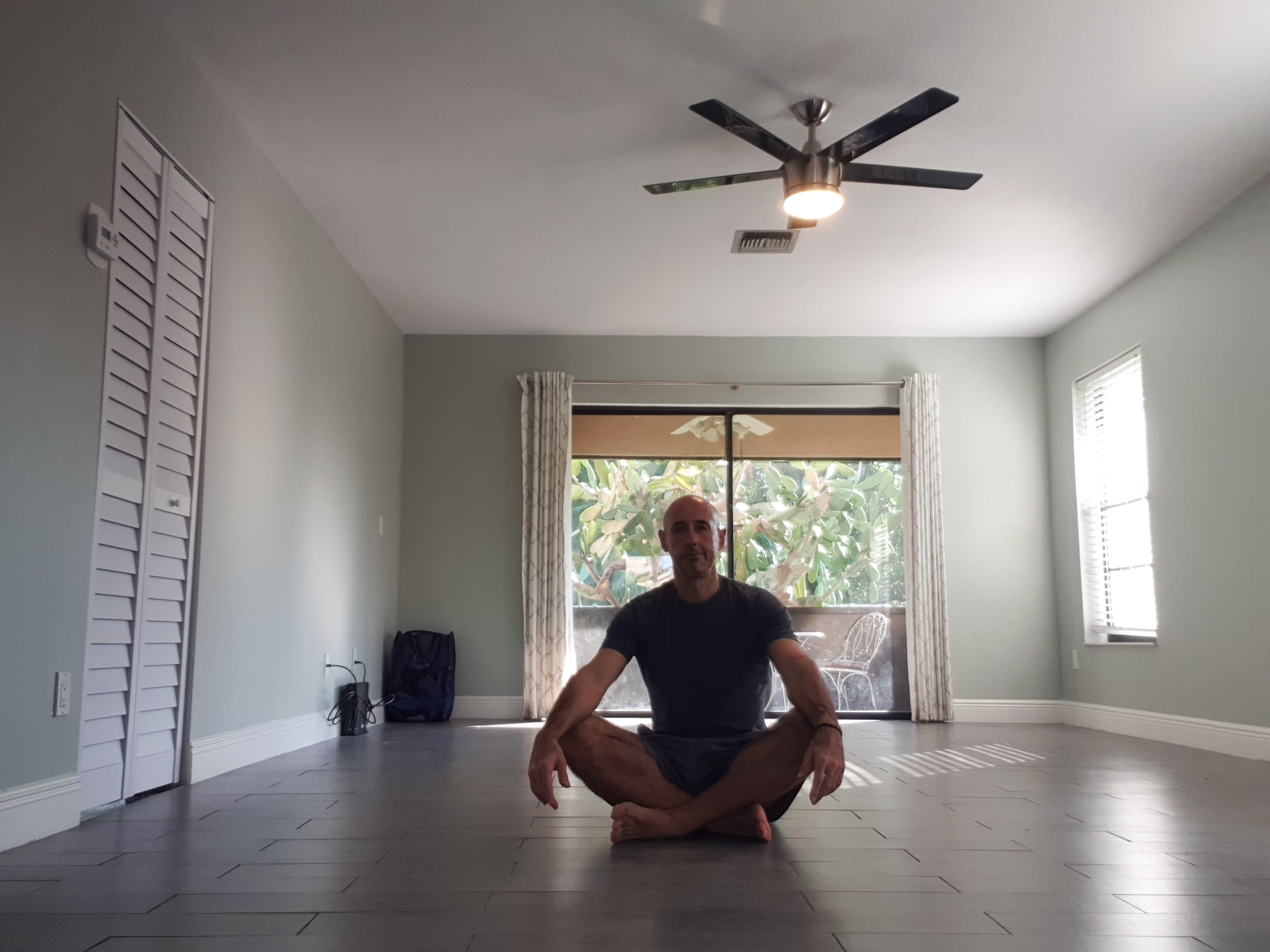
Well, one of the aspects of this process has to do with stuff, yes stuff – we have too much. For years, I have thought about my stuff, my belongings, clothes, furniture, accessories, gadgets, etc., and my attachment to them. In 2018 I got rid of many things when I moved back to Spain from the US, bringing with me only two suitcases and having only a couple of boxes –and two bicycles. This was not as traumatic as I thought it would be, and quite frankly I do not remember most of what I left behind. Now back in the US I am very conscious of how to go about starting, basically from scratch, since this time I only brought with me the two suitcases, no boxes, not even the bicycles!
Minder is meer. Mies van der Rohe
After four months I still do not have a sofa. Yes, I did buy a bed at Ikea, I am not sleeping on the floor just yet…. One of the many criteria about investing in new things is: Is it sustainable? My dining room table is from the Habitat for Humanity Store which means it is recycled and I helped others in my purchase.
Free of stuff I find it easier to focus, I am reading much more, I have not needed to hire a cleaning lady, I just sweep the floors once a week. Life is much, much easier! If you do some quick research you will find that the happiest people on the planet happen to be the Buddhist monks, further investigation will reveal that they only personally own about 8 things (something like 2 robes, 2 towels, a shaving blade, a bowl, a belt, and needle and thread). Obviously, I own many more things than a Buddhist monk, but a, there is a goal, and b, the important bit is being very conscious about your possessions.
Since in the US it is basically impossible to live without a car (except if you live in one of the few real downtowns) I bought a 2017 VW Golf. Possibly the best value for money in automobiles. As I stubbornly hold on to my vanity and ego, I did make sure it is a manual gearbox, because as everybody knows, if you drive stick you are a better person (or at least a cooler one).
The other day I saw a documentary about minimalism, based on a recent popular book, it reinforced everything I have been considering for the last few years. When I followed up on the documentary, I realized there is a whole movement dedicated to de-cluttering one’s life, simplifying, minimizing, tiny homes, etc. etc. I guess I am not as cutting edge as I thought I was, but at least it is good to know.
I used to have an empty cardboard wine bottle box and I would fill it with stuff that I no longer needed, clothes I no longer wore, books I had read and so on, and when it was full I would take it to the thrift shop and grab another empty box to start all over again!
There are many advantages to living with less stuff: you have more time to do things you would not do if you had a lot of things. For me, it is reading, I am reading a lot these days. Living with less means you save a lot of money that would otherwise be spent on buying things, duh. You also have more clarity, literally and figuratively.
In conclusion, I recommend you think about your things, what do you really need? and start a cleansing process, or call it a curating process and you might feel better about it. I think you will appreciate it. Have any thoughts or ideas? Let me know in the comments, thanks!












 Antonioyrocinante's Blog