Which shoes to wear on the Camino (Part III)(With free Camino shoes spreadsheet!)

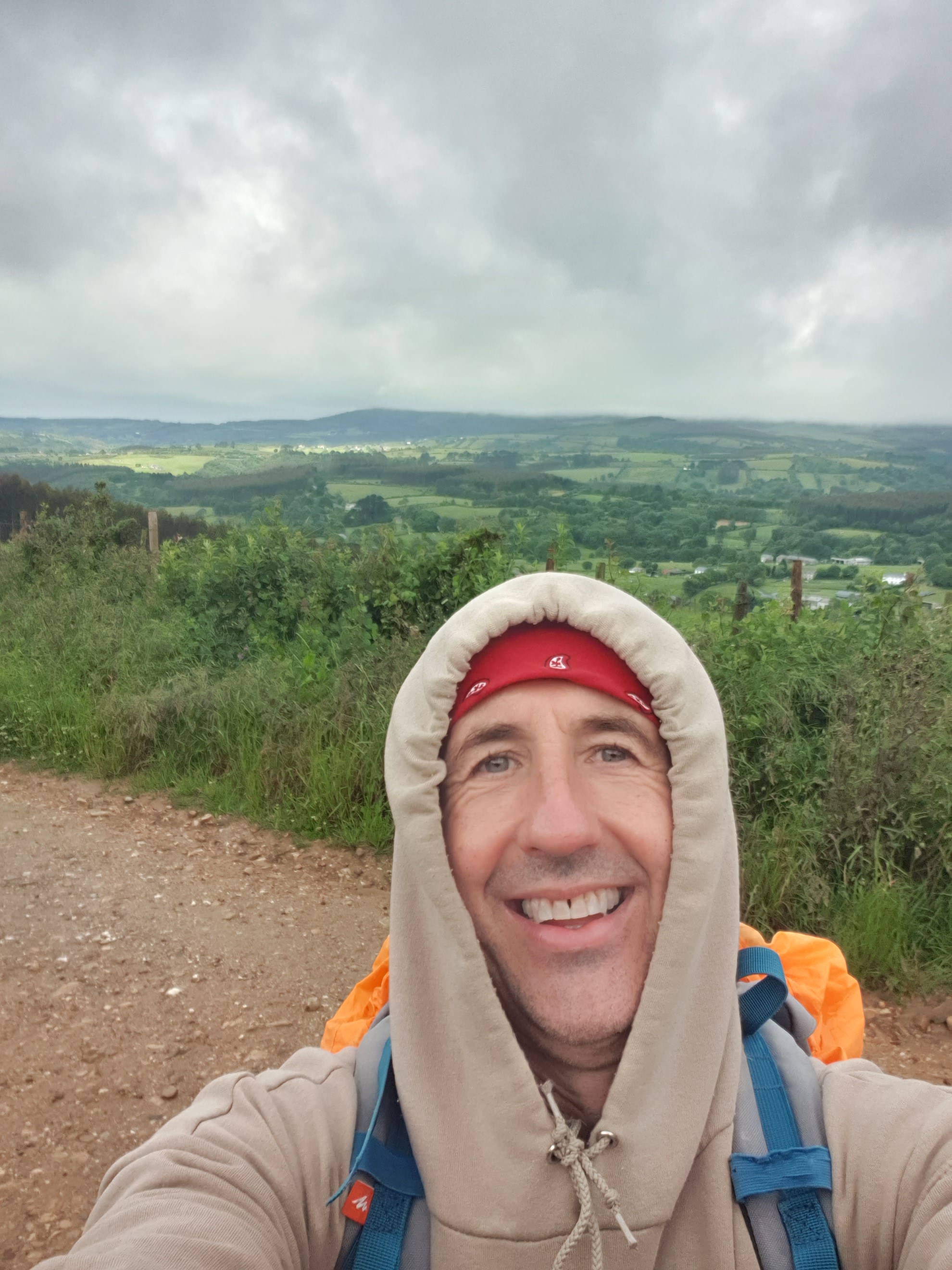
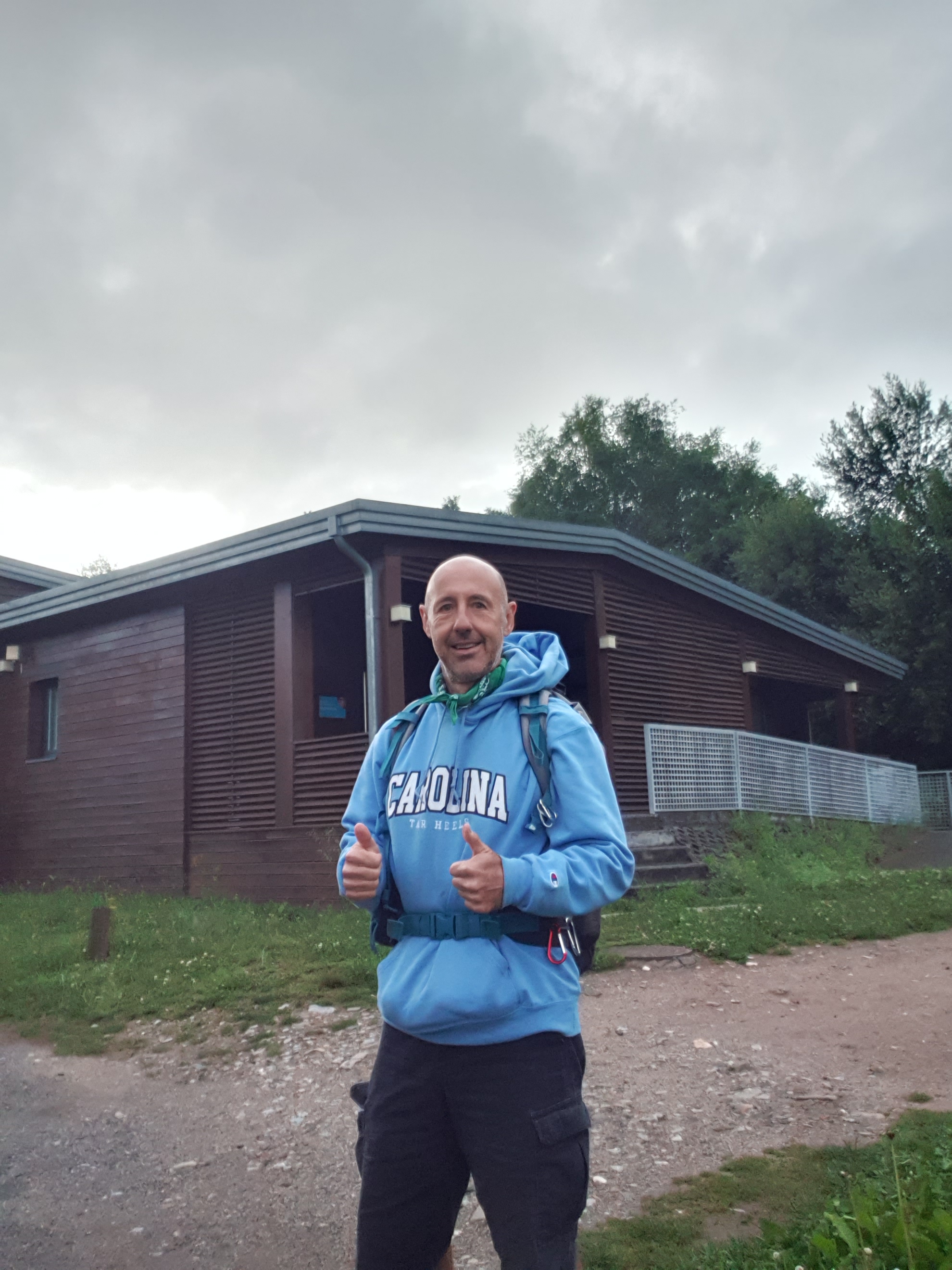
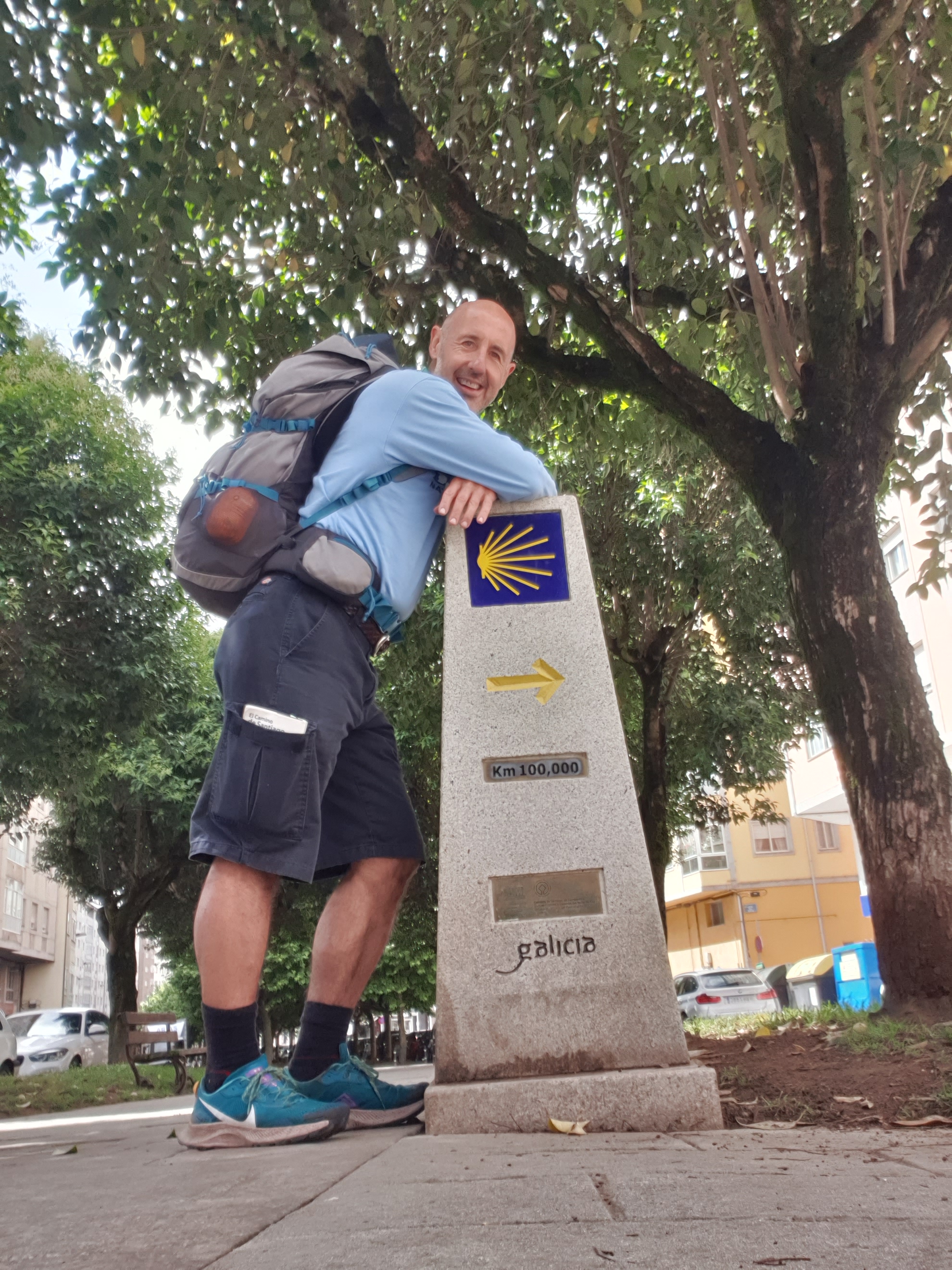
Enjoying my Nike Juniper trail shoes

Which shoes should I wear on the Camino? This is arguably the most asked question by folks preparing for the Camino. Everybody who has walked the Camino has an answer and is happy to tell you all about it. But nobody who has walked the Camino has your feet. So you can only answer the question.

Not surprisingly, one of the most viewed posts on my blog tackles precisely this question, you can read it here: Which shoes to wear on the Camino?

But I am nothing if not professional, and I noticed the spreadsheet on that post was from 2022; with the mad advancements in shoe technology and rampant Capitalism, I should do a new one. So I did, voila.

There is little to add to that original post, but I do have some thoughts that I did not elaborate on back then:

Some pilgrims are more prone to blisters and foot issues than others. I am not a specialist, but it might depend on how much training you have done in those shoes, how appropriate those shoes are for your particular circumstances, weight, stride, mileage, etc.

The shoe is only 50% of the equation; your socks are the other 50%. I use mostly wool with no stitching or seams. I still wear some Darn Tough socks from my first Camino in 2017! Then I got some Icebreakers from New Zealand, which are 60% Merino wool. You want the socks to fit properly to eliminate friction between the shoe, the sock, and your feet.

Sam, the first (and only) person to tell me about Camino prep, told me to lather Vaseline on my feet before putting on my socks. It works for me, in 4 full Caminos I have only gotten a couple of blisters, and they were my fault, not the shoes nor the socks…

During my Camino Aragonés, I walked some stages with Juan Gameros, a hardcore Mexican mountain guide (follow him on Insta: juan_gamerosmx). He wore Injinji toe socks, and he swore by them!

So you must find your magical shoe/sock combo that works for you.

In the attached spreadsheet, I only ranked 25 shoes by going to some random Internet rankings. The number of shoes and the number of criteria prove that there are shoes for all types of feet.

I was delighted with the Nike Pegasus Trail 3 from last year (read about it here); So this year Celia gave me a pair of Nike Juniper Trail II. I have already taken them out a couple of times and I can’t wait to walk the Camino this Summer!

Buen Camino

  • The spreadsheet is in Excel format so you can sort, add, or manipulate it as you want, enjoy!

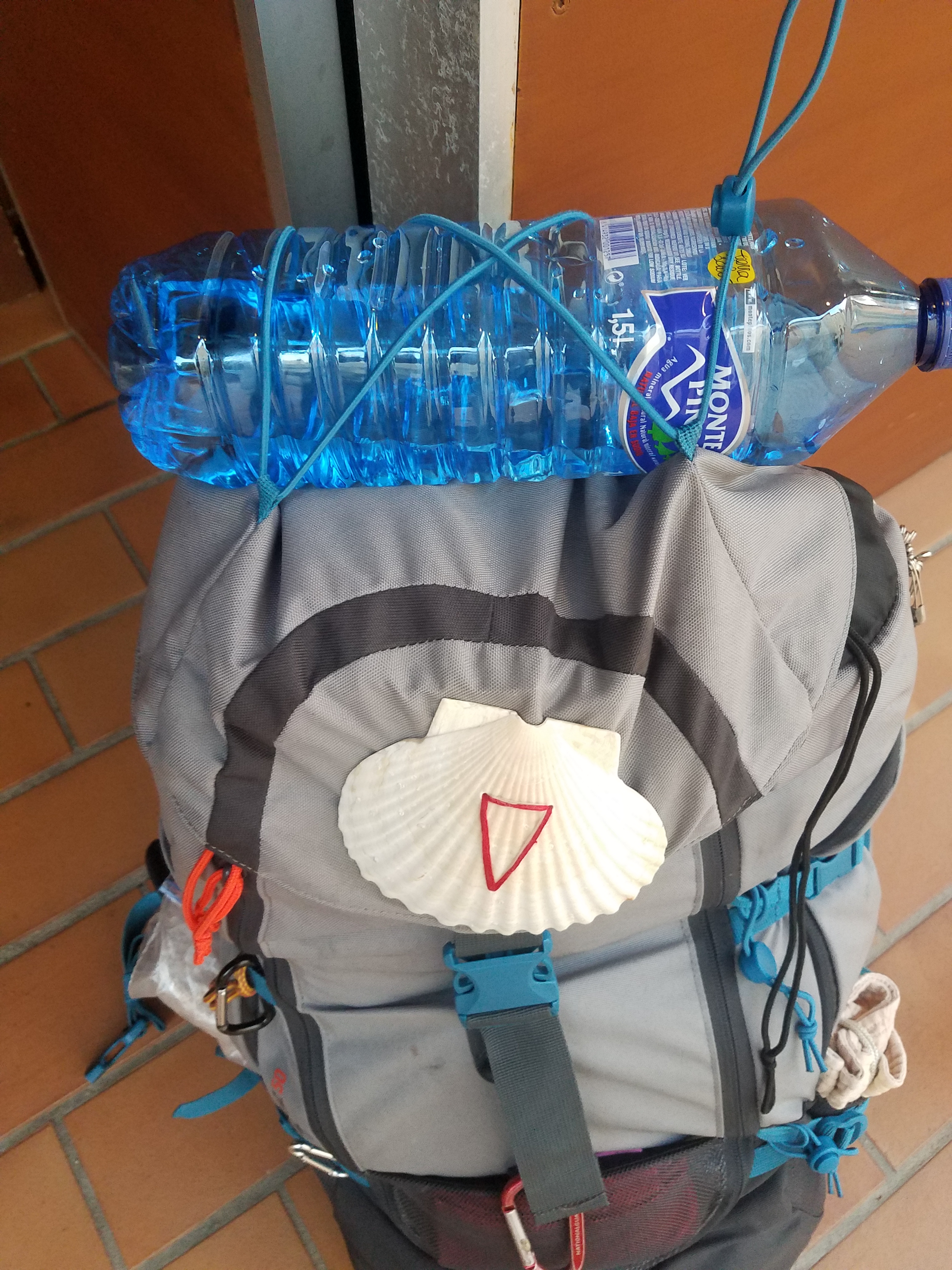
The evolution of my Camino packing

Pilgrims have been walking to Santiago from all over Europe since about the year 800, before Hoka running shoes, before high tech fibers, before ergonomic backpacks, before electronic watches that measure your heart rate, every step you take and your lymphocytes, before, before, before. So chill.

On top of that, most people walk really short Caminos, so your choices are not that critical; you are going to walk for 5 days, eating much better food at half the price of whatever you are eating at home, sleeping on decent beds, showering with decent water pressure, with a fully stocked pharmacy in almost every village you walk through should you need any medicine, and enjoying free, high speed Wi-Fi internet connections so you can post on Instagram. You will not be roughing it (unless you choose to).

As I prepare for my fifth Camino, here are some thoughts on my packing and the evolution of my packing philosophy.

One of your realizations on the Camino might be how happy you are with so little, only with what you are carrying on your back. So packing is or should be an exercise in minimalism. Here are some thoughts:

There are laundry facilities in all albergues, some might be modern washer driers, some might only have manual washing options. If you are not willing to hand wash your own socks, underwear, and t-shirt –ask yourself if you want to be on the Camino. So you do not need to pack a lot of clothes. I pack 3 pairs of wool, no stitching socks, 3 underwear, 3 (long sleeve) cotton T shirs -yes, I am a snob and hate the feel of modern fibers. 2 pairs of cargo shorts (the side pocket is perfect for guidebook, maps, etc.) and a sweatshirt. My first Camino, optimist that I am, I did not pack a sweatshirt, and it was freezing in June in Burgos, so I had to buy one!

Did I tell you I am a snob? My sleeping bag is my favorite bedsheet folded in half and sewn together like a sleeping bag. It is much heavier than a modern sleeping bag, but it is far comfier, with matching pillowcase, of course.

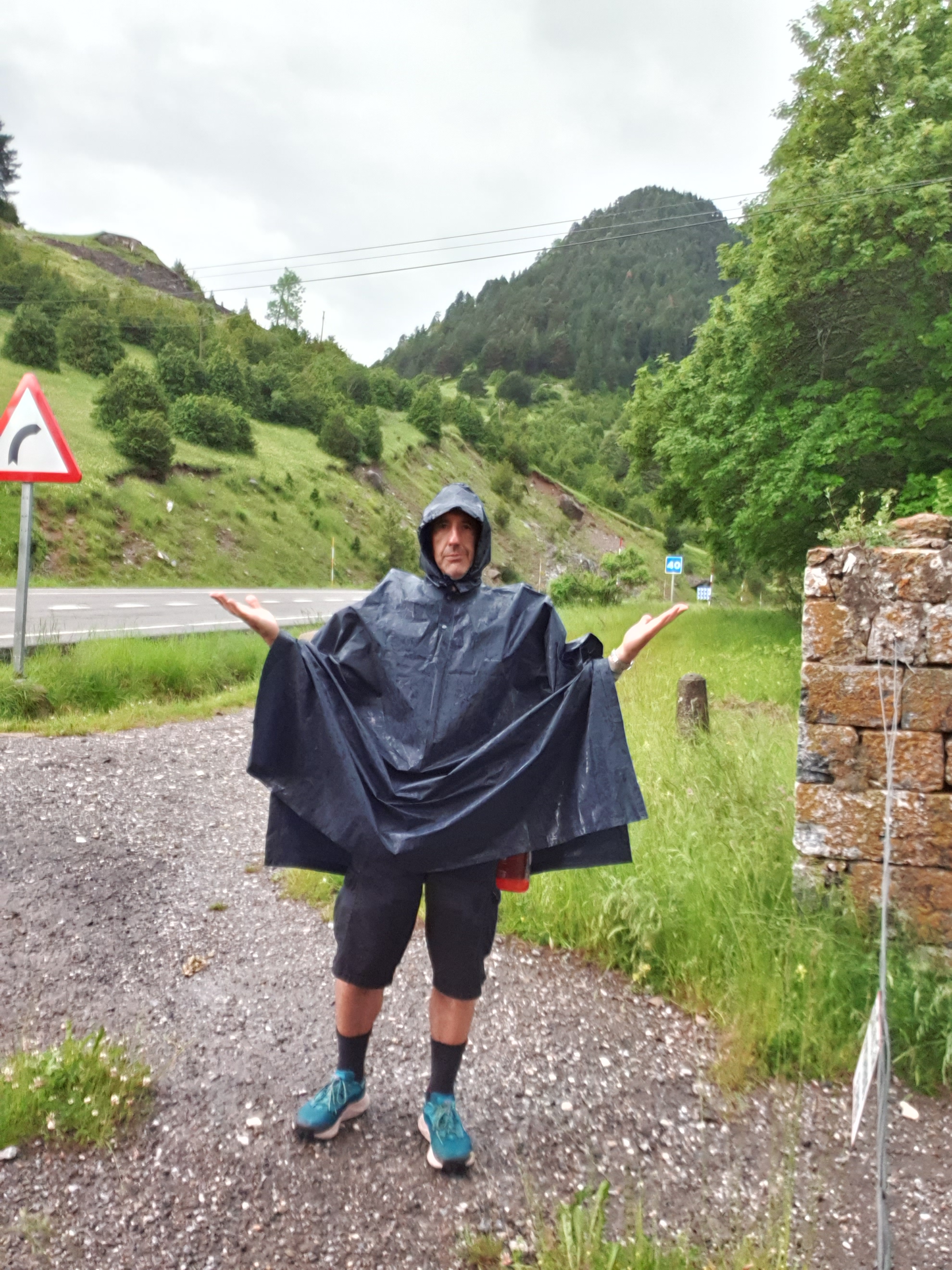
If it rains you are going to get wet. Yes, you can buy a $200 jacket that will keep you dry, good for you. For a few bucks you can have a poncho that will also cover your pack. (although you should also have a rain cover for your pack). Be ready to activate your rain protocol quickly as summer showers might pop up unannounced. (You do not want your poncho at the bottom of your pack.

Bag of mixed nuts (trail mix) in a side pocket for a snack if the walk between villages is too far.

Bandanas (x 3) great for picking up sweat, as an impromptu hat, etc.

Sun hat, people have died on the Camino from sun strokes. On the climb up from Castrojeriz you read the sad story of a fellow who basically got skin cancer -on that climb.

Swiss Army Knife, you are only going to use it to maybe slice some bread to make a bocadillo (Spanish sandwich) or to open a bottle of wine, but it gives you great peace of mind knowing that you have it.

Bathing suit! If you find a spot for an after-hike dip, or a municipal pool, you will need it.

Lightweight towel.

Flip flops. My first Camino I carried sandals for the après-Camino, but then I realized that most of the population of Southeast Asia only wear flip flops. So I ditched the sandals, I now wear my cheap flip flops all the time.

Silk long johns. Some evenings it does get chilly, long johns to the rescue. They weigh nothing and take up zero space.

A few feet of thin rope. No rope space for your laundry? Bring your own line…

Water bottle. A lot of people use bladders, on a sweltering day you will quickly run out of water and those are difficult to fill in a village fountain… you have been warned.

Savon de Marseille: use it for your body, shampoo…or clothes, 3 in 1. If you get it in Spain, it is called jabón Lagarto, every supermarket has it.

Small first aid kit, you might need a few things to take care of blisters, etc. More for peace of mind on the trail.

Small book and writing/drawing notebook.

Sunglasses.

Rule of thumb is your pack should never exceed 10% of your body weight and should never exceed 10 kg (22lbs). My pack is a 50 liter, but I have plenty of space. Also remember to pack the heavy stuff in the bottom of your pack so it will sit in your lumbar area.

Now, having said all this, forget it! Each person is different with unique needs and expectations, experience, etc. So, make your own Camino, and your own pack. Buen Camino!!

Camino Primitivo Albergue Review

Recommended stages on the Primitivo

One of the key skills one must have in life is to master the art of cut and paste. This year I decided to share my opinion of the albergues I stayed at, so before putting them up on Google or whatever, here they are. I like to stay in public albergues whenever possible, but sometimes my daily stage did not finish at a village with a public albergue, so I stayed private. I only saw one parochial / church albergue housed in the monastery at Cornellana, but my daily stage did not stop there.

Oviedo

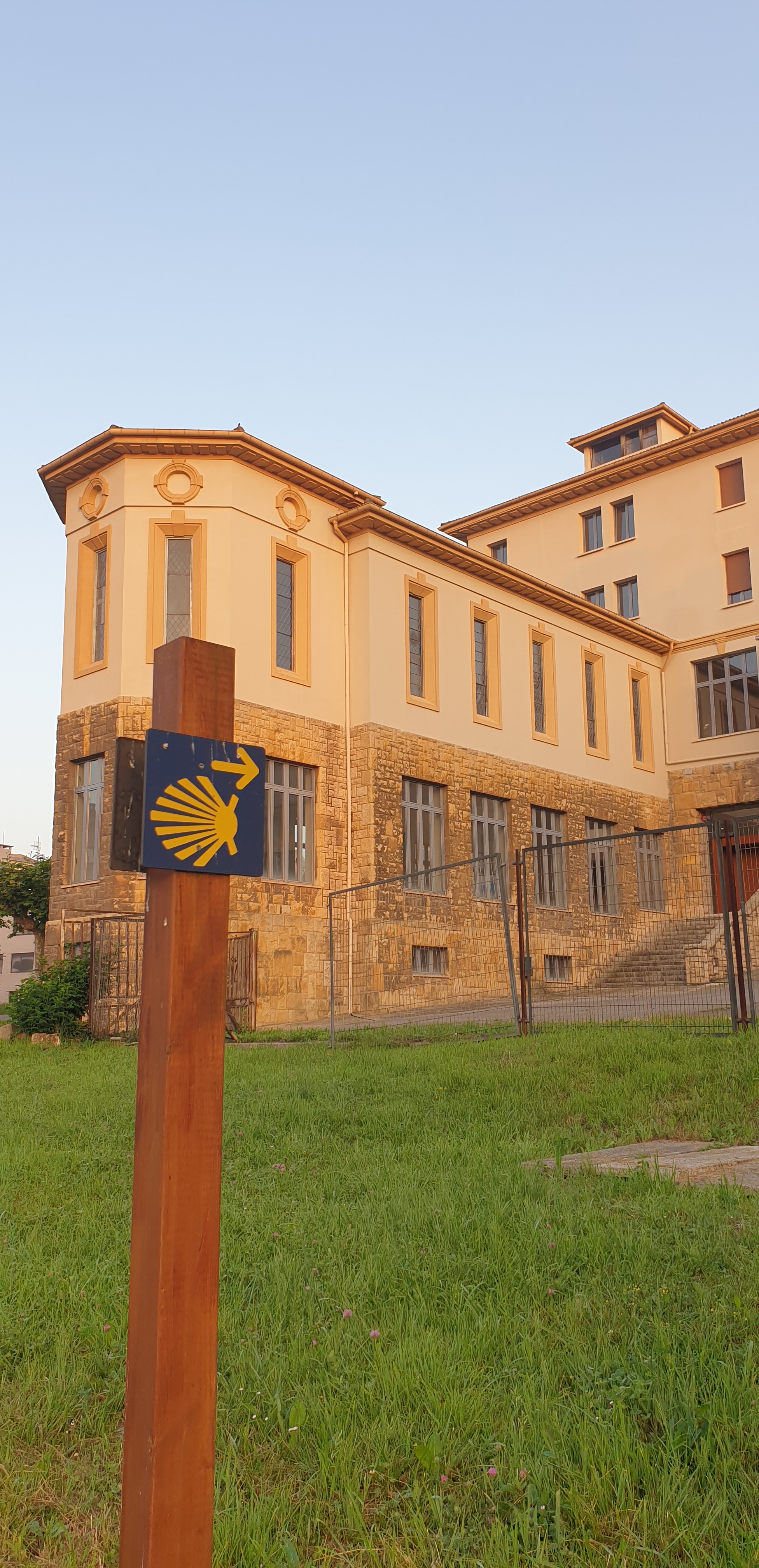
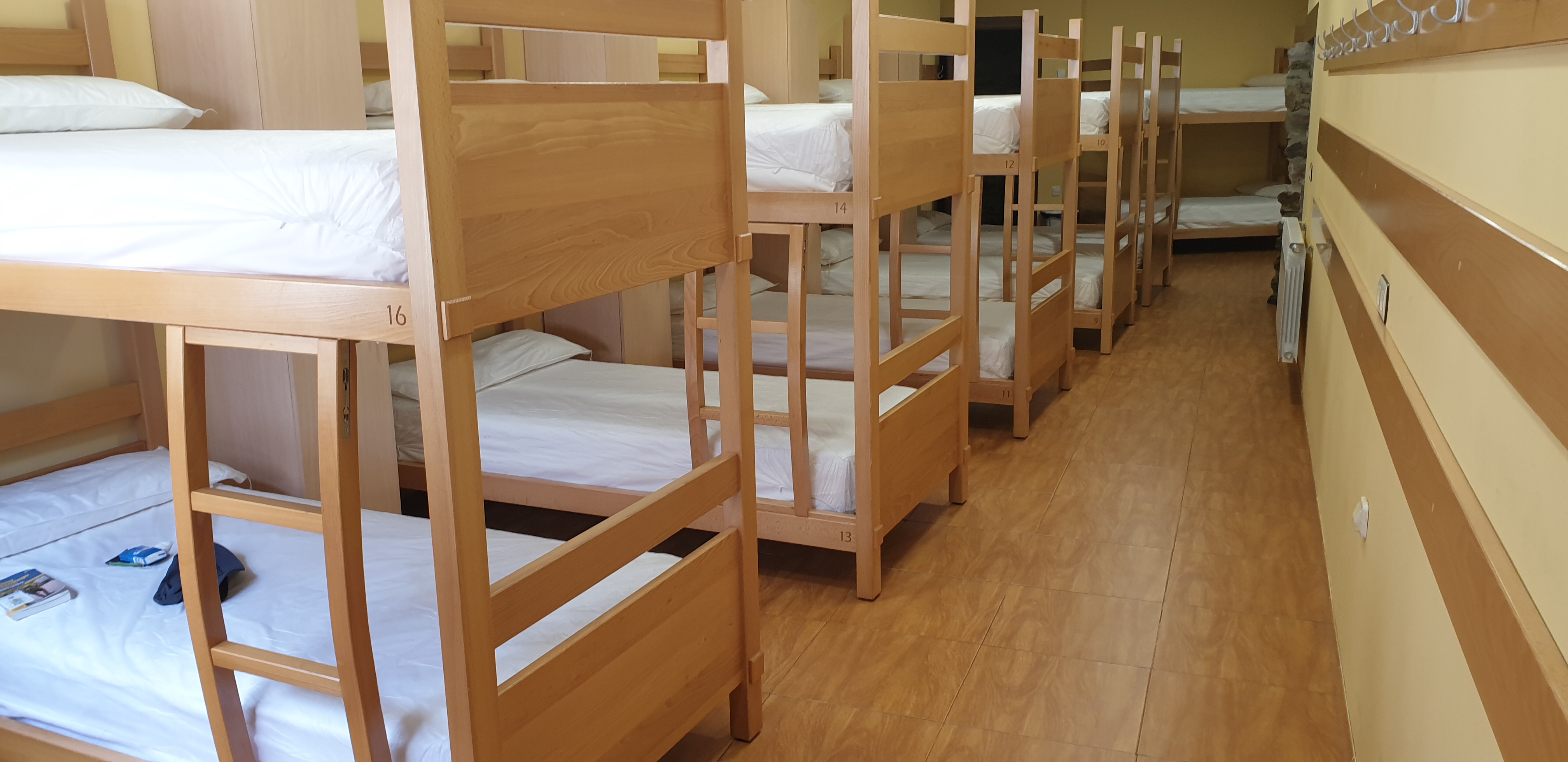
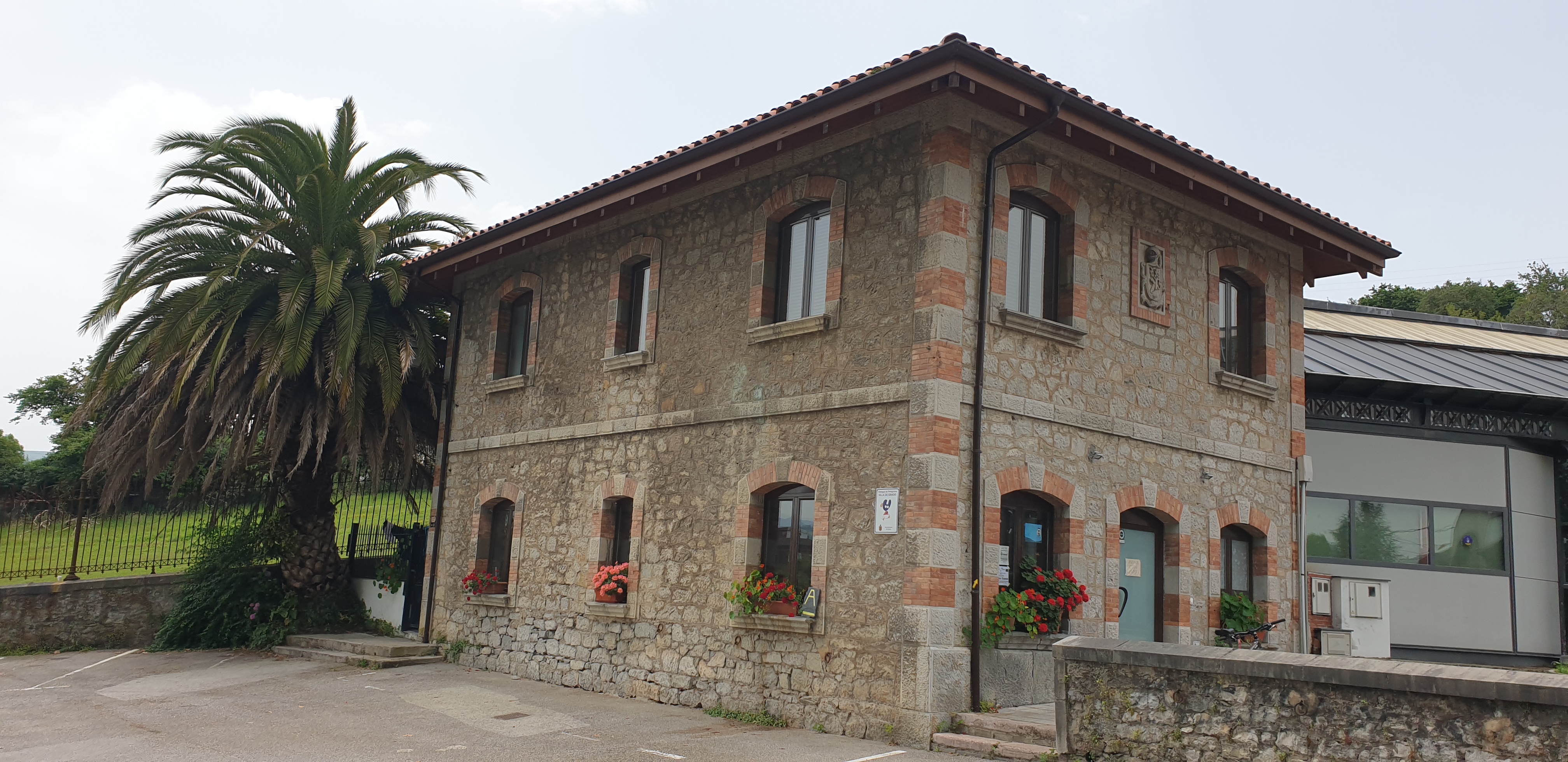
This albergue which is run by the Asociación de amigos del Camino Astur-Leonesa is housed in the old seminary. So basically, it is a plug and play albergue, the infrastructure is all there, all that is missing is the future priests cramming for their Theology exams! The rooms house 2 bunk beds and are equipped with lockers and a handy sink in which to brush your teeth! Oh, and it is right downtown, so you are literally steps away from the Cathedral and the old part of town, right where the Camino starts. I shared a room with Vicente from Valencia whom I would continue bumping into throughout my Camino.

The old seminary is now an albergue in Oviedo

Grado

The public albergue is run by volunteers of the International Fraternity of the Camino de Santiago and it is housed in the old horse auction building – which explains all the iron rings attached to the wall next to the building. But do not fret, it was remodeled in 2016. It was a great little albergue, and the volunteer hospitalario Guy was great!

La Espina – El cruce (Private)

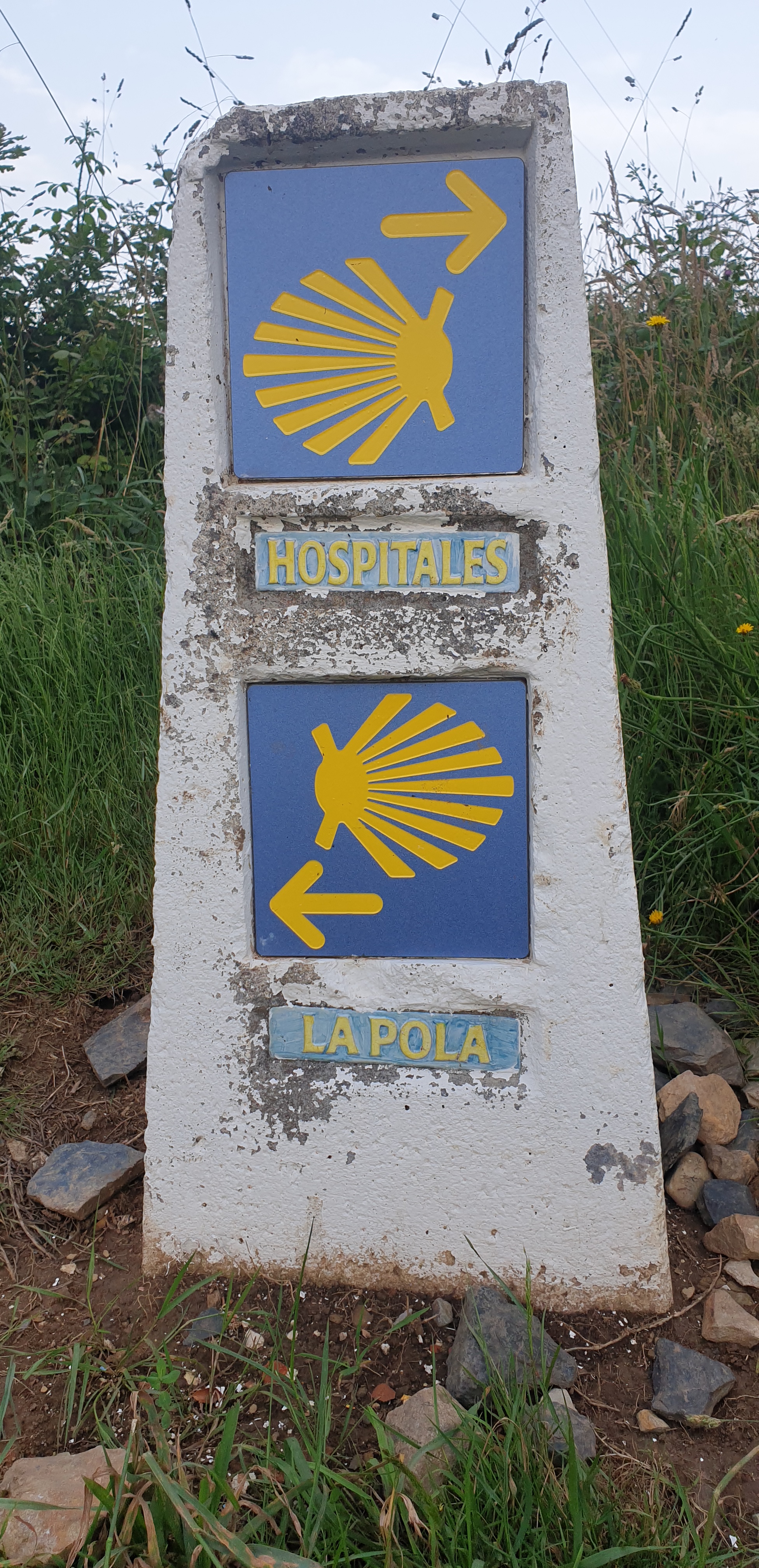
This is as basic and as homey as it gets. It is run by Carmen who had a space above her tiny supermarket and opened an albergue! It has one room with 10 beds which I shared with three American teachers. The village is pretty basic, so it comes in handy that there is a supermarket below the albergue where you can buy groceries and make your own dinner! Apparently, this is a good place to stop if you are planning to take the “Hospitales” variant (which coincidentally I did).

Campiello – Casa Ricardo (Private)

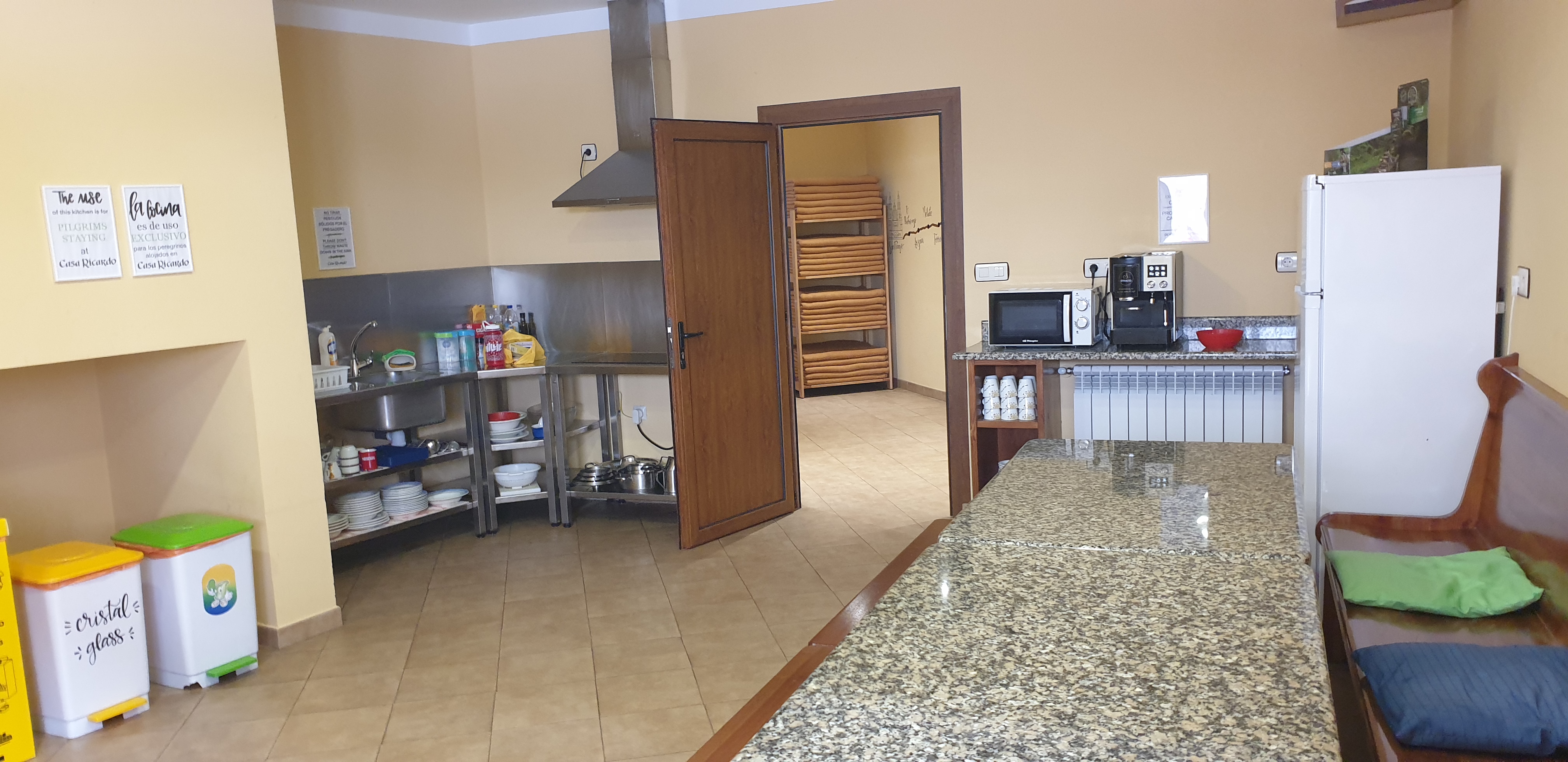
This has to be one of the top albergues I have ever stayed in! it is a restored farmhouse with great facilities: kitchen, bathrooms, patio and a great restaurant/bar and supermarket on the other side of the road. The sleeping room is relatively big but with brand new bunks and exposed stone walls it offered a great night’s sleep.

Berducedo – Camino Primitivo (Private)

After the exhausting (but highly recommended Hospitales variant) I unfortunately skipped the municipal albergue (there had been rumors on the Camino that there was a lack of beds in Berducedo) to go to the private Camino Primitivo . Camino Primitivo was a horrible experience despite good facilities, a despicable albergue only focused on squeezing every last euro from the pilgrim. You cannot order a la carte for lunch, you have to order the full 20 Euro menu (which was good, but way more than what I wanted), when I had an issue with other pilgrims over the washer/drier they did nothing to help our situation and worst of all: they had just done a fly treatment and the whole albergue was full of dead flies -and they did nothing to clean them up. The owner was simply rude, so I refused to stay there for dinner and went to the lovely Araceli instead where I chatted with a bicycle pilgrim (if such a thing still exists) and had a great meal.

What good laundry facilities look like

Castro – Albergue Juvenil de Castro

This restored schoolhouse run by a lesbian collective was a great acquittal of the Berducedo fiasco. These women were generous, funny, hospitable, and when I told them a sad story (they asked for it), affectionate. I loved it. They also had a simple but delicious “meal plan”: they had a refrigerated showcase full of prepared foods; if you order a small plate you can choose two foods and it costs 3 Euro, the big plate with up to three combinations, 5 Euro. It was freezing that evening, so I had a big plate of spaghetti Bolognese. I loved my stay there.

Vilardongo – O Piñeiral (Private)

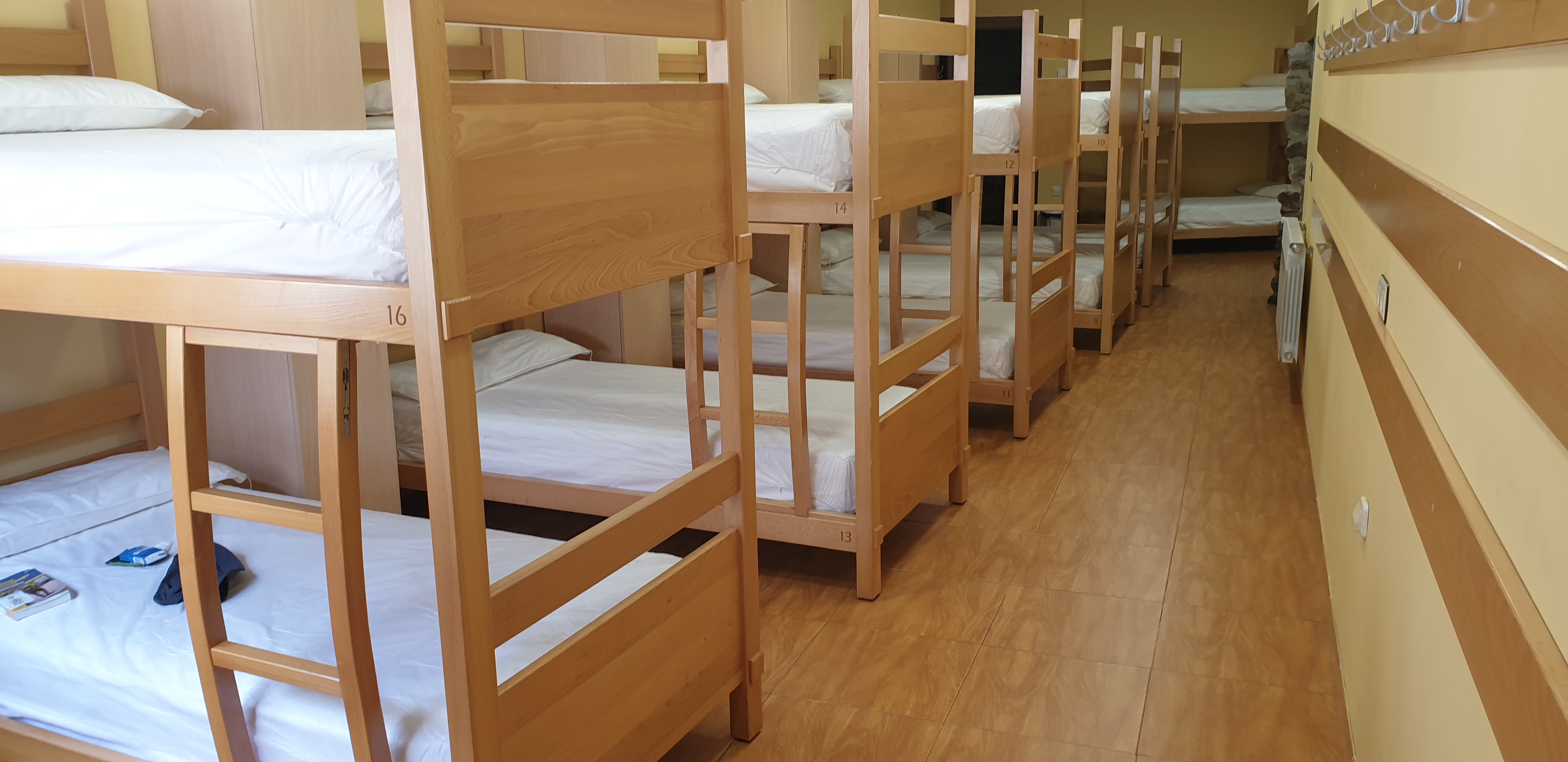
Another private choice, but what a place! This is a luxury albergue with amazing facilities (at regular albergue cost) each bunk bed has a little curtain to separate it, and since the place did not fill up and nobody came above me, I had a bit of a private “suite” for the night –nice!! The food was excellent, and they even had a little room with a yoga mat, where I was able to do some much needed yoga.

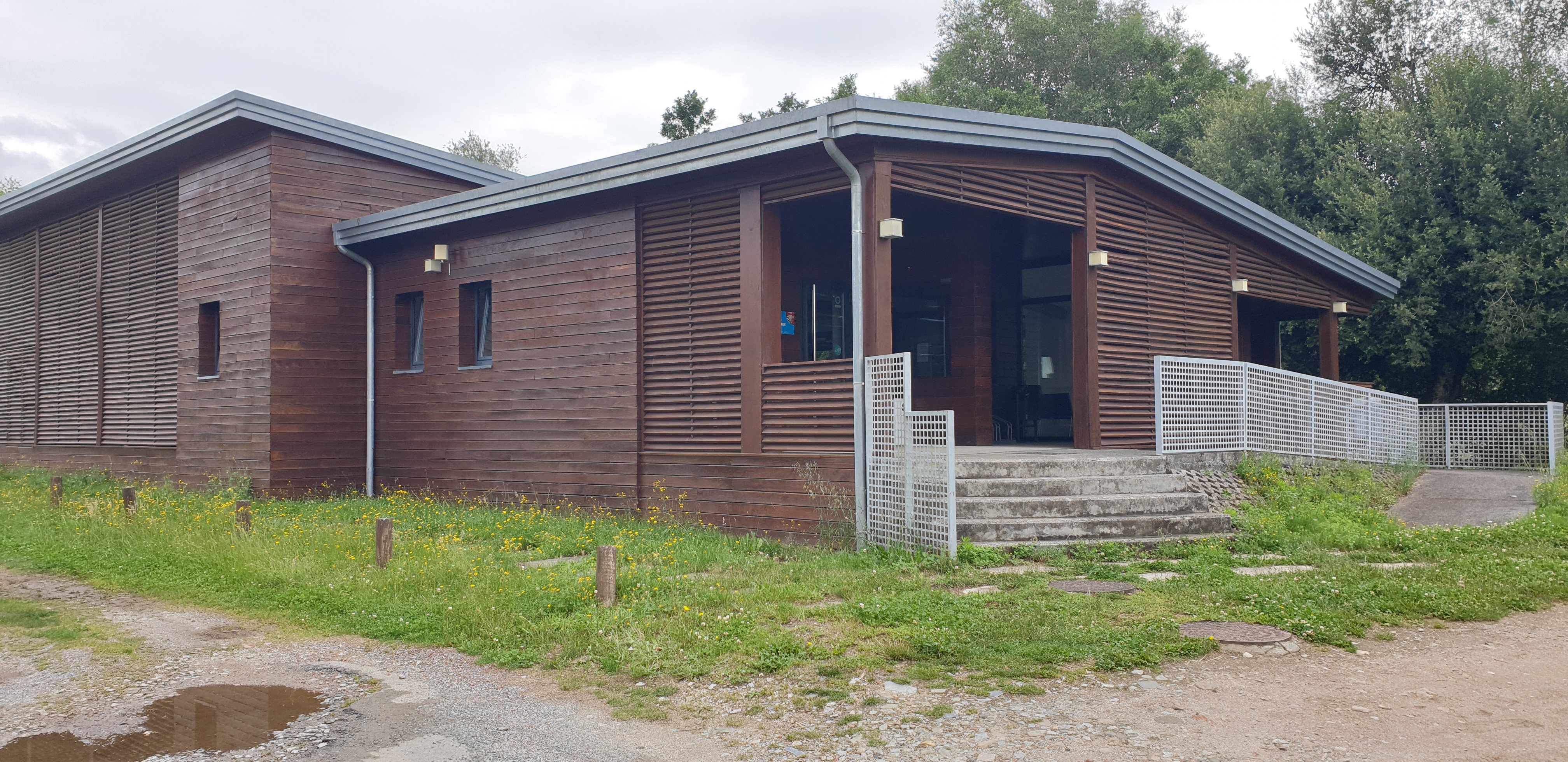
Castroverde

This is a Xunta de Galicia (i.e., public) albergue and it was impressive! Modern installations in a minimalist setting. It even has a stream running through the back yard where I was able to dip my legs to rid them of 8 hours of hiking worth of inflammation! Public albergues lack kitchen equipment to encourage you to eat in the village which I did for lunch, but a classic tuna empanada (pie) was the perfect dinner, and it needed no cooking!

Guntín

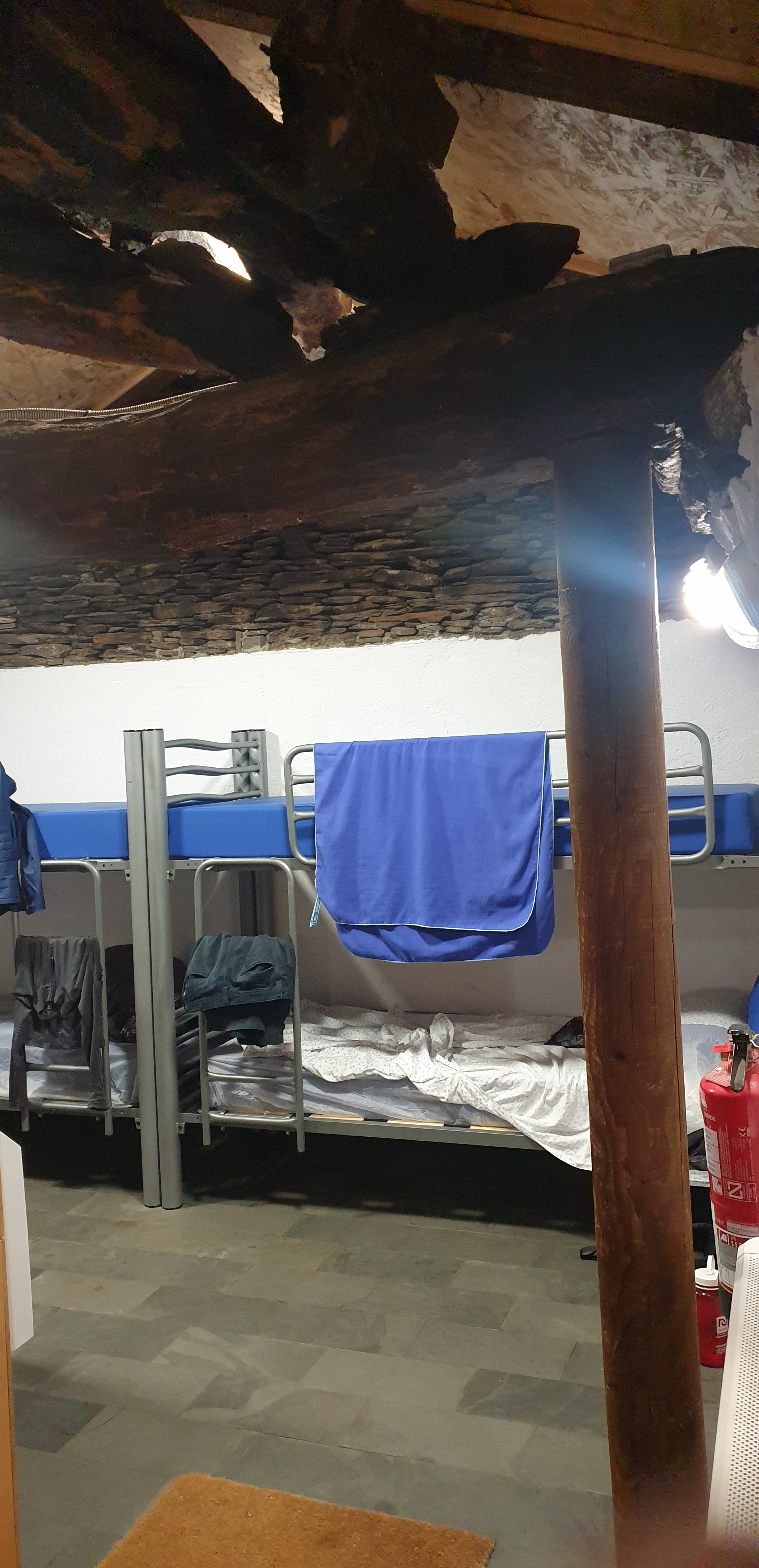
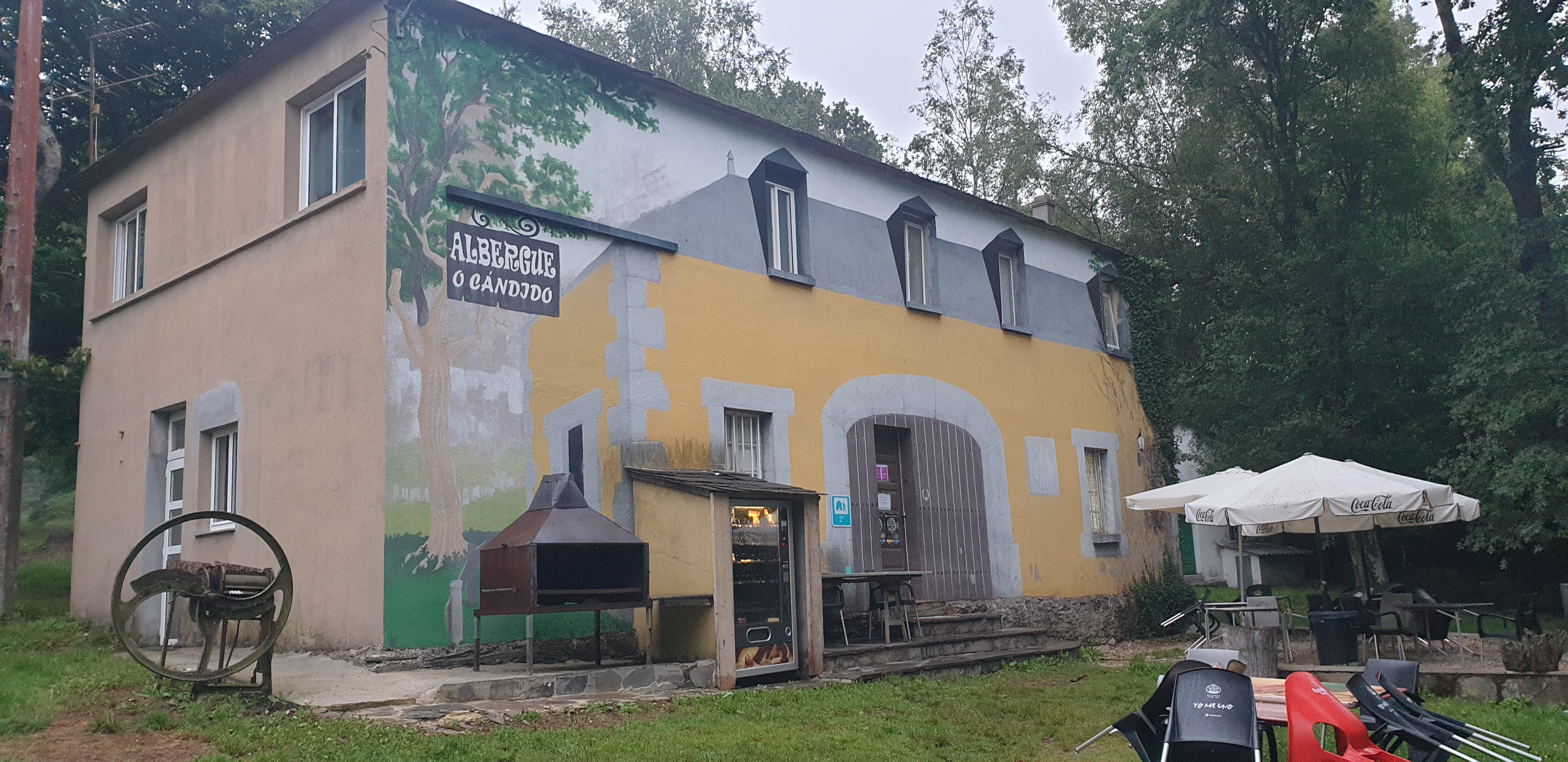
This might be the smallest albergue in the Xunta’s portfolio, only 12 beds! It is so small; the bathroom and showers are in a modern annexed outhouse! This albergue is literally in the middle of a forest but fortunately there is a great private albergue, O Candido across the trail. The exposed wooden beams in the ceiling really made this a rustic experience!

Boente – Albergue Boente (Private)

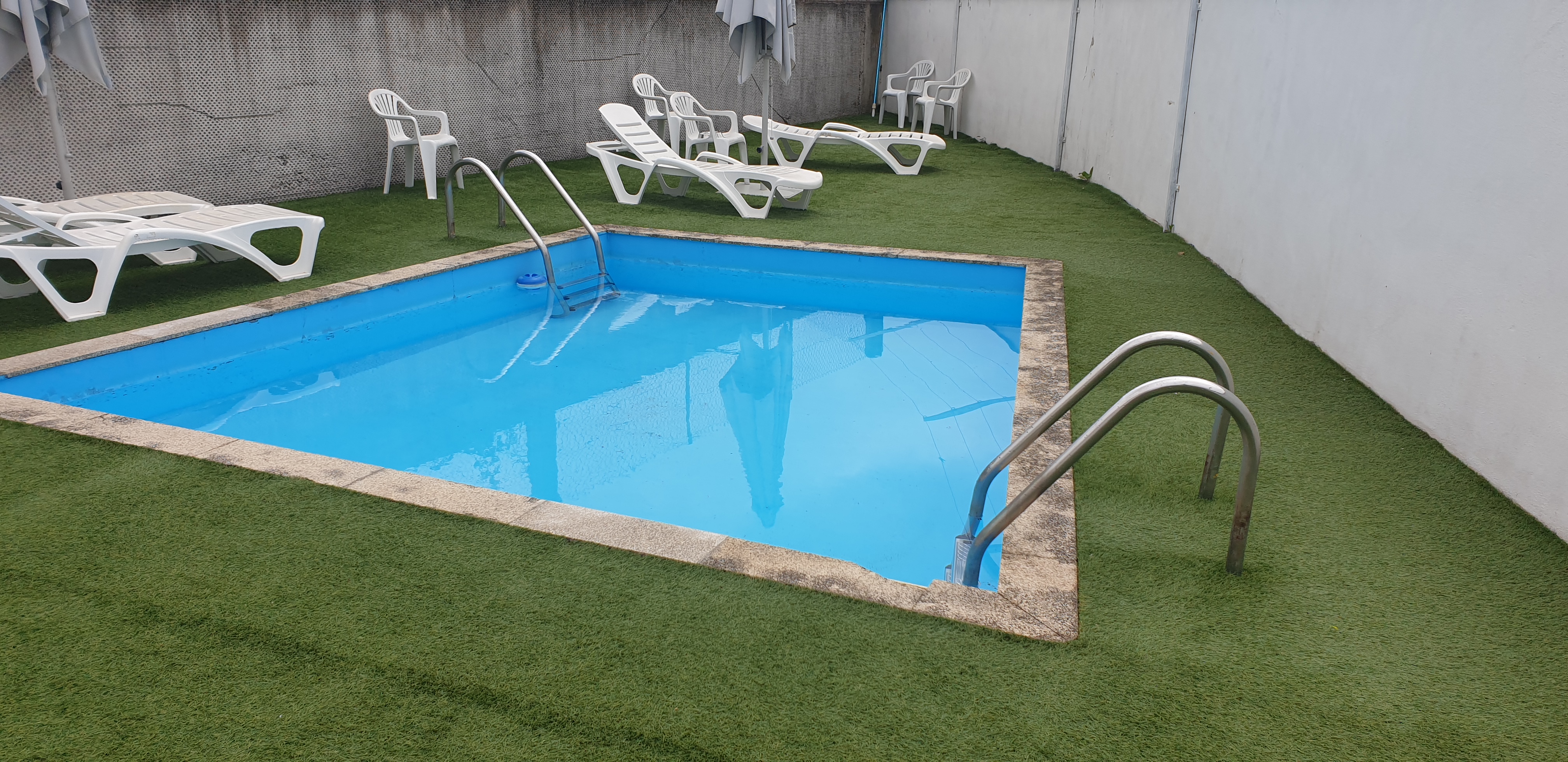
Once you merge into the last 100 km of the French Way, there are plenty of albergues. Pro tip: if you are a seasoned pilgrim doing more than the last 100km, try to stagger your stages so you only walk with the turistas for a few hours in the morning. What I mean by stagger is that you do not sleep in the main recommended end-of-stage towns. By doing this, you get a few quiet hours in the morning (the day trippers don’t get up early) and quiet afternoon. Boente is 6 km away from Melide, and it is far away enough that I had the albergue all to myself!! It also had a tiny, freezing pool where I had a quick dip to remove inflammation.

Monte do Gozo

This is the largest albergue in the Xunta’s portfolio, only 5 km to Santiago. It has 400 beds in a number of pavilions that are opened as needed. They only had one opened when I arrived, exhausted from a 42 km day. It is a Xunta albergue, so it is fairly standard and basic. Since the Monte do Gozo is a massive complex with an open-air auditorium, a private hostel concession, etc., there is a big industrial brewery where I had a great meal -and a beer! Before hitting Santiago the next morning!

Camino de Santiago #3, the Camino Primitivo

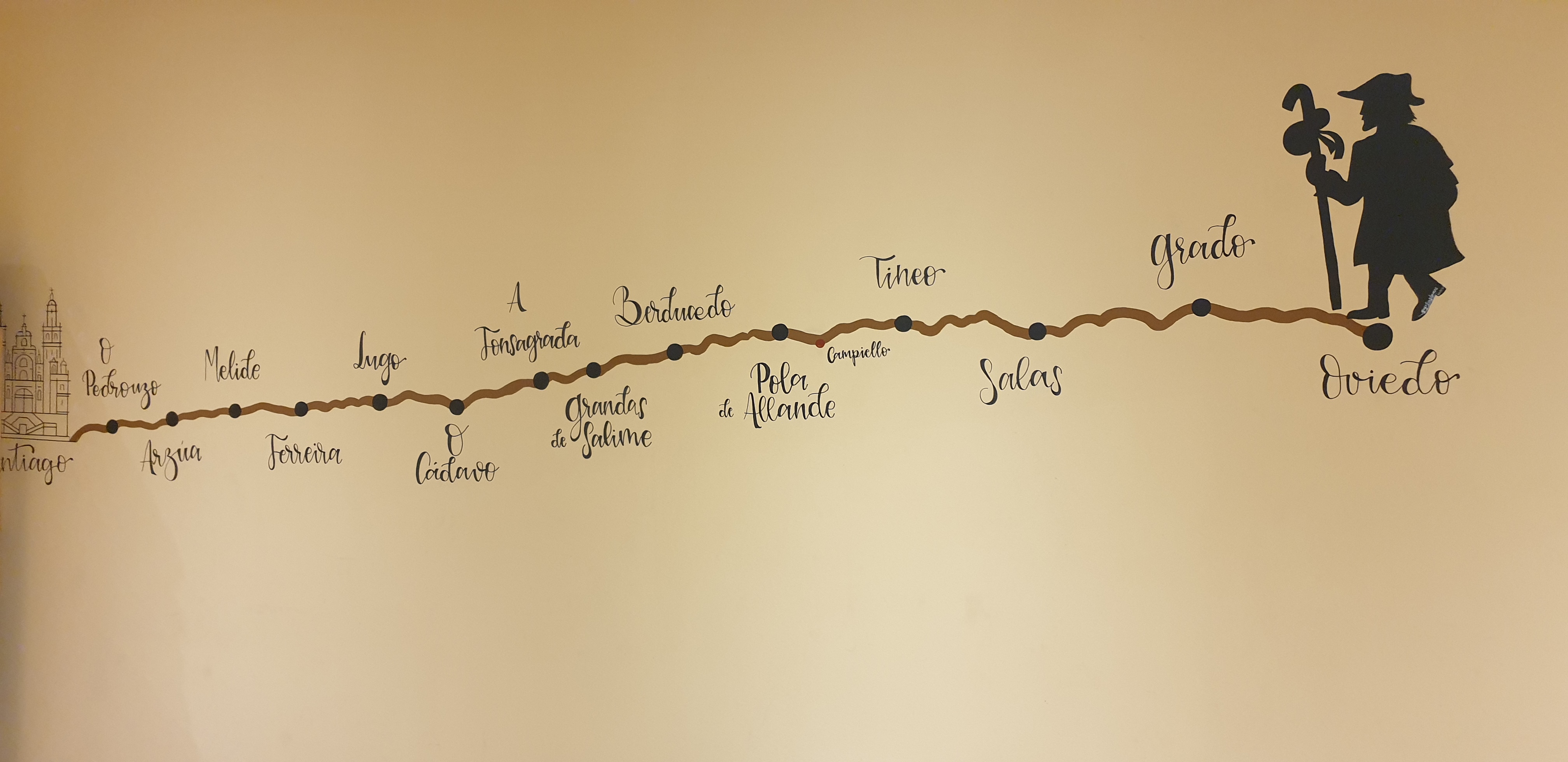
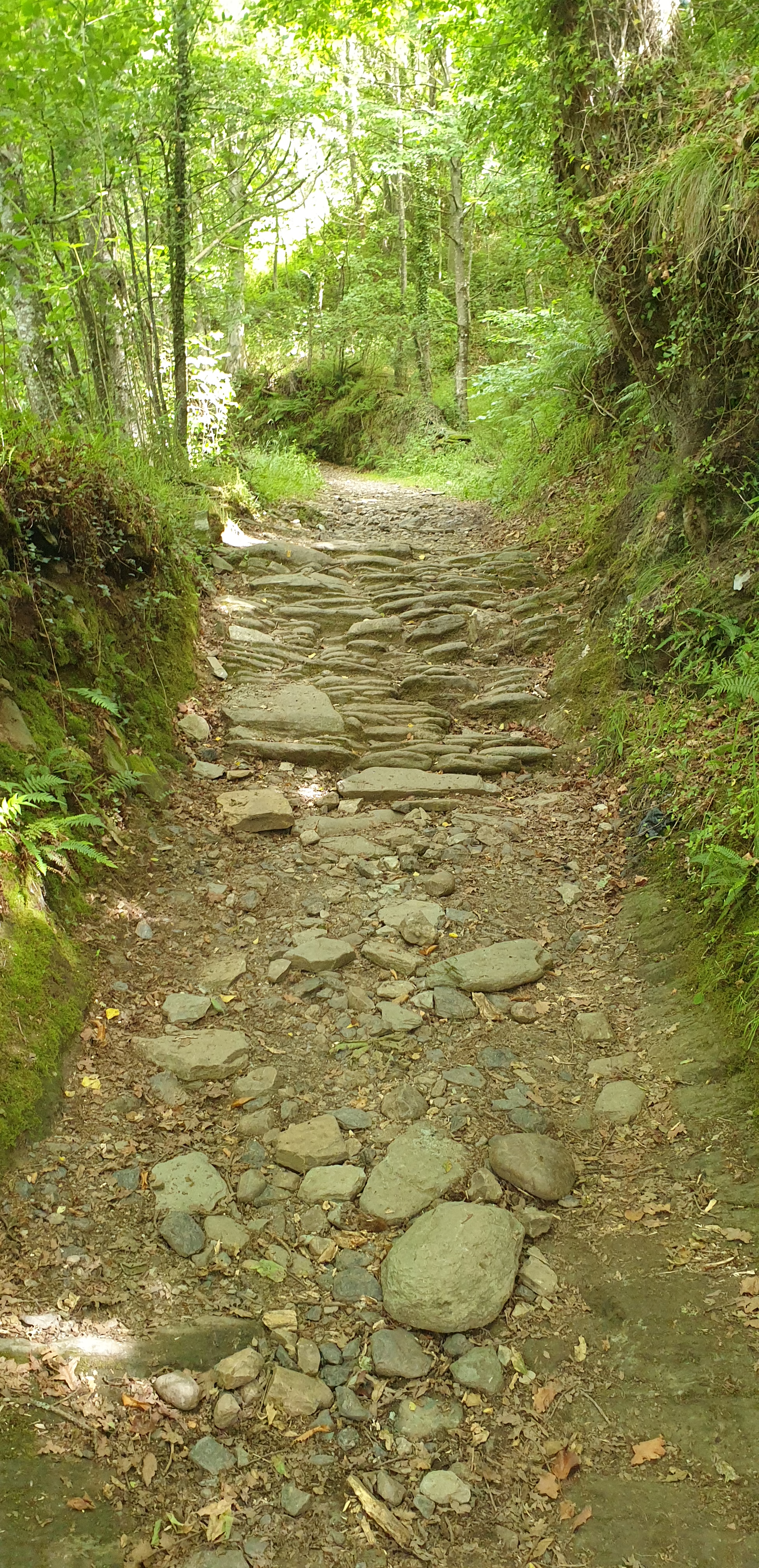
The Camino Primitivo is not only the original Camino, but also the most intense. Yes, it is half the distance of the other “main” Caminos, The Francés and the Norte, but what it lacks in length, it makes up plenty in beauty, ruggedness, physicality, and authenticity.

As you know I had been planning this Camino since I finished the North route last year. It did not disappoint. Here is the story:

Around the year 800, a hermit in Galicia called Paio (or Pelagius) was guided by lights and angels to St. James’ tomb. After telling his local bishop, king Alfonso II “El casto” went to check out what the fuss was about, thereby creating the first pilgrimage. As the Reconquista developed, new routes were established leading to the North and eventually the Francés route, which is today the most popular.

So, I took a train to Oviedo, the ancient capital of Spain during the Moorish occupation. It is a high-speed train only halfway, as the mountains that separate the plateau from the shore has not been breached by the high-speed line yet, making it is a five-hour journey. I arrived in Oviedo just in time to run to the albergue -an old seminary- before it closed!

I shared room with Vicente, a retiree from Valencia whom I would continue to bump into well into the Camino.

Downtown Oviedo is lovely, clean, and full of sculptures! It is so cool! The walk out of town was pleasant enough, and soon you are in the middle of the countryside in total pilgrim mode. The first day is an easy 24Km to Grado, where I had been years ago with my Land Rover. A dip in the frigid river quickly got rid of the day’s hiking inflammation. The albergue is an old horse brokerage house, and there is a cute town square with restaurants and a working church where the priest is happy to give me a pilgrim’s blessing.

The second day brings the first important climbs of the pilgrimage. With hot temperatures and sun, the last climb took a toll, but fortunately I would not have to tackle it first thing next morning.

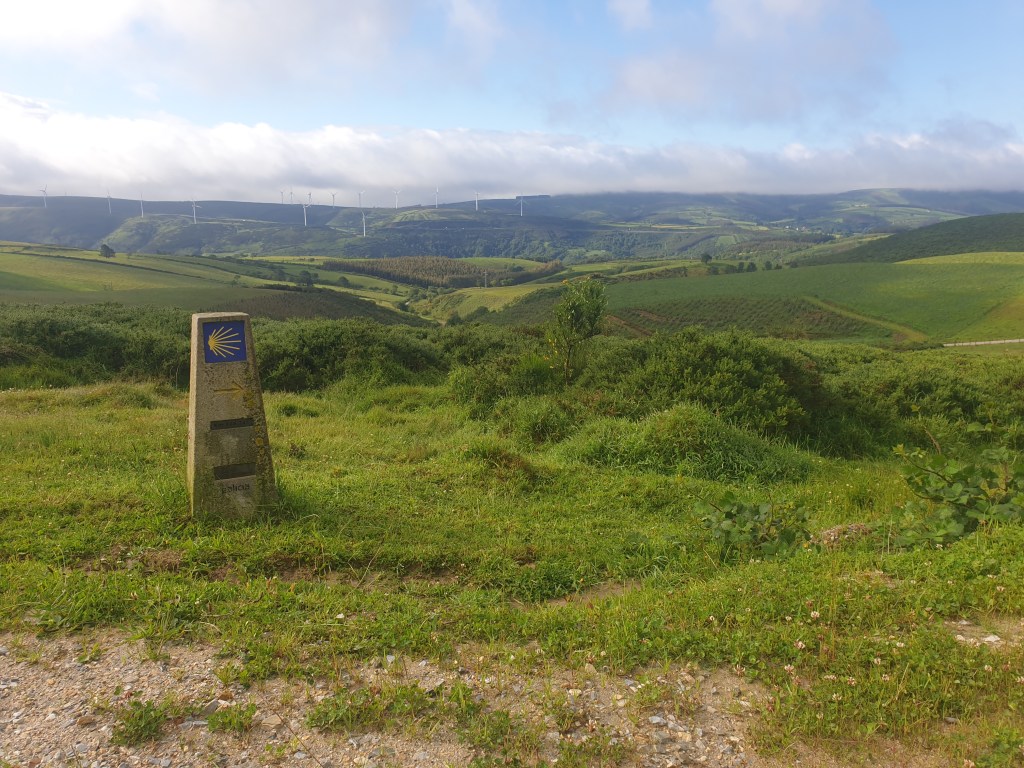
The next five days are a thing of beauty. I chose the Hospitales variant which takes you up over the tree line for a day of ridging 1000 mts over sea level. Amazing, you do not even miss the cafés! The following three or four days are just as impressive: natural, rugged, and fairly uncivilized. although without the altitude,

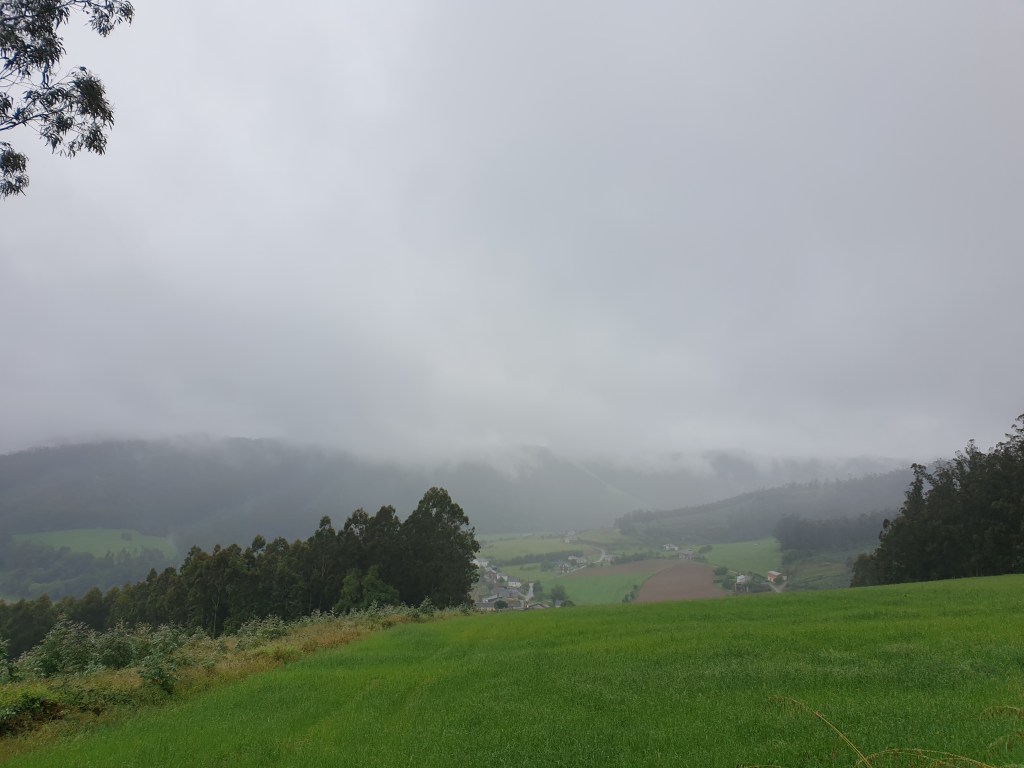
About halfway through you cross the grassy paths of Asturias to the dense forests of Galicia. After the city of Lugo with its amazing Roman walls, you have a day of a lot of asphalt, although the views are lovely, your feet pay the price. Then you have a final day of hillside living, before merging into the popular Camino Francés with all the “tourists” doing just the last 100 km (62 miles) to say they have done the Camino. So, the last three days are crowded and rainy on top of that.

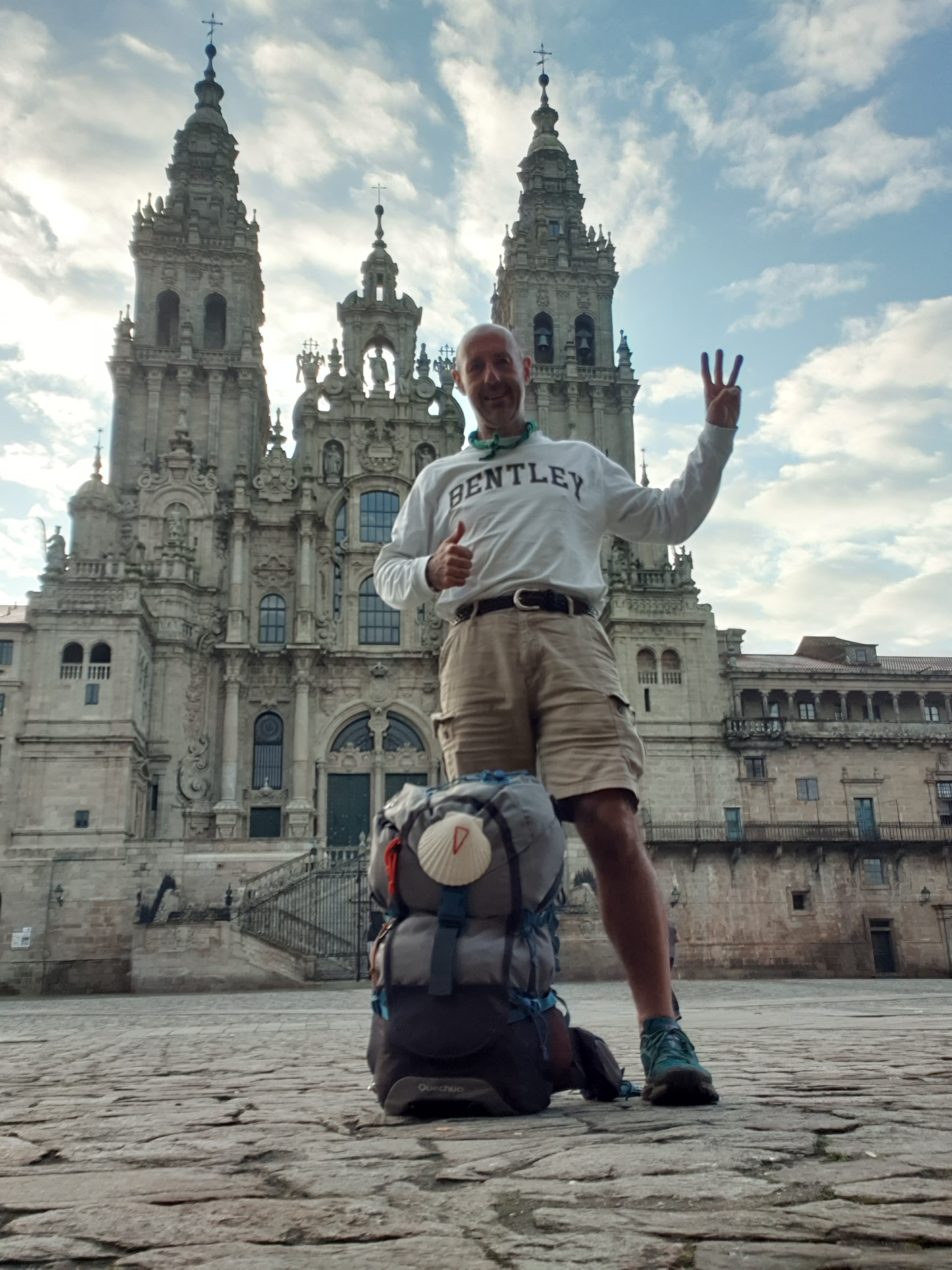
But nothing compares to arriving at the plaza del Obradoiro and standing in front of the Cathedral. For me it was 310 km (200 miles) in 11 days.

The Cathedral has been totally renovated and I could finally go down to the crypt to see the tomb of St. James third time is the charm –it had been closed for restoration all my previous times. Lunch was at the amazing Santiago market, where I had the best hake I have ever tasted. With no train spots available that day, a flight to Madrid that afternoon ended my adventure.

How does it compare to the other Caminos? Well, the obvious facts are that while shorter, it is indeed more intense, beautiful, natural, and rugged. I loved every step of it, even the hard climbs and descents.

Happy New Year! San Silvestre Vallecana, fitness and wellness

Happy New Year to all my wonderful readers and followers!

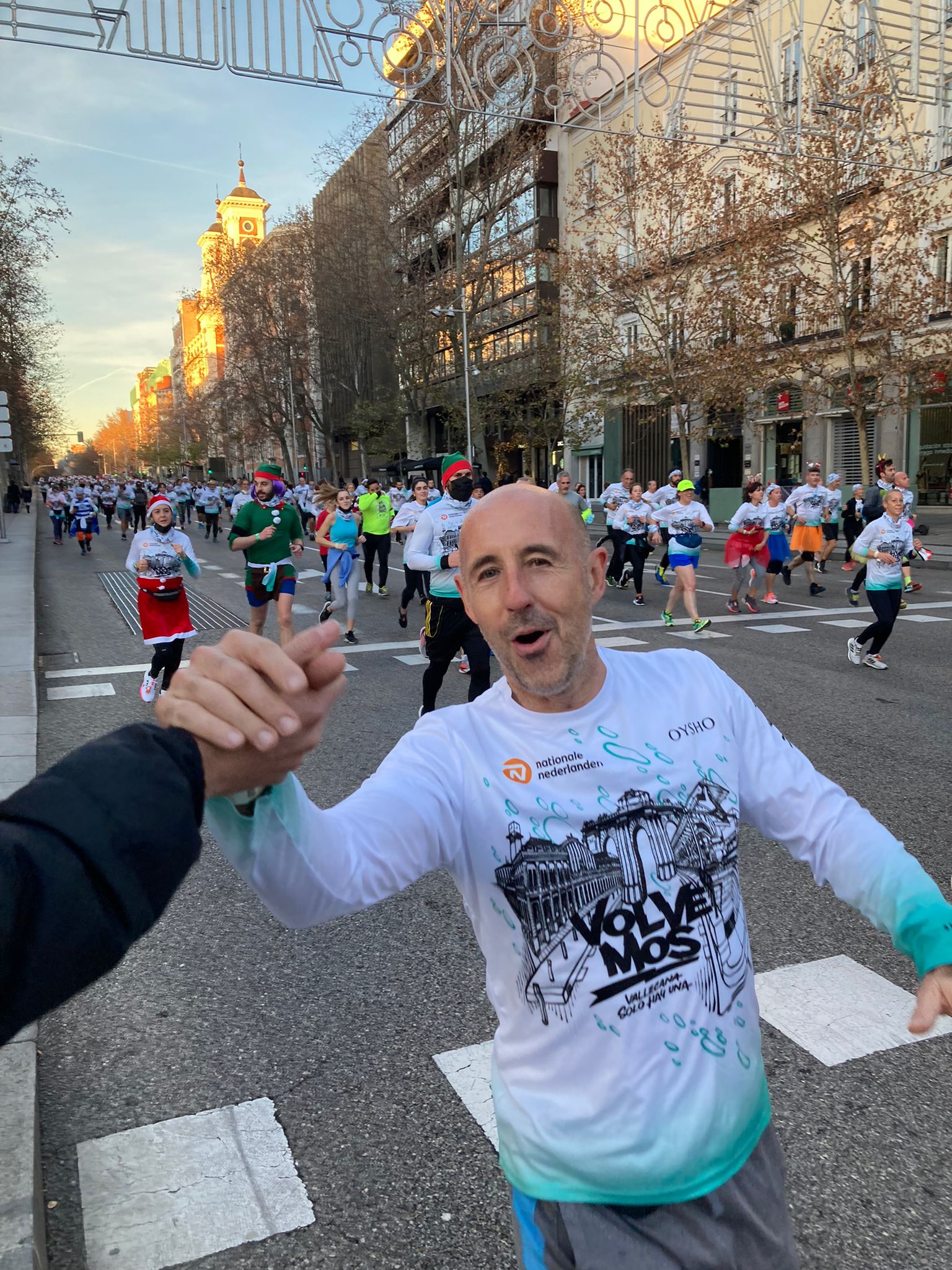
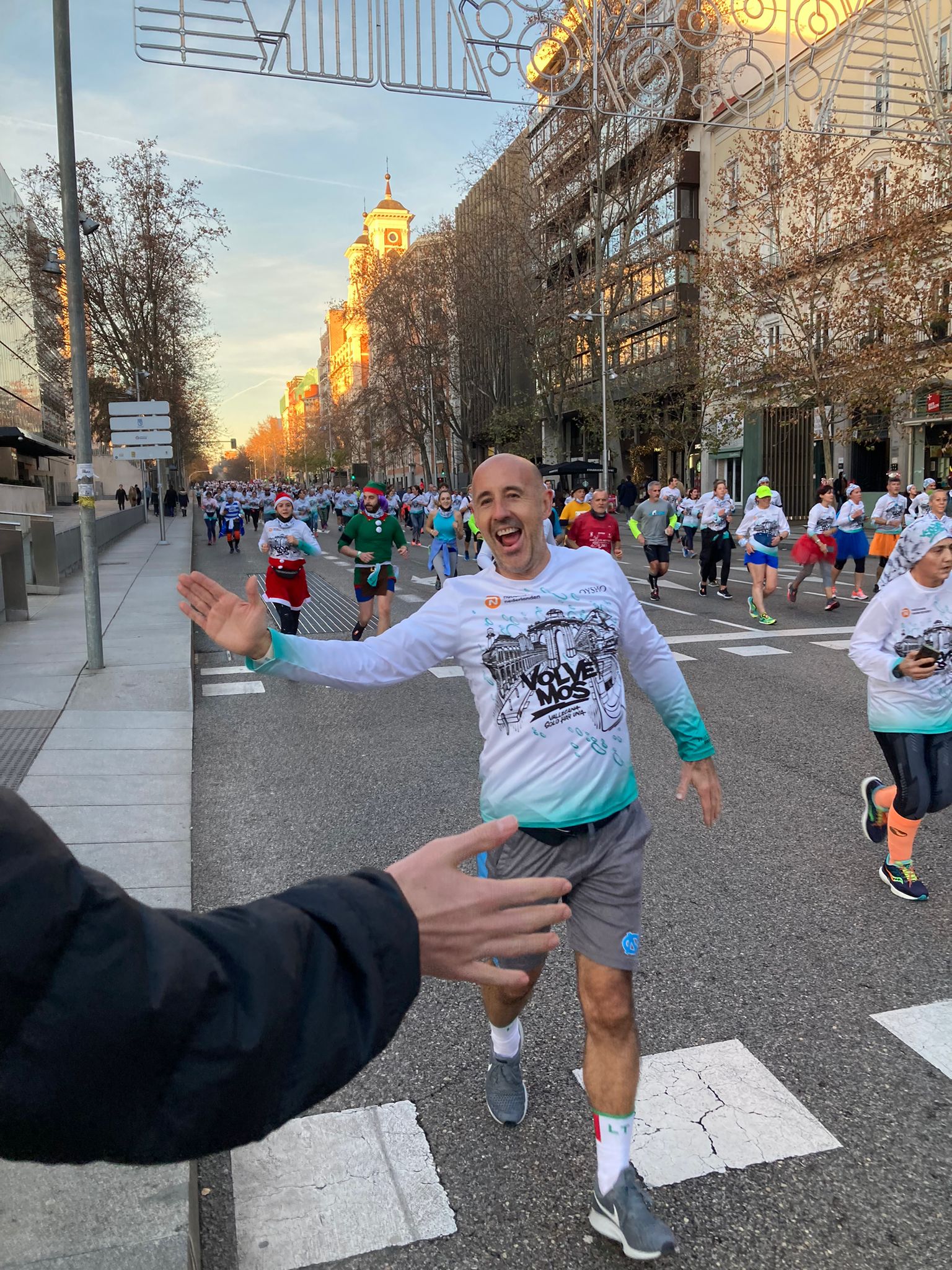
The San Silvestre was only ran by pros in 2020 due to Covid. This year the popular race was back on, and I ran it again!

For those of you who are new to my blog or to the San Silvestre, it is a 10 km race held on New Year’s Eve through all of downtown Madrid. It starts at Real Madrid’s Santiago Bernabeu Stadium and ends at Rayo Vallecano Stadium. This was my fourth running, and I did my best time yet 1:02, not bad for an old man.

The race, at least the Popular race is a fun run with great atmosphere, plenty of costumes and jokes, and although this year there were far fewer runners and spectators, it was still fun.

The San Silvestre is usually my only competitive race of the year, I usually cannot be bothered to get up early for a race. But this one is in the evening, so I have no problem!

Running is only part of my fitness and wellness routine. I normally do strength training every other day and cardio on the other day. Cardio ideally is running -in Boynton Beach I am privileged enough to be able to actually run on the beach, as energy zapping as it is, and in Madrid I have the Retiro Park close enough to run there. If the weather does not allow or it is dark, I do static bike, or elliptical, or treadmill, or God-forbid Ergo machine (rowing).

But just as important as moving your body there are other, just as key factors to keep in mind: eating healthy, mindfulness / meditation, rest, and sleep. I try to keep all aspects of my wellbeing in balance and will continue to try to do so in 2022. You should as well! Let me know any questions in the comments below. Let’s get going in 2022!!

Love letter to El Camino (sorry, en Español)

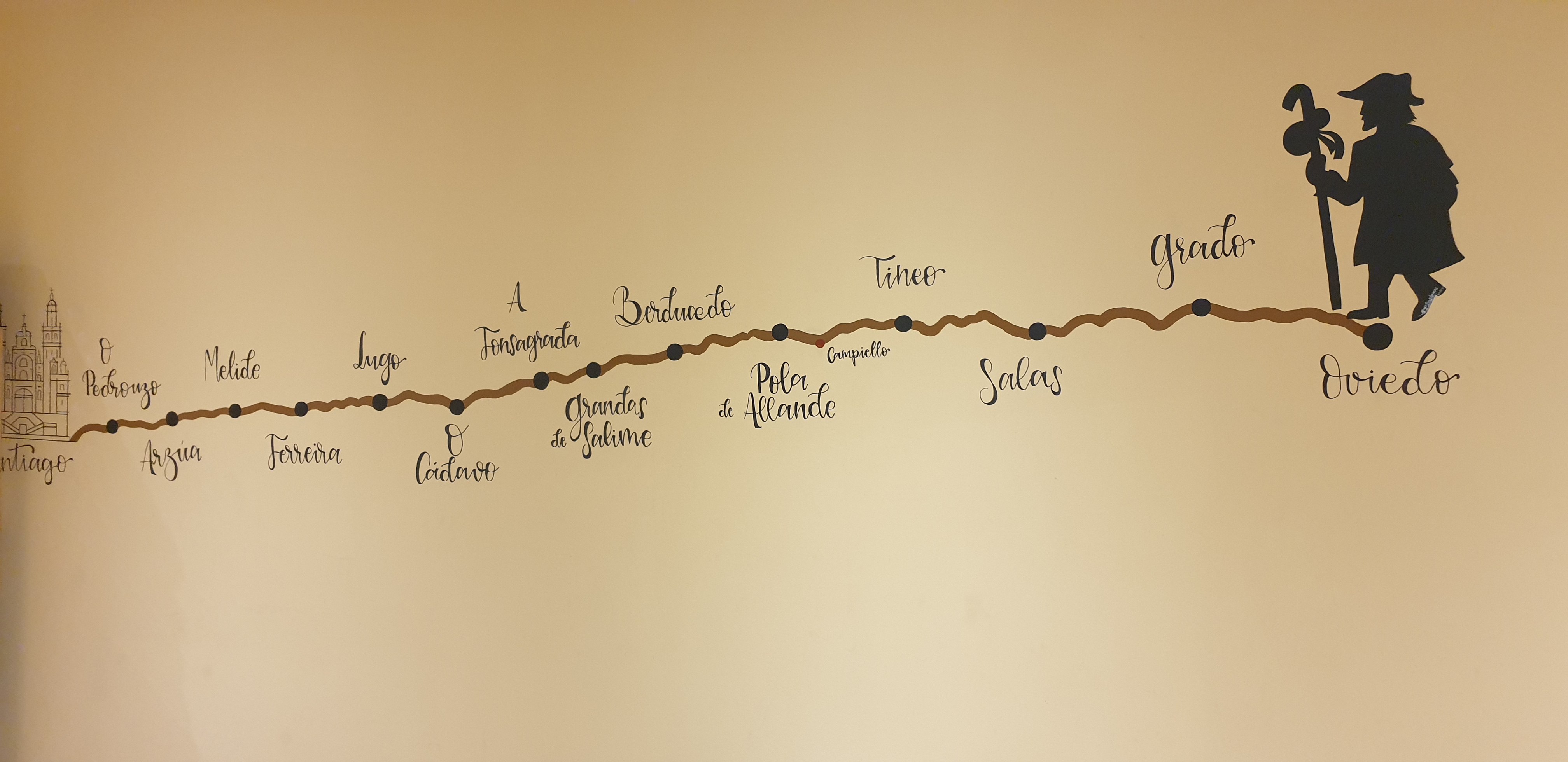
Every day that passes I am closer to getting back on the Camino. This Summer I hope to walk the Primitivo, from Oviedo to Santiago, the same one that king Alfonso II -the first pilgrim- did sometime around 840 to check out St. James’ tomb. It is apparently the most rugged and thus the most beautiful although it is only 14 stages at 314 km (about 195 miles).

The other day I saw this beautiful video/love letter from Condé Nast Traveler, which while not 100% authentic, it does capture the spirit of the Camino, so I am sharing it with you in this tender time that is Christmas.

Enjoy.

Arriving in San Sebastian!

Summer Adventures, Camino de Santiago (#2)

My last Camino de Santiago had to be cut just short of finishing because of time constraints. After a fallow Covid year, I was rearing to get back on the Camino, the Camino del Norte, following the North Shore of Spain until it turns Southwest towards Santiago de Compostela. That turn inland is just where I finished in 2019.

I picked up just where I left off, on the ria (fjord) that separates Asturias from Galicia on the latter side, Ribadeo. A cute town with a nice marina and old buildings ranging from Medieval to Modernist – these were financed by “indianos” folks that made it big after emigrating to America, mostly Cuba, and returning full of cash. Since I could not find the right transportation to get there, I ended up driving myself. I shared the ride on BlablaCar to help me with the cost of my gas guzzler old Land Rover Discovery.

The first day was, like the next four, rainy, but I was so happy to be walking again. It meant wearing a poncho that keeps the rain out but somehow also gets you all wet inside. I have not figured out if the moisture is sweat from wearing a plastic sheet over you, or water that gets in. But I refuse to spend over 200 € for a real rain jacket. I try to keep my Camino as close to the Medieval pilgrims who would have done it, at least as close as I can get in the XXI C.

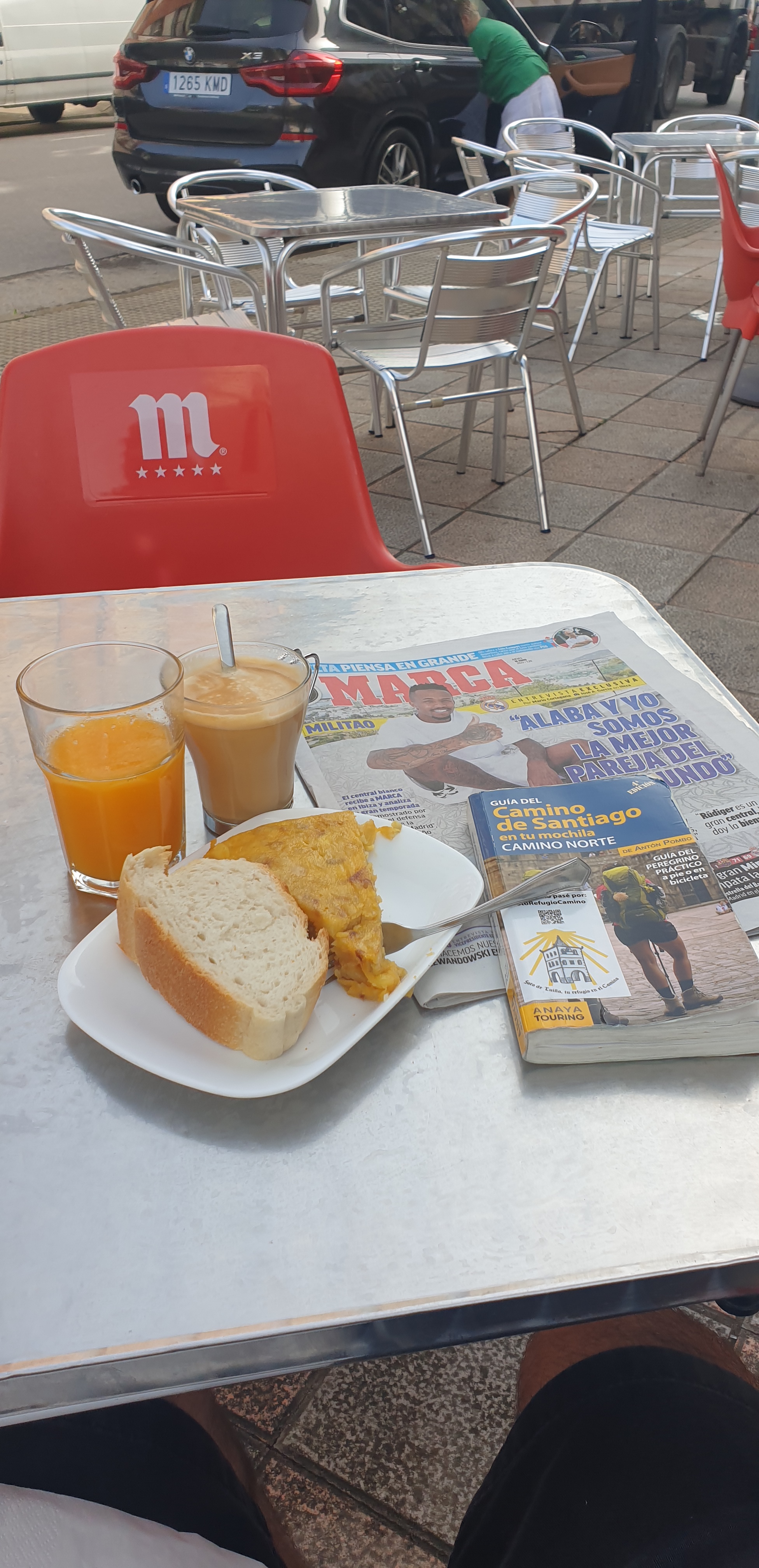
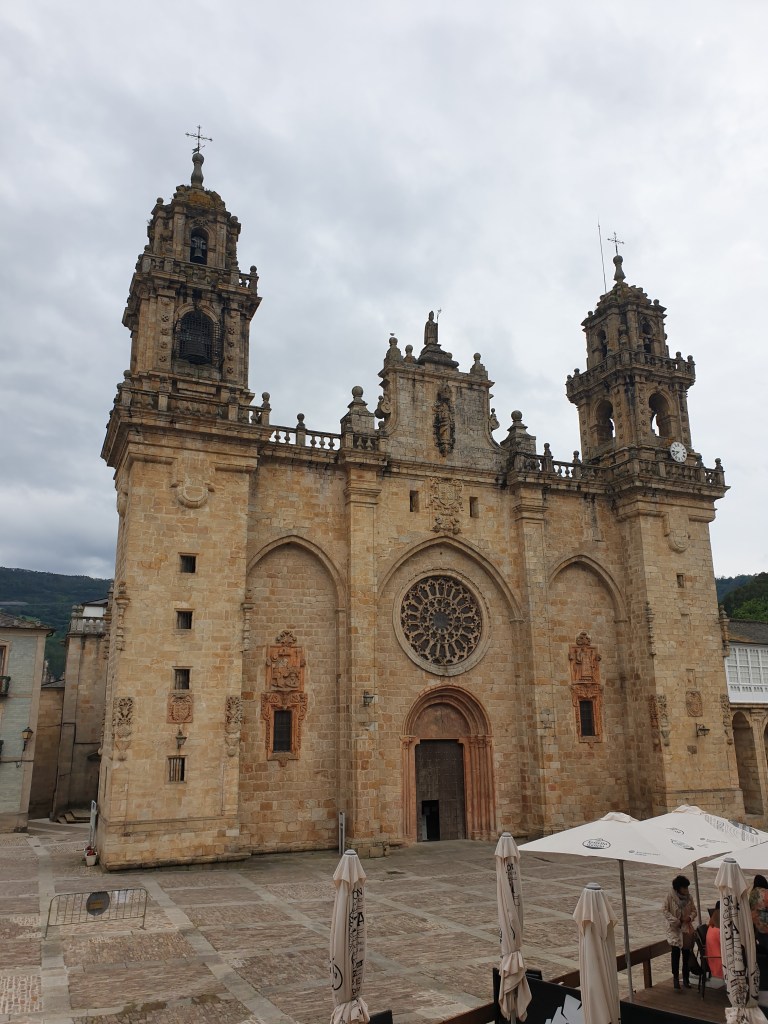
Breakfast at the albergue was a rare treat: tortilla, good coffee and fresh squeezed OJ. My guide recommended pushing 34km to Mondoñedo for the quality of the Albergue and the town. Although it was a bit of a challenge for my first day, it was worth it. I only met four other pilgrims along the way. Before Mondoñedo is Lourenzá which is a nice village which has an amazing monastery! The albergue in Mondoñedo, as the guide promised, was awesome and I even had space to do some post hike yoga! When I sat down at the cathedral for mass, seeing as I was a pilgrim, I was asked by the sacristan if I wanted to read the first reading and the Psalm. What an honor! Of course I accepted although I was wearing my long sleeve T-shirt, shorts, and after hike flipflops! (I always wear long sleeve T-shirts to protect me from the sun and to keep me warm, as the case might be)
One of the reasons I walk the Camino is to honor and remember my dad, who always talked of doing it. So I always make sure that I am walking on June 20, his birthday. On that day, he walks especially close to me.

Day two is still raining and starts with a brutal two-hour climb -fortunately on good ground. Eventually it stops raining and I walk through ancient, magical forests for hours, without seeing a single pilgrim all day (except a German couple at the only café on the Camino). Vilalba, my destination, is quiet as it is Sunday evening when I arrive. I go to the evening mass and dine at the only place open in town.

Day three is, as I said before, rainy. But a pilgrim churns on regardless. I finally meet a genuinely nice pilgrim from Gerona, and we chat for a while.

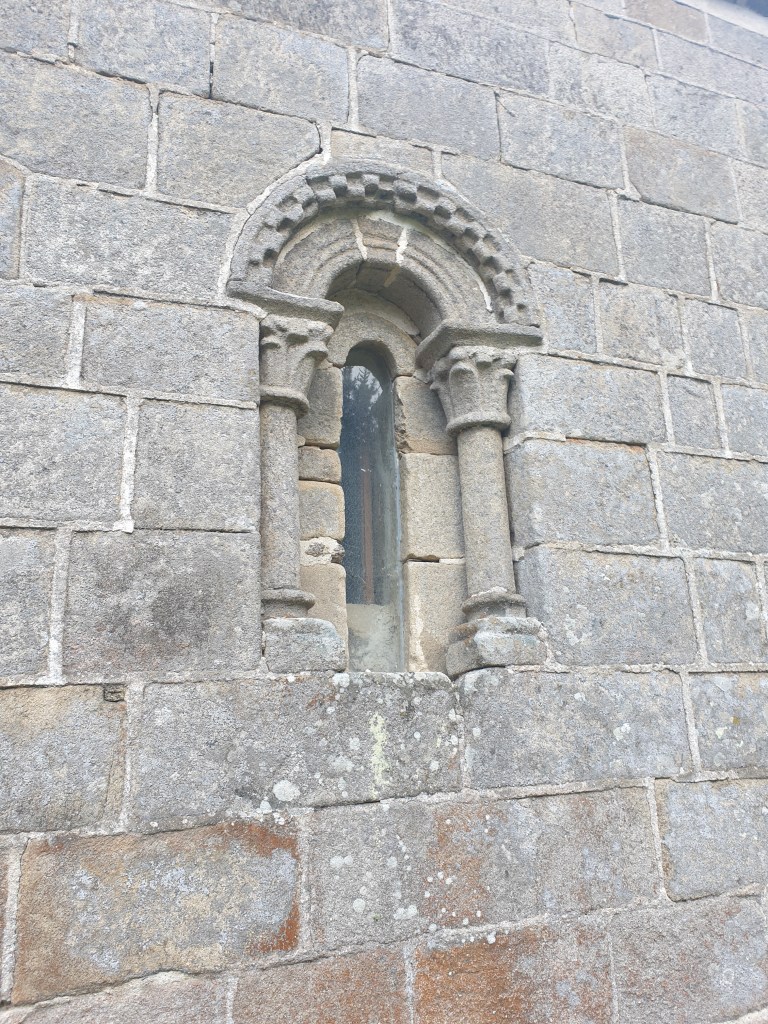
One of the rewards of the Camino is seeing interesting architecture, mostly churches, but also occasionally homes or other buildings. During this stage, I walk to a gorgeous early Gothic church in the middle of a forest, by a river, San Esteve (see photos). Albergue Witericus at the end of the day is an old, restored farmhouse in the middle of a forest. I spend the rest of the rainy evening there, chatting with the wonderful innkeepers, reading, and writing my diary, dining the vegetable soup from their garden and an omelet from their chicken’s eggs!

Day four starts dry but soon changes to pouring rain. The Camino crosses the cute village of Miraz with its manorial tower, and 18th C. church and then climbs into the hills. This day also hits the highest point of the Camino del Norte in Galicia, a mere 700 mts (2.300ft). I finally meet the fellow that keeps overtaking me as he is doing the Camino running!! He is a lovely chap and stops to walk with me for a while. I end my day at Sobrado with its amazing Cistercian monastery which still operates with fourteen monks -one of them a brit! I obviously stay for very mystical Vespers with them, before dinner at a local restaurant.

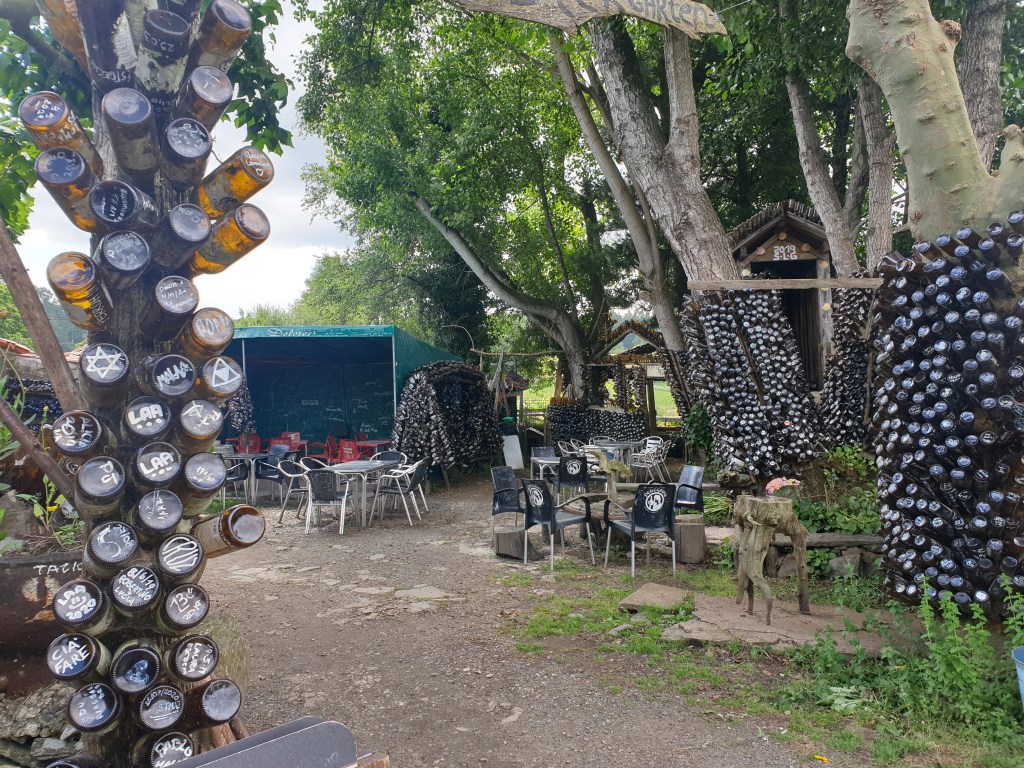
Day five is finally sunny. Cold but sunny, so there is an extra spring in my step. At Arzúa I connect with the Camino Francés, which carries a stream of people. Fortunately, after clearing the village there is no one for the rest of the day. My final albergue is a lovely, restored old house and there is only me and a fellow from Honduras. The only attraction in the village is a bar decorated fully with empty beer bottles! I am the only customer there and spend over an hour chatting with the owner about politics, and the meaning of life, extremely rewarding.

My last day is sad as this Camino has been noticeably short for me, but I get to celebrate it with an amazing breakfast on the trail. I enjoy walking alone, meditating, breathing the fresh air. As we approach Santiago, the concentration of pilgrims increases, but that is part of the Camino. My last coffee stop is the same as when I finished the Camino Francés in 2018, the cortado is just as delicious as I remembered.

Tired of albergues and ready to fulfil one of my Camino dreams, I book my overnight in Santiago at the Parador. This luxury hotel is housed in the original, medieval “Hospital de peregrinos” which yes, was a hospital, but also served as a hostel for those who could not afford where to stay in Santiago. In fact it is technically the oldest hotel in the world. I celebrate my arrival in Santiago with a long, long bath. And only after did I venture for a meal, a walk and eventually mass in the recently restored cathedral that houses the remains of St. James.

In conclusion, I wish my walk would have been longer, but again, family obligations kept me from extending my walk to Finisterre. Otherwise, I love the spiritual journey of self-discovery that is the Camino, walking in nature for days on end, meeting interesting people with their stories, seeing amazing architecture that spans almost a thousand years, and eating great food. But do not get me wrong, the Camino is not a walk in the park, it requires you to walk for miles on end every day. My average this outing was 31.6 km per day (that’s close to 20 miles a day). You start the day with boundless energy, but the last couple of hours of an eight-hour day, day after day are a difficult slog that tests your mental and physical endurance.

Sigüenza

A bit over an hour north-east of Madrid lies the town of Sigüenza. I remember going there for an excursion for lunch once with my father when I was a teenager, and again with my family in my twenties, but I had not gone back since. In early January I went with my girlfriend. What a great town it is for a quick week-end getaway!
There are two main highlights to the town but many interesting bits to fill in between those two bookends. And bookends they are as they are situated on each side of town: The castle sits at the top of the hill, and the cathedral at the bottom. They are connected by the medieval wall. Within those walls are a handful of old churches, from Romanesque like Santiago and San Vicente to 19th C Santa Maria. There is a Renaissance town square, monasteries and convents, and like any good Spanish town a bunch of bars and restaurants!

The medieval castle, where queen Blanca de Borbón was kept prisoner for a few years since her dad King Jean II le Bon did not pay the dowry, became the bishops’ palace and eventually was turned into a gorgeous Parador hotel in the 70s. Imagine staying in a medieval castle but with awesome water pressure, great food and Wi-Fi!! We got a great deal, so we stayed there!

The town is perfect for walking around. Although we went in early January and it was freezing, there are plenty of places to check out and warm up!

The highlight is the Cathedral, originally Romanesque and then modified in Gothic, Renaissance, Baroque and eventually Neo-Classic styles. The main attraction in the cathedral is the tomb of “El doncel”. This fellow, Martín Vázquez de Arce was a local nobleman who was killed fighting for Ferdinand and Isabelle against the Moors in Granada in 1482. What is extraordinary is his tomb: he is not lying down like every other bishop and nobleman in every other cathedral… he is reclining, reading a book in his suit of armour, waiting for his eternal rest. The detail in the carving of the alabaster is exquisite to the point of whimsical: his page carefully holding his foot, his eyes open, etc. it is a gorgeous sculpture –funerary art at its best!

The rest of the cathedral is no slouch: a Greco painting, an outstanding collection of tapestries, amazing architecture, two pulpits: a Romanesque and a Renaissance one, etc., etc.

The Clarisas convent just happens to have an ancient burying ground outside their doors which is simply covered with a glass for you to appreciate the architecture and human bones! The nuns make the best chocolate truffles you can imagine. Since these nuns do not allow you to see them you have to buy the sweets via a rotating door. As a certified chocaholic, I can attest to the quality of the truffles! I did not bother tasting anything else.

As in any good Spanish town, food is the soul of the place. Sigüenza lies pretty much along the dividing line between Old and New Castille  – so called as Castille progressed on the expulsion of the aforementioned Moors… So you get both cuisines, North and South.

The surrounding villages are obviously much smaller than Sigüenza,but are very rich in history and culture. Make sure you check out Atienza and Medinacelli.

Mind, body and soul, exercise, yoga and meditation

For a few years, since 2010 to be precise, I have been actively seeking inner peace, not just talking about it with a drink in one hand and a cigar in the other staring at a sunset. It is only with breakage that one slowly lets go of the ego and matures through Kierkegaard’s three stages that we have seen before (the aesthetic, the ethic and the spiritual). With my divorce and the life changes brought about by that trauma, I started seeking solace and understanding. My first, basically subconscious moves were to exercise, to work with a therapist (the amazing Dr. Nemser), I went to church on Sunday – and have not missed a Sunday since (maybe a couple but only for reasons of force majeure), and volunteering. I started reading Scripture every night, then I got hooked on Richard Rohr’s Daily Meditations, I tried to find inspiring readings, revisiting Tolstoy’s The death of Ivan Illich, Milton, Jalics, etc. With time I started meditating, then I started yoga, then came walking the pilgrimage to Santiago…

Little by little I started realizing in my body, mind and spirit that all these things were connected, that working with one affected the other two. Yoga, even weightlifting quieted my mind, meditating relaxed my body and spirit. Breathing helped me stretch during yoga. I realized that while we are made up of many different things, we are in fact one totality of being with a single energy.

I started yoga lessons in North Carolina about six years ago. It was the perfect thing for saturdays after friday night soccer games. And just like that I was hooked. I normally find a gym or a studio that has lessons, but in a pinch I use an app called Down Dog which is very scalable!

For meditation, I usually wait until the end of the day so I have nothing left to do that day. Or I parcel out a time to mediate. I sit and breathe, focussing on my breathing for twenty minutes. I use a great app called Insight timer where I can time myself, take courses, dial into guided meditations – and it keeps track of your progress!

Then I started using these techniques with my athletes when I coached, most recently and successfully the tennis players at the Hun School. Yoga on days in between games, a bit of meditation before games, it all translated to happier, less injured, more understanding players.

Volunteering has been a key factor in my recent growth and maturity. First at Community Servings in Boston cooking for sick, homebound families. In Chapel Hill I volunteered every monday night for four years at the Ronald McDonald House. In Naples I helped out the St. Vincent de Paul charities. Now in Madrid I’m helping at the Ronald McDonald Family Room at the La Paz Hospital in Madrid, for families with premature babies.

My second pilgrimage to Santiago I really focused on walking, meditating, stopping at churches for contemplation, doing yoga after the day’s walk. It really was magical, and I noticed a holistic improvement!

Healing is a long process that there is no way to rush. Acceptance, gratitude, patience, forgiveness, compassion, perspective, humility, understanding, generosity, none of these knock on your door overnight. One must consciously work at healing, it is slowly working for me, give it a try!


The Camino is what the world should be like

Three months have passed since I finished my Camino for the year. I have had time to think and process my pilgrimage. In the meantime, a student from UNC interviewed me about my experience on The Camino, which helped me to vocalize my feelings about the experience.

My conclusion is that The Camino is what the world should be like. Pilgrims are generous,  considerate, and kind, we are all fairly equal, united in the task of walking to Santiago. Add to this the human and humane pace of walking, allowing you to talk to others, to enjoy the beautiful scenery, there are no unwanted interruptions, there is no need for technology. There are no hidden interests, we are all just walking and that is pretty much all there is to it. You can walk faster or slower, you can stop wherever you want. It really is a parallel world that is as much of a real world utopia as you can find.

I recently read this passage from Thomas Merton, a real modern-day mystic, and I immediately connected it to my Camino experience:

In Louisville, at the corner of Fourth and Walnut, in the center of the shopping district, I was suddenly overwhelmed with the realization that I loved all those people, that they were mine and I theirs, that we could not be alien to one another even though we were total strangers. It was like waking from a dream of separateness, of spurious self-isolation in a special world, the world of renunciation and supposed holiness. The whole illusion of a separate holy existence is a dream. . . . This sense of liberation from an illusory difference was such a relief and such a joy to me that I almost laughed out loud. . . . I have the immense joy of being [hu]man, a member of a race in which God . . . became incarnate. As if the sorrows and stupidities of the human condition could overwhelm me, now [that] I realize what we all are. And if only everybody could realize this! But it cannot be explained. There is no way of telling people that they are all walking around shining like the sun. . . . Then it was as if I suddenly saw the secret beauty of their hearts, the depths of their hearts where neither sin nor desire nor self-knowledge can reach, the core of their reality, the person that each one is in God’s eyes. If only they could all see themselves as they really are. If only we could see each other that way all the time. There would be no more war, no more hatred, no more cruelty, no more greed.

Unfortunately The Camino ends, and one returns to the world we have created. We return to noise and pollution, but even worse: to rude and aggressive people, to rushing, to everything we have constructed that separates us from peace, and beauty, and truth.