How often do you think of the Roman Empire?

How often do you think of the Roman Empire? This was a silly viral question/meme that became quite the sensation last year on the interweb.

I must confess that maybe because of my work in the field of Literature and Culture, I end up thinking of the Roman Empire quite frequently.

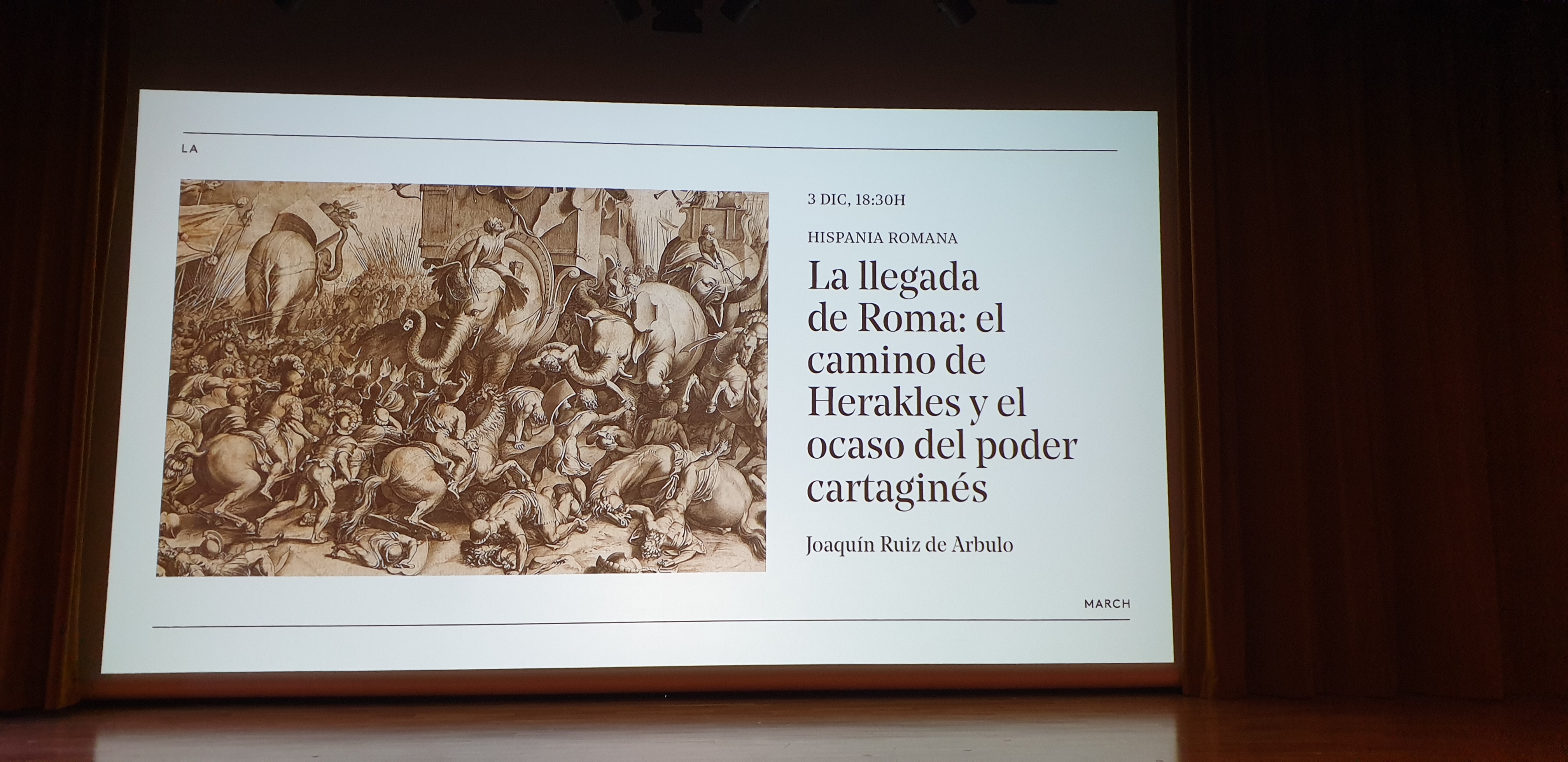
One such occasion was a couple of weeks ago when I had the opportunity to listen to a conference by Universitat Rovira i Virgili professor of Classical Archaeology Joaquín Ruiz de Arbulo at the Fundación Juan March. His conference La llegada de Roma: el camino de Herakles y el ocaso del poder cartaginés about the arrival of Romans to the Spanish península was fantastic.

Ruiz de Arbulo explained that by the time the Romans arrived in Spain, there were already Celts, Phoenicians, Carthaginians, Greeks and Massaliotes, which was a Greek tribe from modern day Marseille. Despite being a leading academic in his field, Ruiz de Arbulo spoke clearly and simply, listening to him was mesmerizing. He had a great Power Point explaining how tuna fished in Cadiz was dried and sold in Egypt, and how stuff from the Eastern Mediterranean ended up on Spanish shores long before the Romans even got here, how traders and sailors had a temple in Rome, etc.

In conclusion: I do think about the Roman Empire a fair bit. How about you? Let me know in the comments -and no, I am not going to try to bring back that old internet meme, although it might make my blog a bit more popular!

Humanities, Caravaggio, and Artificial Intelligence.

Am I the only one who is sick and tired and bored of AI? And this nightmare has only just begun? Yes, let’s eradicate Cancer and streamline flight traffic, and all that good stuff, but do you really need an AI generated picture of whatever nonsense you think of? and you certainly do not need it for that high school or college essay. Sorry.

This comes to mind because AI is already everywhere we look, but also because as every cloud has a silver lining, folks are hungry, thirsty for meaning. The solution? more Humanities, more arts, music, theatre, literature, more stories, more narrative.

Everybody has an opinion on AI. Some more positive, like Spanish writer Irene Vallejo, who thinks AI will “push” us towards the Humanities, and some more pessimistic, like French philosopher Éric Sadin who wisely explains that AI will not generate new jobs -at any rate not enough to cover those lost to AI.

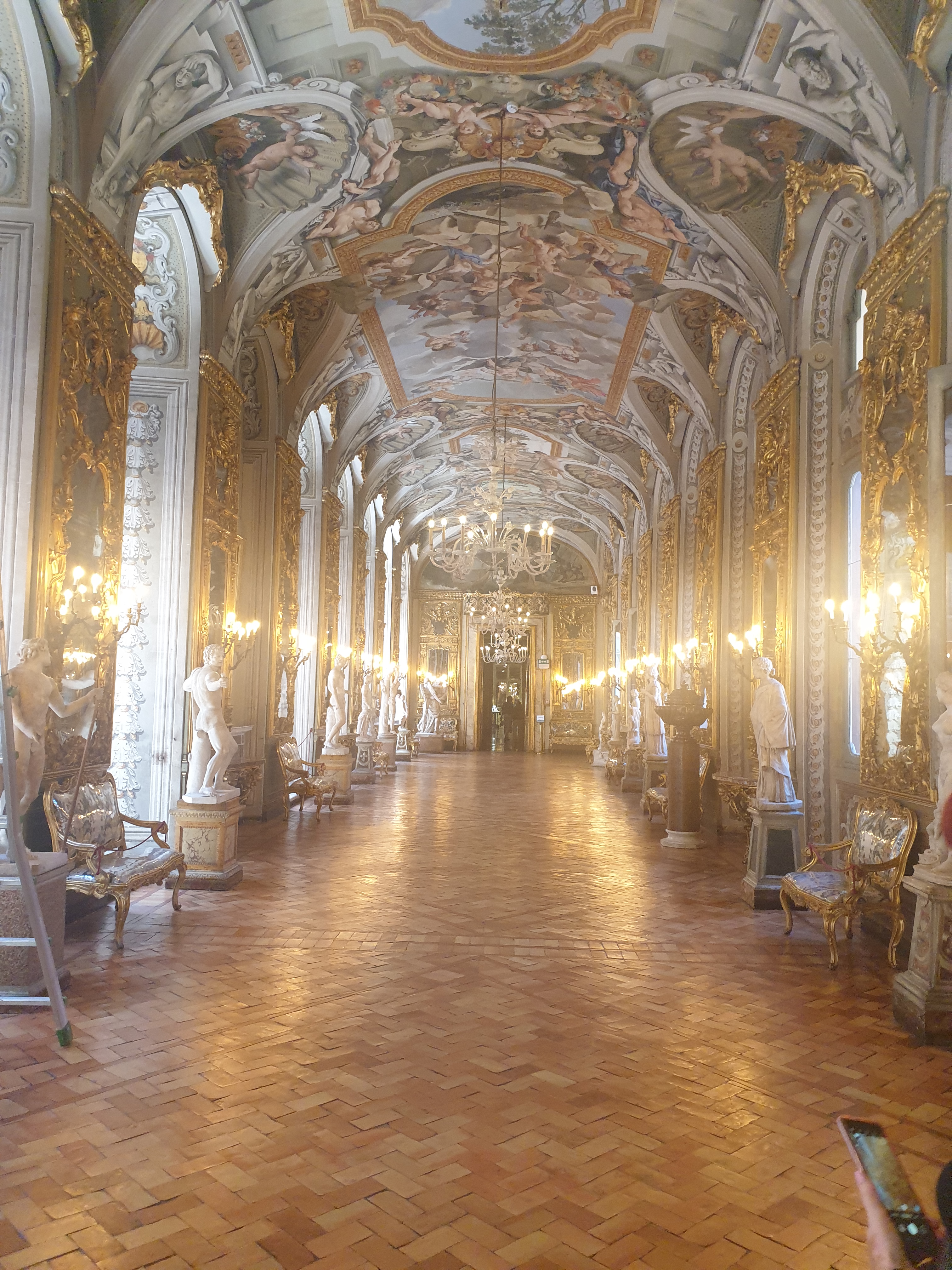
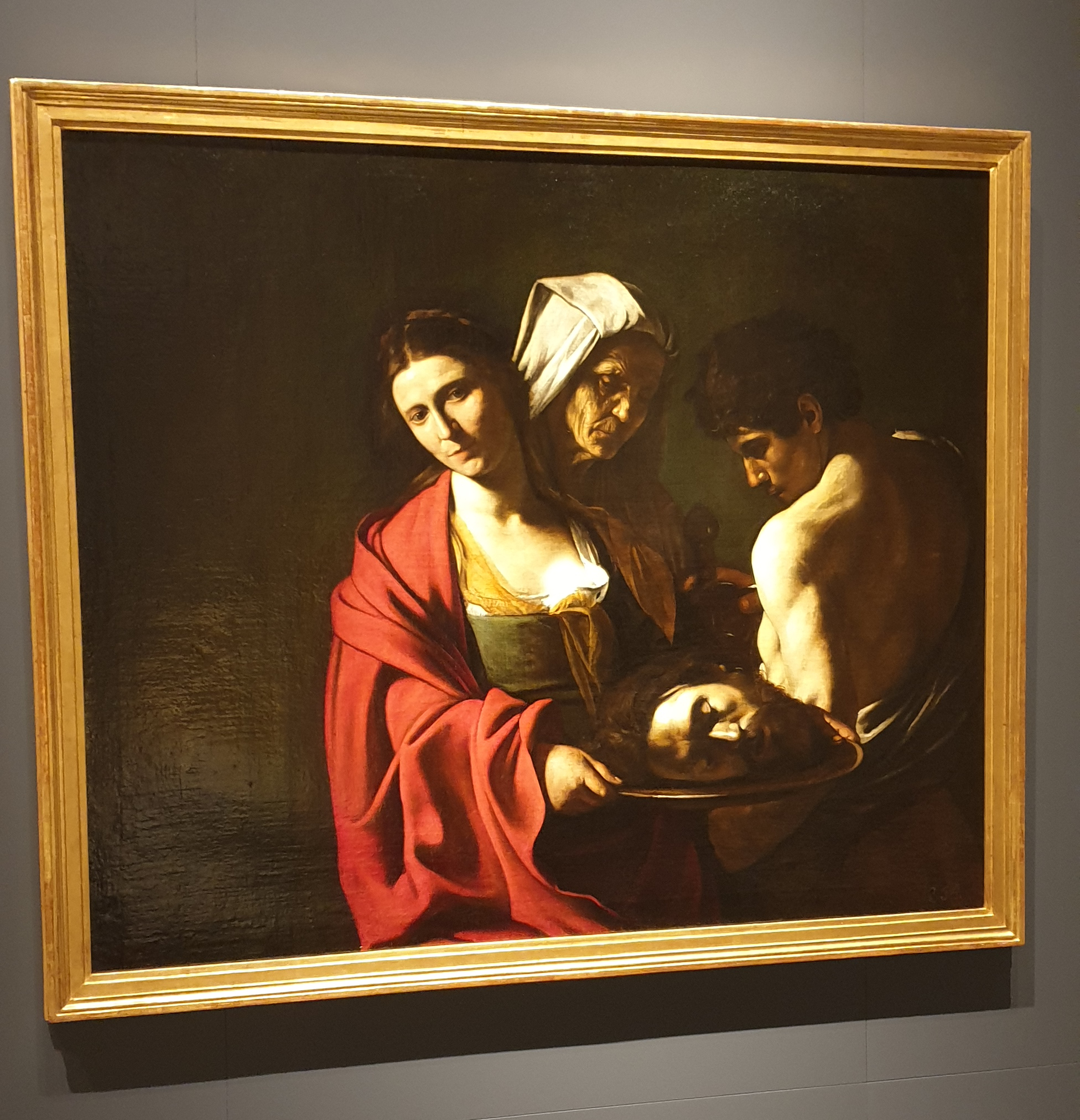
So what does Caravaggio have to do with all this? Well, I was thinking about AI when I unexpectedly “bumped” into a brilliant Caravaggio at the Colecciones Reales recently (read about that here) and I was so deeply moved, that I understood how art and the humanities are the antidote to AI. A few days later I saw two more Caravaggios at the Prado, including a lost one which was in the attic of a Madrid family. I then basked in the memory of other Caravaggios I had recently seen: one in the Cathedral of Toledo, and a couple at the Doria Pamphilj Gallery in Rome. The evidence was evident: AI can “paint” just like a Caravaggio with the amazing 3D effect and the chiaroscuro, but it will never be a Caravaggio.

Caravaggio only painted about 60 to 105 paintings, and the story each one tells, the drama, the humanity, is moving. You can see where each painting is on this Wikipedia page.

So, if you are hungry, thirsty for meaning, for purpose, for humanity, find a Caravaggio near you and go enjoy it. If you can’t find one, you can read a good book, watch a good film, listen to a symphony, etc. You are welcome!

The best present ever, Rome.

Confession time: I had never been to Rome before last week when my girlfriend invited me for a few days. I had been to Milan, Lake Cuomo, and Sicily, I spent a lot of time for work in Florence. But I had never been to Rome.

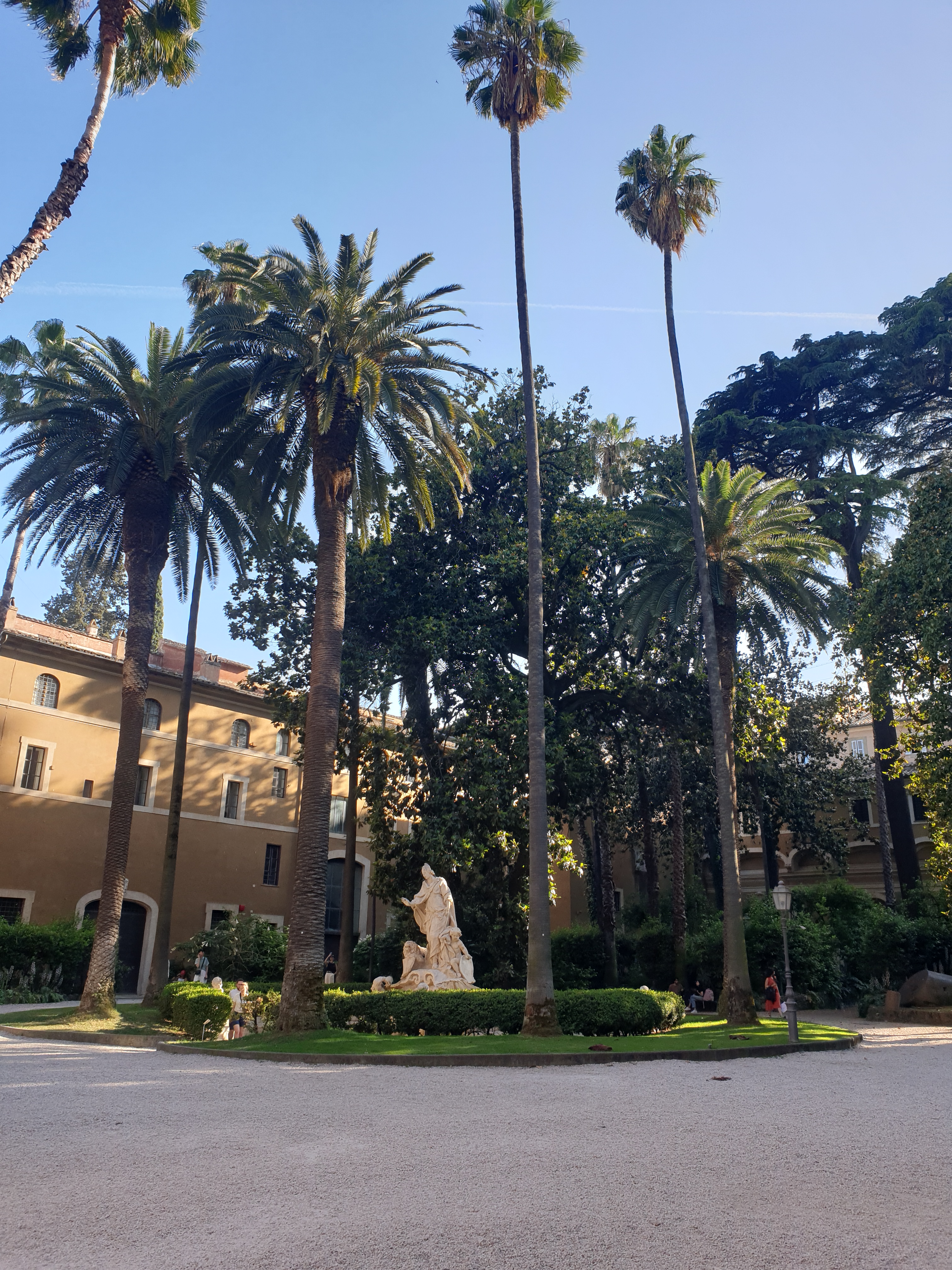
My mind was blown. The absolute beauty, even in the apparent anarchy and chaos of traffic, mopeds, rental scooters, and tourists. Every little piazza, every big piazza, every sculpture, every cobble stone street, one is surrounded by inebriating beauty.

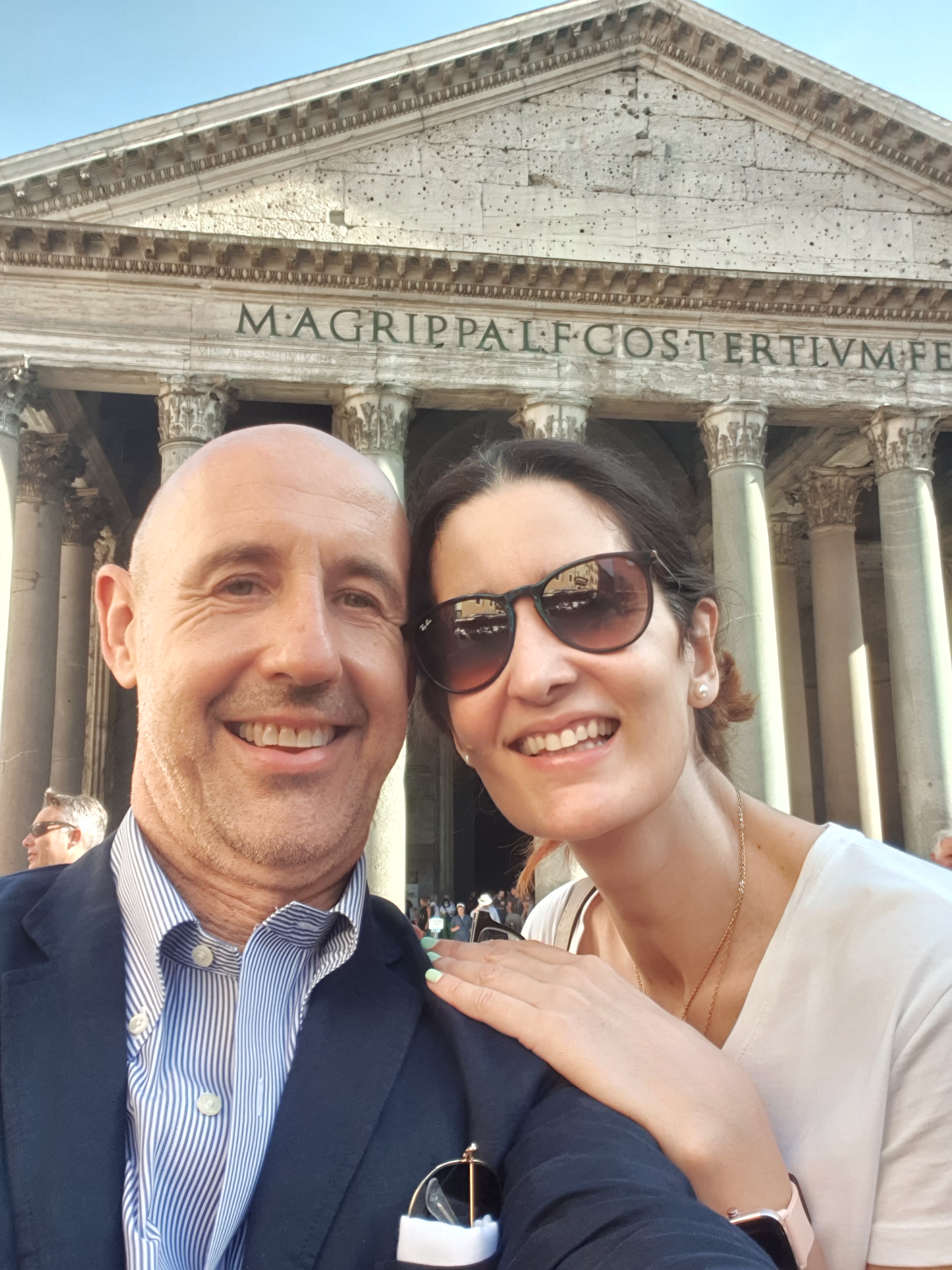
We stayed at a cute and quirky hotel on Largo de Torre Argentina, where Julius Caesar was assassinated, and although Celia had been there before, she was still game to walk all over town to the Pantheon, Forum, Jewish neighborhood, Piazza Venezia, Colosseum, Trastevere, Isola Tiberina, Piazza Navona, Spanish Steps, Trevi, Villa Borghese, the Vatican, St. Peter’s, Piazza del Popolo, Castel St. Angelo, and church after church, you name it, we saw it!

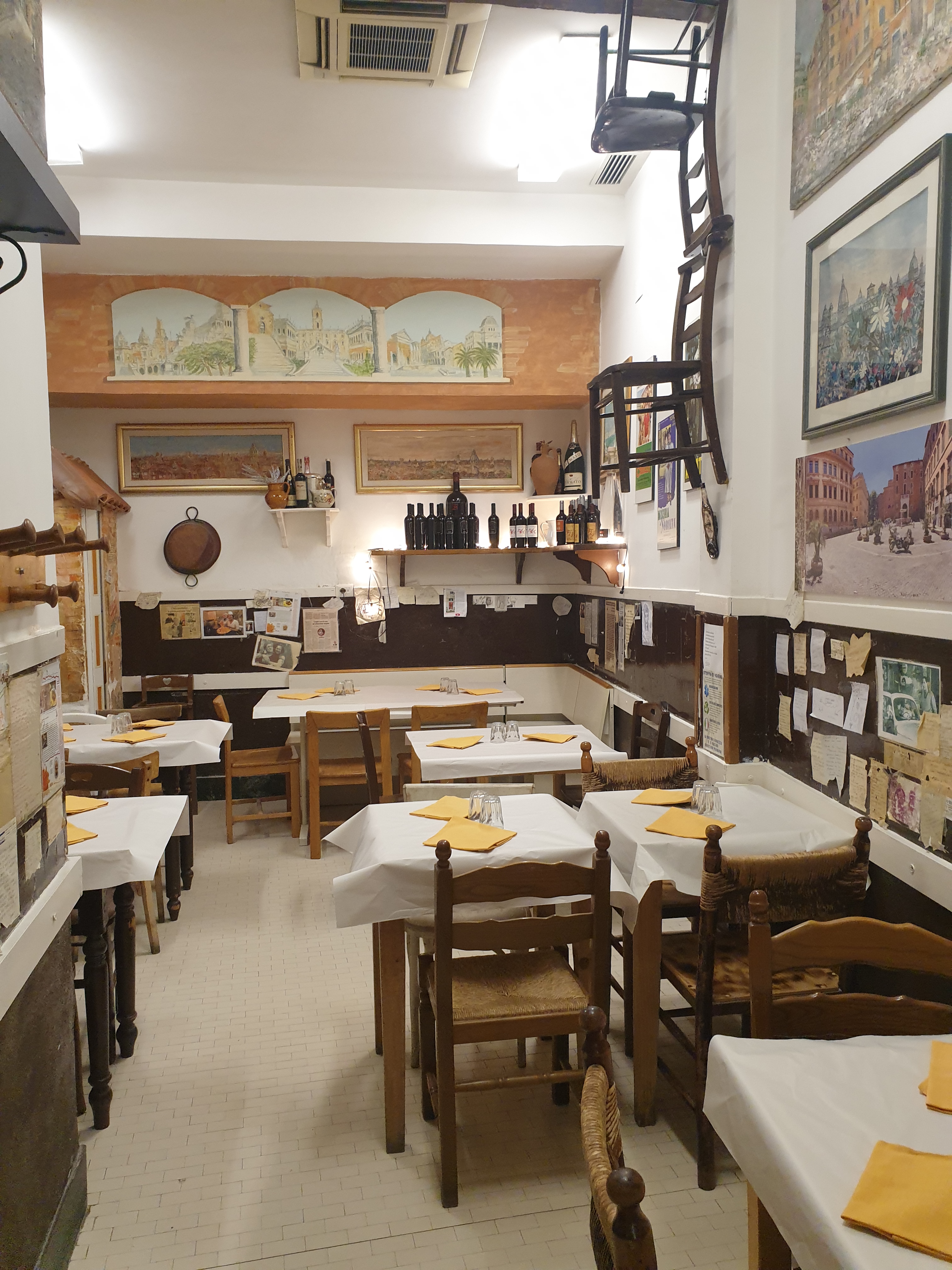
We had delicious meals: my first real carbonara, my first real Jewish artichokes, amazing! Excellent coffee, great wines, an Aperol Spritz when evening started, lick your fingers pastries and gelato, you get the idea.

Two memorable experiences were seeing Velazquez’s Inocencio X at the Doria Pamphili Gallery and Michelangelo’s Pieta in St. Peter’s. Although I was a bit disappointed in the Sistine Chapel: the crowds and the noise make it difficult to enjoy, if on top of that the Vatican cops are yelling “Silenzio!!” and “Move along!!” on their megaphones, then the moment is totally lost, sad.

Overall, I am still in awe. My senses are still aglow with the beauty, tastes, and sounds. I can’t wait to go back, which I should because I dropped a coin in Trevi fountain.

My favorite? Michelangelo’s Pieta in St. Peter’s, but that might merit its own blog post.

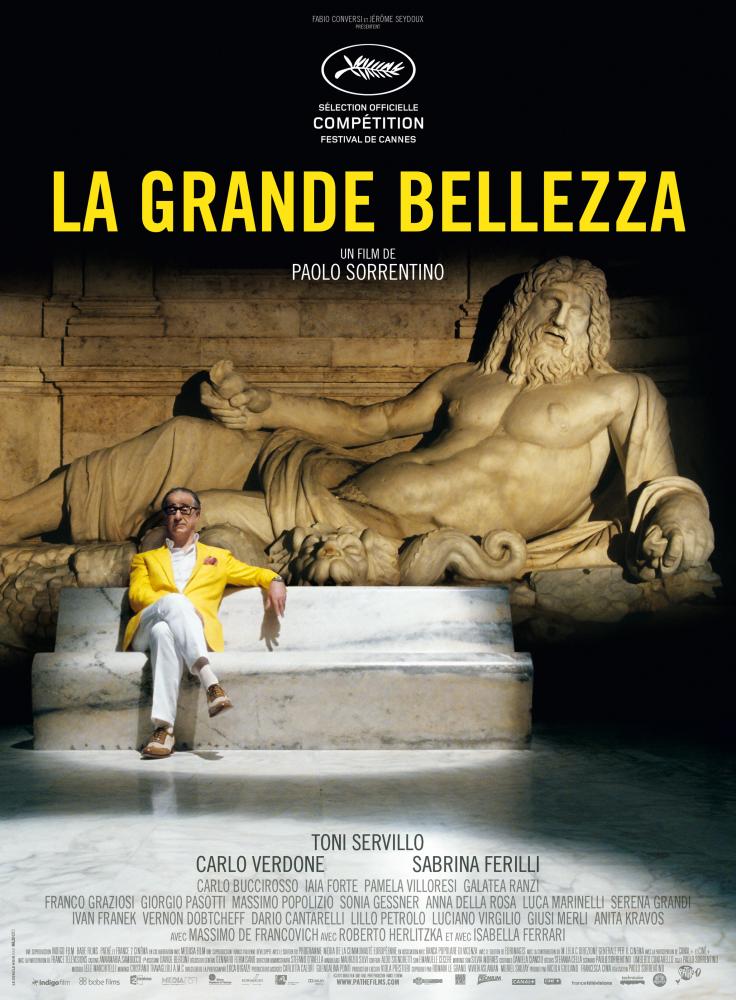
La Grande Bellezza (The Great Beauty) 2013

La Grande Belleza

Thanks to Film Club, I am seeing many more films now than I have in years . Having said that, I really do not want to make antonioyrocinante into a film blog, there are enough of those already.

But I just saw La Grande Bellezza, (yes it is a 2013 film, I am a bit slow) and I have to tell you about it – beware, there might be spoilers.

This is an exquisite film, as beautiful as Rome, the city where it is filmed: exuberant, colorful, rich, fun… but there is a gaping void in it, a melancholy, sad void represented by protagonist Toni Servillo as Jep Gambardella.

You see, all the beauty in the world is sterile, meaningless without love, without a deep spiritual connection. Director Sorrentino is not subtle about this: The film opens with a quote from Céline’s Journey to the End of the Night

Traveling is very useful: it makes your imagination work. Everything else is just disappointment and trouble. Our journey is entirely imaginary, which is its strength.

To drive home that point, the opening scene combines ethereal views of Rome combined with David Lang’s otherworldly song I lie. The fact that the song is in Yiddish should lead you to the great spiritual journeys of Israel, of Job. Life is nothing if not a spiritual journey to yourself, to the divine in you, to your Grande Belleza, Namaste.

Let’s stop there. Let me know your thoughts in the comments, or go see the film and then let me know.

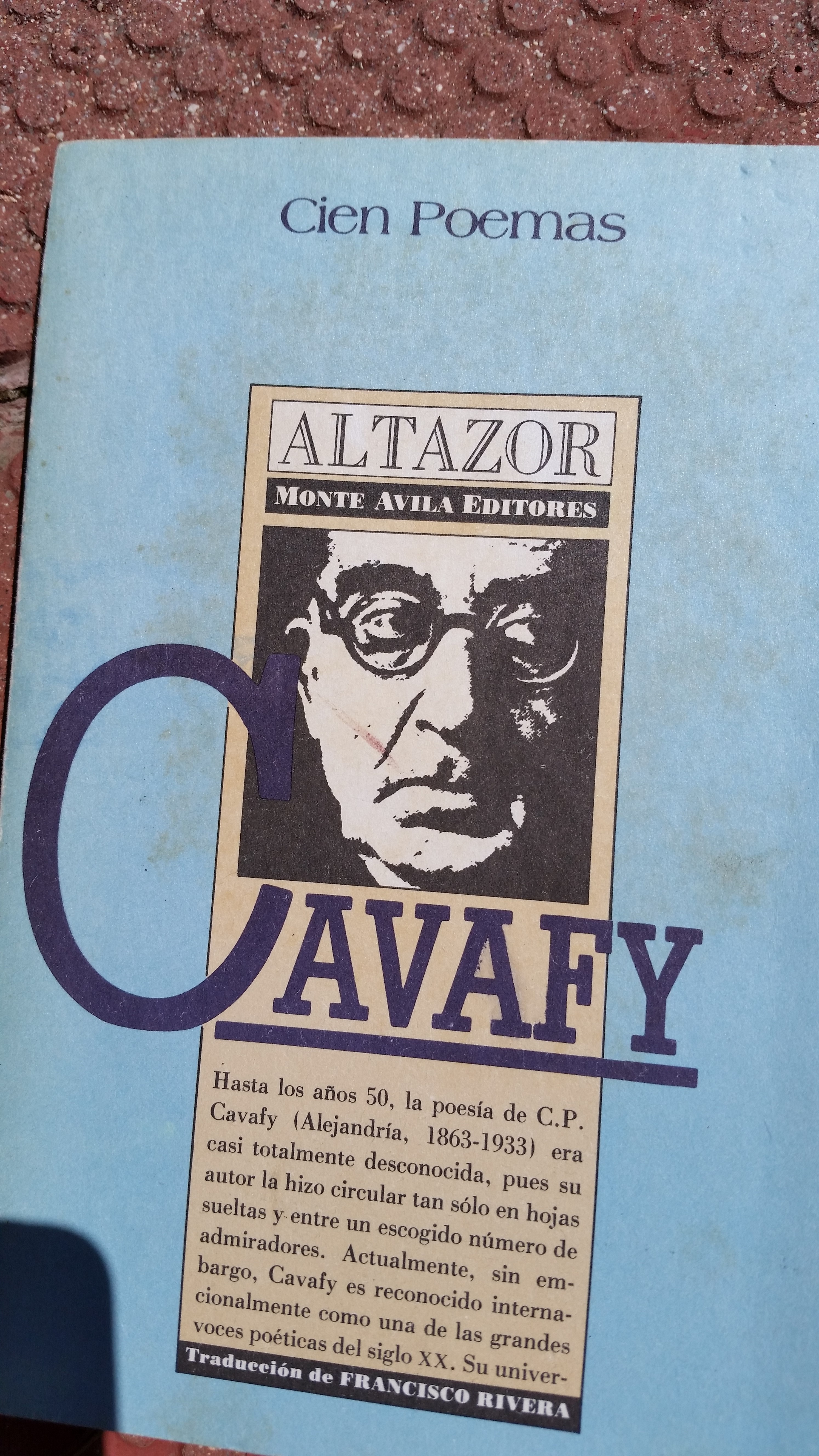
Revisiting Cavafy

my old Cavafy

my old Cavafy

Sad and melancholic after returning from Greece, I found my old Cavafy book and I am re-visiting it!

My brother Theo introduced me to Constantine Cavafy years ago – through his poem Ithaka (which I posted on this blog on August 19, 2011). Now as I reread poems I discover new beauty in his words. The poem which has struck me the most during this re-reading has been God Abandons Antony or God Forsakes Antony, published in 1911. The story is of a defeated Marc Anthony in Alexandria (which centuries later would be home to Cavafy). After being moved by its elegance I remarked on the importance of the story of Marc Anthony and Cleopatra. Of our fascination with that love story, with ancient Egypt, with the Roman Empire, and so on, so I started thinking of my favorite connections to this story…

The first one that came to mind where the lyrics from one of my favorite Rolling Stones songs: Blinded by Love, when Mick Jagger sings:

The queen of the Nile

She laid on her throne

And she was drifting downstream

On a barge that was burnished with gold

Royal purple the sails

So sweetly perfumed

And poor Mark Antony’s

Senses were drowned

And his future was doomed

He was blinded by love

Of course Cavafy’s poem is born from Plutarch’s telling of the story. Canadian singer-songwriter Leonard Cohen used the poem for one of his songs, but changed Alexandria, the city, to Alexandra, a woman. Of course there is Shakespeare’s play Antony and Cleopatra born from a translation of Plutarch, there is Elizabeth Taylor and Richard Burton, and so on and so forth, but for now I leave you with Cavafy in his own translation:

If unexpectedly, in middle night,

an unseen company be heard to pass,

with music and with voices exquisite, —

turn not away and uselessly lament

your fortune that is giving in, your work

that came to nothing, the projects of your life

that proved illusory from first to last.

As one prepared long since, as fits the brave,

bid now farewell to the departing city,

farewell to the Alexandria you love.

And above all, do not deceive yourself:

say not that your impression was a dream,

that, it may be, your hearing played you false:

to futile hopes like these never descend.

As one prepared long since, as fits the brave,

as most fits you who gained so great a city,

approach the open window steadily,

and with emotion, but without the plaints

and supplications of the timorous,

listen — knowing it to be your last delight —

listen to the elysian sounds, the exquisite

instruments of the mystic company;

and bid farewell to the city you are losing,

farewell to the Alexandria you love.