Russian literature quiz

Match the titles of the books with their corresponding first line.

  1. Happy families are all alike; every unhappy family is unhappy in its own way.
  2. Well, Prince, so Genoa and Lucca are now just family estates of the Buonapartes.
  3. On an exceptionally hot evening early in July a young man came out of the garret in which he lodged in S. Place and walked slowly, as though in hesitation, towards K. bridge.
  4. Towards the end of November, during a thaw, at nine o’clock one morning, a train on the Warsaw and Petersburg railway was approaching the latter city at full speed.
  5. Please allow me to introduce myself, I’m a man of wealth and taste, I’ve been around for a long, long year, stole many a man’s soul and faith.
  6. In the big building of the Law Courts, during a break in hearing the case of the Molinsky’s, the members and the prosecutor met in Ivan Yegorovich Shehek’s office, and the conversation turned on the celebrated Krasovski case.
  7. It was a wonderful night, such a night as is only possible when we are young, dear reader.
  1. Fyodor Dostoevsky, White Nights
  2. Leo Tolstoy, Anna Karenina
  3. Mikhail Bulgakov, Master and Margarita (trick question, this is the opening of the Rolling Stones’ Sympathy for the Devil, which is based on this book)
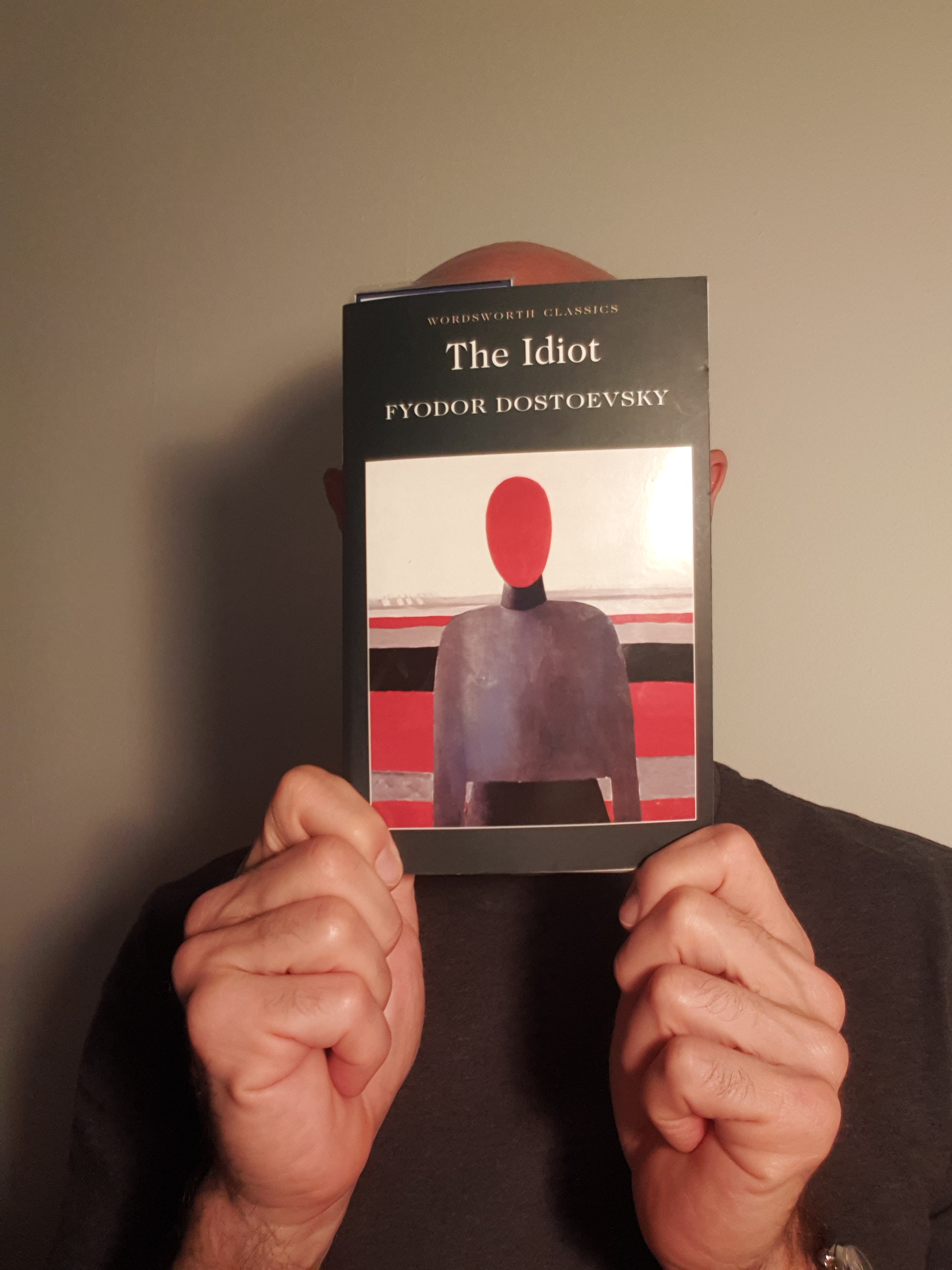
  4. Fyodor Dostoevsky, The Idiot
  5. Leo Tolstoy, War and Peace
  6. Fyodor Dostoevsky, Crime and Punishment
  7. Leo Tolstoy, The Death of Ivan Ylich

Answers: 1-B, 2-E, 3-F, 4-D, 5-C, 6-G, 7-A

How did you do? As you can see this is a thorough test of your knowledge of Russian literature. In reality, it is a test of my knowledge (or lack thereof) of Russian literature, since these are the only books by Russian authors that I have read.

“The strongest of all warriors are these two — Time and Patience.”

― Leo Tolstoy, War and Peace

Having said this and confessed my weak literacy in this deep ocean of work, I love what little I have read of Russian literature. In fact, at one point, I naively fancied doing my PhD in Comparative Lit. studying Spanish and Russian. Granted, this thought only lasted until I realized there was no way I was going to learn Russian in any level required to pursue a PhD, so… about 15 seconds (yes, I am a bit slow).

“Taking a new step, uttering a new word, is what people fear most.”

― Fyodor Dostoevsky, Crime and Punishment

One of the many reasons I love Russian Literature are the many links to my beloved Don Quixote. While this is not unusual, think of Moby Dick, Madame Bovary, and authors like Unamuno, Graham Greene, Foucault, and now even Salman Rushdie! Dostoevsky is clearly and heavily influenced by The Knight of Sad Countenance. Oh by the way, if you this will not be a profound, critical literary analysis, just my chaotic ramblings, sorry.

“No one’s fate is of any interest to you except your own.”

― Mikhail Bulgakov, The Master and Margarita

My first dip into Russian literature was, predictably, War and Peace which blew my mind. The intricacy of the descriptions, the narrative arc, the character development, the whole package! Tolstoy puts you in 19th C. Russia, down to the smells, the samovar ritual, the clothes, the temperatures, etc.

“If you look for perfection, you’ll never be content.”

― Leo Tolstoy, Anna Karenina

Then came The Death of Ivan Ylich and my mind was blown even further. Here was all the richness of War and Peace, but in a short story. Crime and Punishment came in 2007, and at this point there was little of my mind that had not been blown to smithereens! In my opinion this is a psychological thriller at its best! If Tolstoy puts you in Russia, Dostoevsky puts you inside Raskolnikov’s mind!

“Beauty will save the world”

― Fyodor Dostoevsky, The Idiot

A couple of years later my dear friend Irina recommended Bulgakov’s Master and Margarita, and I was just flabbergasted, bowled over, dumfounded. This is deep, funny, magical, wonderful reading.

Anna Karenina, I found more personal than War and Peace, it struck a chord in my heart, not only in my mind. Basically, a similar narrative arc, character development, etc. of War and Peace, but from a much more intimate, psychological perspective.

And now, I just started Dostoevsky’s The idiot. The start is promising, to begin with, there is a narrator interrupting the narrative. I love it and will keep you posted (if I have any brain left to write).

PS: I did not forget Chekhov. But as we say in Spain, that is flour from another sack…

Please leave any comments and recommendations below!!

Revisiting Cavafy

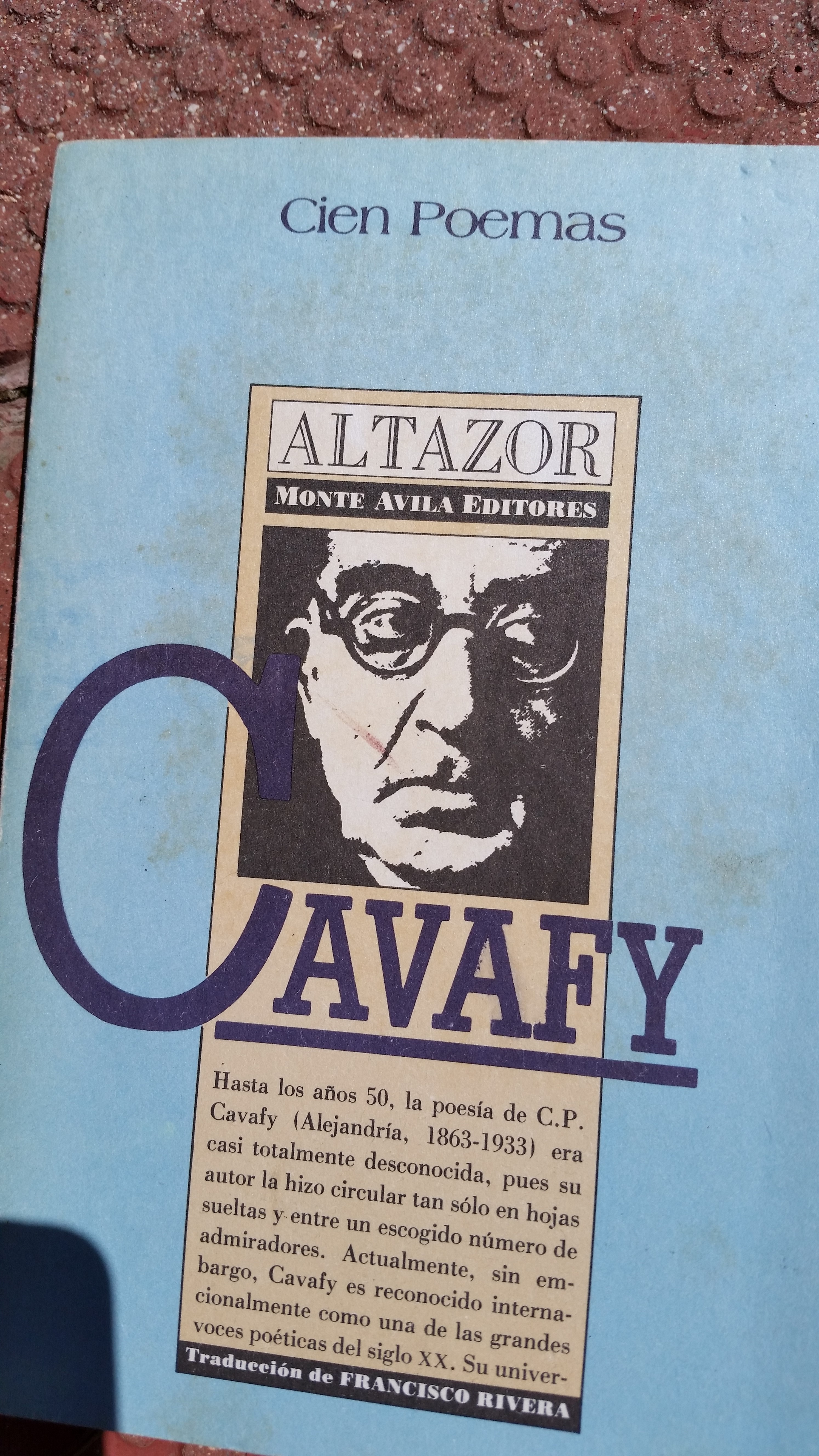
my old Cavafy

my old Cavafy

Sad and melancholic after returning from Greece, I found my old Cavafy book and I am re-visiting it!

My brother Theo introduced me to Constantine Cavafy years ago – through his poem Ithaka (which I posted on this blog on August 19, 2011). Now as I reread poems I discover new beauty in his words. The poem which has struck me the most during this re-reading has been God Abandons Antony or God Forsakes Antony, published in 1911. The story is of a defeated Marc Anthony in Alexandria (which centuries later would be home to Cavafy). After being moved by its elegance I remarked on the importance of the story of Marc Anthony and Cleopatra. Of our fascination with that love story, with ancient Egypt, with the Roman Empire, and so on, so I started thinking of my favorite connections to this story…

The first one that came to mind where the lyrics from one of my favorite Rolling Stones songs: Blinded by Love, when Mick Jagger sings:

The queen of the Nile

She laid on her throne

And she was drifting downstream

On a barge that was burnished with gold

Royal purple the sails

So sweetly perfumed

And poor Mark Antony’s

Senses were drowned

And his future was doomed

He was blinded by love

Of course Cavafy’s poem is born from Plutarch’s telling of the story. Canadian singer-songwriter Leonard Cohen used the poem for one of his songs, but changed Alexandria, the city, to Alexandra, a woman. Of course there is Shakespeare’s play Antony and Cleopatra born from a translation of Plutarch, there is Elizabeth Taylor and Richard Burton, and so on and so forth, but for now I leave you with Cavafy in his own translation:

If unexpectedly, in middle night,

an unseen company be heard to pass,

with music and with voices exquisite, —

turn not away and uselessly lament

your fortune that is giving in, your work

that came to nothing, the projects of your life

that proved illusory from first to last.

As one prepared long since, as fits the brave,

bid now farewell to the departing city,

farewell to the Alexandria you love.

And above all, do not deceive yourself:

say not that your impression was a dream,

that, it may be, your hearing played you false:

to futile hopes like these never descend.

As one prepared long since, as fits the brave,

as most fits you who gained so great a city,

approach the open window steadily,

and with emotion, but without the plaints

and supplications of the timorous,

listen — knowing it to be your last delight —

listen to the elysian sounds, the exquisite

instruments of the mystic company;

and bid farewell to the city you are losing,

farewell to the Alexandria you love.

Van “the man” Morrison

http://www.youtube.com/watch?v=l8Fjv7YZ83M

Even if you do not realize it, if you have ever listened to the radio, you have heard Van Morrison. This was my case until one winter afternoon in the early nineties, relaxing on the patio of a slope-side coffee shop in Sugarloaf Maine, where the Boston Gourmet Society had a ski chalet, that I paid attention and realized I was listening to Van Morrison, Moondance, of course. I bought that CD and listened to it endlessly. One summer I was alone in the country house at La Navata (see previous posts) it was all I listened to.

Fast forward to the mid-nineties. Right after breaking up with my first wife, I was on a business trip to a convention in Las Vegas. Bored at the thought of spending a whole weekend alone in the city of sin, I called a friend in San Francisco and I was on a plane. The weekend was fantastic as I had not seen my friend in years and had not been to San Francisco in even more years. She had Van’s Wavelength CD in her little BMW, and that was all we listened to all week-end long as we tooled around the city.

As soon as I got back to Madrid I bought that CD and listened to it over and over again. Then I bought another and another until I had the whole Van Morrison discography – over 40 CDs. In fact I listened exclusively to Van Morrison for eight full months straight. I did not realize it at the time, but it was therapeutic for me. One summer morning when I woke up and played a Rolling Stones CD, I knew I was on the mend!

Van Morrison, The lion of Belfast, has been in the business since he was 17. He plays a bunch of instruments, and more importantly he is credited with being the first to bring jazz influences like the double bass, brass sections, etc. to pop. His Astral Weeks is considered one of most influential records in contemporary music. He plays and tours around the world constantly and is not  afraid to work with top, top talent like Brian Kennedy, Georgie Fame or Saxophonist Pee Wee Ellis.

Personally I love Van’s intimate personal meaning, on some songs deep spirituality that connects with my soul in a way no other music does. Four of the six CDs in my car are Van (the other two are baroque and opera if you must know). I have had the privilege of seeing Van play a few times and they were very moving experiences.

It would be silly to try to say what songs are my favorites as they change with my moods and where I am in my life. A song I might have listened to hundreds of times without paying much attention might all of a sudden catch me. Songs that I had obsessed about in the past might come back to me. I might re-visit certain songs, or even certain parts of certain songs.

This clip is a song I have been listening to over and over recently. One of Van’s recurring themes is that of healing and this song pretty much sums it all up. I hope you like it.