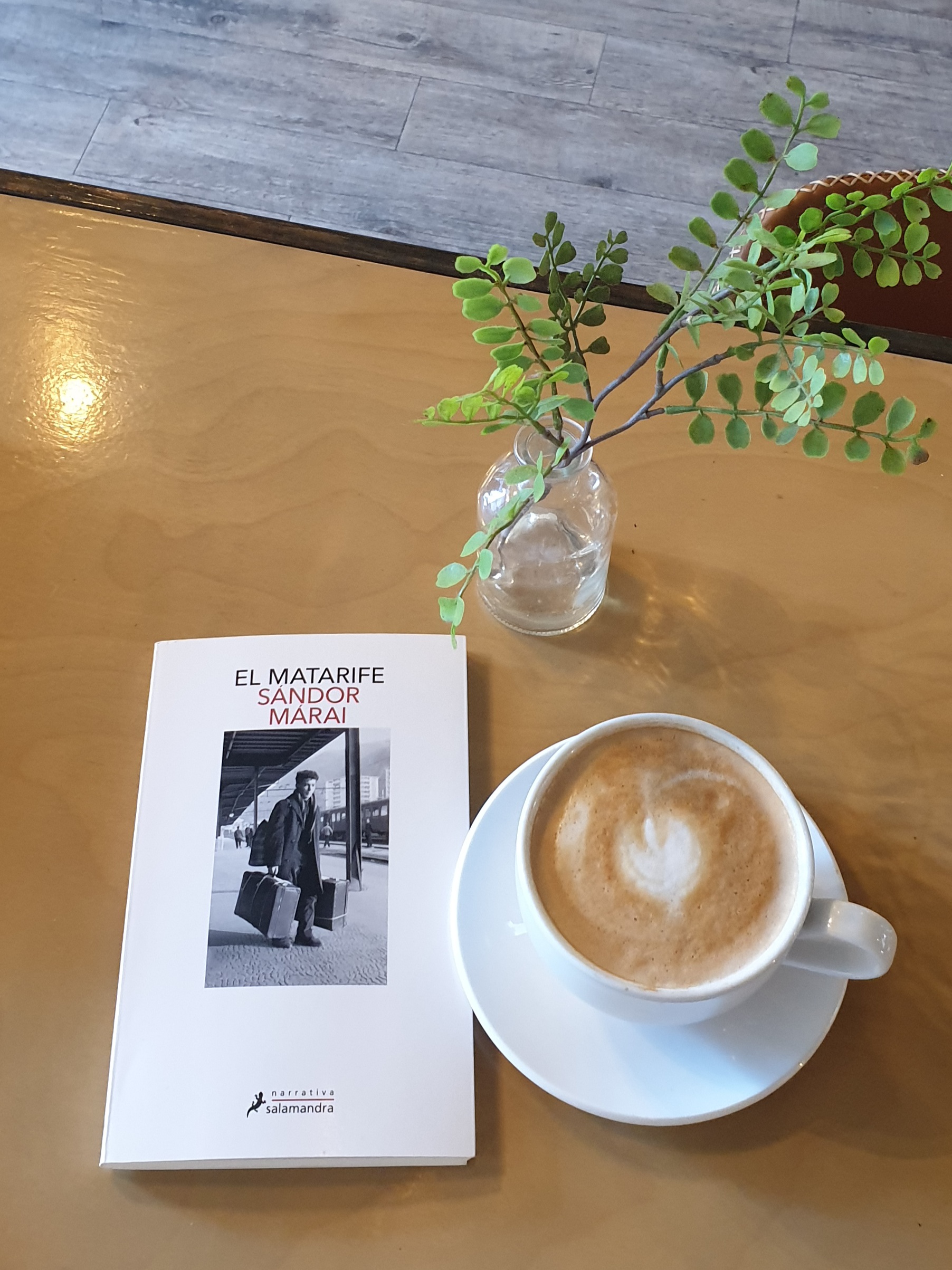
Last Summer, when I returned from Budapest, gushing with excitement from my visit, my sister gifted me Sandor Márai’s first novel, El matarife (The Slaughterer, The Butcher). I had never heard of him, but I was quickly absorbed by the Joseph Roth-like, turn of the (20th) Century style, which I love, and you can read about here.
Most protagonists in Existentialist literature have either lofty or uncertain, questionable motives. Yes, they might be murderers, think of Raskolnikov or Meursault, but either they try to justify their motives or, following Existential absurdity, they simply do not care. Other, more lofty existentialists, such as Don Quixote or Unamuno’s San Manuel Bueno, are not afraid to stand up for their beliefs.
In El Matarife (A mészáros in Hungarian) (1924) —which has yet to be translated into English! Marai creates a different narrative. Otto, who, as the title implies, will become a slaughterer, a butcher, enjoys killing, firstly cattle in Berlin’s market, then enemy soldiers and civilians during WWI. And eventually, as expected, he becomes a serial killer, who then kills himself.
The beauty of this book lies in Marai’s buildup of the narrative. We know Otto is a little different when, as a child, he enjoys seeing an ox get slaughtered. I remember being traumatized as a child seeing my neighbor’s pigs slaughtered, and that was a festive, community event! We also notice Otto is a detached fellow, no real friends, no girlfriend, no wife. Otto seems conscious of his behavior, which even earns him an Iron Cross from the Emperor himself!
Enough spoilers, if you can get your hands on some Marai, it will not disappoint. You are welcome.
Embers, originally published in 1942, was eventually published in English in 2001. It did garner critical acclaim, and I have it on the reading list.








 Antonioyrocinante's Blog