You should be meditating.

Stop, inhale, focusing on the air entering your nostrils or your lungs. Exhale, focusing on the air leaving your lungs or your nostrils. There, you did it!! For a brief time, you didn’t worry about what’s for dinner, your bills, the weather, what you were going to tell your boss, your customer, or your friend. You didn’t think about politics, and you weren’t scrolling through social media. You had a moment —albeit a very short one—of meditation. The trick is to do that exact exercise with your breathing for 5, 10, 20 minutes, or half an hour. The longer you do it, and the more often you do it, the better you will feel.

My dear friend Paco encouraged me to try meditating while I was in a deep, dark depression over ten years ago. It was not easy for a hyperactive fellow like me to embrace it, but now I cannot live without some quiet time every day. And although I have written about meditation here before, it was usually in passing while talking about health and mental health in general.

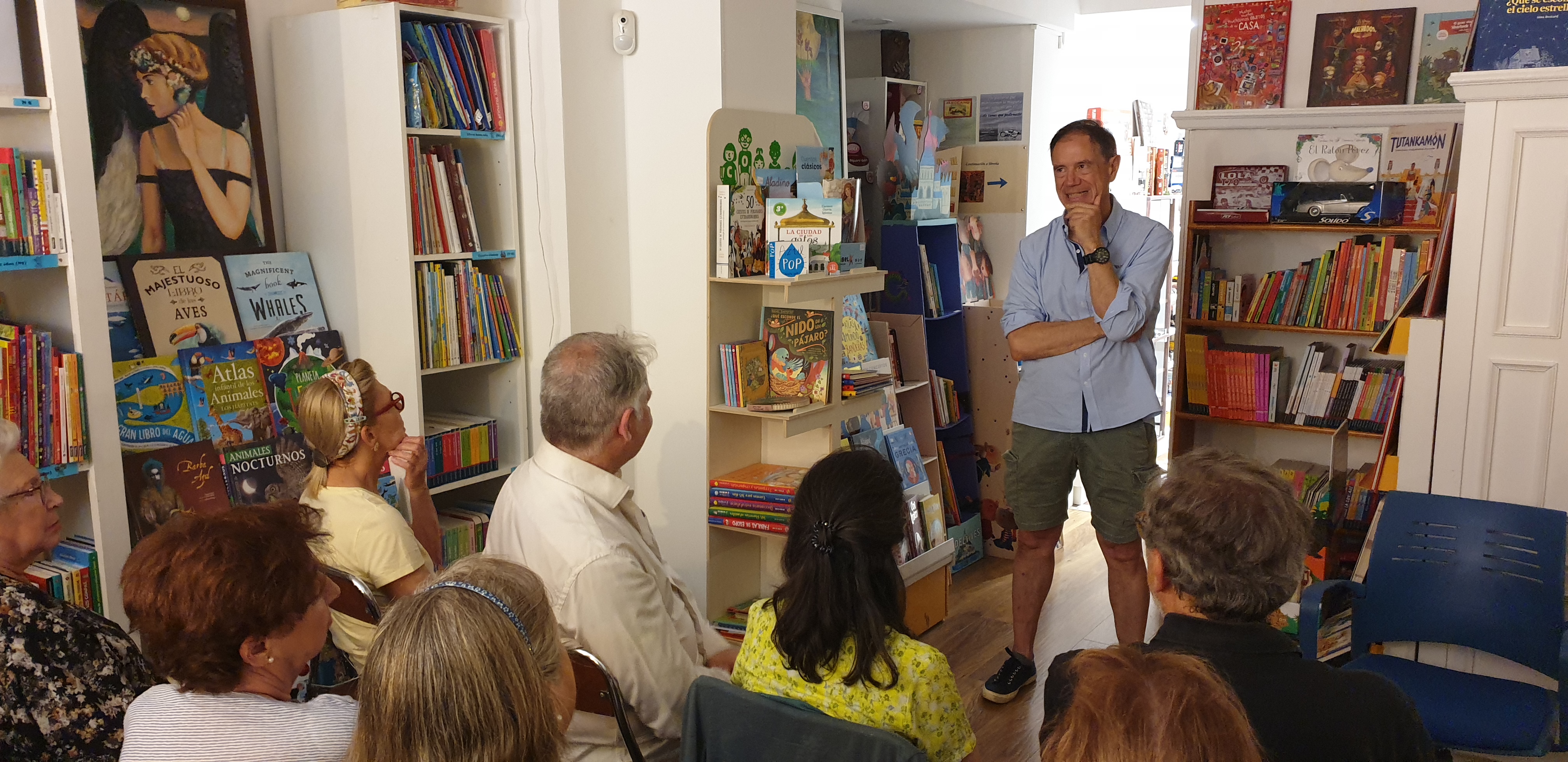
This all comes to mind because I recently had the opportunity to see and hear Paco give a presentation on Christian Meditation at the Antonio Azorín bookstore in El Escorial. He filled the room and had a wonderful talk. I originally thought the attendees were curious about meditation, but during the Q&A, I realized some of them were very advanced, although from different “schools” of meditation —see below.

There are many labels for meditation, just like there are many different philosophies and methods: Mindfulness Meditation, Mantra Meditation, Zen Meditation (Zazen), Vipassana Meditation, Transcendental Meditation (TM), or Body Scan Meditation. The ancient Fathers and Mothers of the desert, the early Christians, also developed a method of meditation which nowadays is called Christian meditation, or even centering prayer. Some recent Catholic proponents of meditation might be Thomas Keating, Thomas Merton, or Richard Rohr.

Whichever way you choose to sit down in silence is fine. Of course, nowadays you can use an app on your phone to time your sits, or to guide you. I have been using Insight Timer for years, and I love it!

Every class I teach at school starts with one minute of silence. This time is a buffer between whatever the students were doing before and class, between English and Spanish; it is a moment to regroup, to breathe, and for me, it is a minute of meditation.

Recently, Maria Popova also wrote about the importance of spending time alone and in silence, not exactly meditation, but close to it. Check it out here.

So carve out a few minutes from your day: when you wake up, before you go to sleep, in the middle of the day, or, paradoxically, if you are really busy, more than once a day. Whatever works for you, sit down, and start focusing on your breathing. You are welcome.

Oh, you should definitely check out this video of Villanova’s Fr. Martin Laird on the benefits of meditation. It is a bit long, but worth it!!

An evening at a Van Morrison concert

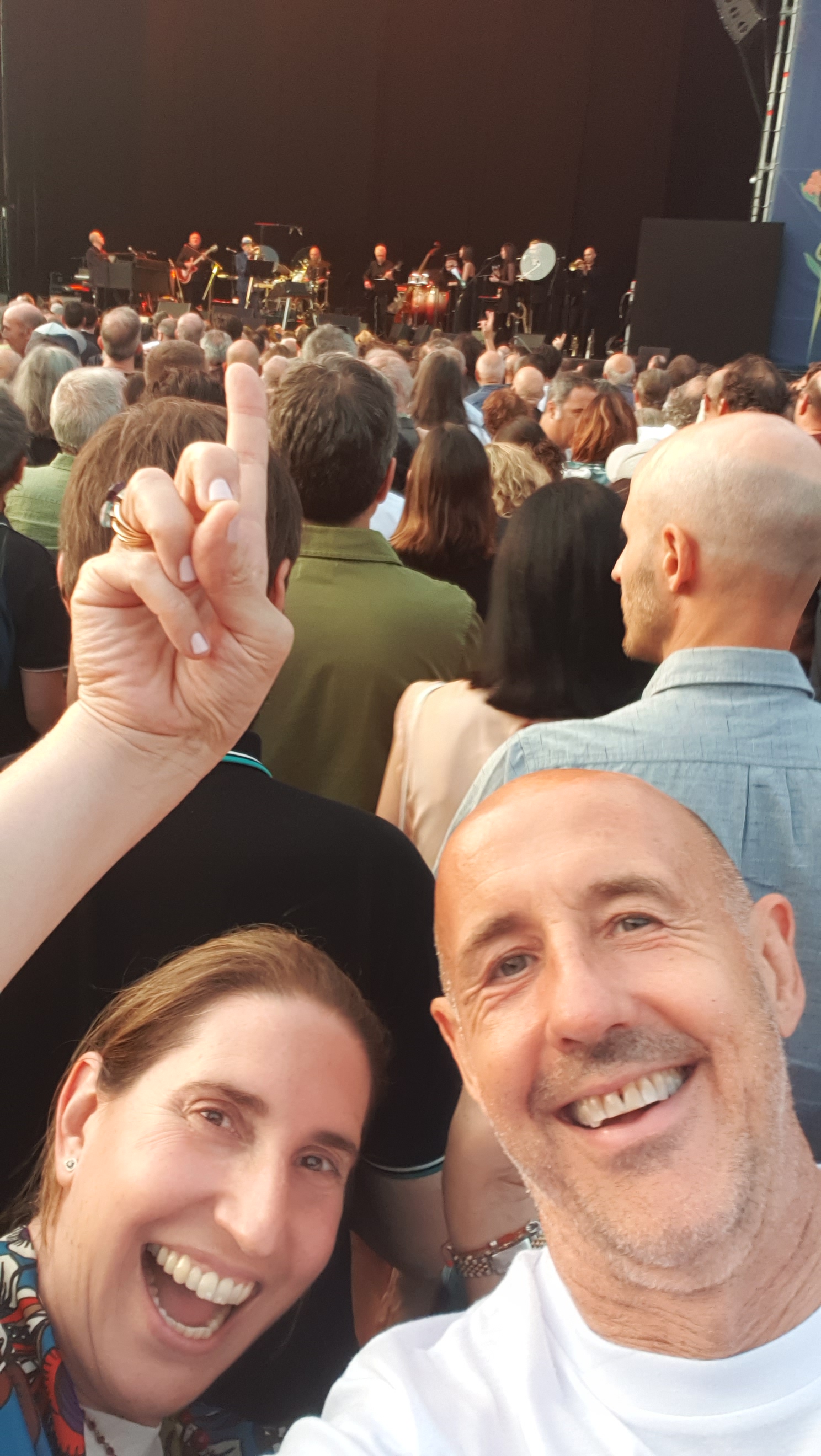
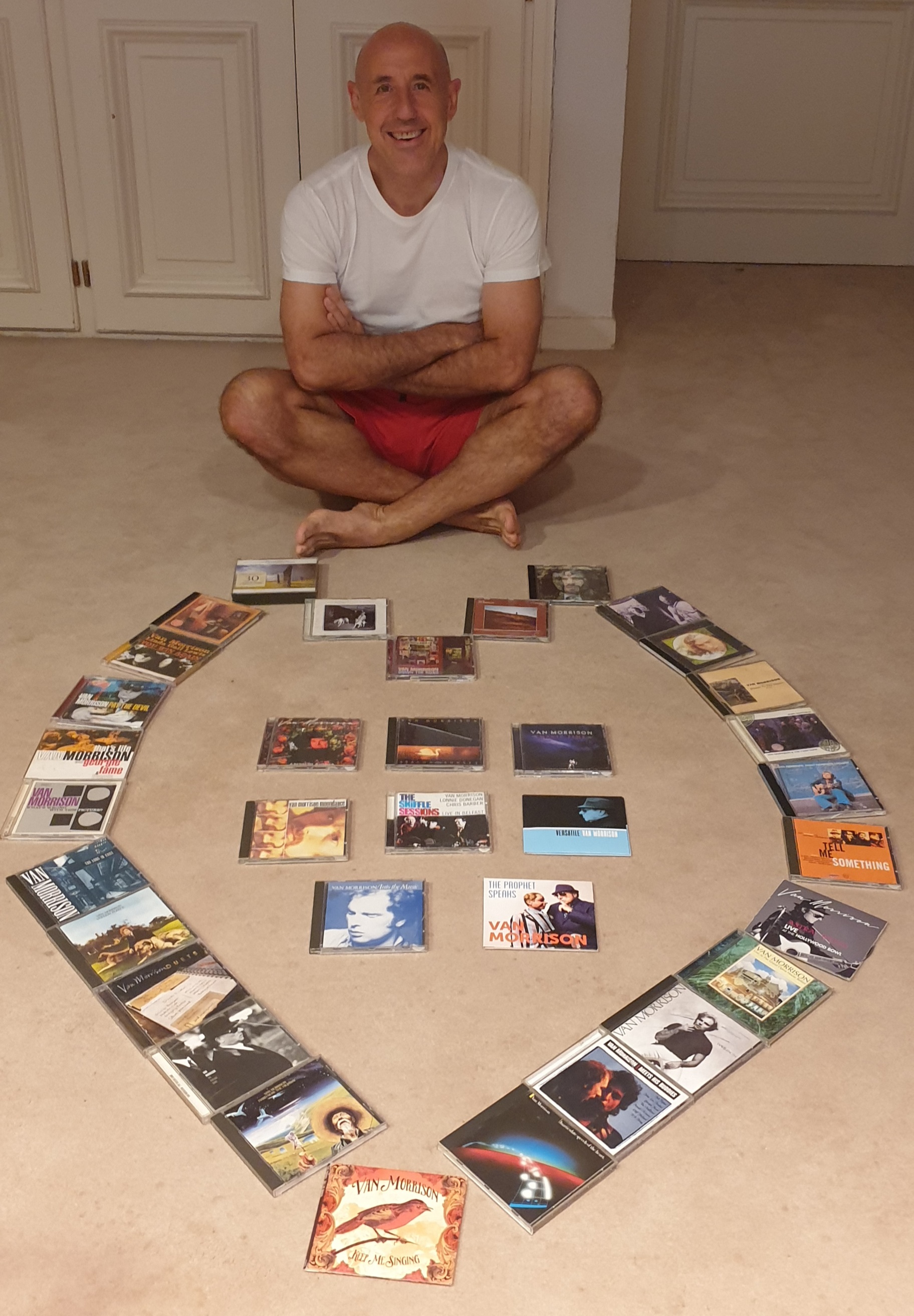
Van Morrison was featured in this blog back in June 2014 because he is my favorite contemporary musician. Well, it is time to revisit the Lion of Belfast, as I recently had the opportunity to see him at a concert in Madrid. I had not been to a Van Morrison concert since the mid-2000s!

My dear friend Paco notified me, and I immediately bought a ticket, without knowing if I would be in Spain by June 4th. Fortunately, I was. A couple of days before, Paco’s wife pulled out of the concert, so I invited my sister, Rocky. We had a blast.

The concert was held at the university’s botanical garden, which features a large amphitheater-like stage area in the center. Surrounding it, they have placed all sorts of food trucks and bars, making for an awesome, cool (literally) experience on summer nights. They host a variety of concerts (see photos).

Van played a few of his big hits, such as “Days Like This,” “In the Afternoon,” or “Raincheck.” He also played a couple of his new songs, including “Cutting Corners.” He played a few covers, including Ray Charles’ “What Would I Do Without You” and Hank Williams’ “Cold, Cold Heart”.

Van had an amazing 9-piece band with him, which shone at the end of the concert, when they performed “Gloria”. Van then left them to each do their solos, which was mind-blowing and amazing!

Van sang for a very respectable hour and a half in the beautiful Madrid evening and light. This was my fourth time seeing Van the Man, and it was certainly my favorite concert. With his melodies, he takes you on wonderful spiritual journeys, letting you daydream in the beauty of the songs, he is really unique and unparalleled.

This was the playlist (thanks to setlist.fm)

Only a Dream

Cutting Corners

Back on Top

What Would I Do Without You (Ray Charles cover)

Days Like This

Real Real Gone

In the Afternoon / Raincheck / Sittin’ Pretty

Cleaning Windows

Green Rocky Road (traditional cover)

No Other Baby (Dickie Bishop and His Sidekicks cover)

Cold, Cold Heart (Hank Williams With His Drifting Cowboys cover)

Ain’t Gonna Moan No More

Broken Record

Wild Night

Help Me (Sonny Boy Williamson cover)

Gloria

Are you really living if you are not volunteering and/or helping others? Pancreatic Cancer Action Network – PanCAN

Last summer, my dear friend Paco gave me Stefan Zweig’s great 1922 short story “The Eyes of My Brother, Forever” (“Die Augen des ewigen Bruders”), and it confirmed what I have known for a long time: volunteering and helping others might be the best thing you can do not only to get out of your shell but also to live your fullest life.

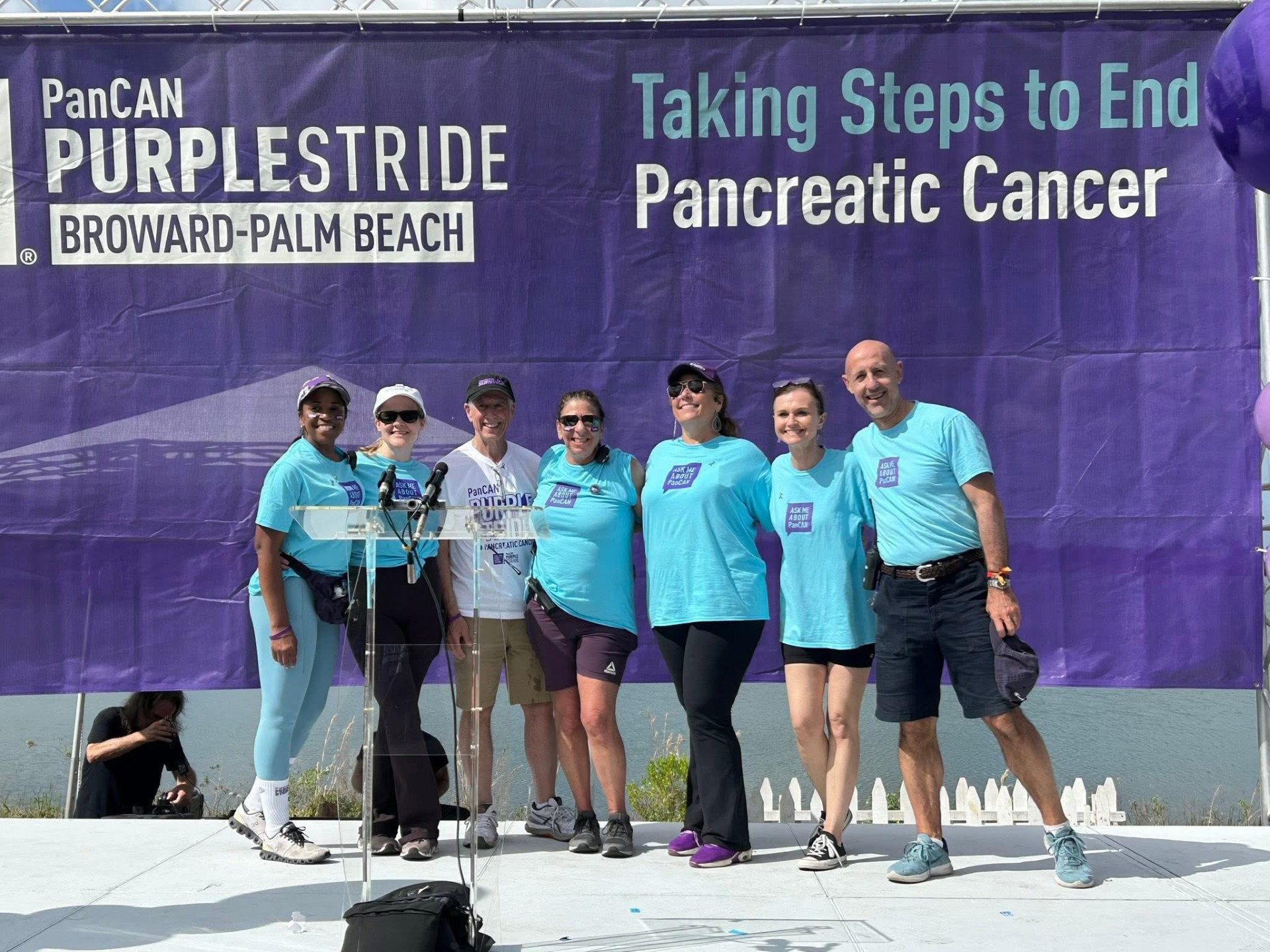
This was my third year volunteering for the Pancreatic Cancer Action Network – PanCAN. They host the national Purple Stride event every Spring, and it is a great time! I serve as the Registration Lead volunteer, so everybody who has not registered for the event has to come to our tent. I must get up at 4 in the morning to be in Boca Raton at 5, but it is worth it. I had a blast with my sidekick Rona, whose son, like me, went to Bentley. She is a hilarious New Yorker, and I have a great time collaborating with her.

Listening to the radio, I recently learned that only 20% of the US population participates in “formal” that is, organized volunteering, as opposed to mowing your elderly neighbor’s yard. That number seems to me terribly low. Yes, you must turn off the TV and get off the couch, but it is worth it!!

So, look for volunteering options in our neighborhood: soup kitchens, food banks, or helping children with their studies. Whatever it is, it will fill your heart with joy. You are welcome.

“Not all of us can do great things. But we can do small things with great love.” — Mother Teresa

Mahler, Roth, von Hofmannsthal, and Magris, fin de siècle Vienna and the fall of the Austro-Hungarian empire.

Lord Chandos on a train

A couple of years ago I wrote about Mahler and Joseph Roth and the coincidence that they both lived in the turn of the Century Vienna. It was very much a gut feeling post (you can read it here) since I am not a history scholar, even less an Austro-Hungarian history scholar specializing in the fall of the empire.

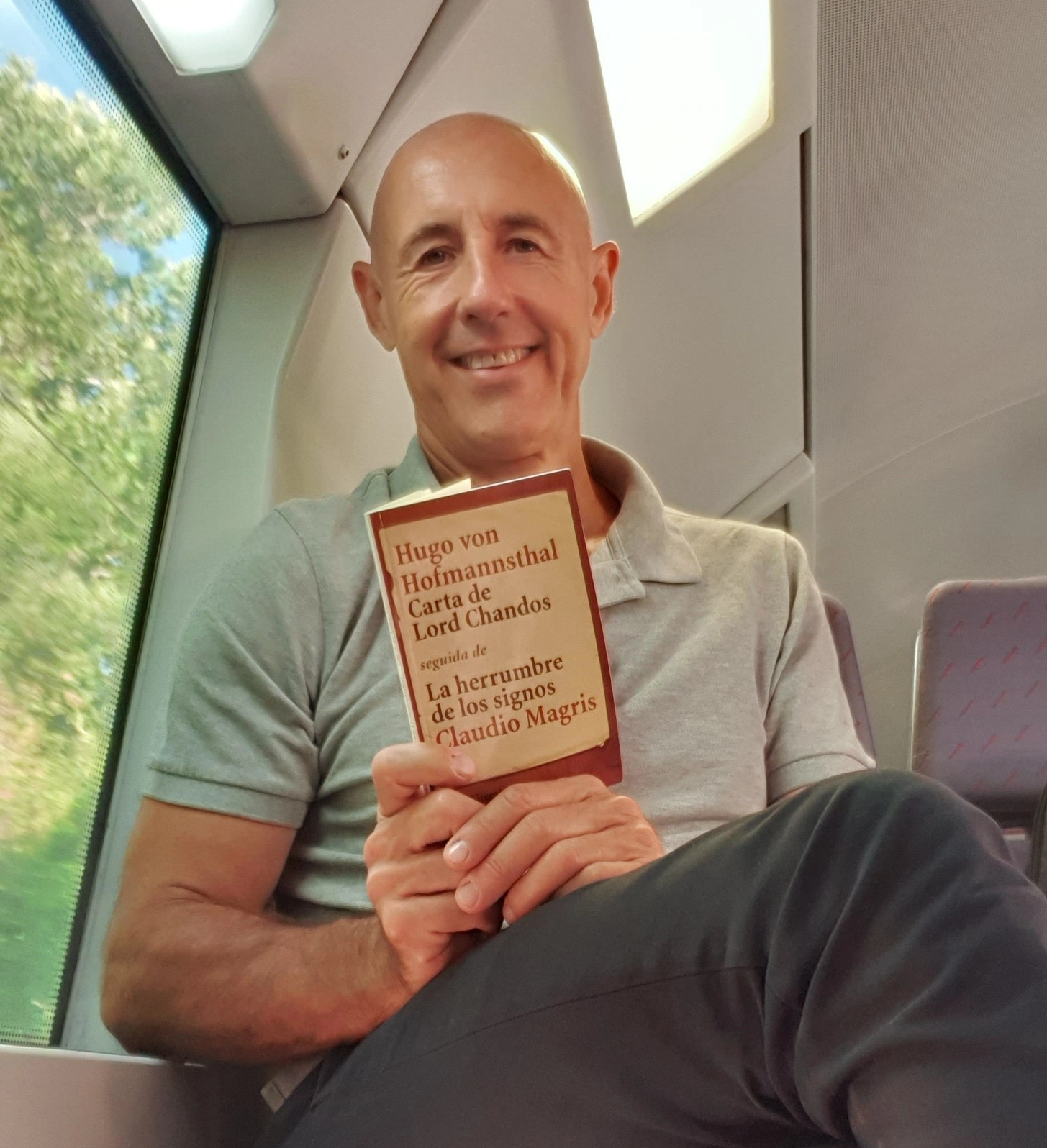
What you read on the Camino is very important. I usually choose spiritually enlightening books. (The Book of Job, Gemma Simmonds The Way of Ignatius A Prayer Journey through Lent (she was my sister’s teacher!), Willigis Jager The Wave is the Sea, even a collection of Zen stories!) They also have to be physically light and small due to backpacking requirements. This year under my friend Paco’s recommendation I took an intellectually challenging book: Hugo von Hofmannsthal Ein Brief (Brief des Lord Chandos) – Letter to Lord Chandos followed by Claudio Magris’ analysis of the Letter in La Lettera Di Lord Chandos.

Hofmannsthal’s (fictional) letter from Lord Chandos to Francis Bacon is a short (22 pages) but fascinating essay on language. Magris’ analysis of the letter is a mind-blowing tour de force of fin de siècle Vienna and the fall of the Austro-Hungarian empire and what was to follow in Europe. After a master’s and a PhD in literature, I was surprised to find that this is by far the densest reading I have ever encountered. It is rich, thick -but readable- and chock full of references: Kafka, Wittgenstein, Heidegger, Freud, and Nietzsche (obviously), Borges, Saussure, Kubrick, Eco, Pasolini, Plato, Seneca, and Cicero, Roth, Kierkegaard, Klee, Van Gogh… and a whole bunch of other names I confess I have no clue who they are. But the point is that Magris explains in philosophical and existential detail the fall of the Austro-Hungarian Empire, turn of the Century Vienna and what would follow in postmodern Europe. It was also very rewarding to read a real essay on what I wrote as a hack blog post…

In conclusion, this is a short, small book, perfect for travelling but dense and rich and glorious academic reading! Enjoy, you are welcome!

PS: If you want to read more about Chandos check out this article:

Greaney, Patrick. “On the Chaos in Chandos: Hofmannsthal on Modernity’s Threshold.” MLN 129.3 (2014): 563-573.

Your friendly neighborhood kiosk

Over the last few months, my friendly neighborhood kiosk closed and was eventually removed. This was heartbreaking.

Cities are living organisms that have evolved over centuries and have developed tools to make life easy, efficient, and enjoyable. The neighborhood kiosk plays (played?) a key part in this mechanism. Not only can you buy any newspaper, local, national, regional or international, you can get any magazine, books, any everyday necessity: chewing gum, tissues, postcards, water and sodas, cigarettes (come on, this is Europe), and all sorts of assorted knick knacks, but more importantly your friendly neighborhood kiosk owner knows everything about the area and every inhabitant in a mile radius!!

A funny anecdote: Hola magazine, the flagship and doyen of gossip magazines, has their offices in our block. In fact, Doña Mercedes, the owner, used to live next door (she died last year), and every Wednesday when the magazine came out she did not grab one from the pile in the office, she would go down to the kiosk and buy one from Yuste!

While I am overall positive about technology, I am not a reader of on-line newspapers. When you read a newspaper, you have to look at every page so you see what is going on internationally, nationally, locally, sports, culture, you even have to pass the obituaries. And if an article catches your eye, you read it. On-line newspapers do not give you that kind of thoroughness. You click on what catches your eye, but you are missing a lot of stuff you normally would not skip on a paper newspaper. Go ahead, call me old fashioned, but on any given day if you “read” an on-line newspaper and I read a paper one, I bet you I have seen -and likely read- more than you.

Our kiosk was inaugurated in 1965, the year I was born! and was run by the Yuste family since! They were friends. Over the last few years they complained about the loss of sales since fewer and fewer people bought newspapers -and I live in an old folks neighborhood! Stopping for a newspaper means having a bit of a chat, checking in, sharing a joke, commenting on the news, or whatever. Yuste once had me run to the bank to deposit a check for him!

At any rate, tired of not making ends meet and with aggravating health issues. The Yuste family finally closed their kiosk this Winter. A few weeks after closing a truck came and dismantled it. A few days later they paved over the site. Another victim of technology.

Paco runs the kiosk up the street in the Plaza de Chamberí, he seems like a nice fellow.