Don Quixote’s influence on Existentialist Philosophy Part II – José Ortega y Gasset

One of the most popular posts on this blog is Don Quixote’s Influence on Existentialist Philosophy, which is a bit embarrassing because it is not very good. I wrote it very early on in my master’s, and while the idea, the thesis is good, I did not develop it very deeply nor fully. It is mostly my gut feeling, my intuition that comes through.

I have thought and thought about this since 2008, and more importantly, I have read a lot that I would not have had the time to read for that little essay. I have read more Dostoyevsky, Sartre, Kierkegaard, El Quijote desde Rusia with three brilliant essays by Turgenev, Dostoyevsky, and Merejkowsky, more Unamuno, Graham Greene, and on and on.

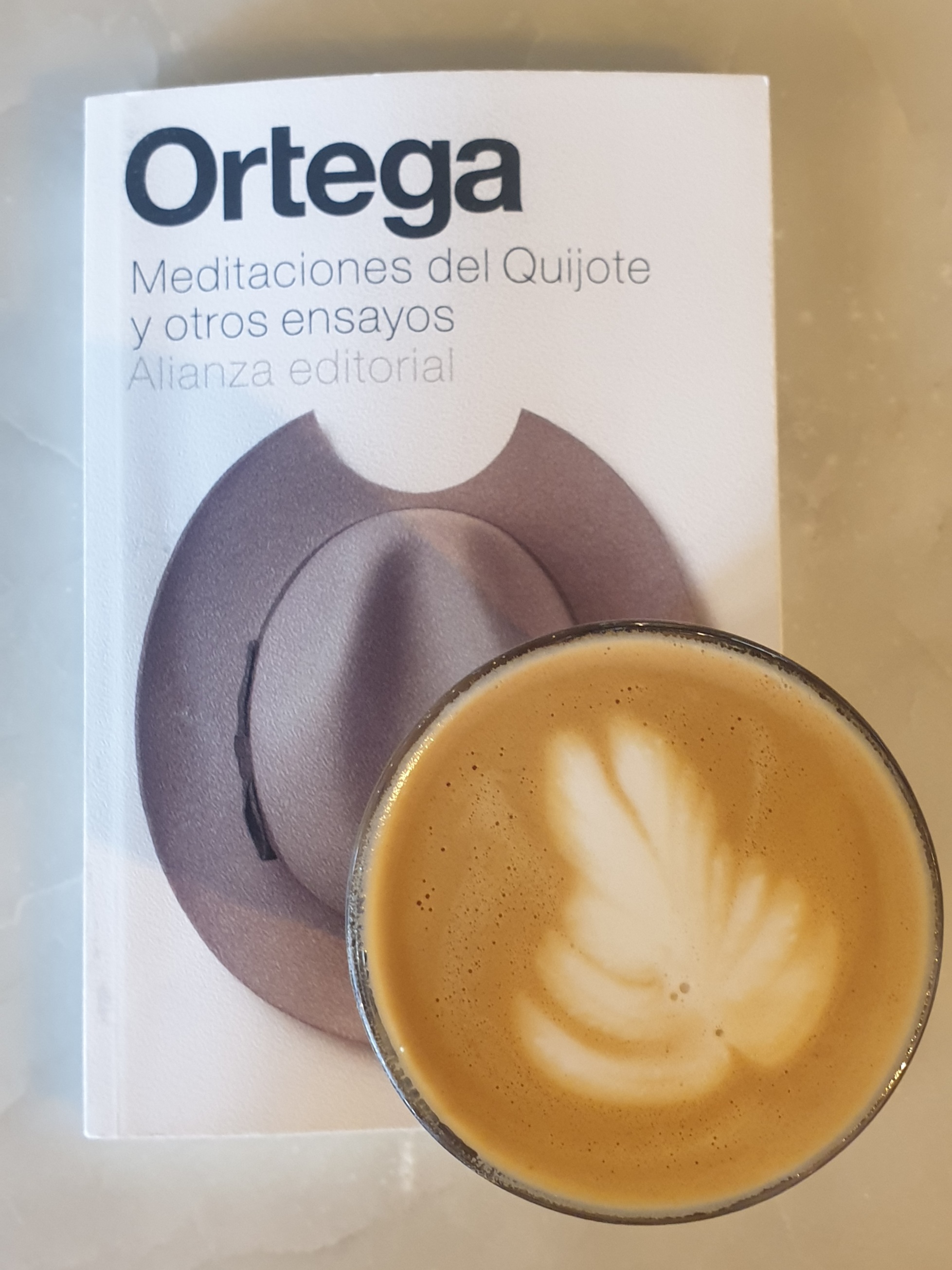
For Christmas, Celia gave me José Ortega y Gasset’s Meditaciones del Quijote y otros ensayos, which I had wanted to read for years.

All this reading confirms the theory that Cervantes crystallizes the thoughts of the preceeding centuries, from the ancient Greeks on Liberty to the early Christians on Free Will, where the Self is swimming in the primordial waters of philosophy, floating around until Cervantes’ electric genius gave abiogenesis form to Don Quixote, consciously creating his fortune, bringing about the concept of existentialism. The textbook example of this is the beginning of chapter VIII. Read it carefully, what does Quijote see? He sees them. What are they? Windmills or giants…

Don Quixote is the proverbial Tetrapod fish walking onto earth. It will be up to Kierkegaard, Dostoyevsky, Nietzsche, Unamuno, and Ortega before Simone de Beauvoir and Jean-Paul Sartre finally come up with the label that puts a nice bow on the Darwinian evolution of thought that delivers Existentialist theory.

Meditaciones has the famous quote “yo soy yo y mi circunstancia, y si no la salvo a ella no me salvo yo”.  So, yes, you are responsible for what you do in life, with life, but you also must deal with the circumstances surrounding your life. But Meditaciones is not what you expect. It is not a direct essay on Ortega’s thoughts on El Quijote -although it is also that- it is that in a meandering, roundabout way. Ortega talks about the Mediterranean culture, compares it to the Germanic culture as he lived in Germany for many years. This is evident when he quotes Nietzsche’s “Live dangerously”, which is, of course, the whole premise of Quijote’s adventures.

As a good philosopher, questioning El Quijote, Ortega ends up asking more questions than answering them. One key observation comes when he compares Cervantes to Shakespeare, something commonly done, as they were, after all, contemporaries. And here is the difference: Shakespeare explains himself, Cervantes not so much. Some of that difference might be due to the difference in genres: Theatre vs the modern novel, but nonetheless, there it is. Another common assumption is the Spanishness of Quijote, which leads Ortega to call Spain the “spiritual promontory of Europe”.

Another of Ortega’s brilliant observations, connections are between two Baroque masterpieces: Quijote and Velazquez’s Meninas, how we can step into each work and see it from the inside. This imaginary stepping into these makes them realistic. That realism is what makes us, and understanding ourselves in that work, that singularity, is what makes us heroes, a full hymn to Existentialism!

So what I wrote 17 years ago, although not the most brilliant, not the best written academic paper, still stands. Cervantes, by creating Don Quijote, is setting the cornerstone of Existentialist philosophy.

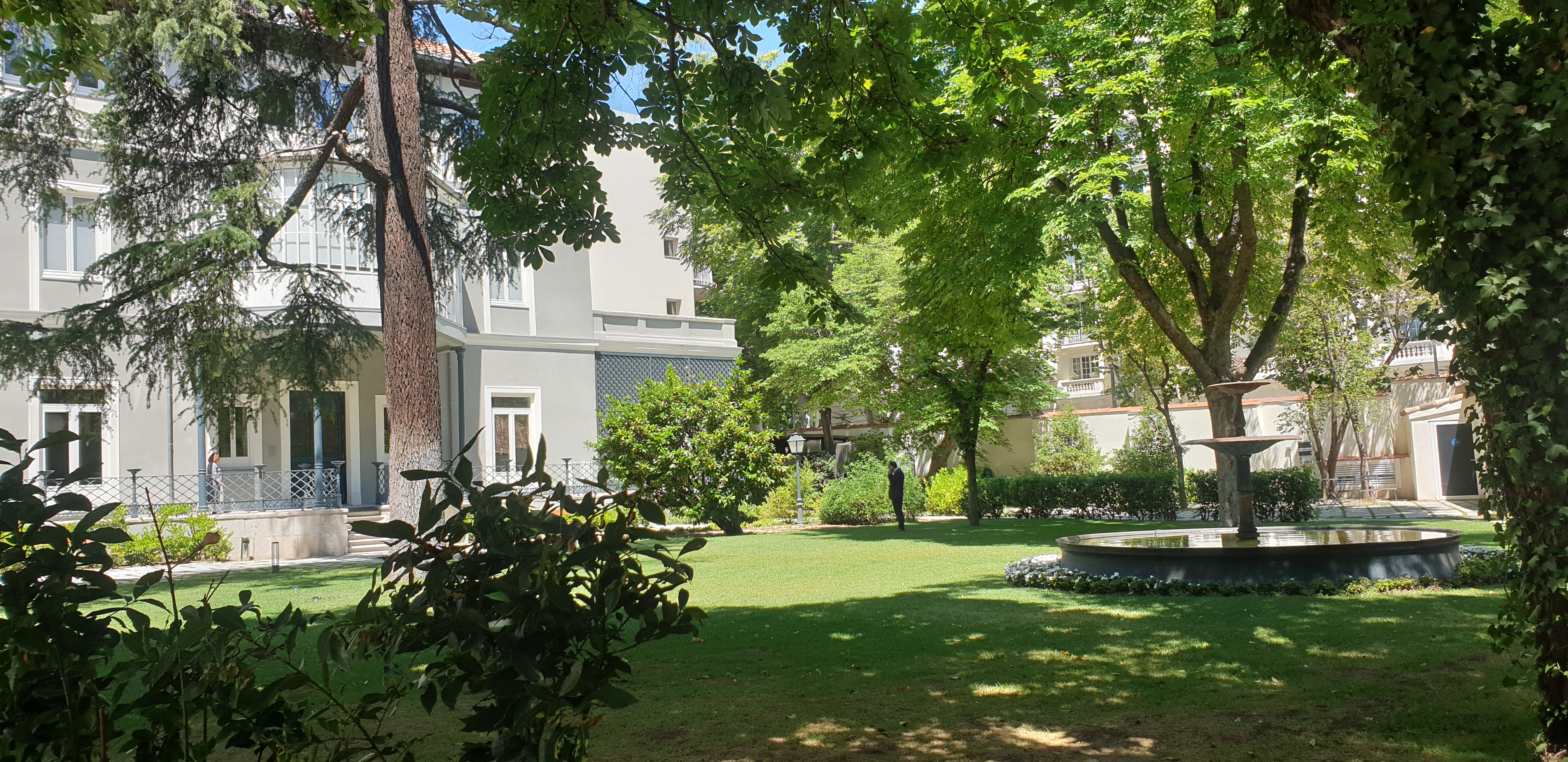
Fundación Ortega-Marañón, an oasis in the city.

Few things are as rewarding as walking around the concrete jungle that is a city, and finding an oasis, a quiet corner, a patch of grass, trees. Madrid, as beautiful as it is, is still a concrete jungle, and the other day I discovered the Fundación Ortega-Marañón, one such oasis, literally around the corner from my mom’s house in the Chamberí neighborhood.

José Ortega y Gasset is considered Spain’s top 20th C philosopher and Gregorio Marañón was a humanist doctor. Their respective nonprofits joined forces and merged in 2010. They are housed in an old palazzo with a beautiful garden and in what used to be the Residencia de Señoritas, a women’s college dorm which sits right behind the palazzo. They have done a beautiful job with the construction, preserving both the palazzo and the dorm.

Yo soy yo y mi circunstancia, y si no la salvo a ella no me salvo yo.

José Ortega y Gasset

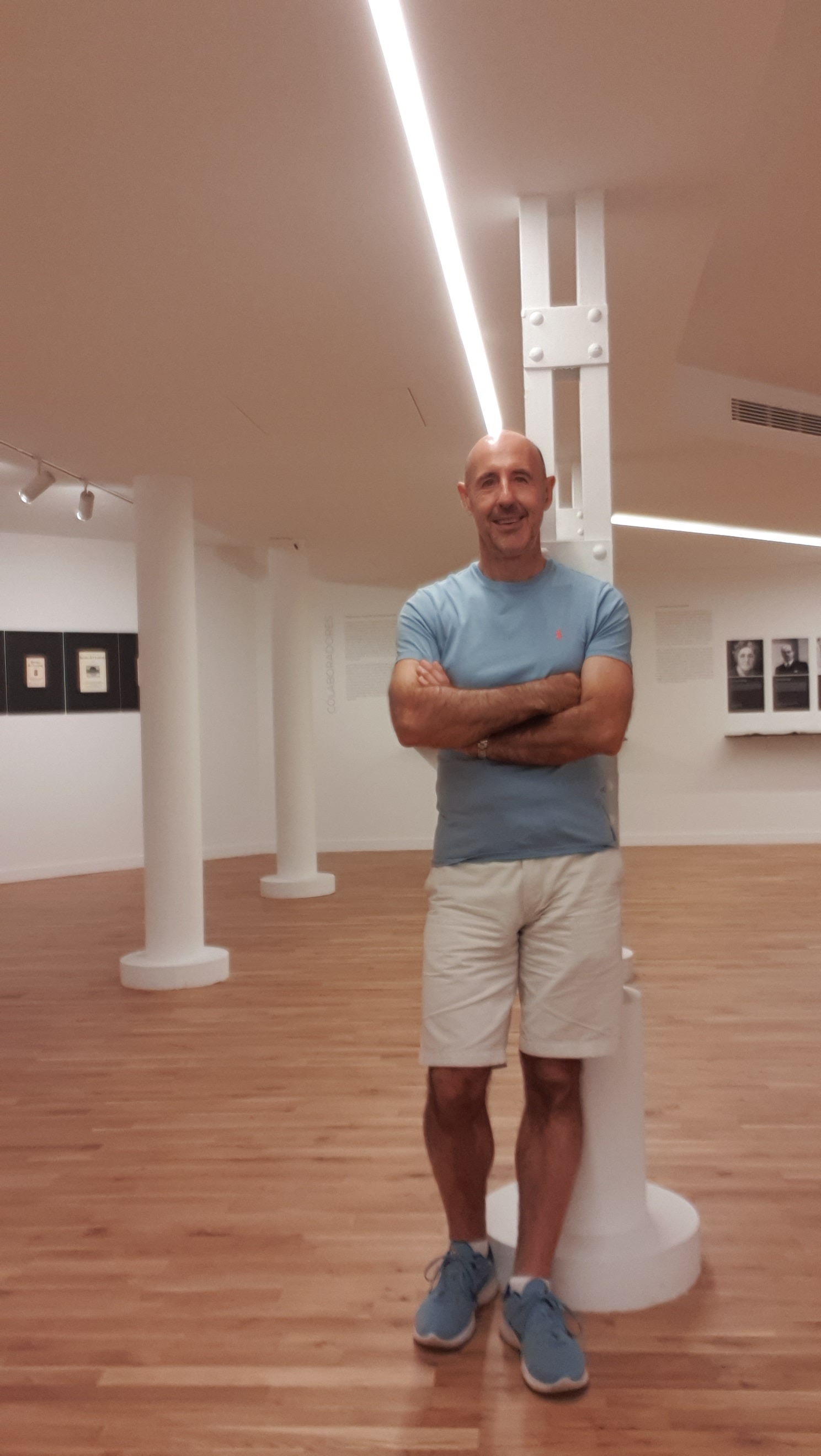
During my visit, there was a great exhibition on the Revista de Occidente, Gasset’s literary magazine. With the title Claridad, claridad, it explained the trajectory and writers that participated in the magazine. It was very well done, and I was all alone. After my visit I was able to sit in the garden and read my book, what an oasis in the city.

Where are you on your journey? Richard Rohr (continued)

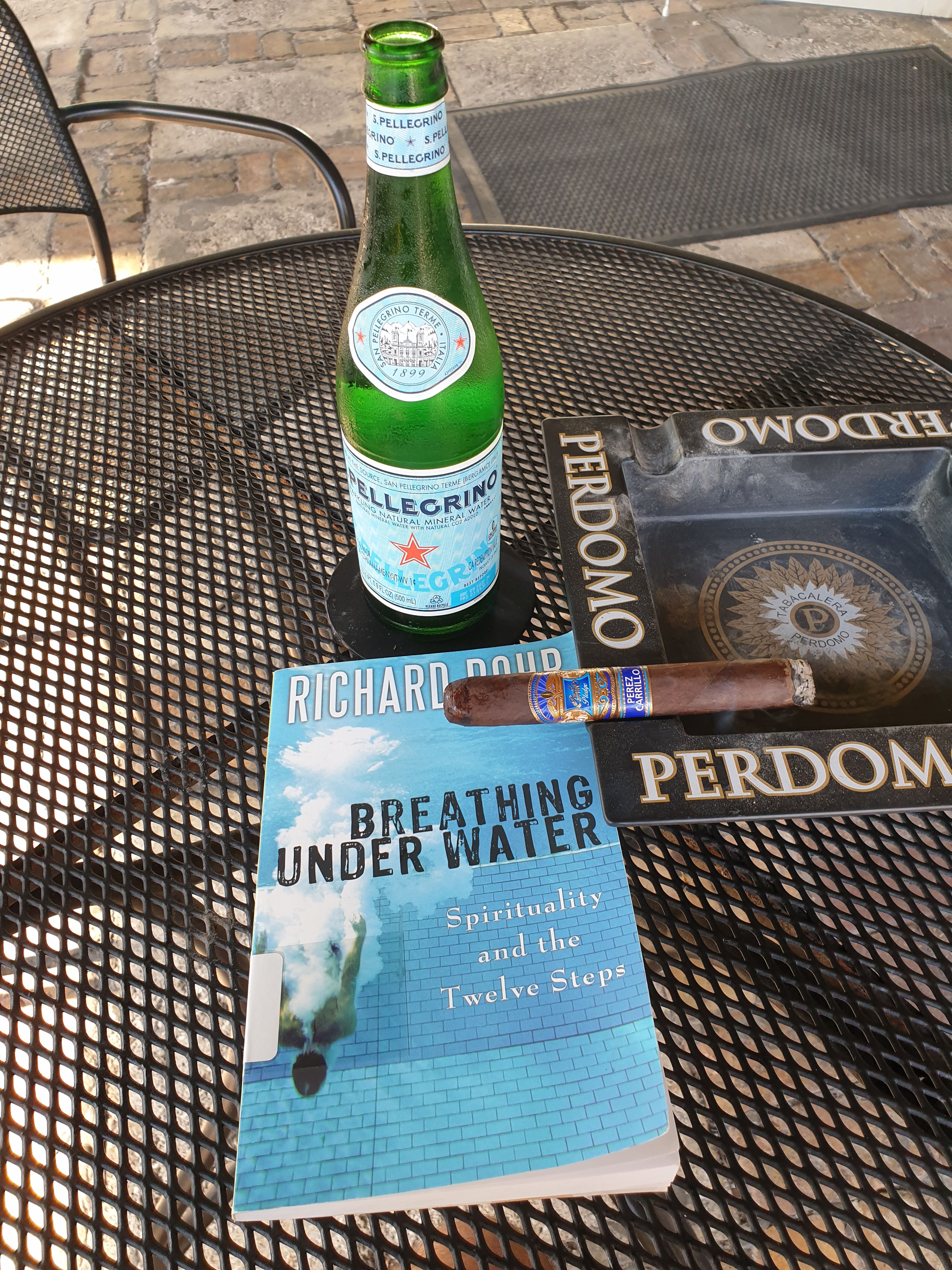
Spirituality and cigars, why not?

Where are you on your journey of self-fulfillment? Where are you on your journey of peace, inner and outer? Where are you on your journey of finding the real you? Not your things, your mind, or your TikTok likes, but your soul.

If you are on this journey, and I hope you are, and it is a journey, I hope that you pay attention to yourself, that you spend time alone cultivating, discovering yourself, call it what you will, your spirit, your soul. The first step on this long road usually comes about due to failure, breakage: a failed relationship, financial struggle, accidents, whatever. Without this fall, why would you need to rebuild? To re-calibrate? To question anything? Just go on your merry way with your ego, enjoy.

Otherwise, with every so-called failure, you release your ego; you embrace peace, you let go, you become more aware of your inner self. You rebuild and grow –and here is the catch- not necessarily stronger in the selfish way of thinking, but more vulnerable, wiser.

Why are you on such a metaphysical rant, Antonio? You might ask, and I am happy that you ask. You see, I have just read Richard Rohr’s Breathing Under Water and my mind has been expanded.

In his book, Rohr studies Alcoholics Anonymous Twelve Steps from a spiritual perspective and re-frames your pre-conceived ideas of alcoholics!

The book is epigraphed by three quotes from three of my favorite guides:

“I did not come for the healthy, but for those who need a doctor.”

Jesus (Luke 5:31-32)

“Alcohol in Latin is “spiritus” and you use the same word for the highest religious experience as well as for the most depraving poison.”

Carl Jung, letter to Bill Wilson (1961)

And

“These are the only genuine ideas, the ideas of the shipwrecked. All the rest is rhetoric, posturing, farce.”

José Ortega y Gasset

The first step is the hardest to take: “We admitted we were powerless over alcohol – that our lives had become unmanageable.” Most of the time our ego blinds us to our problems. This is why many times only a violent awakening will make us reach for much needed help. That is the first step, realizing you have a problem, it is much easier to dismiss it than to deal with it, and its roots…

Rohr analyzes every step in detail weaving spirituality into each rung of the ladder. It is an illuminating book that everybody should read. Yes, you too.

We all have our addictions our sins, it does not have to be alcohol or drugs –although many times it is. Rohr sees how “breakage” and coming out of it is deeply healing and spiritual. In Japan, when they break a plate or a bowl many times they glue it back together with gold covered adhesive, making the piece much more valuable. They call it Kintsugi, and it makes for beautiful, unique pieces!

“The secret of life, though, is to fall seven times and to get up eight times.”

― Paulo Coelho, The Alchemist
Enjoying mi reading

Don Quixote’s influence on Existentialist philosophy

This has taken me a couple of years to bring to the Interweb. The idea of publishing my thoughts in an academic journal kept me from using my own blog as a platform. Now that I have some distance from the ivory tower that is academia, I feel liberated enough to use this humble vehicle to say my thoughts.

The idea is quite simple: The Danish philosopher Kierkegaard (1813-1855), who comes up with the idea of existentialism, even if not in those words – he is known as the grandfather of existentialism –, was a fan of Cervantes’ Don Quixote, writing extensively about him. Kierkegaard influenced many of the philosophers who came after him: Friedrich Nietzsche, Miguel de Unamuno, Martin Heidegger, José Ortega y Gasset, and eventually Jean Paul Sartre (although it would be fairer to say Simone de Beauvoir) who finally came up with a formal theory of existentialism. Unamuno relied heavily on Kierkegaard and on Don Quixote to form his theories.

In 1605 Cervantes creates a man who decides to live life by his own rules. Bored with his bourgeois life, he becomes a knight in somewhat shining armor. Don Quixote is a celebration of free will with all the beauty and issues that that carries. Therefore Don Quixote is the great-grandfather of existentialism. As you will be able to see from the bibliography, remarkably little, if anything has been written about this topic.

This is my Master’s thesis which I wrote in 2008 at Simmons College in Boston, for the great professor Louise Cohen. It has not been peer-reviewed, which is not to say that this paper is any good, it is not. If you have read any of my work on this blog before, you know I write like a horse’s ass. So read at your own discretion. Oh, haha, FYI it’s in Spanish.

el-existencialismo-en-el-quijote