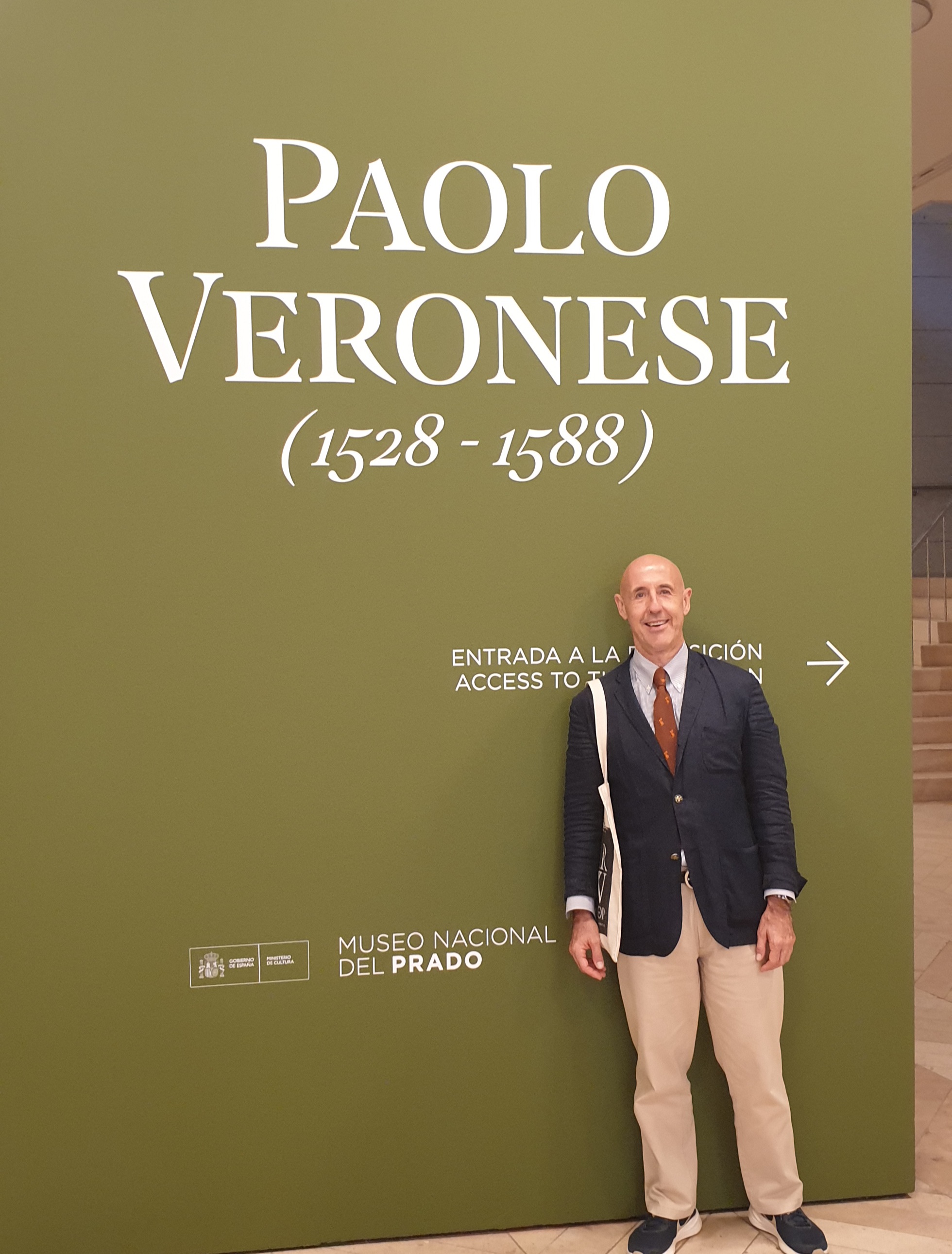
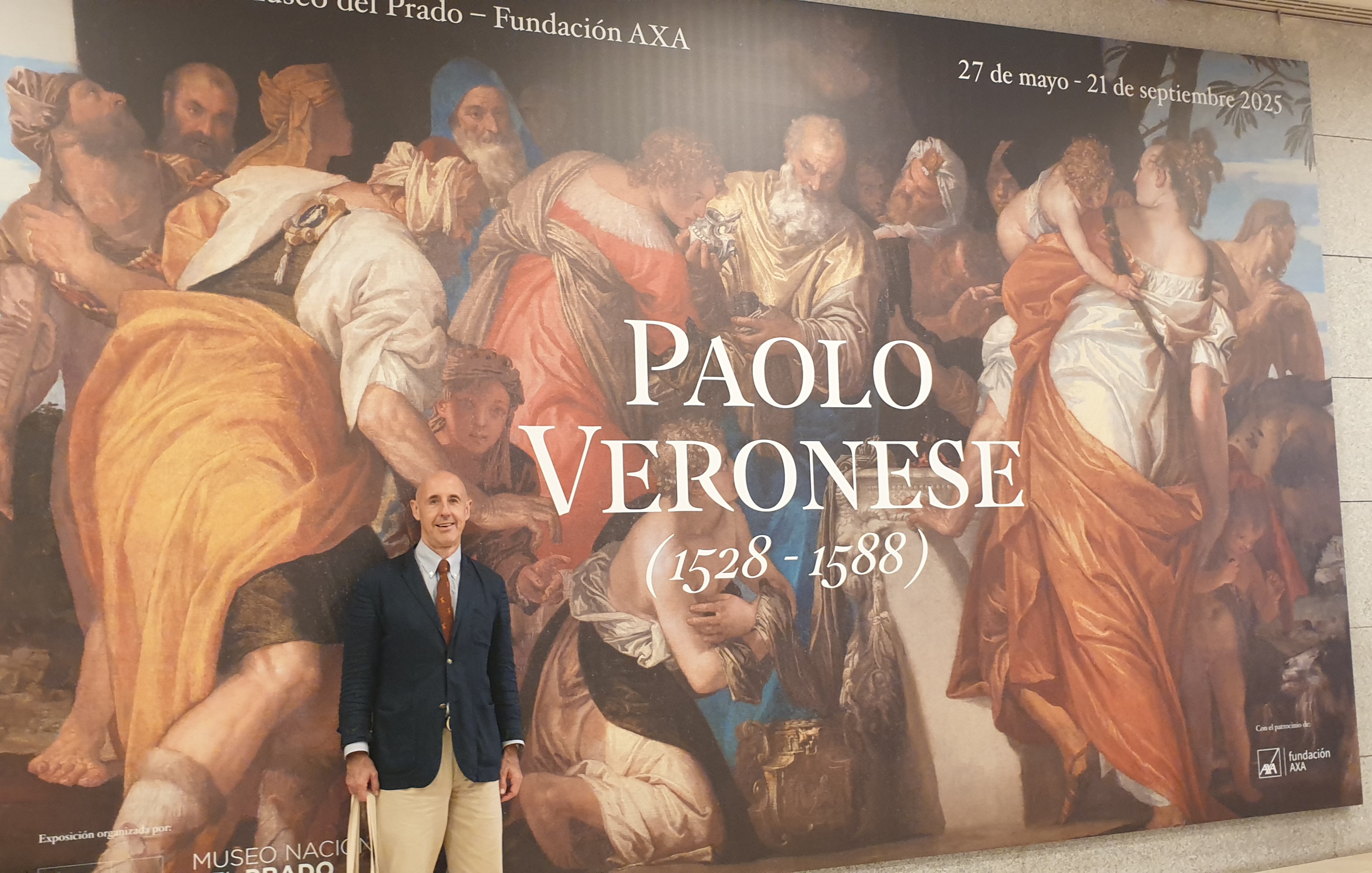
Paolo Veronese at the Prado Museum

Back in a previous lifetime, I used to collaborate with a polymer extrusion company (sexy, I know) located just outside Florence. For work purposes, of course, I used to visit them every year, spending a week in Florence. Because of this, I am quite familiar with the Florentine Renaissance and less so, I must admit, the Venetian Renaissance.

Fortunately, I recently had the opportunity to (partly) fix this by going with my sister to an amazing Paolo Veronese (1528-1588) exhibit at the Prado.

I was blown away!! There are over a hundred paintings from the Louvre, the Metropolitan Museum, the National Gallery in London, the Galleria degli Uffizi, the Kunsthistorisches Museum of Vienna, and, of course, the Prado.

When you mention the Renaissance, the first thing you think of, in painting, is perspective, depth; this is something Veronese has mastered. More importantly, I found the details, and even more importantly, the narrative capacity of the paintings —the ability to tell a story, really special. From a technical or art history perspective, the Renaissance started in Florence, giving them the edge, but Venice soon countered with brighter colors, as a young El Greco would learn. However, all this makes little difference, for a non-specialist like me, I just freaked out at the beauty.

This being the Renaissance, most paintings are of Biblical or Greek mythology stories, making it relatively easy to situate oneself.

So if you are in Madrid until September 29, see the Veronese exhibit at the Prado. You are welcome.

Conferences

This Spring I had the opportunity to present at a conference other than our own Carolina Conference on Romance Literatures. I participated at the University of Maryland’s “Perspectives on Power” conference. I had a nice drive to Maryland, although I always manage to get lost around the DC area. I took a day off to visit Washington, since I had not been there since the late ’70s (yikes!). I walked to the metro in College Park into downtown and had a lovely day visiting DC. I popped my head in at the Spanish consulate for some paperwork, had a lovely coffee, visited the Vietnam Veterans memorial which I had never seen (that is how long since I had been to DC), bumped into an old Buckingham Browne and Nichols student and spent the rest of the day at the National Gallery, which is in one word: extraordinary. Although it was rainy and gray all morning, by the afternoon the sky had cleared and I managed to enjoy a lovely sandwich outdoors.

The next day I presented at the beautiful U of Maryland, where the great Spanish writer Juan Ramón Jimenez taught during his exile. For my presentation, as usual, I focused on my man Padre Isla and his keen use of power in his texts. The grad students and other participants were all very nice, with a large contingent of students who had flown in from China for the conference, impressive.

And with that I drove back to old North Carolina. Of course with the obligatory traffic jam exiting DC on 95 South…

I also presented at our Carolina Conference and I again spoke about Isla, this time about his cunning use of imagery. Fascinating stuff. I had the privilege of presenting with legendary prof. Joaquín Rodriguez-Barbera from Sam Houston University in Texas. The conference is a great opportunity to bond with the department colleagues and faculty, and to meet interesting people from all over.

Every year the graduate students that organize the conference work hard with the faculty to bring in top-level keynote speakers. This year we had Cuban author and academic Gustavo Pérez Firmat. He gave awesome back to back presentations to cover his two literary fronts as author and academic. I was mesmerized by his intelligence, sharpness, and humor. When after his presentations I went over to thank him, we figured out that he reads this blog. His words were something like, “I was trying to figure out who this half catholic, half crazy guy was!” Needless to say I was flattered by his accurate description and by the fact that he knew of AntonioyRocinante.

The conference has two key social moments: The party hosted by Prof. Domínguez in his lovely home. Every year Joaquín is put in charge of making a serious paella, this year we sadly celebrated Joaquin’s last paella, as he is apparently throwing in the apron. The Domínguezs are even generous enough to let me smoke a cigar in the garden – which apparently reminds Prof. Domínguez of his childhood in Cuba.

The other key event is the closing banquet. Celebrated at the lovely Weathervane restaurant it is the nicest social event of the year with great food, drink and conversation. Every year prospective students come and they have a chance to let us convince them of how great our program is.