Frida Kahlo, Diego Rivera and Mexican Modernism

I guess that like most people, I knew the pop culture Frida Kahlo: Mexican artist, unibrow. It was not until I started teaching that she always popped up in different cultural units and readings. So, I did some research and was blown away! Soon we were doing full units on her, watching documentaries, and writing essays for class. I was so fascinated by this woman, that in 2008 I took the train from Boston to see an exhibit of her paintings at the Philadelphia Museum of Art.

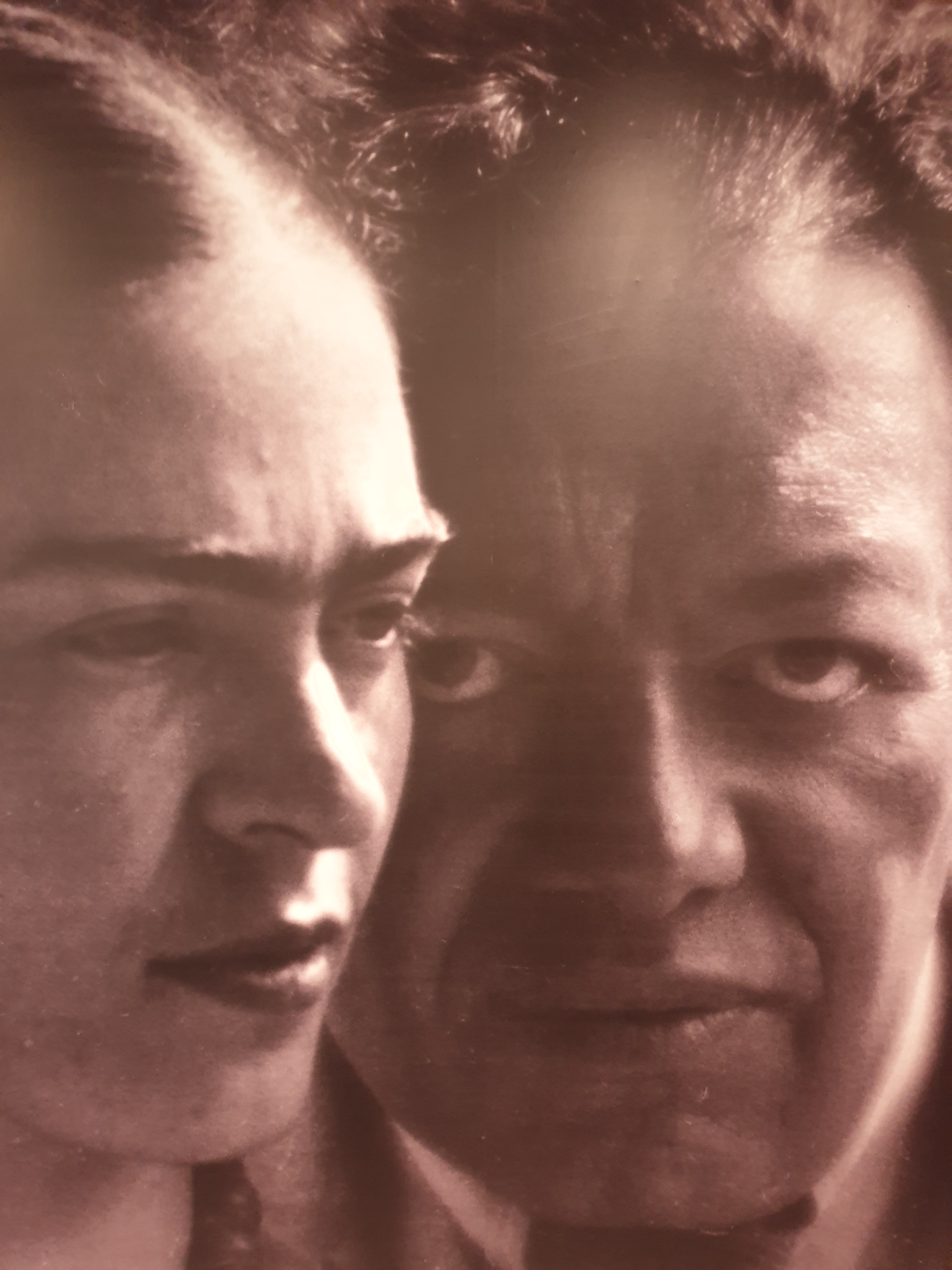
When the Norton Museum of Art up the road from me in West Palm Beach hosted an exhibit based on her, her husband Diego Rivera, and Mexican Modernism, I liked it so much I went twice!

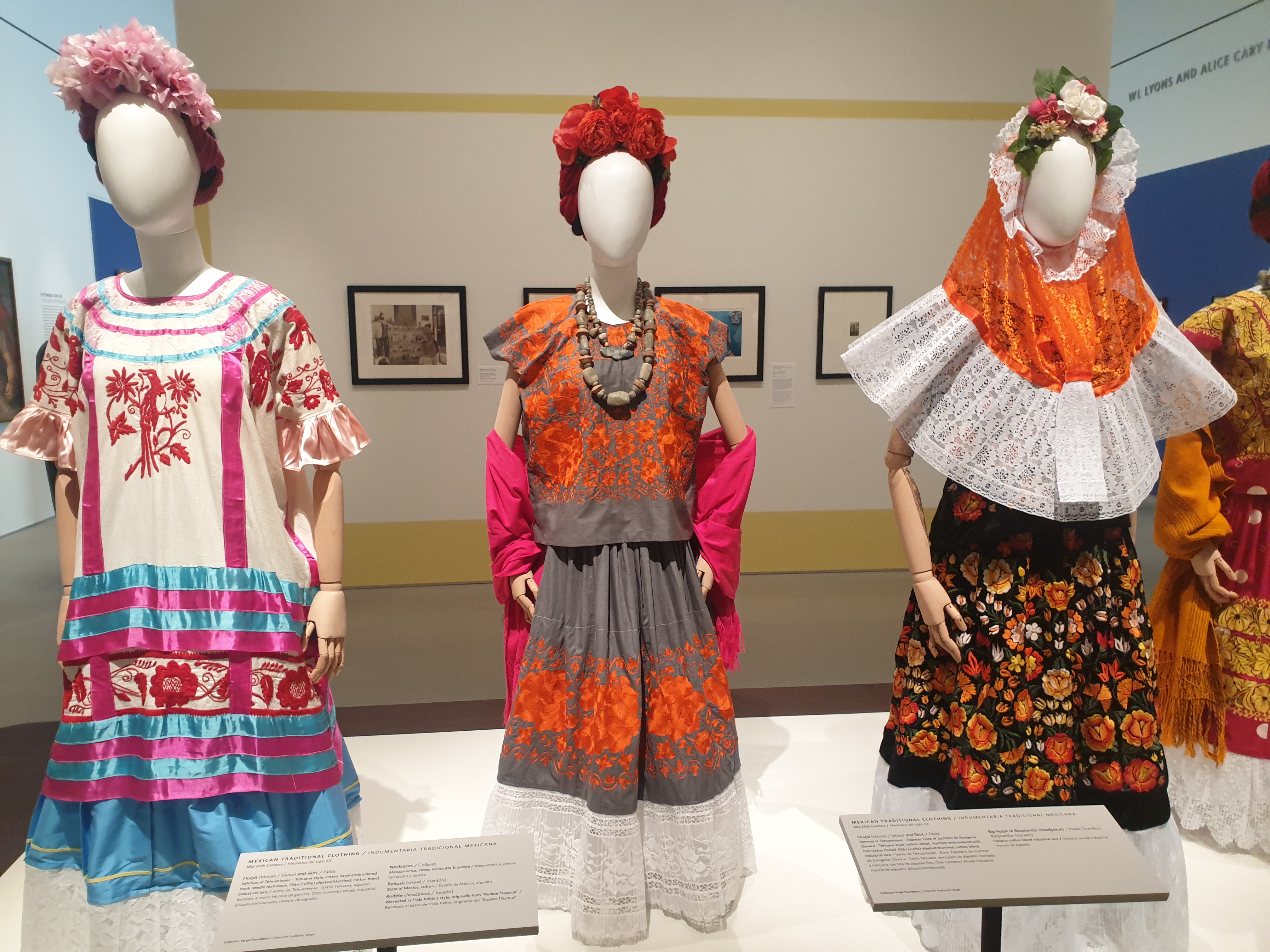
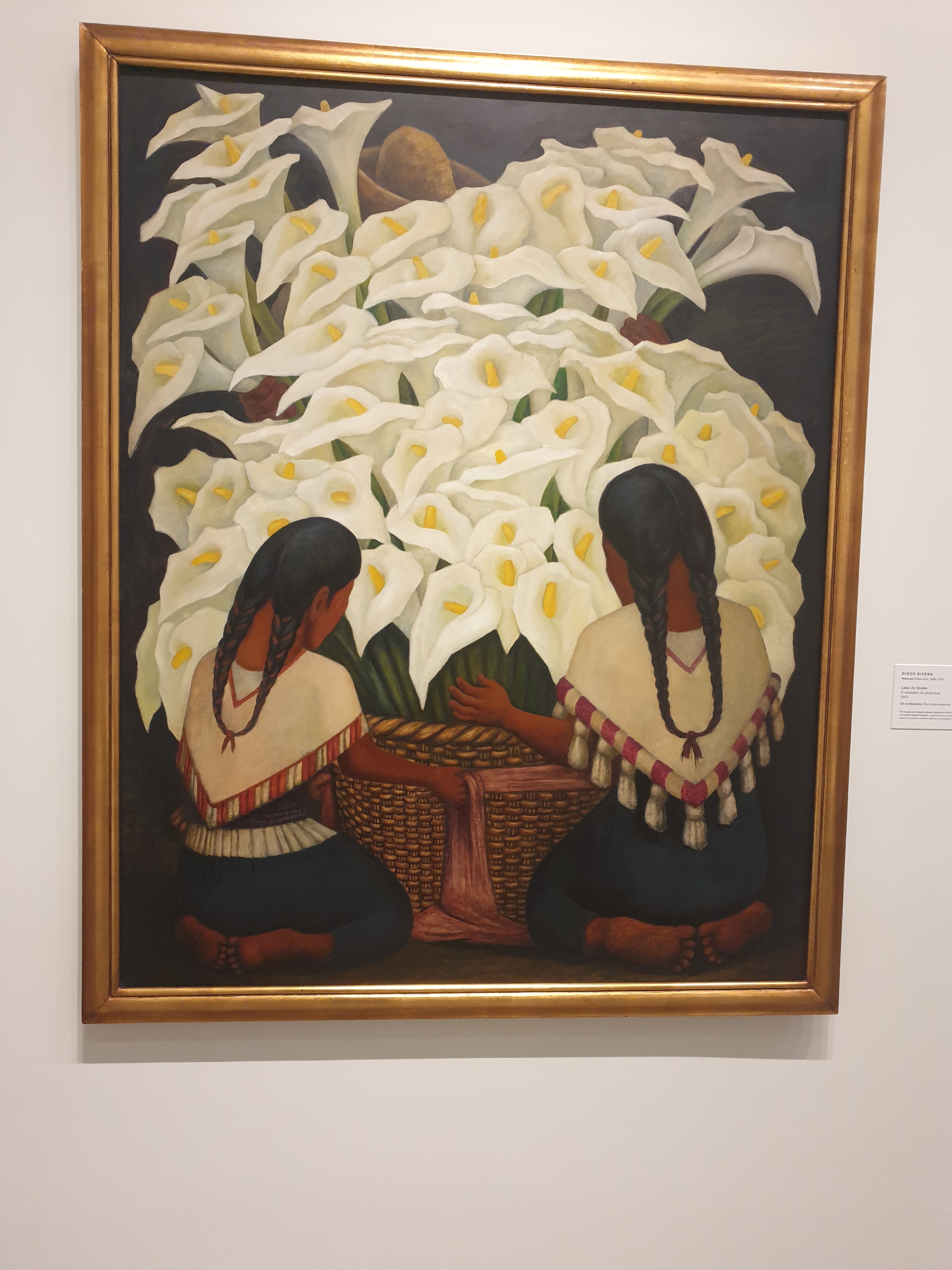
Unlike other exhibits, this one delivers on what it promises; It not only has a delightful selection of Kahlo’s work, but it also has a good representation of Rivera’s work and of the whole Mexican Modernist movement, it even has a dozen Mexican dresses on show.

Of course, the real star here is Kahlo beyond the pop culture iconography; Her strength as a survivor of polio, and of having a bus handrail impale her pelvis at 18. She is a crucible of pre-Columbine and Hispanic culture, of Christianity and ancient Mexican religions, of nature and urban environments, of communism and capitalism, of sexuality, and so on with everything.

Besides the dresses, the exhibit has other nice touches like the photos Patti Smith took on her visit to Kahlo’s house in Coyoacán in Mexico City, and a quote from Carlos Fuentes, one of my favorite writers. It is a wonderful exhibit and if you are in Southern Florida you should see it.

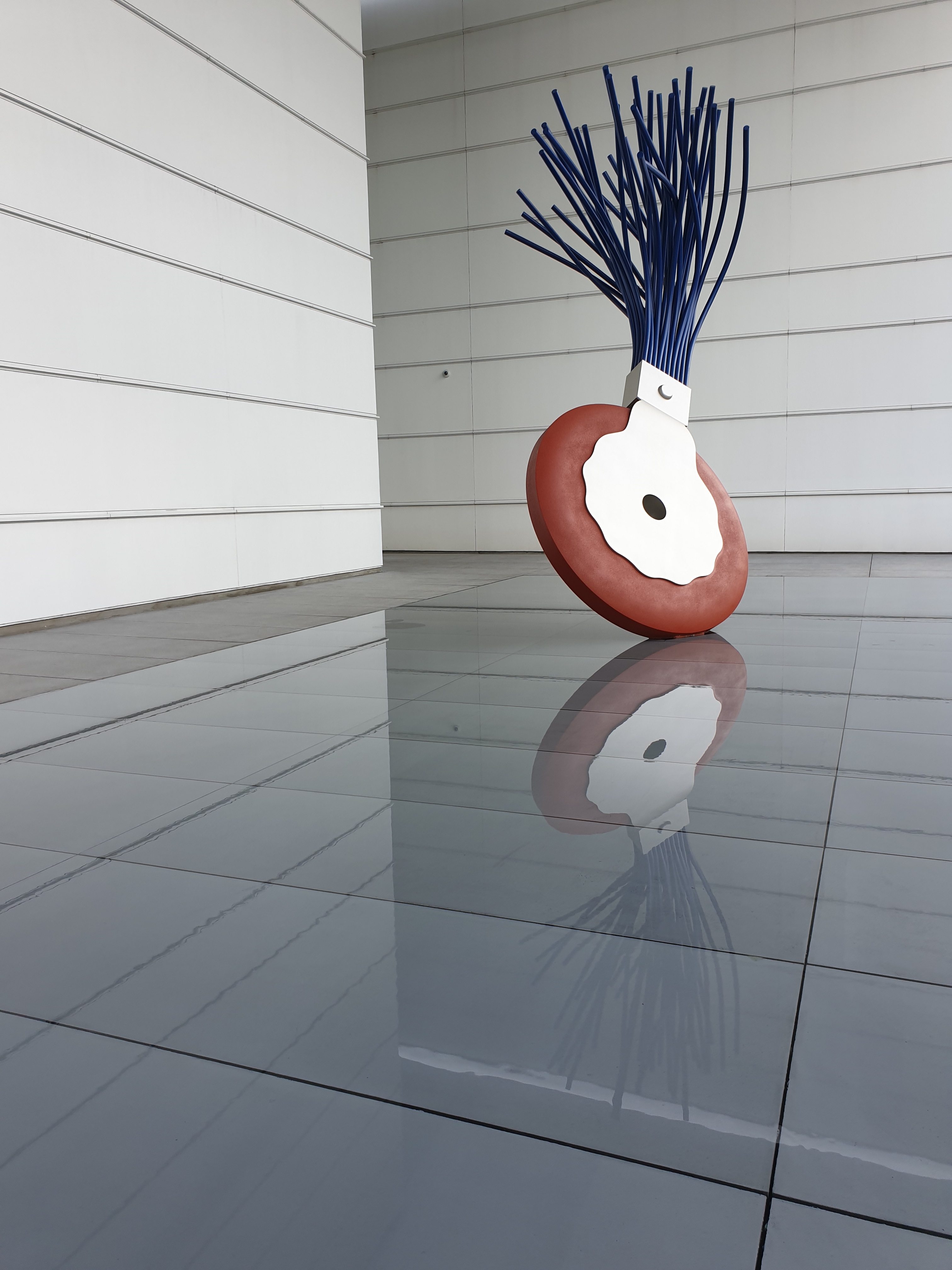
As I have mentioned before on this blog, the Norton Museum is an oasis of culture in the suburban wasteland that is Southern Florida, so a morning at the museum with a lovely coffee in the courtyard and a visit to the gift shop is a morning well spent.

The 18th Century as literary hinge

When I “discovered” 18th Century Spanish literature, something that really struck me was what a critical element it was in the history of literature and how little credit it gets. The 18th Century is a literary hinge in the evolution of literature. While it can be argued that every century, or era, is a “hinge” era, a time between times, the 18th Century exercises as a flexing point in what has been called the pendulum of literary movements. Being the philistine that I am, I can only use Spanish literature for my example:

The ilustrados (18th C educated Spaniards), whether they liked it or not, were actually building on the shoulders of the Baroque, with its chiaroscuro and trompe l’oeil, which they hated. This, in turn, was a reaction to the Renaissance which was short lived in Spain in favor of the more mysterious and why not, fun, Baroque, more suited to the Spanish temperament (perpetuating stereotypes, the Spanish are a Baroque people. Disagree? Go watch an Almodovar film). For the Spanish literati, the solution to what they considered centuries of muddle was to build a one way bridge to the classic ancient Greeks and Romans as Luzán proposed in his Poética (1737). As much as the Enlightened writers wanted to, they could not get there without the rich legacy of medieval letters and art and everything that followed. For example, my man, Padre Isla (1703-1781), a precursor to the ilustrados, indeed goes back to the ancients, but he also relies heavily on St. Bonaventure, St. Thomas Aquinas, and especially Cervantes and Quevedo, creating his narrative from a blend of centuries of letters. Consciously or not these are the foundations the 18th Century had to build on.

On the other hand the Enlightenment’s obsession with societal good which even led to the elimination of the novel in Spain due to its reliance on the first person singular, is the launching pad for the Romantic movement where that “I” is all important. Equally, the Enlightened enthusiasm for scientific enumeration led to the naturalists. The reaction to those developments will be realism, modernism and postmodernism.

In big bold brushstrokes there are the Classics, Medieval, Renaissance and Baroque eras leading up to the Enlightenment, and the Romantic, Naturalist, Realist, Modernist and Postmodernism after it. How do I then explain the fact that my sides, arms or rays of my angle are lopsided? Well it must be taken into account that both the Classical and Medieval periods encompass centuries, while the last big three movements occurred within the 20th C. due to the advances in communications and technology, so just counting movements is not the same as considering the influence and repercussion of  those movements. This of course is taking into account all the differences in labeling periods and movements. No style is 100% unique, as one genre blends into another.

Thus, a solid grasp of 18th Century literature opens up an understanding to what happened before and after on the literary continuum. From a teaching standpoint, understanding the enlightenment offers the key to the past as well as to the future of literary history.

P.S.: When I explained this idea to my thesis director during one of our coffees, she liked it so much she took a picture!