


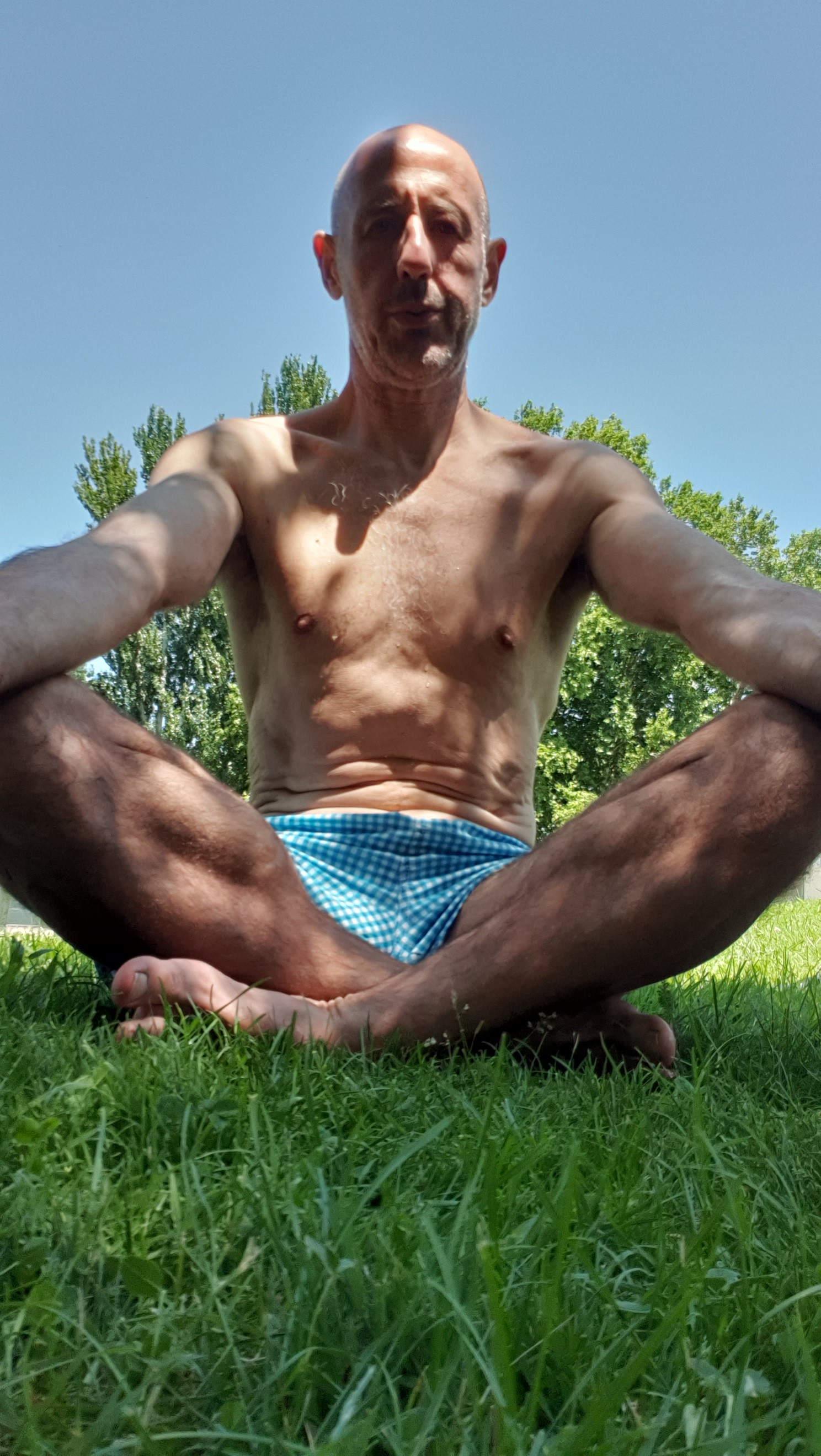
Stop, inhale, focusing on the air entering your nostrils or your lungs. Exhale, focusing on the air leaving your lungs or your nostrils. There, you did it!! For a brief time, you didn’t worry about what’s for dinner, your bills, the weather, what you were going to tell your boss, your customer, or your friend. You didn’t think about politics, and you weren’t scrolling through social media. You had a moment —albeit a very short one—of meditation. The trick is to do that exact exercise with your breathing for 5, 10, 20 minutes, or half an hour. The longer you do it, and the more often you do it, the better you will feel.
My dear friend Paco encouraged me to try meditating while I was in a deep, dark depression over ten years ago. It was not easy for a hyperactive fellow like me to embrace it, but now I cannot live without some quiet time every day. And although I have written about meditation here before, it was usually in passing while talking about health and mental health in general.
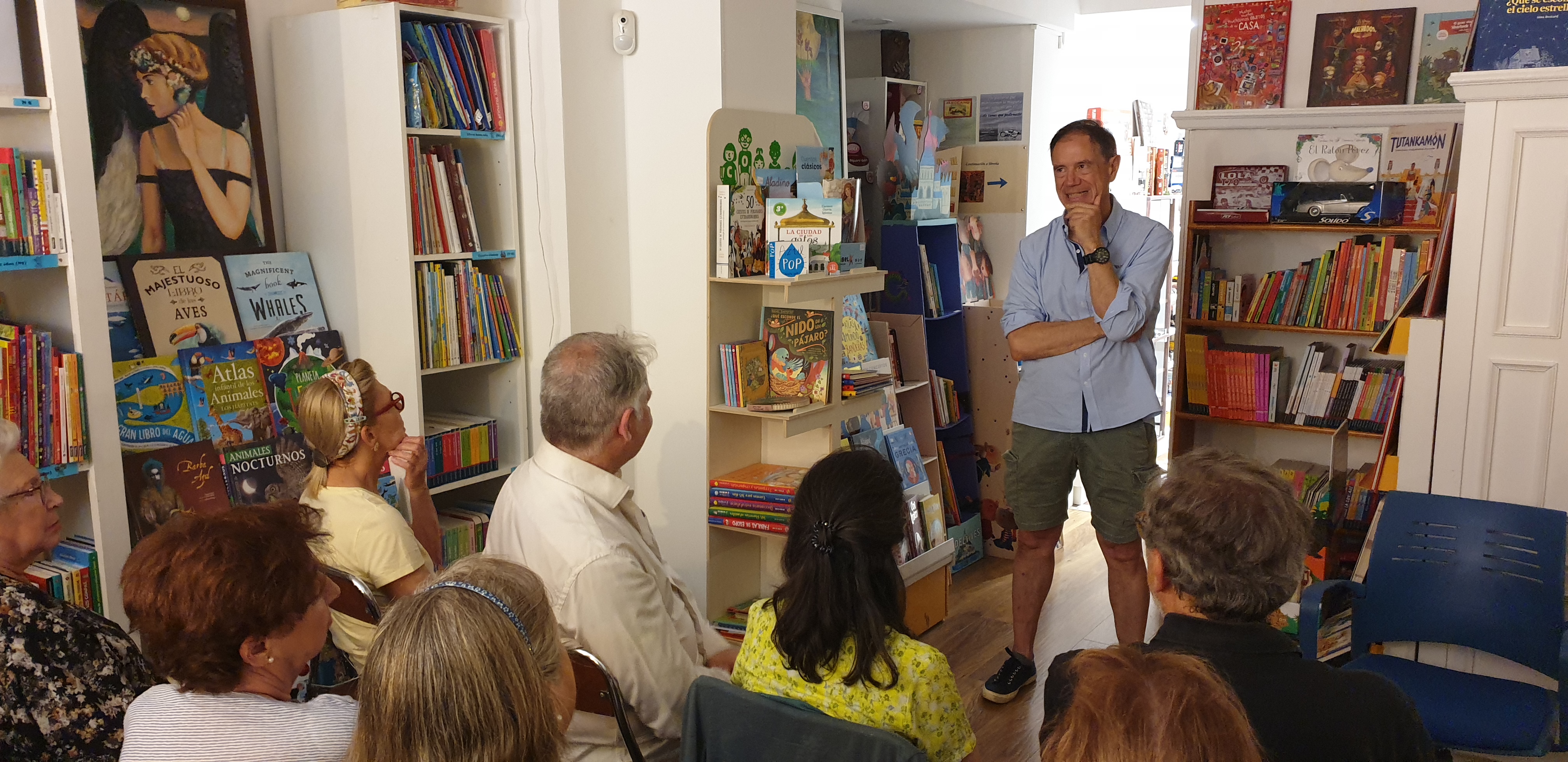
This all comes to mind because I recently had the opportunity to see and hear Paco give a presentation on Christian Meditation at the Antonio Azorín bookstore in El Escorial. He filled the room and had a wonderful talk. I originally thought the attendees were curious about meditation, but during the Q&A, I realized some of them were very advanced, although from different “schools” of meditation —see below.
There are many labels for meditation, just like there are many different philosophies and methods: Mindfulness Meditation, Mantra Meditation, Zen Meditation (Zazen), Vipassana Meditation, Transcendental Meditation (TM), or Body Scan Meditation. The ancient Fathers and Mothers of the desert, the early Christians, also developed a method of meditation which nowadays is called Christian meditation, or even centering prayer. Some recent Catholic proponents of meditation might be Thomas Keating, Thomas Merton, or Richard Rohr.
Whichever way you choose to sit down in silence is fine. Of course, nowadays you can use an app on your phone to time your sits, or to guide you. I have been using Insight Timer for years, and I love it!
Every class I teach at school starts with one minute of silence. This time is a buffer between whatever the students were doing before and class, between English and Spanish; it is a moment to regroup, to breathe, and for me, it is a minute of meditation.
Recently, Maria Popova also wrote about the importance of spending time alone and in silence, not exactly meditation, but close to it. Check it out here.
So carve out a few minutes from your day: when you wake up, before you go to sleep, in the middle of the day, or, paradoxically, if you are really busy, more than once a day. Whatever works for you, sit down, and start focusing on your breathing. You are welcome.
Oh, you should definitely check out this video of Villanova’s Fr. Martin Laird on the benefits of meditation. It is a bit long, but worth it!!




 Antonioyrocinante's Blog