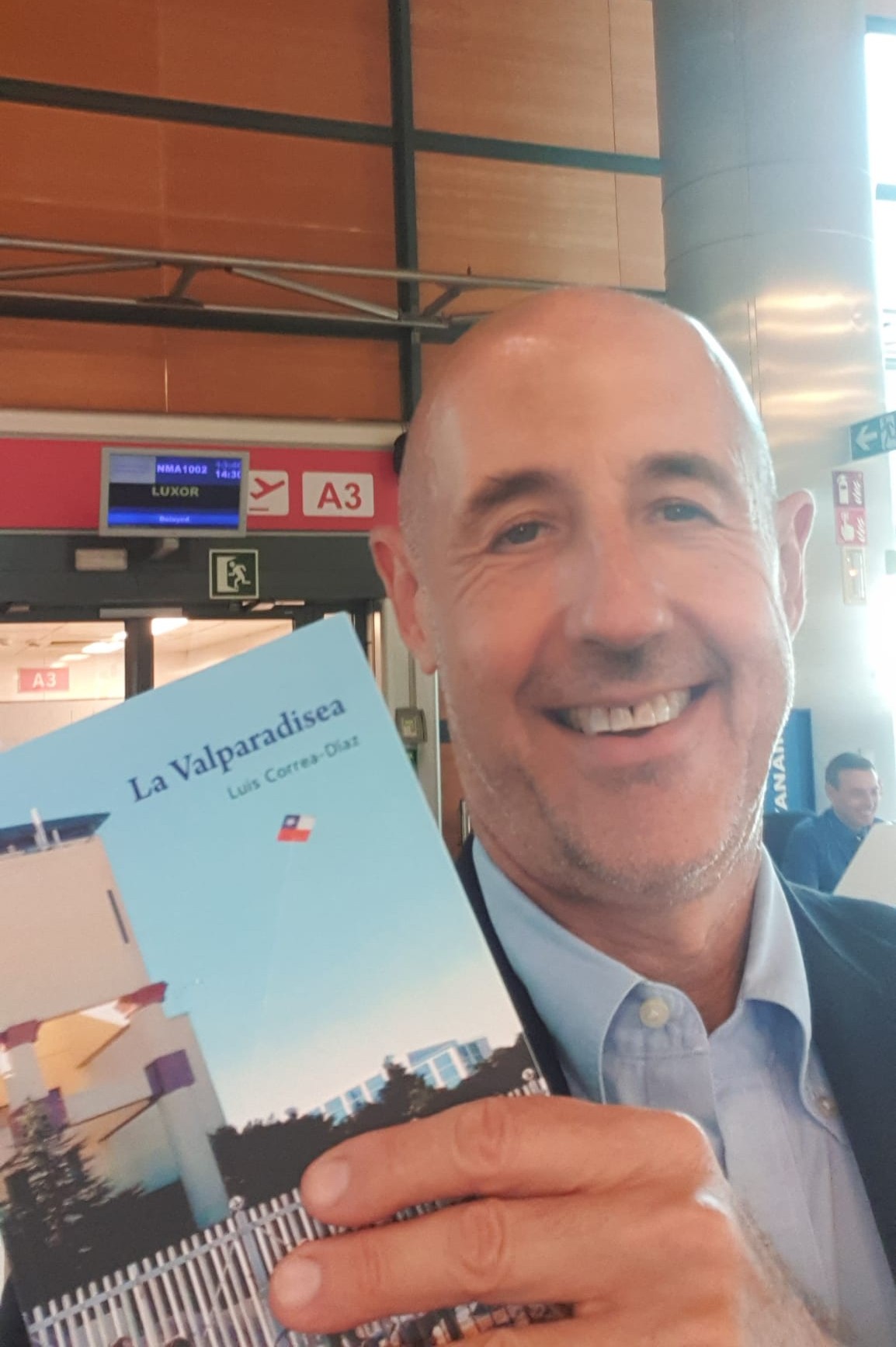
La Valparadisea Luis Correa-Diaz

La Valparadisea LCD

Hay tres tomas de Valparaíso en la película Los diarios de la motocicleta: La primera en la oficina de correos donde Ernesto Guevara, el futuro Ché, recoge una carta de su novia, cortando con él. La segunda es un trayecto en el funicular donde no hay siquiera diálogo entre Guevara y su amigo Granado. Y la tercera es en la playa, donde Guevara acepta que no le queda otra que seguir su aventura. Esto es todo lo que sé, o lo que sabía de Valparaíso hasta que empecé a leer los poemas de Luis Correa-Díaz. En su última entrega, La Valparadisea (Altazor, 2025) Correa-Díaz nos invita a una excursión en dron —droncito— y recoge los corazones rotos como el de Guevara, los trayectos en el funicular, sin diálogo, y las meditaciones en la playa.

Con Correa-Díaz siempre hay más. Sus líneas están llenas de referencias: Jorge Manrique junto a Starbucks, la Nueva Trova Cubana junto a Hieronymus Bosch, al Papa junto a Herzog y todo ello en las calles, plazas, cafés y urbanizaciones de Valparaíso.

Pero lo importante no son las calles ni los edificios, sino la gente que llena los poemas de LCD: Amigos, libreros, familiares, transeúntes, otros poetas, músicos, tenderos, camareros, la gente que hace una ciudad, que le dan el color, la textura, la profundidad y la memoria a los sitios.

La memoria y su hermana la melancolía son el tejido que colorea el tapiz que es La Valparadisea. Los recuerdos de Correa-Díaz, los recuerdos de nuestros hogares que tenemos los que vivimos en el exilio —aunque sea elegido.

El escudo de Chile, Luis Correa-Díaz, la canción del exiliado. (Finally going bilingual!)

Hay un hilo que une a todos los exiliados, emigrantes y refugiados del planeta: nuestras cabezas conocen los problemas y saben las dificultades que hay en nuestros países, pero nuestros corazones añoran todo lo bueno que dejamos atrás: las familias, amigos, la comida, los olores, los sonidos. Luis Correa-Díaz lo explica con poemas en su Escudo de Chile (Oxeda 2023).

Confieso que cuando recibí el libro que Luis generosamente me envió, estaba justo leyendo otro libro. En vez de dejarlo acumulando polvo en mi escritorio se lo presté a Ricardo, mi compañero de trabajo chileno, enciclopedia andante de futbol, quien me aclaró mis dudas sobre Chile que ignorante de mí solo conozco de Missing con Jack Lemmon y Sissy Spacek (1982) y Los diarios de la motocicleta.

En esta aventura narrativa, perdón, en verso, Correa-Díaz, nos invita a su exploración postmoderna, postcolonial, milenial, romántica, político-futbolística, neo barroca (¿Cómo escribiría poesía Alejo Carpentier en el siglo XXI?), musical, culinario-gastronómico de Chile por medio de su escudo.

El libro está dividido en 70 poemas, pero la ausencia de puntuación nos propone, en un juego borgiano, 70 poemas o un solo poema o infinitos poemas. La lectura fluye entre poemas con solo algunos cambios de perspectiva cuando el narrador es el escudo o cuando las referencias cambian de históricas (Pinochet, Aylwin) a musicales (Serrat, Bad Bunny, Juanes…), a futbolísticas (Colo-Colo, la Roja), etc.

El escudo de Chile es tan solo la piedra angular de esta construcción, un trampolín que permite a Correa-Díaz tocar la política, la historia, la geografía y sobre todo la cultura de su país entre Jung, Gabriela Mistral, Dante, Capitán América, Trump, emoticones, fotos…

Este es el tercer poemario que leo de Correa-Díaz después de Valparaíso, puerto principal y Del amor hermoso – el cual sale auto referenciado en el Escudo de Chile –Y es tan enriquecedor como los anteriores!

Llevaba años pensando en hacer este blog bilingüe. Inspirado por Luis, por fin, después de 13 años me he decidido. Espero que os guste.

Story of a Book, a return to poetry: Valparaíso, puerto principal by Luis Correa-Díaz

As everybody knows, books are living creatures, and as such, they have their own lives. This is the story of a wonderful book.

Luis Correa-Díaz came into my life socially, during a visit to Chapel Hill a couple of years ago. Knowing that he is from Chile, when saw an old -ancient- National Geographic with the main story on Chile, I did not hesitate to send it to him, as a bit of a nostalgic curiosity. What I did not expect was that he was going to pay back that silly gesture by sending me his latest book of poems: Valparaíso, puerto principal.

I treasured this book, waiting for the right time to dive in, which was during my recent silence and meditation retreat (see previous post). As I took the book out to the monastery’s cloister garden, I was filled with excitement. Before digging in, that anticipation of starting a new book, I was called to the fountain… ¿how about some photos for the blog? So, I got clicking, until, in and adventurous and risky pose, the book was blown into the fountain (yes, I know you were expecting that, I did too, but I took my chances…)

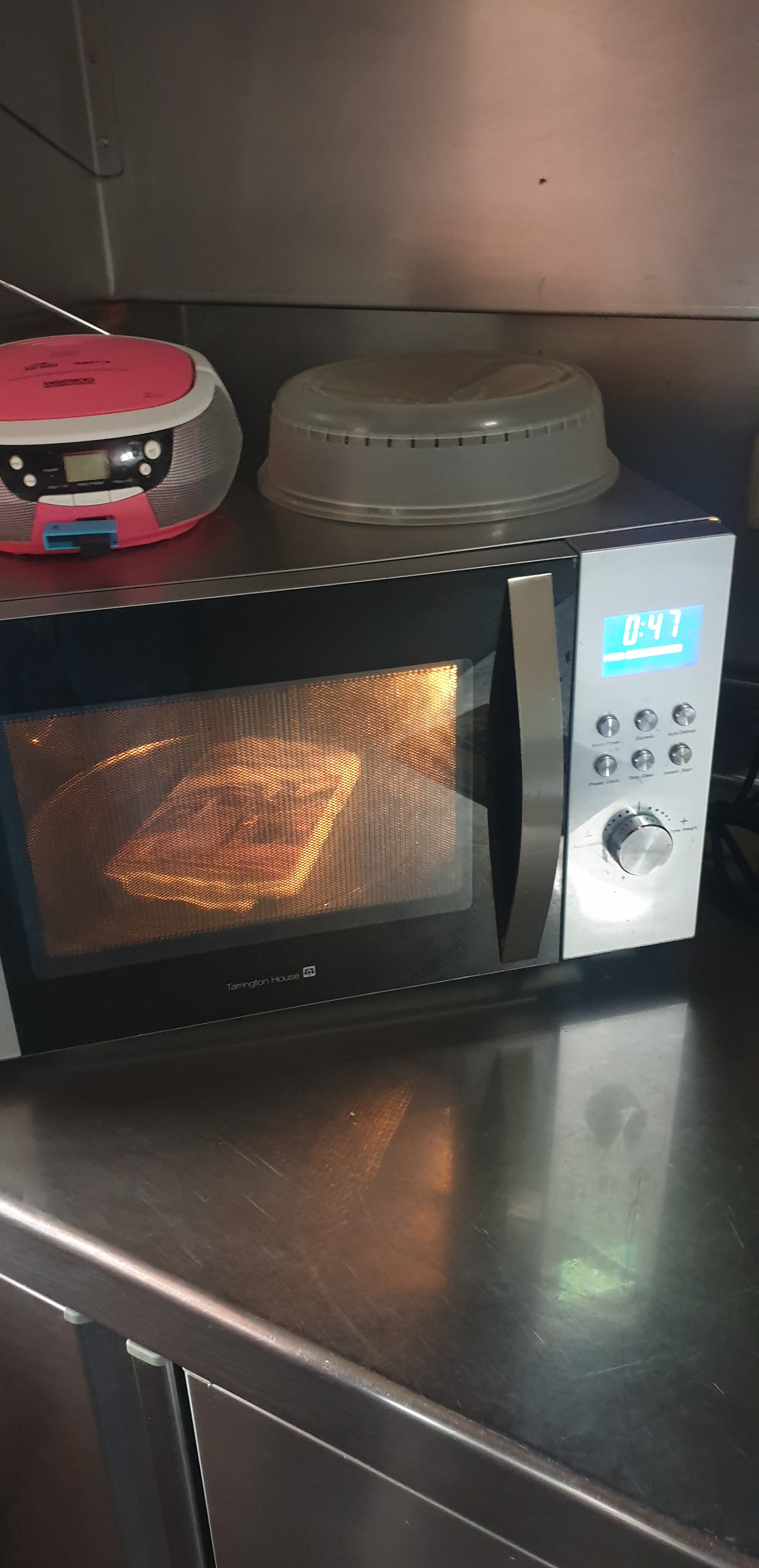
A quick rescue and a rush to the monastery kitchen soon had the book in the microwave oven for an ER intervention. Coming out steaming hot -literally- I blew the steam out making sure the words stayed put on the page. This had to be done a few times to ensure the book dried quickly. It survived, albeit with stiff, wavy pages that say: “I had an adventure” and “my owner is an idiot”.

What I love about Correa-Díaz´s writing is that it appears casual, carefree, with all sorts of English words, Millennial English words -even emoticons thrown in. But as those happy-go-lucky words sink in you see, no, you notice the feeling, the emotion of those words. In this case, his beloved Valparaiso as a home he no longer lives in (exactly how I feel about my Madrid). His writing is peppered with references to Teilhard de Chardin or Madonna, to the local coffee shops, where you can almost smell the coffee suffusing from the old walls, plus all the local references that one has to be a local to identify, reminiscent of the best Gabriel García Márquez.

This book will make you miss Valparaíso, even if, like me, you have never been there. This is what the Portuguese and Brazilians call saudade, or the Gallegos morriña (you can read about that feeling here), there is no comparable word in English, sorry.

On poetry

Although I started this blog years ago with some poetry: Frost’s The Road Not Taken and Cavafy’s Ithaka, I have not written as much about poetry as I should have, given how much I enjoy it, and compared to other arts. Sure, I recently wrote about Omar Khayyam’s Rubaiyat, but that is still not enough for my liking. So here is an attempt to fix that.

My first conscious appreciation of poetry came in college with Pablo Neruda. To this day I am still moved by his words, and Tu Risa is still one of my favorite poems. Alfred Lord Tennyson’s Ulysses is also right up there as well as the two poets mentioned at the beginning. But the list of favorite poets is a long one: Lorca, Bequer, Espronceda, Benedetti, Mistral, Pessoa, Milton, Manrique, Dante, EE Cummings, Wordsworth and Coleridge, Blake, Elizabeth Bishop, and on and on. But one does not have to go to the big guns to find poetry that will amaze you. Naïf, amateur or student writers can take you places you would not think. Sometimes poetry hits you when you least expect it: I was surprised and blown away by 22-year-old Amanda Gorman at Biden’s Inauguration. Quadriplegic Ramón Sampedro, euthanasia’s cause célèbre in 90s Spain also wrote some sweet lines. Check out this poem in the namesake movie:

For me, the beauty of poetry is the capacity it has to transport you in a few words, in a verse. Never mind words, Haikus only have seventeen syllables – three lines!! I love Haikus: although I knew and had read them before, I actually became a follower of Haiku poetry by reading, wait for it… Jack Kerouac’s book of Haikus! (although he does not always follow the 17-syllable rule), since then I have read and enjoyed Bashō, the master. I am in awe of poets since I cannot write my way out of a paper bag (thank you for reading this, it means a lot).

Years ago, at Walnut Hill School I got a glimpse, a backstage tour of the poetry world from the brilliant poet and teacher Daniel Bosch. I once invited him to my advanced Spanish class to talk about Neruda’s Veinte poemas de amor…, which we were studying at the time, and he blew our minds!! Daniel also wrote a hilarious poem when I got my citizenship: Song for a New American. To this day it is framed and on my wall!!

I write all this because I have just read …del amor hermoso by Chilean author and teacher Luis Correa-Díaz, and it is wonderful. His capacity to write about love, apparently in a playful manner, but not really. His poems are soaked in ecclesiastical vocabulary and structure which gives his writing an extra edge and throws you off the traditional expectation as a poetry reader. This is apparently three books in one, which again is a bit unsettling: where there originally three separate books? Is it all another manipulation of my expectations? Another old-fashioned trick, which still works is that he “found” the poems in a manila envelope, and the ones he did not find are “anonymous”. Never mind the trickery, the poems are lovely and they keep you reading and paying attention.