The oldest house in Miami

Confession time: Although I hate Miami traffic and expansive development, I must admit that I am discovering more and more redeeming bits about an otherwise unpleasant city. But first, a little history.

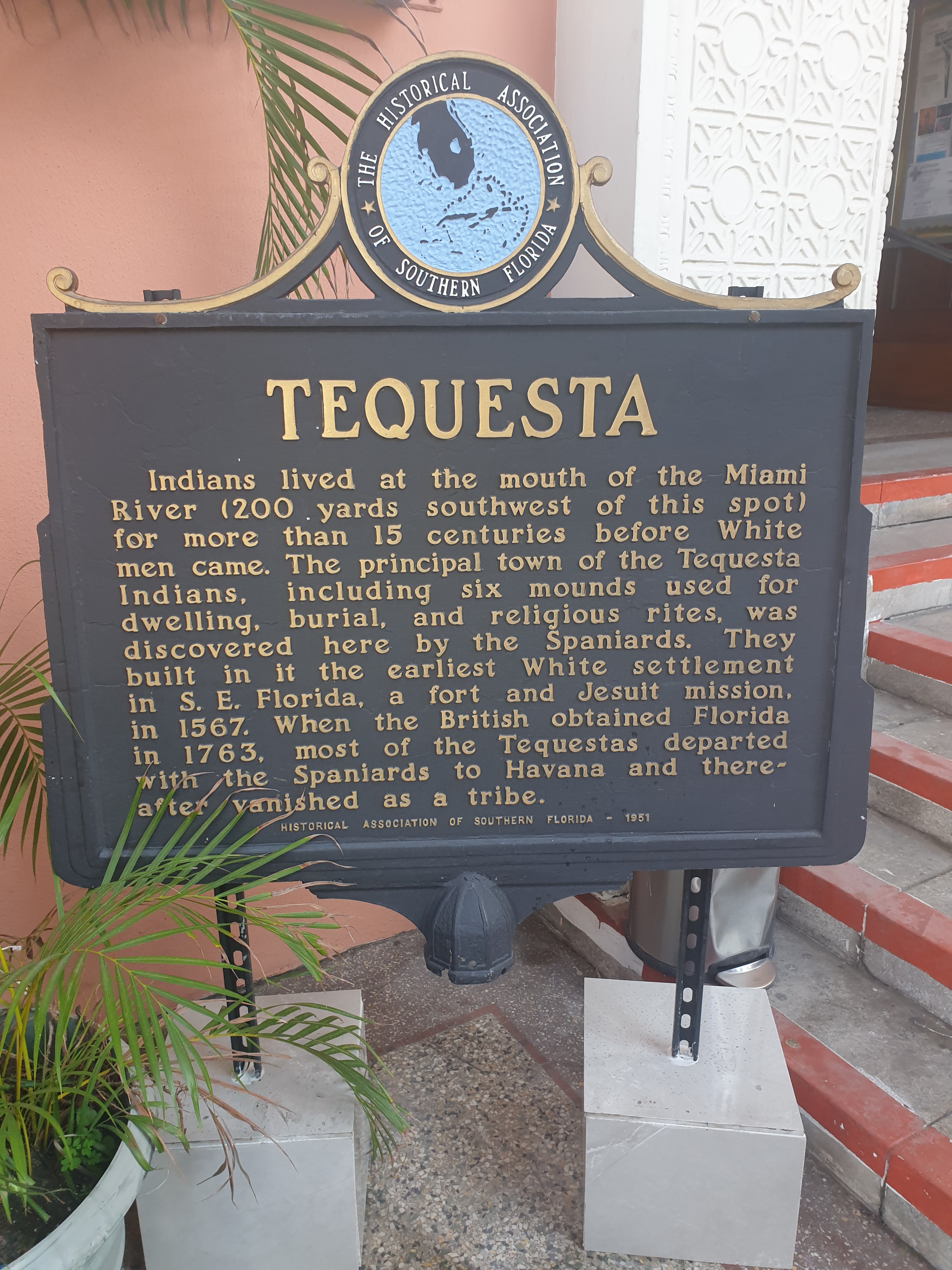
The Tequesta people lived at the mouth of the Msimiyamithiipi river for centuries. The only remains of the Tequesta village is now a dog park… welcome to Miami! The first Europeans to settle in Miami were Spanish Jesuits who set up a mission there in 1567 (although both Jesuits and natives later fled Miami to Cuba when the Brits started to make trouble). Then nothing much happened in the area until Julia Tuttle set up agricultural development in 1880. When Flagler’s railroad arrived in Miami in 1896, the population was a remarkably interesting 444 inhabitants (¿?). Then there was a boom with Collins and Brickell and Fisher building hotels and developing everything in sight, until a massive hurricane in 1926 destroyed pretty much everything, hitting the reset button for Miami, kicking of its Great Depression almost three years before the rest of the country hit it.

Only a few structures remain in Miami from before the hurricane; The Cape Florida Lighthouse from 1825, in Key Biscayne is the oldest building in Miami.

The oldest remaining house in Miami belonged to a yacht designer called Ralph Munroe. His home, called the Barnacle, is fortunately now a Florida State Park, and it is a bit of a jewel and an oasis in the middle of crazy Miami. The Barnacle is right in downtown Coconut Grove, the bohemian, Rive Gauche type of neighborhood of Miami.

The house where Munroe designed and built his beautiful sailing boats sits in a hammock which is a park with native plants and trees right on the water. Also, at that time you were better off travelling around Miami by boat than by land, so most properties were on the water.

The house is a lovely Victorian mini mansion well worth the visit. There is also Munroe’s boathouse down by the water, and a couple of the beautiful boats he designed are in the water!

You are welcome. Let me know your thoughts on this and other Miami jewels in the comments.

Shark tagging


Every year, the Science Department at Seacrest organizes a collaboration with the University of Miami  Shark Research team to go on a shark tagging sortie. This year I joined them!

The day starts at 6:00 am driving a van full of students to Key Biscayne. If I had to define Miami with just one word it would be: Traffic. But we made it with time to stop at Starbucks for some breakfast.

The research vessel is a scuba boat (Diver’s Paradise of Key Biscayne) run by the great French/Cuban Captain Eric who moonlights as an Organizational Behavior Professor at FIU. The nuts and bolts of the tagging are simple. Ten “drum lines” are dropped with big chunks of tuna on the hooks, then you go back to check if the sharks have bitten. Sharks need to swim to breathe, so the hooks have an ingenious system to allow them to swim in circles before being tagged. The hook also has a timer so the scientists can know how long it’s been on the hook. Once on board the students have to take various measurements, check the nictitating membrane for stress and reflexes, clip a tiny skin sample from the fin to check the shark’s health and tag it! The grad students also take a blood sample. It is all very professional and humane, I was impressed. Students also study water samples for quality.

Our first specimen was a small blacknose shark, caught near Stiltsville – a series of houses on the water built during prohibition – you guessed it – on stilts, where folks would drink and party. You have to love American hypocrisy! Some are still strong enough to host raves.

The day goes on checking lines, dropping lines, hanging out on the boat, chatting with the U Miami grad students, Eric the Captain, students, and other teachers. It is fantastic to spend a school day where the classroom is the boat!

Then we caught a nurse shark. These are fascinating! Out of the water they breathe on the water they have in their system making a “suckling” noise that gives them their name, their skin feels like sandpaper, and their color is also unique.

After a long day on the boat we hit Miami traffic again to cross Alligator Alley back to Naples. Yuck.

As an educator, this is the kind of experience we always want for our students, where they are participating, helping graduate students work on their research. This is not a sterile classroom experiment, this is field research to study shark stress levels, ecosystem impact, shark immunology, etc. this is real life!

Notes and fun facts: The majority of sharks are under 5 feet long,  you can purchase shark research swag here: https://sharkresearch.rsmas.miami.edu/shop