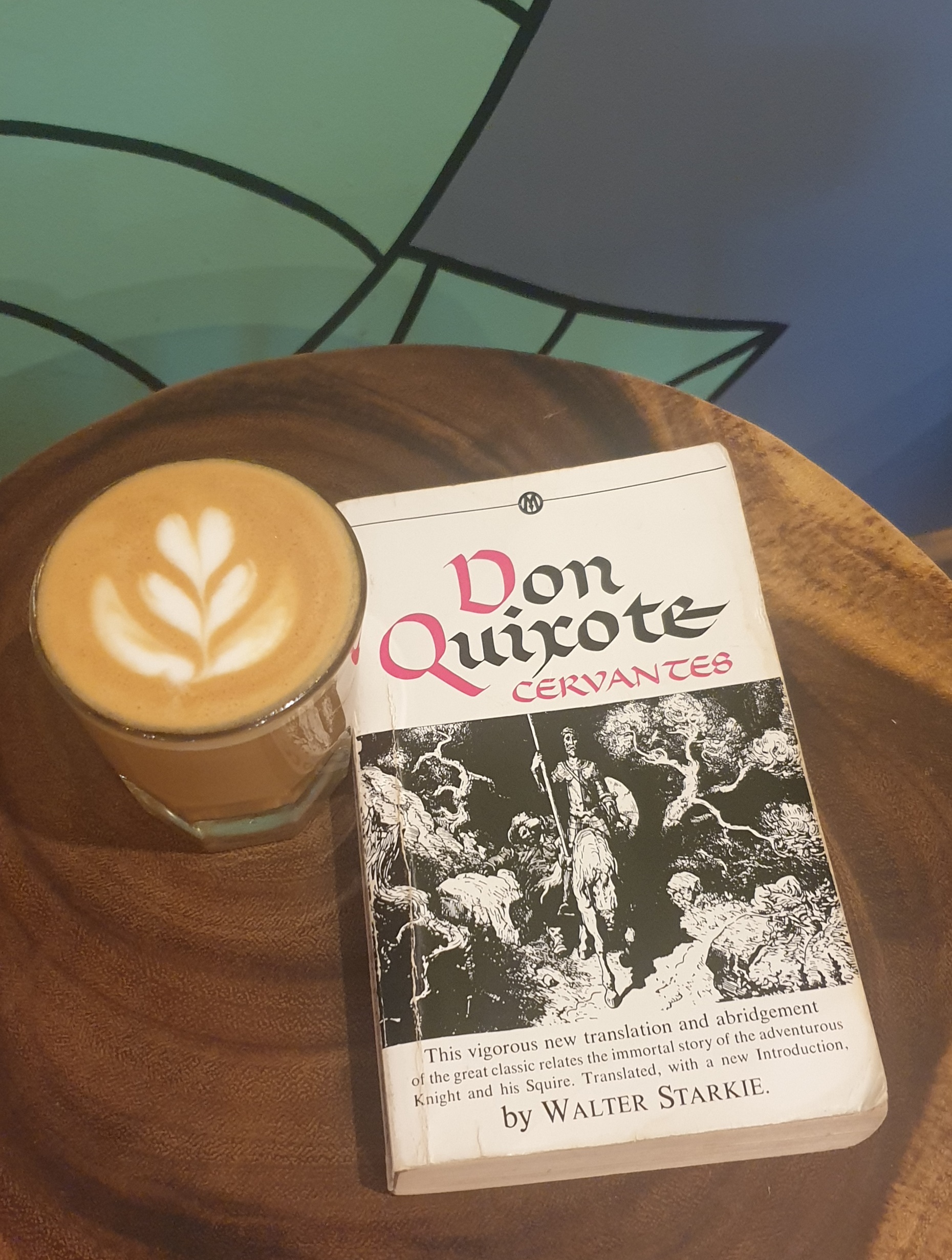
British geopolitics in Spain during WWII; Walter Starkie and “El British”

My dad could not stop talking about Walter Starkie. I never gave the fellow much consideration, that was my dad’s thing. My dad even found and bought some of his (many) books. But a few days ago, my aunt passed along a brief bio of Starkie –particularly in his time as Director of the British Institute in Madrid (attached). And I loved it! This fellow did more for Britain than you would think.

Mise en scene: Spain during WWII is a neutral country, at least on paper. After all, Franco won the (in)Civil War in 1939 with help from Hitler and Mussolini. Having said that, when Hitler asked Franco to let him transport his troops and tanks by train to Algeciras (next to British Gibraltar -but that is another story) to get to North Africa, Franco -to his credit- said no. But back to our story.

So, in a neutral but Axis friendly country, in 1940, during WWII, what could Britain do to exert some sort of “soft” power in Spain? The answer: send a phenom of nature, a genius, a virtuoso (literally), a wonder, and let him do his thing. Make sure he looks unassuming, a roly-poly, jolly, violin-playing academic fellow. Give him a fairly vague title like British cultural representative. Finally, give him carte blanche to do as he sees fit, oh and a generous budget, I am sure.

Ironically, Starkie was Irish, from a family of scholars and artists, he graduated from Trinity College in Dublin, with honors in Classics, History and Political Science, oh, and first prize in violin from the Royal Academy of Music in Dublin! After graduating he stayed at Trinity teaching Italian and Spanish. Samuel Beckett was one of his students! During WWI in Italy, he played violin for the British troops and met his wife. Back in England Y.B. Yeats made him director of the Abbey Theatre. From there he was sent to Madrid in 1940.

Starkie soon founded the British Institute – El Instituto Británico, “El British,” where my father, my uncle, and my aforementioned aunt went to school as children of a British Embassy employee (read more about my grandad here). Eventually my sister and I would also go to “El British.” Starkie made the school a center for conferences, concerts, presentations, so forth, which is precisely what Britain wanted in Spain: a cultural beachhead in Nazi friendly Madrid. Not only that, but as a Catholic (remember, Starkie was Irish), Starkie soon made friends with influential Jesuits Heras and Otaño, and eventually with government ministers. In fact, one of Starkie’s biggest victories was to have English as a language option (together with German) in Spanish secondary schools.

On any given day, Starkie could meet with a Spanish government official, play the violin with gypsies, whom he loved and wrote his most famous books about (Raggle-Taggle: Adventures with a Fiddle in Hungary and Romania (1933), Spanish Raggle-Taggle: Adventures with a Fiddle in Northern Spain (1934), and Don Gypsy: Adventures with a Fiddle in Barbary, Andalusia and La Mancha (1936)), host a conference, write or translate a book -like Don Quijote, and then go home, which served as a safe house for Jewish, Gypsy, and other prosecuted refugees on their way to America.

I asked my uncle what he remembered about Starkie. He told me how the Embassy’s country house was used as a safe house for downed plane crews rescued by the French resistance who were on their way back to the UK to fly again. But to get to this country house one had to drive by a gypsy settlement. Because of the friendship between Starkie and the gypsies, nobody ever dared go near that house to investigate what was going on, why there were cars and vans coming in and out at all times of the day and night, another point for Starkie!

So, besides the eventual victories on the battlefield, Britain scored a major victory in WWII by sending Walter Starkie to Spain.

The oldest house in Miami

Confession time: Although I hate Miami traffic and expansive development, I must admit that I am discovering more and more redeeming bits about an otherwise unpleasant city. But first, a little history.

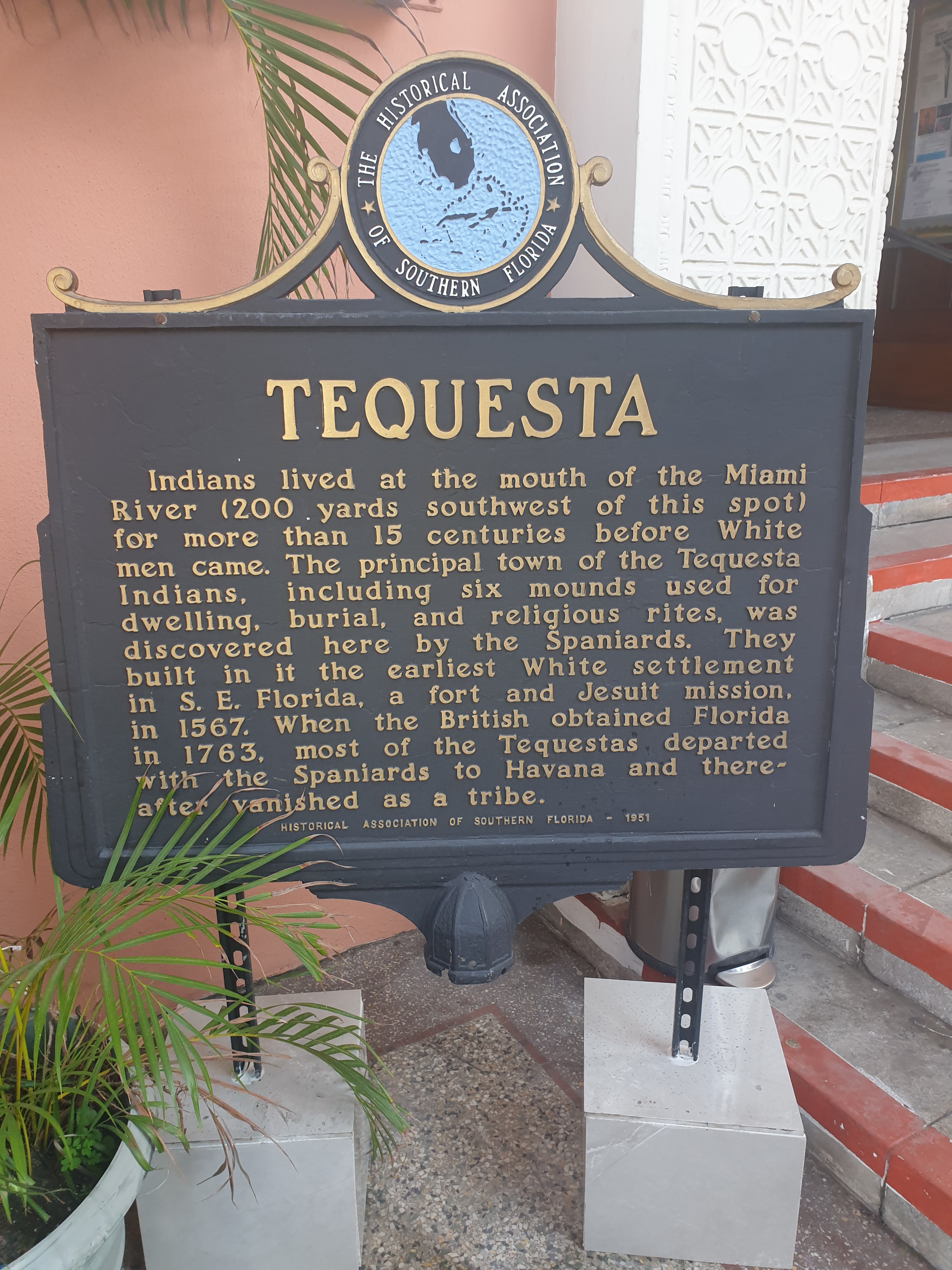
The Tequesta people lived at the mouth of the Msimiyamithiipi river for centuries. The only remains of the Tequesta village is now a dog park… welcome to Miami! The first Europeans to settle in Miami were Spanish Jesuits who set up a mission there in 1567 (although both Jesuits and natives later fled Miami to Cuba when the Brits started to make trouble). Then nothing much happened in the area until Julia Tuttle set up agricultural development in 1880. When Flagler’s railroad arrived in Miami in 1896, the population was a remarkably interesting 444 inhabitants (¿?). Then there was a boom with Collins and Brickell and Fisher building hotels and developing everything in sight, until a massive hurricane in 1926 destroyed pretty much everything, hitting the reset button for Miami, kicking of its Great Depression almost three years before the rest of the country hit it.

Only a few structures remain in Miami from before the hurricane; The Cape Florida Lighthouse from 1825, in Key Biscayne is the oldest building in Miami.

The oldest remaining house in Miami belonged to a yacht designer called Ralph Munroe. His home, called the Barnacle, is fortunately now a Florida State Park, and it is a bit of a jewel and an oasis in the middle of crazy Miami. The Barnacle is right in downtown Coconut Grove, the bohemian, Rive Gauche type of neighborhood of Miami.

The house where Munroe designed and built his beautiful sailing boats sits in a hammock which is a park with native plants and trees right on the water. Also, at that time you were better off travelling around Miami by boat than by land, so most properties were on the water.

The house is a lovely Victorian mini mansion well worth the visit. There is also Munroe’s boathouse down by the water, and a couple of the beautiful boats he designed are in the water!

You are welcome. Let me know your thoughts on this and other Miami jewels in the comments.

Sharing knowledge, academic articles (my first!)

PC: Jess Strub

As my dear old friend and brother Theo would say, I am a bit of a late bloomer. I got into teaching later in life, I started my master’s at 42 and my PhD at 47. Once in the doctoral program I realized the importance of publishing academic articles, but I never really committed to it, I was focused on my dissertation which I managed in 4 years from start to finish. So I was never into the article publishing game; I tried a couple of times but halfheartedly…

Then life happened, and I did not worry too much about it, oh and Covid, and so on. Once settled in Florida, alone, in the long winter nights, I actually hammered out an article! When I mentioned it to Irene, my dissertation director, she liked it! and recommended I submit it to Romance Notes academic literary journal…

And they accepted it.

And it was just published!

What is it about?

Remember that Francisco de Isla wrote a scathing satire of 18th Century Spanish preachers: Fray Gerundio de Campazas? The moment it was published it sold out -literally overnight- but as was to be expected, the novel rubbed some people the wrong way and it was denounced to the Inquisition.

The article deals with the letters that Isla wrote in defense of his work. And that is where it gets fun: it is not so much a defense, as an attack on the fellow who filed the complaint of Fray Gerundio to the Inquisition.

You can find the article following this citation, and if you do not have access to academic databases and still want to read it, reach out on the comments and I will get you a copy.

Balsón, Antonio. “La Apología por la historia de Fray Gerundio de Campazas de Francisco de Isla. La anfibología como arma secreta.” Romance Notes 62.3 (2022): 419-429.

Here is the abstract (oh, FYI its in Spanish):

La Apología por la historia de Fray Gerundio es la defensa de Francisco de Isla contra la denuncia presentada por Fray Pablo de la Concepción, superior general de los Carmelitas Descalzos, ante el Tribunal de la Inquisición contra La Historia de Fray Gerundio de Campazas, alias Zotes. Fray Gerundio se publicó en Madrid el 21 de febrero de 1758 y fue un éxito rotundo. La reacción de los predicadores fue instantánea y, no queriendo ser tildados de “Gerundios”, empezaron a predicar sus sermones en un lenguaje más claro y sencillo. Cuatro días después de su publicación, de la Concepción, presentó su denuncia del Gerundio ante el Tribunal de la Inquisición. Isla rebatió la denuncia escribiendo cuatro cartas que se convirtieron en la Apología por la historia de Fray Gerundio. La Apología es una obra típicamente isliana en su retorica combativa. Isla utiliza todos los recursos aprendidos durante su larga carrera literaria, para defender su obra y usa un ataque minucioso para desglosar la totalidad de la denuncia, aunque finalmente fuese en vano, y la novela best seller del siglo dieciocho fuese prohibida. Una de las claves para entender la Apología reside en el uso de la anfibología por parte de Isla. El doble entendre ilumina la Apología como arma ofensiva más que defensiva. Esta obra, como la mayoría de las obras de Isla con la excepción del Gerundio, ha tenido mínima repercusión crítica y académica.

La apologia por la Historia de FG

Helping at church, on being an usher

One of the resources I leveraged years ago when I went through a rough crisis was going to church. While the church had always been there, I never really had a spiritual connection to it. Then I started going regularly, enjoying the time to recollect myself, the ceremony, the silences, begging for forgiveness, etc. and hopefully, if I was lucky a good lesson in the form of a sermon, these however are understandably rare.

The first church I went to during this crisis was St. Elizabeth in Milton, outside of Boston. I only went there for a couple of weeks and I spent most of the time (ok, all the time) crying. From there I went to Our Lady of Victories in Boston, which unfortunately has now closed. One day one of the Marist brothers who ran the church asked me to help during mass. I explained that I was not worthy of helping but they insisted. My first job was ringing the little altar bells before Consecration and Communion, then I started reading. Then I moved to North Carolina where I was warmly welcomed by the UNC Newman parish and Franciscan Brother Bill of whom I have written a lot about before here.

St. Ann’s in Naples was my home for a couple of years. Here in Madrid, I went to cute, tiny Our Lady of Lourdes for a while, and to the Jesuits for a few years, but my official parish and the one I have been going to for many years is San Fermín de los Navarros, which is basically across the street and where both my sisters got married. Like in Boston, the Pastor after seeing that I was a bit of a regular asked me to read, and I do so humbly and with pride.

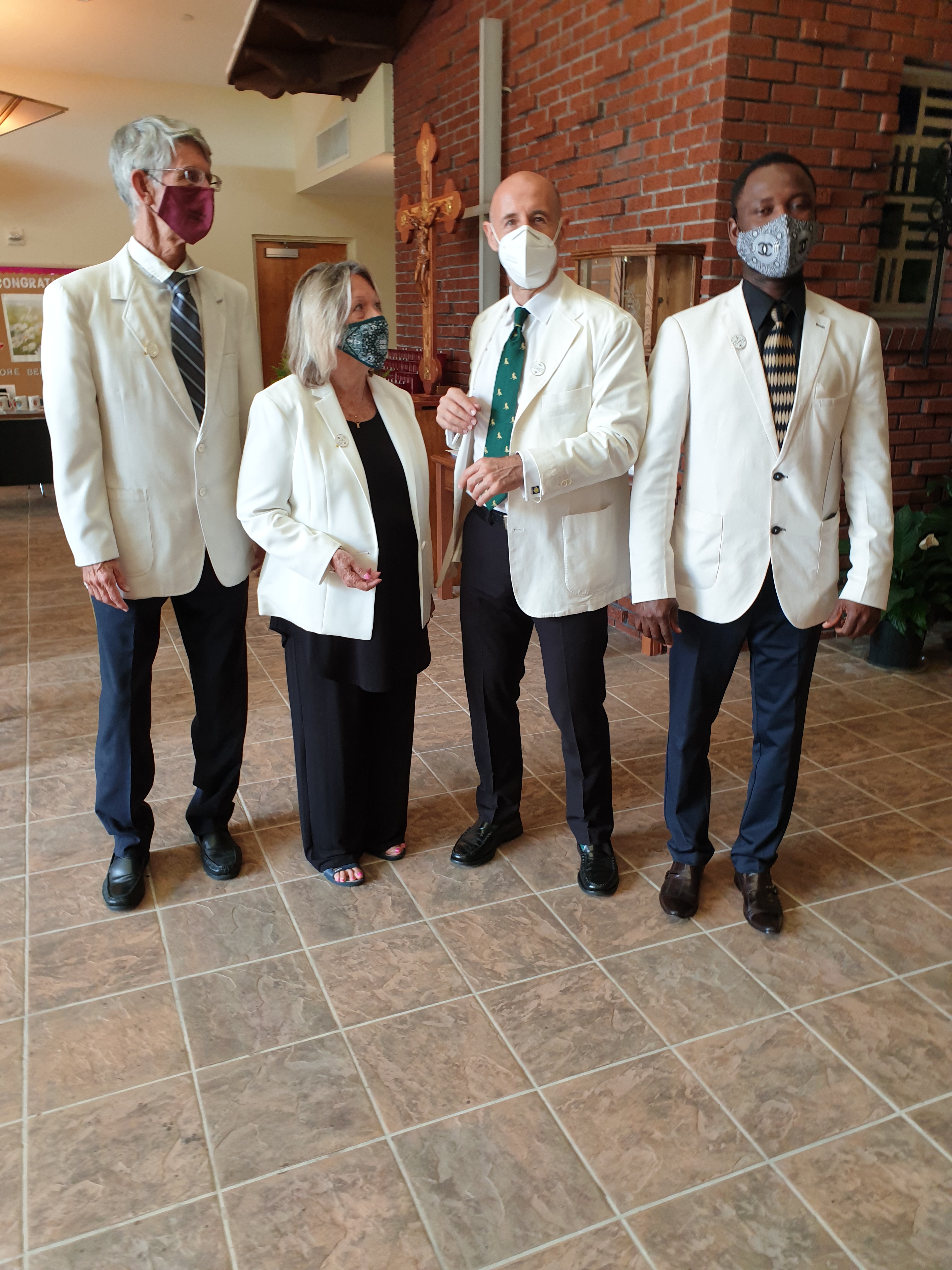
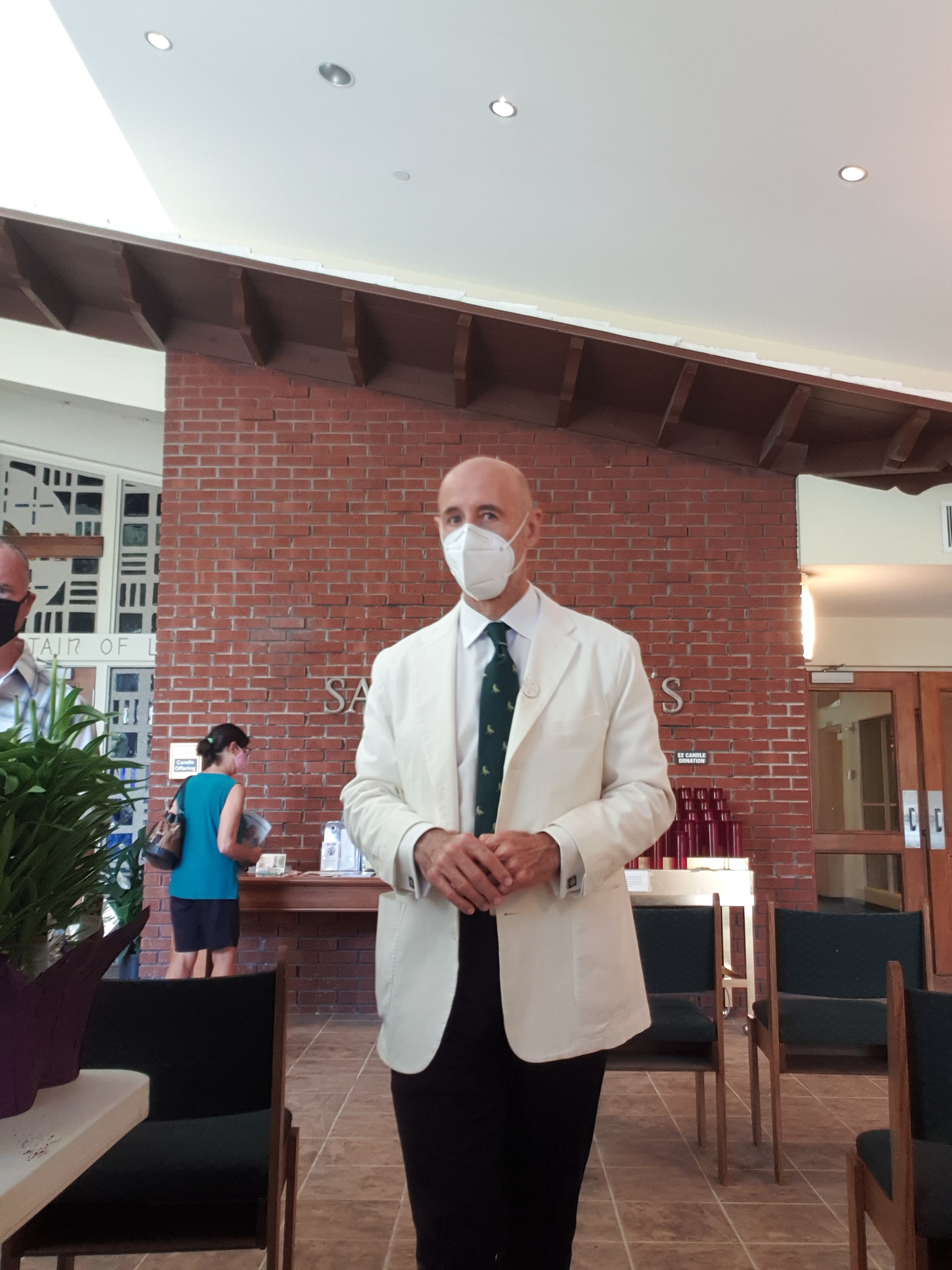
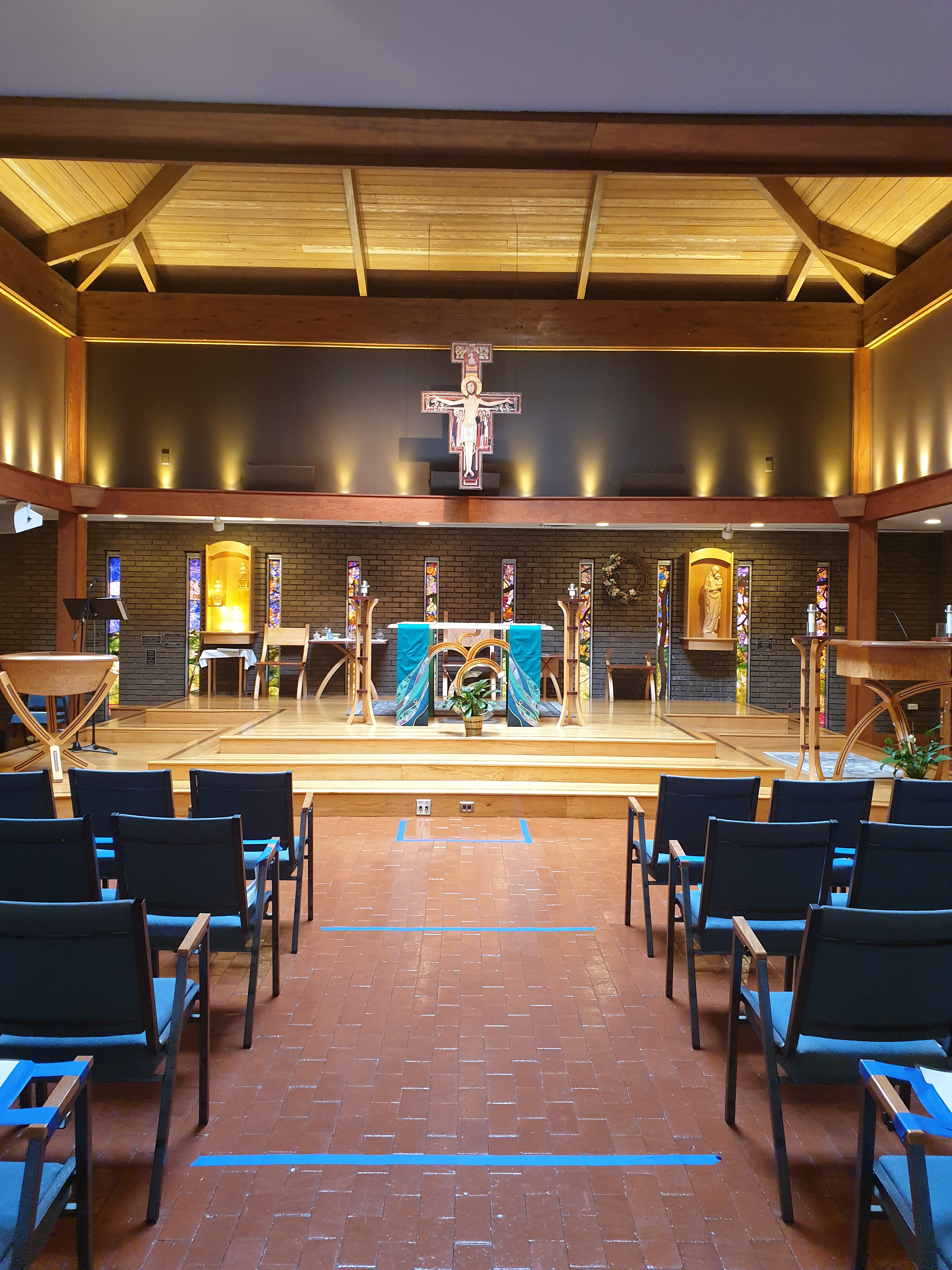
Cut to the chase, after a few times at St. Marks in in Boynton Beach, I was approached by an usher and asked if I wanted to join their crew. I had never really thought about it, but I am happy to serve. The team is a fun, hodgepodge collection of characters, Christine who recruited me is, of course, the boss, the usher coordinator. I have to wear black pants, a white jacket, white shirt, and a tie. Yes, I look a waiter but since I am snob, I prefer to think I look like a sommelier. Since I did not have a white jacket, they lent me one… until I found a vintage one that I much preferred. The job is easy enough: be charming and welcome everyone as they come in, once mass has started guide the late comers to socially distanced seating, manage the Communion flow, at the end open the doors and say “goodbye”, then clean up bulletins left in the pews and put the collection in a bag. Easy peasy.

In conclusion, no job is too simple, too easy. Every honest job is honorable. I am happy to serve and to be useful.