
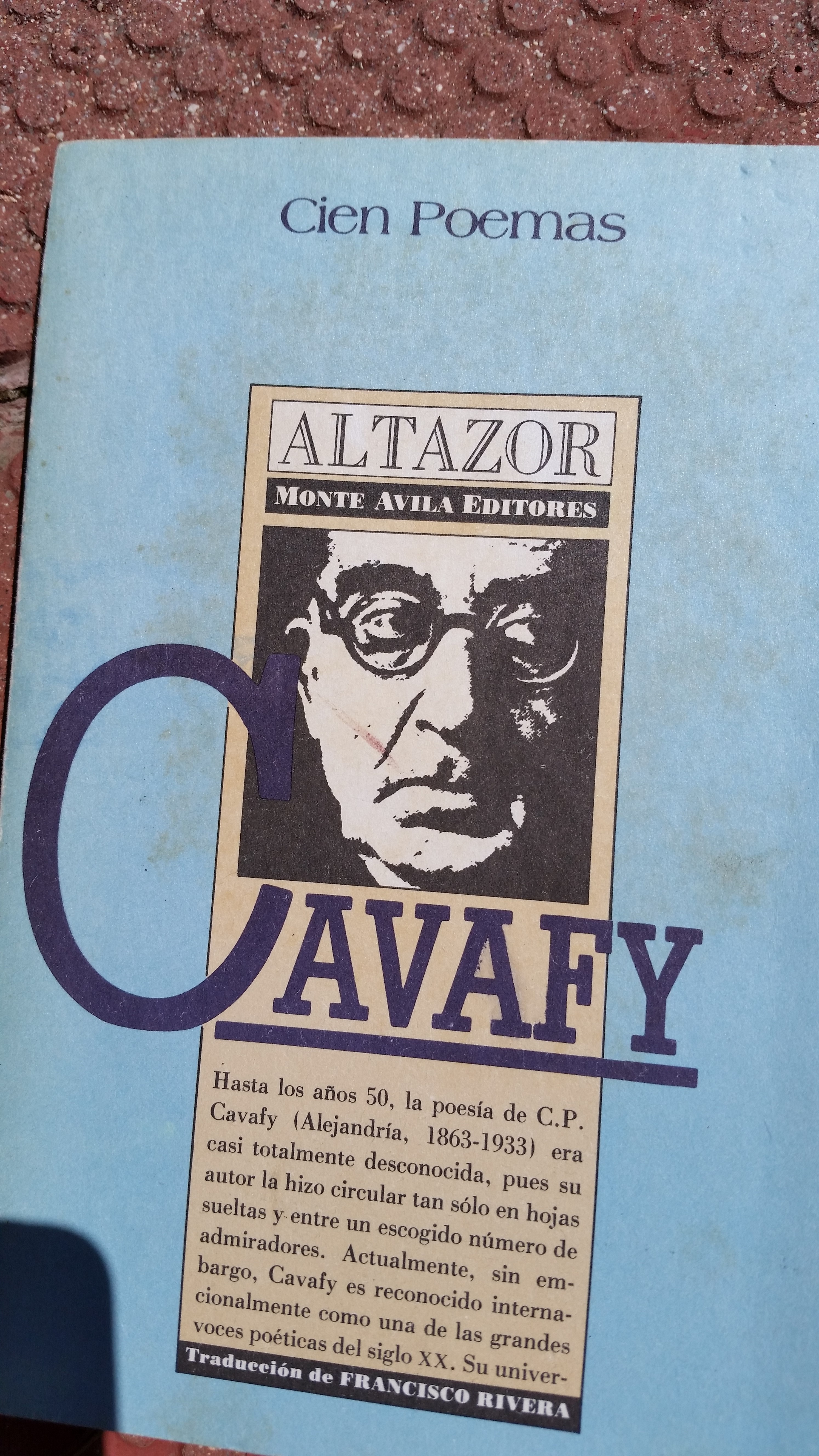
Although I started this blog years ago with some poetry: Frost’s The Road Not Taken and Cavafy’s Ithaka, I have not written as much about poetry as I should have, given how much I enjoy it, and compared to other arts. Sure, I recently wrote about Omar Khayyam’s Rubaiyat, but that is still not enough for my liking. So here is an attempt to fix that.
My first conscious appreciation of poetry came in college with Pablo Neruda. To this day I am still moved by his words, and Tu Risa is still one of my favorite poems. Alfred Lord Tennyson’s Ulysses is also right up there as well as the two poets mentioned at the beginning. But the list of favorite poets is a long one: Lorca, Bequer, Espronceda, Benedetti, Mistral, Pessoa, Milton, Manrique, Dante, EE Cummings, Wordsworth and Coleridge, Blake, Elizabeth Bishop, and on and on. But one does not have to go to the big guns to find poetry that will amaze you. Naïf, amateur or student writers can take you places you would not think. Sometimes poetry hits you when you least expect it: I was surprised and blown away by 22-year-old Amanda Gorman at Biden’s Inauguration. Quadriplegic Ramón Sampedro, euthanasia’s cause célèbre in 90s Spain also wrote some sweet lines. Check out this poem in the namesake movie:
For me, the beauty of poetry is the capacity it has to transport you in a few words, in a verse. Never mind words, Haikus only have seventeen syllables – three lines!! I love Haikus: although I knew and had read them before, I actually became a follower of Haiku poetry by reading, wait for it… Jack Kerouac’s book of Haikus! (although he does not always follow the 17-syllable rule), since then I have read and enjoyed Bashō, the master. I am in awe of poets since I cannot write my way out of a paper bag (thank you for reading this, it means a lot).
Years ago, at Walnut Hill School I got a glimpse, a backstage tour of the poetry world from the brilliant poet and teacher Daniel Bosch. I once invited him to my advanced Spanish class to talk about Neruda’s Veinte poemas de amor…, which we were studying at the time, and he blew our minds!! Daniel also wrote a hilarious poem when I got my citizenship: Song for a New American. To this day it is framed and on my wall!!
I write all this because I have just read …del amor hermoso by Chilean author and teacher Luis Correa-Díaz, and it is wonderful. His capacity to write about love, apparently in a playful manner, but not really. His poems are soaked in ecclesiastical vocabulary and structure which gives his writing an extra edge and throws you off the traditional expectation as a poetry reader. This is apparently three books in one, which again is a bit unsettling: where there originally three separate books? Is it all another manipulation of my expectations? Another old-fashioned trick, which still works is that he “found” the poems in a manila envelope, and the ones he did not find are “anonymous”. Never mind the trickery, the poems are lovely and they keep you reading and paying attention.


 Antonioyrocinante's Blog