Paolo Veronese at the Prado Museum

Back in a previous lifetime, I used to collaborate with a polymer extrusion company (sexy, I know) located just outside Florence. For work purposes, of course, I used to visit them every year, spending a week in Florence. Because of this, I am quite familiar with the Florentine Renaissance and less so, I must admit, the Venetian Renaissance.

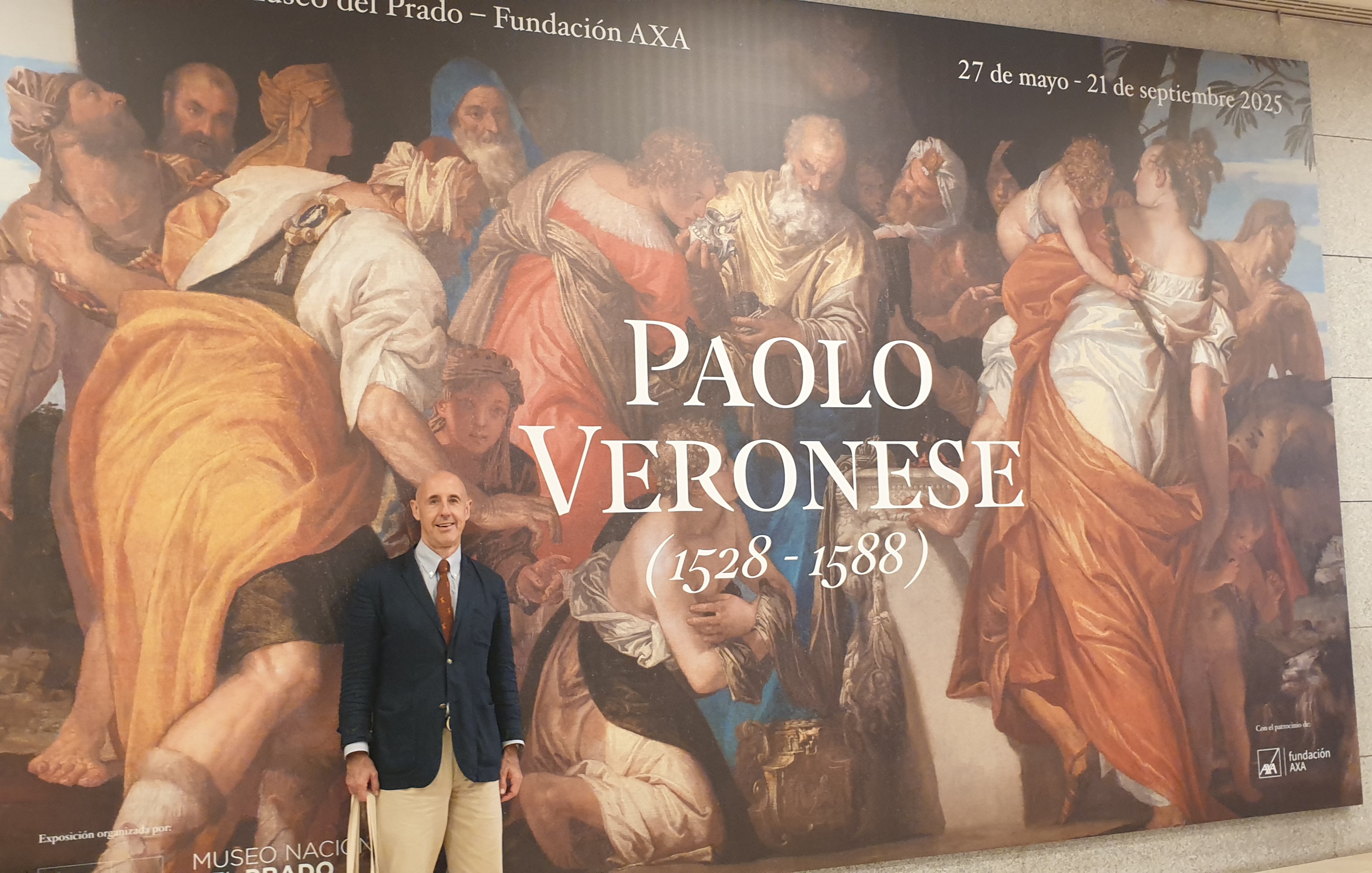
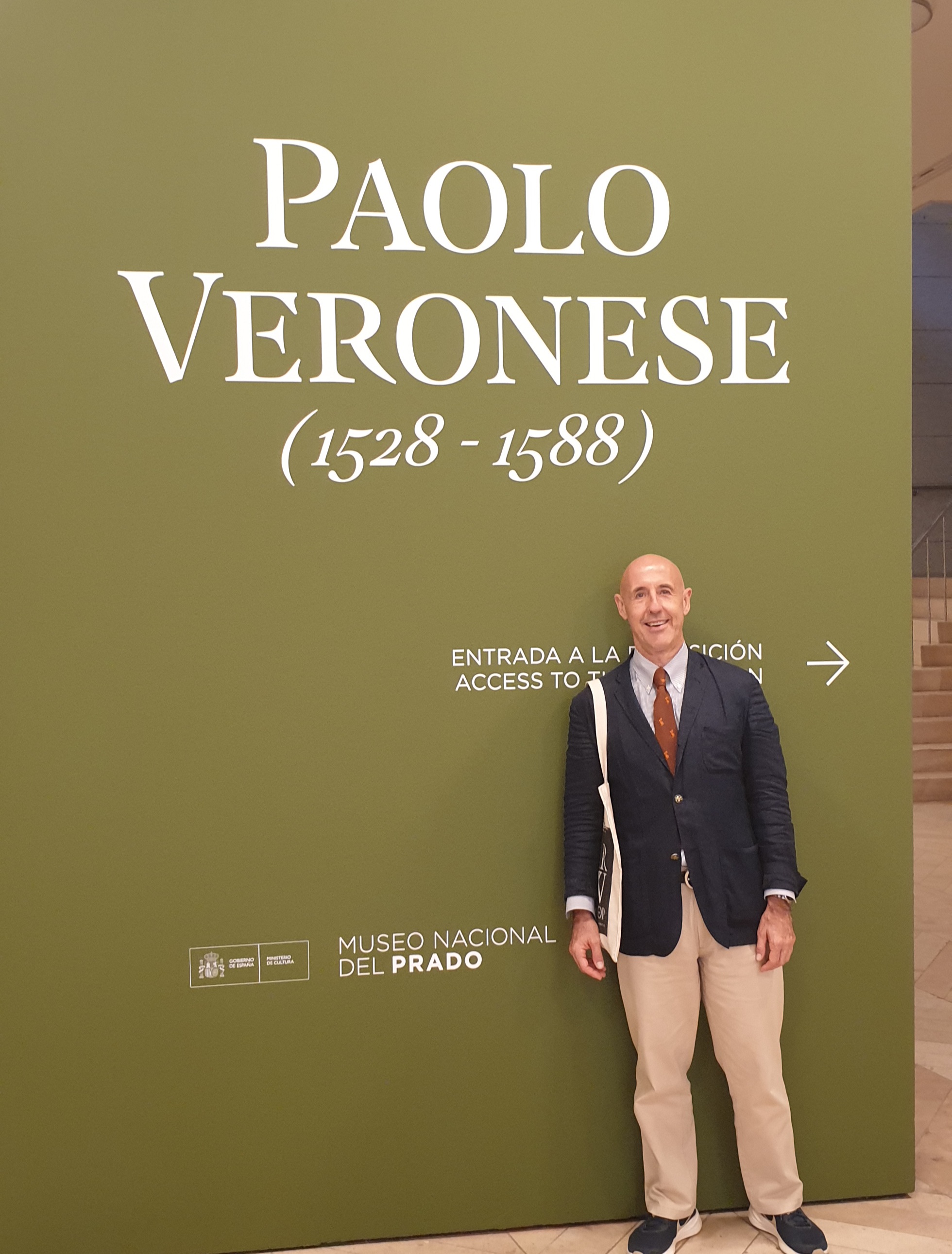
Fortunately, I recently had the opportunity to (partly) fix this by going with my sister to an amazing Paolo Veronese (1528-1588) exhibit at the Prado.

I was blown away!! There are over a hundred paintings from the Louvre, the Metropolitan Museum, the National Gallery in London, the Galleria degli Uffizi, the Kunsthistorisches Museum of Vienna, and, of course, the Prado.

When you mention the Renaissance, the first thing you think of, in painting, is perspective, depth; this is something Veronese has mastered. More importantly, I found the details, and even more importantly, the narrative capacity of the paintings —the ability to tell a story, really special. From a technical or art history perspective, the Renaissance started in Florence, giving them the edge, but Venice soon countered with brighter colors, as a young El Greco would learn. However, all this makes little difference, for a non-specialist like me, I just freaked out at the beauty.

This being the Renaissance, most paintings are of Biblical or Greek mythology stories, making it relatively easy to situate oneself.

So if you are in Madrid until September 29, see the Veronese exhibit at the Prado. You are welcome.

The Grand Tour, or get out and travel

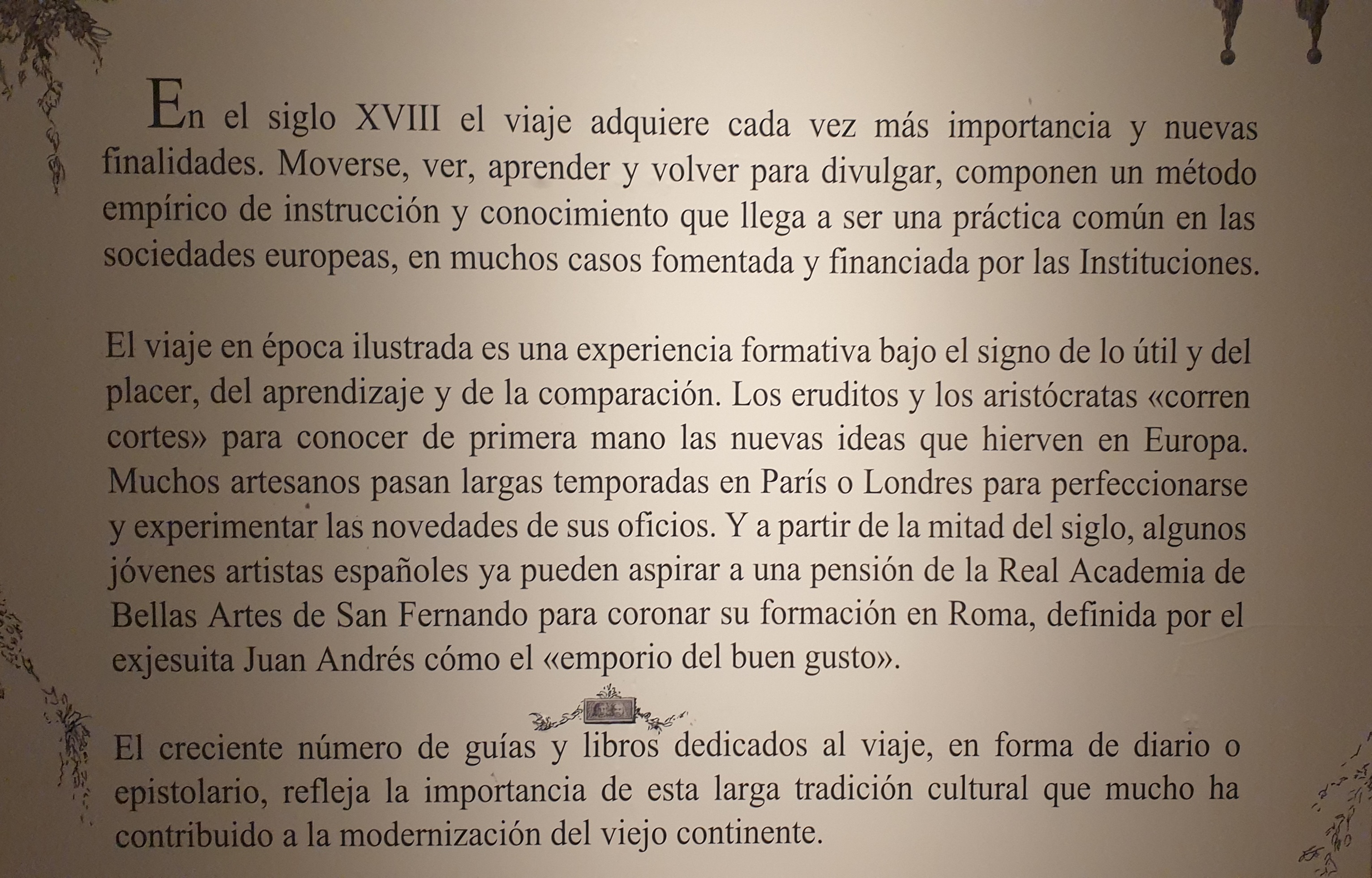
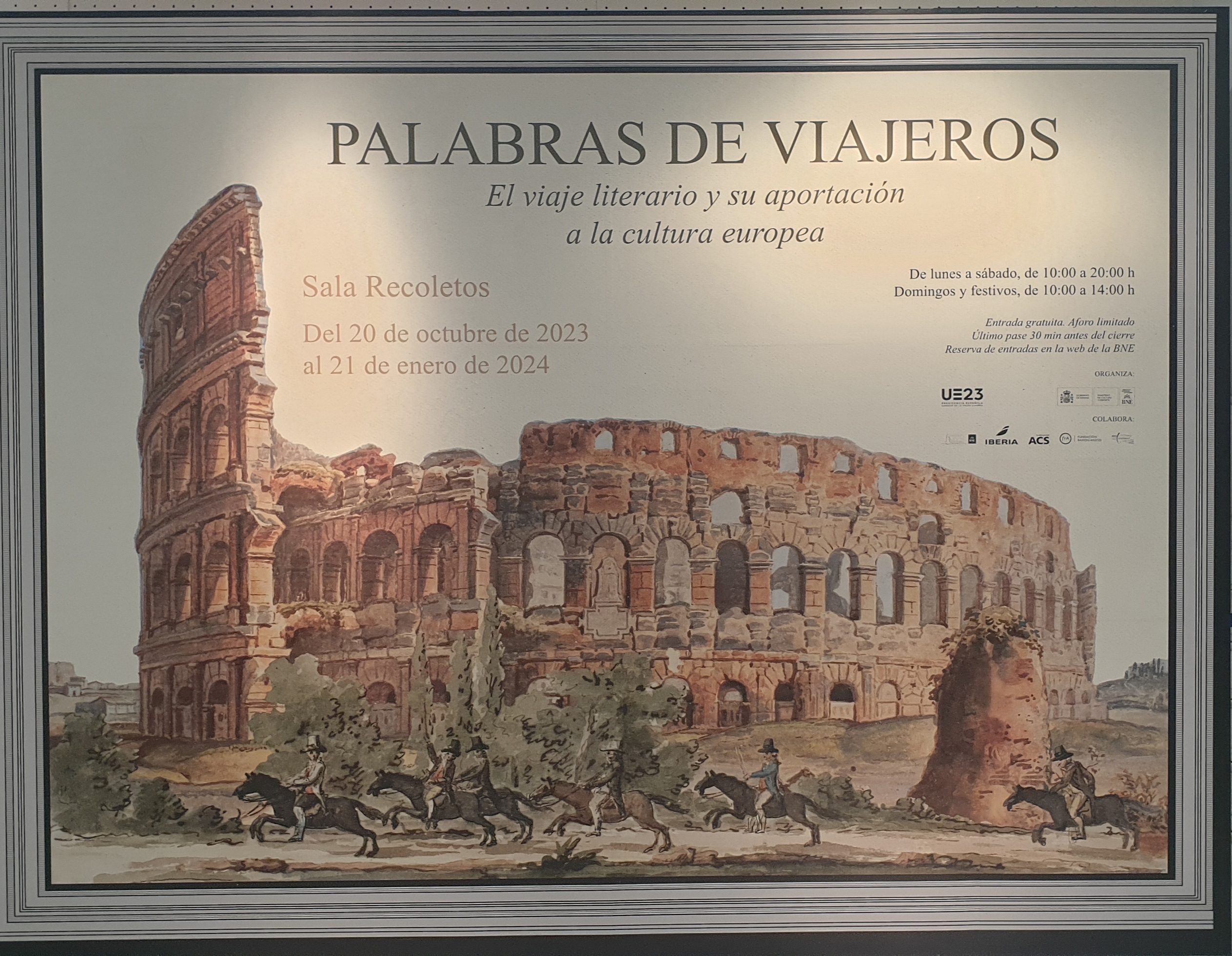
The Grand Tour is associated with wealthy brits traveling around Italy back in the 19th C., think of Lord Byron, or E. M. Forster’s Room with a View. But long before them, noble Spaniards were doing the Grand Tour, as I recently discovered at a brilliant exhibition at the Biblioteca Nacional in Madrid, titled Palabras de Viajeros.

The Grand Tour eventually morphed into “Euro railing” which was a Summer jaunt through Europe taking advantage of cheap rail tickets. My niece did this last year and there seemed to be more flights than trains and more discos than museums…

Nowadays I do not travel as much as I used to. Mainly because I am now tied to the academic calendar, and when I am not teaching, I enjoy spending time with my family, with Celia, with friends. But I still manage little escapades to Chapel Hill, to Rome, to the Camino. And I am excited to visit St. Augustine soon, look out for that post.

The issue here is not so much an issue of quantity as much as quality. Discovering new foods, talking to locals, walking, walking, walking. And processing, maybe through writing, keeping a diary -for me it is this blog- I do not know if Instagram allows you enough depth to really appreciate your travels, although we always enjoy nice photos.

At any rate, the conclusion is simple: if you can, when you can, go travel.

 Travel is fatal to prejudice, bigotry, and narrow mindedness.

Mark Twain  

British geopolitics in Spain during WWII; Walter Starkie and “El British”

My dad could not stop talking about Walter Starkie. I never gave the fellow much consideration, that was my dad’s thing. My dad even found and bought some of his (many) books. But a few days ago, my aunt passed along a brief bio of Starkie –particularly in his time as Director of the British Institute in Madrid (attached). And I loved it! This fellow did more for Britain than you would think.

Mise en scene: Spain during WWII is a neutral country, at least on paper. After all, Franco won the (in)Civil War in 1939 with help from Hitler and Mussolini. Having said that, when Hitler asked Franco to let him transport his troops and tanks by train to Algeciras (next to British Gibraltar -but that is another story) to get to North Africa, Franco -to his credit- said no. But back to our story.

So, in a neutral but Axis friendly country, in 1940, during WWII, what could Britain do to exert some sort of “soft” power in Spain? The answer: send a phenom of nature, a genius, a virtuoso (literally), a wonder, and let him do his thing. Make sure he looks unassuming, a roly-poly, jolly, violin-playing academic fellow. Give him a fairly vague title like British cultural representative. Finally, give him carte blanche to do as he sees fit, oh and a generous budget, I am sure.

Ironically, Starkie was Irish, from a family of scholars and artists, he graduated from Trinity College in Dublin, with honors in Classics, History and Political Science, oh, and first prize in violin from the Royal Academy of Music in Dublin! After graduating he stayed at Trinity teaching Italian and Spanish. Samuel Beckett was one of his students! During WWI in Italy, he played violin for the British troops and met his wife. Back in England Y.B. Yeats made him director of the Abbey Theatre. From there he was sent to Madrid in 1940.

Starkie soon founded the British Institute – El Instituto Británico, “El British,” where my father, my uncle, and my aforementioned aunt went to school as children of a British Embassy employee (read more about my grandad here). Eventually my sister and I would also go to “El British.” Starkie made the school a center for conferences, concerts, presentations, so forth, which is precisely what Britain wanted in Spain: a cultural beachhead in Nazi friendly Madrid. Not only that, but as a Catholic (remember, Starkie was Irish), Starkie soon made friends with influential Jesuits Heras and Otaño, and eventually with government ministers. In fact, one of Starkie’s biggest victories was to have English as a language option (together with German) in Spanish secondary schools.

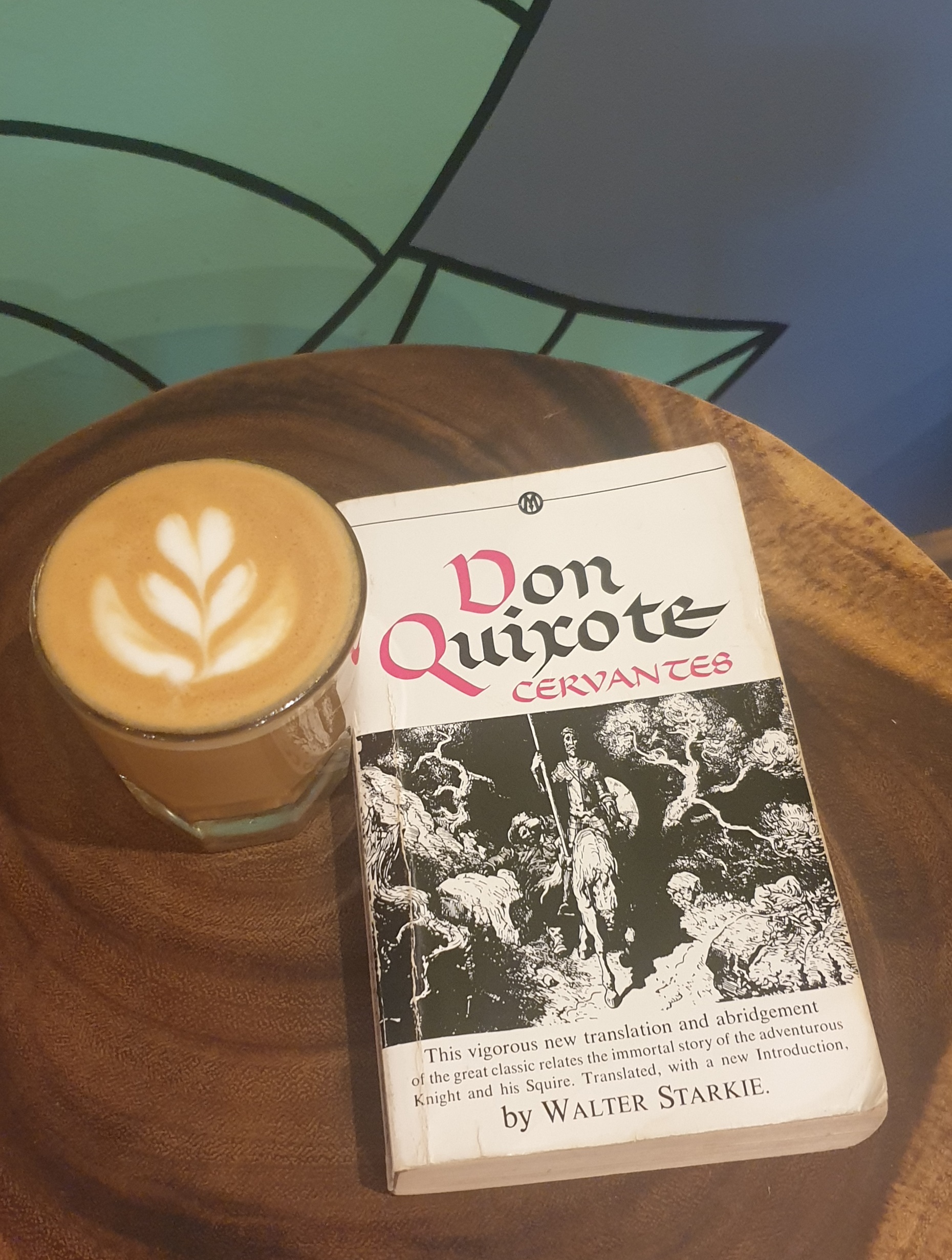
On any given day, Starkie could meet with a Spanish government official, play the violin with gypsies, whom he loved and wrote his most famous books about (Raggle-Taggle: Adventures with a Fiddle in Hungary and Romania (1933), Spanish Raggle-Taggle: Adventures with a Fiddle in Northern Spain (1934), and Don Gypsy: Adventures with a Fiddle in Barbary, Andalusia and La Mancha (1936)), host a conference, write or translate a book -like Don Quijote, and then go home, which served as a safe house for Jewish, Gypsy, and other prosecuted refugees on their way to America.

I asked my uncle what he remembered about Starkie. He told me how the Embassy’s country house was used as a safe house for downed plane crews rescued by the French resistance who were on their way back to the UK to fly again. But to get to this country house one had to drive by a gypsy settlement. Because of the friendship between Starkie and the gypsies, nobody ever dared go near that house to investigate what was going on, why there were cars and vans coming in and out at all times of the day and night, another point for Starkie!

So, besides the eventual victories on the battlefield, Britain scored a major victory in WWII by sending Walter Starkie to Spain.

The best present ever, Rome.

Confession time: I had never been to Rome before last week when my girlfriend invited me for a few days. I had been to Milan, Lake Cuomo, and Sicily, I spent a lot of time for work in Florence. But I had never been to Rome.

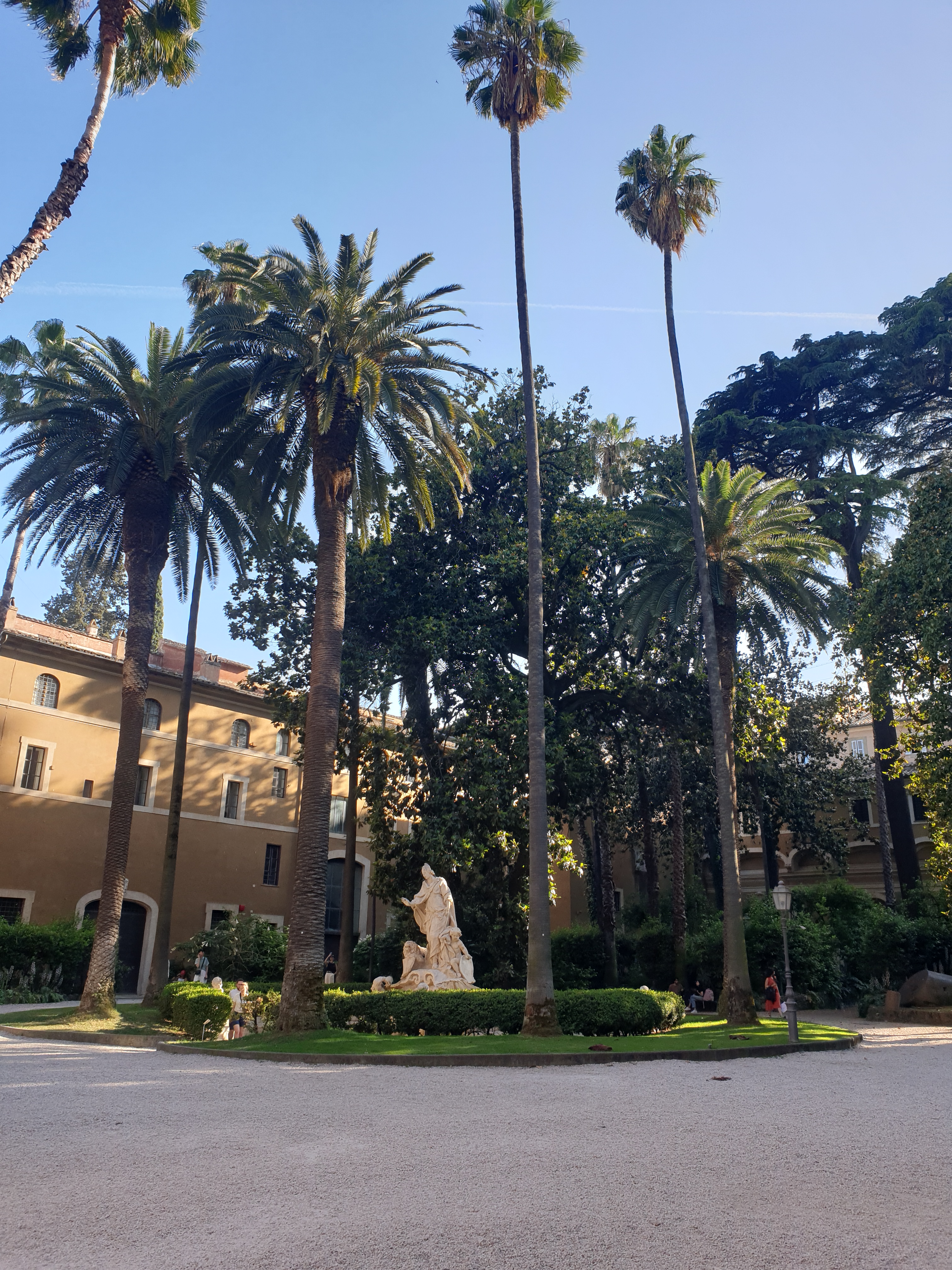
My mind was blown. The absolute beauty, even in the apparent anarchy and chaos of traffic, mopeds, rental scooters, and tourists. Every little piazza, every big piazza, every sculpture, every cobble stone street, one is surrounded by inebriating beauty.

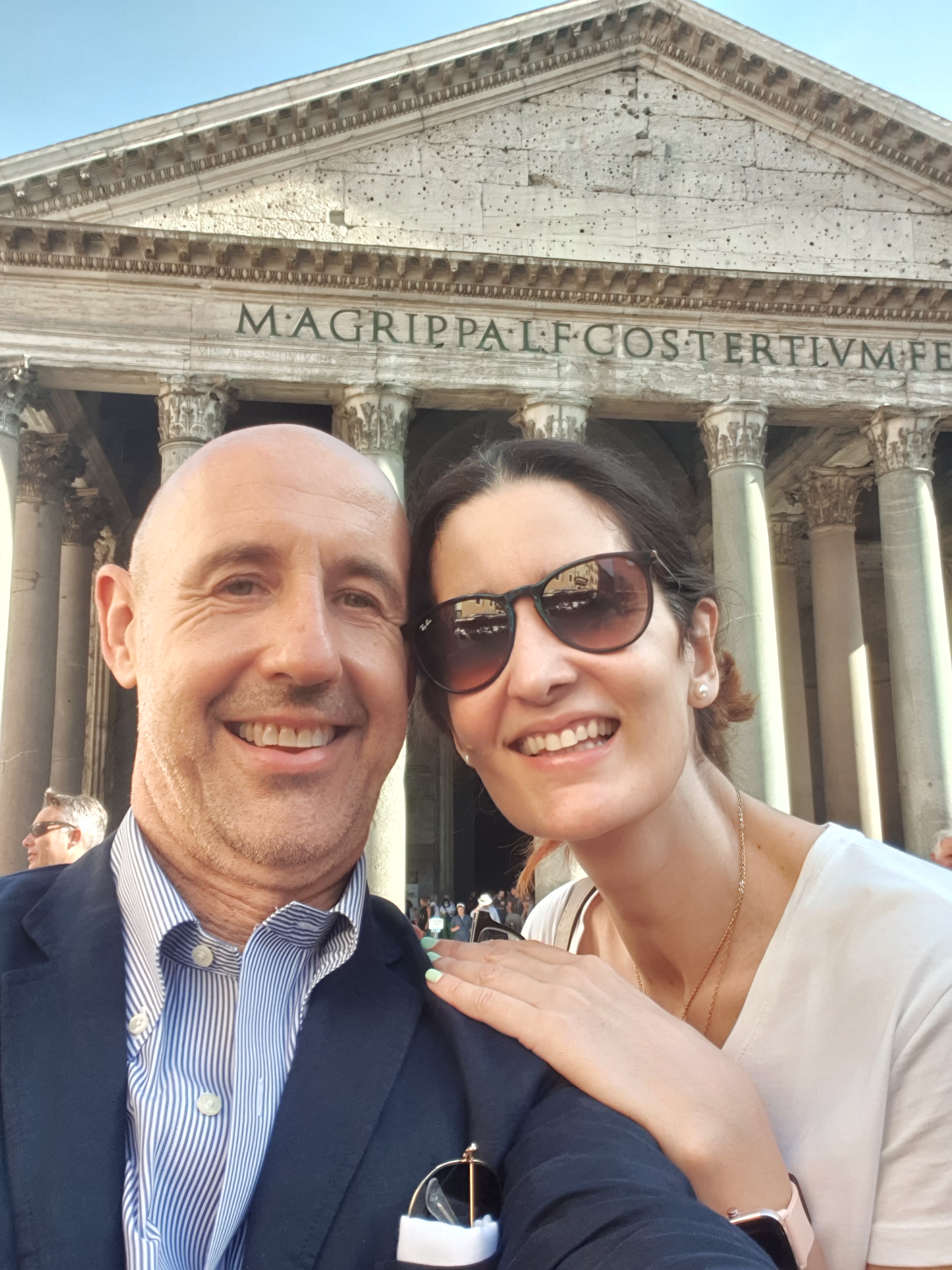
We stayed at a cute and quirky hotel on Largo de Torre Argentina, where Julius Caesar was assassinated, and although Celia had been there before, she was still game to walk all over town to the Pantheon, Forum, Jewish neighborhood, Piazza Venezia, Colosseum, Trastevere, Isola Tiberina, Piazza Navona, Spanish Steps, Trevi, Villa Borghese, the Vatican, St. Peter’s, Piazza del Popolo, Castel St. Angelo, and church after church, you name it, we saw it!

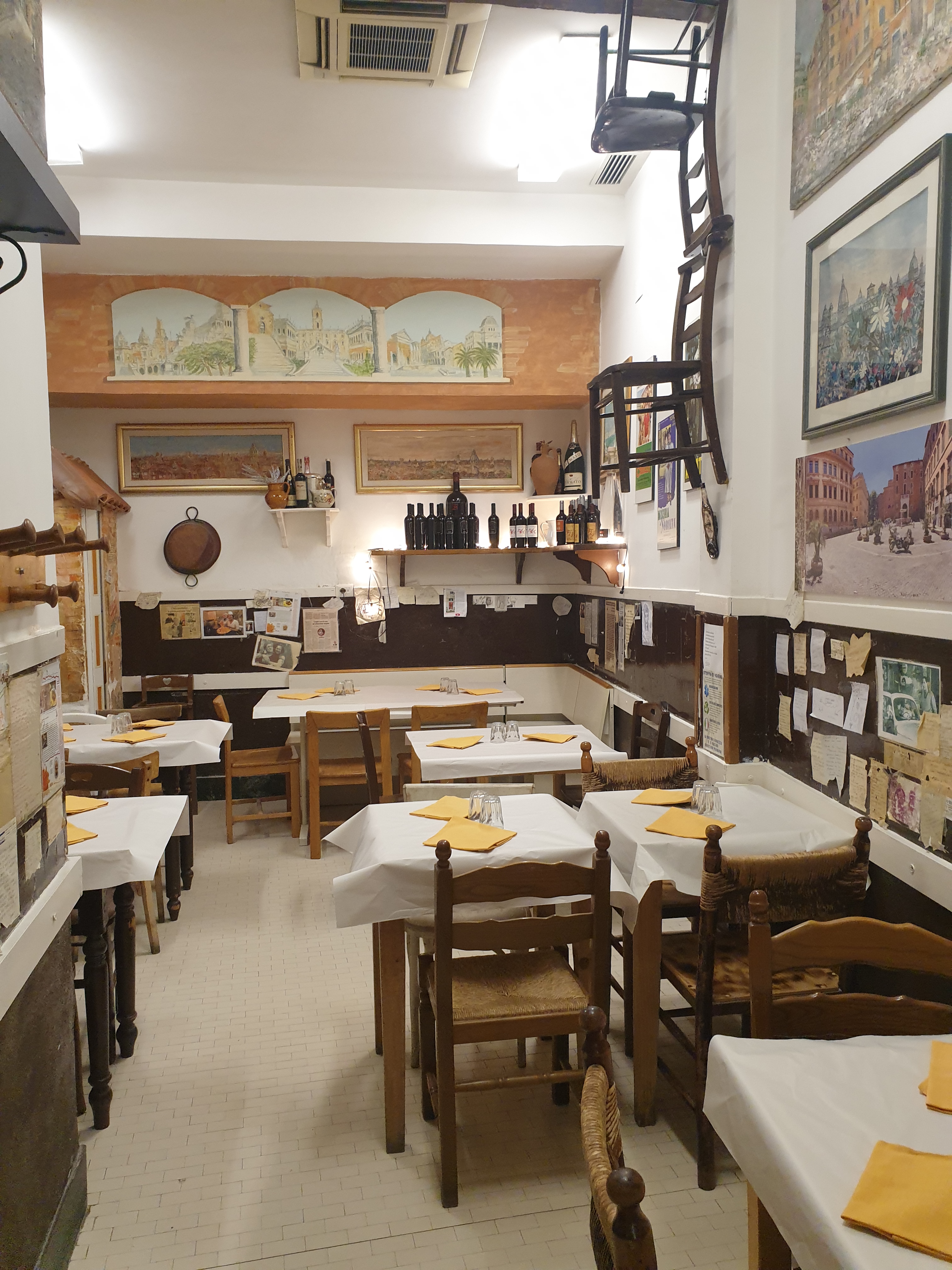
We had delicious meals: my first real carbonara, my first real Jewish artichokes, amazing! Excellent coffee, great wines, an Aperol Spritz when evening started, lick your fingers pastries and gelato, you get the idea.

Two memorable experiences were seeing Velazquez’s Inocencio X at the Doria Pamphili Gallery and Michelangelo’s Pieta in St. Peter’s. Although I was a bit disappointed in the Sistine Chapel: the crowds and the noise make it difficult to enjoy, if on top of that the Vatican cops are yelling “Silenzio!!” and “Move along!!” on their megaphones, then the moment is totally lost, sad.

Overall, I am still in awe. My senses are still aglow with the beauty, tastes, and sounds. I can’t wait to go back, which I should because I dropped a coin in Trevi fountain.

My favorite? Michelangelo’s Pieta in St. Peter’s, but that might merit its own blog post.

Castello Cavalcanti


Surfing the Interweb as one does during these times of Covid, I found this 7 minute jewel from Wes Anderson. As some of my followers know, I am a big fan of Anderson. His films have a great story, which is beautifully told. In this case the premise of the story is simple enough to be told in 7 minutes, so the key is the how it is told, and Anderson is a master in this technique… (click here to see my other Wes Anderson review)

Ah, but the film is a 2013 advert for Italian fashion house Prada, I can hear the purists mumble. Ok, sure, but that does not detract an ounce from the quality of the film. In fact you have to pay attention to even notice the ad part of the film.

Jason Schwartzman is the leading (only) actor, but the setting, the references, the music, the secondary actors, etc. are rich, very rich, so if you are a film buff, pay attention.

So there you have it, a 7 minute bagatelle from one of our best living auteurs. You are welcome.

I could strangle that little twerp by the way. My mechanic, he’s actually my brother in law Gus. Screwed the steering wheel in backwards! Where am I?