Authors (and characters) as adjectives a quiz, Niccolo Machiavelli a conference, revisiting the Renaissance

Match the author -or character (extra credit)- to the adjective (answers below)

  1. Kafkaesque     A. In which political expediency is placed above morality, and craft and deceit areused to maintain the authority and carry out the policies of a ruler.

2. Nietzschean    B. As a striving toward love of spiritual or ideal beauty.

3. Platonic           C. Emphasizing the will to power as the chief motivating force of both the individual and society.

4. Orwellian        D. Extravagantly chivalrous or romantic; visionary, impractical, or impracticable.

5. Machiavellian E. Describing a fictional world teeming with characters from all walks of life and social strata.

6. Quixotic          F. Sacrificing spiritual values for power, knowledge, or material gain.

7. Faustian          G. Marked by a senseless, disorienting, often menacing complexity.

8. Dickensian      H. The totalitarian future described in his antiutopian novel 1984.

Fairly easy and short right? The reason is that very few authors -and even fewer characters- have reached the level of having their name become adjectives.

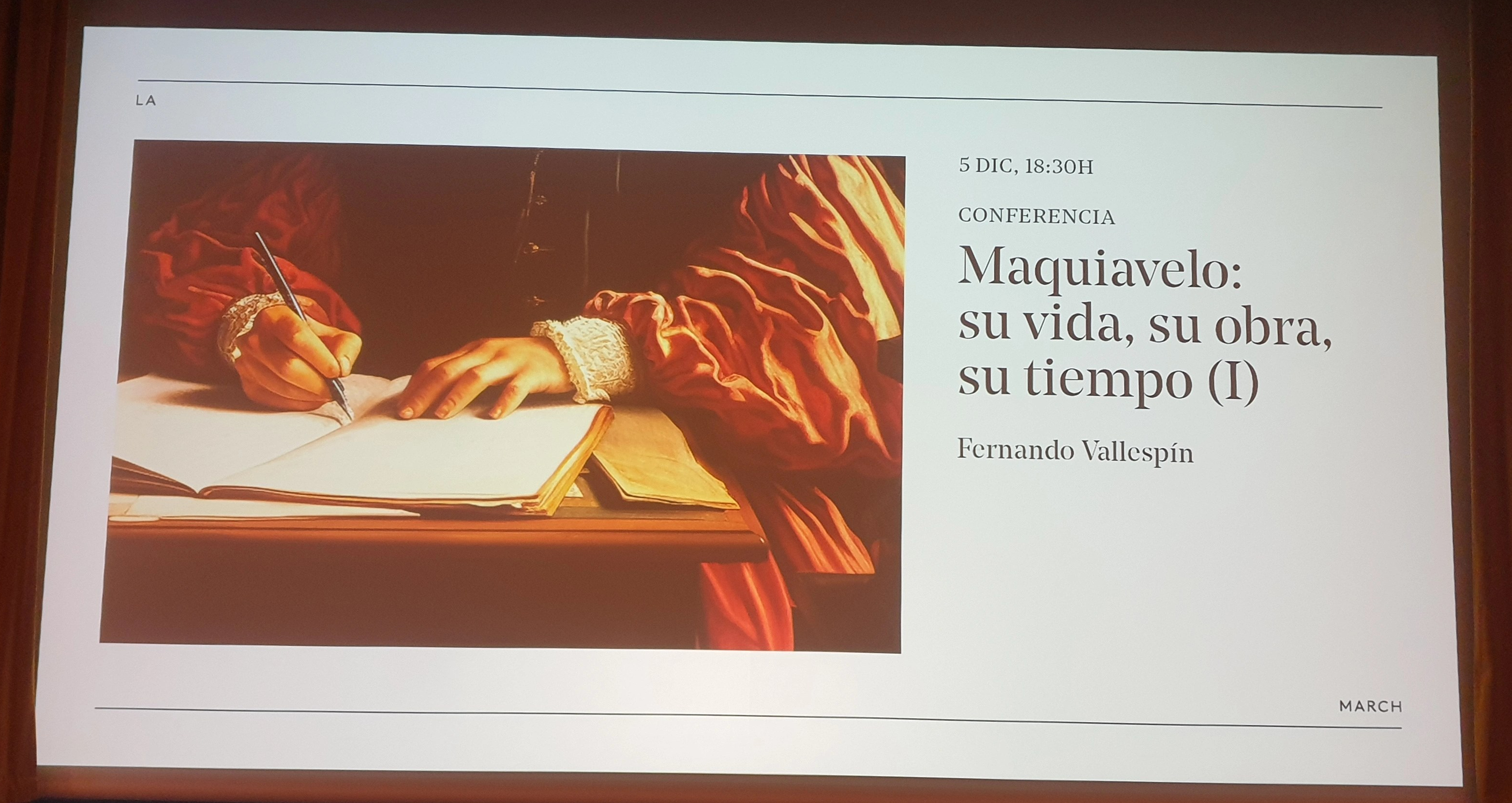
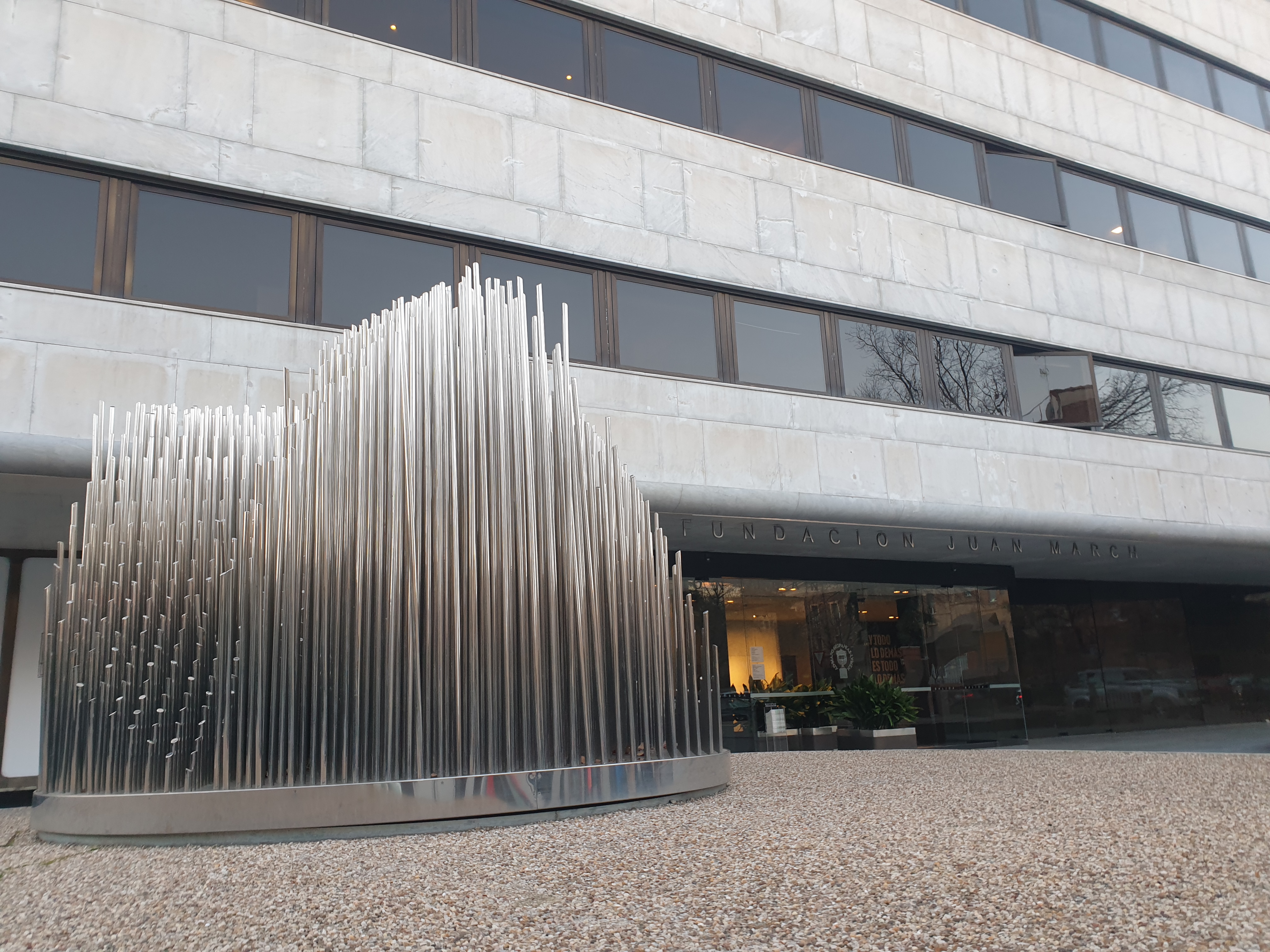
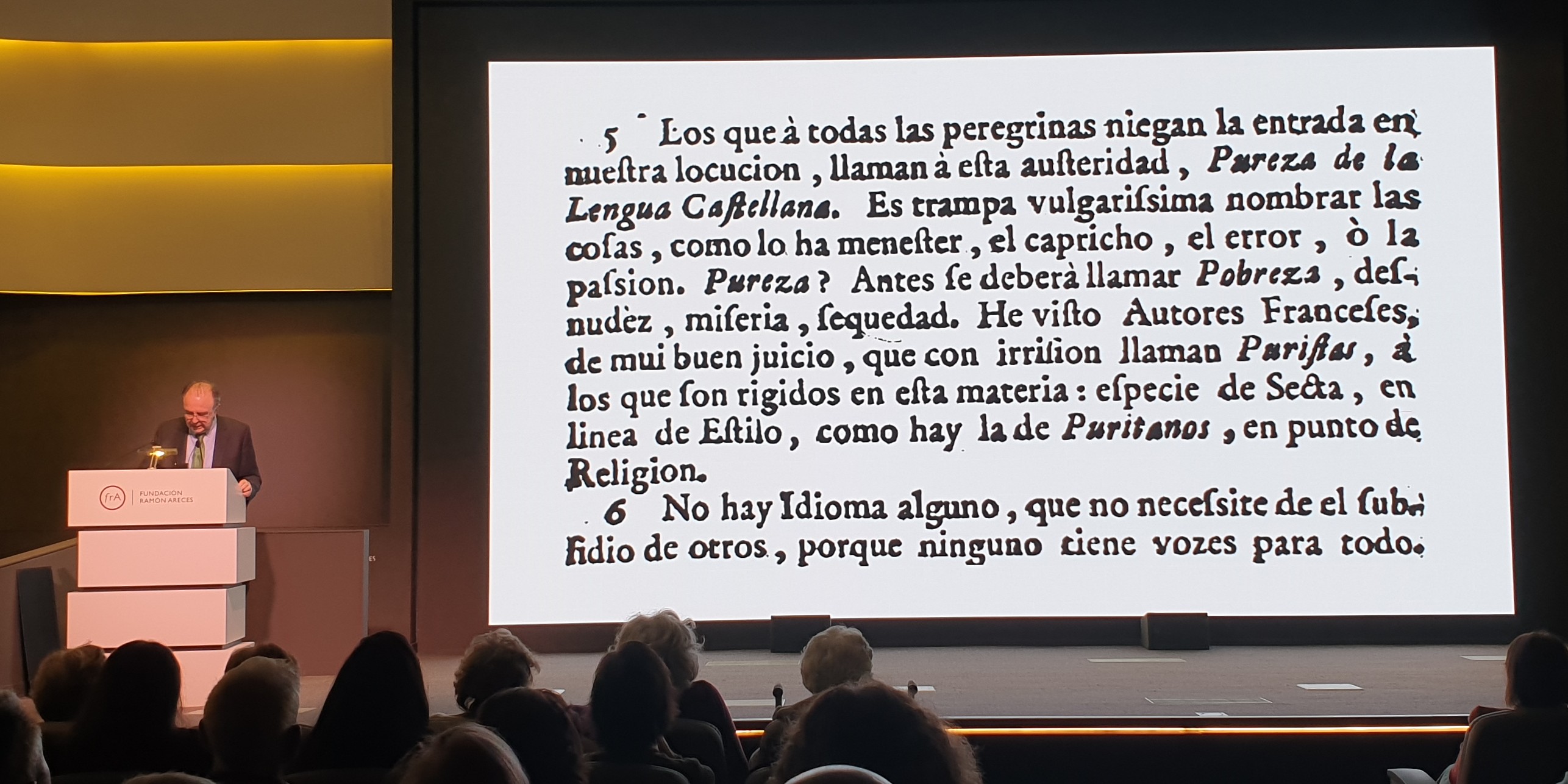
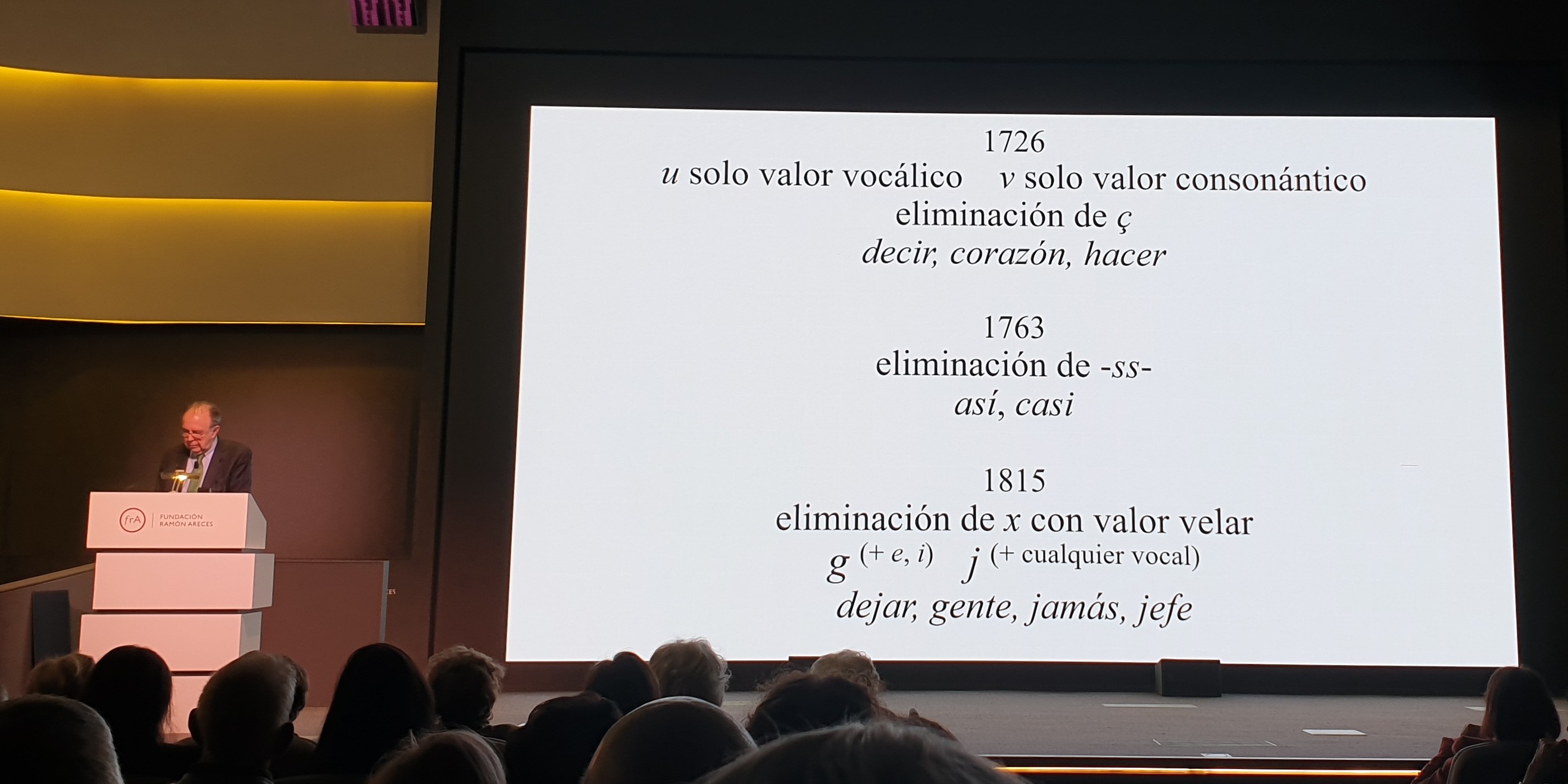
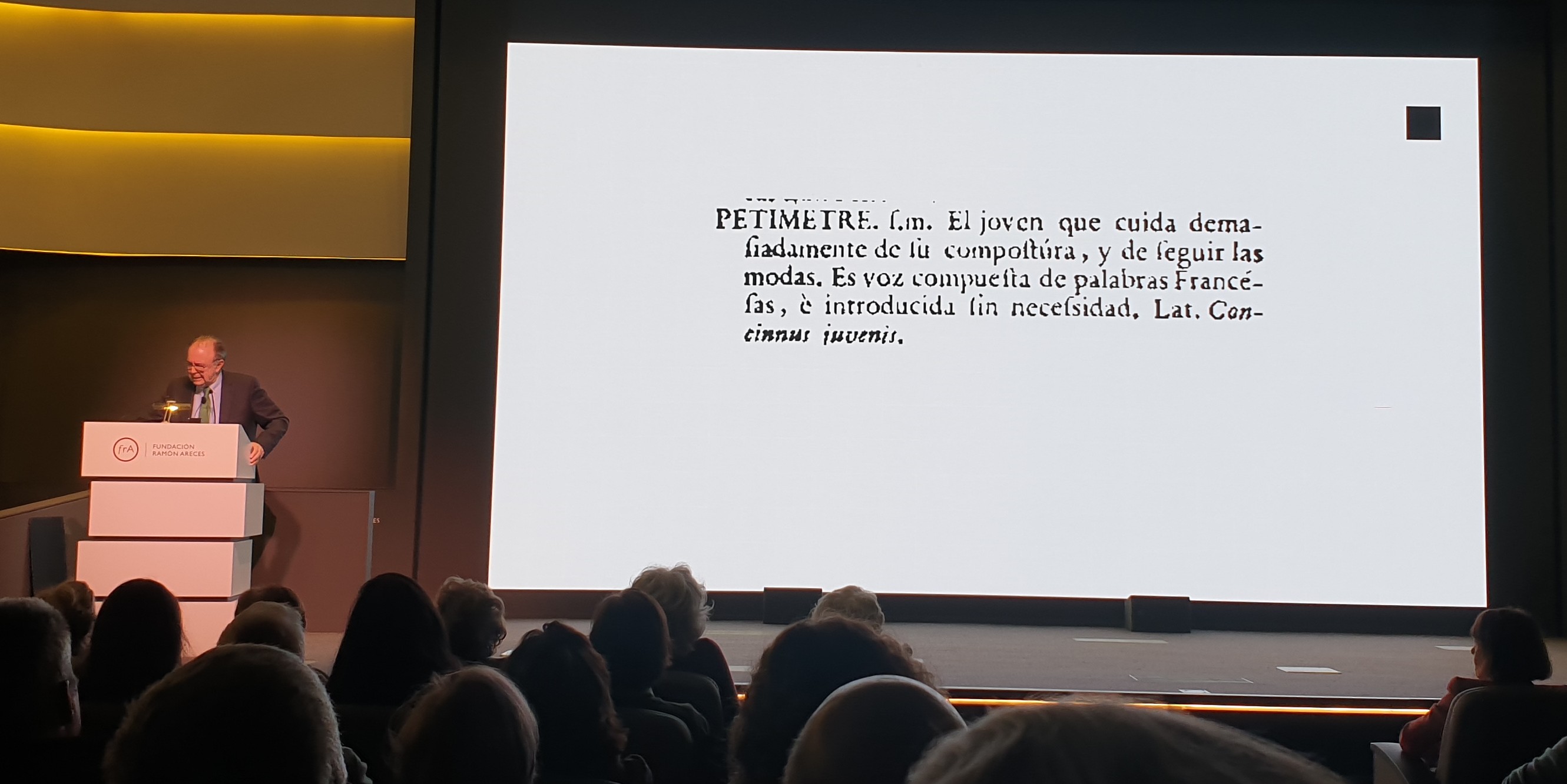
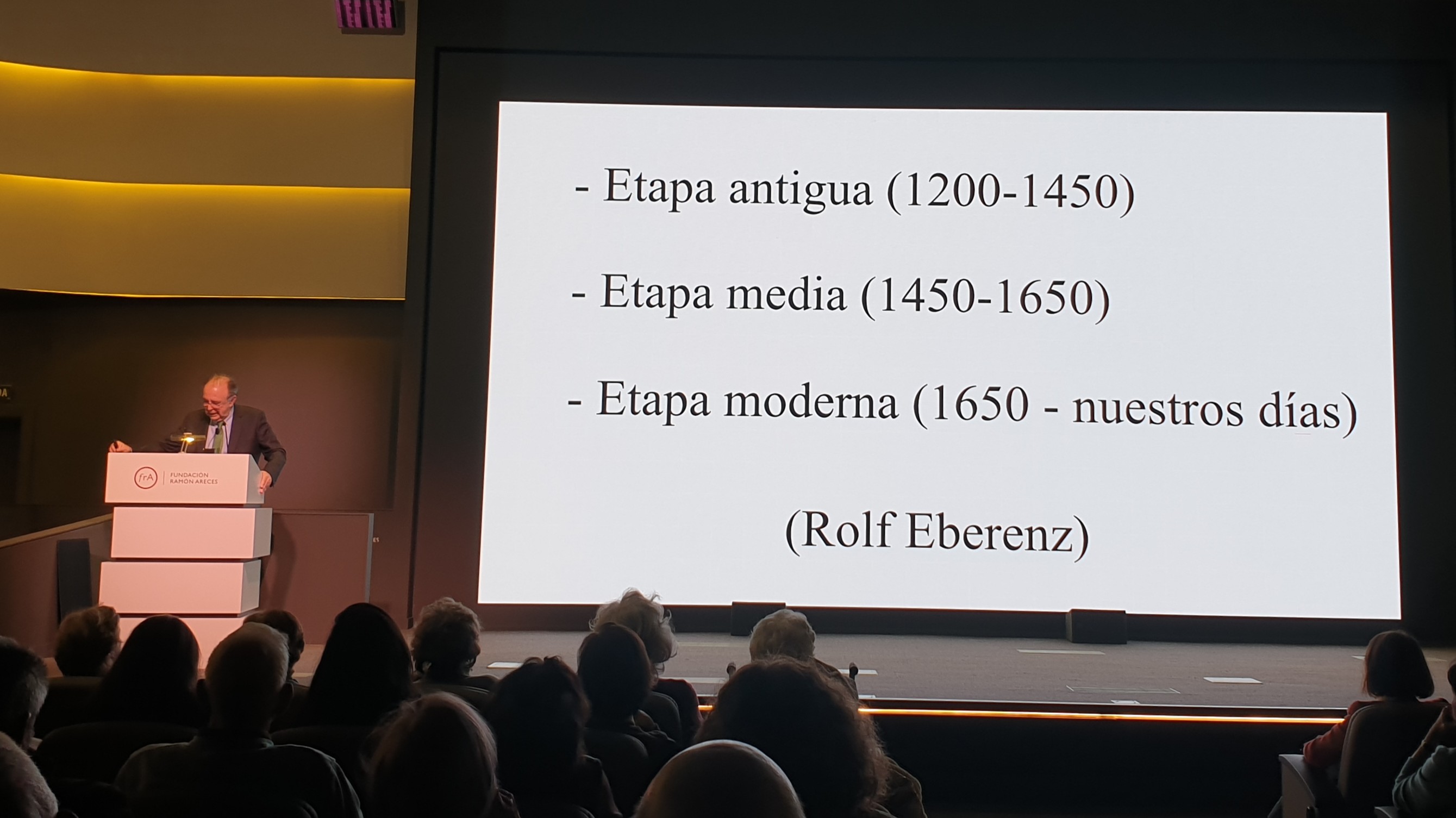
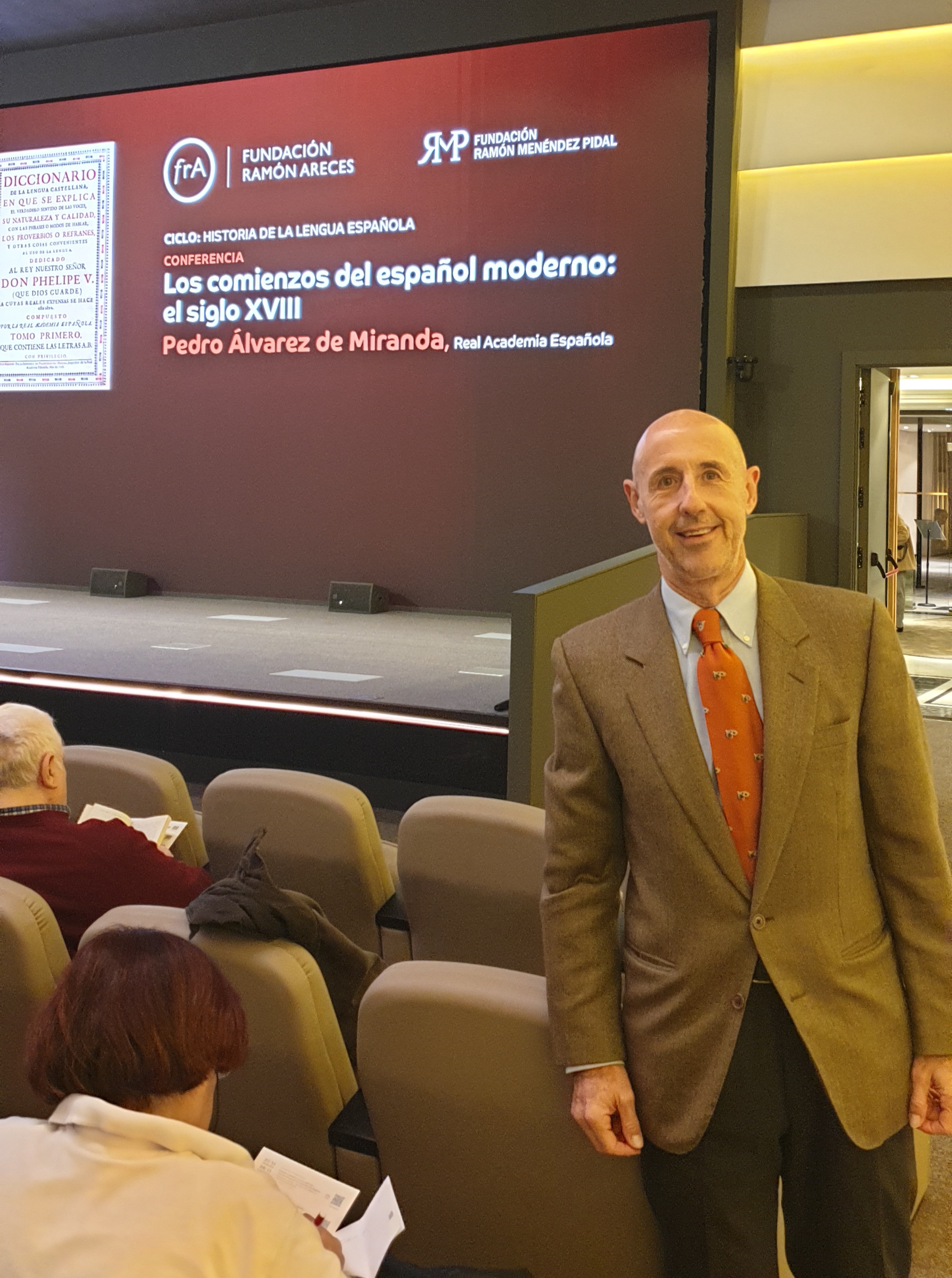
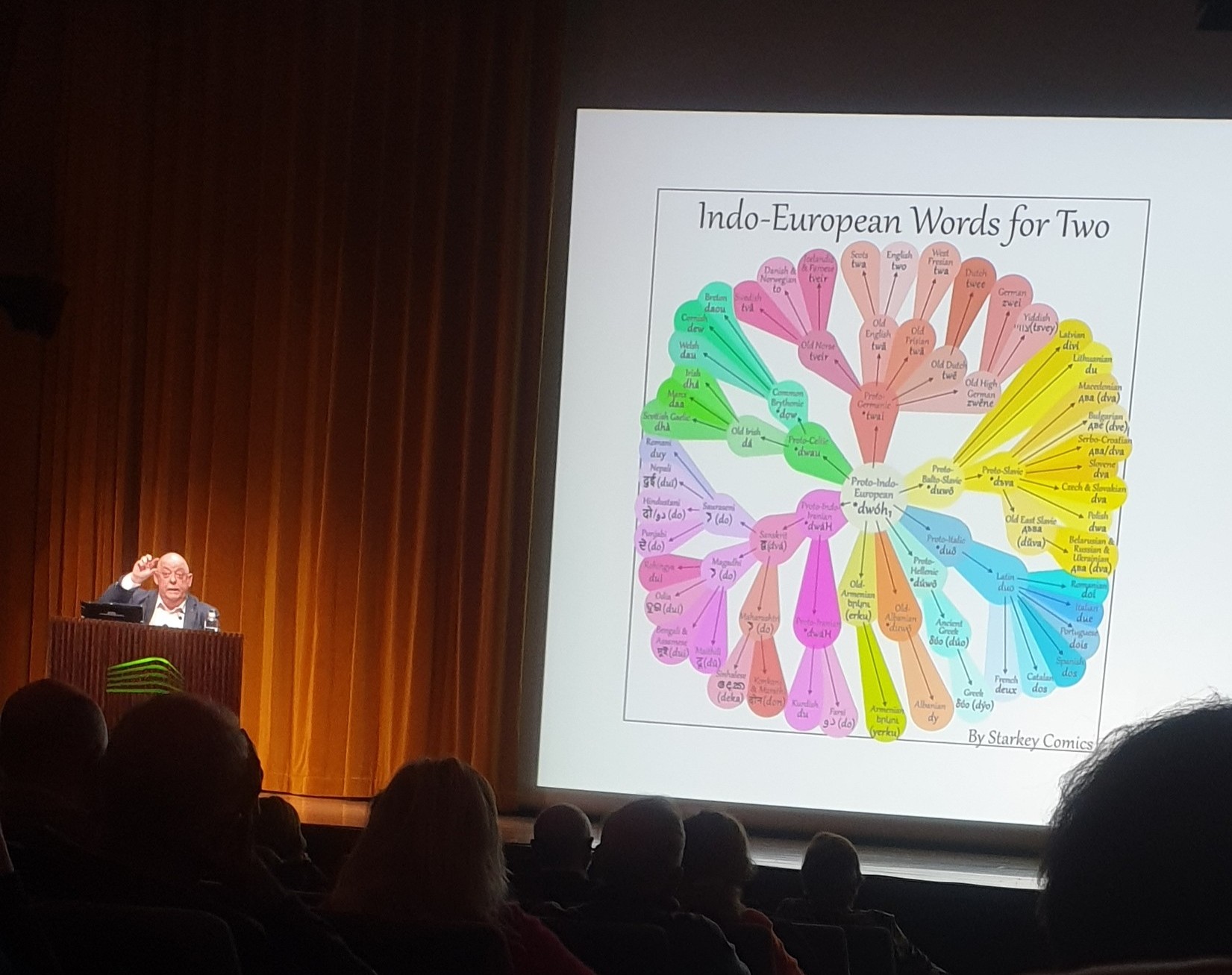
Although I am not a Renaissance specialist, I recently went to a fantastic conference on Machiavelli given by professor of Political Science at the Autonomous University of Madrid Fernando Vallespín at the fantastic Fundación Juan March.

Professor Vallespin was amazing, and his presentation was equally interesting. He obviously referenced the growing wave of Humanism that sparked and propelled the Renaissance, he commented on Giovanni Pico della Mirandola (1463–1494), he recommended Stephen Greenblat’s The Swerve, and he put Machiavelli in the context of his era. I had not read The Prince since high school back in the Pleistocene; so, it was very refreshing to re-visit Machiavelli. I remembered my Medieval Literature professor, the great Frank Dominguez mention that The Prince was written for king Ferdinand of Aragon whom Machiavelli admired. I wanted to ask Prof. Vallespin about that, but he did not stick around for Q and A…

If you are in Madrid, check out the conference cycles at the March, you will not regret it!

Answers:

1.         Kafkaesque     G. Marked by a senseless, disorienting, often menacing complexity.

2.         Nietzschean    C. Emphasizing the will to power as the chief motivating force of both the individual and society.

3.         Platonic           B. As a striving toward love of spiritual or ideal beauty.

4.         Orwellian        H. The totalitarian future described in his antiutopian novel 1984.

5.         Machiavellian A. in which political expediency is placed above morality, and craft and deceit are used to maintain the authority and carry out the policies of a ruler.

6.         Quixotic          D. Extravagantly chivalrous or romantic; visionary, impractical, or impracticable.

7.         Faustian          F. Sacrificing spiritual values for power, knowledge, or material gain.

8.         Dickensian      E. Describing a fictional world teeming with characters from all walks of life and social strata.

*All definitions from Dictionary.com with thanks

Culture in cities, Fundación Juan March; Antes de America.

One of the principal reasons I love cities is their fantastic cultural offering -lots of it free. So, when I am in Madrid, I make the most of it and try to go to as many culturally stimulating events as possible.

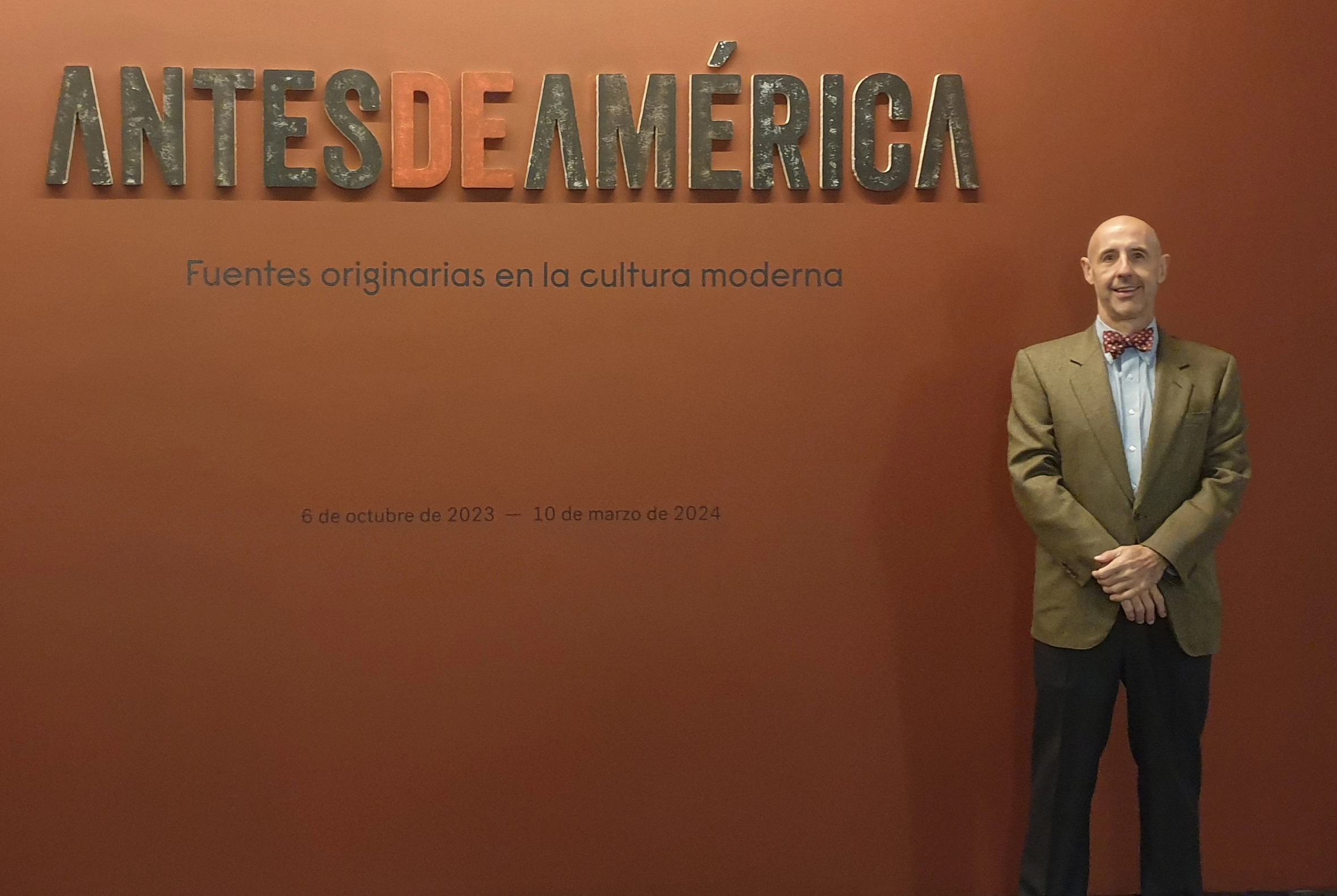
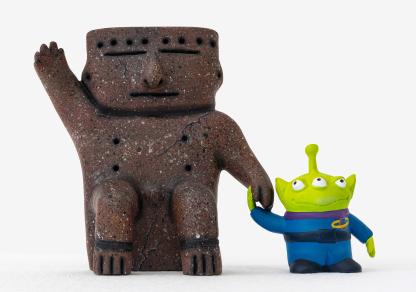
The other day I went with my nephew to the Antes de America exhibit at the phenomenal Fundación Juan March. What this exhibition sets to show is the influence of pre-colonial art on post-colonial art. It was a massive display showing pre-colonial artifacts next to the artifacts it inspired: from furniture to posters, record covers, pottery, all sorts of stuff.

Although the brochure claims the exhibit highlights art from Tierra de Fuego to Alaska, most of the material was Mesoamerican. Admittedly, that is also the region with the richest concentration of cultures -I am guessing because of the weather, but I am not a paleontologist or any kind of scientist, so what do I know?

One of the more important things I learnt from this exhibition was how prevalent ancient American art is in our modern culture. You might see a cool geometric design on a poster for a concert, for example, but in fact it was done hundreds of years ago by a tribe, people, culture that is no longer with us.

With hundreds, maybe thousands of pieces on show, there are bound to be some misses and I did find a couple of choices somewhat questionable. But again, this is not my field of expertise, I am just an old, white guy.

In conclusion, the exhibit is phenomenal in volume and content, if you are in Madrid before March 10, 2024, I highly recommend a visit. The Fundación has a cute little coffee shop in the basement and a cute little library you can borrow books from! And of course, the obligatory gift shop which sells the massive catalogue from the exhibition (yes, I got one!).

On Photography

With your hand on your heart, tell me you have never been moved by a photograph. Such is the power of photography. I am ashamed to say that despite spending over twelve years in the world of photography professionally (and many more as an amateur) I have never written about this art which means so much for me.

I took my Kodak Disk camera on a high school trip to the Soviet Union in 1983 (yes, I am old). The camera was not particularly good with its tiny negatives and tiny lens, but it exposed me (haha) to the magic of capturing powerful images. A couple of years later, I borrowed my sister’s Canon AE1 Program for a holiday in Greece and my passion for photography started in earnest. Back home, I permanently appropriated my dad’s Pentax ME Super (he never used it) and, as they say, the rest is history.

In 1991, I made my hobby into my job, when I got the opportunity to work as a sales manager for an English photo distributor in Spain. From there I entered the photo lab supply business and eventually started my own company supplying photo labs all over Spain. It was genuine fun until 2004 when everybody got a digital camera for Christmas and traditional photography as we knew it ended, overnight.

Needless to say, photography has remained my passion, although I gave all my equipment away to one of my students who was studying photography (3 different Pentax bodies, a bunch of lenses, and accessories – but I kept my Billingham bag!)

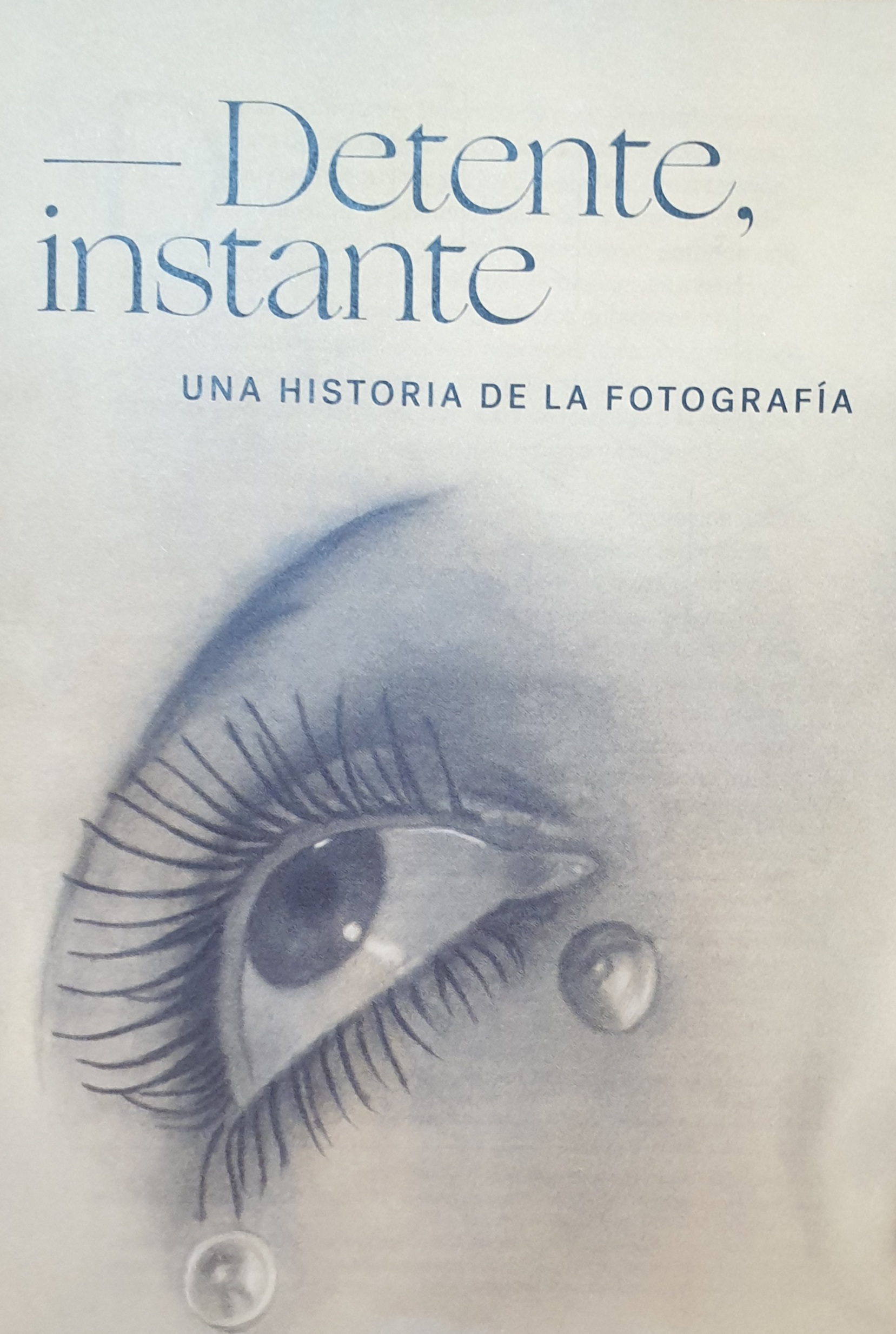
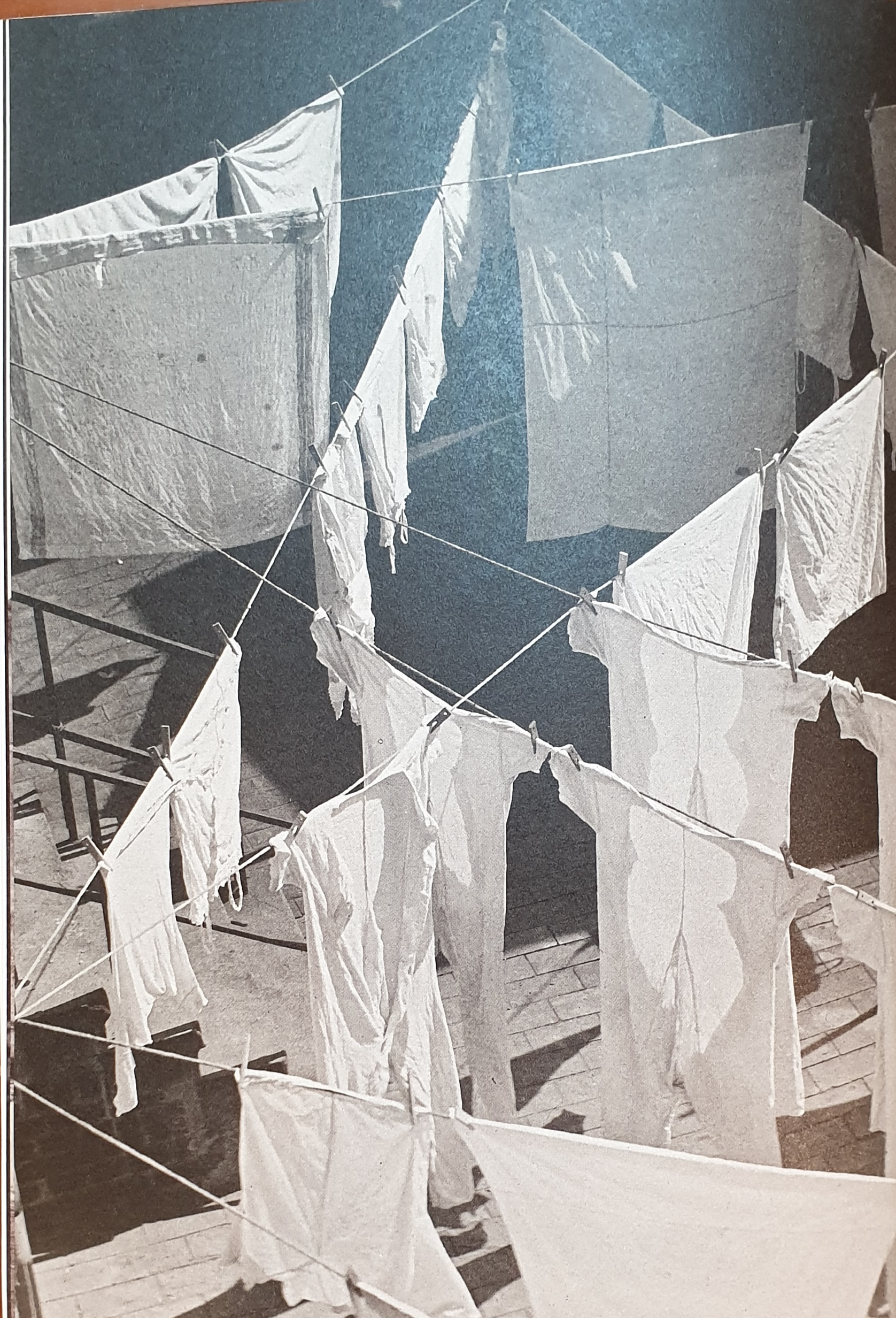
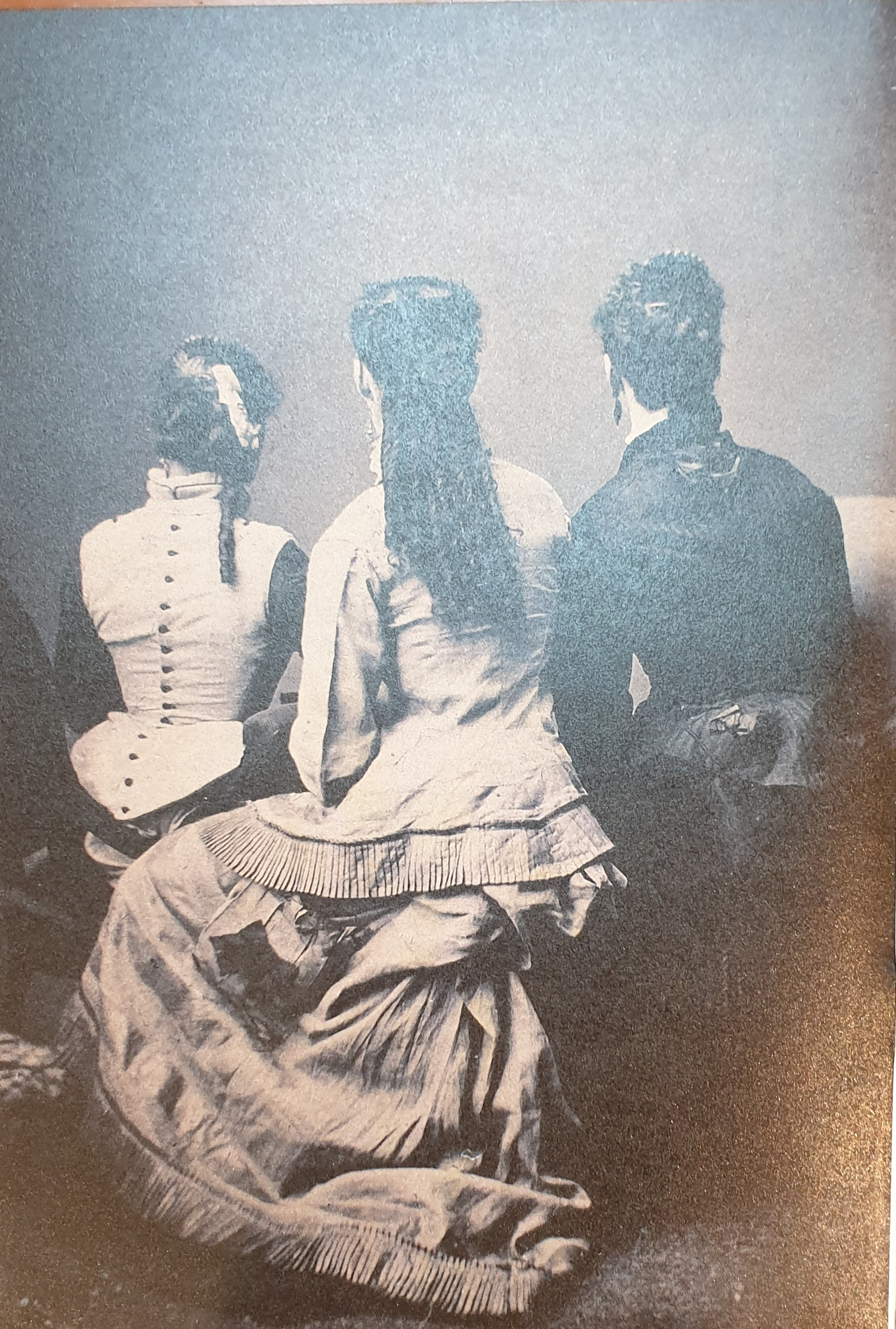
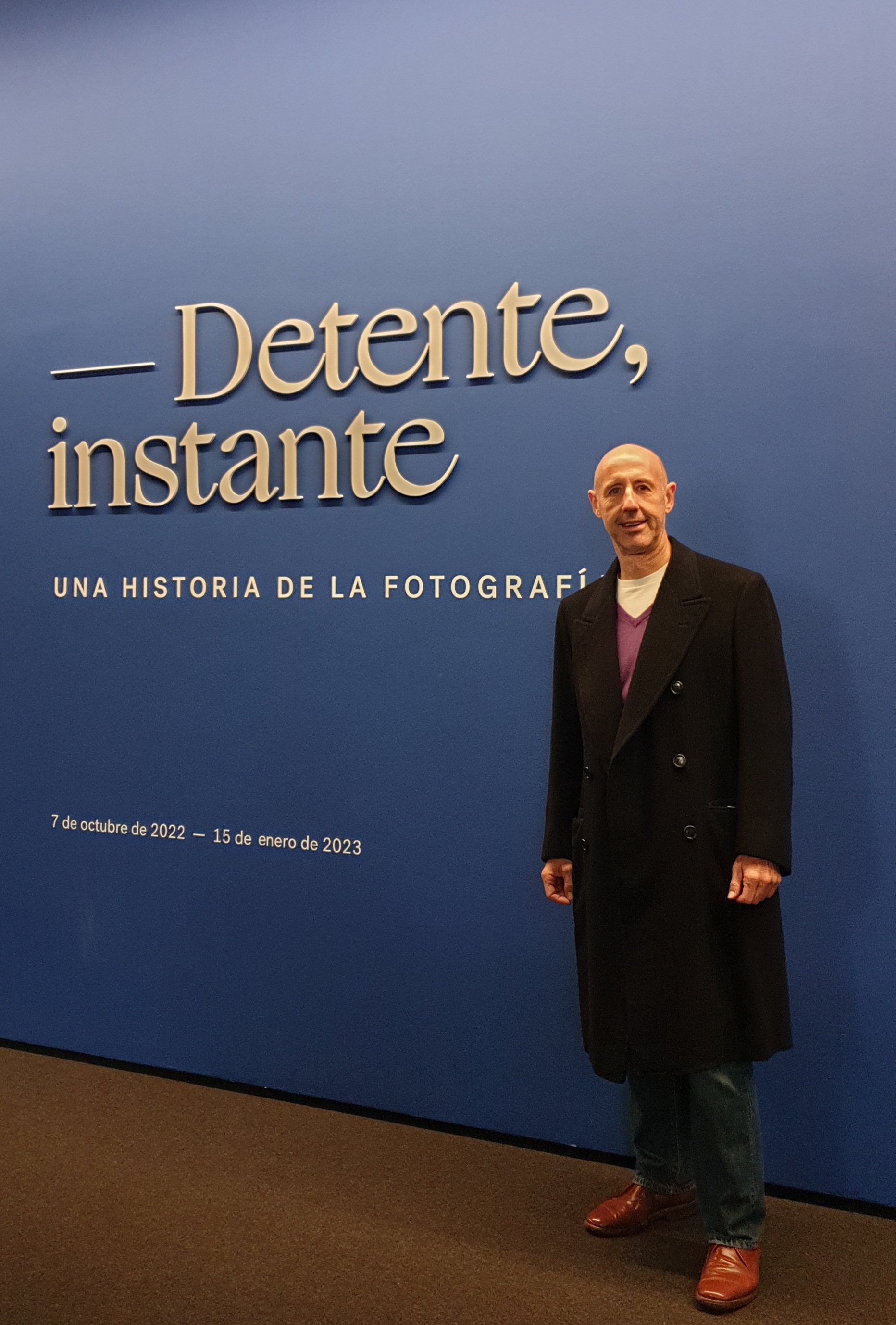
The other day I went to a History of Photography exhibit at the Fundación Juan March, and I was deeply moved by images I knew by heart: Man Ray, Mapplethorpe, Cartier-Bresson, Brassaï, Ansell Adams, Capa, and on and on. It was very emotional.

If you are in Madrid head over this exhibit, you are welcome.

The photo exhibit at the March

Sor Juana Inés de la Cruz, a conference

One of the great benefits of being in Madrid for my Summer break is being able to attend all sorts of events that are difficult to find in South Florida.

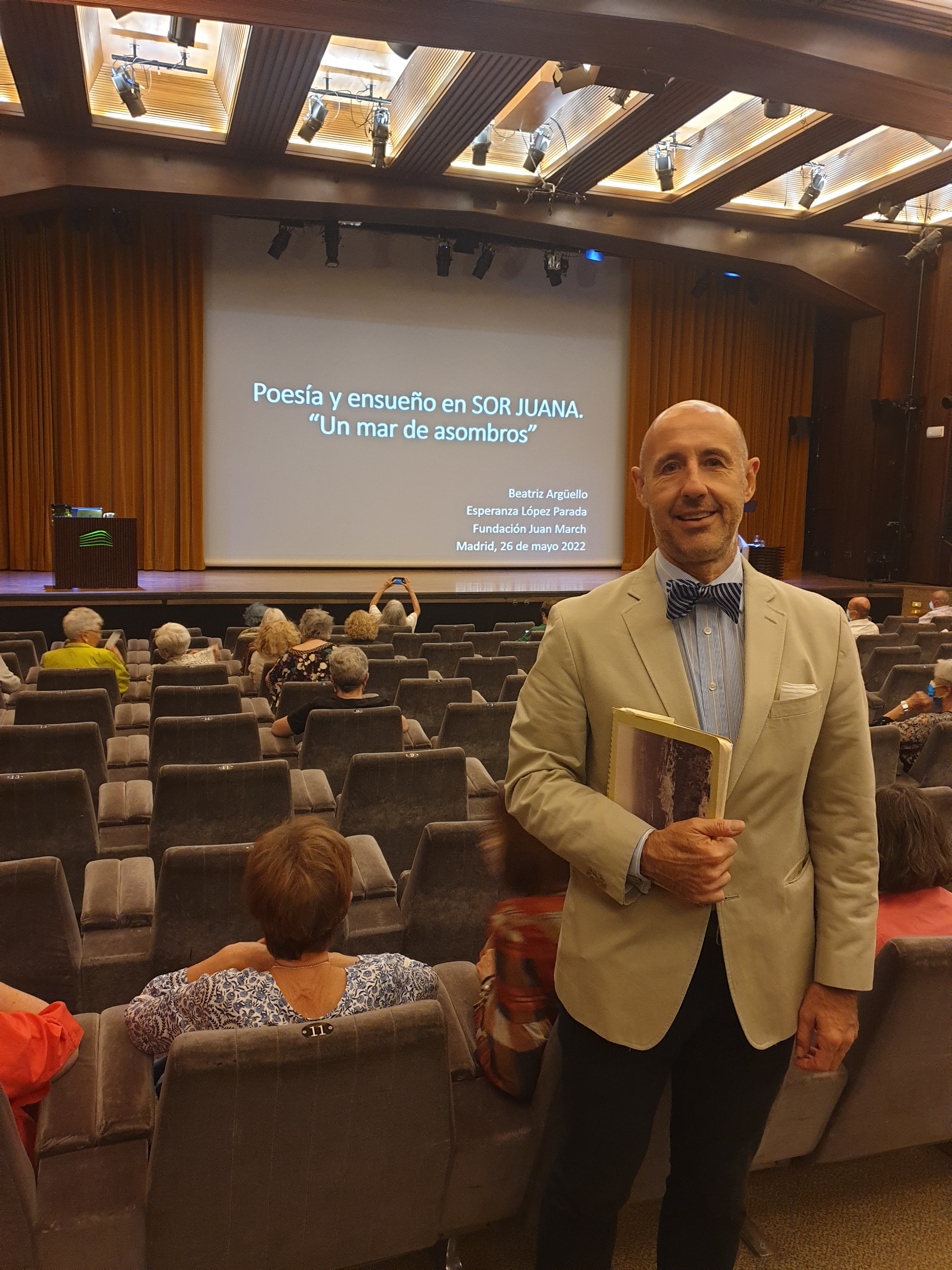
I recently had the pleasure of attending a great series of conferences on Sor Juana Inés de la Cruz, the brilliant Mexican Baroque writer (and musician, architect, scientist, and cook!), whom I studied a bit for my PhD at UNC.

The conference was hosted at the great Fundación Juan March (which I have already mentioned here) and the speaker was Esperanza López Parada, professor of Latin American literature at the Complutense University in Madrid.

The first lecture was on Sor Juana’s time, her life, and her writings in general. It is always interesting to learn new facts and perspectives on someone you have studied.

The second lecture focused on the poem Primero Sueño, and it included actor Beatriz Arguello reading the poem. The commentary and the reading were masterfully interwoven, making for an extremely rewarding experience!

López Parada cited my UNC professor (and PhD Committee Member Rosa Perelmuter, which was very moving for me). We even chatted a bit after the conference, which was a nice little plus.

Here is a video López Parada showed us of the adaptation into song of one of Sor Juana’s most famous poems: Hombres necios.

Ad Reinhardt, the victory of minimalism

One of the wonderful things of being in Madrid is that many interesting places are walking distance from home. If they are a bit farther away, I can always jump on a rental scooter, on a little motorbike, or a bicycle, if it’s harsh weather I can take public transportation like buses or metro. In a worst-case scenario, I can rent a car per hours. My dinosaur Land Rover cannot be legally parked downtown.

Recently I walked to the Fundación Juan March, which I have talked about before in this blog to see a great exhibit on Ad Reinhardt, a groundbreaking abstract American painter. The exhibit was split into two distinct areas: an area of his paintings showing his evolution into the purest minimalism (see the photo of the red painting) where a monochromatic canvas has only the most subtle color variations, mesmerizing!

The other part covers Reinhardt’s career as an illustrator, teacher, activist, and designer.

He also coined some evident but necessary phrases like

Art is Art. Everything else is everything else

Ad Reindhardt

or

Art is too serious to be taken seriously

Ad Reindhardt

If you get a chance to see the exhibit in Madrid, go now. If Madrid is not an option go check out his paintings at the Museum Folkwang Essen, SFMOMA in San Francisco, and of course the New York MOMA and the Met.