Michael Jackson and Hegel in Nosferatu (1922) and Nosferatu the Vampyre (1979)

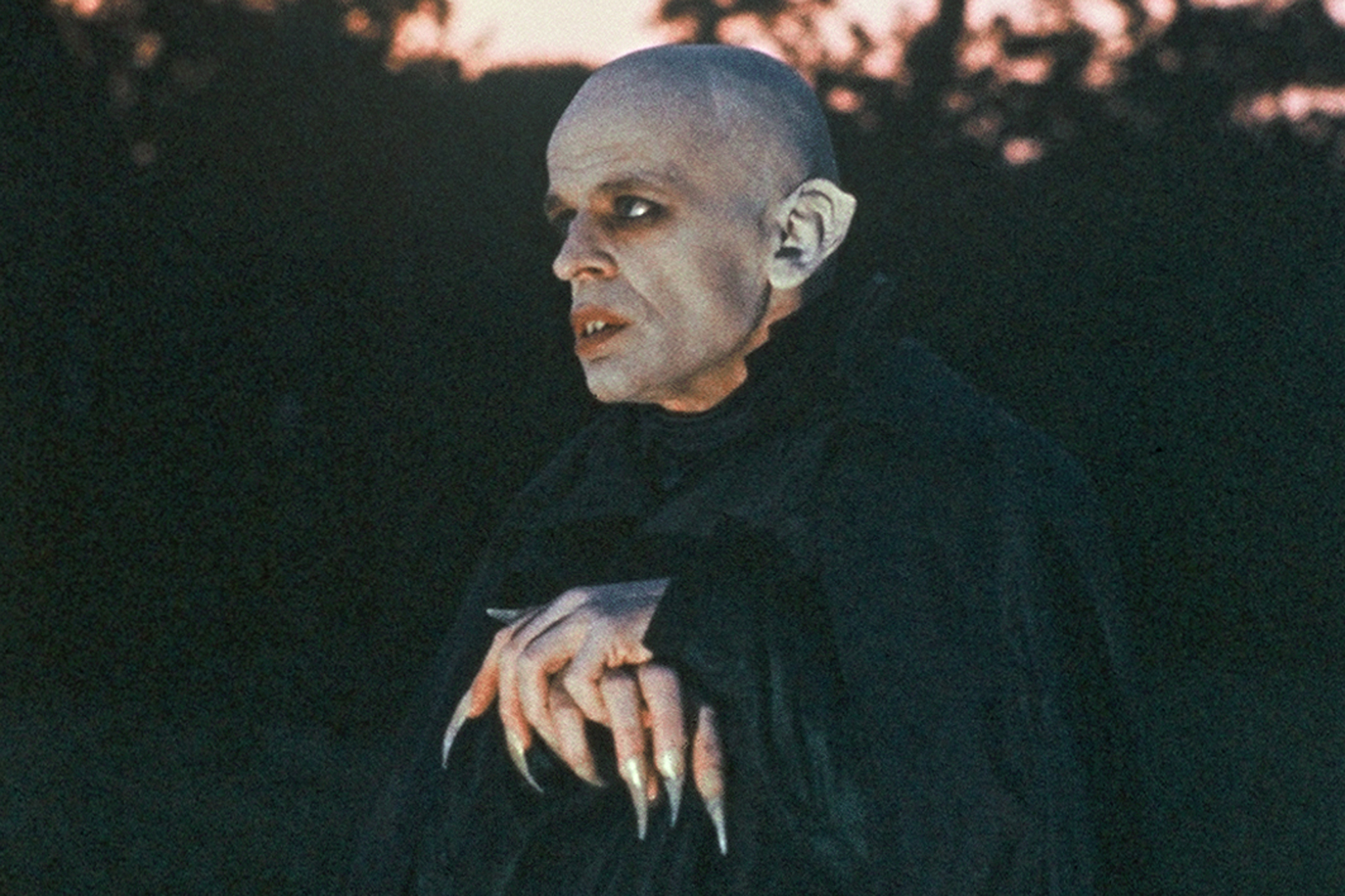
There is a scene in Nosferatu (1922) where Count Dracula is looking across his window at Lucy Harker. When he slowly retreats from the window, his hands are awkwardly positioned in a sort of sideways traffic-stopping gesture. This is the key move in Michael Jackson’s (who was a big fan of Count Dracula) Thriller video dance sequence. There you have it, now let’s talk about Hegel’s influence on Werner Herzog’s Nosferatu the Vampyre (1979).

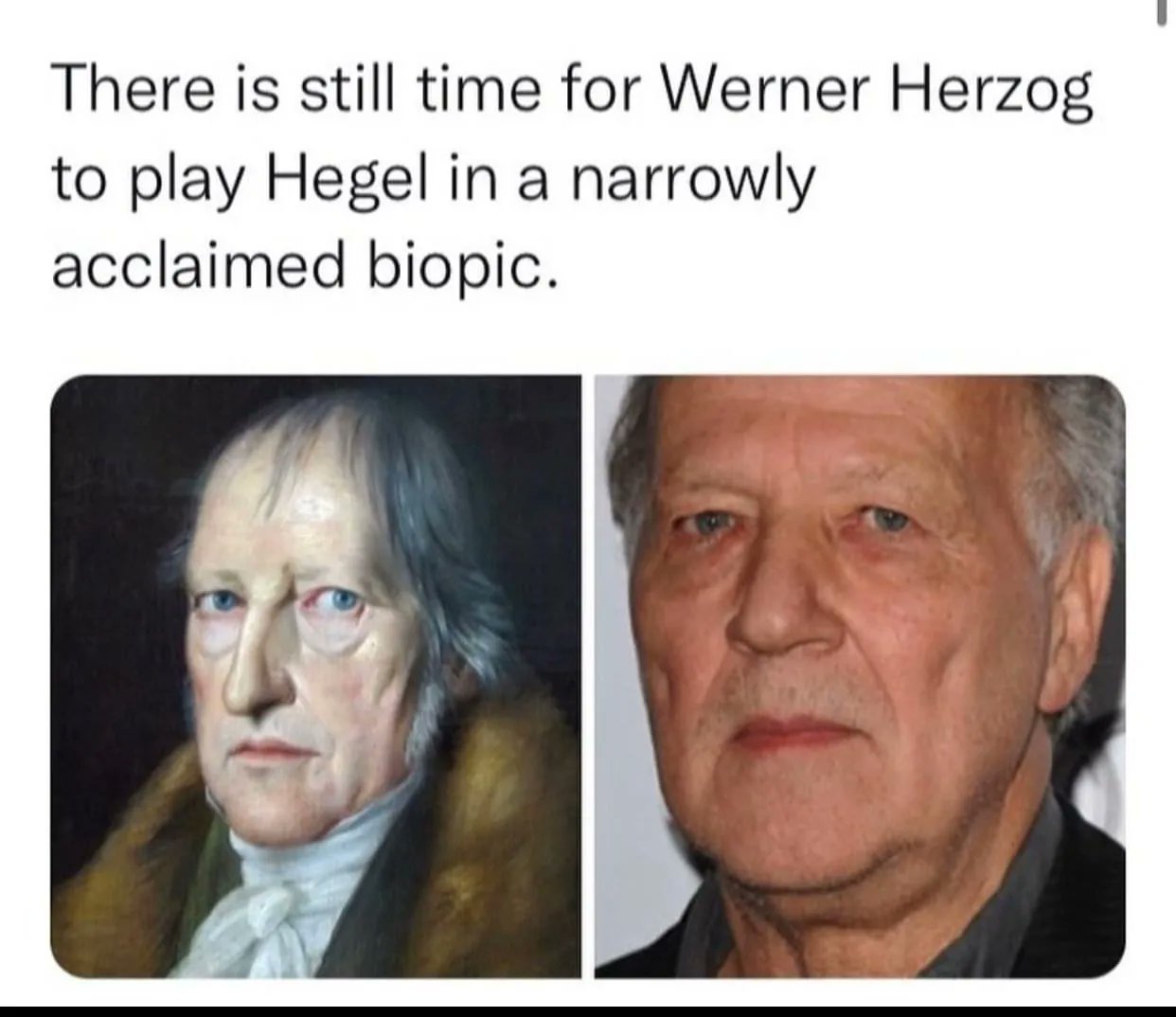
There is a nerdy viral meme showing side-by-side pictures of philosopher Hegel and film director Herzog —who look remarkably similar— asking when Herzog will play Hegel in his biopic. As with the reality surpassing fiction aphorism, there is more here than meets the eye.

The key scene in Herzog’s film is when Lucy Harker (Isabelle Adjani) has a conversation with Count Dracula (Klaus Kinski). This poetic philosophical dialogue exposes Herzog’s Hegelian philosophy:

Dracula:          You must excuse my rude entrance. I’m Count Dracula.

Lucy:               I know of you from Jonathan’s diary. Since he has been with you, he is ruined.

Dracula:          He will not die.

Lucy:               Yes, he will. Death is overwhelming. Eventually, we are all dead. Stars spin and reel in confusion, time passes in blindness, rivers flow without knowing their course. Only death is cruelly sure.

Dracula:          Dying is cruelty against the unsuspecting, but death is not everything; it is more cruel not to be able to die. I wish I could partake of the love which is between you and Jonathan.

Lucy:               Nothing in this world, not even God, can touch that. And it will not change. Even if Jonathan never recognizes me again.

Dracula:          I could change everything. Will you come to me? And be my ally, there will be salvation for your husband, and for me. The absence of love is the most abject pain.

Lucy:               Salvation comes from ourselves alone, and you might rest assured that even the unthinkable will not deter me. Goodnight.

In his Lectures on the Philosophy of Religion, Hegel takes a novel approach to salvation, taking it beyond the religious to the existential —even when Existentialism as such was being “invented” a bit further north in Denmark by Kierkegaard. The road to salvation in Hegel’s view is tied to one’s spirituality, one’s spiritual journey.

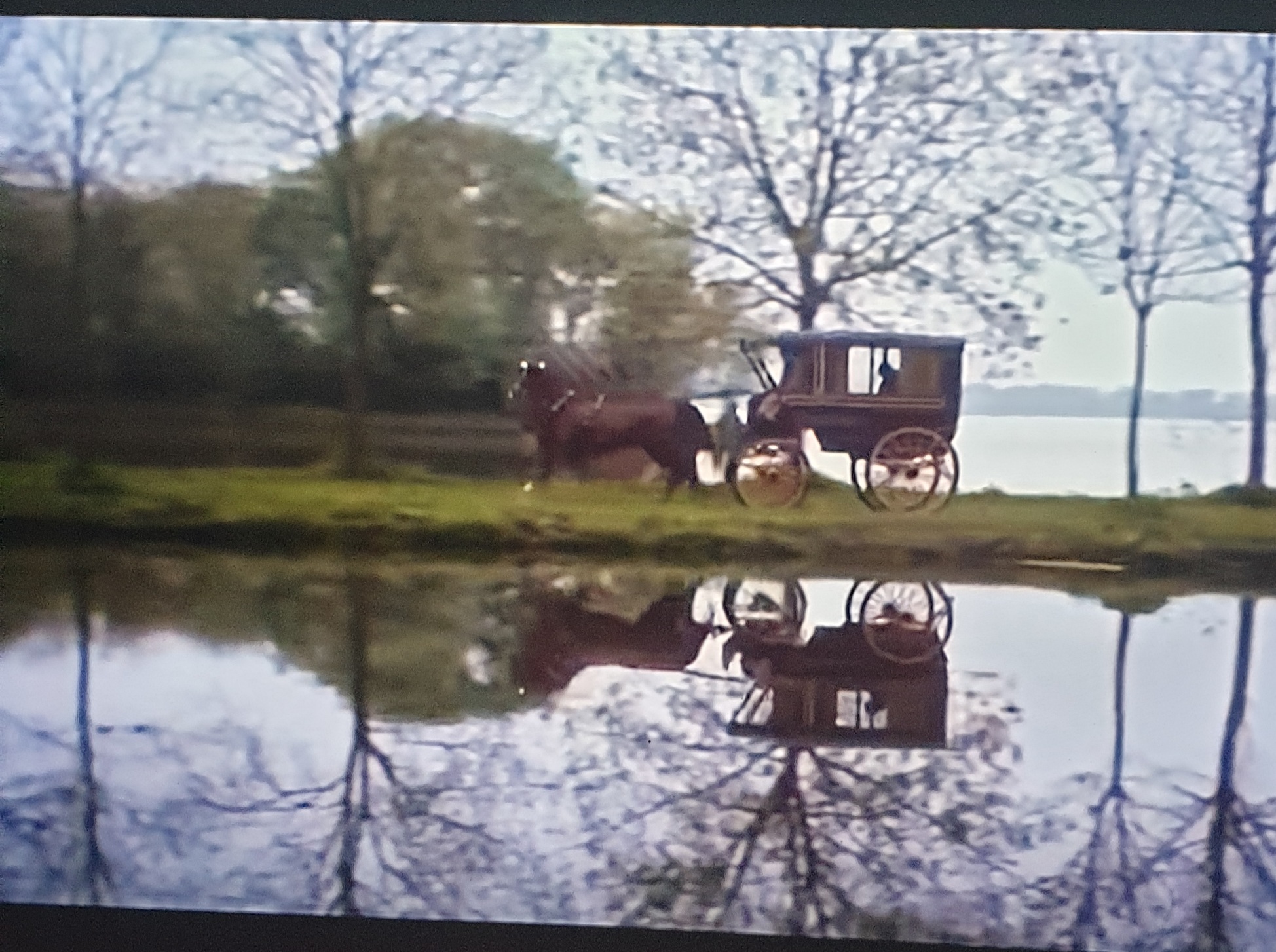
Other than in Transylvania, Bram Stoker’s Dracula takes place mostly in London, but the 1922 film Nosferatu takes place in the fictional German city of Wisburg, which is actually Wismar. In Werner Herzog’s Nosferatu the Vampyre, the Dutch towns of Delft and Schiedam serve as stand-ins for the German city of Wismar circa 1850. Having the story set in mid-1800s Germany allows the characters to more plausibly have read orstudied under Hegel. Ok, that is a bit of a stretch. But you get the idea.

Oh, by the way, I also saw 2024 Nosferatu, and I must be getting old and cynical, because I did not like it at all. All the AI neogothic, steampunk, everything (landscapes, backgrounds, the castle, blah, blah, blah), the exaggeration, the predictability, bilingual count Orlok (Romanian and English), the sexualization, the juvenile script: “Does evil come from within us, or from beyond?” Even that sublime scene between Lucy and Dracula in Herzog’s version becomes a gaudy monstruosity in this film. I found only one redeeming quality to this production: Willem Dafoe. If you want my ranking: 1979, 1922, and if you must, 2024.

The Quixotic in David Lynch’s The Straight Story

The Straight Story poster

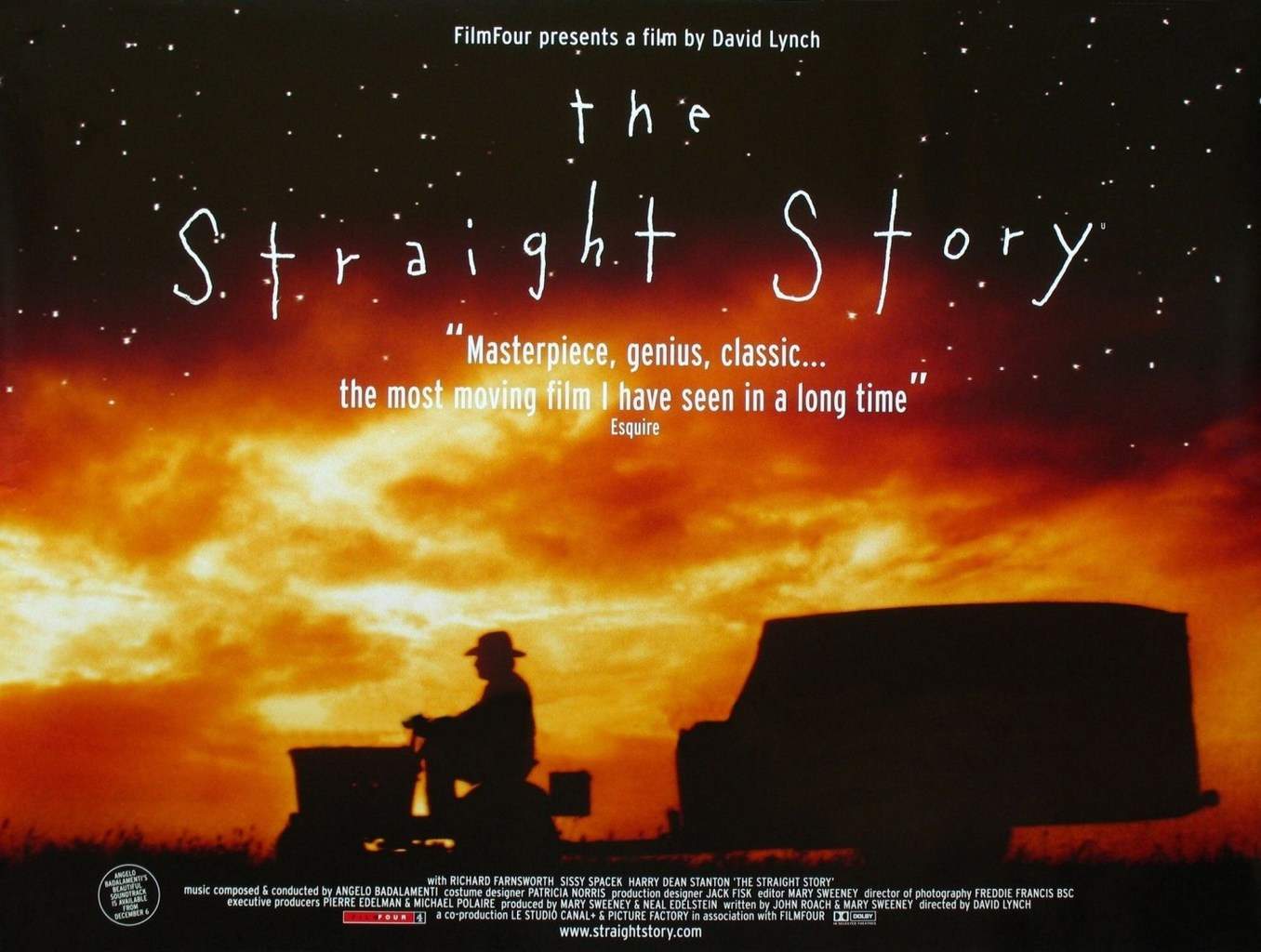
When people think of David Lynch, they think of surreal, dream sequences and noir-style classics like Blue Velvet or Mulholland Drive. Because it is in essence a documentary, The Straight Story is the exception to the rule. It is based on the real story of a fellow, Alvin Straight—thus the name—who travels to visit his brother 300 miles away on a riding lawnmower!!

Due to Lynch’s recent passing, we just celebrated a David Lynch month in Film Club, and it was fantastic, a little homage, our tribute. We saw Elephant Man, Blue Velvet, The Straight Story, and Mulholland Drive.

One of the many things I learned during this month’s research is how much of a jokester Lynch was—what a character! But did he know how much of a Quixotic journey his film represents?

The few outward, visible clues that Straight Story is a Midwestern, late 20th-century Quixote story are that Straight is an older, skinny, rough-bearded fellow with an existential need to embark on this trip. Like Don Quixote, he has a false start to his adventure, returning home before starting his quest. He has a cohort of naysayers -hanging out at the local hardware store, the hardheadedness, a boring home life; although he has a loving daughter in Sissy Spacek, a phenomenal, but underrated actress.

The Straight Story poster

Along the way, he has many adventures: he encounters a group of cyclists, reminiscent of Quijote’s encounter with the herd of sheep, the lady who keeps running over deer, a few close encounters with 18-wheelers, giants? Etc.

But at the end of the day, this is a story of a man seeking his redemption, it is a physical representation of an inner journey, it is an existential, transcendental quest. It is important to know that while most road films represent an escape, in this case, like in Quijote, the journey is a necessary trip of personal realization.

The film is beautifully shot with great photography of the vast Midwest, not unlike the plains and hills of La Mancha. Straight camps out most nights, and like Quijote depends on the charity of strangers to progress on his trip.

One could argue that most road trip films are in some way Quixotic, but I argue that Lynch’s Straight Story is particularly so.

Don Quixote’s influence on Existentialist Philosophy Part II – José Ortega y Gasset

One of the most popular posts on this blog is Don Quixote’s Influence on Existentialist Philosophy, which is a bit embarrassing because it is not very good. I wrote it very early on in my master’s, and while the idea, the thesis is good, I did not develop it very deeply nor fully. It is mostly my gut feeling, my intuition that comes through.

I have thought and thought about this since 2008, and more importantly, I have read a lot that I would not have had the time to read for that little essay. I have read more Dostoyevsky, Sartre, Kierkegaard, El Quijote desde Rusia with three brilliant essays by Turgenev, Dostoyevsky, and Merejkowsky, more Unamuno, Graham Greene, and on and on.

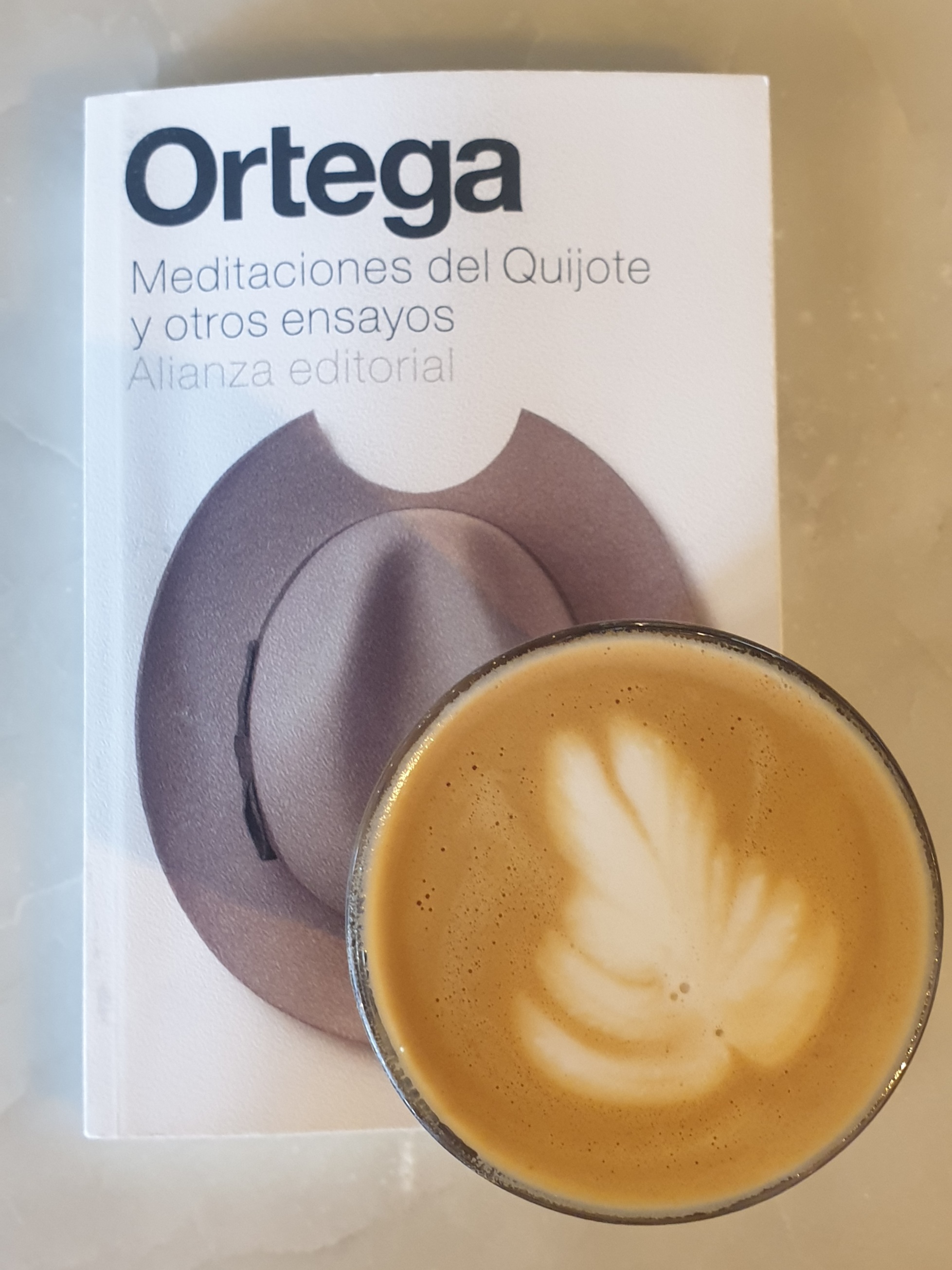
For Christmas, Celia gave me José Ortega y Gasset’s Meditaciones del Quijote y otros ensayos, which I had wanted to read for years.

All this reading confirms the theory that Cervantes crystallizes the thoughts of the preceeding centuries, from the ancient Greeks on Liberty to the early Christians on Free Will, where the Self is swimming in the primordial waters of philosophy, floating around until Cervantes’ electric genius gave abiogenesis form to Don Quixote, consciously creating his fortune, bringing about the concept of existentialism. The textbook example of this is the beginning of chapter VIII. Read it carefully, what does Quijote see? He sees them. What are they? Windmills or giants…

Don Quixote is the proverbial Tetrapod fish walking onto earth. It will be up to Kierkegaard, Dostoyevsky, Nietzsche, Unamuno, and Ortega before Simone de Beauvoir and Jean-Paul Sartre finally come up with the label that puts a nice bow on the Darwinian evolution of thought that delivers Existentialist theory.

Meditaciones has the famous quote “yo soy yo y mi circunstancia, y si no la salvo a ella no me salvo yo”.  So, yes, you are responsible for what you do in life, with life, but you also must deal with the circumstances surrounding your life. But Meditaciones is not what you expect. It is not a direct essay on Ortega’s thoughts on El Quijote -although it is also that- it is that in a meandering, roundabout way. Ortega talks about the Mediterranean culture, compares it to the Germanic culture as he lived in Germany for many years. This is evident when he quotes Nietzsche’s “Live dangerously”, which is, of course, the whole premise of Quijote’s adventures.

As a good philosopher, questioning El Quijote, Ortega ends up asking more questions than answering them. One key observation comes when he compares Cervantes to Shakespeare, something commonly done, as they were, after all, contemporaries. And here is the difference: Shakespeare explains himself, Cervantes not so much. Some of that difference might be due to the difference in genres: Theatre vs the modern novel, but nonetheless, there it is. Another common assumption is the Spanishness of Quijote, which leads Ortega to call Spain the “spiritual promontory of Europe”.

Another of Ortega’s brilliant observations, connections are between two Baroque masterpieces: Quijote and Velazquez’s Meninas, how we can step into each work and see it from the inside. This imaginary stepping into these makes them realistic. That realism is what makes us, and understanding ourselves in that work, that singularity, is what makes us heroes, a full hymn to Existentialism!

So what I wrote 17 years ago, although not the most brilliant, not the best written academic paper, still stands. Cervantes, by creating Don Quijote, is setting the cornerstone of Existentialist philosophy.

The monk in Rainer Maria Rilke’s Prayer of a Young Poet and Alyosha Karamazov; the same person?

One of the best things about having your own blog is that you can write whatever you want. Even if it is pseudo academic, or as one of my students says: Dr. B’s conspiracy theories. No double-blind peer reviews, no scientific method, no academic prestige to worry about, just my unadulterated thoughts, a hunch. So enjoy:

Why am I fascinated by the turn of the (20th) Century Central and Eastern Europe? I have written about it a couple of times (here and here).

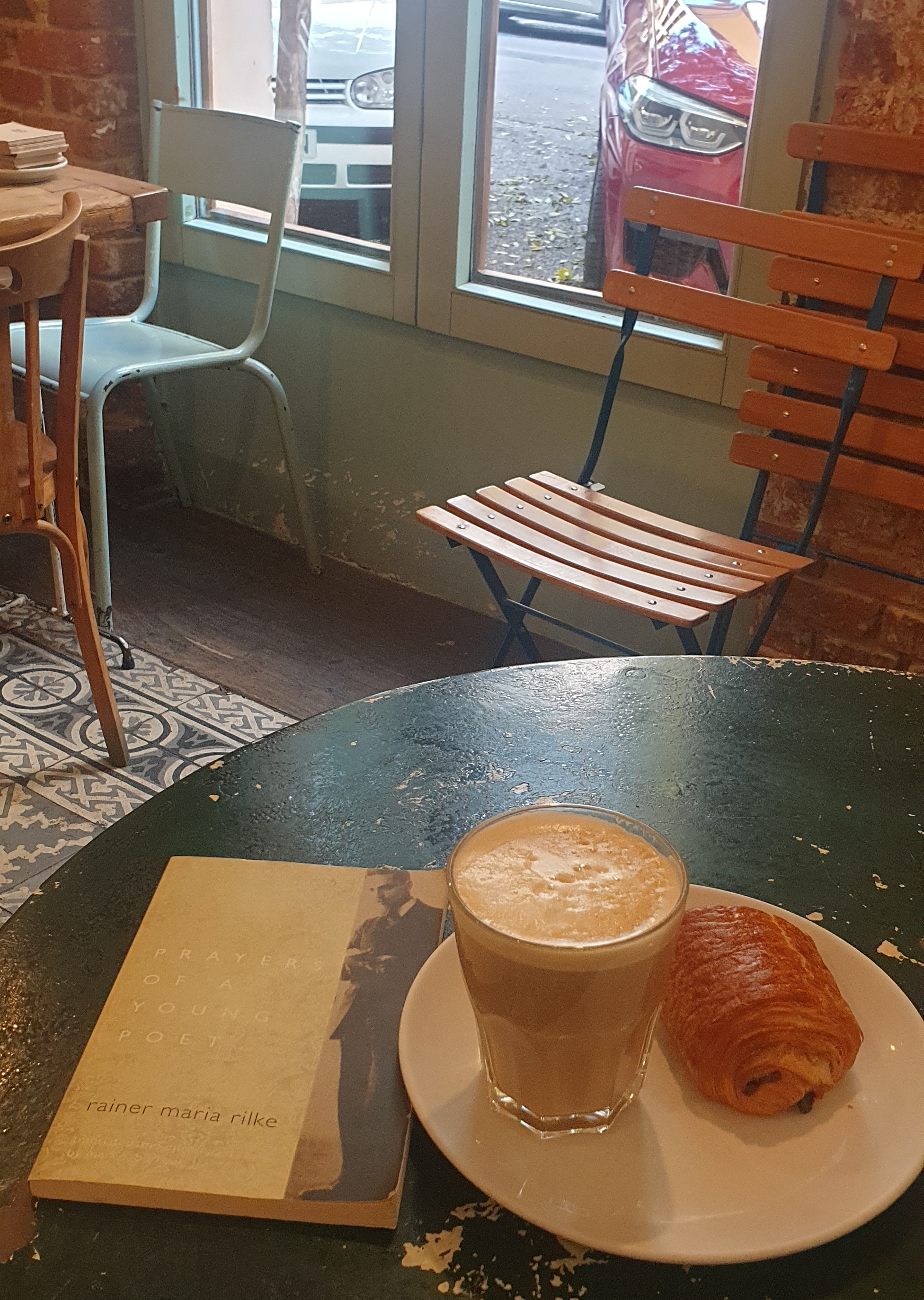
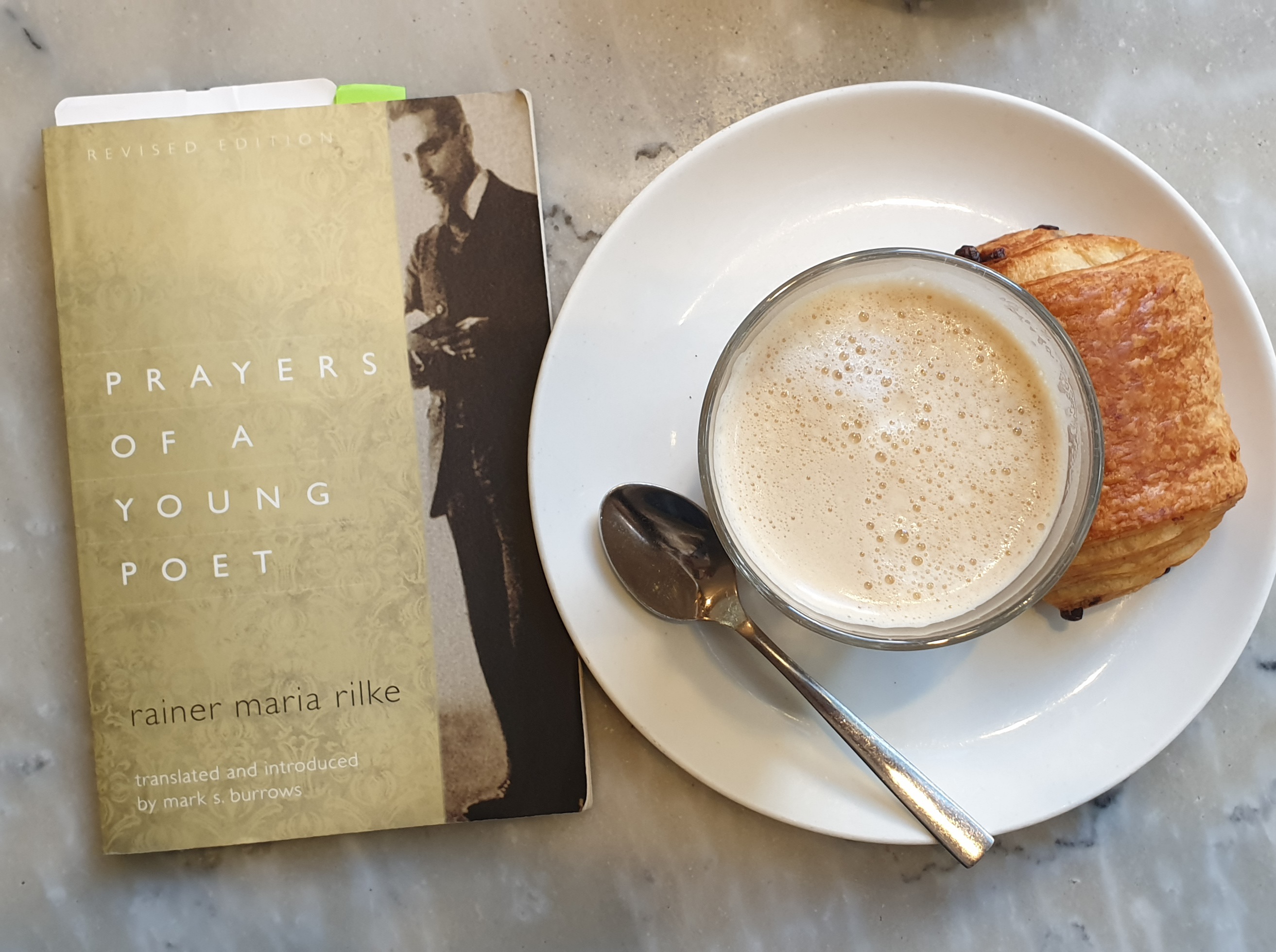
I just finished Rainer Maria Rilke’s Prayers of a Young Poet, and it blew me away!

Rilke authors this 68-poem collection in the voice of a nameless Russian Orthodox monk. The spirituality is palpable. Each poem has a brief footnote denoting where and/or when it was written: “2nd of October, beneath soft evening clouds”, “On the 5th of October, written down in the exhaustion of evening, having returned home after having been out among the people.”

Perhaps due to my ignorance and lack of reading, I kept thinking of Alyosha Karamazov from Dostoyevsky’s novel.

What connects these poems and Alyosha Karamazov is a simple innocence, a pure love of life and humanity in lines like:

“I want to love things in ways no one has yet done.”

or

“The hour bows down and stirs me

with a clear and ringing stroke;

my senses tremble. I feel that I can–

and seize the forming day.”

So, that is my hunch, my thesis. That there is an existential connection between the monk, the narrative author of Prayers of a Young Poet and Alyosha Karamazov, as if he had drafted those poems. But, you say, there are hundreds if not thousands of Russian Orthodox monks and many of them are in literature. My answer to your comment is the first line of this blog post. Also, I am a romantic, can’t you see? And this connection is just beautiful, and delicate, and awesome!

Rilke travelled to Russia and was entranced by their culture, art, and most importantly their rich religious tradition. He also could have read Dostoyevsky’s masterpiece published in 1880, 19 years before the original publication of Prayers in 1899.

Yes, I could go on and on and get all academic, but this is a general interest blog, so there you have it. If you do want me to elaborate on my thoughts, let me know in the comments!!

You should read Fyodor Dostoevsky’s The Brothers Karamazov

“Above all, don’t lie to yourself. The man who lies to himself and listens to his own lie comes to a point that he cannot distinguish the truth within him, or around him, and so loses all respect for himself and for others. And having no respect he ceases to love.”

― Fyodor Dostoevsky, The Brothers Karamazov

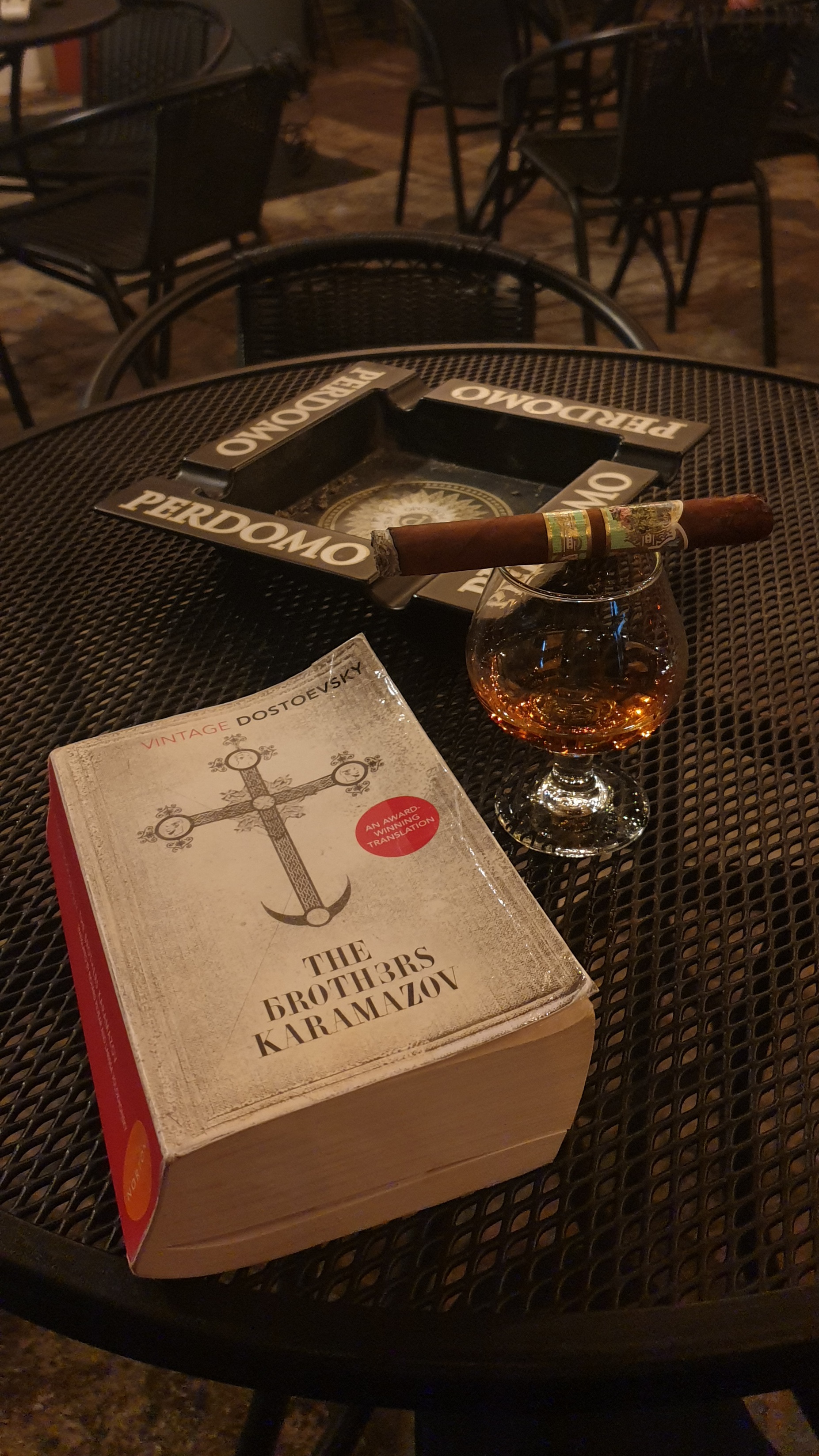
The hype is real, The Brothers Karamazov is one of the best books ever written. For me it goes straight up in my list! It has the perfect combination of human behavior, philosophy, love (and lust), Russia, and much more, all beautifully written and woven together.

No spoilers, the book is about the three Karamazov brothers: Dmitri, Ivan, and Alexei -Alyosha- and their father. There is also a half-brother, two women, servants, and many other characters who give the novel phenomenal depth and texture.

Ah, but it is a really long book! You exclaim. Well, yes, my edition is 776 pages, but look at them as an investment, or look at it as 7 books of 100 pages each, whatever just start reading. It took me four months, and it was time well spent.

My reference, my bar, is set at Don Quixote which was written 300 years before The Brothers Karamazov and for me, is still a better representation of human nature. But back to Dostoevsky:

This novel deals with the human condition from a deep philosophical and theological perspective, in doing so, Dostoevsky presents both sides of arguments. For example, in discussing the existence of God, Dostoevsky presents a profound argument against God with a brilliant story called The Grand Inquisitor and asking the age-old question “If God exists why do children die horrible deaths?” in the chapter “Rebellion”.  On the other hand, the author summons Voltaire’s quote “S’il n’existait pas Dieu, il faudrait l’inventer” (If God didn’t exist, we would have to invent him). Likewise for existentialism. Dostoevsky studies both sides of the argument at length: do we have free will and we exercise it? Or is everything destined to happen? Like Cervantes -and more importantly unlike Nietzsche- Dostoevsky proves that God exists, and that man decides his life. But you have to read all the way to the last word to get there!

“The mystery of human existence lies not in just staying alive, but in finding something to live for.”

― Fyodor Dostoyevsky, The Brothers Karamazov

In his arguments, the author quotes Voltaire, the Book of Job, the Byronic hero, and hundreds of other references. The Devil also makes an appearance in what looks like a clear predecessor of Bulgakov’s Master and Margarita almost a hundred years later.

As far as narrative techniques, Dostoevsky does not only imitate Cervantes, but he also leverages Cervantine techniques: His narrator’s intromissions are constant and hilarious:  at one point saying, “I am not a doctor…”, or “It could all serve as the plot for another story, for a different novel, which I do not even know that I shall ever undertake”. During the critical courtroom scene, arguably the climax of the story he writes: “The whole courtroom rose in turmoil, but I did not stay and listen. I remember only a few exclamations from the porch on the way out.” Very, very Cervantine.

There are a number of interpolated stories, which add to the reader’s understanding of the overall narrative. Some are stand alone and some weave in and out of the narrative, becoming part of the story.

In conclusion The Brothers Karamazov is one of the best novels ever written and you should read it. It will make you a more understanding person.

“What is hell? I maintain that it is the suffering of being unable to love.”

― Fyodor Dostoevsky, The Brothers Karamazov


Don Quixote, Monsignor Quixote, Graham Greene, and madness vs. Existentialism

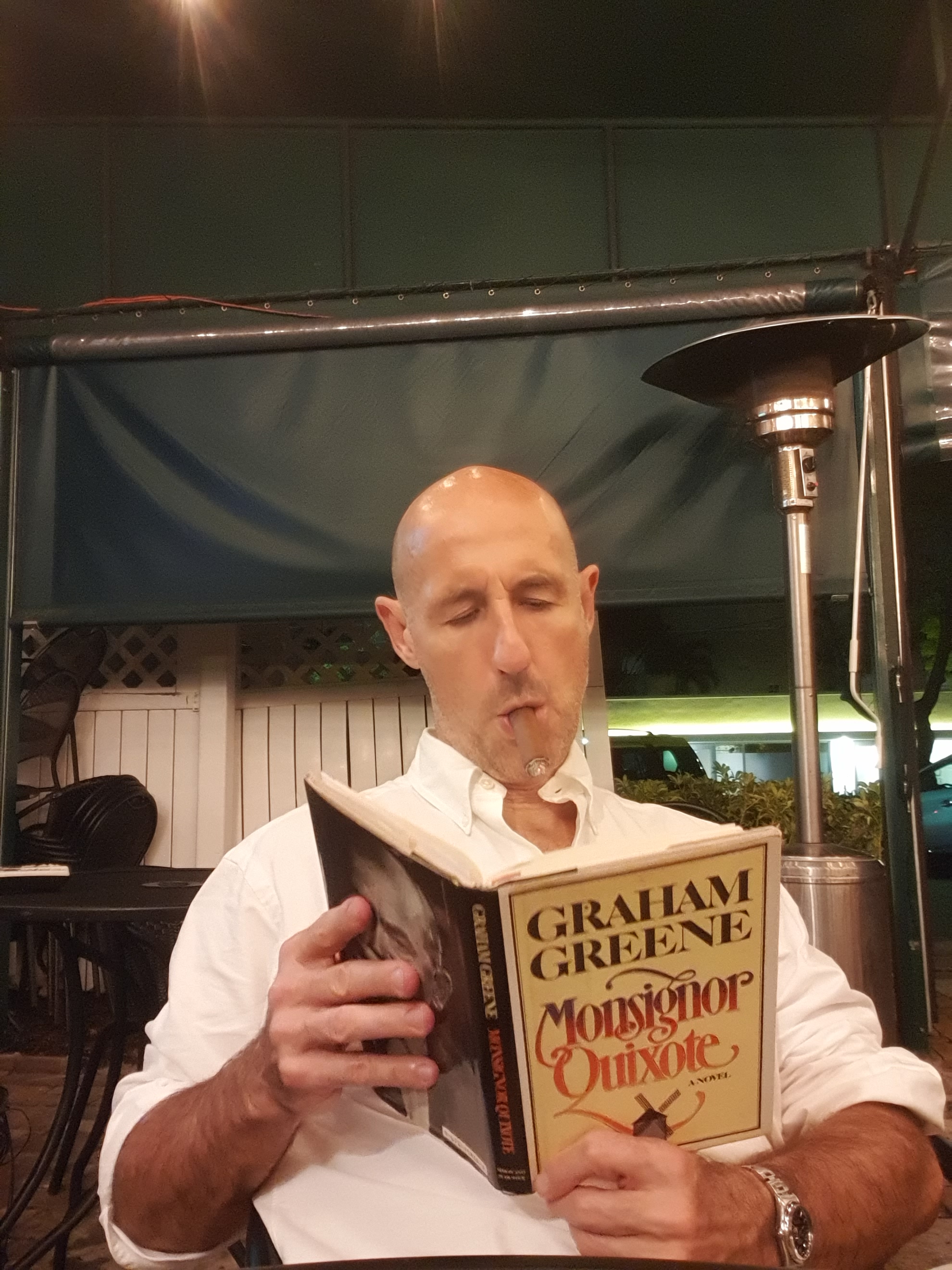
A good book and a good cigar

There are books that I re-read with certain regularity: The Old Man and the Sea, Voltaire’s Candide, the Rubaiyat of Omar Khayyam (you can read about that one here), Don Quixote only three times.

But I recently came across a book I had read as a teenager in the 80s and decided to revisit: Graham Greene’s Monsignor Quixote.

As you can see from the title -I will try not to spoil anything- in a fictional meta-reality, Monsignor Quixote deals with the adventures of a descendant of Don Quixote. There is a Rocinante and a Sancho. Greene converted to Catholicism at 22 in 1926 (you can read his bio here) and this novel deals precisely with -no spoilers- with religion, theology, and the Church in early ‘80s, post Franco Spanish society (It was published in 1982). The book is an easy, quick read, and, since I am always on the lookout for the far reaching effects of Don Quixote, I re-borrowed Monsignor Quixote (thanks Sue) and thoroughly enjoyed it.

My more faithful readers know that one of my research interests is the influence of Don Quixote on Existentialist philosophy. So my antennae are always poised to pick up on this theme. Monsignor Quixote does not disappoint! The references to the links between Don Quixote and Existentialism might have been written unknowingly by Greene, which I doubt, but they are there either way:

There is a heartfelt reference to Miguel de Unamuno who was a big fan of Don Quixote and a proto-Existentialist (read San Manuel Bueno, Mártir). This is an indication that Greene understands Cervantes.

There are explicit mentions of Monsignor Quixote acknowledging his existence, which is a big step in understanding who one is.

The novel deals with our doubts and beliefs, the Existential anguish that drove Kierkegaard (but not in those words), the father of Existentialism -which would make Cervantes the great-grandfather of Existentialism (read about that here).

Finally, as any alert reader would expect of a novel with the name Quixote in it, it talks of madness. Of course, folks -specially those who have not read the novel- often confuse Don Quixote’s drive and purpose with madness (which drives me mad). I will not elaborate but Don Quixote knows who he is, it is just that nobody understands what he is doing, so they call him mad. This leads me to my first and hopefully last political statement ever on this blog: Former President Trump was often called Quixotic, for whatever reason, and the people who labeled Trump like that have obviously never read, and/or never understood Cervantes’ novel!! A similar point is seen in the film Easy Rider when Jack Nicholson as George Hanson says:

Oh, yeah, they’re gonna talk to you, and talk to you, and talk to you about individual freedom. But they see a free individual, it’s gonna scare ’em.

I guess I could have written a more academic article about this book, and maybe I will, but for the time being, enjoy.

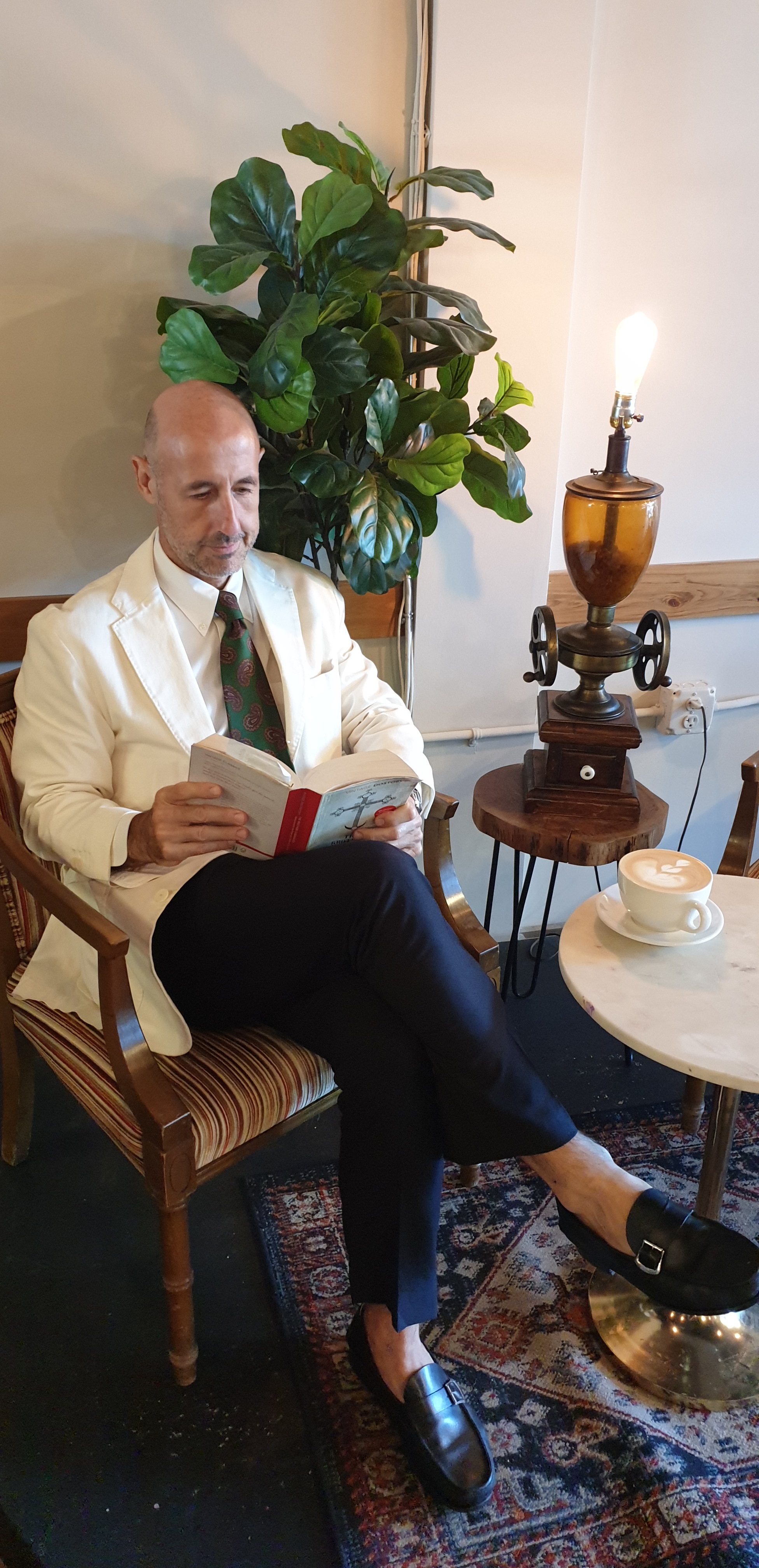
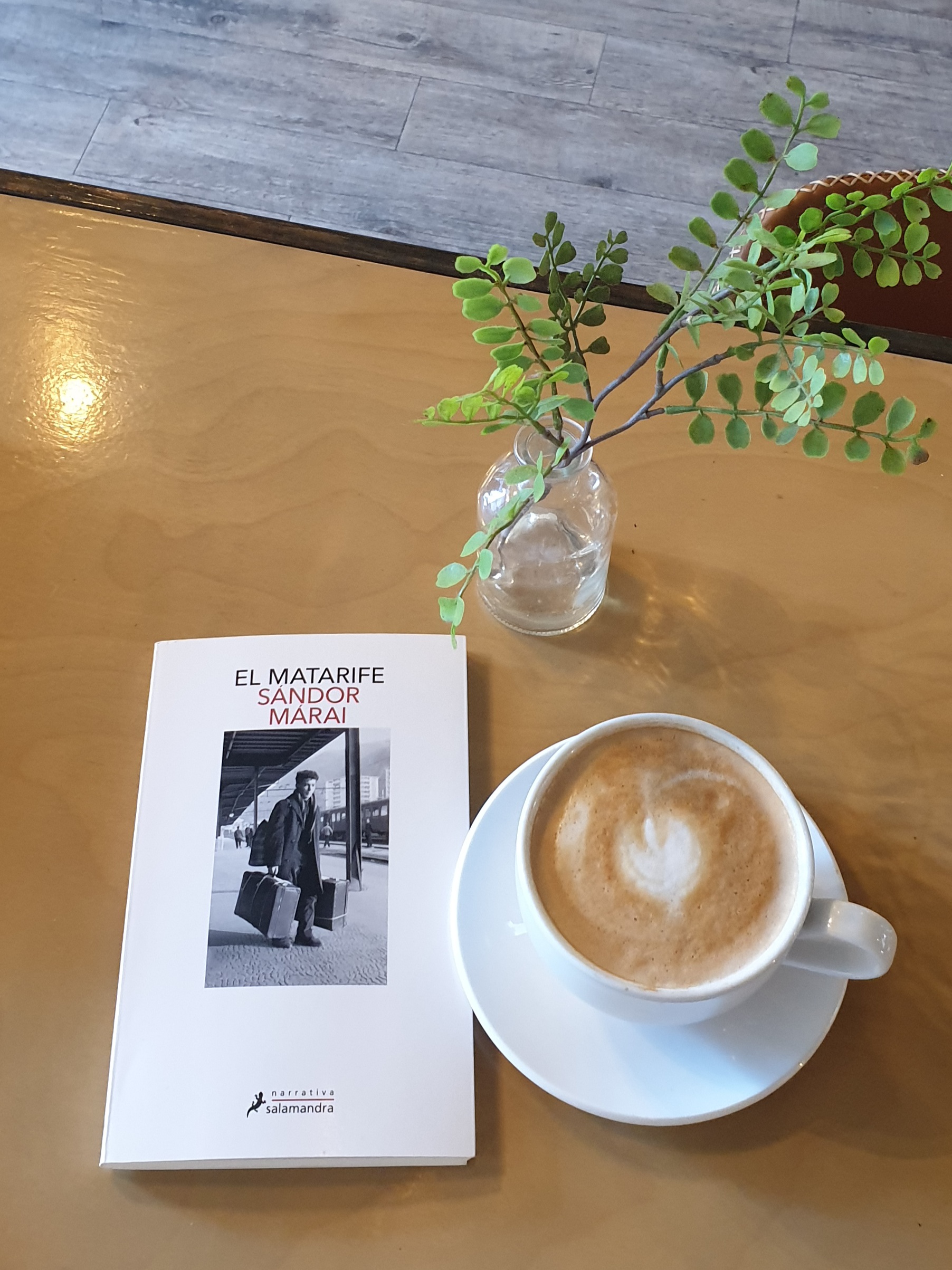
A good book and a good coffee

Happy new year 2022

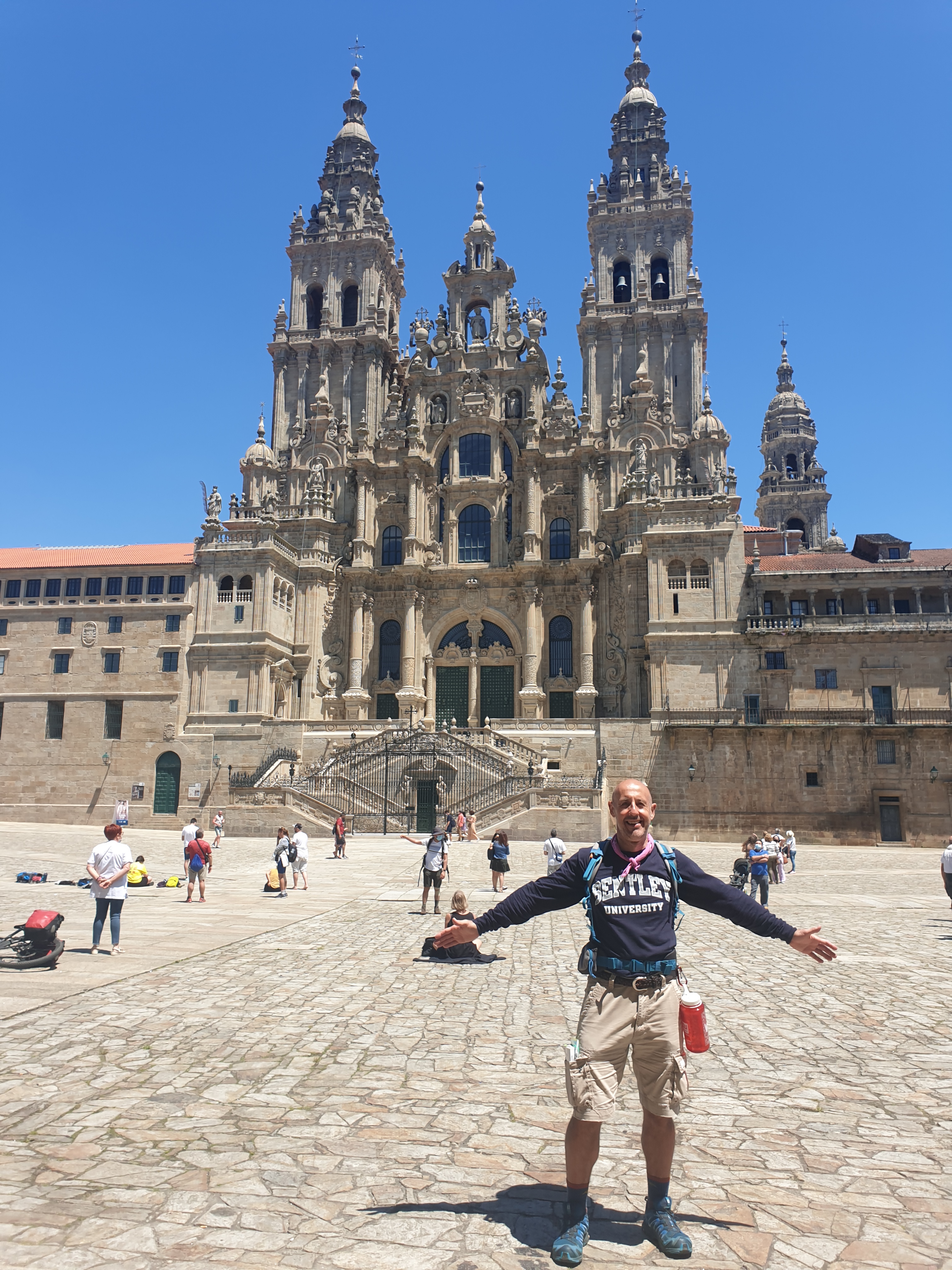
Setting out on our hike

Dear readers,

Just a quick note to thank you for your support this year and all ten years of this blog!! 2021 has been our best year as far as visitors and second best year in terms of views. Records that I hope to improve on next year!

As usual my most popular post was the one about Don Quixote and Existentialism, which you can check out here. Surprisingly and unexpectedly the second most viewed was the post on Jonathan Dickinson State Park, which you can see here.

I hope to continue bringing you interesting and solid content in 2022. Until then, thanks and Happy New Year!!

(Oh, here are a couple of the most popular photos from 2021)

I made it!!!

Don Quixote’s influence on Existentialist philosophy

This has taken me a couple of years to bring to the Interweb. The idea of publishing my thoughts in an academic journal kept me from using my own blog as a platform. Now that I have some distance from the ivory tower that is academia, I feel liberated enough to use this humble vehicle to say my thoughts.

The idea is quite simple: The Danish philosopher Kierkegaard (1813-1855), who comes up with the idea of existentialism, even if not in those words – he is known as the grandfather of existentialism –, was a fan of Cervantes’ Don Quixote, writing extensively about him. Kierkegaard influenced many of the philosophers who came after him: Friedrich Nietzsche, Miguel de Unamuno, Martin Heidegger, José Ortega y Gasset, and eventually Jean Paul Sartre (although it would be fairer to say Simone de Beauvoir) who finally came up with a formal theory of existentialism. Unamuno relied heavily on Kierkegaard and on Don Quixote to form his theories.

In 1605 Cervantes creates a man who decides to live life by his own rules. Bored with his bourgeois life, he becomes a knight in somewhat shining armor. Don Quixote is a celebration of free will with all the beauty and issues that that carries. Therefore Don Quixote is the great-grandfather of existentialism. As you will be able to see from the bibliography, remarkably little, if anything has been written about this topic.

This is my Master’s thesis which I wrote in 2008 at Simmons College in Boston, for the great professor Louise Cohen. It has not been peer-reviewed, which is not to say that this paper is any good, it is not. If you have read any of my work on this blog before, you know I write like a horse’s ass. So read at your own discretion. Oh, haha, FYI it’s in Spanish.

el-existencialismo-en-el-quijote