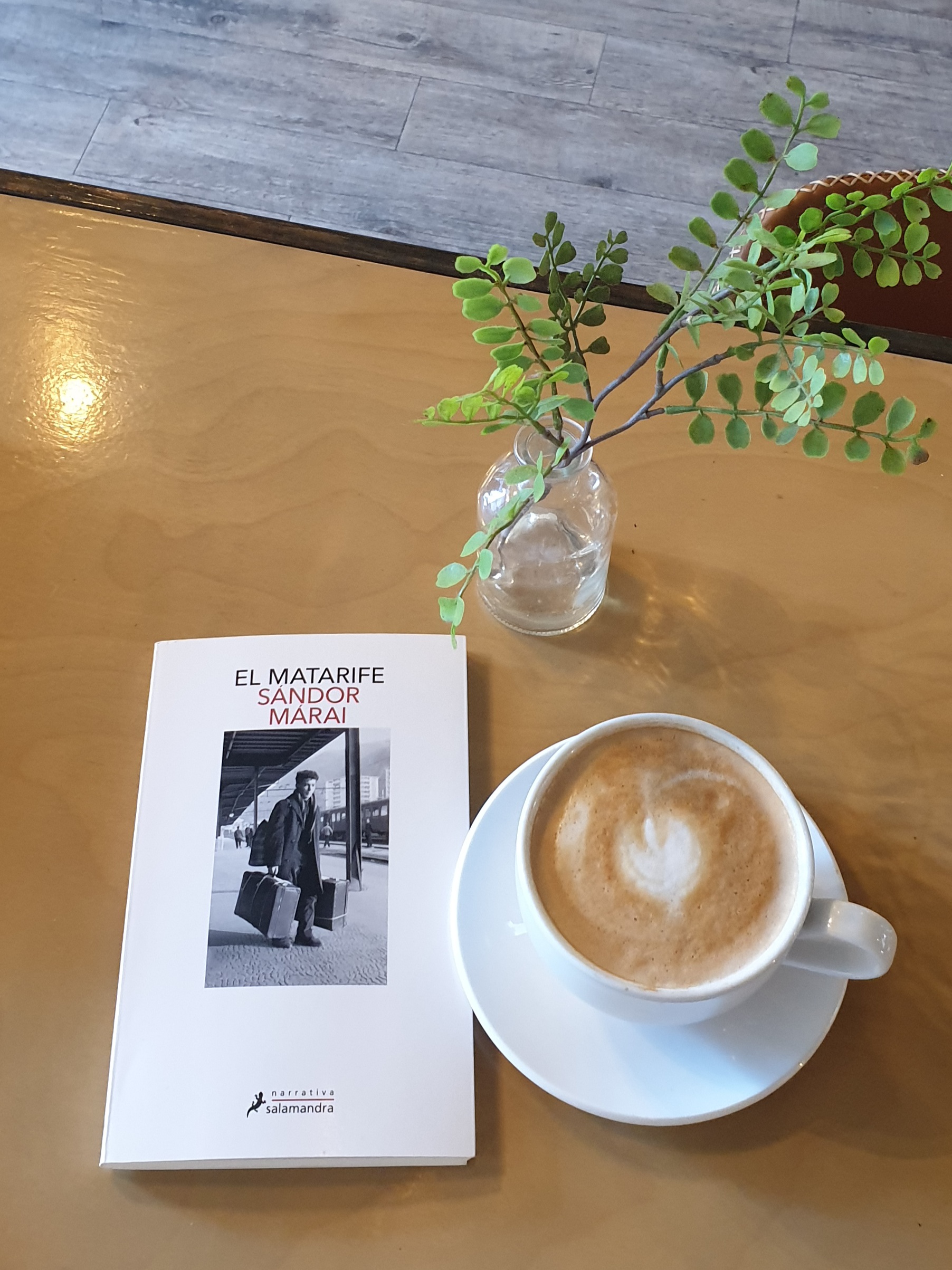
Last Summer, when I returned from Budapest, gushing with excitement from my visit, my sister gifted me Sandor Márai’s first novel, El matarife (The Slaughterer, The Butcher). I had never heard of him, but I was quickly absorbed by the Joseph Roth-like, turn of the (20th) Century style, which I love, and you can read about here.
Most protagonists in Existentialist literature have either lofty or uncertain, questionable motives. Yes, they might be murderers, think of Raskolnikov or Meursault, but either they try to justify their motives or, following Existential absurdity, they simply do not care. Other, more lofty existentialists, such as Don Quixote or Unamuno’s San Manuel Bueno, are not afraid to stand up for their beliefs.
In El Matarife (A mészáros in Hungarian) (1924) —which has yet to be translated into English! Marai creates a different narrative. Otto, who, as the title implies, will become a slaughterer, a butcher, enjoys killing, firstly cattle in Berlin’s market, then enemy soldiers and civilians during WWI. And eventually, as expected, he becomes a serial killer, who then kills himself.
The beauty of this book lies in Marai’s buildup of the narrative. We know Otto is a little different when, as a child, he enjoys seeing an ox get slaughtered. I remember being traumatized as a child seeing my neighbor’s pigs slaughtered, and that was a festive, community event! We also notice Otto is a detached fellow, no real friends, no girlfriend, no wife. Otto seems conscious of his behavior, which even earns him an Iron Cross from the Emperor himself!
Enough spoilers, if you can get your hands on some Marai, it will not disappoint. You are welcome.
Embers, originally published in 1942, was eventually published in English in 2001. It did garner critical acclaim, and I have it on the reading list.
“Above all, don’t lie to yourself. The man who lies to himself and listens to his own lie comes to a point that he cannot distinguish the truth within him, or around him, and so loses all respect for himself and for others. And having no respect he ceases to love.”
― Fyodor Dostoevsky, The Brothers Karamazov
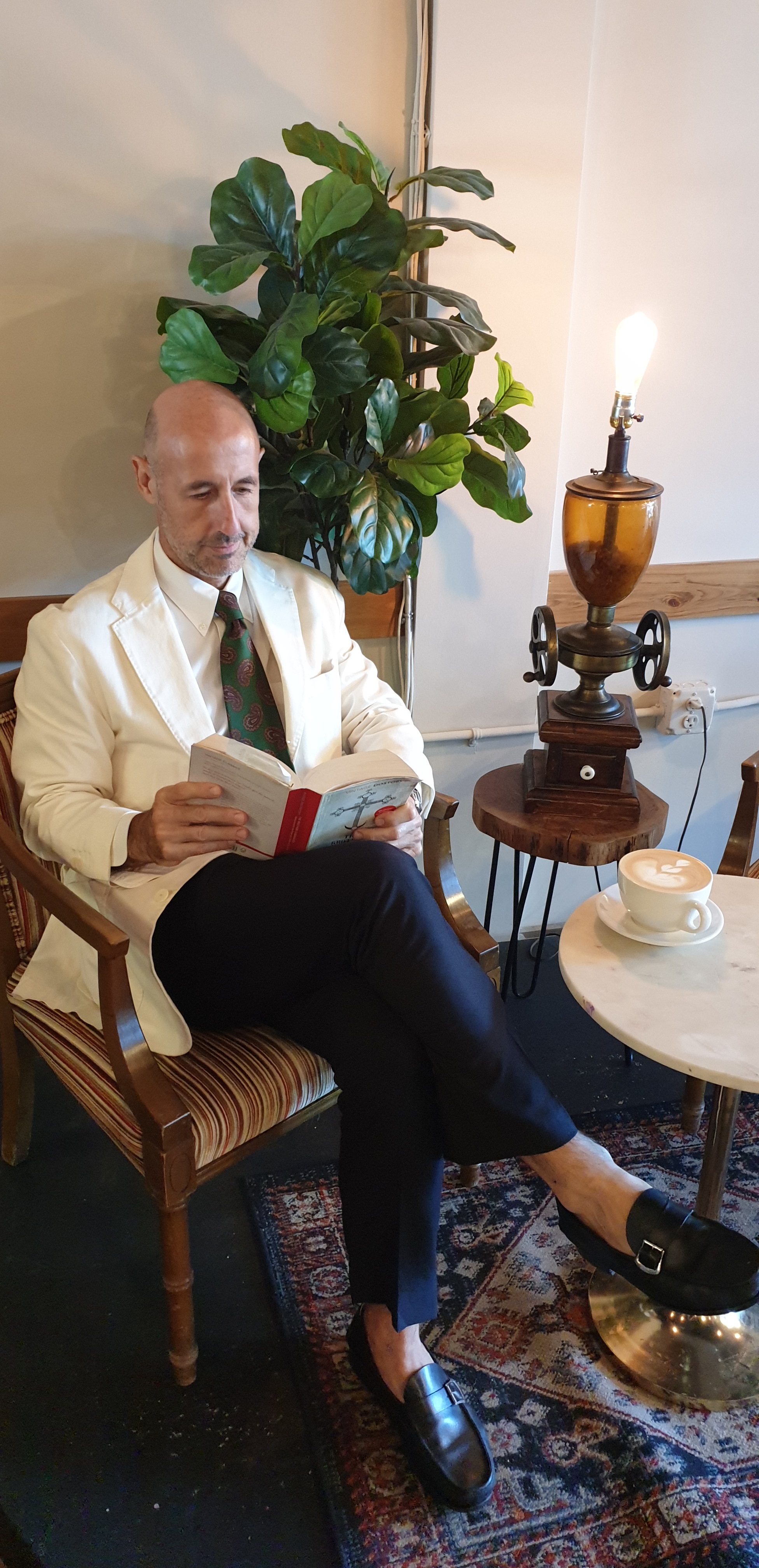
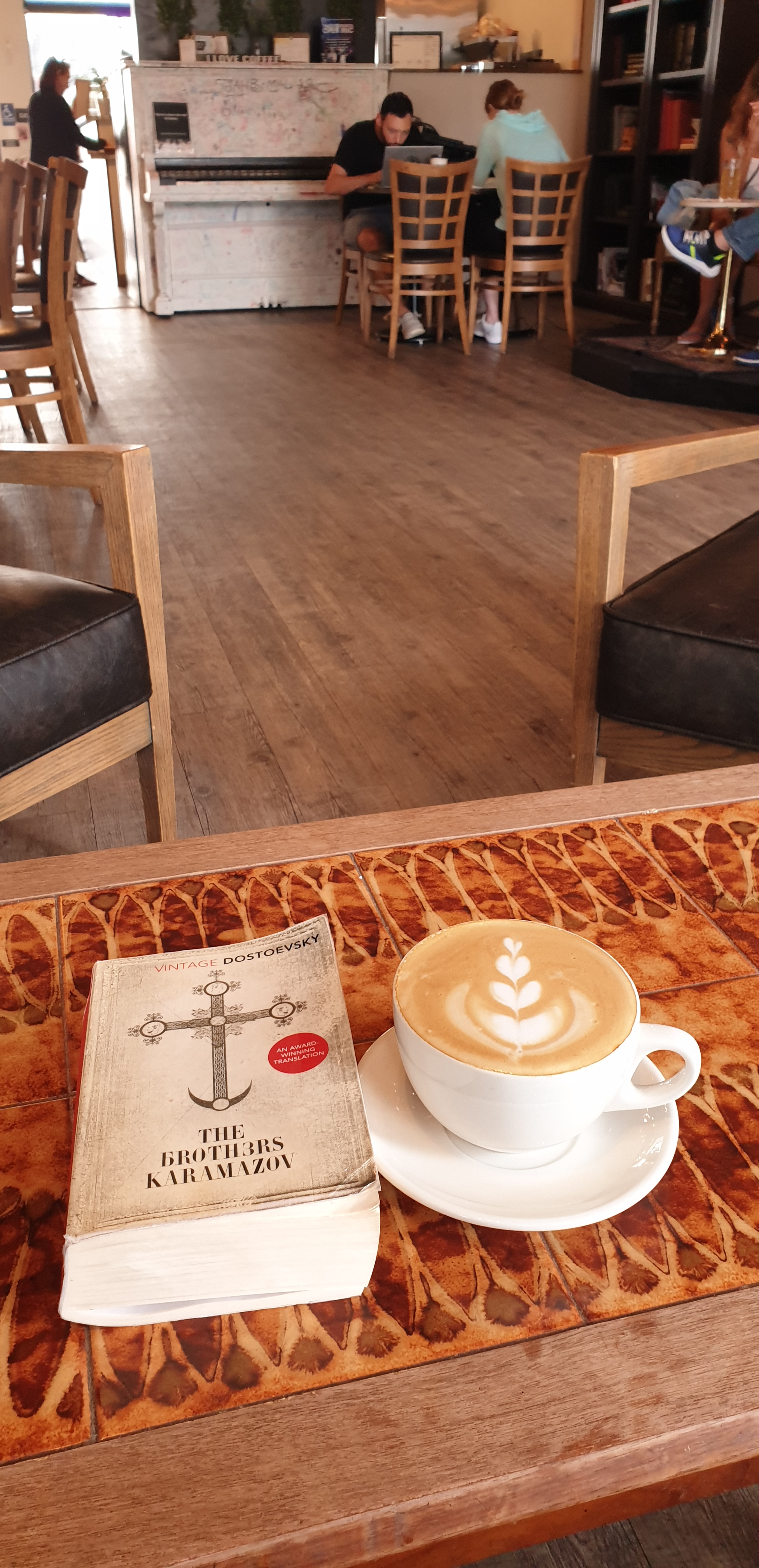
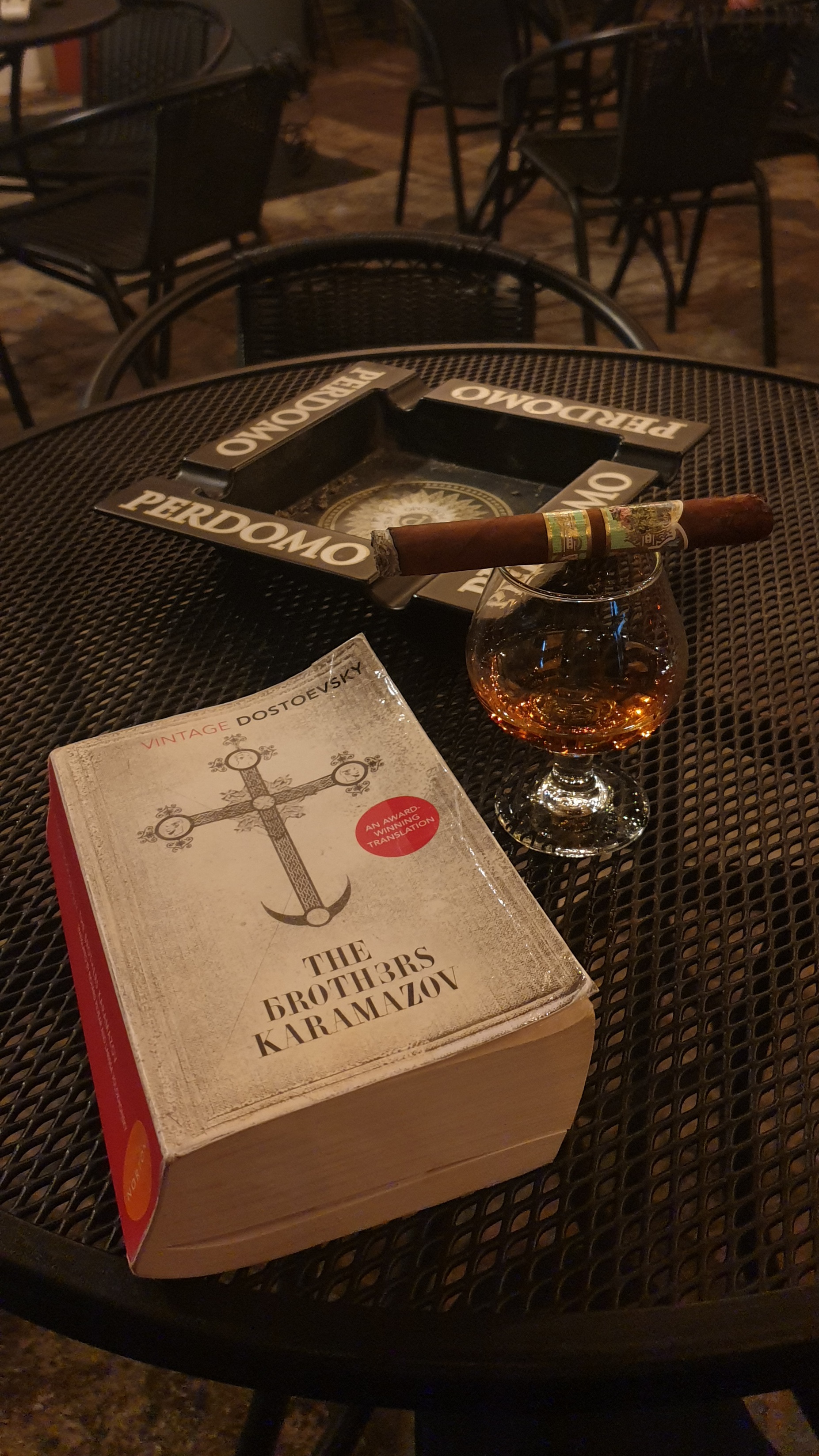
The hype is real, The Brothers Karamazov is one of the best books ever written. For me it goes straight up in my list! It has the perfect combination of human behavior, philosophy, love (and lust), Russia, and much more, all beautifully written and woven together.
No spoilers, the book is about the three Karamazov brothers: Dmitri, Ivan, and Alexei -Alyosha- and their father. There is also a half-brother, two women, servants, and many other characters who give the novel phenomenal depth and texture.
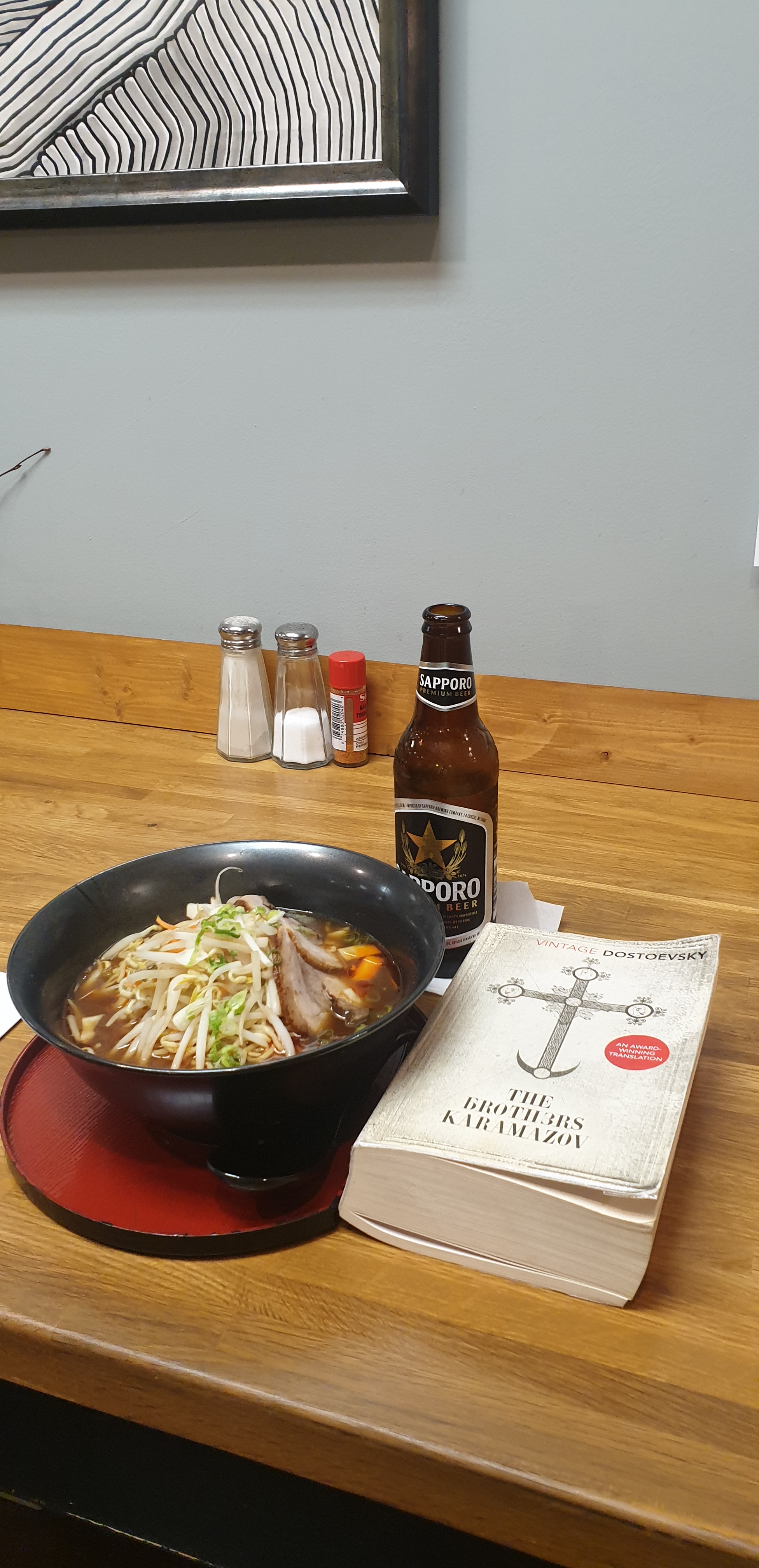
Ah, but it is a really long book! You exclaim. Well, yes, my edition is 776 pages, but look at them as an investment, or look at it as 7 books of 100 pages each, whatever just start reading. It took me four months, and it was time well spent.
My reference, my bar, is set at Don Quixote which was written 300 years before The Brothers Karamazov and for me, is still a better representation of human nature. But back to Dostoevsky:
This novel deals with the human condition from a deep philosophical and theological perspective, in doing so, Dostoevsky presents both sides of arguments. For example, in discussing the existence of God, Dostoevsky presents a profound argument against God with a brilliant story called The Grand Inquisitor and asking the age-old question “If God exists why do children die horrible deaths?” in the chapter “Rebellion”. On the other hand, the author summons Voltaire’s quote “S’il n’existait pas Dieu, il faudrait l’inventer” (If God didn’t exist, we would have to invent him). Likewise for existentialism. Dostoevsky studies both sides of the argument at length: do we have free will and we exercise it? Or is everything destined to happen? Like Cervantes -and more importantly unlike Nietzsche- Dostoevsky proves that God exists, and that man decides his life. But you have to read all the way to the last word to get there!
“The mystery of human existence lies not in just staying alive, but in finding something to live for.”
― Fyodor Dostoyevsky, The Brothers Karamazov
In his arguments, the author quotes Voltaire, the Book of Job, the Byronic hero, and hundreds of other references. The Devil also makes an appearance in what looks like a clear predecessor of Bulgakov’s Master and Margarita almost a hundred years later.
As far as narrative techniques, Dostoevsky does not only imitate Cervantes, but he also leverages Cervantine techniques: His narrator’s intromissions are constant and hilarious: at one point saying, “I am not a doctor…”, or “It could all serve as the plot for another story, for a different novel, which I do not even know that I shall ever undertake”. During the critical courtroom scene, arguably the climax of the story he writes: “The whole courtroom rose in turmoil, but I did not stay and listen. I remember only a few exclamations from the porch on the way out.” Very, very Cervantine.
There are a number of interpolated stories, which add to the reader’s understanding of the overall narrative. Some are stand alone and some weave in and out of the narrative, becoming part of the story.
In conclusion The Brothers Karamazov is one of the best novels ever written and you should read it. It will make you a more understanding person.
“What is hell? I maintain that it is the suffering of being unable to love.”
Match the titles of the books with their corresponding first line.
Happy families are all alike; every unhappy family is unhappy in its own way.
Well, Prince, so Genoa and Lucca are now just family estates of the Buonapartes.
On an exceptionally hot evening early in July a young man came out of the garret in which he lodged in S. Place and walked slowly, as though in hesitation, towards K. bridge.
Towards the end of November, during a thaw, at nine o’clock one morning, a train on the Warsaw and Petersburg railway was approaching the latter city at full speed.
Please allow me to introduce myself, I’m a man of wealth and taste, I’ve been around for a long, long year, stole many a man’s soul and faith.
In the big building of the Law Courts, during a break in hearing the case of the Molinsky’s, the members and the prosecutor met in Ivan Yegorovich Shehek’s office, and the conversation turned on the celebrated Krasovski case.
It was a wonderful night, such a night as is only possible when we are young, dear reader.
Fyodor Dostoevsky, White Nights
Leo Tolstoy, Anna Karenina
Mikhail Bulgakov, Master and Margarita (trick question, this is the opening of the Rolling Stones’ Sympathy for the Devil, which is based on this book)
Fyodor Dostoevsky, The Idiot
Leo Tolstoy, War and Peace
Fyodor Dostoevsky, Crime and Punishment
Leo Tolstoy, The Death of Ivan Ylich
Answers: 1-B, 2-E, 3-F, 4-D, 5-C, 6-G, 7-A
How did you do? As you can see this is a thorough test of your knowledge of Russian literature. In reality, it is a test of my knowledge (or lack thereof) of Russian literature, since these are the only books by Russian authors that I have read.
“The strongest of all warriors are these two — Time and Patience.”
Having said this and confessed my weak literacy in this deep ocean of work, I love what little I have read of Russian literature. In fact, at one point, I naively fancied doing my PhD in Comparative Lit. studying Spanish and Russian. Granted, this thought only lasted until I realized there was no way I was going to learn Russian in any level required to pursue a PhD, so… about 15 seconds (yes, I am a bit slow).
“Taking a new step, uttering a new word, is what people fear most.”
One of the many reasons I love Russian Literature are the many links to my beloved Don Quixote. While this is not unusual, think of Moby Dick, Madame Bovary, and authors like Unamuno, Graham Greene, Foucault, and now even Salman Rushdie! Dostoevsky is clearly and heavily influenced by The Knight of Sad Countenance. Oh by the way, if you this will not be a profound, critical literary analysis, just my chaotic ramblings, sorry.
“No one’s fate is of any interest to you except your own.”
My first dip into Russian literature was, predictably, War and Peace which blew my mind. The intricacy of the descriptions, the narrative arc, the character development, the whole package! Tolstoy puts you in 19th C. Russia, down to the smells, the samovar ritual, the clothes, the temperatures, etc.
“If you look for perfection, you’ll never be content.”
Then came The Death of Ivan Ylich and my mind was blown even further. Here was all the richness of War and Peace, but in a short story. Crime and Punishment came in 2007, and at this point there was little of my mind that had not been blown to smithereens! In my opinion this is a psychological thriller at its best! If Tolstoy puts you in Russia, Dostoevsky puts you inside Raskolnikov’s mind!
A couple of years later my dear friend Irina recommended Bulgakov’s Master and Margarita, and I was just flabbergasted, bowled over, dumfounded. This is deep, funny, magical, wonderful reading.
Anna Karenina, I found more personal than War and Peace, it struck a chord in my heart, not only in my mind. Basically, a similar narrative arc, character development, etc. of War and Peace, but from a much more intimate, psychological perspective.
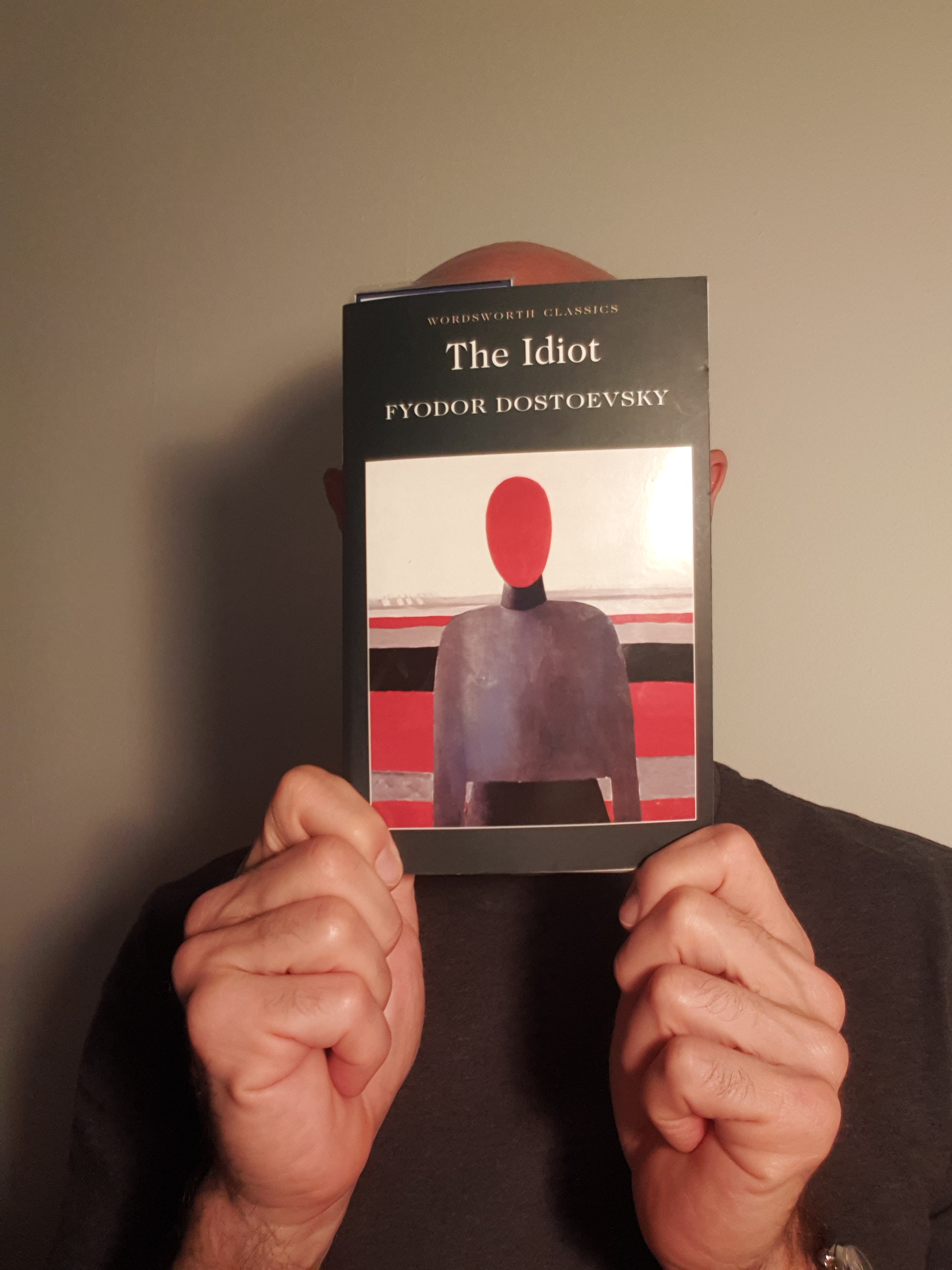
And now, I just started Dostoevsky’s The idiot. The start is promising, to begin with, there is a narrator interrupting the narrative. I love it and will keep you posted (if I have any brain left to write).
PS: I did not forget Chekhov. But as we say in Spain, that is flour from another sack…
Please leave any comments and recommendations below!!





 Antonioyrocinante's Blog