Don Quixote’s influence on Existentialist Philosophy Part II – José Ortega y Gasset

One of the most popular posts on this blog is Don Quixote’s Influence on Existentialist Philosophy, which is a bit embarrassing because it is not very good. I wrote it very early on in my master’s, and while the idea, the thesis is good, I did not develop it very deeply nor fully. It is mostly my gut feeling, my intuition that comes through.

I have thought and thought about this since 2008, and more importantly, I have read a lot that I would not have had the time to read for that little essay. I have read more Dostoyevsky, Sartre, Kierkegaard, El Quijote desde Rusia with three brilliant essays by Turgenev, Dostoyevsky, and Merejkowsky, more Unamuno, Graham Greene, and on and on.

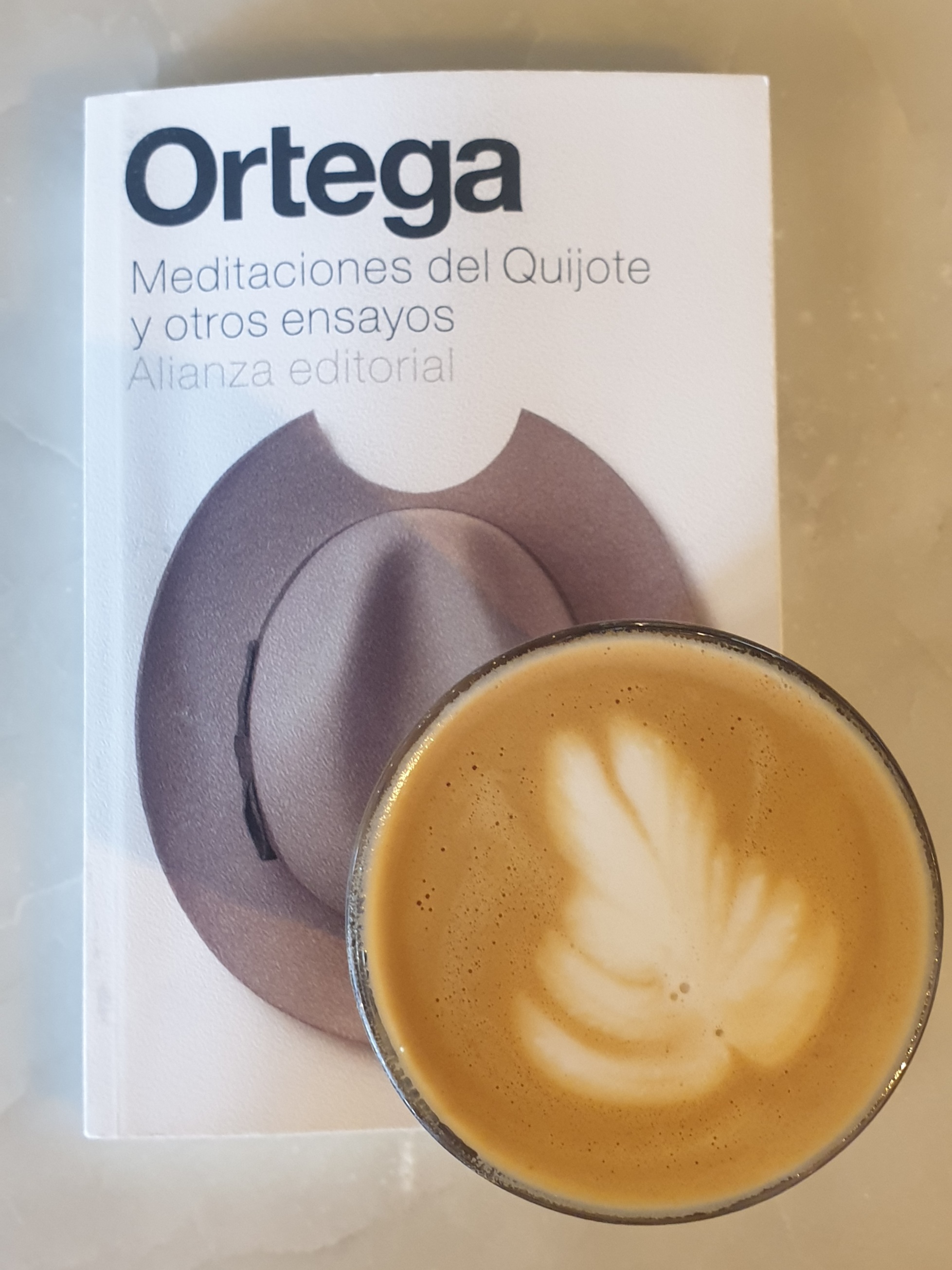
For Christmas, Celia gave me José Ortega y Gasset’s Meditaciones del Quijote y otros ensayos, which I had wanted to read for years.

All this reading confirms the theory that Cervantes crystallizes the thoughts of the preceeding centuries, from the ancient Greeks on Liberty to the early Christians on Free Will, where the Self is swimming in the primordial waters of philosophy, floating around until Cervantes’ electric genius gave abiogenesis form to Don Quixote, consciously creating his fortune, bringing about the concept of existentialism. The textbook example of this is the beginning of chapter VIII. Read it carefully, what does Quijote see? He sees them. What are they? Windmills or giants…

Don Quixote is the proverbial Tetrapod fish walking onto earth. It will be up to Kierkegaard, Dostoyevsky, Nietzsche, Unamuno, and Ortega before Simone de Beauvoir and Jean-Paul Sartre finally come up with the label that puts a nice bow on the Darwinian evolution of thought that delivers Existentialist theory.

Meditaciones has the famous quote “yo soy yo y mi circunstancia, y si no la salvo a ella no me salvo yo”.  So, yes, you are responsible for what you do in life, with life, but you also must deal with the circumstances surrounding your life. But Meditaciones is not what you expect. It is not a direct essay on Ortega’s thoughts on El Quijote -although it is also that- it is that in a meandering, roundabout way. Ortega talks about the Mediterranean culture, compares it to the Germanic culture as he lived in Germany for many years. This is evident when he quotes Nietzsche’s “Live dangerously”, which is, of course, the whole premise of Quijote’s adventures.

As a good philosopher, questioning El Quijote, Ortega ends up asking more questions than answering them. One key observation comes when he compares Cervantes to Shakespeare, something commonly done, as they were, after all, contemporaries. And here is the difference: Shakespeare explains himself, Cervantes not so much. Some of that difference might be due to the difference in genres: Theatre vs the modern novel, but nonetheless, there it is. Another common assumption is the Spanishness of Quijote, which leads Ortega to call Spain the “spiritual promontory of Europe”.

Another of Ortega’s brilliant observations, connections are between two Baroque masterpieces: Quijote and Velazquez’s Meninas, how we can step into each work and see it from the inside. This imaginary stepping into these makes them realistic. That realism is what makes us, and understanding ourselves in that work, that singularity, is what makes us heroes, a full hymn to Existentialism!

So what I wrote 17 years ago, although not the most brilliant, not the best written academic paper, still stands. Cervantes, by creating Don Quijote, is setting the cornerstone of Existentialist philosophy.

British geopolitics in Spain during WWII; Walter Starkie and “El British”

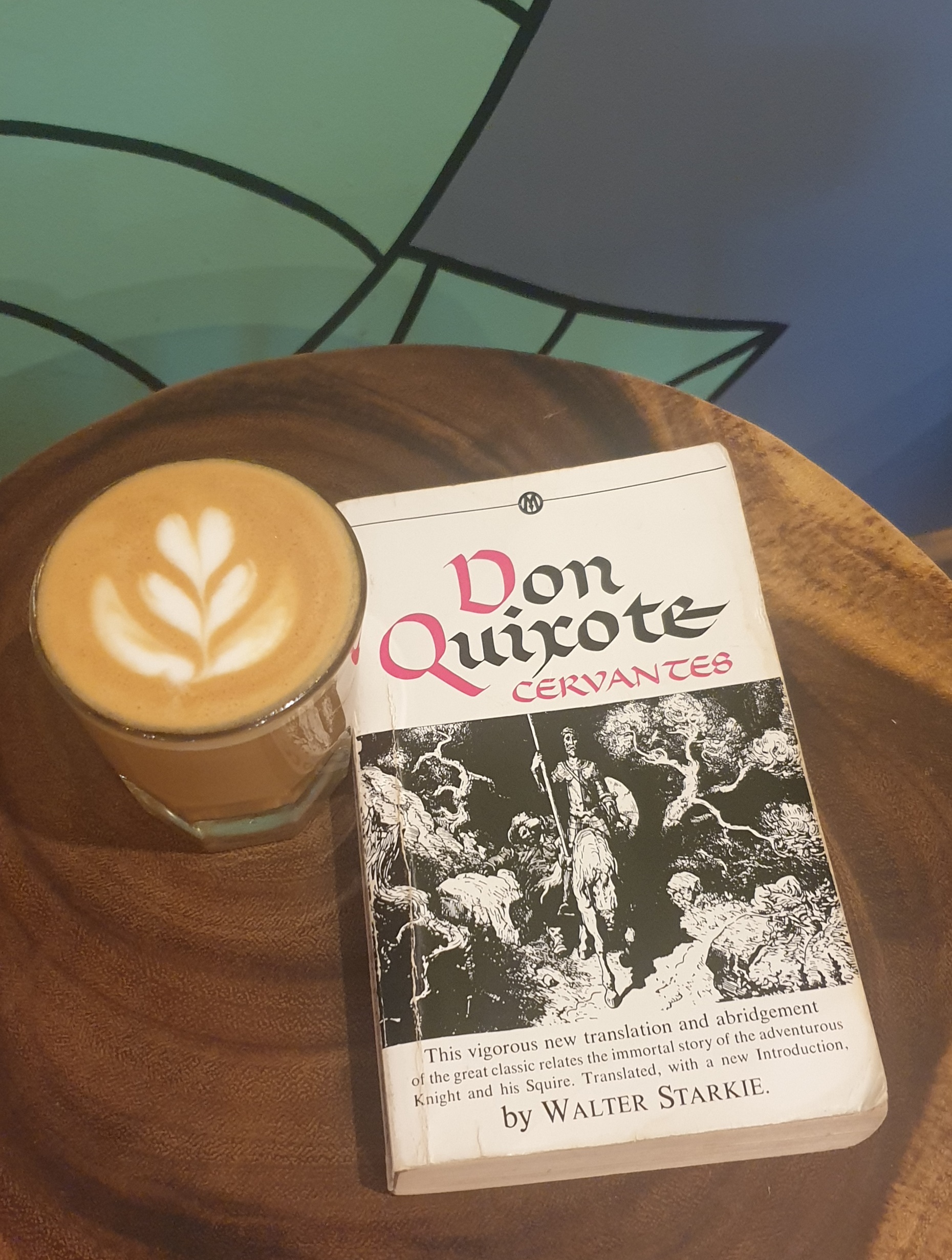
My dad could not stop talking about Walter Starkie. I never gave the fellow much consideration, that was my dad’s thing. My dad even found and bought some of his (many) books. But a few days ago, my aunt passed along a brief bio of Starkie –particularly in his time as Director of the British Institute in Madrid (attached). And I loved it! This fellow did more for Britain than you would think.

Mise en scene: Spain during WWII is a neutral country, at least on paper. After all, Franco won the (in)Civil War in 1939 with help from Hitler and Mussolini. Having said that, when Hitler asked Franco to let him transport his troops and tanks by train to Algeciras (next to British Gibraltar -but that is another story) to get to North Africa, Franco -to his credit- said no. But back to our story.

So, in a neutral but Axis friendly country, in 1940, during WWII, what could Britain do to exert some sort of “soft” power in Spain? The answer: send a phenom of nature, a genius, a virtuoso (literally), a wonder, and let him do his thing. Make sure he looks unassuming, a roly-poly, jolly, violin-playing academic fellow. Give him a fairly vague title like British cultural representative. Finally, give him carte blanche to do as he sees fit, oh and a generous budget, I am sure.

Ironically, Starkie was Irish, from a family of scholars and artists, he graduated from Trinity College in Dublin, with honors in Classics, History and Political Science, oh, and first prize in violin from the Royal Academy of Music in Dublin! After graduating he stayed at Trinity teaching Italian and Spanish. Samuel Beckett was one of his students! During WWI in Italy, he played violin for the British troops and met his wife. Back in England Y.B. Yeats made him director of the Abbey Theatre. From there he was sent to Madrid in 1940.

Starkie soon founded the British Institute – El Instituto Británico, “El British,” where my father, my uncle, and my aforementioned aunt went to school as children of a British Embassy employee (read more about my grandad here). Eventually my sister and I would also go to “El British.” Starkie made the school a center for conferences, concerts, presentations, so forth, which is precisely what Britain wanted in Spain: a cultural beachhead in Nazi friendly Madrid. Not only that, but as a Catholic (remember, Starkie was Irish), Starkie soon made friends with influential Jesuits Heras and Otaño, and eventually with government ministers. In fact, one of Starkie’s biggest victories was to have English as a language option (together with German) in Spanish secondary schools.

On any given day, Starkie could meet with a Spanish government official, play the violin with gypsies, whom he loved and wrote his most famous books about (Raggle-Taggle: Adventures with a Fiddle in Hungary and Romania (1933), Spanish Raggle-Taggle: Adventures with a Fiddle in Northern Spain (1934), and Don Gypsy: Adventures with a Fiddle in Barbary, Andalusia and La Mancha (1936)), host a conference, write or translate a book -like Don Quijote, and then go home, which served as a safe house for Jewish, Gypsy, and other prosecuted refugees on their way to America.

I asked my uncle what he remembered about Starkie. He told me how the Embassy’s country house was used as a safe house for downed plane crews rescued by the French resistance who were on their way back to the UK to fly again. But to get to this country house one had to drive by a gypsy settlement. Because of the friendship between Starkie and the gypsies, nobody ever dared go near that house to investigate what was going on, why there were cars and vans coming in and out at all times of the day and night, another point for Starkie!

So, besides the eventual victories on the battlefield, Britain scored a major victory in WWII by sending Walter Starkie to Spain.

Manuel Balsón, “El Jefe” (1934 – 2015)

Many personal obituaries start by mentioning a favorite memory, or a first memory they have of the departed. This, besides being personal, offers the opportunity for a funny or intimate story or anecdote. On the other hand, professional (read press) obituaries focus on the achievements of the departed.

For my father I am throwing out both styles and let’s see what we get. Part of the reason for this is that I do not have a specific memory, or a funny memory, or a first memory. Well, I have many and not one of them particularly sticks out. Nor do I have a list of achievements for him. He did not discover penicillin, nor the theory of relativity, nor did he invent the light bulb. But from humble beginnings he worked hard to bring up a family.

The secret of his success is due to the vision of his father (my grandfather) Antonio, who sent him to the British School in Madrid, meaning that my father was a rara avis: an English speaking Spaniard in the post civil war, Franco ruled Spain of the 50s.

A couple of times I have heard the cute remark about how the important thing on gravestones is the little dash that separates the birthdate from the date of death. Duh.

Something else to keep in mind is how we label and put people in their little boxes. Yes my dad devoted most of his life to international banking, in fact he was an important cog in the Spanish international banking scene of the seventies and eighties. But that is not all of who he was. Yes was a keen motorist and loved cars and motorsports. Yes he was a keen fan of Apple computers, especially given his age. Yes he managed to track his family back to the mid eighteenth Century, but that is not who he was either. He loved jazz – although later in life he got to appreciating classical music more, so every Christmas I would record for him, originally a cassette tape and eventually CDs and finally USB sticks. He loved to read the newspaper which he did every day without fail. That is another trait I learned from him. He loved food and wine and would equally enjoy a cheese sandwich on a park bench as a Michelin starred meal.

He was a brave and decisive man who at a young age went to London to learn about foreign exchange. He lived with my mother across the street from Ashburton Grove, home of Arsenal Football club, but that did not make him an Arsenal fan, if anything he was a Real Madrid fan. After learning about foreign exchange in London, he started an upwards trajectory that would not stop until his retirement in the late 80s.

In the 70s he was offered to start the New York office of the bank. Being the elegant visionary that he was, he opened shop in the iconic Seagram Building on Park Avenue. We all packed up and left Madrid, I was twelve. It was a bit traumatic but I would eventually get the hang of moving back and forth, and it would become a way of life. After three years in New York came five in London and then back to Madrid, by then I had started my own nomadic way of life, going to college in Boston and working in France and Switzerland during the summers.

But back to Manuel. He had that kind of knack to be in the right place at the right time and looking good while doing it. Of course it did not hurt that his brother-in-law – my uncle and godfather – was a renowned tailor that made him all his suits!  BTW that is where I get my suit wearing custom, in case you were wondering. The other side of that coin was that unfortunately my dad travelled constantly, so we did miss him at home.

As a teenager up I remember blasting all around Europe in the big old Bismark at 130 miles per hour with any excuse. Eventually I would even be allowed to drive – that was fun.

My father retired in the late 80s and started all kinds of hobbies: playing with computers, taking a genealogy course to track his family tree, but most importantly spending time with friends, travelling with them and basically hanging out with all sorts of people. Manuel made friends easily, from all walks of life: artists, Bohemians, noblemen and gypsies, doormen and executives, everybody. About this time he became a part of the Boina club. The boina is the Spanish version of the French beret. This “club” basically consists of a bunch of guys meeting at a great basque restaurant for dinner and appointing 2 new members: a male and a female boinero who had to make an induction speech. This group had a fantastic network of contacts so the list of members is basically a who´s who of Madrid: writers, artists journalists, politicians, professors, you name it, of course my dad with his love of cars was the unofficial chauffeur of the group, picking up and dropping off the new members, this way he always got to hang out with them one on one!

For years every morning he would walk around the Retiro Park in Madrid, and he would often meet people there. Some of them became close friends. He walked every day until he no longer had the strength to walk out the door. The twelve years that I lived in Madrid, I always loved living overlooking the park so I had the light and could run and walk. Many weekend mornings I would bump into my dad walking and I would walk with him. Those walks were very special.

Possibly his biggest project after retirement was installing and improving the sprinkler system at the country house in La Navata. In fact, more of a hobby, it might have been his summertime obsession. I joked with him that he was like Enea Silvio Carrega, the hydraulics obsessed uncle in Italo Calvino’s story Il barone rampante. Fixing the sprinklers, changing water pumps, pumping water from one well to the other, tweaking the irrigation software. For this project he would enlist Mohammed, our local gardener to dig a ditch here, uncover a pipe here, make a hole here and so on. You would wake up on a hot summer morning and see chubby Mohammed trudging around the garden following my father who would be wearing his immaculate Panama hat overseeing the watering situation.

My father was diagnosed with an advanced pancreatic cancer in 2012. Thanks to the phenomenal staff at the Hospital Clínico San Carlos and specifically to Dr. Sastre, who managed to sneak him into the last spot at a clinical trial for a new pancreatic cancer drug manufactured by Celgene. This was a massive and miraculous success that increased my father’s life from an average of 5 to 9 months to three and a half years. These have been a tough three and a half years for Manuel as he struggled with his illness. The last few days, my mom, terribly stressed from being basically the sole caregiver all this time, took advantage of the fact that I was home from North Carolina to take some days off in Mallorca with her grandchildren. So I spent my father´s last week alone with him. Despite the fact that it was a tough situation for us, we had a very nice last bonding experience. We did not talk much, as by then he was spending most of his time sleeping. I slept on a bed next to him, to help him at night.

This slideshow requires JavaScript.

Manuel died peacefully in his sleep on the morning of July 3 on his bed, surrounded by his family, like Don Quijote or Rodrigo Manrique.