Is there a right or wrong way to walk the Camino?

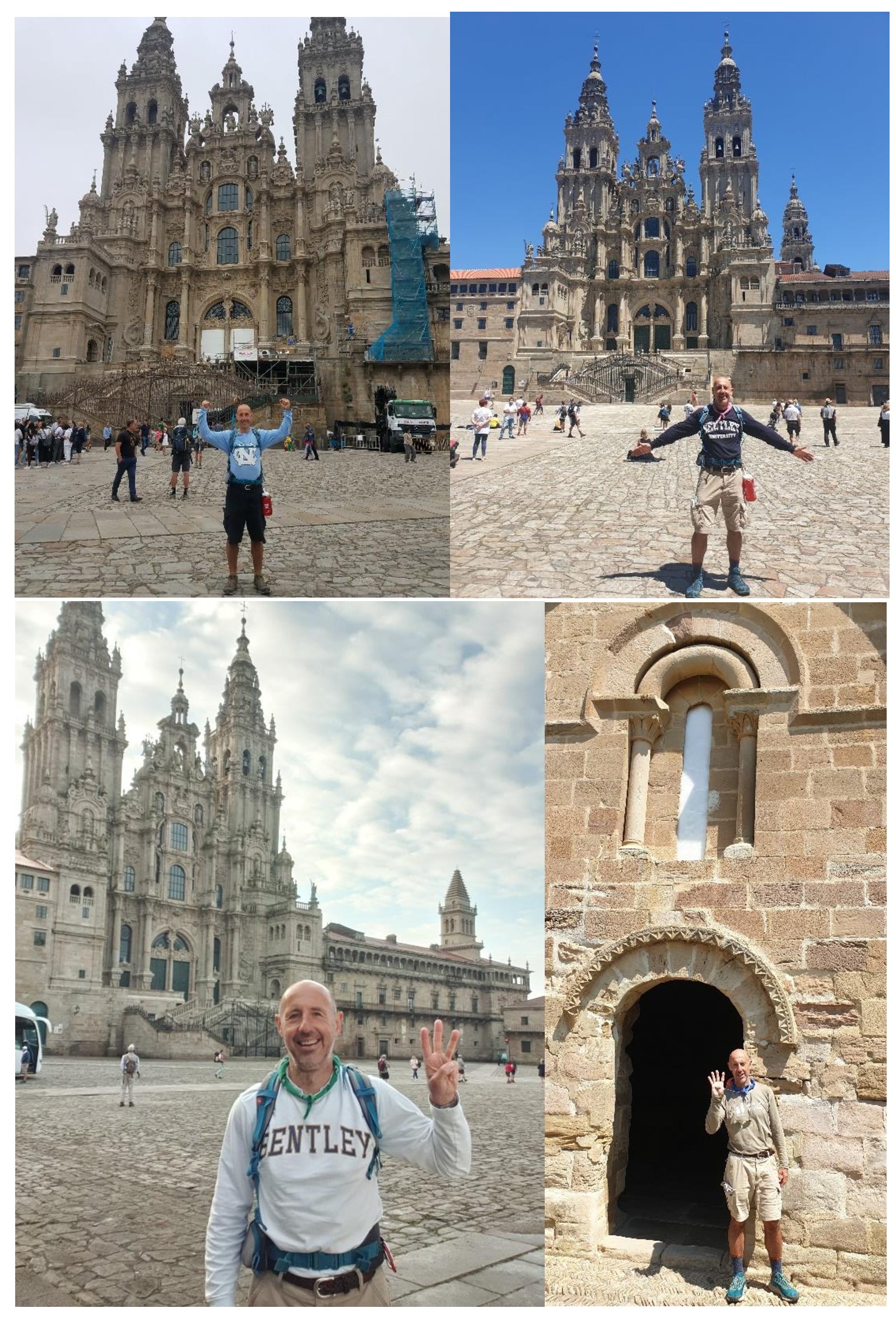
4 Caminos so far…

Is there a right or wrong way to do the Camino? Spoiler alert: no, everyone does their thing. There is a lot of talk about this, and social media really likes to push extremes. If you go to the Camino pages on any platform, you will see what I am talking about. Pilgrims who walk from St. Jean or further beyond think they are better than folks who start in Sarria, stay in luxury hotels, eat gourmet meals, and have a luggage delivery service. This is obviously not true, but having said that, there is a difference between a pilgrim and a tourist, and that is ok.

Like everything else in life, you are going to get out of the Camino as much as you put into it.

It boils down to how willing you are to have your life changed; how open you are to being changed, and how much you are willing to do to have that experience. I remember the first time I stepped into an albergue and realized I had to share room -and bathroom- with complete strangers, something I had not done since college, a few decades before. That was a first eye opening and humanizing experience, never mind walking for over thirty days with a pack on my back.

The problem arrives when you are on a pilgrimage trail, but you have chosen not to be a pilgrim, or you are not willing to put in the effort to be a pilgrim, or you do not know the difference (I once saw a young lady walking in her bikini carrying only a water bottle, good for her!). There is no such thing as a perfect pilgrim, maybe if the only thing you are carrying is a chunk of old bread and a Bible, according to The Way of a Pilgrim, a 19th-century Russian mystical text (reference Richard Rohr’s Daily Meditation: The Way of a Pilgrim).

Before you start the Camino, ask yourself what your purpose is in walking to Santiago. Do you just want to check off this item on your bucket list, but have no desire for a spiritual journey? That is fine but be aware that you will walk with people who might have a deep spiritual purpose on the Camino. Likewise, pilgrims need to be aware that not everybody on the Camino is there on an inner journey but might just be there for the fun experience, the food, and the thread count on their bedsheets.

The whole purpose of a pilgrimage is letting go of the ego, a lot of that happens through letting go of other stuff… all your clothes -you only need a few, your privacy, a nice bed. It is easy for your ego to think that you are the best pilgrim, or that the only good pilgrims are the ones who stay in your Albergue. For more on this read about the Cosmic Egg here.

At the end of the day, it is all about tolerance. Yes, there is a difference between a pilgrim and a tourist, it is a mindset and attitude issue, but that is all right, we can all share the path.

Here is an interesting chart I found on Researchgate: Tourism – pilgrimage continuum based on spirituality and authenticity by Ivo Jirásek
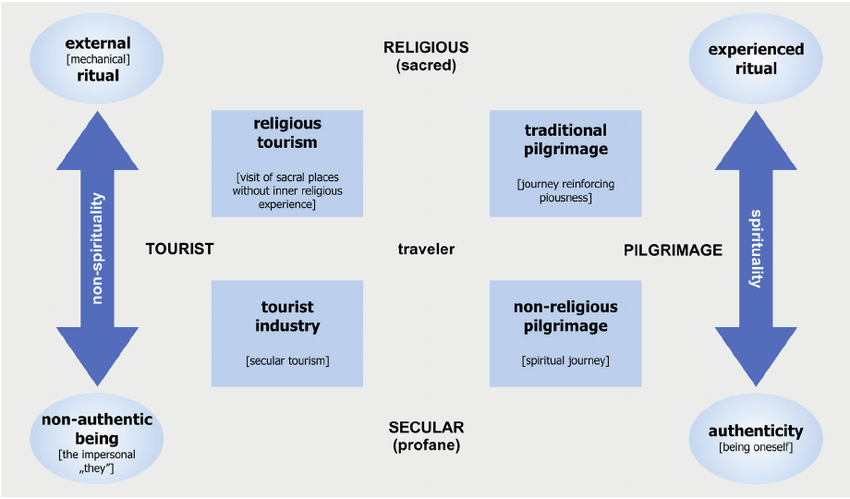
Thanks to Ivo Jirásek

Meditation, the cosmic egg, and Kierkegaard

Rohr

It is difficult to pinpoint when I became interested in the intersection of spirituality, philosophy, and wellbeing. I know I was curious about these issues as a teenager, so I guess it has been a lifelong pursuit, adding ingredients into the mix as I learn and mature.

In 2012, thanks to the great Dr. Mulkern, I started reading Richard Rohr. Rohr is a Franciscan friar who has written over thirty books on religion and spirituality. I have mentioned him many times in this blog. You can subscribe to his brilliant and illuminating daily email by clicking here. A couple of years later my dear friend Paco introduced me to meditating, I have not stopped since –although I am bad at it, that is ok.

Briefly and roughly: 19th C Danish philosopher Kierkegaard (also often mentioned in these pages) proposes three stages of life: An ego driven, superficial youthful stage called the Aesthetic, the more mature ethical stage in which we worry about right and wrong, and finally the Religious, where we connect with our spiritual self. These are not supposed to be linear, although it makes sense if they are. Also, there are people who stay in one stage all their lives…

The “cosmic egg” appears in many different mythological traditions giving birth to the world, and/or the universe. Richard Rohr’s interpretation is of three eggs one inside the other, like Russian Matryoshka dolls. In his theory, the smallest egg, “My Story”, is a me centered, ego-driven narrative, which revolves around my status, my things, my Instagram followers, etc. you get the idea. The next bigger egg is “Our Story” which revolves around group mentality: my country, my religion, my football team, my race. Definitely, “Our Story” is a step up from “My Story”, but there are bigger and better things out there: “The Story” is the universal story that connects all of us, it is the transcendental stage where everything makes sense, it is the place of love, forgiveness. wisdom, listening, and understanding. It is what is. You can read his explanation here.

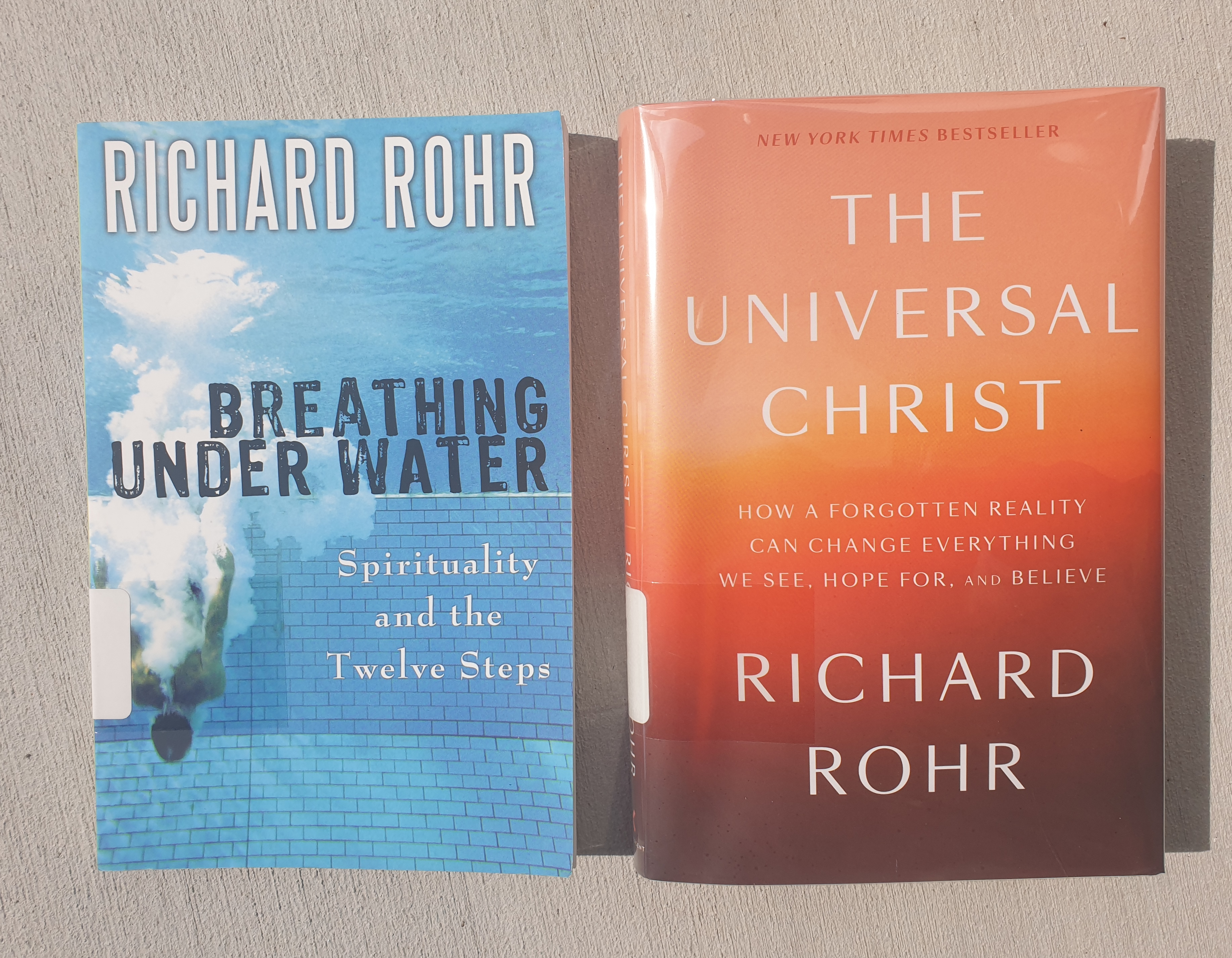
A couple of Rohr’s books

Interestingly, these three “eggs” or stories match Kierkegaard’s stages perfectly. The trick here is that to progress from one stage to the next the only way is through pain, through breakage, through loss and vulnerability (check out my post on vulnerability here). If you do not pay your dues, you might stay in your ego centered little universe your whole life. You have to be willing to suffer and listen to the pain to come out on the other side, wiser. This never-ending effort to transcend, to enlightenment, requires a very conscious effort which is where meditation, reading, religion, community, exercise, volunteering, even diet is important –but not the only- ingredients.

The Story is not limited to any one religion or denomination, and all healthy religions and even philosophies will be tellingit on some level. For example, forgiveness is one of the patterns that is always true. It always heals, whether you are Hindu, Buddhist, Catholic, or Jewish, gay or straight, Black or white. There is no specifically Catholic or Indigenous way to feed the hungry or steward the earth. Love is love, even if the motivation and symbols might be different.

The complete cosmic egg is uniquely the work of God and healthy religion. Biblical tradition, at its best, honors and combines all three levels of story: personal journey as raw material, communal identity as school and training ground, and true transcendence as the integration and gathering place for all the parts together. We call it holiness, which is the ultimate form of wholeness.

Richard Rohr’s “Daily Meditation” 01-27-2021