


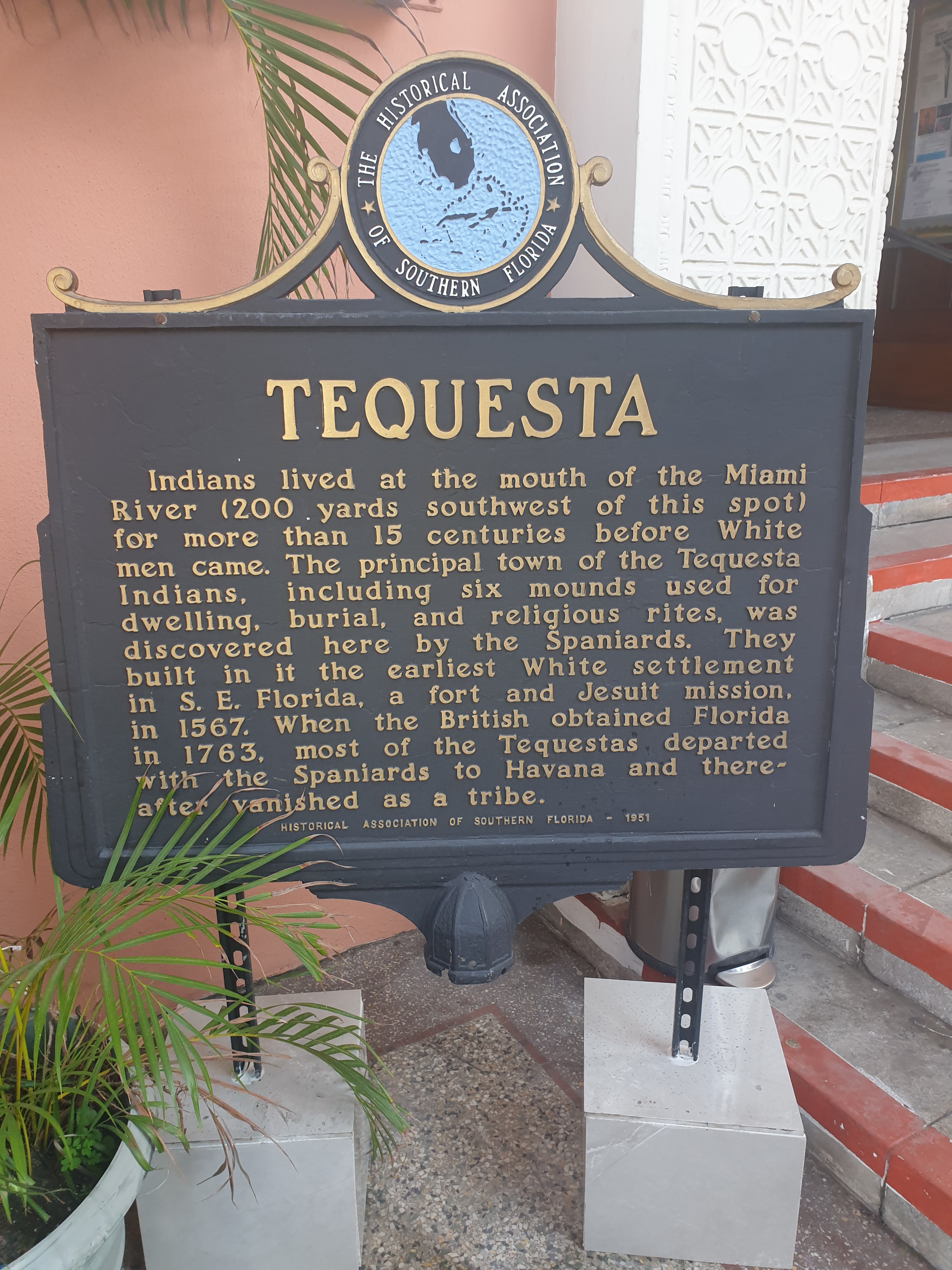
Confession time: Although I hate Miami traffic and expansive development, I must admit that I am discovering more and more redeeming bits about an otherwise unpleasant city. But first, a little history.
The Tequesta people lived at the mouth of the Msimiyamithiipi river for centuries. The only remains of the Tequesta village is now a dog park… welcome to Miami! The first Europeans to settle in Miami were Spanish Jesuits who set up a mission there in 1567 (although both Jesuits and natives later fled Miami to Cuba when the Brits started to make trouble). Then nothing much happened in the area until Julia Tuttle set up agricultural development in 1880. When Flagler’s railroad arrived in Miami in 1896, the population was a remarkably interesting 444 inhabitants (¿?). Then there was a boom with Collins and Brickell and Fisher building hotels and developing everything in sight, until a massive hurricane in 1926 destroyed pretty much everything, hitting the reset button for Miami, kicking of its Great Depression almost three years before the rest of the country hit it.
Only a few structures remain in Miami from before the hurricane; The Cape Florida Lighthouse from 1825, in Key Biscayne is the oldest building in Miami.
The oldest remaining house in Miami belonged to a yacht designer called Ralph Munroe. His home, called the Barnacle, is fortunately now a Florida State Park, and it is a bit of a jewel and an oasis in the middle of crazy Miami. The Barnacle is right in downtown Coconut Grove, the bohemian, Rive Gauche type of neighborhood of Miami.
The house where Munroe designed and built his beautiful sailing boats sits in a hammock which is a park with native plants and trees right on the water. Also, at that time you were better off travelling around Miami by boat than by land, so most properties were on the water.
The house is a lovely Victorian mini mansion well worth the visit. There is also Munroe’s boathouse down by the water, and a couple of the beautiful boats he designed are in the water!
You are welcome. Let me know your thoughts on this and other Miami jewels in the comments.





 Antonioyrocinante's Blog