Rembrandt and the Dutch Masters at the Norton Museum

Years ago, I heard that the three most influential artists in history were Velázquez, Goya, and Rembrandt. I am not an artist, so I cannot opine, but it does make a lot of sense. Velázquez and Goya —I am fairly familiar with them, since I spend a lot of time at the Prado Museum (which only has one Rembrandt). Rembrandt and the Dutch Masters are fascinating, but I am less familiar (although I did spend time at the Rijksmuseum back in the Mesozoic era).

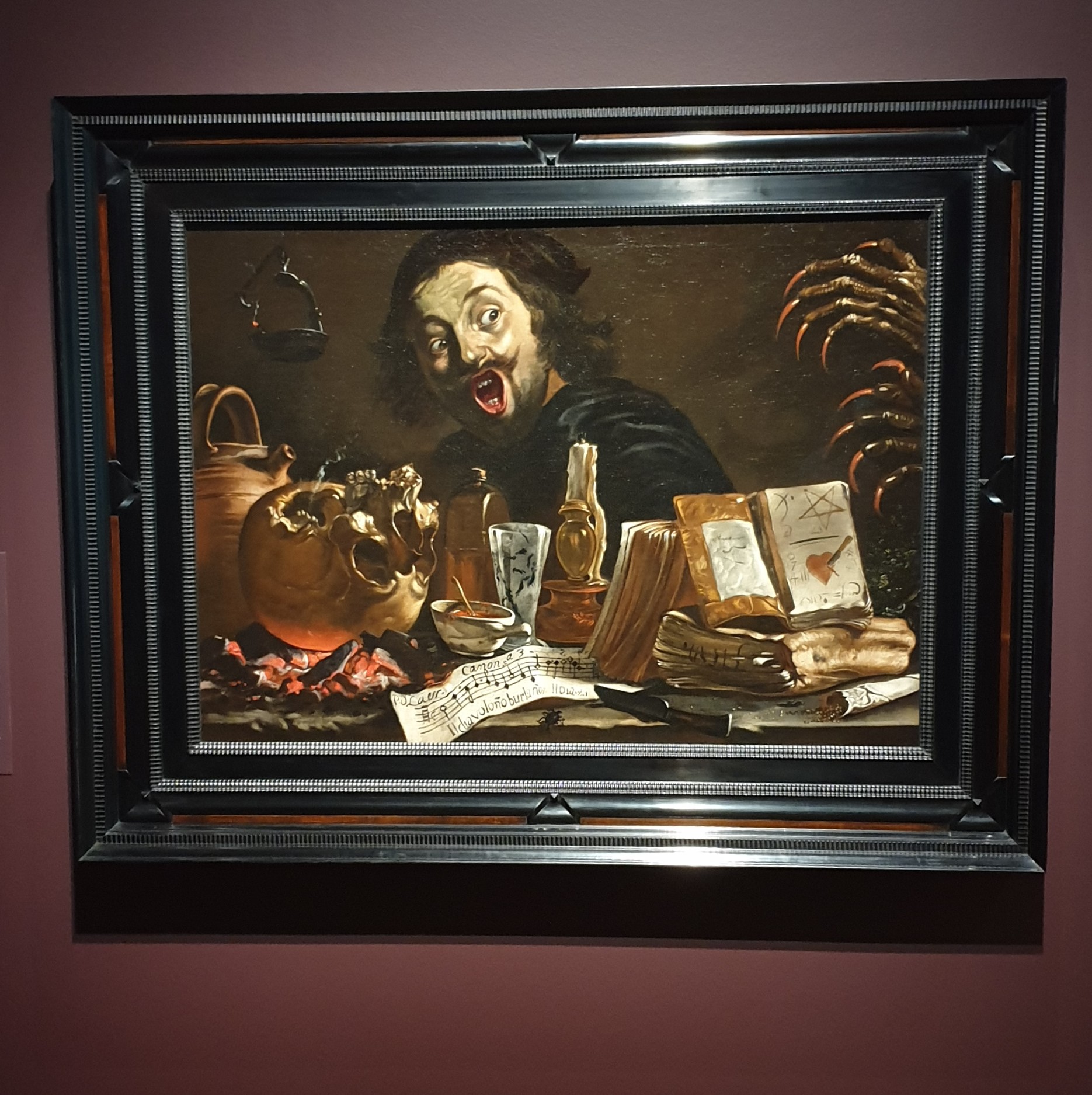
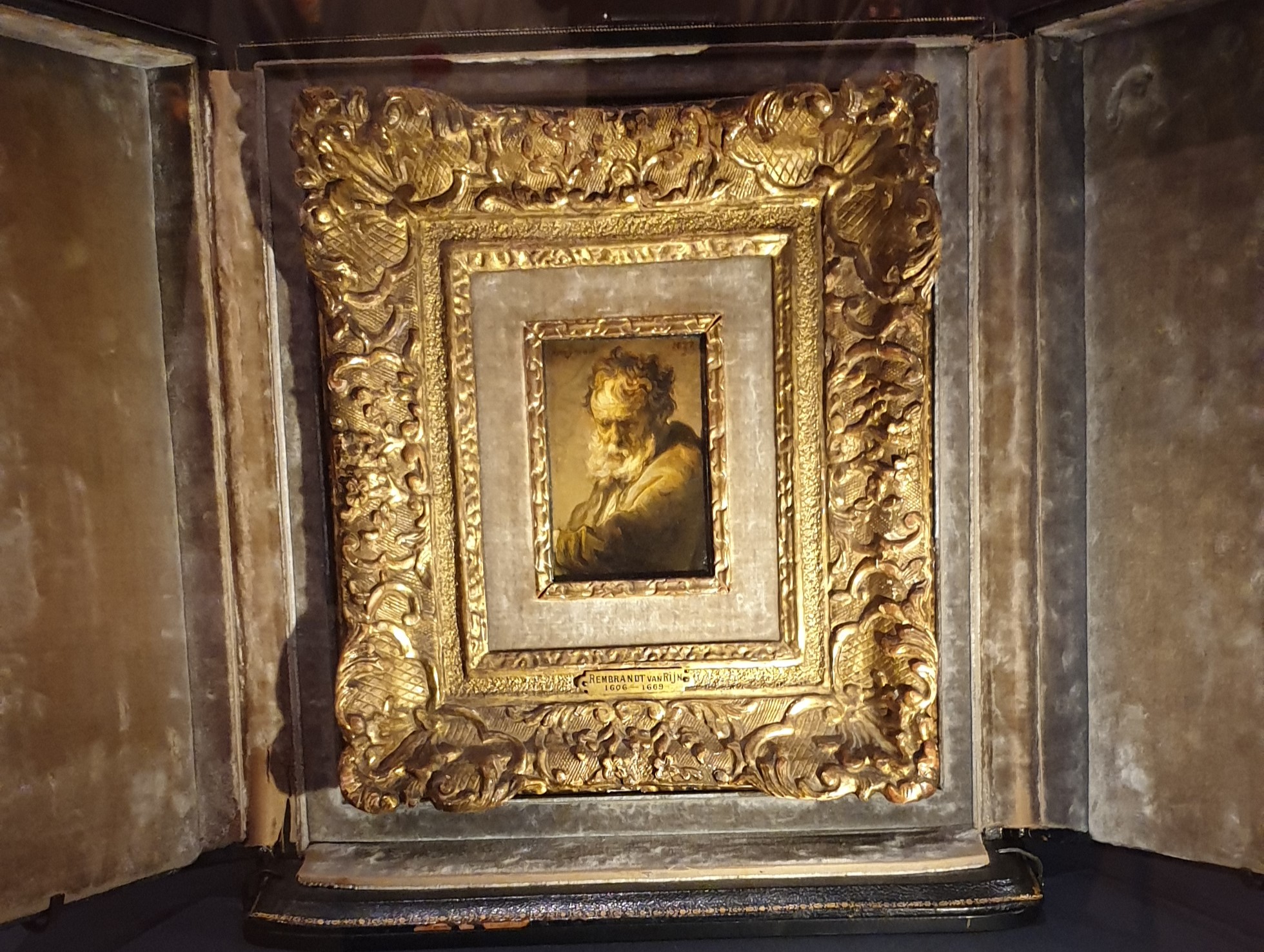
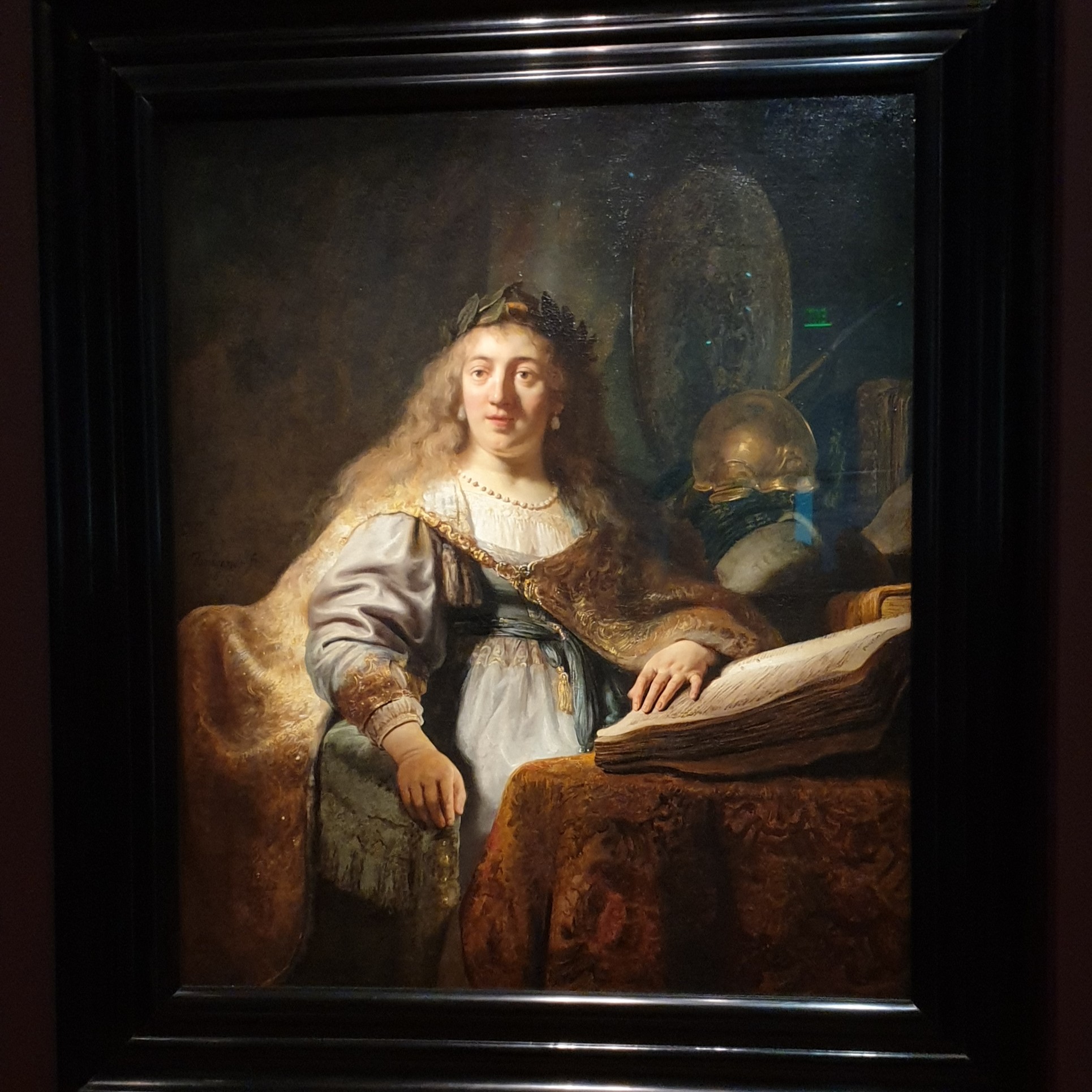
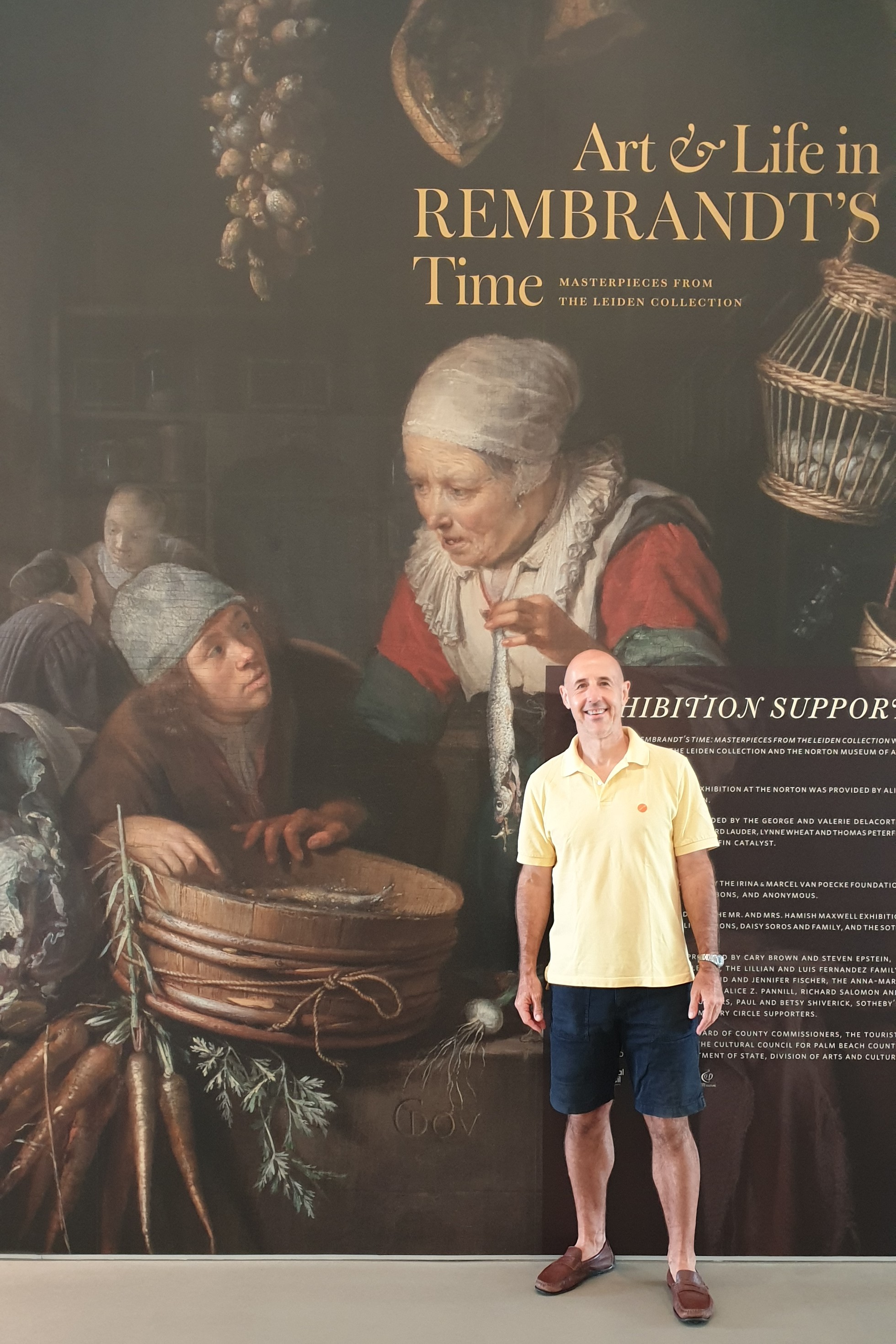
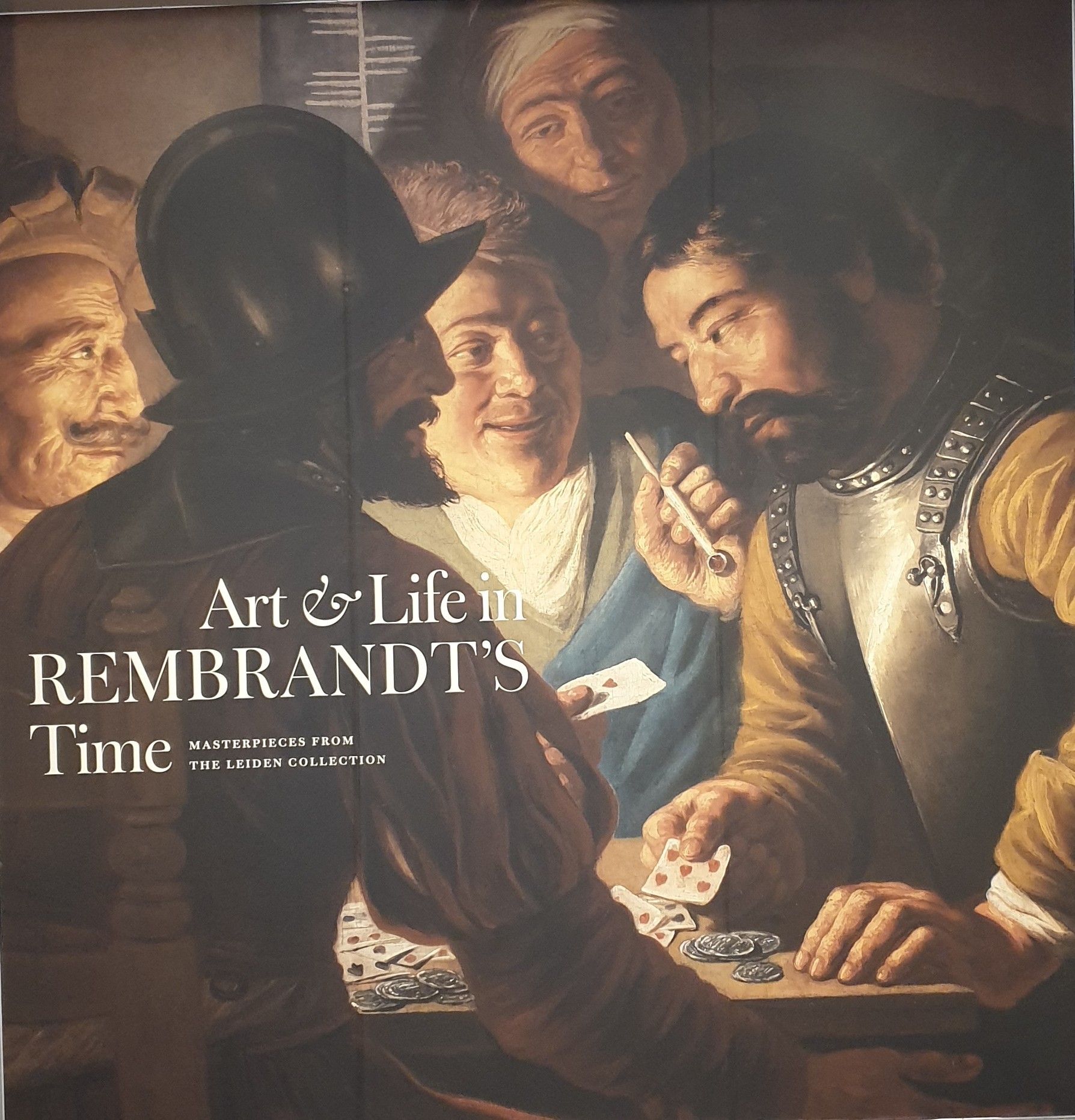
The Norton Museum has just opened a phenomenal exhibit on Rembrandt and the Dutch Masters from the largest private collection, The Leiden, and I have already seen it twice and hope to see it a few more times. I have already scheduled a visit for one of my classes!

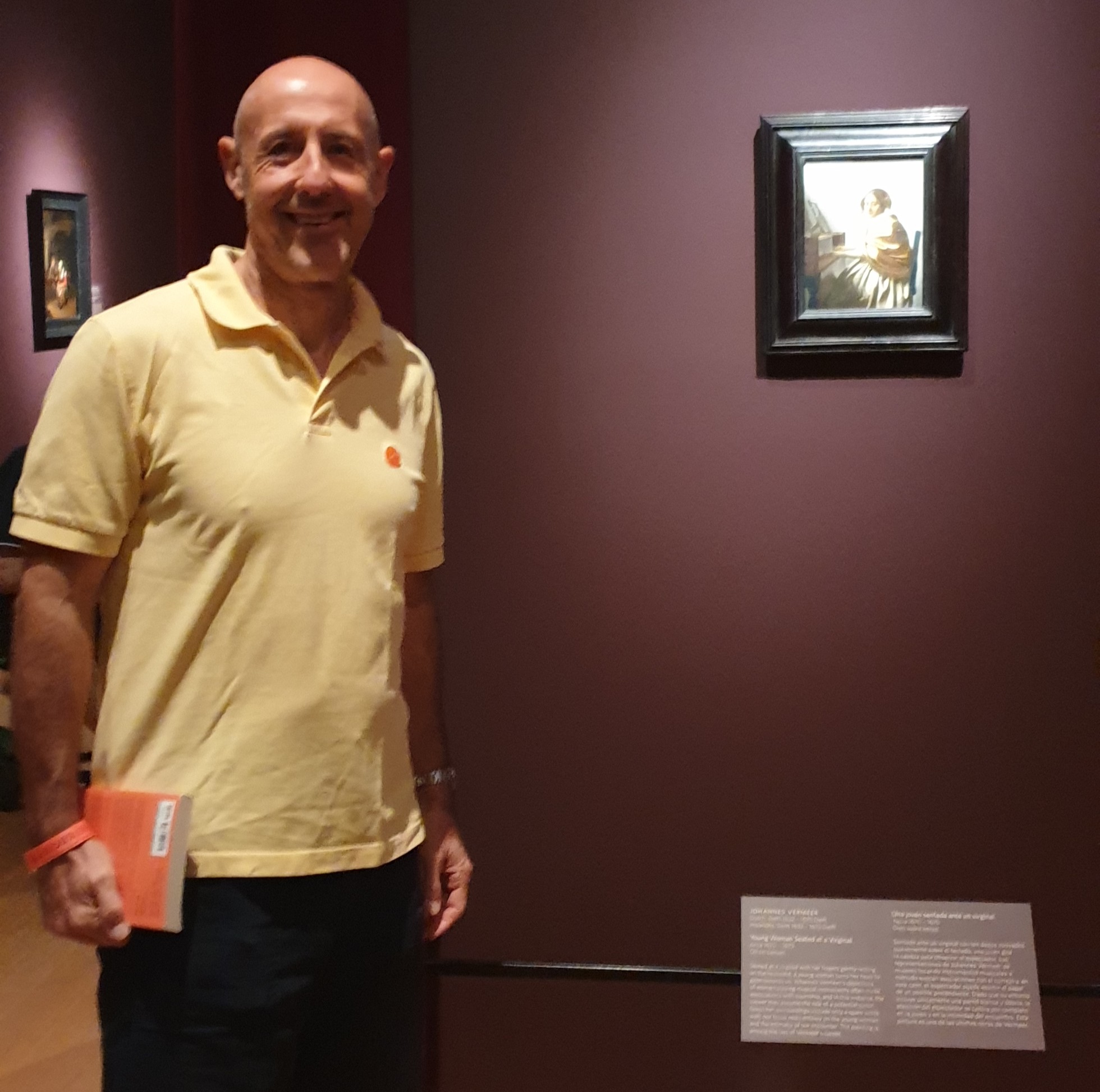
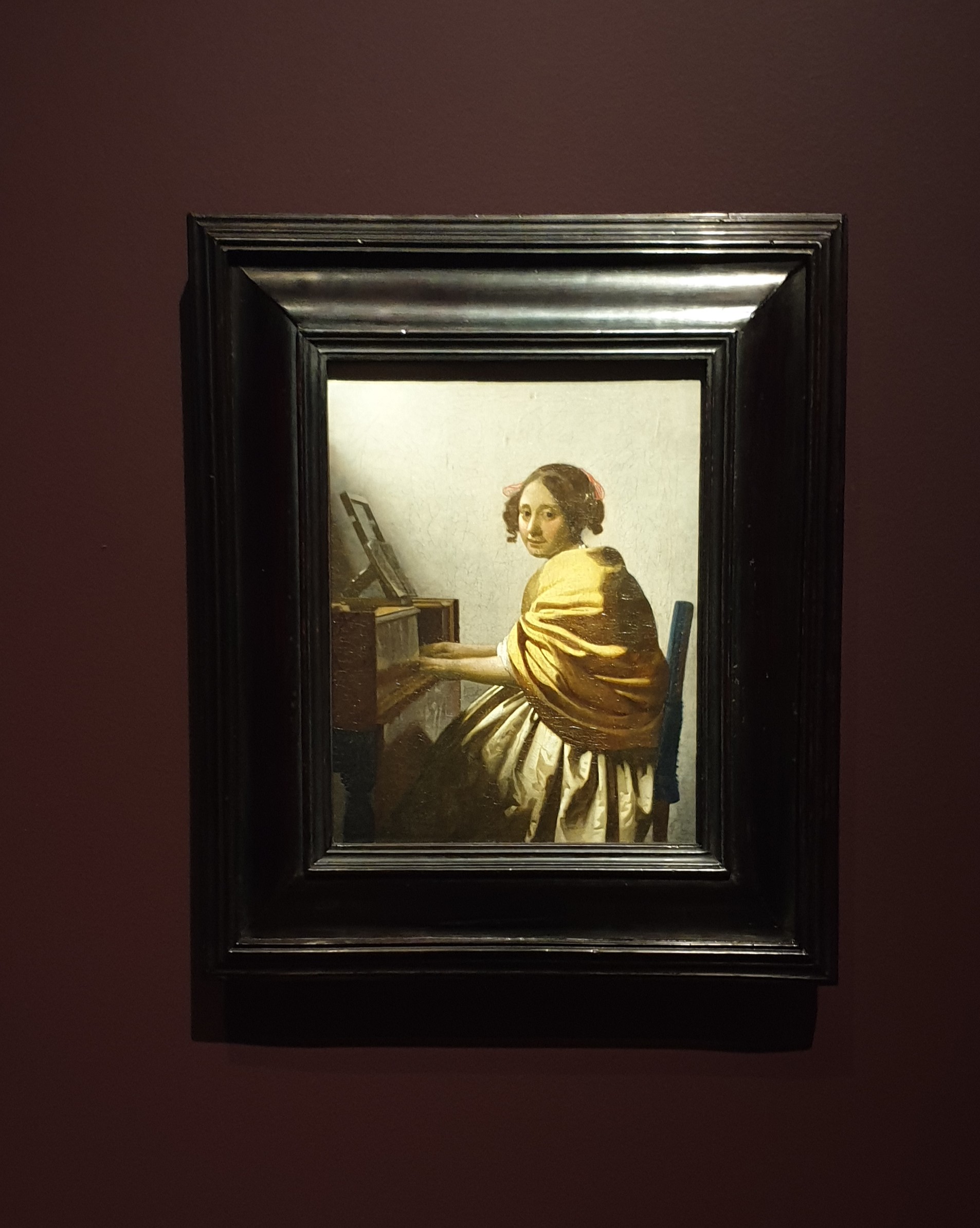
The exhibit is phenomenal; it includes many Rembrandts, various other Dutch Masters, and, as a bonus, a Vermeer!

The works are mostly from the 17th century, although there are a handful from the 18th. So, Dutch Baroque, which is a bit different from the rest of European Baroque, especially Italian and Spanish, but still plays with the chiaroscuro. Jesus at the Mount of Olives is a great example of that technique.

Yes, the Vermeer is my favorite; it is just a girl, a piano, and a chair, but it does so much more than any of the other paintings. It is tiny, but the girl’s gaze, her hair with its almost transparent bow, her dress, two tiny pearls on her neck, the trademark light pouring from a high window. I have written before about the victory of minimalism, but this might take the cake!

So if you are in South Florida before March 29, reserve your ticket and see this exhibition. You are welcome.

Humanities, Caravaggio, and Artificial Intelligence.

Am I the only one who is sick and tired and bored of AI? And this nightmare has only just begun? Yes, let’s eradicate Cancer and streamline flight traffic, and all that good stuff, but do you really need an AI generated picture of whatever nonsense you think of? and you certainly do not need it for that high school or college essay. Sorry.

This comes to mind because AI is already everywhere we look, but also because as every cloud has a silver lining, folks are hungry, thirsty for meaning. The solution? more Humanities, more arts, music, theatre, literature, more stories, more narrative.

Everybody has an opinion on AI. Some more positive, like Spanish writer Irene Vallejo, who thinks AI will “push” us towards the Humanities, and some more pessimistic, like French philosopher Éric Sadin who wisely explains that AI will not generate new jobs -at any rate not enough to cover those lost to AI.

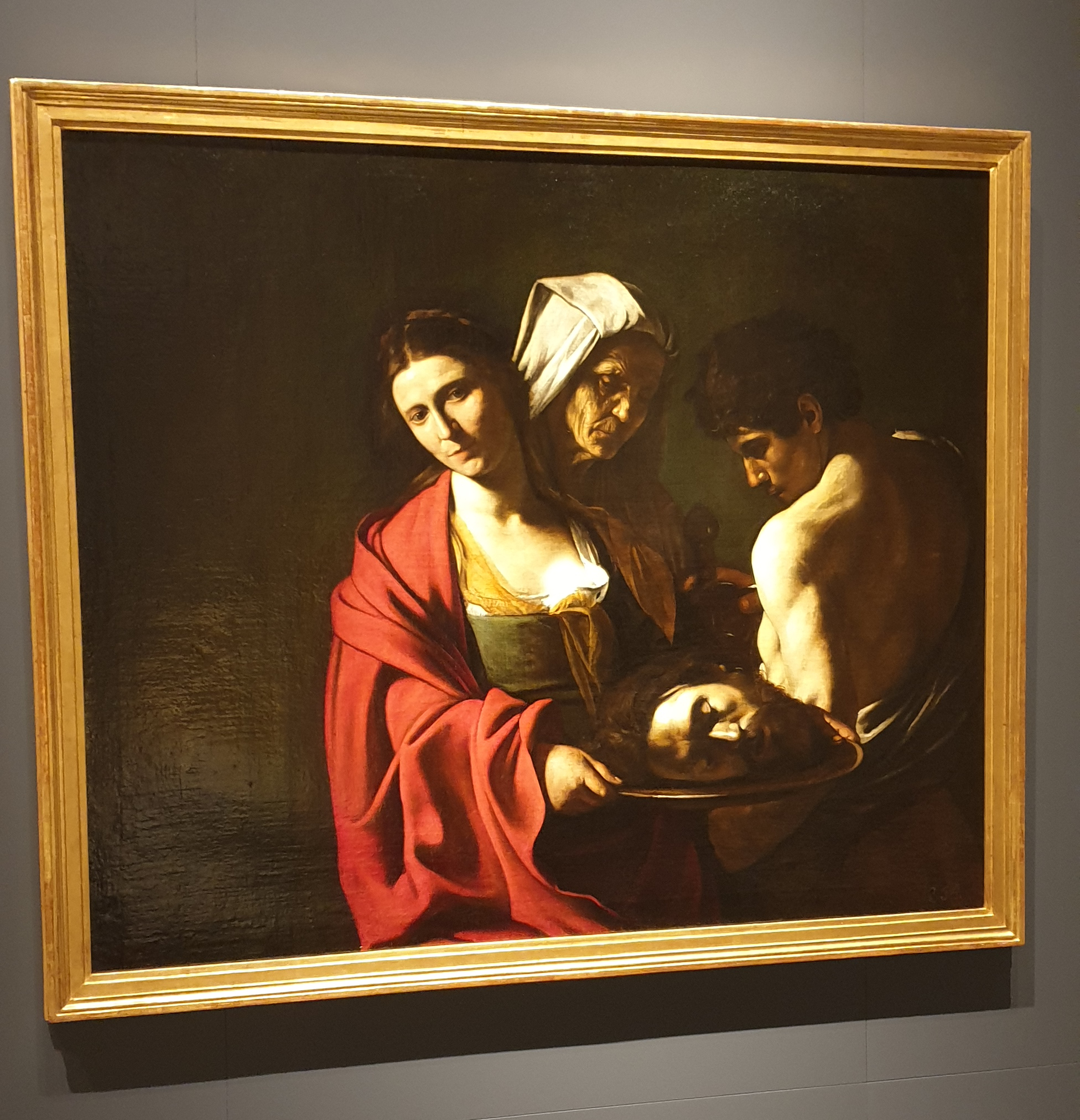
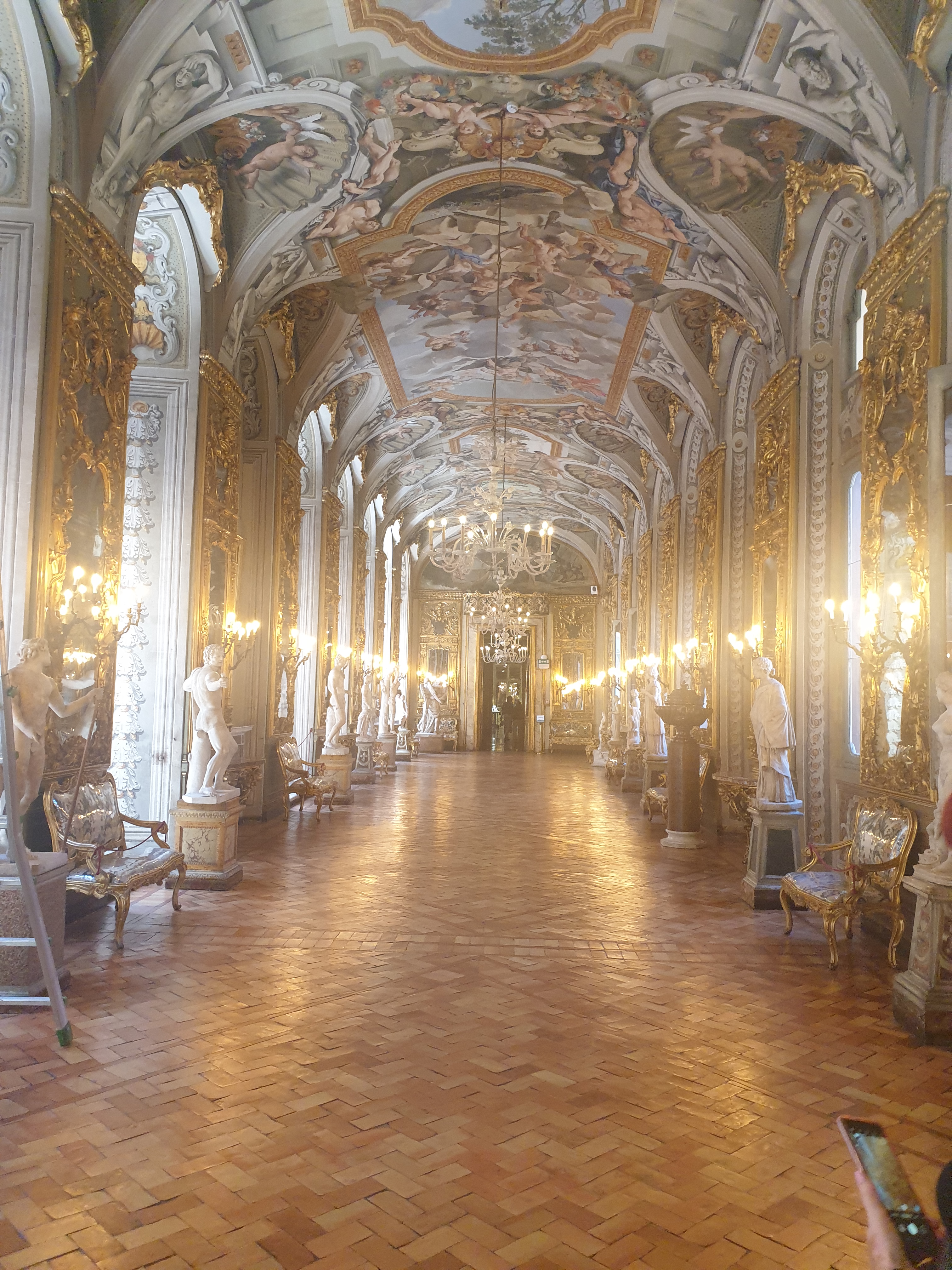
So what does Caravaggio have to do with all this? Well, I was thinking about AI when I unexpectedly “bumped” into a brilliant Caravaggio at the Colecciones Reales recently (read about that here) and I was so deeply moved, that I understood how art and the humanities are the antidote to AI. A few days later I saw two more Caravaggios at the Prado, including a lost one which was in the attic of a Madrid family. I then basked in the memory of other Caravaggios I had recently seen: one in the Cathedral of Toledo, and a couple at the Doria Pamphilj Gallery in Rome. The evidence was evident: AI can “paint” just like a Caravaggio with the amazing 3D effect and the chiaroscuro, but it will never be a Caravaggio.

Caravaggio only painted about 60 to 105 paintings, and the story each one tells, the drama, the humanity, is moving. You can see where each painting is on this Wikipedia page.

So, if you are hungry, thirsty for meaning, for purpose, for humanity, find a Caravaggio near you and go enjoy it. If you can’t find one, you can read a good book, watch a good film, listen to a symphony, etc. You are welcome!

The 18th Century as literary hinge

When I “discovered” 18th Century Spanish literature, something that really struck me was what a critical element it was in the history of literature and how little credit it gets. The 18th Century is a literary hinge in the evolution of literature. While it can be argued that every century, or era, is a “hinge” era, a time between times, the 18th Century exercises as a flexing point in what has been called the pendulum of literary movements. Being the philistine that I am, I can only use Spanish literature for my example:

The ilustrados (18th C educated Spaniards), whether they liked it or not, were actually building on the shoulders of the Baroque, with its chiaroscuro and trompe l’oeil, which they hated. This, in turn, was a reaction to the Renaissance which was short lived in Spain in favor of the more mysterious and why not, fun, Baroque, more suited to the Spanish temperament (perpetuating stereotypes, the Spanish are a Baroque people. Disagree? Go watch an Almodovar film). For the Spanish literati, the solution to what they considered centuries of muddle was to build a one way bridge to the classic ancient Greeks and Romans as Luzán proposed in his Poética (1737). As much as the Enlightened writers wanted to, they could not get there without the rich legacy of medieval letters and art and everything that followed. For example, my man, Padre Isla (1703-1781), a precursor to the ilustrados, indeed goes back to the ancients, but he also relies heavily on St. Bonaventure, St. Thomas Aquinas, and especially Cervantes and Quevedo, creating his narrative from a blend of centuries of letters. Consciously or not these are the foundations the 18th Century had to build on.

On the other hand the Enlightenment’s obsession with societal good which even led to the elimination of the novel in Spain due to its reliance on the first person singular, is the launching pad for the Romantic movement where that “I” is all important. Equally, the Enlightened enthusiasm for scientific enumeration led to the naturalists. The reaction to those developments will be realism, modernism and postmodernism.

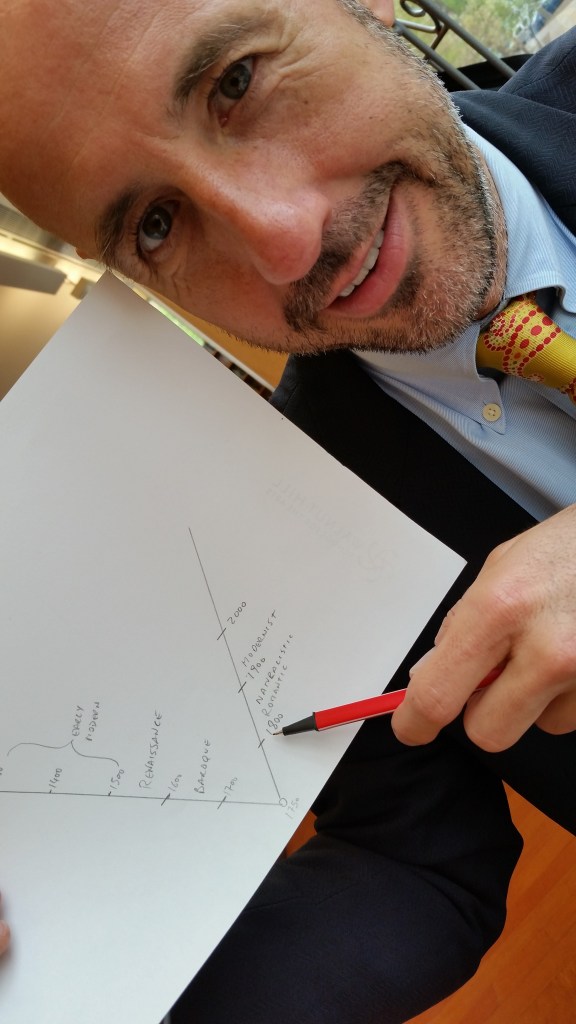
In big bold brushstrokes there are the Classics, Medieval, Renaissance and Baroque eras leading up to the Enlightenment, and the Romantic, Naturalist, Realist, Modernist and Postmodernism after it. How do I then explain the fact that my sides, arms or rays of my angle are lopsided? Well it must be taken into account that both the Classical and Medieval periods encompass centuries, while the last big three movements occurred within the 20th C. due to the advances in communications and technology, so just counting movements is not the same as considering the influence and repercussion of  those movements. This of course is taking into account all the differences in labeling periods and movements. No style is 100% unique, as one genre blends into another.

Thus, a solid grasp of 18th Century literature opens up an understanding to what happened before and after on the literary continuum. From a teaching standpoint, understanding the enlightenment offers the key to the past as well as to the future of literary history.

P.S.: When I explained this idea to my thesis director during one of our coffees, she liked it so much she took a picture!