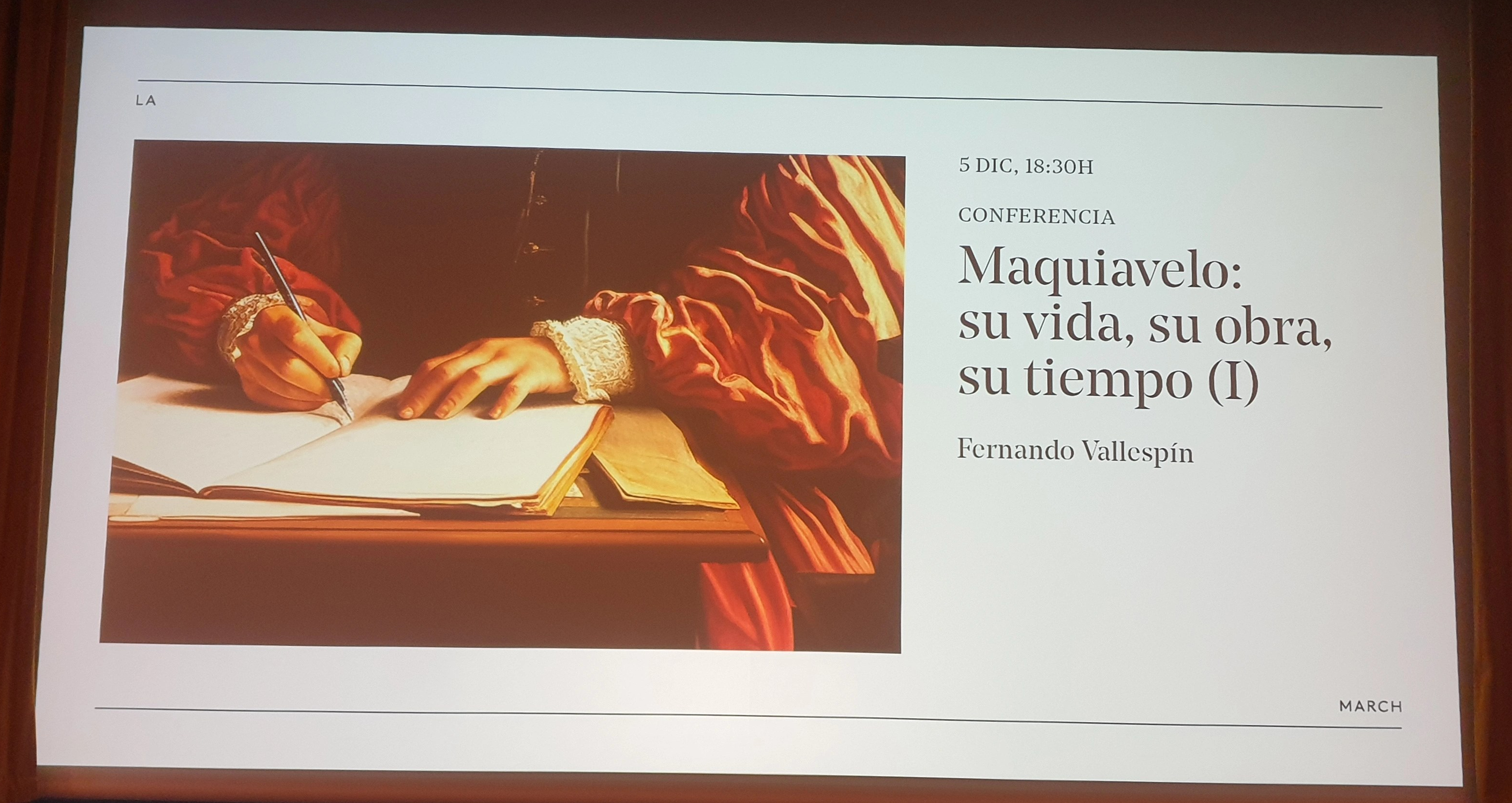
Authors (and characters) as adjectives a quiz, Niccolo Machiavelli a conference, revisiting the Renaissance

Match the author -or character (extra credit)- to the adjective (answers below)

  1. Kafkaesque     A. In which political expediency is placed above morality, and craft and deceit areused to maintain the authority and carry out the policies of a ruler.

2. Nietzschean    B. As a striving toward love of spiritual or ideal beauty.

3. Platonic           C. Emphasizing the will to power as the chief motivating force of both the individual and society.

4. Orwellian        D. Extravagantly chivalrous or romantic; visionary, impractical, or impracticable.

5. Machiavellian E. Describing a fictional world teeming with characters from all walks of life and social strata.

6. Quixotic          F. Sacrificing spiritual values for power, knowledge, or material gain.

7. Faustian          G. Marked by a senseless, disorienting, often menacing complexity.

8. Dickensian      H. The totalitarian future described in his antiutopian novel 1984.

Fairly easy and short right? The reason is that very few authors -and even fewer characters- have reached the level of having their name become adjectives.

Although I am not a Renaissance specialist, I recently went to a fantastic conference on Machiavelli given by professor of Political Science at the Autonomous University of Madrid Fernando Vallespín at the fantastic Fundación Juan March.

Professor Vallespin was amazing, and his presentation was equally interesting. He obviously referenced the growing wave of Humanism that sparked and propelled the Renaissance, he commented on Giovanni Pico della Mirandola (1463–1494), he recommended Stephen Greenblat’s The Swerve, and he put Machiavelli in the context of his era. I had not read The Prince since high school back in the Pleistocene; so, it was very refreshing to re-visit Machiavelli. I remembered my Medieval Literature professor, the great Frank Dominguez mention that The Prince was written for king Ferdinand of Aragon whom Machiavelli admired. I wanted to ask Prof. Vallespin about that, but he did not stick around for Q and A…

If you are in Madrid, check out the conference cycles at the March, you will not regret it!

Answers:

1.         Kafkaesque     G. Marked by a senseless, disorienting, often menacing complexity.

2.         Nietzschean    C. Emphasizing the will to power as the chief motivating force of both the individual and society.

3.         Platonic           B. As a striving toward love of spiritual or ideal beauty.

4.         Orwellian        H. The totalitarian future described in his antiutopian novel 1984.

5.         Machiavellian A. in which political expediency is placed above morality, and craft and deceit are used to maintain the authority and carry out the policies of a ruler.

6.         Quixotic          D. Extravagantly chivalrous or romantic; visionary, impractical, or impracticable.

7.         Faustian          F. Sacrificing spiritual values for power, knowledge, or material gain.

8.         Dickensian      E. Describing a fictional world teeming with characters from all walks of life and social strata.

*All definitions from Dictionary.com with thanks

Wes and Woody

I’m waiting for my Thesis Director to go over my most recent dissertation scribbles, so I take a rare break from writing my dissertation… to write my blog!

Back in the short period between my prospectus (see previous posts) and starting my dissertation, before Christmas, I actually had time to watch a few of films, and I loved them both.

Wes Anderson has been one of my favorites since his Rushmore (1998). I love how he weaves a narrative with all these eccentric, maybe a little bit broken, chipped characters. His latest is The Grand Budapest Hotel, about the concierge (Ralph Fiennes) in an old school grand hotel somewhere in Mitteleuropa. The humor is woven into the narrative, sometimes with a big old slapstick brush, sometimes with a nuanced, detailed, subtle touch, and of course the whole spectrum in between. I have been known – back in the day, to have gotten kicked out of movie theaters for laughing when nobody else laughed, because I caught some tiny wink of humor. Wes Anderson keeps doing that for me time and again. Although nowadays I fortunately do not get kicked out of theaters.

When we were kids I remember spending summers at a place like that, the Gran Hotel Camp de Mar (which is now a gaudy monstrosity). Talk about old school. I even remember when one of the guests died and it was all hush-hush, but not really. So it really struck a chord with me, remembering the grand old dining room, the old furniture, everything.

Within the arc that is the narrative of the story, every detail of every scene is perfect. Every character, every costume, every prop, every line, you name it, it is perfect. Which of course contrasts beautifully with the eccentric, maybe a little bit broken, chipped characters.

Wes Anderson is, of course, building on the shoulders of giants, particularly those of Woody Allen. I did get all caught up on his three latest movies (that is how behind I was on my movie watching): Midnight in Paris (2011), From Rome with Love (2012), and Blue Jasmine (2013).

Cate Blanchett (who was also brilliant in Anderson’s The Life Aquatic with Steve Zissou, 2004) nails her Jasmine. The film really got me thinking about how we delude ourselves, and how we see people around us that fool themselves to amazing depths and do not want to acknowledge it. From Rome with Love was fun, and I was happy to see Allen reprise Penelope Cruz in this film. But it was Midnight in Paris that I enjoyed the most. The magic of 1920s Paris in the 21st Century, Owen Wilson, who is also in the Grand Hotel Budapest (Adrien Brody is also in both). Maybe it is because I lived in Paris for a summer and inevitably fell in love with the city, maybe because it has one of Woody Allen’s best narratives in a while. Whatever, it was magic.